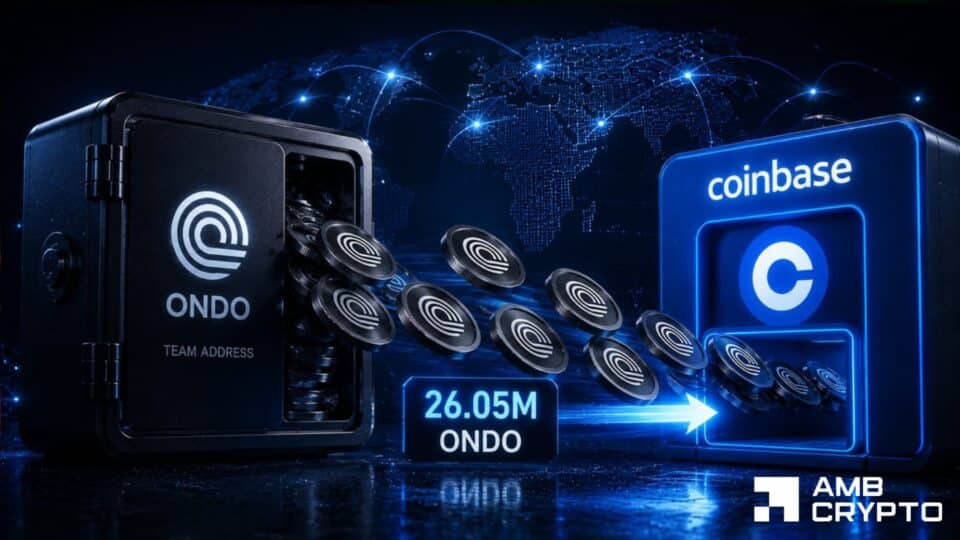
Will new Uniswap protocol fee proposals drive ‘substantial UNI burn’?

ambcrypto2026-07-18 tarihinde yayınlandı2026-07-18 tarihinde güncellendi

Özet

Uniswap has submitted three governance proposals to activate protocol fees across multiple versions (V2, V3, V4) and various blockchains, including Robinhood, Ethereum, Base, Arbitrum, BNB Chain, Polygon, and Optimism. CEO Hayden Adams stated these fees would be directed into the existing UNI token burn mechanism, expecting a "substantial" impact on token reduction based on current trading volumes, particularly from the newly launched Robinhood chain. The move has drawn mixed reactions, as it would reduce fees for liquidity providers (LPs), who have earned over $5 billion cumulatively versus only $25 million in protocol revenue. Some LPs, like Gamma Strategies, oppose the V4 proposal, arguing it could make Uniswap less competitive against rival decentralized exchanges. If approved, the increased protocol revenue could significantly boost the UNI burn rate, which has already tripled in the past week. Meanwhile, UNI's price rallied 41% in July, partly driven by Robinhood traction, but faces potential consolidation or a pullback unless new momentum from fee proposals and Robinhood activity fuels further gains.

Uniswap has officially submitted three governance proposals for protocol fee activation across several chains and different versions of the DEX.

The first fee proposal will be for versions 2 (V2) and 3 (V3) on the Robinhood chain. The new Ethereum L2 debuted this month, attracting several DEXes, including Uniswap. About 10 days after launch, Uniswap crossed $1B in trading volume – ultimately showing its growing traction.

Similarly, the project seeks to activate fees on V4 across Ethereum, Base, Arbitrum, Robinhood, BNB Chain, Polygon and Optimism. Hayden Adams, Uniswap’s CEO, added that a third fee proposal for remaining V4 chains will also be submitted soon.

Adams said,

Both direct all new protocol fees into the existing UNI burn mechanism. Based on current volumes, especially Robinhood, we expect the impact on UNI burn to be substantial.

Mixed reactions to Uniswap’s fee proposal

For clarity, fees are what users pay for each swap on the DEX, and they mostly go to liquidity providers (LPs). Protocol revenue (which is partly directed for UNI burn) is a percentage of the swap fees that goes to the project after a governance vote.

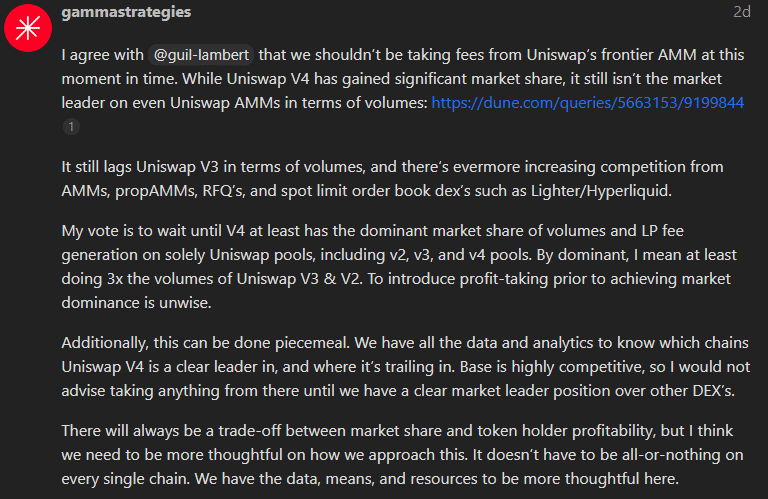
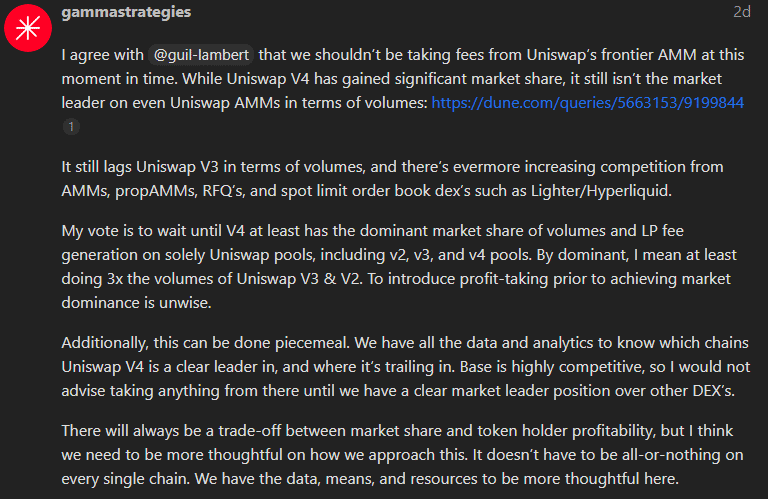
In other words, such proposals would directly reduce fees collected by LPs. As such, it was not surprising that some LP providers like Gamma Strategies opposed V4 fee proposals because they would affect their lifeline.

Still, Gamma Strategies made a sound argument for their opposition, noting that Uniswap V4 was still not competitive enough and the fees would make it lose to rivals.

It (V4) still lags Uniswap V3 in terms of volumes, and there’s evermore increasing competition from AMMs, propAMMs, RFQ’s, and spot limit order book DEX’s such as Lighter/Hyperliquid.
Source: Uniswap governance

That said, Uniswap has only activated fees across a few chains and versions. However, most of the fees collected go to LPs.

In fact, LPs have made a whopping +$5B in cumulative fees since 2018. Yet, the protocol has made only $25M in cumulative revenue.
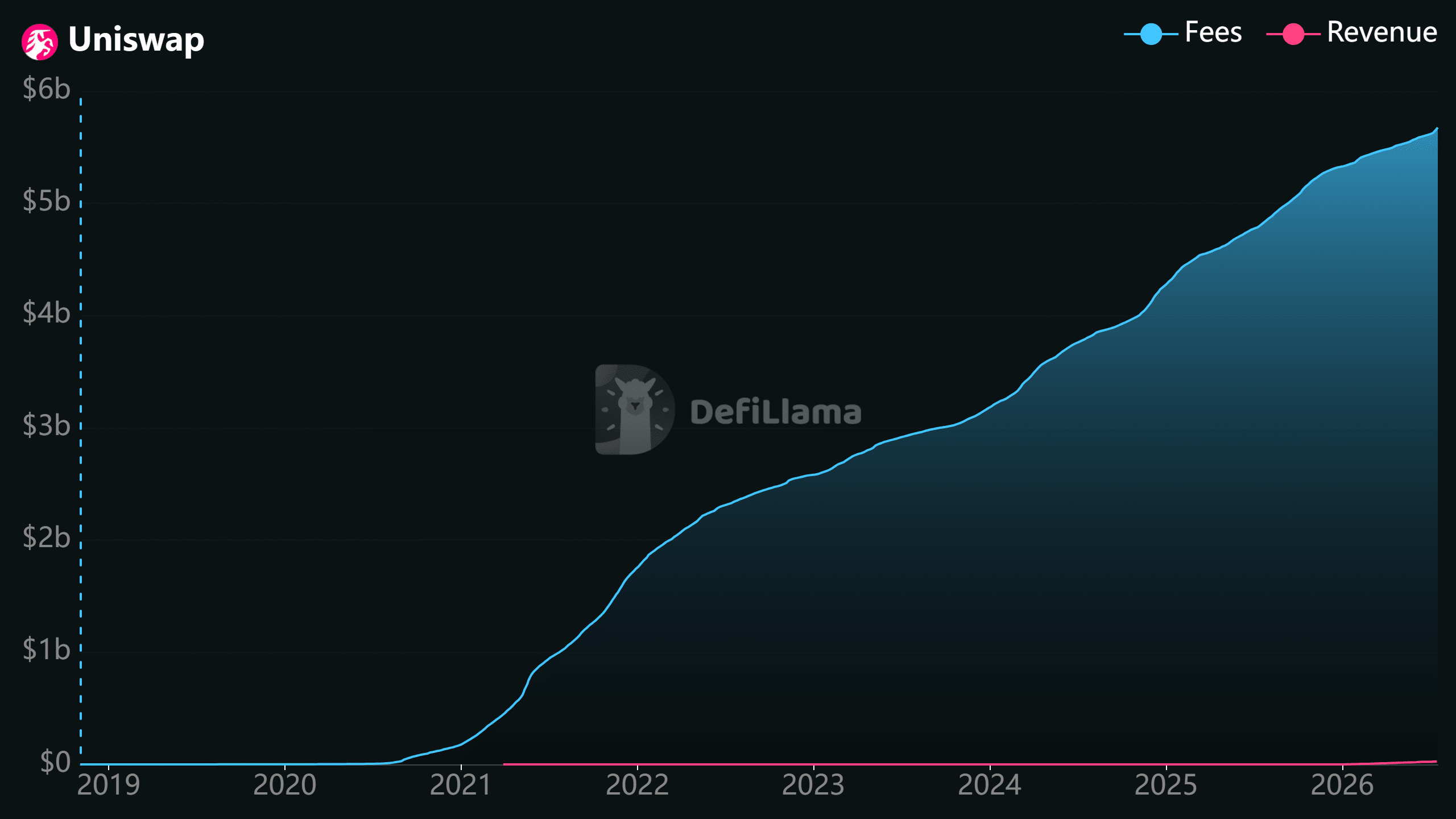
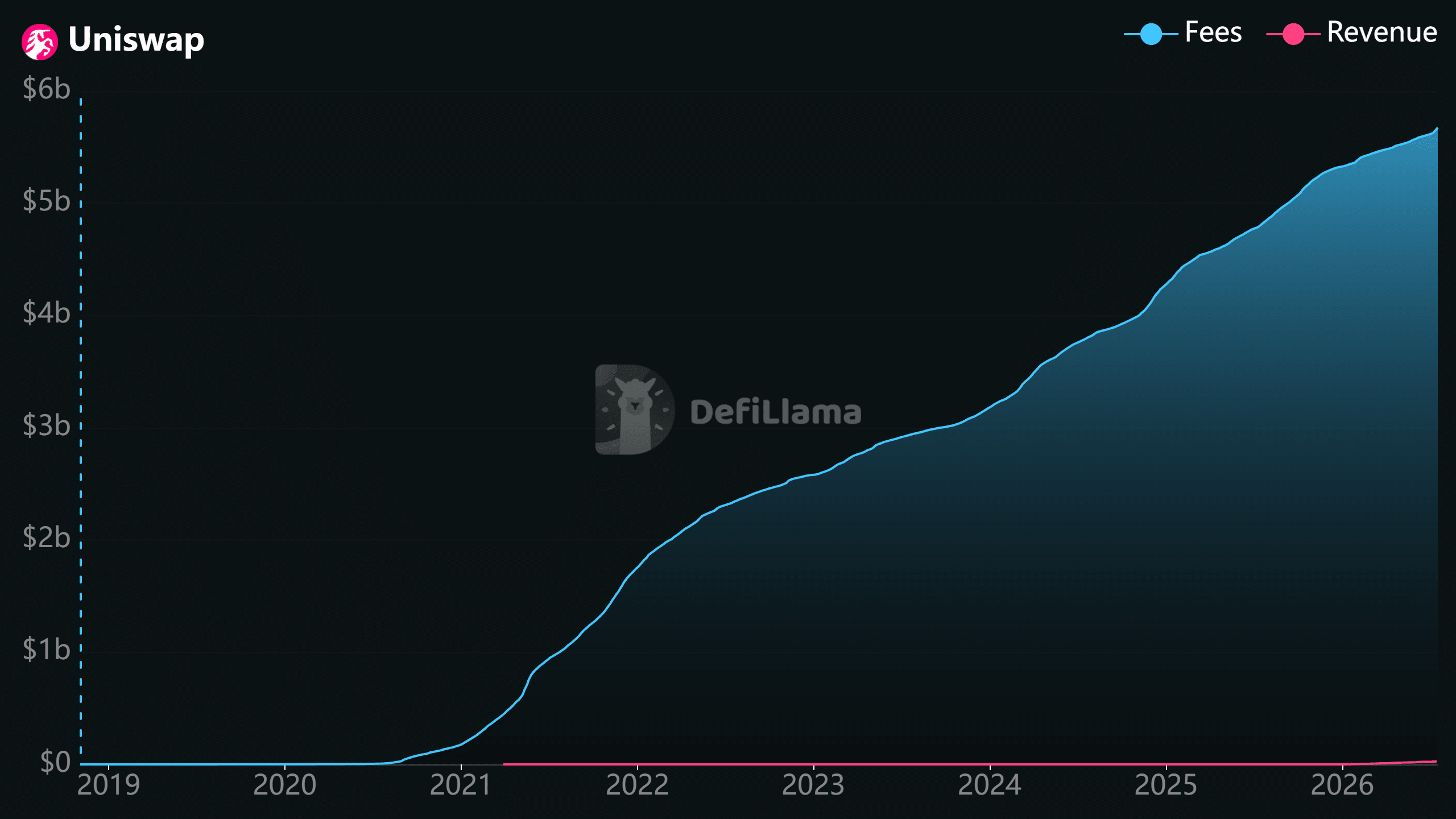
Source: DeFiLlama

If the proposal goes through and is balanced with competition, more protocol revenue would translate to more UNI burn rates, as Adams projected.

That said, the project has now burned a total of 107.49M UNI tokens. UNI burn rate surged 3x from $51K to over $160K in the past week.

Can UNI extend its July rally?

The Robinhood traction was front-run by traders as the Uniswap [UNI] price surged. In July, UNI price surged 41% from $2.7 to $3.8.

But the bullish strength has eased as the price stalled below the 200-day Moving Average (blue line). As such, price could remain sideways above $3.5 or slip to $3 if Robinhood momentum stabilizes.
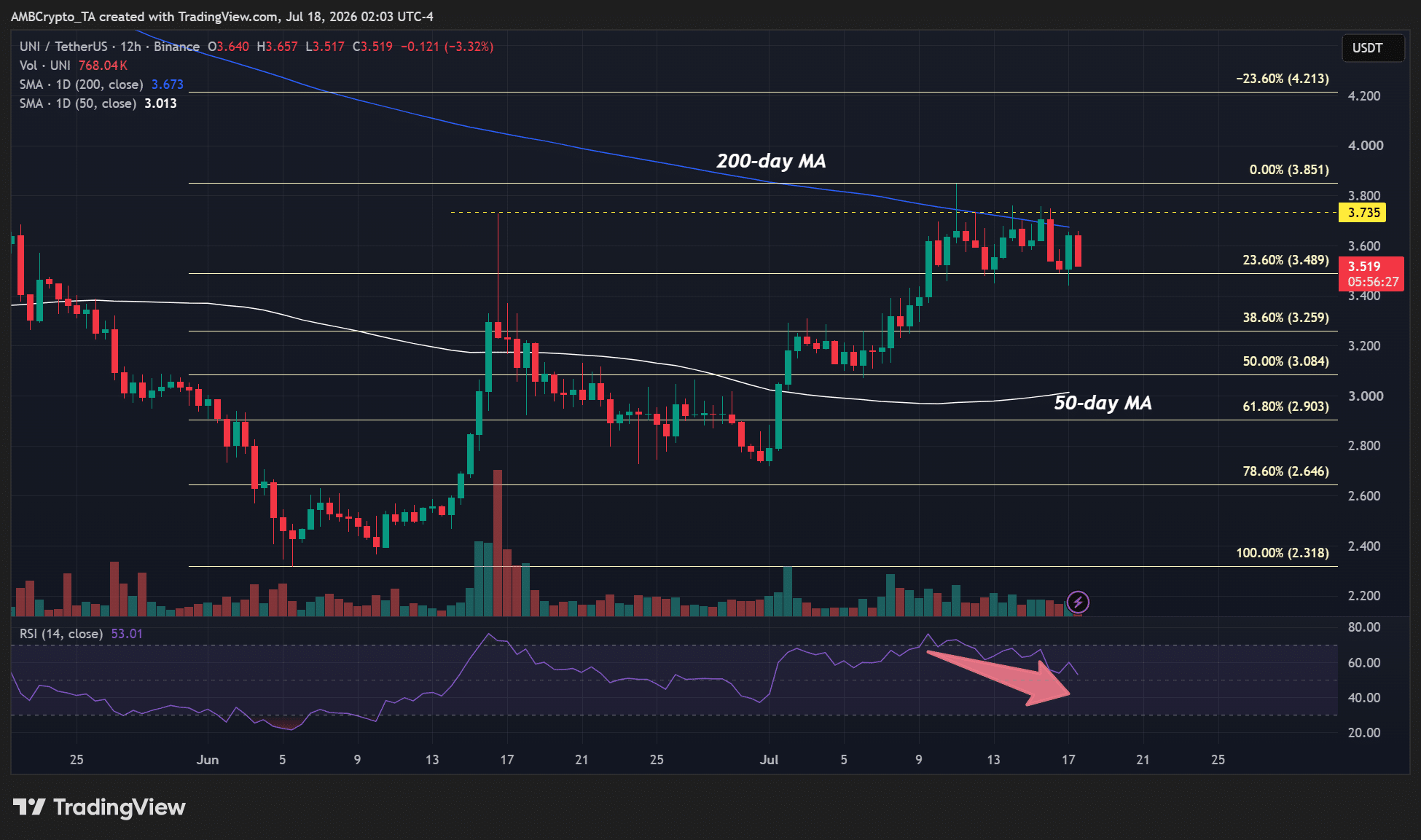
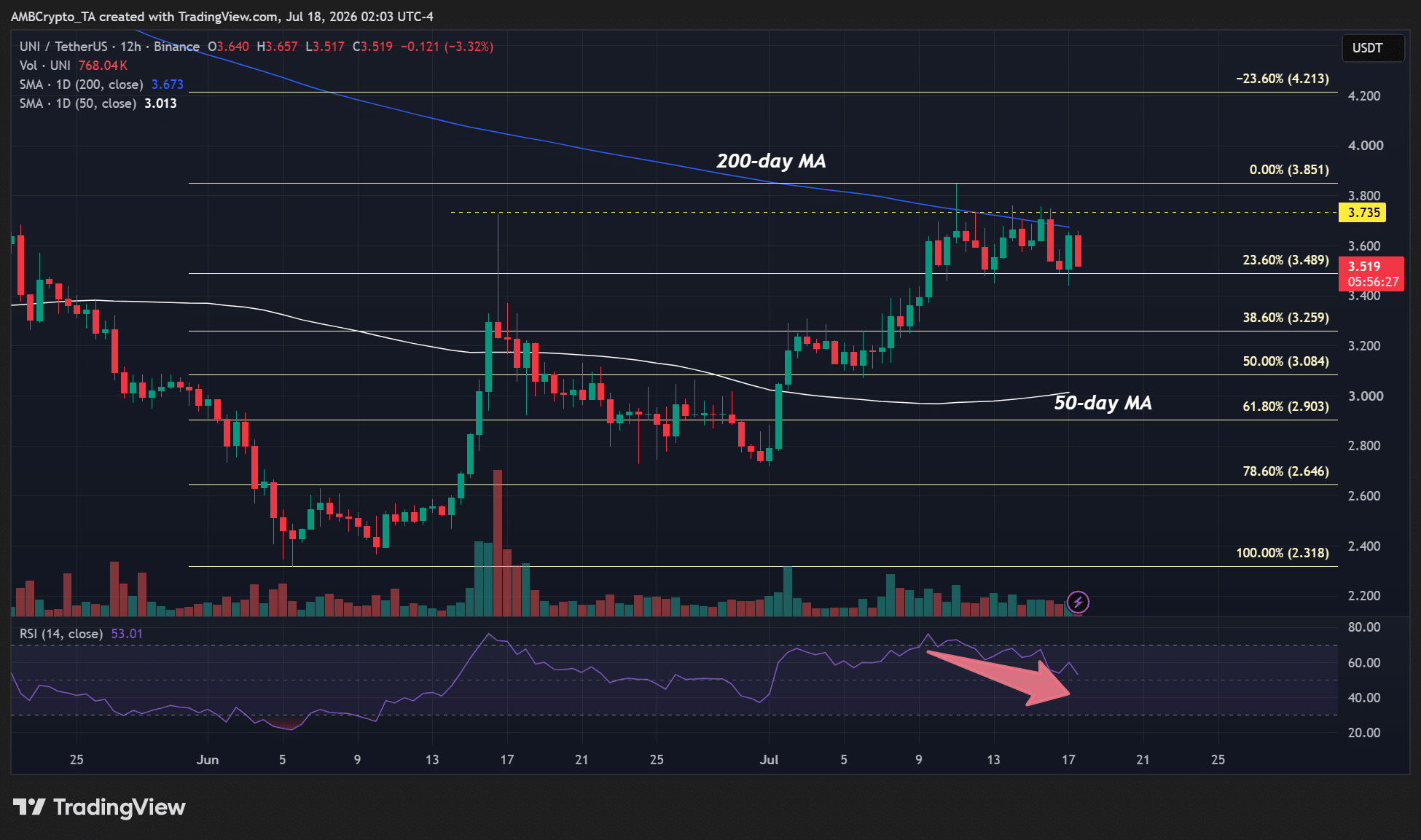
Source: UNI/USDT, TradingView

But the next move higher could be triggered by renewed Robinhood momentum and if the fee proposals drive more UNI burn.


Final Summary

  • Uniswap pushes three fee protocol fee proposals to accelerate UNI burn.
  • Currently, Uniswap LPs have accrued over $5B while the protocol makes relatively little revenue

İlgili Sorular

QWhat are the three governance proposals submitted by Uniswap, and what is their primary goal?

AUniswap has submitted three governance proposals to activate protocol fees. The first is for versions V2 and V3 on the Robinhood chain. The second is to activate fees for V4 across Ethereum, Base, Arbitrum, Robinhood, BNB Chain, Polygon, and Optimism. A third proposal for remaining V4 chains will follow soon. Their primary goal is to direct all new protocol fees into the existing UNI token burn mechanism, aiming for a substantial increase in UNI burn.

QAccording to Hayden Adams, what impact does Uniswap expect the new fee proposals to have on UNI burn?

AHayden Adams, Uniswap's CEO, stated that based on current trading volumes, especially on the Robinhood chain, they expect the impact of the new protocol fee proposals on UNI burn to be substantial.

QWhy do some liquidity providers (LPs), like Gamma Strategies, oppose the V4 fee proposal?

ALiquidity providers like Gamma Strategies oppose the V4 fee proposal because it would directly reduce the fees collected by LPs, which are their primary source of revenue. They also argue that Uniswap V4 is not yet competitive enough, and adding fees could make it lose ground to rival decentralized exchanges.

QWhat is the historical relationship between fees earned by Liquidity Providers (LPs) and protocol revenue for Uniswap?

AHistorically, Liquidity Providers (LPs) have earned the vast majority of fees on Uniswap, accruing over $5 billion in cumulative fees since 2018. In contrast, the protocol itself has generated only about $25 million in cumulative revenue from a small percentage of swap fees on select chains and versions.

QHow has UNI's price performed recently, and what factors could trigger its next upward move according to the article?

AIn July, the price of UNI surged 41%, from $2.7 to $3.8, partly driven by anticipation of Uniswap's traction on the Robinhood chain. Its bullish momentum has since eased, with the price stalling below the 200-day Moving Average. The article suggests the next upward move could be triggered by renewed momentum on Robinhood and if the new fee proposals successfully drive a higher UNI burn rate.

İlgili Okumalar

Pax Silica vs. WAICO: The US Wants to Prohibit Europe from Using Chinese Artificial Intelligence

The United States is preparing to demand that European and other partners abandon Chinese artificial intelligence initiatives, threatening exclusion from the American-led "Pax Silica" coalition, according to a leaked U.S. State Department document. This ultimatum forces signatories of the "AI Opportunity Statement" to choose between the Western technological ecosystem and alternative frameworks, with China not explicitly named but clearly targeted. Pax Silica is a U.S. strategy for AI and semiconductor hegemony, launched in late 2025. Its European presence expanded significantly in mid-2026. Concurrently, China, Russia, and 27 other nations established the World AI Cooperation Organization (WAICO) in July 2026 as an independent intergovernmental platform promoting AI governance based on UN principles. This situation creates a difficult choice, especially for European nations balancing strategic autonomy with dependence on U.S. tech and security. It also pressures Global South countries with pragmatic ties to both Washington and Beijing. The formation of competing blocks risks fragmenting the global tech landscape, forcing companies to split supply chains, increasing costs, and potentially leading to incompatible standards and protocols. The era of open globalization in AI may be ending, replaced by geopolitical confrontation where technological sovereignty trumps economic efficiency. The decisions made will shape the global digital economy for decades.

cryptonews.ru16 dk önce

Pax Silica vs. WAICO: The US Wants to Prohibit Europe from Using Chinese Artificial Intelligence

cryptonews.ru16 dk önce

Robert Kiyosaki Shares His Mentor's Predictions About the Emergence of Bitcoin and AI

American entrepreneur and author of "Rich Dad Poor Dad," Robert Kiyosaki, discussed the influence of futurist R. Buckminster Fuller on his worldview, linking Fuller's past technological predictions to the emergence of Bitcoin and the development of artificial intelligence. In an X post, Kiyosaki also reflected on personal purpose, sharing his journey from the music business—where he worked with bands like The Police and Iron Maiden—to creating the "Cashflow" board game and writing his famous book. He described feeling an inner emptiness despite his success, a turning point that came after meeting Fuller, whom he studied with for three summers. Kiyosaki described Fuller as a "friendly genius" who foresaw world-changing developments like Bitcoin and AI. However, the core of his post focused on Fuller's philosophical impact, particularly a quote about belonging to the universe and finding purpose by dedicating one's life to the maximum benefit of others. The entrepreneur remains a vocal advocate for cryptocurrencies. He regularly advises buying Bitcoin during market panics, viewing it and assets like Ethereum, gold, and silver as hedges against traditional financial system failures. Kiyosaki has predicted a major market crash by 2026, seeing it as an opportunity for prepared investors, with long-term price targets including $750,000 for Bitcoin and $95,000 for Ethereum.

cryptonews.ru2 saat önce

Robert Kiyosaki Shares His Mentor's Predictions About the Emergence of Bitcoin and AI

cryptonews.ru2 saat önce

Etherealize CEO Calls Wall Street's Private Blockchains a 'Race to the Bottom'

Etherealize co-founder and CEO Vivek Raman criticized Wall Street's growing interest in private, permissioned blockchains, calling them a "race to the bottom." In an interview with CoinDesk, Raman argued that consortium networks fragment liquidity and return the industry to the siloed systems that blockchain technology was meant to overcome. He stated that closed networks do not interoperate, undermining two key advantages of the technology: system compatibility and liquidity concentration. Etherealize promotes Ethereum as an open, foundational layer for institutional players. Raman insists that privacy and access restrictions should be built on top of public infrastructure—at the application or L2 level—rather than creating separate, closed networks. He compared Ethereum to HTTP as a base layer, with additional permissioned and private layers akin to HTTPS. Examples of this new wave of "closed" solutions mentioned include Canton Network from Digital Asset, Circle's Arc project, and Stripe's Tempo. Raman termed this trend "consortium chains 2.0," recalling earlier initiatives like the R3 interbank consortium and the Hyperledger corporate ecosystem from 2016 that failed to gain significant traction. He reiterated his firm belief that a global, open, permissionless infrastructure is necessary as a foundational base layer. Raman previously noted in June that traditional financial institutions had begun implementing Ethereum-based solutions into real business processes.

cryptonews.ru2 saat önce

Etherealize CEO Calls Wall Street's Private Blockchains a 'Race to the Bottom'

cryptonews.ru2 saat önce

İşlemler

Spot
活动图片