Local Banks Delay Adoption of the 'Transparency' Law Due to Stablecoin Rewards

cryptonews.ru2026-08-11 tarihinde yayınlandı2026-08-11 tarihinde güncellendi

Özet

Local banks in the U.S. are intensifying lobbying efforts against the proposed CLARITY Act (Digital Asset Market Transparency Act), reigniting debate over provisions related to stablecoin rewards. These smaller, community-owned banks argue that the current version of the legislation would impair their ability to attract deposits and extend credit. Their persistent advocacy has resonated with Republican senators who have personal connections to local bankers, leading figures like Senators Mike Rounds, Josh Hawley, and Jerry Moran to threaten opposition unless the bill is amended to address stablecoin reward concerns specifically. While rewards for holding stablecoins were removed from the bill after earlier compromise, rewards for *using* stablecoins as payment remain permitted. Bankers contend these incentives still create an uneven playing field. This dispute over stablecoin yields compounds another major obstacle for the bill: an unresolved ethics provision requiring White House negotiations. Consequently, despite Senate Majority Leader John Thune scheduling a September vote, the prospects for the CLARITY Act's passage have dimmed as partisan disagreements and these substantive issues appear increasingly difficult to bridge.

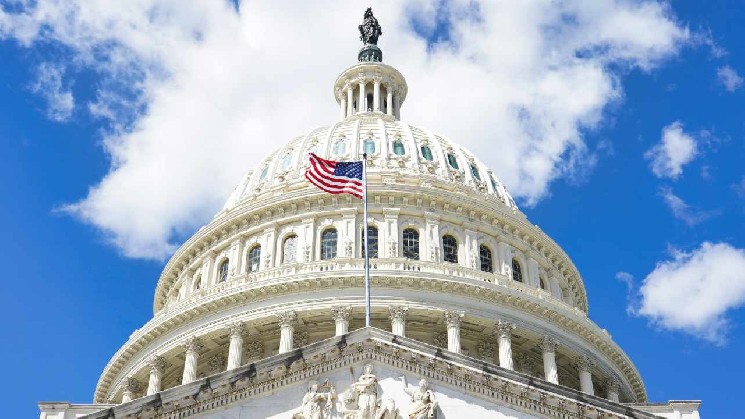
Although the issue of stablecoin rewards in the 'Transparency in Digital Asset Markets Act,' widely known as the CLARITY Act, seemed to have been settled long ago, it has recently resurfaced due to the efforts of local-level banks.

Local banks — institutions that are locally owned and generally have less capital than their national counterparts — have expressed concern about how the adoption of the CLARITY Act in its current form would affect their ability to attract deposits and, consequently, their lending capacity.

As reported by Punchbowl News, weeks of active lobbying by these small banks have caused concern among Republican senators who have direct ties to bank representatives.

"They know us. Each of us personally knows these people," said Senator Mike Rounds, explaining why their arguments have worked and have already swayed some to oppose the CLARITY bill.

Brad Bolton, CEO of Community Spirit Bank, emphasized the importance of small institutions raising these issues. "It took little-known local bankers like me, from the heartland, to tell the senator: this is what the real-world consequences of this are," he stated.

Although rewards for holding stablecoins were excluded from the current version of the CLARITY Act after lengthy discussions and a compromise between banks and the crypto industry, usage rewards, which would promote stablecoins as a means of payment, remain permitted.

Two Republican senators, Josh Hawley and Jerry Moran, have stated they will oppose the CLARITY Act unless its text is changed to address the issue of stablecoin rewards.

The problem of stablecoin yield compounds another major obstacle facing CLARITY: an ethics provision that depends on negotiations with the White House and on which agreement has not yet been reached.

This is why, despite Senate Majority Leader John Thune scheduling a vote for September, the chances of the CLARITY Act passing have diminished, as disagreements between the two parties and the issues under discussion seem insurmountable.


İlgili Sorular

QWhat is the main reason local banks are delaying the CLARITY Act according to the article?

ALocal banks are delaying the CLARITY Act due to concerns over stablecoin rewards and how they might affect their ability to attract deposits and maintain lending capacity.

QWhat specific type of stablecoin rewards are still permitted in the current version of the CLARITY Act?

AUsage rewards that promote stablecoins as a means of payment are still permitted in the current version of the CLARITY Act.

QWhich two Republican senators stated they would oppose the CLARITY Act without changes to the stablecoin rewards issue?

ASenators Josh Hawley and Jerry Moran stated they would oppose the CLARITY Act if the text is not changed to address the stablecoin rewards issue.

QBesides the stablecoin rewards issue, what is another major obstacle facing the CLARITY Act mentioned in the article?

AAnother major obstacle facing the CLARITY Act is an ethics provision that requires negotiation with the White House and where agreement has not yet been reached.

QWhat did CEO Brad Bolton emphasize was important about who raised concerns regarding the CLARITY Act?

ABrad Bolton emphasized that it was important for 'unknown local bankers' like him from rural areas to explain the real-world consequences of the Act to senators.

İlgili Okumalar

New Claude models will embed invisible watermarks in generated text

Anthropic has announced that starting from August 2, 2026, new Claude models deployed in the European Union will incorporate machine-readable invisible watermarks into generated text. This measure will apply globally wherever Claude is offered, including via its API, applications, and through partners like AWS, Google Cloud, and Microsoft Foundry. The watermarking mechanism for text is distinct from file provenance. For text, invisible watermarks will be woven directly into the model's responses without altering meaning, quality, or readability, and are designed to persist through copying and pasting and partially through editing. This system is separate from the C2PA standard. For files (e.g., .png, .jpg), Claude already attaches C2PA-compliant metadata signatures to indicate AI origin. Models released before August 2, 2026 (including the current Claude Opus 5) are in a transitional period and do not embed text watermarks, though Anthropic is working to add support. Currently, there are no public tools to detect these text watermarks; Anthropic states it is developing such tools and will release technical details later. The timing aligns with the EU AI Act's Article 50, which from August 2, 2026, mandates labeling of AI-generated content, with potential fines for non-compliance. A key technical question remains regarding the watermark's resilience to paraphrasing or translation by other AI models, which in other industry experiments has significantly reduced detection accuracy.

cryptonews.ru22 dk önce

New Claude models will embed invisible watermarks in generated text

cryptonews.ru22 dk önce

İşlemler

Spot
活动图片