Compiled & Edited by: Deep Chao TechFlow
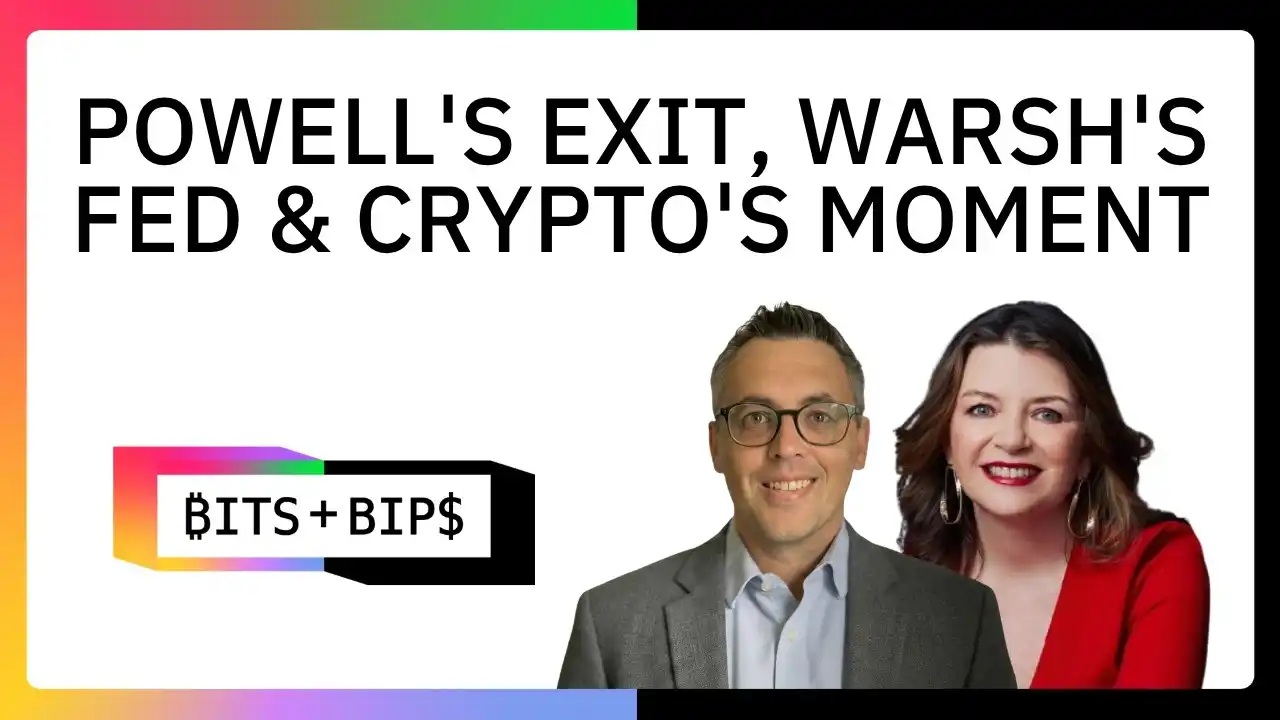
Guest:Noelle Acheson
Host:Steve Ehrlich
Podcast Source:Unchaind
Original Title:Powell Is Out, Warsh Is In: What It Means for Crypto
Release Date:May 22
Editor's Note
The 'Bliss Trade' (large, lasting stimulus expectations) proposed by former IMF chief economist Gita Gopinath in the FT is replacing the 'Taco Trade' as the underlying market logic. This is a structural, cross-party, cross-regime fiscal backstop expectation, forming the true moat for current risk asset valuations and the core rationale for currency depreciation trades.
Crypto is Macro Now newsletter author Noelle Acheson made three core judgments in the podcast: First, there is extreme divergence between stocks and bonds. The bond market is pricing in global tightening, while the stock market is driven by AI hype, similar to the divergence between the equal-weighted S&P 500 and the market-cap-weighted S&P 500 before the 1999 internet bubble. Second, Powell's tenure should acknowledge his defense of the Fed's independence, but one must not forget he led the 2023 shutdown of Silvergate and the de-banking of crypto firms. Finally, inflation won't fall quickly. Even if the Strait of Hormuz crisis ended tomorrow, energy price transmission and consumer expectations would take months to repair. Moreover, the uptrend in inflation predates Trump's tariffs and is driven by the long-term trend of deglobalization.
Key Quotes
Stock-Bond Divergence, 'Bliss Trade' & Systemic Fragility
- "Global bond yields are rising, this is global tightening, and it's not good for markets. But stocks always dance to a different beat; that's not new. What's new is the scale of the divergence - it's massive."
- "The bond market is traditionally called 'smart money' because they look only at macro data, narratives, and trends; while the stock market gets swept up in hype cycles. The current situation is that stocks follow the hype, bonds follow the macro indicators - two completely different stories with different beats, but they don't need to be the same."
- "The essence of the 'Bliss Trade' is structural, unlike the 'Taco Trade' which was limited to Trump's term. It means that no government today will choose not to spend money to bail people out when they're in trouble, whether it's a market crash, a banking crisis, or high oil prices. It's not about party, or even about being a democracy - we've seen this too many times south of the equator."
- "The 'backstop' is now part of the system, and of course this adds another layer of fragility. It's also one reason why risk appetite remains so strong in such an uncertain environment."
- "Historically, market tops are often triggered by an extremely large IPO."
- "The contrarian indicator I'm watching most closely is everyone cheering for the S&P 500 hitting new highs while ignoring the widening gap between the S&P 500 and its equal-weighted index. The last time it widened at this rate was 1999. Anything top-heavy, by the laws of physics, will eventually topple."
Inflation Won't Fall Quickly
- "I have to push back on one assumption: inflation is not falling as much as many people think. Since 2024, core CPI has been ranging between 2.6% and 3%, not declining at all."
- "The real driver of higher inflation is deglobalization, a trend that started even before the Trump administration, during Biden's term. Trump is just accelerating it, turbocharging it. Tariffs zigzag, and the Hormuz crisis lit a match underneath it all."
- "Even if the Hormuz crisis ended tomorrow, it would take time for energy prices to fall back, and even longer for that to transmit to inflation indices and expectations. So the inflation story won't end anytime soon, regardless of what happens in Hormuz."
- "A target rate of 3% is actually reasonable, and many Fed officials privately think so. But they can't change the target because a big part of the Fed's job is managing trust. If they change the target, they're telling the market 'we can't meet the old one,' and that damages the Fed's entire credibility system."
Powell's Tenure: Achievements and Failures
- "Powell looks like a grandfatherly uncle you'd want to get a cotton candy latte with, but we must not forget he was also the driving force behind the de-banking of crypto firms, the leader of the Silvergate shutdown and the March 2023 events, and he completely misread inflation."
- "The word 'independence' itself is worth questioning. He did stand up and push back when the Justice Department subpoena arrived, and that deserves credit; but in shutting down crypto-related banking, there was no independent thinking to be seen - that was politically influenced. Does independence mean being unaccountable for decisions? Does it mean ignoring subpoenas?"
- "He wants to shrink the balance sheet, but the market won't let him. It's that simple. The bond market is the boss here. The Fed cannot let the Treasury market become disorderly, because that affects the dollar and price stability. So he can wish for it, but it won't happen. I also wish I were a professional pianist, but that won't happen either."
The Cost of Bitcoin's Macro-Assetification & Prospects for the Clarity Act
- "Bitcoin is a hedge against currency depreciation. During the 2023 banking crisis, Bitcoin surged. Everyone said, 'because people realized the banking system is corrupt and fragile.' I said back then, no, it was because people expected central banks to step in and provide liquidity. That's what Bitcoin really reacts to."
- "Bitcoin becoming a macro asset is a good thing, but it has a cost: it's now just one among many macro assets. And investors seeking volatility will choose higher-volatility assets, which currently is not Bitcoin. Right now, there are endless AI narratives to play, and prediction markets, so many things to play with."
- "Even if the Clarity Act passes this year, it won't have much impact on Bitcoin. Bitcoin doesn't lack regulatory clarity. The real beneficiary is ETH, and when ETH rises, it often pulls Bitcoin up because they frequently move together."
- "I'm worried about the details of the tokenization innovation exemption. If it allows third parties to issue tokens representing a company's stock without the company's knowledge or consent, that's purely a derivative speculation market, not a capital formation market. This contradicts the fundamental purpose of markets and is also detrimental to the crypto industry's existing 'purely speculative' stigma."
Steve Ehrlich: Hello everyone, welcome to Bits and Bips, where we explore the intersection of macro and crypto. I'm Steve Ehrlich, Research Director at SharpLink and your host today. This is a fantastic episode. The macro world is busy: stocks and bonds are moving in opposite directions, and crypto is caught in the middle. A new Fed Chair takes over tomorrow, and there's much more to discuss.
Let me introduce our guest. Formerly with Genesis, ex-Research Director at CoinDesk, and currently the author of the highly influential newsletter Crypto is Macro Now, Noelle Acheson. Noelle, welcome.
Noelle Acheson: Hi Steve, great to chat with you again.
Steve Ehrlich: How are you doing today?
Noelle Acheson: I'm recovering from near 35-degree heat in Philadelphia - this hot in May.
Steve Ehrlich: Got it, you'll probably have to get used to that. Like many watching today, I'm also trying to figure out what's going on with the markets. As the intro said, equities are still strong.
Noelle Acheson: Yes, but there are some warning signs emerging.
Steve Ehrlich: Right, Nvidia delivered another very strong earnings report, but the market reaction was muted. There's quite a bit of panic in the bond market, with 10-year and 30-year yields rising, a direction you've been closely watching. Adding fuel to the fire, we got our first inflation data since the Iran war started. No one knows what's coming next. Powell steps down as Fed Chair on Thursday, though he'll stay on the Board and vote for the foreseeable future. Crypto is caught up in it too, with Bitcoin hitting the 80k-83k range recently, ETH reaching around 2400, and both have pulled back.
So let's take them one by one. First question, how do you read the panic in the bond market? Yields are being pushed higher, 10-year, 30-year are up - to me these are concerning signals, but equities are largely ignoring them.
Stock-Bond Divergence & the Bond Market's 'Smart Money' Narrative
Noelle Acheson: You're right, these are concerning signals, and they are global warnings. Global bond yields are rising, this is global tightening, and it's not good for markets. But equities always dance to a different beat; that's not new. What's new is the scale of the divergence.
You probably remember the 60/40 portfolio used to be highly praised, where stocks and bonds were supposed to move inversely. We are seeing inverse movement now, but the scale is startling.
Equities are currently driven by internal, temporary factors, mainly AI enthusiasm - just look at the chip sector; while the bond market looks at the macro outlook, at the future. The bond market is traditionally called 'smart money' because they focus only on macro data, narratives, and trends; while equities can get caught up in hype cycles, and increasingly so.
So the current situation is that stocks follow the hype, which may or may not have a basis - we can discuss that later; bonds follow macro indicators, which currently do not look good. That's why the two beats tell completely different stories, but they don't need to be the same.
Steve Ehrlich: Let's talk about those macro indicators. Inflation data is on everyone's mind, and PPI (Producer Price Index) is also starting to tick up. What else are you seeing? How do you interpret these inflation signals? I don't want to use the word 'transitory,' but theoretically, if the Strait reopens, if there's any resolution with Iran, energy markets should at least return to pre-February 28 airstrike levels, things should calm down.
Noelle Acheson: Things will calm down, at least in oil prices. But that doesn't mean inflation will fall immediately, for two reasons. First, inflation transmission is slow. We've already seen the Fed's preferred core index ticking up, though not by much, because while oil prices affect everything, it takes time to transmit.
Second, we will see expectations become more volatile. This is interesting, especially in the US economy, where gasoline prices have a huge impact on inflation expectations. When you see the numbers tick up at the gas station, it feels like money is being siphoned from your bank account. So even if gas prices don't enter core inflation, consumers already feel inflation rising. This affects their expectations, which affects behavior, and ultimately affects actual inflation.
So even if the Hormuz crisis ended tomorrow, it would take quite a while for energy prices to fall back, and even longer for that to transmit to inflation indices and expectations. In other words, the inflation story won't end anytime soon, regardless of what happens in Hormuz, because this isn't new - inflation was building even before the Hormuz crisis.
Steve Ehrlich: Can you elaborate on that? I know you're in Spain, a European perspective; I'm American. Since inflation retreated from the post-COVID peak, the Fed has been raising rates to push it down, not to the 2% target, but it has been falling. What do you mean by 'building even before'?
Noelle Acheson: I have to push back on that assumption: it's not falling as you think. Look at the chart since 2024: core CPI has been ranging between 2.6% and 3%, not declining at all.
Actually, a year or even a year and a half ago, many said, 'Okay, the inflation story is over, the disinflation process is done, we'll range here for a while before moving up again.' Why expect inflation to continue upward? Because of deglobalization, a trend that started even before the Trump administration, during Biden's term. So it's a long-term trend; Trump is just accelerating it, turbocharging it. Tariffs zigzag - we don't know about refund situations yet, but prices have already gone up due to tariffs; the Hormuz crisis lit a match underneath. But honestly, if you look at the chart, inflation hasn't been falling for a long time.
Steve Ehrlich: You're right. I remember discussions about whether the Fed's 2% target should be raised, recalibrating the neutral rate.
Noelle Acheson: 3% is actually a reasonable target. Many discuss this, and many Fed officials privately think so, but they can't change the target. The reason is the Fed's fundamental problem is credibility. A big part of what the Fed does is managing trust. If they suddenly say, 'We can't achieve 2%, so we're changing the target,' they're undermining the market's trust in the Fed's ability to meet its own goals.
Steve Ehrlich: Understood. We'll talk more about the Fed and trust in about ten minutes.
From Taco Trade to Structural Backstop Expectations
Steve Ehrlich: I want to ask you more about this 'unstoppable force vs. immovable object' of stocks vs. bonds. In your newsletter this week, you pointed to a very interesting op-ed by a former IMF Deputy Managing Director about the so-called 'Bliss Trade,' which might be a more sustainable extension of the Taco Trade, part of the same family as Fed backstop expectations. I read a book a few months ago about the rise of the carry trade, arguing there will always be a backstop, turbocharged during COVID because global central banks had to flood with support for the shutdown economy. Can you explain this Bliss Trade? Which side do you think breaks first?
Noelle Acheson: The Bliss Trade comes from a very interesting FT op-ed a few weeks ago by Gita Gopinath, former IMF Chief Economist and Deputy Managing Director, now a Harvard professor. Read it from her IMF background perspective, but she makes a brilliant point: the market's expectation of a 'backstop,' a 'safety net,' is no longer just the Taco Trade. The Taco Trade is part of it, of course; Trump provided countless events for the market to believe 'he'll eventually step back,' but her point is that it's broader.
The Taco Trade is temporary, limited to Trump's term; but Bliss Trade stands for 'big, large and lasting stimulus or support,' and it's structural. Her argument is that no government today will choose not to spend money to bail people out when they're in trouble, whether it's a market crash, a banking crisis, or high oil prices. We saw it in 2020, again in 2022 due to energy prices, and now in Europe because of the Hormuz crisis. Governments don't get voted out for not bailing people out.
It's not about party, or even about being a democracy - we've seen coups south of the equator too many times. But this is crucial for the currency depreciation outlook. Where does the stimulus money come from? They'll always find a way; their toolbox is deep.
Long-term, this does add moral hazard, adds froth to the speculative side of the market. It's also a reason why we see such strong risk appetite in such an uncertain environment. But it is structural; the 'backstop' is now part of the system, and this of course adds another layer of fragility.
Steve Ehrlich: I'm curious about when this systemic fragility might break. Because anyone who dares to short the 'doom loop' ends up being run over by the market, which always recovers, usually in a K-shape, V-shape, or some letter.
Before we move to the next topic, I want to ask about AI stocks. OpenAI is reportedly planning to confidentially file for an IPO as soon as tomorrow, and Anthropic is rumored to go public later this year. These companies need to raise hundreds of billions to build infrastructure, buy Nvidia chips. I hear Anthropic achieved quite impressive operational profits this quarter; but OpenAI is still burning massive amounts of money, using debt to build the future. Yet this is the engine driving the stock market higher. What's your take?
Noelle Acheson: Many reports out there insist that current P/E ratios, forward P/E ratios are actually quite reasonable. What drives me crazy is that everyone assumes earnings expectations will be met or exceeded. Historically, that's often the case, but we can't assume it will always be so. Because what are these earnings expectations based on? Often, it's company guidance; often, it's simple demand extrapolation. We're assuming massive demand for chips and AI infrastructure, and that may not materialize.
It might materialize; I don't claim to be an AI expert. But historically, technological innovations have their own hype cycles, where expectations outrun reality and eventually face a correction. Could this be the first exception in history? Possibly, but it's reckless to bet your entire portfolio on that exception. And the market is currently betting entirely on it; this is an underlying fragility that is severely overlooked.
You mentioned Nvidia's great earnings but stock pullback. Actually, for the past eight quarters, every time Nvidia reports, the pattern is the same. Everyone says, 'The AI story is over.' It's not; it's a classic 'sell the news' effect. Expectations run up before earnings, earnings are delivered, people exit. So I wouldn't read too much into this reaction, but your point is correct: there will be a moment of reversal. I want to add another point: historically, market tops are often triggered by an extremely large IPO.
Steve Ehrlich: That's a good one to watch. Nvidia is also an interesting case; I read they've beaten analyst expectations for 14 or 15 consecutive quarters. But analyst expectations should theoretically have a basis in reality, while the Twitter hype machine can extrapolate arbitrarily, and that's where momentum traders' money goes.
What I find interesting is that Jensen Huang and Nvidia themselves emphasize concerns about 'inbreeding' among AI companies, the tangled web between chipmakers and clients. They try to alleviate concentration worries by saying about half their customers aren't large cloud providers.
Noelle Acheson: The problem of high customer concentration is real, and these customers themselves face rising costs and debt interest rates. How can we be sure about the health of these clients to sustain the earnings expectations that these cloud and chip companies are selling to the market? Okay, I admit I might be wrong; I've been expecting a market correction for a while and have been wrong on timing. So take this with a big grain of salt.
Powell's Departure: Achievements, Crypto De-banking & Independence Debate
Steve Ehrlich: Powell's tenure as Fed Chair spans almost the entire maturation of the crypto industry. And Bitcoin and crypto were originally designed as a counterforce to everything the Fed does. Can you talk about what his tenure meant for the industry?
Noelle Acheson: The cult of personality around Powell is easy to get swept into. He does seem like a grandfatherly uncle you'd want to get a cotton candy latte with. But we must not forget he was also the driving force behind the de-banking of crypto firms, the leader of the Silvergate shutdown and the March 2023 events (referring to the Silvergate, SVB, Signature Bank chain of collapses). He did a lot of damage to the reputation of US banking regulation. He also completely misread inflation.
So while I admit a personal fondness for him - I watch FOMC press conferences, and he communicates Fed goals and internal workings well - many things he was aware of and supported ended up hurting the crypto industry and the overall reputation of US banking; other things he simply didn't know about, which is also on him. This is before even getting into the credibility of the DOJ case itself. His non-response, non-compliance with those subpoenas suggests a certain arrogance and uncooperativeness. Even if you disagree with the premise behind the White House's moves, for precedent and procedural reasons, you at least go through the motions. So it's a mixed review overall. He certainly had a lot to deal with - repo crisis, pandemic, inflation.
Steve Ehrlich: Right, I forgot he was Fed Chair during the 2019 repo crisis too.
Noelle Acheson: He did have a lot on his plate. But for me, fondness doesn't equal exoneration.
Steve Ehrlich: I'm probably in a similar camp. I'm an institutionalist; listeners know I've worked in the US government, the US military. I have a strong belief in the objectivity and non-partisanship of key government institutions. Powell's insistence on defending Fed independence is very commendable to me; he clearly faced immense pressure. And I think that pressure wasn't just from the White House; Congress has somewhat abdicated its responsibility for fiscal policy in recent years, forcing the Fed to pick up the slack. Kevin Warsh actually wants to push back on that; he wants to shrink the Fed's balance sheet, refocus the Fed on monetary policy. So I get it. But if the first line of Powell's 'obituary' as Chair is 'he defended independence,' the second line must be 'he misjudged inflation.' We all got sick of the word 'transitory' in 2021, 2022. There was some logic then; COVID looked like a one-off tail event, and things should normalize post-reopening. But they didn't, and as you said, deglobalization etc. changed supply chains. He misread it, leading to the highest inflation in decades that had to be crushed; which led to the banking crisis you mentioned, some banks trapped by the bonds they held in this rate cycle, leading to an unprecedented bailout. These two things are hard to reconcile.
Noelle Acheson: Even his reputation for 'independence' itself is worth questioning. He did stand up and push back when the DOJ subpoena arrived; that moment was striking and necessary. A big part of his job is communicating and fostering trust in the institution, and he did that well here. But we must also remember that in shutting down crypto-related banking, there was no independent thinking to be seen; that was politically influenced.
We must also ask ourselves: does independence mean being unaccountable for all decisions? Does it mean you can simply ignore subpoenas? So what exactly does 'independence' mean? Is it possible that this Fed truly exhibited that independence? There's room for debate. And this opens a fascinating topic: what exactly do we mean when we say 'central bank independence'? When does it become a drawback rather than a virtue?
Steve Ehrlich: For me, he's more Paul Volcker (Fed Chair famous for raising rates to crush inflation in the late 70s/80s) than Arthur Burns (Fed Chair in the 70s accused of political subservience). But indeed, independence has many definitions.
Kevin Warsh's Inauguration: Balance Sheet, Forward Guidance & Rate Cut Expectations
Steve Ehrlich: Let's talk about his successor. Kevin Warsh has undergone his own evolution between 'dove vs. hawk.' He clearly stated in hearings that he wants the Fed to stay away from fiscal policy. His phrasing was something like 'fiscal policy is more about picking winners and losers, monetary policy is more democratic, affecting the whole economy' - that's where the Fed Chair should sit. He also wants to create new inflation measurement methods to make the Fed more precise, more forward-looking. Powell provided a lot of forward guidance; Warsh doesn't want to do that. What are your expectations of him?
Noelle Acheson: He can say he wants a smaller balance sheet, but the market won't let him achieve it. It's that simple. The bond market is the boss here; this is closely tied to price stability. The Fed cannot let the Treasury market become disorderly because that affects the dollar, affects price stability. So it's a wish. I also wish I were a professional pianist, but that won't happen either.
Regarding forward guidance, I wouldn't be surprised if there are fewer FOMC press conferences, fewer dot plots. There will be big debates about whether this is good or bad. This relates to what the SEC is doing; they're also discussing reducing annual disclosure frequency. Will the market accept less information? Or will it increase volatility? Does it mean analysts actually have to think rather than being spoon-fed data on a schedule? I don't know. It's a huge change. We've gotten used to a certain rhythm, being fed data on a schedule; if that's taken away, will it disrupt markets so much he has to put it back, or will it be a healthy shift, lowering costs and reintroducing original thinking? I don't know. I wouldn't be surprised if he tries, but whether the market lets him succeed, I'm not sure. That's probably all he can do. He certainly can't change inflation measurement methods; that's not his purview. He can influence what people focus on, but people will judge what's important themselves. And he certainly won't have the ability to cut rates.
Steve Ehrlich: On that note, the Fed released the April meeting minutes yesterday. One revelation was that there were more hawkish voices in the meeting than the final vote (to hold rates steady) suggested. This is the environment he's stepping into: higher inflation, but a President who wants lower rates, believing AI productivity will suppress inflation. And then Warsh has to prove himself 'independent of the President.' What are your expectations for the next few Fed meetings?
Noelle Acheson: Right now, the first thing to watch is what Trump says. He publicly said, 'Warsh can do what he wants, I have full confidence in him.' That's a pretty stunning statement given the environment Warsh is walking into. We know Warsh can't cut rates. First, he only has one vote, and almost no one will vote with him. Second, Trump can't turn around and attack him so soon after appointing him. So there will be a truce period.
There's one thing I think the market is misreading right now: rate hike expectations. I've been saying 'no rate cuts' for a long time, and it's comforting to see that consensus form; but now it's swung to the other extreme - a rate hike this year. I think that's going too far. He can't cut, but few will have the courage to vote for a hike when the 'transitory vs. persistent' inflation debate isn't even settled. So it will be 'no change.' That will keep Trump comfortable, maybe not completely happy, but he'll be quiet. This gives the Fed some breathing room, gives Warsh time to build his relationships, because ultimately it depends on the FOMC members' trust in the Chair - whether they'll follow his recommendations - which influences subsequent monetary policy.
Steve Ehrlich: I find that somewhat reassuring. Before dissenting votes started appearing last year, there hadn't been a dissent in decades. I actually think dissents are good because in a room with so many people, different backgrounds, overseeing different regions, there *should* be different opinions economically, moving away from groupthink. I'm looking forward to a potential Saturday Night Live sketch in season 52 about an FOMC meeting; the characters are distinct enough to be recognizable.
Noelle Acheson: That would be amazing. Think about it from another angle: what if the next dissent comes from the Chair himself?
Steve Ehrlich: That would be interesting. I'm not sure there's a historical precedent.
Noelle Acheson: I doubt he would; his top priority now is to earn the trust of the FOMC members.
Steve Ehrlich: Right, at least not in the first meeting. But who knows later.
The Cost of Bitcoin's Macro-Assetification
Steve Ehrlich: We've talked a lot about macro. Let's talk crypto. Bitcoin and ETH got caught up again over the weekend. Reports on Sunday of a possible new strike on Iran, then on Tuesday Trump said several Gulf countries asked for more negotiation time, things were put on hold. But crypto hasn't recovered. I hear some Chinese tankers passed through the Strait, reports say they paid some kind of 'fee' to Iran. Not sure if that becomes a pattern. But crypto is stuck again. Is it a high-beta risk asset, or will currency depreciation trades in a higher-inflation world make Bitcoin and crypto dominant again? Or will it lose out to gold again? How do you view the performance of major crypto assets now?
Noelle Acheson: Possibly all of the above, honestly. I don't see any catalyst to push it out of the current range, at least not a positive one. Negative risks are always there: a stock market crash would drag down major crypto assets; even if correlations weaken in the short term, gravity will exert itself. But will the stock market actually crash? That's uncertain.
The depreciation trade thread is always there. Bitcoin is a hedge against currency depreciation. When people worry about currency depreciation, Bitcoin tends to perform better. During the 2023 banking crisis, Bitcoin surged. Everyone said, 'because people realized the banking system is corrupt and fragile.' I said back then, no, it was because people expected central banks to step in and provide liquidity. That's what Bitcoin really reacts to. If there is genuine market deterioration, signals of stimulus measures (what we called the Bliss Trade earlier), that could potentially jolt crypto out of its slumber.
But given current risk appetite, Bitcoin isn't moving because there are too many other options. Countless AI narratives, prediction markets - so many things to play with. That's the cost of Bitcoin becoming a macro asset. I've been watching this for a long time. Bitcoin becoming a macro asset is a good thing; it's increasingly finding a place in macro portfolios. But the cost is that it's now just one among many macro assets. Investors seeking high volatility will choose higher-volatility assets, which currently is not Bitcoin. So in summary: there's no catalyst now to push it out of the range until it breaks out on its own and momentum takes over.
Steve Ehrlich: A potential future catalyst is the Clarity Act (market structure bill). We don't have time to dive deep today, but it's a topic that's been beaten to death. Can you give a brief comment? Both on the bill itself and the likelihood of it being signed into law?
Noelle Acheson: I hope the Clarity Act passes this year. But confidence isn't high; maybe it's just wishful thinking. I don't think it will impact Bitcoin much; Bitcoin doesn't lack regulatory clarity. The real lack is for ETH, and ETH might benefit; and when ETH rises, it often pulls Bitcoin up. Overall, regulatory clarity might make some investors more comfortable allocating to Bitcoin, but Bitcoin itself doesn't lack regulatory clarity today.
Steve Ehrlich: Right. I've written a few Twitter threads about this; Bitcoin and ETH already have a fair degree of clarity. The SEC even issued guidance saying many staking activities are not securities, a complete reversal from the Gary Gensler-era SEC stance. For DeFi, it could be an unlock, as it gives some TradFi companies more certainty to participate; DAOs won't be treated as general partnerships with massive liability risks; FinCEN and AML compliance boundaries will be clearer. These are unlocks Clarity could bring. But you're right, Bitcoin, ETH, including XRP, Solana, even without formal legislation declaring them commodities, have enough traditional rulings, not to mention the SEC has already approved ETFs under the '33 Act, essentially packaging commodities into ETFs.
Noelle Acheson: It is indeed very complex. Let me ask you a question: Is the potential passage of the Clarity Act already priced into the market? In other words, if it doesn't pass, would crypto crash? Or do people already not care?
Steve Ehrlich: Hard to say, likely depends on the asset. I tend to think it's not fully priced in because crypto has been subdued for months. If there is real momentum to push it through in the coming weeks, it has to happen by early summer, otherwise I think it won't. Even if passed, it doesn't necessarily mean Bitcoin instantly hits 140k, ETH automatically 5000. It would take longer. But I also don't think it's fully priced in because people understand that crossing so many hurdles in such a short time - like reconciling Senate versions with each other, then with the House version, writing in ethics provisions acceptable to the White House, then signing - is tough. I hear the target is July 4th, that's only about six weeks away, quite tight.
Noelle Acheson: The devil is in the details. Legislation is one thing; subsequent rulemaking is another. But I keep thinking, if it doesn't pass, it's not the end of the world for crypto. The SEC is already on board, most financial regulators are on board; they can keep rulemaking until the end of Trump's term. Even if an anti-crypto party enters the White House in 2028, by then crypto will probably be too big to dismantle.
Steve Ehrlich: Right. Crypto has proven to be a very powerful lobbying group, interest group. I believe any successor, even a Democrat, would be less hostile than the Gensler-era stance because that posture didn't yield much political gain.
Tokenization Innovation Exemption, Indicators to Watch & Contrarian View
Steve Ehrlich: One last small topic: What are your thoughts on the tokenization innovation exemption regarding interaction between crypto and traditional markets?
Noelle Acheson: The devil is in the details again. One thing I'm worried about is rumors that it would allow third-party issuance. In other words, anyone could issue a token representing a stock, with no relation to the company, even rumors say without the company's consent. I think that's insane.
To me, the essence of markets is capital formation. Derivatives support capital formation by creating more liquid markets, giving investors who put money into a stock a form of insurance. But if you create a market purely for derivative speculation, like tokenized stocks, that subverts the fundamental idea of markets. It's also not favorable for crypto, which already gets slapped with the 'only good for speculation' label - we've heard that too many times. Of course, not you or I think that, but the label exists.
So that's my concern. But if the details aren't that bad in the end, the tokenization innovation exemption is actually good news. It encourages experimentation. Regulators will be careful, won't let just anyone in, won't allow unlimited scale. But it will encourage entrepreneurs, market participants, and innovators to experiment with this new market architecture. We know tokenization will be a significant part of markets in the next five, ten years. Regulators giving confidence that 'you won't be punished for experimenting with new asset forms' is a big step forward.
Steve Ehrlich: Final question, two choices: One chart/indicator you're watching most closely in the coming weeks/months? Or, one contrarian view you'd like to share?
Noelle Acheson: I love your questions; you don't dodge, you pick up overlooked stories. For the indicator, I choose 'inflation.' If we lose sight of it, there's a very bad script ahead. Inflation will drive the bond market, dominate monetary policy, and have a huge impact on fiscal policy at a global level. So inflation is unavoidable. You can change index calculations as the new Chair says, but it's useless; inflation is unavoidable.
For the contrarian view, I'll pick something overlooked. Everyone is cheering for the S&P 500 hitting new highs, but ignoring the widening gap between the S&P 500 and its equal-weighted index. The market-cap-weighted index we all watch is hitting new highs; the equal-weighted index is not. This gap is getting larger. The last time it widened at this rate was 1999.
Steve Ehrlich: Followed by the dot-com bust.
Noelle Acheson: Yes. Anything top-heavy, by the laws of physics, will eventually topple.
Steve Ehrlich: Totally agree. Noelle, we'll have you on again. Thanks everyone for watching.