Authors: Anthony Cormier, David Kocieniewski, Annie Massa, Bloomberg
Compiled by: Saoirse, Foresight News
This event is seen as a landmark in the crypto industry and represents the first legislative achievement in Trump's agenda to position the United States as the 'global crypto capital.'
A year ago in the same month, Trump signed the formal legislation of the GENIUS Act into law in the White House East Room, witnessed by a group of congressmen and industry executives. He called the bill a crucial step in integrating digital assets into the mainstream U.S. financial system.
The bill established the first federal regulatory framework for stablecoins, aiming to restore market confidence in this $300 billion sector. It requires issuers to disclose accounts and prevent financial fraud. It also plans to bring stablecoin issuers under U.S. regulatory jurisdiction regardless of their registration location, addressing a long-standing industry pain point: criminals, terrorist organizations, and sanctioned entities persistently using stablecoins to move funds.
However, extensive interview records and court documents reveal the inside story of the negotiations: in the months before and after Trump's inauguration, his advisors Howard Lutnick and Bo Hines worked behind the scenes to weaken regulatory constraints. The final version of the bill tilted in favor of Tether, the world's largest stablecoin issuer. Multiple sources involved in the consultations stated that among Trump's advisors, Lutnick and Hines had a decisive influence on the legislative direction, and the final bill incorporated several provisions beneficial to Tether. Dozens of industry executives, lobbyists, and current and former U.S. officials who provided information for this report requested anonymity as they were not authorized to disclose negotiation details.
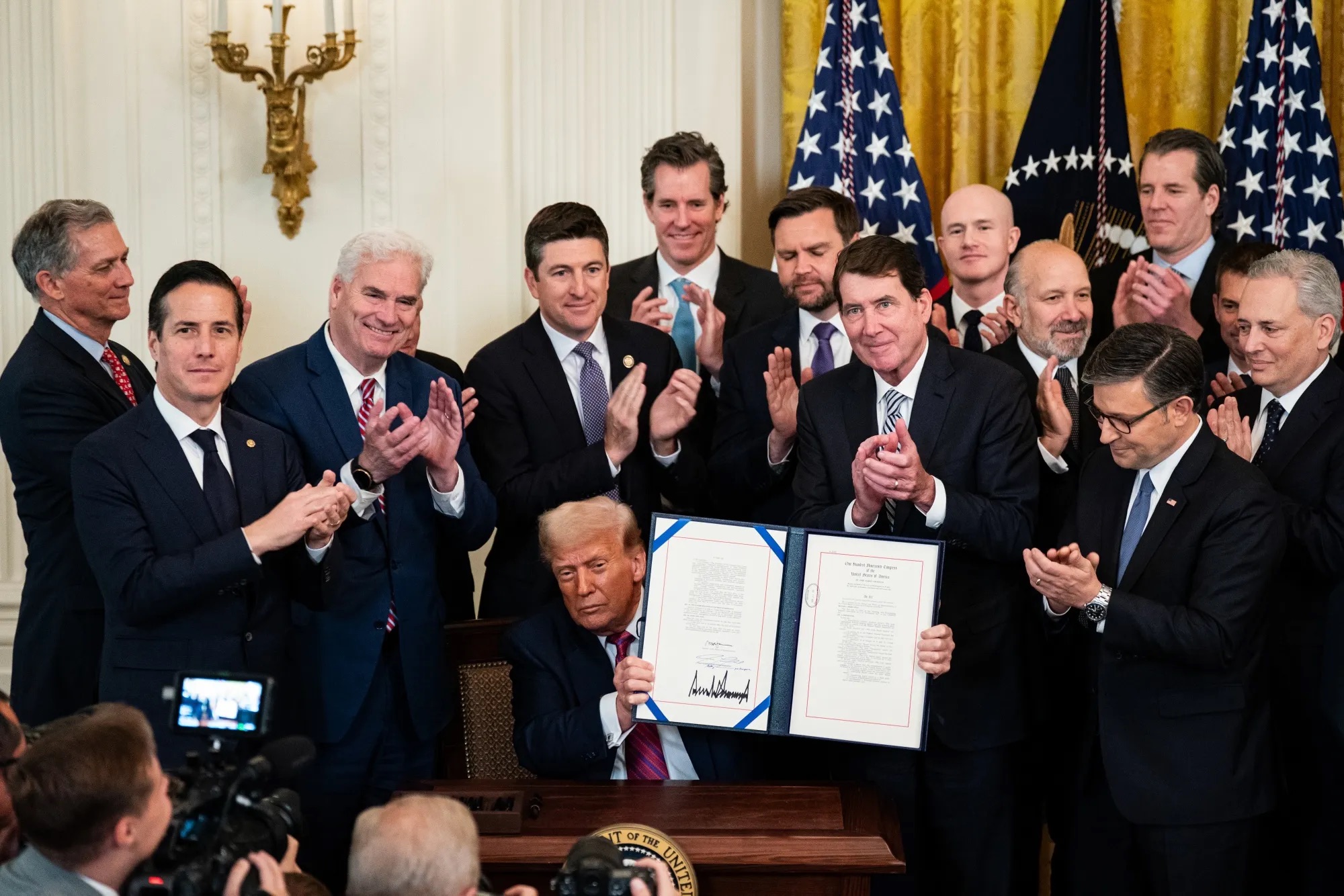
July 18, 2025: Trump signs the GENIUS Act at the White House. He called the bill a "major advance in solidifying America's dominance in global finance and crypto technology." Photo: Al Drago/Bloomberg
Before becoming Trump's Commerce Secretary, Howard Lutnick was the Chairman and CEO of the Wall Street investment bank Cantor Fitzgerald, which is entrusted with managing Tether's reserve assets. Congressional lobbying records, federal court filings, and a source familiar with the matter confirm: throughout 2024, Lutnick acted as Tether's crisis management lead, quelling various negative publicity and lobbying lawmakers to resist bills not endorsed by Tether.
After Trump took office, Bo Hines was responsible for the final stage of legislative maneuvering. The 29-year-old White House aide is a North Carolina-based entrepreneur and crypto investor who ran as a Republican in the 2022 and 2024 congressional elections but lost both. He called himself the "tough enforcer" for the White House on this bill. Three sources revealed that as negotiations neared conclusion, Hines conveyed externally that the provisions Tether sought to implement were non-negotiable "red lines" for the White House.
This report traces the complete legislative process, exposing previously undisclosed operations: first Howard Lutnick, then Bo Hines, brokered deals to secure favorable rules for Tether, which holds about 60% of the global stablecoin market share. The report also clearly shows how policy-making in this administration is deeply intertwined with the personal financial interests of officials. Both Hines and Lutnick received substantial benefits from Tether.
Starting in 2024 and continuing until shortly after the GENIUS Act's passage, over 18 months, Tether executives completed a series of business moves:
- April 2024: Granted a call option for company shares worth tens of billions of dollars to Howard Lutnick's financial institution for a transaction price of just $600 million. Tether's Chairman reportedly told partners the price was "ridiculously low."
- December 2024: Invested $775 million in the persistently loss-making Rumble Inc. This streaming media company collaborates with the company operating Trump's Truth Social platform, and several Trump allies are among its investors.
- August 2025: Hired Bo Hines as an executive, just one month after the bill was signed.
- October 2025: Provided a loan to a trust whose beneficiaries are Howard Lutnick's children, who were acquiring their father's multi-billion dollar business assets at the time.
Under the federal ethics agreement all cabinet officials must sign, Howard Lutnick had pledged to divest his Cantor Fitzgerald holdings and recuse himself from all matters involving conflicts of interest. A U.S. Department of Commerce spokesperson did not respond to the details of this article, stating only that Lutnick complied with ethics commitments, divested all assets including those related to Tether, and "was not involved in any work on the stablecoin-related provisions of the GENIUS Act."
Bo Hines did not respond to interview requests, and the White House also declined to comment.
Tether issued an official statement vehemently denying any improper conduct regarding its lobbying activities with policymakers on stablecoin legislation. The company stated it has long legally and transparently communicated with regulators, lawmakers, and law enforcement, a practice common among many market participants. Tether also emphasized that the GENIUS Act contains no special favors for Tether, and the new rules will uniformly apply to all stablecoin issuers wishing to operate under its framework.
The bill triggered intensive lobbying across the financial industry, with crypto exchanges, credit card companies, and community banks all participating. But Tether is undoubtedly the absolute industry leader; its closest competitor is only half its size, giving Tether the highest stakes during the 2025 bill negotiations.
Since the law took effect, El Salvador-registered Tether has continued to expand. The company launched a new compliant token for the U.S. market, but its core product remains the world's most widely circulated stablecoin. Multiple industry research firms and government data show: USDT has long been used by terrorists, North Korean hackers, and sanctioned entities from Iran and Russia. According to the GENIUS Act provisions, this core USDT token may permanently escape direct jurisdiction by U.S. regulators.
The final version of the GENIUS Act contained several provisions favoring Tether, significantly different from earlier stablecoin regulatory drafts by members of Congress. Stablecoins combine convenience and pseudonymity: blockchain wallet addresses are permanently public but cannot directly trace to a user's real identity.
Trump's Core Aides Influencing Crypto Legislation
As early as 2023-2024, bipartisan lawmakers drafted bills with stringent requirements: foreign stablecoin firms (like Tether) wishing to operate in the U.S. must accept U.S. regulatory oversight and implement a full set of anti-money laundering rules.
The GENIUS Act significantly relaxed these constraints. A clause criticized as the "regulatory equivalence loophole" states: as long as the U.S. Treasury Secretary determines that El Salvador's regulatory standards are roughly equivalent to those of the U.S., Tether's USDT can be supervised by El Salvador, a country Tether plans to move its headquarters to. Implementation rules for this equivalence determination are still being drafted.
Another adjustment narrows the liability boundary for stablecoin issuers, known in the industry as the "DeFi loophole": issuers are not required to track token misuse in secondary decentralized finance (DeFi) markets. Users can bypass banks and exchanges, trading peer-to-peer directly on the blockchain without verifying identity or stating the purpose of funds.
The bill also provides a three-year compliance grace period: stablecoin issuers entering the U.S. market are not forced to meet all compliance requirements for three years. During legislative negotiations, some Democratic lawmakers proposed shortening the grace period to 18 months. Sources said Tether insisted on keeping the three-year term, with Bo Hines stepping in at a critical moment to forcefully secure it.
During negotiations, Bo Hines conveyed to various parties that Tether was significant to the White House and Republicans should hold their ground. Three sources relayed that Hines explicitly stated that preserving the three-year transition period was a non-negotiable red line.
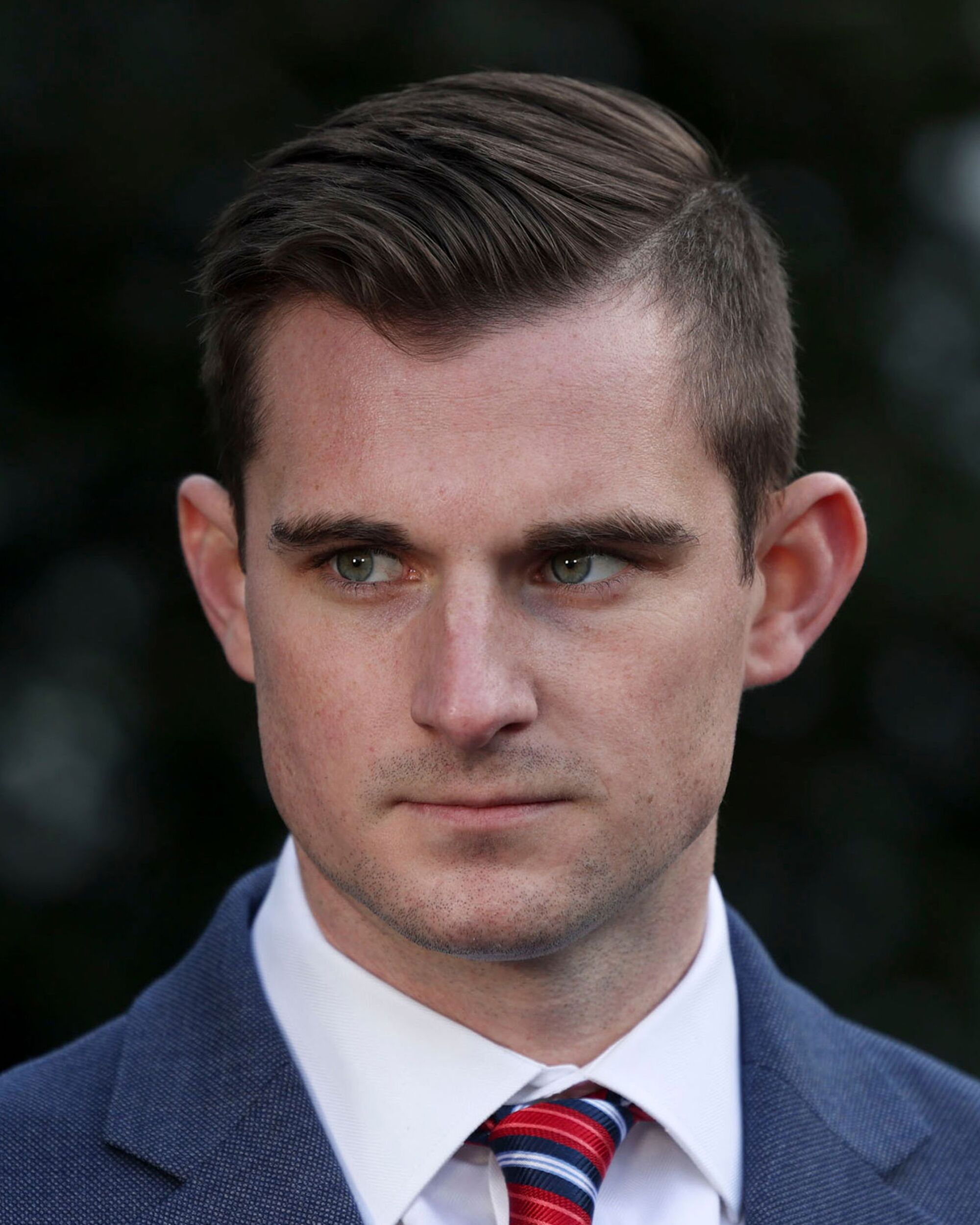
Bo Hines, appointed by Trump as Executive Director of the Presidential Digital Assets Advisory Council, led the charge to push the GENIUS Act through Congress. Photo: Tierney L. Cross/Bloomberg
Many financial experts warn that these clauses will weaken the U.S.'s ability to combat money laundering by criminals and sanctioned entities, while also hindering Trump's goal of establishing global leadership in digital currency.
Timothy Massad, former Assistant Secretary of the Treasury under the Obama administration, expressed concerns: regulatory loopholes could create unfair competition. U.S.-based crypto firms face high compliance costs, while foreign issuers could evade stringent anti-money laundering rules, potentially damaging the U.S. dollar's status as the global reserve currency. Timothy Massad also served as Chairman of the U.S. Commodity Futures Trading Commission from 2014–2017.
"If we want the dollar to remain the world's core reserve currency, we cannot allow terrorists, sanctioned individuals, and criminals to anonymously move dollar funds," Timothy Massad said.
Any currency carries the risk of illicit use. However, since launching USDT in 2014, Tether has faced persistent skepticism that its user due diligence is insufficient. Tether previously argued that being based overseas protected it from what it called U.S. "over-regulation." But its stance later shifted: In December 2023, Tether implemented rules to proactively freeze wallet addresses associated with individuals and entities on the U.S. Treasury Department's sanctions list.
Investigative bodies have continuously gathered evidence showing USDT being used for Mexican fentanyl smuggling and aiding Russian sanctions evasion. A January 2024 United Nations report noted that Southeast Asian crypto money laundering groups primarily use USDT. Two sources revealed that in 2024, the Biden administration's National Security Council even discussed completely banning Tether tokens from the U.S. market.
Ultimately, that plan was shelved, with law enforcement agencies reasoning that they could still track USDT-related illicit funds through on-chain transactions. In the long term, federal law enforcement also acknowledged that Tether's willingness to cooperate in freezing assets involved in cases had improved.
A Tether spokesperson responded to the interview: "The company has built one of the most effective law enforcement collaboration mechanisms in the global financial sector." The company stated its commitment to combating financial crime and that the GENIUS Act would further strengthen this work.
Nevertheless, throughout the bill negotiations and after its passage, USDT remains frequently used by illicit groups.
Data from blockchain analytics firm Elliptic shows: In 2025, the sanctioned Central Bank of Iran purchased $507 million worth of USDT. In July of the same year, the month Trump signed the bill, Elliptic detected nearly $2.5 billion in USDT flowing into wallets of several Russia-linked companies; the U.S. Treasury Department identified these companies as building cross-border channels to help parties evade sanctions.
This year alone, over $4 billion worth of USDT has circulated in black markets operated by Chinese fraud rings for crimes like pig butchering scams, impersonation fraud, and sextortion, also according to Elliptic.
Court records show: Since July 2025, federal prosecutors nationwide have filed dozens of lawsuits seeking seizure of USDT involved in cases, totaling at least $172 million.
Tether's circulating supply is more than double that of its top competitor, Circle Internet Group Inc., but it employs less than half the staff, outsourcing much of its suspicious transaction analysis to third parties. Tether declined to disclose the size of its compliance team but stated: "We continuously collaborate with over 340 law enforcement agencies across 67 jurisdictions globally to identify, freeze, and assist in recovering assets linked to illegal activities."
A company spokesperson said: "This is not just compliance on paper, but practical, quantifiable collaboration that most traditional financial institutions struggle to match."
Howard Lutnick's Lobbying Strategy
Cantor Fitzgerald has been entrusted with managing Tether's reserve assets since 2021, a time when the investment banker had already known Trump for decades. Trump had just finished his first presidential term and was preparing to return to the White House. Tether was highly profitable but its market reputation was controversial. In 2024, Howard Lutnick campaigned for both Trump's election and Tether.
Independent audits are crucial for investors to trust that tokens are fully backed by reserves, but Tether has never released a complete, independent reserve audit report. In 2021, Tether and its affiliated exchange paid $61 million to settle charges brought by federal regulators and New York state, who alleged Tether misrepresented its reserves and misled investors; Tether did not admit wrongdoing in the settlement. Under the GENIUS Act, stablecoin issuers must provide annual audit reports; Tether announced this year it hired an auditor but hasn't disclosed a timeline for releasing a full audit report.
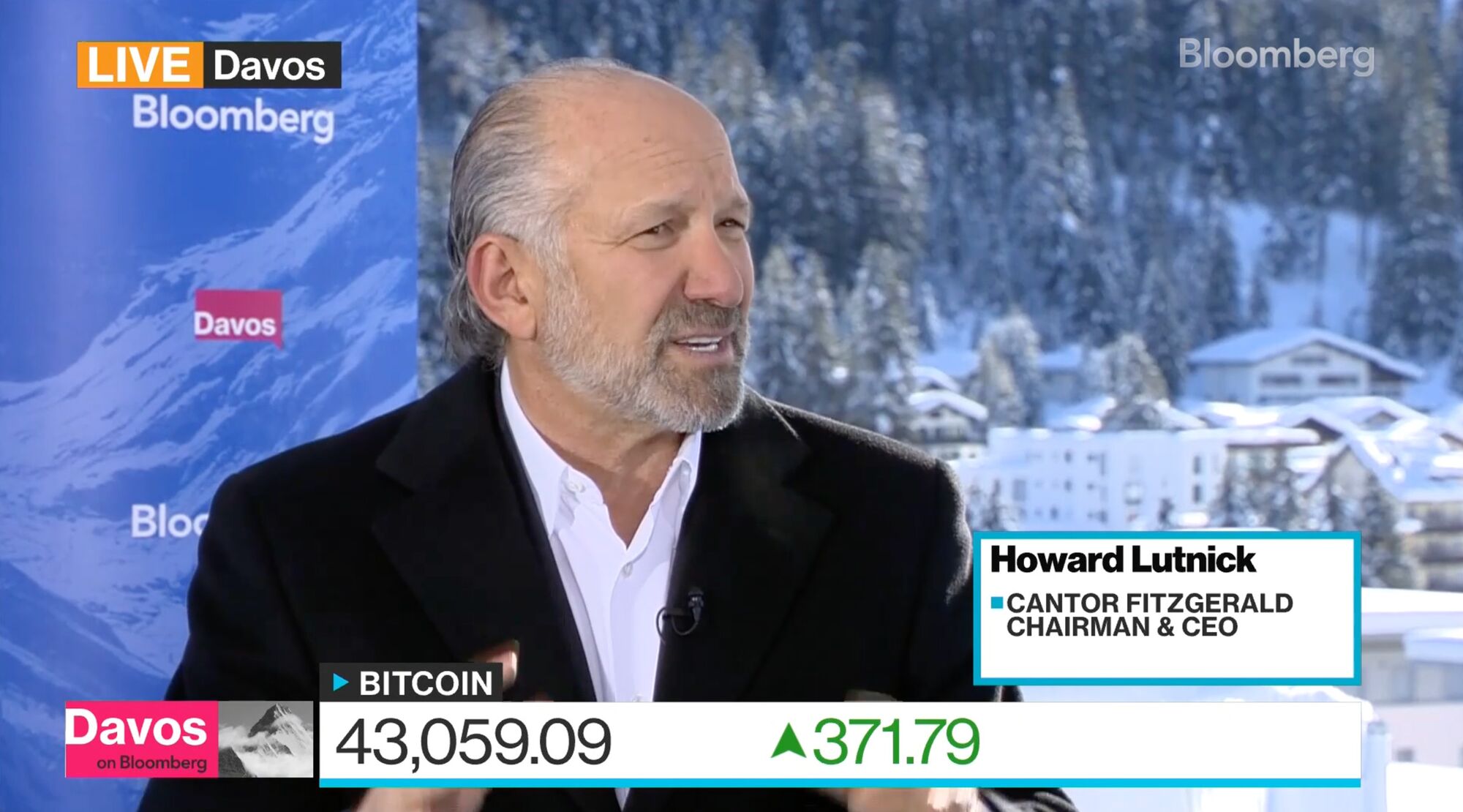
Howard Lutnick (then Chairman and CEO of Cantor Fitzgerald) attends the World Economic Forum in Davos, Switzerland, January 2024. Source: Bloomberg
When market skepticism about Tether's reserves persisted, Howard Lutnick publicly stepped up to defend it. In January 2024, he went to the Davos forum and stated on a Bloomberg TV broadcast: "They have the reserves they say they have."
The following month, Howard Lutnick visited El Salvador, meeting with Tether Chairman Giancarlo Devasini and the country's president, Nayib Bukele, a strong supporter of the crypto industry who calls himself the "world's coolest dictator." Tether later announced plans to move its headquarters to the capital, San Salvador.
In April 2024, Cantor Fitzgerald invested $600 million in convertible bonds, obtaining a call option for a 5% equity stake in Tether. This transaction wasn't publicly disclosed until November of that year, after Trump won the election. Based on Tether's own financial reports, the deal was heavily discounted: Tether's net profit in 2024 was approximately $13 billion. Using valuation logic from listed financial institutions, the company's valuation would be at least $130 billion. By this estimate, the paper value of the equity corresponding to Cantor's investment exceeded $6 billion.
Bitcoin entrepreneur Cory Klippsten, who met with Tether executives and Howard Lutnick in 2024, relayed that Tether Chairman Giancarlo Devasini described the deal as "ridiculously cheap."
Cory Klippsten had a business collaboration with Tether that later fell apart, leading to litigation. Klippsten alleges in court filings that Tether executives poached employees, stole program code and trade secrets, and tore up cooperation agreements; Tether countersued, alleging Klippsten improperly used Tether's investment as collateral for other trades. During the lawsuit, Klippsten sought to subpoena Howard Lutnick and obtain documents regarding Cantor Fitzgerald's dealings with Tether. Lutnick's lawyers argued in court that the Commerce Secretary was unrelated to the dispute and the subpoena was merely to "harass and embarrass Lutnick."
In March court filings, Cory Klippsten stated he kept complete records of his conversations with Giancarlo Devasini, including the excerpt "the price is ridiculously cheap." The filing argued that Cantor's convertible bond was essentially hidden compensation for Lutnick acting as Tether's representative in Washington and media circles.
The Aborted Early Regulatory Bills
Members of Congress have long been wary of Tether. In late 2023, Wyoming Republican Senator Cynthia Lummis co-signed a public letter urging the Department of Justice to investigate whether Tether provided substantial financial support to terrorist organizations like Hamas during the October 2023 attack on Israel. In April 2024, Cynthia Lummis, along with New York Democratic Senator Kirsten Gillibrand, introduced a bill requiring all stablecoin issuers operating in the U.S. to comply with U.S. anti-money laundering rules and disclosure obligations.
Cynthia Lummis stated clearly at the time: If Tether wants to enter the U.S. market, it must follow U.S. regulations. After the bill's introduction, she told CoinDesk: "If Tether chooses to remain overseas and is willing to accept other regulatory oversight, that's a business decision. But if it wants U.S. market recognition, we want it to complete U.S. compliance."
In July of the same year, at the Nashville Bitcoin Conference, Howard Lutnick again publicly defended Tether. Trump also delivered a keynote speech at the event. Lutnick said emotionally: "We would never work with any company involved in jihadist terrorism. I am disgusted by it." He reminded the audience that in the 2001 World Trade Center attack, over 650 Cantor Fitzgerald employees were killed, including his brother.
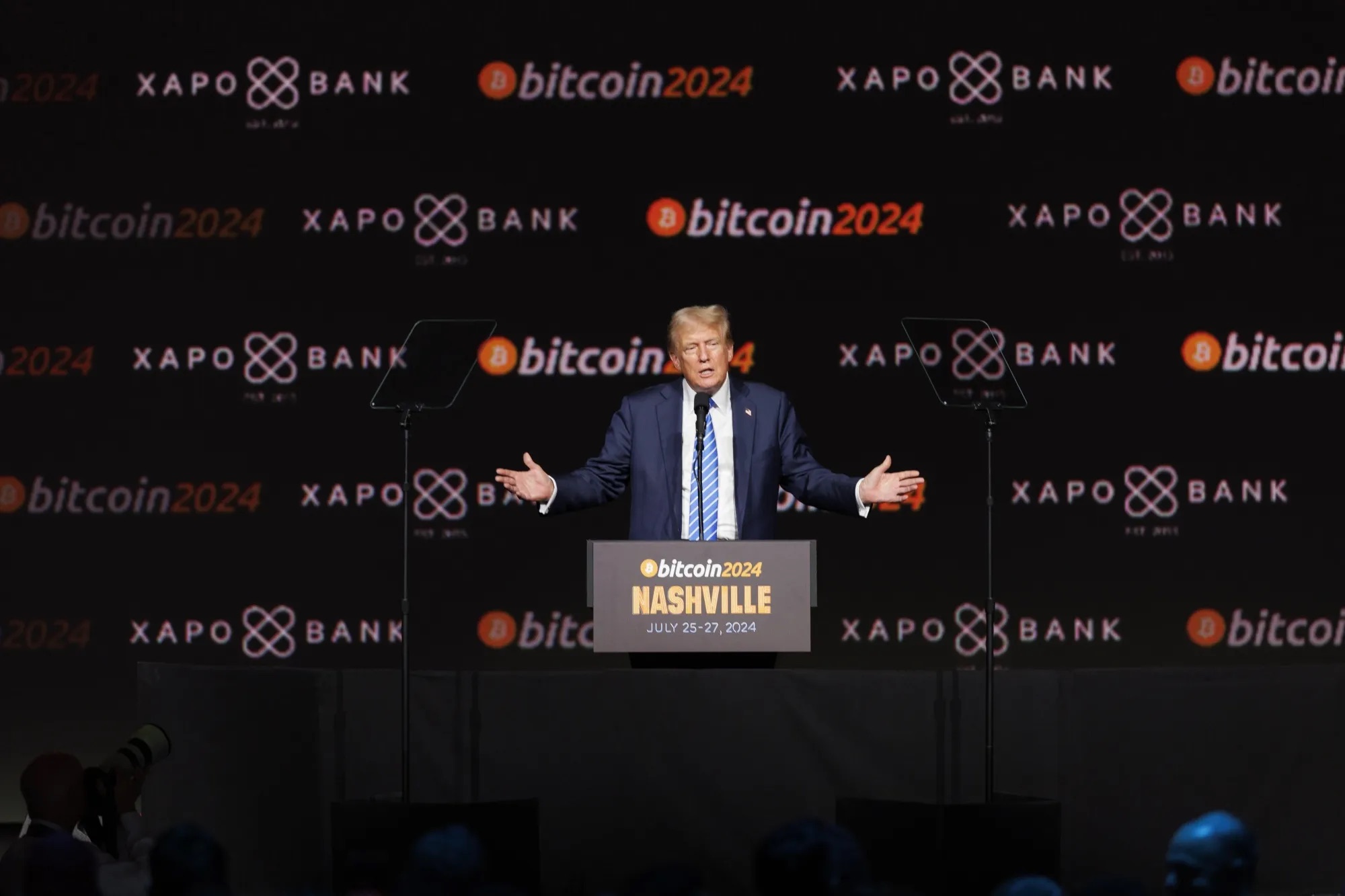
July 2024: Trump speaks at the Bitcoin Conference in Nashville, Tennessee. Photo: Brett Carlsen/Bloomberg
After this speech, Trump, who had shifted from a crypto skeptic to a supporter, invited Howard Lutnick onto his campaign plane, appointing him co-chair of the presidential transition committee. The group flew to Minnesota, where Lutnick gave a warm-up speech, followed by Ohio Senator JD Vance (a known crypto supporter).
According to Cory Klippsten's notes, Trump's rising poll numbers significantly boosted Tether executives' confidence. "They saw a new opportunity to fly to New York, go on CNBC. That's the platform Trump could bring."
In 2024, Howard Lutnick went to Washington. Lobbyists hired by Cantor Fitzgerald communicated with members of the House and Senate regarding multiple pending stablecoin bills. Sources said Lutnick met with then-House Financial Services Committee Chairman Patrick McHenry to discuss how new laws would affect foreign companies like Tether. Patrick McHenry did not respond to interview requests. In September of the same year, Lutnick met with Cynthia Lummis; a spokesperson for the senator said the meeting mainly discussed presidential transition team preparations, only briefly touching on her concerns about Tether's involvement in financial crime.
The spokesperson emphasized: "No one persuaded Cynthia Lummis to abandon pushing her own bill. Secretary Lutnick and his team never pressured her in any way to modify the provisions."
Court filings cite Cory Klippsten's records, quoting Tether Chairman Giancarlo Devasini: "Howard told me he has blocked all bills related to stablecoins and cryptocurrencies. There's still time before Congress adjourns, and Howard believes no policies unfavorable to us will be passed."
Those bills ultimately all stalled. The following year, both Cynthia Lummis and Kirsten Gillibrand voted in favor of the new GENIUS Act, including the provision allowing foreign entities to be supervised under equivalent regulation. Kirsten Gillibrand's spokesperson declined to comment on the vote; Cynthia Lummis's spokesperson stated that lawmakers often vote for bills that don't perfectly align with their ideal proposals. This year, Cynthia Lummis is leading efforts in the Senate to draft legislation creating a regulatory framework for crypto assets beyond stablecoins.
After Trump's victory in November 2024, Cantor Fitzgerald facilitated a new round of Tether investment, further linking Tether to Trump's business circles. Around Christmas, Tether invested $775 million in Rumble Inc. This conservative video streaming platform provides cloud services and advertising support for Trump's Truth Social.
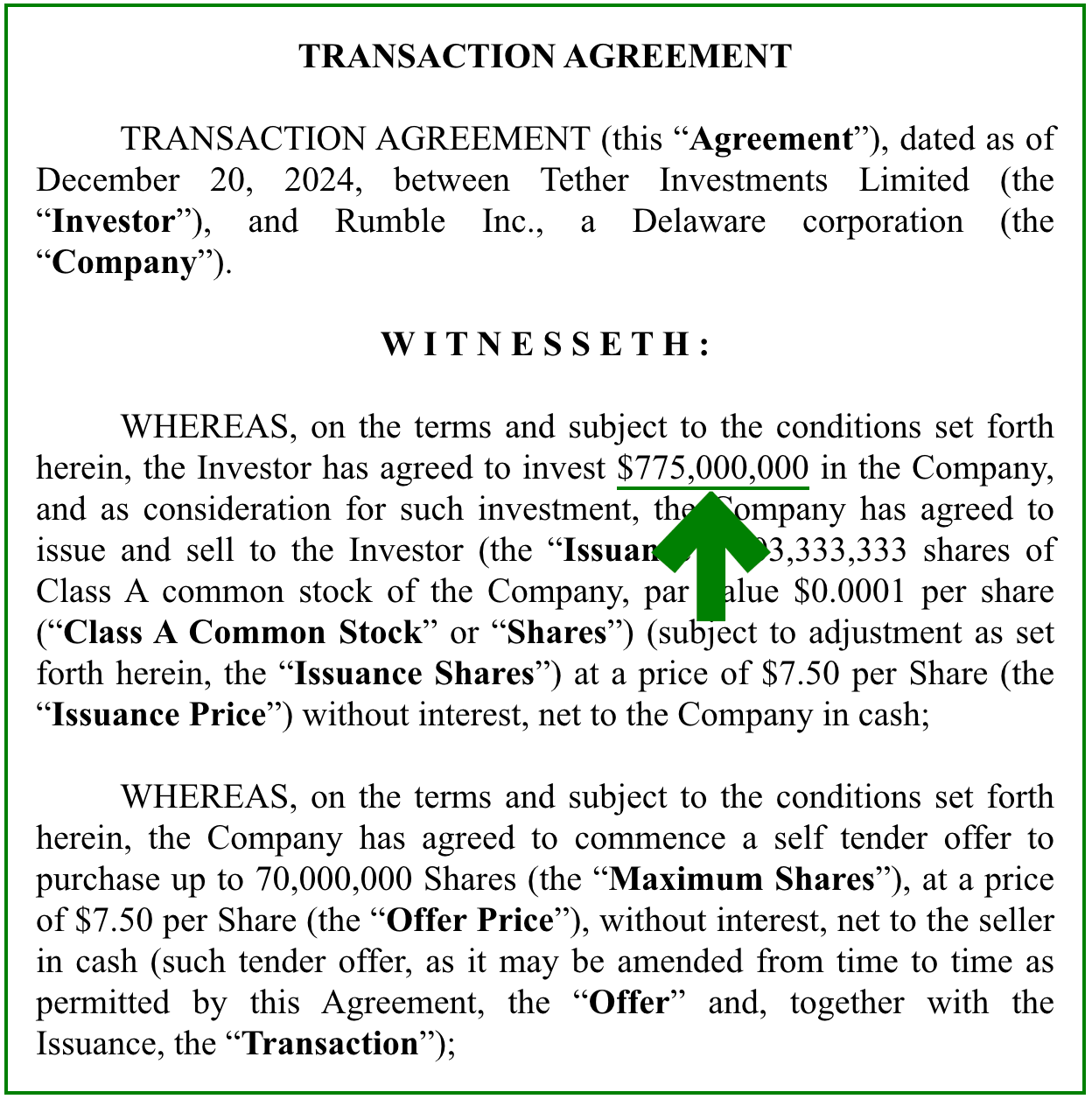
Excerpt from the December 20, 2024 transaction agreement
Investor Tether Investment Limited and Delaware-incorporated Rumble Inc. sign an agreement: The investor contributes $775 million, and the company issues 103,333,333 Class A common shares at $7.50 per share. The company also initiates a voluntary tender offer to repurchase up to 70 million shares at the same price of $7.50 per share. Source: U.S. Securities and Exchange Commission filing, December 2024.
The timing of this investment was noteworthy: that year, Rumble accumulated losses of $338 million. The platform, which positions itself as a free-speech alternative to mainstream video sites, has investors including several Trump allies who later joined Trump's second administration, including Vice President JD Vance, former FBI Deputy Director Dan Bongino, and former White House Special Advisor on AI and Crypto David Sacks.
After Tether's investment was announced, Rumble's stock price surged in the short term, closing at $16.27 on December 26, a 126% increase from the announcement day. Rumble is now renamed RUM Group. Of the funds Tether invested, $525 million (about 68%) was used to repurchase shares from core management. Tether has continued to increase its holdings, with its current stake valued at approximately $875 million.
Tether CEO Paolo Ardoino stated at the time: "Tether's investment in Rumble stems from a shared belief in decentralization, transparent operations, and the fundamental right to free speech." The company said about $250 million would be used for business expansion, including building a crypto payments platform.
During the formation of Trump's second administration, the White House assigned the task of advancing stablecoin legislation to a former college football player. His first encounter with cryptocurrency came from participating in the 2014 "Bitcoin St. Petersburg Bowl" football game.
"Hey, Bo!"
Entering Washington politics, Bo Hines's resume couldn't match the crypto giants and seasoned congressional staffers he dealt with daily. But the 6-foot-1, 205-pound young man possessed qualities valued by the Trump White House: photogenic, a firm MAGA supporter, and with a public record of not acknowledging the 2020 presidential election results. Additionally, in the fall of 2024, a company he co-owned with his father spent $1 million on billboards to fund a political action committee supporting Trump's campaign.
Appointed by the president, Bo Hines headed the newly established Presidential Digital Assets Advisory Council, responsible for several tasks: studying the creation of a federal crypto asset reserve, drafting regulatory guidance for the crypto industry, with the core mission of getting the GENIUS Act passed.
In early February 2025, the bill text circulated within Washington. In late February, crypto executives and lawmakers gathered at the Willard Hotel to discuss the bill. Two attendees confirmed that Tether CEO Paolo Ardoino unexpectedly appeared. Ardoino told those present that the company was seriously implementing anti-money laundering work.
In March, Paolo Ardoino posted photos on social media visiting Congress and the White House. He told The New York Times that after Howard Lutnick officially became Commerce Secretary in February, he deliberately avoided meeting him to avoid potential conflicts of interest.
That same month, Tether hired Washington lobbyist Jeff Miller. This person had been representing Cantor Fitzgerald on stablecoin-related matters since 2024. Jeff Miller served as a core member of Trump's inauguration committees for both terms. His consulting firm saw rapid business growth during Trump's first term. In 2025, Miller Strategies received a total of $570,000 in fees, with $480,000 from Cantor and $90,000 from Tether. Paolo Ardoino said in a Bloomberg TV interview: "It's crucial for the industry's voice to be fully heard."
Meanwhile, Bo Hines steadily advanced the work. Sources said he believed lawmakers had no right to go against the president's will and pressured all sides to reach consensus quickly. He also argued that the risks of digital tokens being used illegally were overstated. In an April interview with Bitcoin Magazine, Bo Hines said: "It's not wise for bad actors to use digital assets for crime. In most scenarios, transaction records are publicly traceable."
The earliest version of the GENIUS Act drew strong opposition from Tether's competitors and Democratic lawmakers, as it was significantly less restrictive compared to the 2024 drafts.
In May, a group of Democratic lawmakers (including crypto policy moderates) united in opposition, temporarily halting the bill's progress. Two sources revealed that New York Senator Chuck Schumer, in a closed-door Democratic meeting, urged colleagues to review intelligence on Tether's operations compiled by Biden's national security agencies to ensure the GENIUS Act had sufficient safeguards to prevent U.S. adversaries from using crypto channels for money laundering.
That same month, Massachusetts Senator Elizabeth Warren urged her Democratic colleagues to reject the latest version of the bill. She believed the provisions deliberately relaxed regulations to specifically benefit Tether.
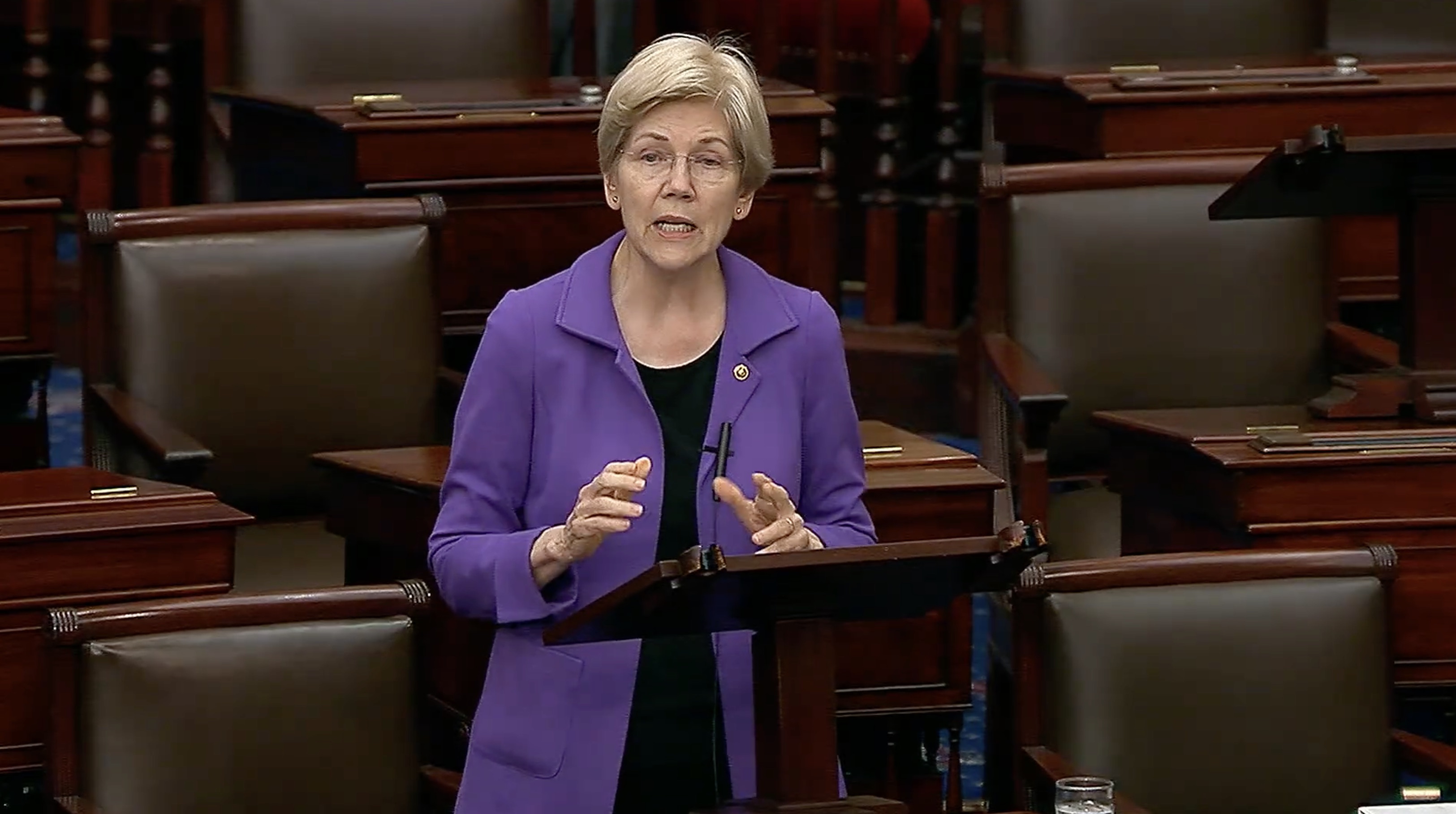
Senator Elizabeth Warren questions provisions of the GENIUS Act. Source: Elizabeth Warren YouTube Official Account
Sources said Bo Hines ignored such concerns, frequently citing Trump's desire for the bill to pass quickly. Republican congressional leadership continued to advance the legislative agenda.
The final bargaining point focused on the length of the compliance transition period. In private negotiations, Bo Hines insisted Republicans could not give up the three-year grace period, rejecting the Democratic proposal to shorten it to 18 months. In multiple internal meetings, he clearly told parties this was Tether's demand.
Ultimately, Bo Hines prevailed. At the July bill signing ceremony, the bill's main supporters gathered at the White House.
Trump stood on stage, scanned the crowd, and asked: "Where's Bo Hines? Hey, Bo! Bo was a hell of a football player, right? Top college football player in the country. That's how I met him, through football." (Bo Hines was a wide receiver at North Carolina State University before transferring to Yale; a shoulder injury ended his football career.)
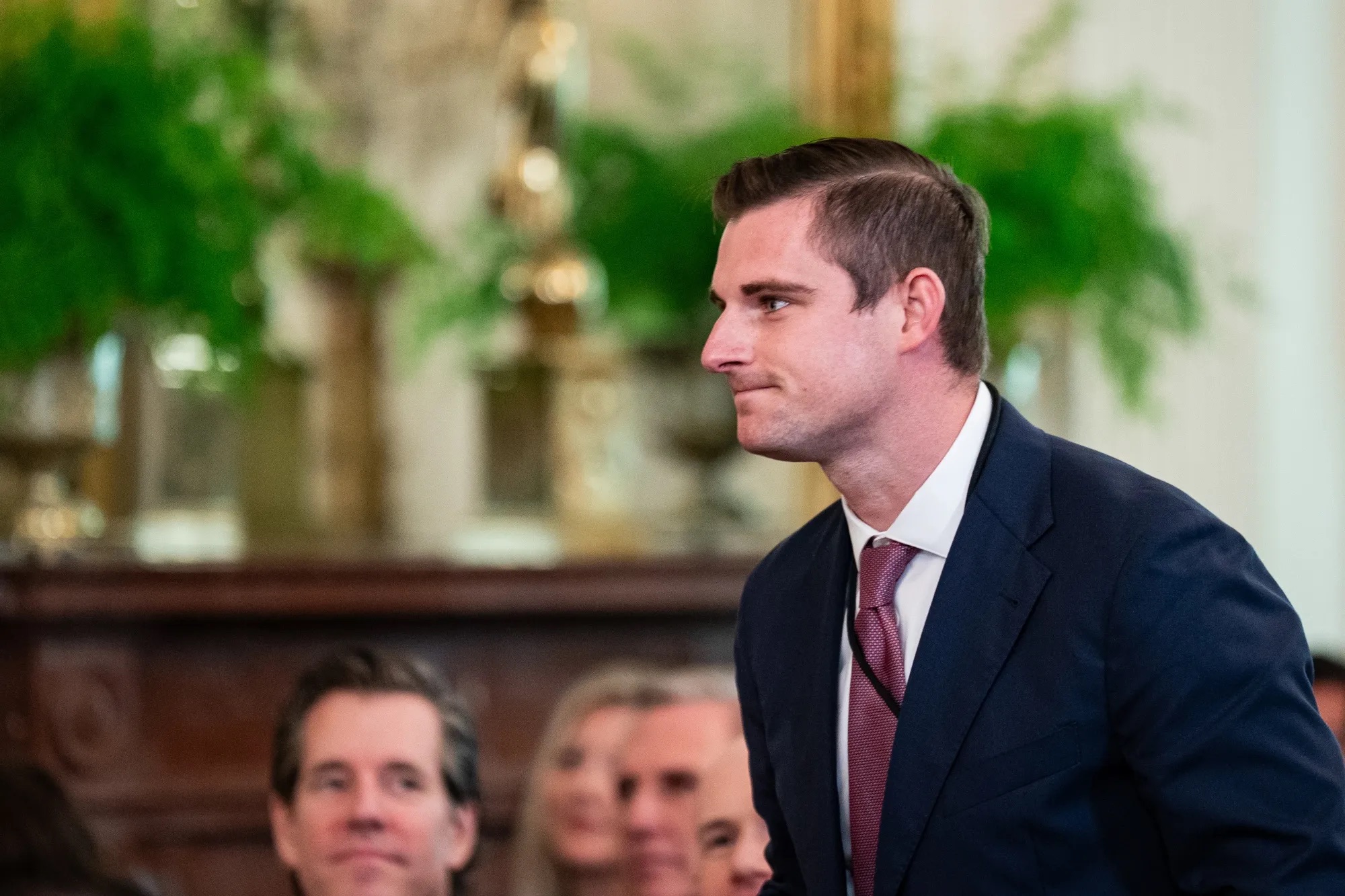
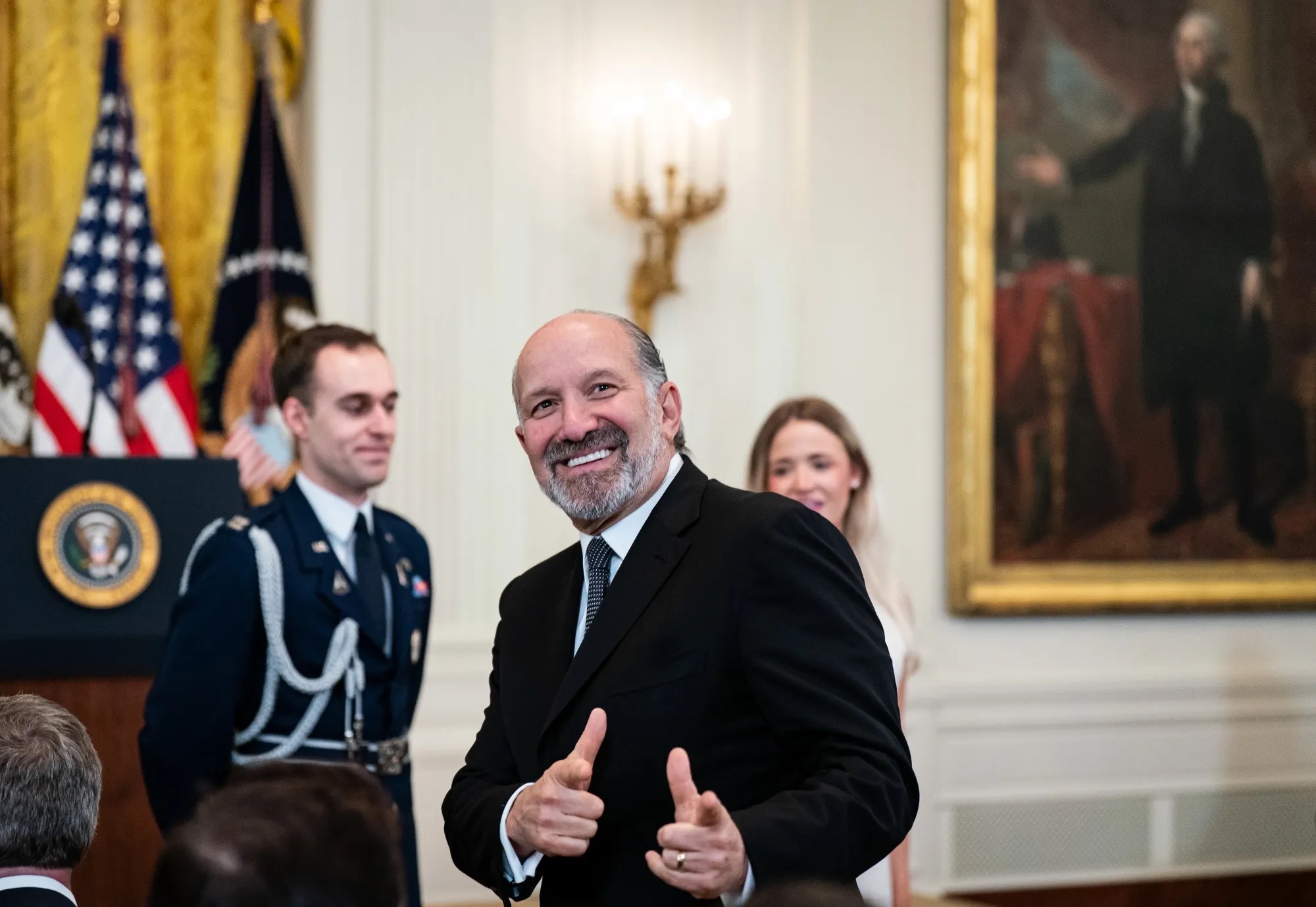
Hines and Lutnick attend the GENIUS Act signing ceremony.
Bo Hines stood up to accept applause and then sat down. Seated directly in front of him was Tether CEO Paolo Ardoino. Just one month later, Tether announced hiring Bo Hines as an advisor; soon after, Bo Hines was promoted to CEO of Tether's new U.S. compliant token, USAT. This new token has limited circulation, totaling about $186 million. Bo Hines spoke at a crypto industry conference last year, stating that both USAT and USDT would comply with GENIUS Act regulatory standards.
In the front row at the signing ceremony, between Bo Hines and Vice President JD Vance, sat Howard Lutnick. Trump gestured for him to stand and receive applause, praising his work on tariff negotiations: "Howard, you've done a fantastic job."
Three months later, Howard Lutnick completed a transaction selling Cantor Fitzgerald to a beneficiary trust set up for his children. The day after the deal closed, a filing in New York showed Tether provided an undisclosed loan to one of the trusts.
Howard Lutnick declined to disclose the transaction amount for his children's acquisition of the assets and did not state whether the Tether loan was used to pay for the purchase. That same year, Tether contacted investors about a funding round based on a $500 billion valuation. If this valuation materializes, the paper value of Cantor Fitzgerald's potential 5% equity stake would reach $25 billion.