1inch, the leading DeFi ecosystem, has announced the full-scale public launch of Aqua – a non-custodial shared liquidity layer that allows liquidity providers to use the same wallet balance across multiple positions without locking assets in pools. This is stated in a press release by Incrypted.
Following a developers-only launch in November 2025, Aqua offers one of the first alternatives to the traditional DeFi pooled model with risk control. The solution allows for more efficient capital utilization when providing liquidity.
As explained by the project team, 1inch Aqua functions like a registry: a user connects their wallet, approves a token balance, and creates liquidity positions that can reference this balance.
The Aqua protocol tracks the balance. When it receives a swap order matching a position's criteria, the protocol takes the requested tokens from the wallet and returns the received tokens and fees as part of a single atomic transaction. In all other cases, the user's tokens remain in their wallet and under their full control.
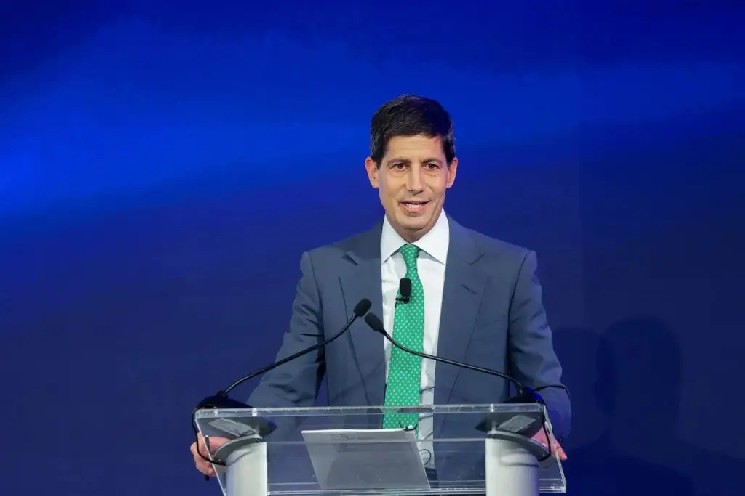
"The liquidity provision space is broken, but the scale of the problem only becomes visible when an alternative emerges. Today, that alternative is here. With Aqua, liquidity providers no longer have to put up with the inefficient pool structure they've worked with for years," said Sergej Kunz, Co-Founder of 1inch.
He added that the DeFi space doesn't just need additional liquidity volume, but more useful capital, active where there is demand.
"We built Aqua so providers could have that reach without giving up self-custody: your tokens stay in the wallet until the moment of swap execution," Kunz noted.
Alongside the product launch, the 1inch Network Incentives program – a liquidity reward program for Aqua – is kicking off. It is led by Degensoft Ltd (BVI) and implemented via Merkl.
The 1inch Foundation has allocated 10 million $1INCH as rewards for liquidity providers, and the 1inch DAO has added another 500,000 $USDC.
The initiative aims to accelerate liquidity growth and swap activity in supported pairs. As a result, liquidity providers not only get Aqua's improved user experience but also the opportunity to earn additional rewards. The program's terms, markets, and guardrails are detailed in the published campaign configuration.
According to 1inch, the current pooled system is one of the key limitations for scaling DeFi and attracting capital from traditional finance on-chain.
For liquidity providers, the existing deposit-to-pools model means relinquishing control over assets, while active capital is spread too thinly across protocols, pairs, and price ranges.
The scale of the problem is evident in an on-chain Dune research study commissioned by 1inch: in the first half of 2026, 85% of concentrated liquidity on major DEXs was used inefficiently. This is about $1.6 billion out of the $1.84 billion tracked. This figure includes approximately $542 million that were on average completely out of range weekly. This led to roughly $150 million in unearned fees annually.
Through Aqua, 1inch demonstrates a more efficient shared liquidity model that allows the same wallet balance to support multiple positions simultaneously. Unlike the traditional model where liquidity must be split across multiple pools and positions, Aqua allows a single balance to support multiple quotes at once.
For example, a $100,000 balance can support three positions that collectively quote $300,000 worth of liquidity, with the potential to quote an even larger volume. The underlying tokens remain available to each position at all times. Nothing is borrowed, and any swap can only execute against assets that are actually present in the wallet.
A position in Aqua can be full-range, concentrated, or pegged depending on the selected pair and position type. Users can open and close positions independently without locking assets.
Their exposure is limited to the tokens they actually hold, not the theoretical aggregate size of all created positions. If there are insufficient funds in the wallet to cover a swap, Aqua simply does not access the user's tokens.
Starting today, users can create positions across 13 EVM-compatible networks, including Ethereum, Arbitrum, Base, Robinhood Chain, and BNB Chain.
Aqua also launches with a range of additional features, including a liquidity leaderboard, an incentives dashboard, liquidity map visualizations, batch position creation, provider profiles with cross-chain positions, sub-wallets, and an AI assistant for liquidity provisioning via the 1inch Business MCP with secure batch deployment coming soon.
Aqua has undergone eight independent security audits conducted by OpenZeppelin, Bailsec, Hashlock, Hexens, MixBytes, Nethermind, Theori, and Decurity. Combined with its fully non-custodial architecture where Aqua never stores user tokens, this means a swap can only move assets that are actually in the provider's wallet at the moment of execution. Revoking approval stops new executions immediately after the transaction is confirmed on the blockchain.
Aqua is also architecturally protected against JIT fee sniping, as each position has a single owner. Therefore, there is no common fee accrual moment that bots could target. While Aqua's architecture limits exposure and leaves providers in control of their own tokens, swap fees are not guaranteed, prices can move against a position (impermanent loss), and providers bear market risks and smart contract risks.