OpenAI has another big move!
Sam Altman just demonstrated the internal model Astra, which made major breakthroughs on 10 mathematical problems at once!
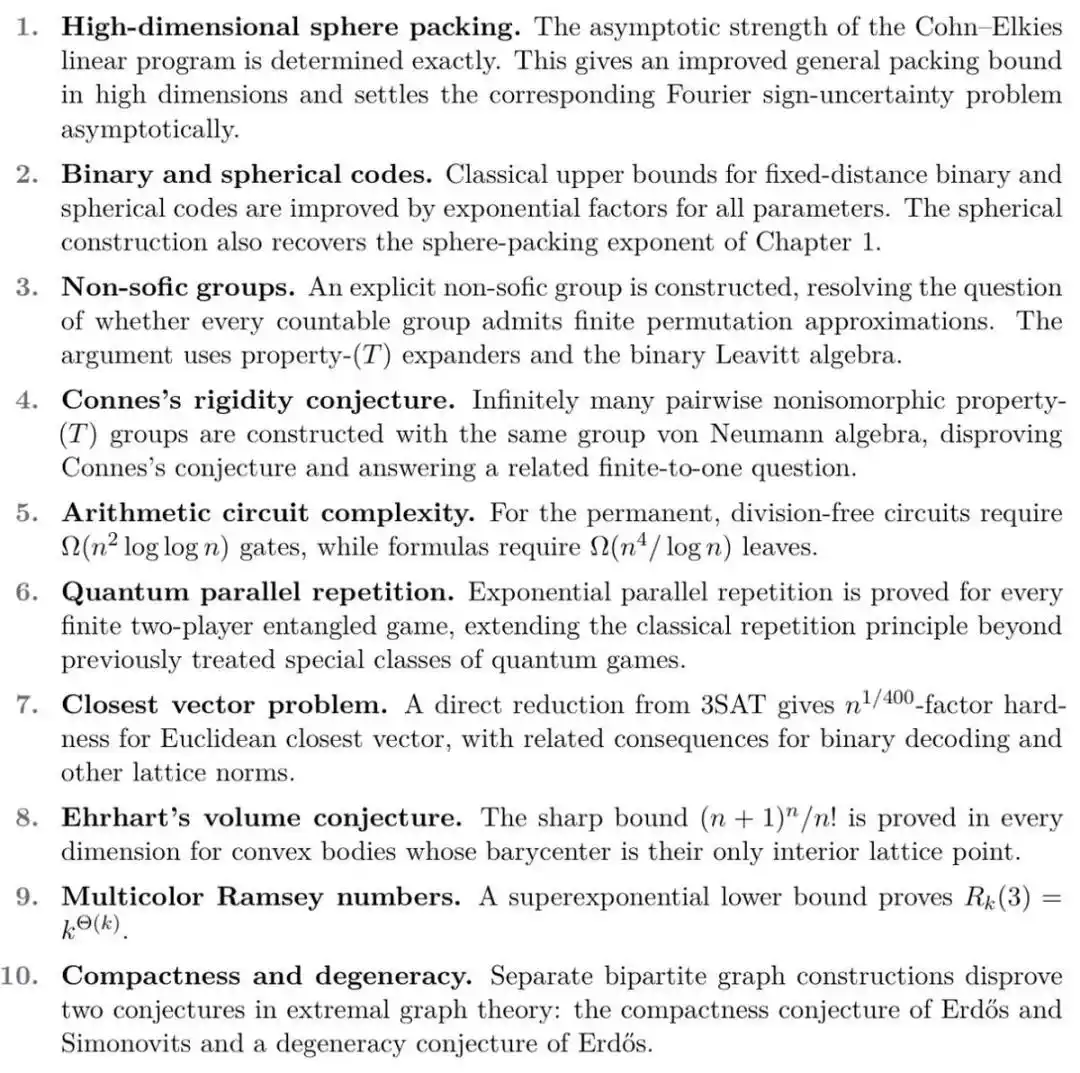
This 249-page PDF is absolutely explosive across the entire mathematics community.
Paper: https://cdn.openai.com/pdf/ten-proofs-oai.pdf
Proof: https://openai.com/index/ten-advances-in-mathematics/
Open-source Lean proof on Github: https://github.com/openai/ten-proofs
Mathematician, Fellow of the American Mathematical Society, and Distinguished Professor at Rutgers University Alex Kontorovich could not hide his shock, leaving only two exclamation marks.
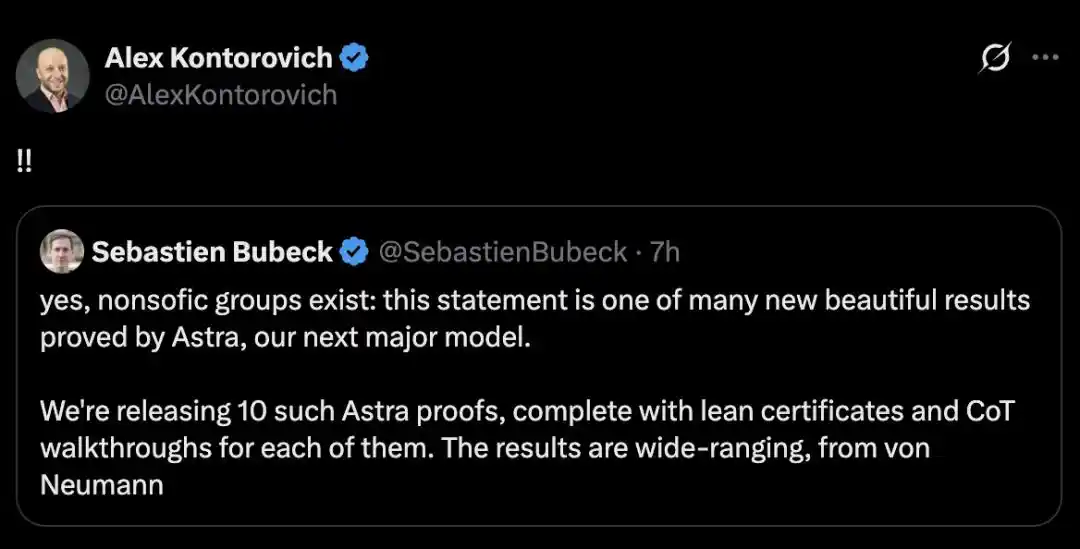
This is a watershed moment destined for the history books: both in the field of mathematics and on the journey to AGI.
To put it bluntly: if these results withstand the scrutiny of the entire academic community, then today's release alone could be considered the single-day leap of greatest span in the history of related fields!
Claude Fable 5 stated outright: "By Fields Medal standards, any one of these would be award-worthy"!
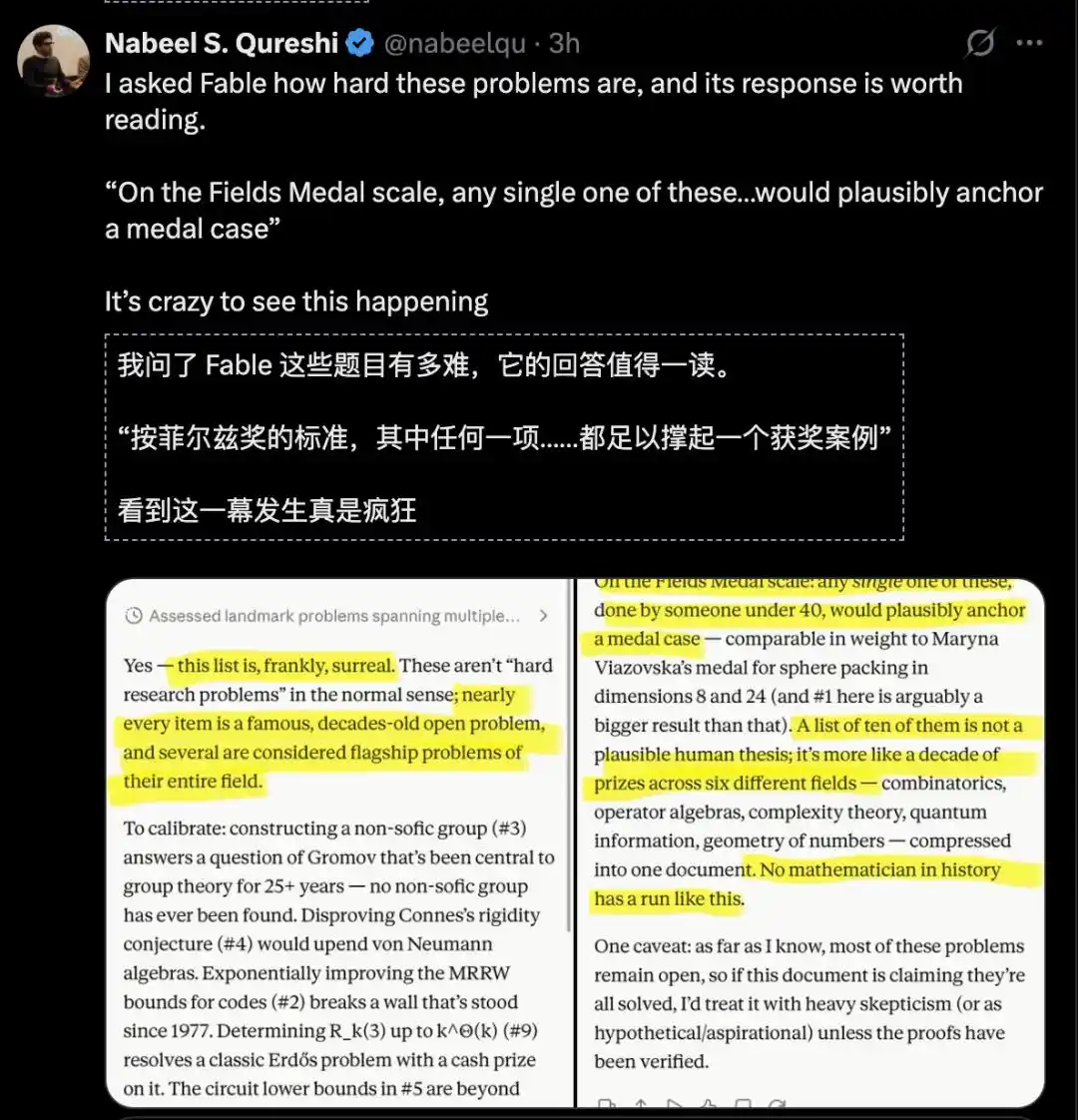
Most astonishingly, OpenAI spent only $2000 to crack these ten major problems.
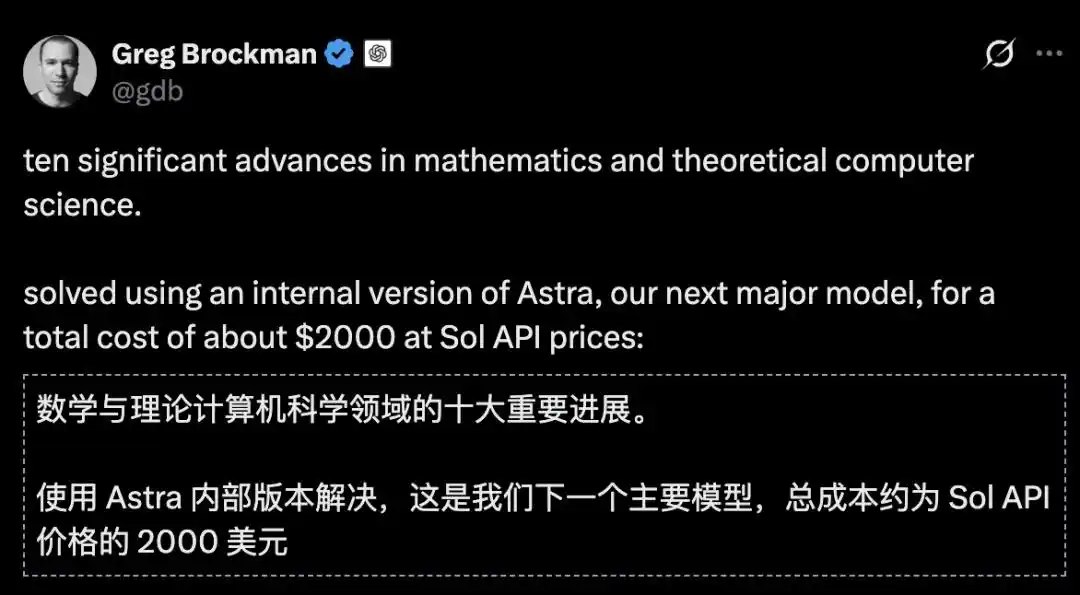
Earthquake in Mathematics! A Moment for the AI History Books
In May, OpenAI announced an AI-discovered counterexample to the Erdős unit distance conjecture.
But it is now confirmed that it was OpenAI's next-generation model Astra that cracked it—the same model Altman is currently demonstrating to the U.S. Congress.
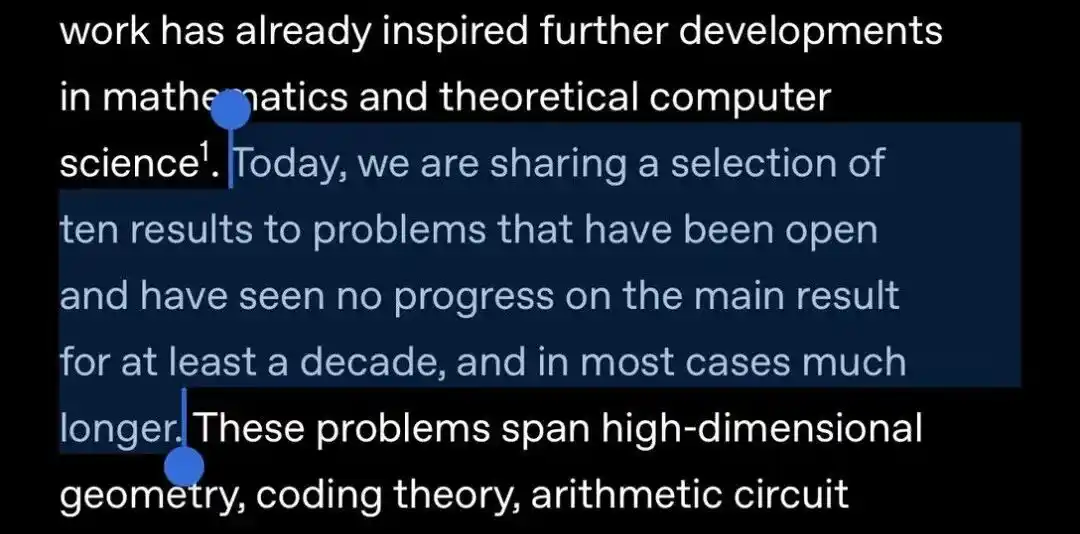
Now, OpenAI has shared Astra's latest achievements on problems that have seen no progress for at least a decade.
These problems span a wide range of fields including high-dimensional geometry, coding theory, arithmetic circuit complexity, group theory, operator algebras, quantum complexity, lattice cryptography, and extremal combinatorics.
As soon as the news broke, the math world exploded!
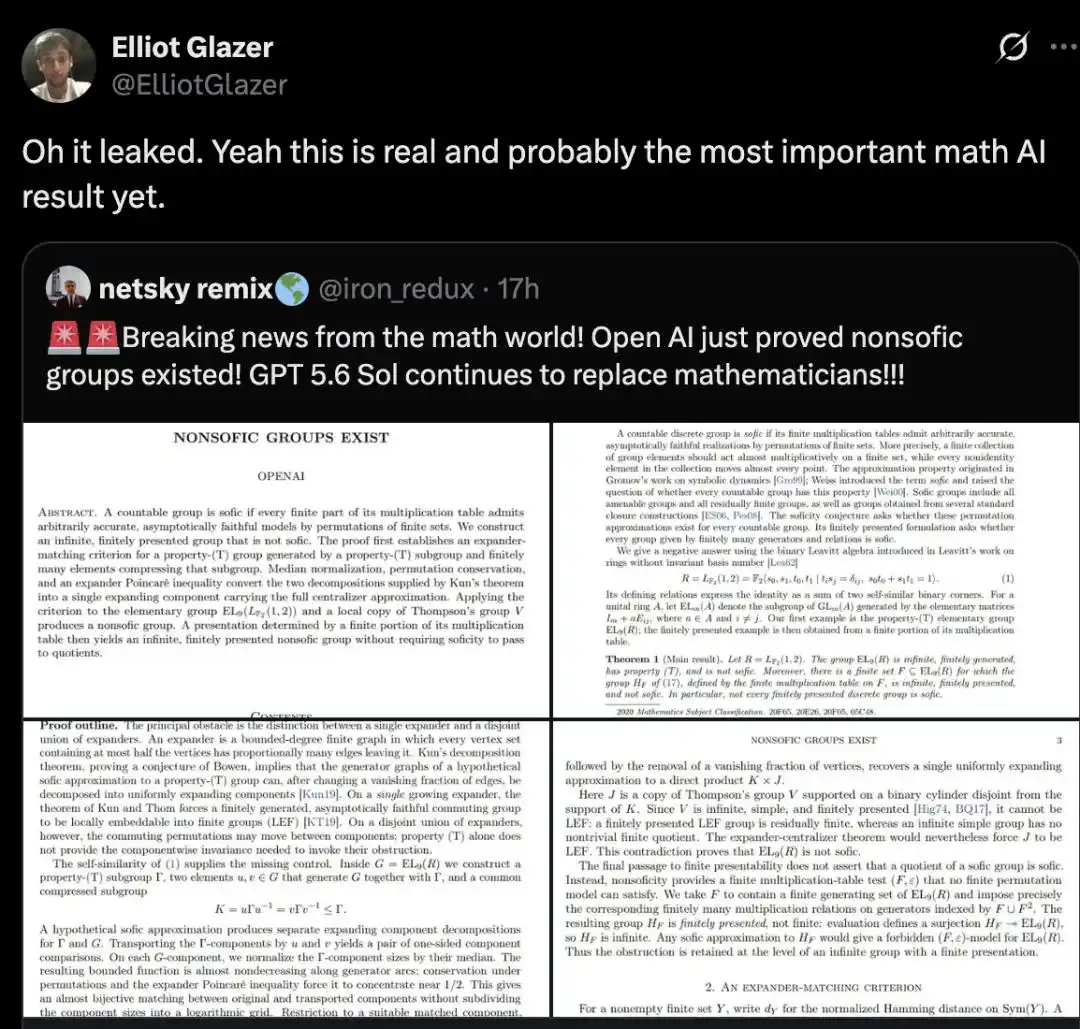
Among them, perhaps the most outstanding result is that Astra has put an end to the non-sofic group problem proposed by Gromov since 1999.
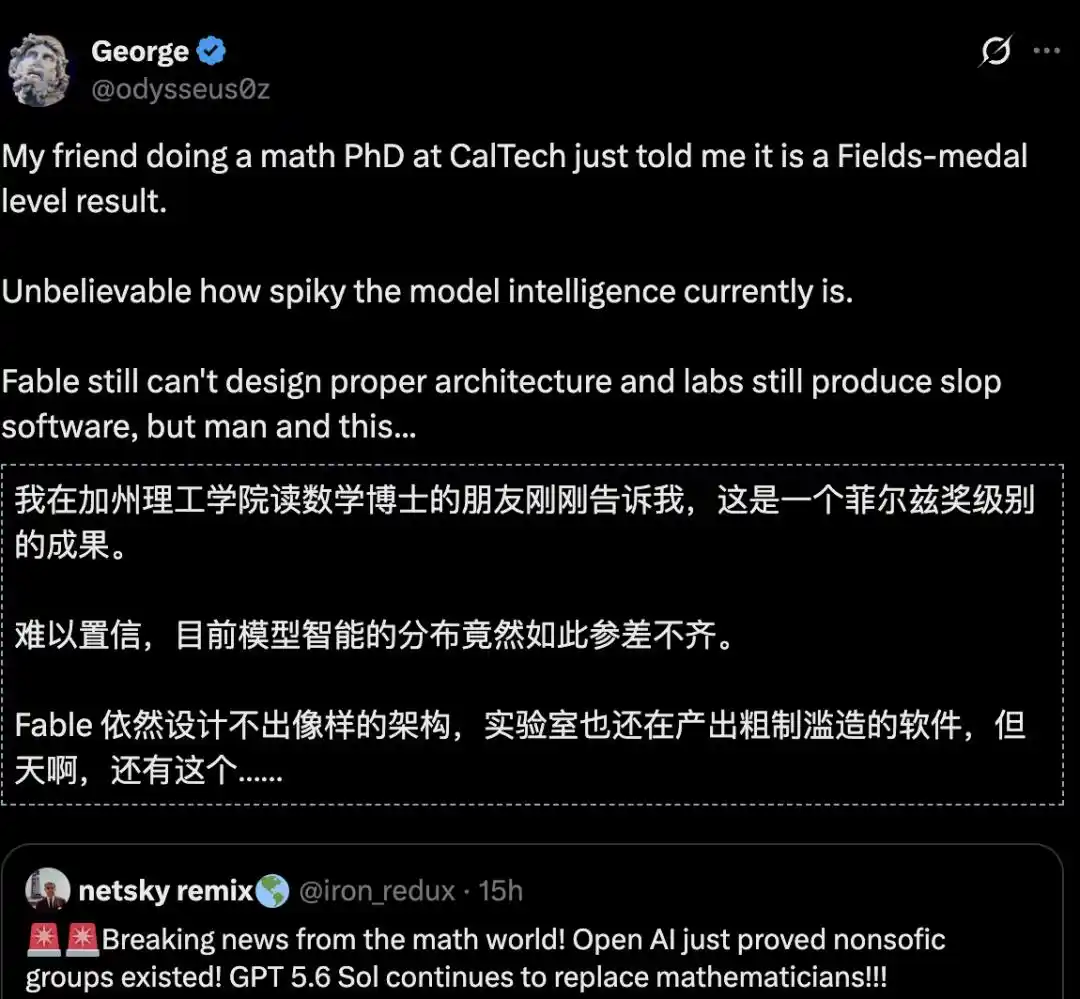
A mathematics PhD from Caltech, the alma mater of Qian Xuesen, called it: "This is Fields Medal-level work"!
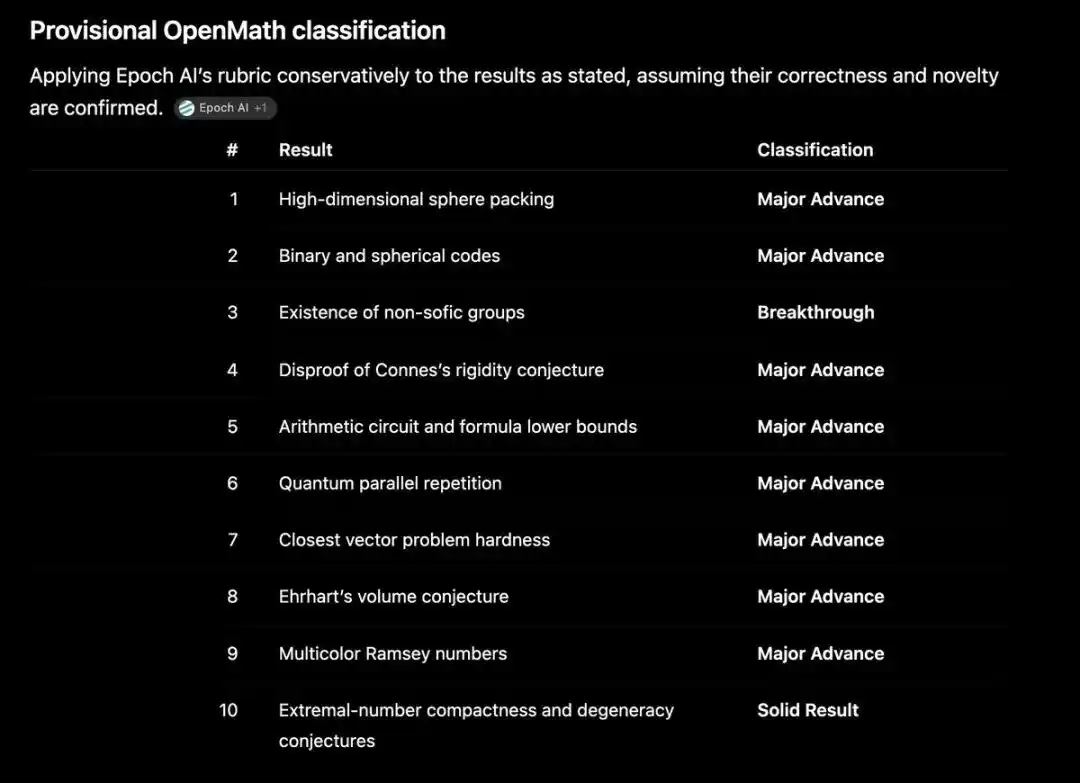
According to Epoch AI's OpenMath rating standards, GPT-5.6 Sol Pro and Fable 5 Max believe:
Most results would be highly recognized by peers and rated as "Major Advance".
Only the third result has the potential to break out of the circle and could become one of the best mathematical achievements of the year, rated as a "Breakthrough".
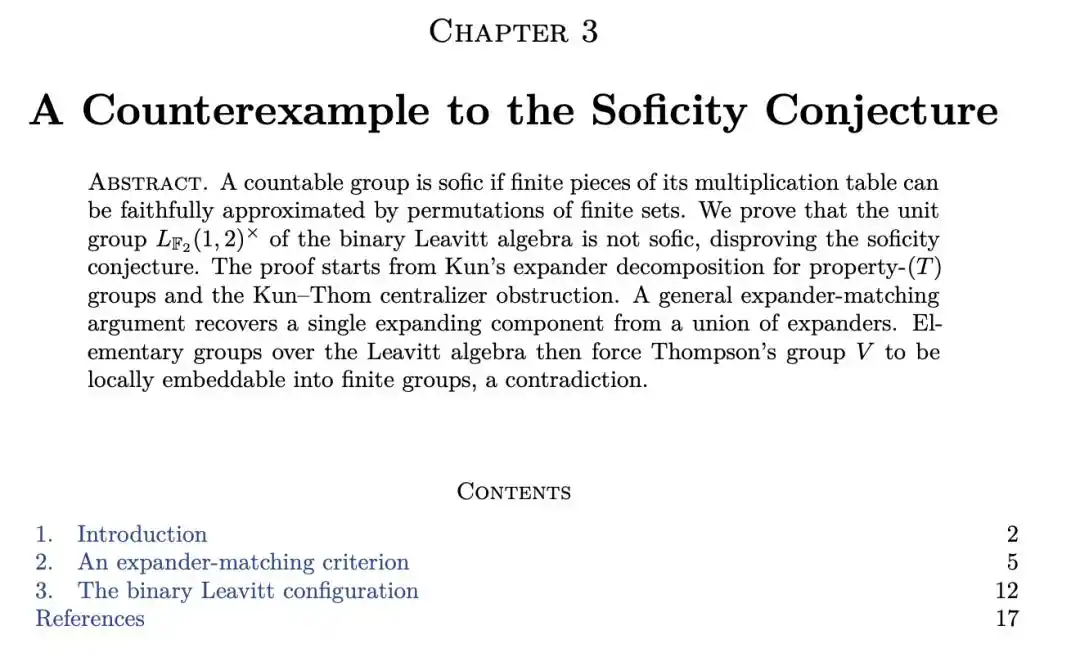
The third result is also a counterexample:
OpenAI Astra constructs an infinite finitely presented non-sofic group, negating the conjecture that "all countable groups are sofic".
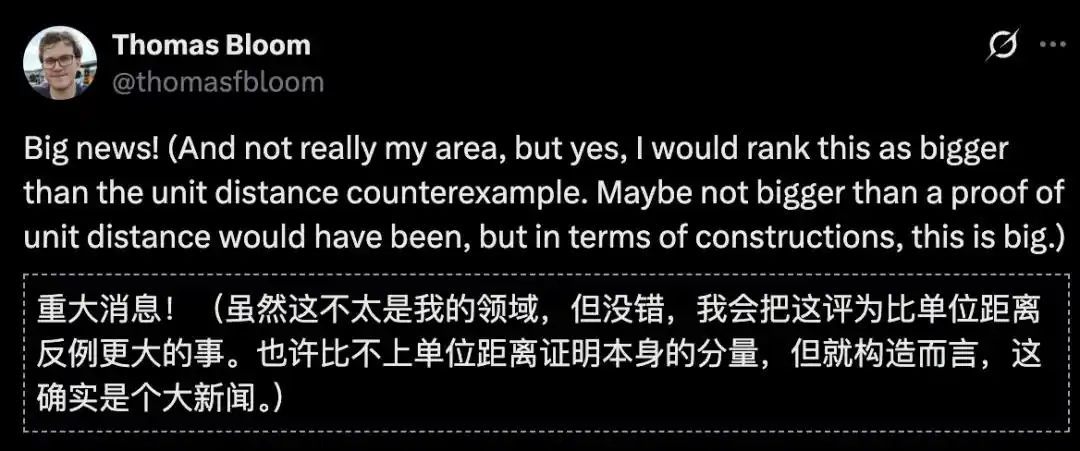
Thomas Bloom, a Royal Society University Research Fellow and mathematician at the University of Manchester, stated bluntly: this breakthrough is more important than OpenAI's previous disproof of the unit distance conjecture.
Moreover, the total cost of generating the proofs for these 10 breakthrough results, calculated at Sol API prices, was less than $2000, averaging $200 each.
That is to say, solving a scientifically valuable conjecture costs about as much as a graduate student's weekend stipend.
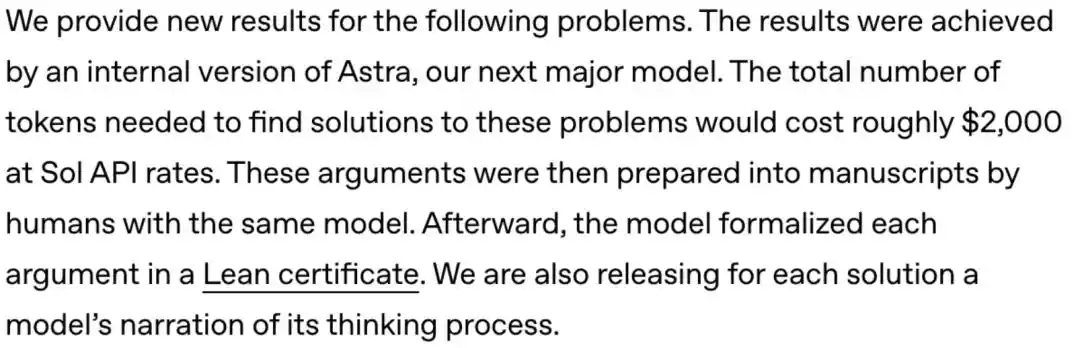
And all of this was merely a "byproduct" accidentally harvested while evaluating an unreleased model.
Another point everyone might miss if they don't look closely:
These 10 conjectures are the result of OpenAI's careful selection!
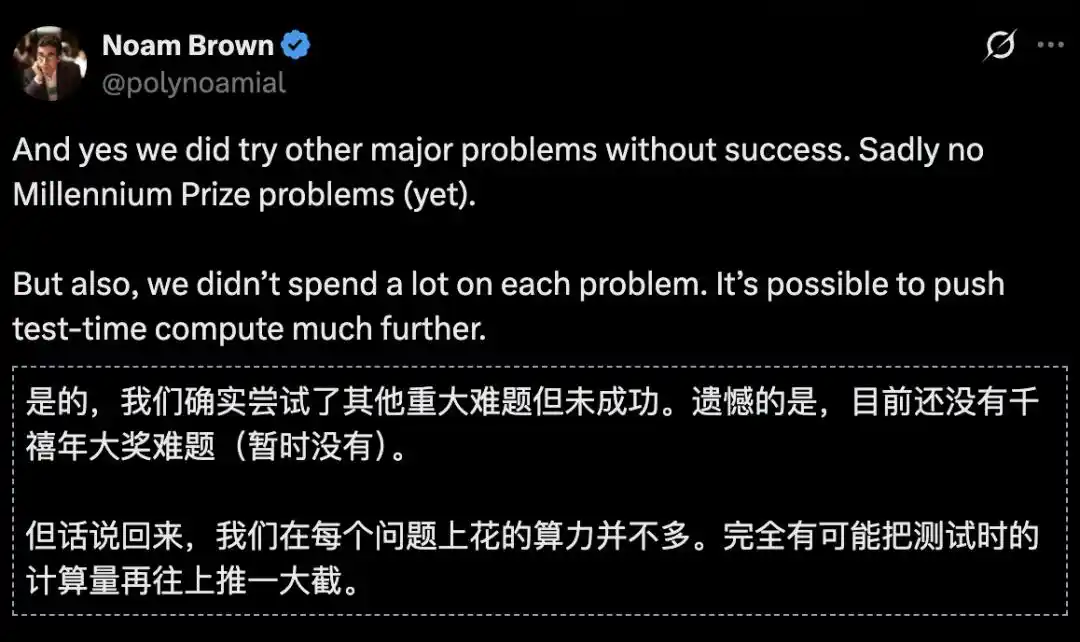
Noam Brown, the core architect of OpenAI's reasoning model, directly dropped a bombshell.
He admitted that OpenAI has indeed tried other difficult problems and has not yet successfully solved a Millennium Prize Problem like the Riemann Hypothesis.
But more crucially, computation during testing is far from capped, meaning world-class problems costing millions of dollars could also be cracked.
It's both awe-inspiring and poignant: Will mathematics still be the glory of the human mind?

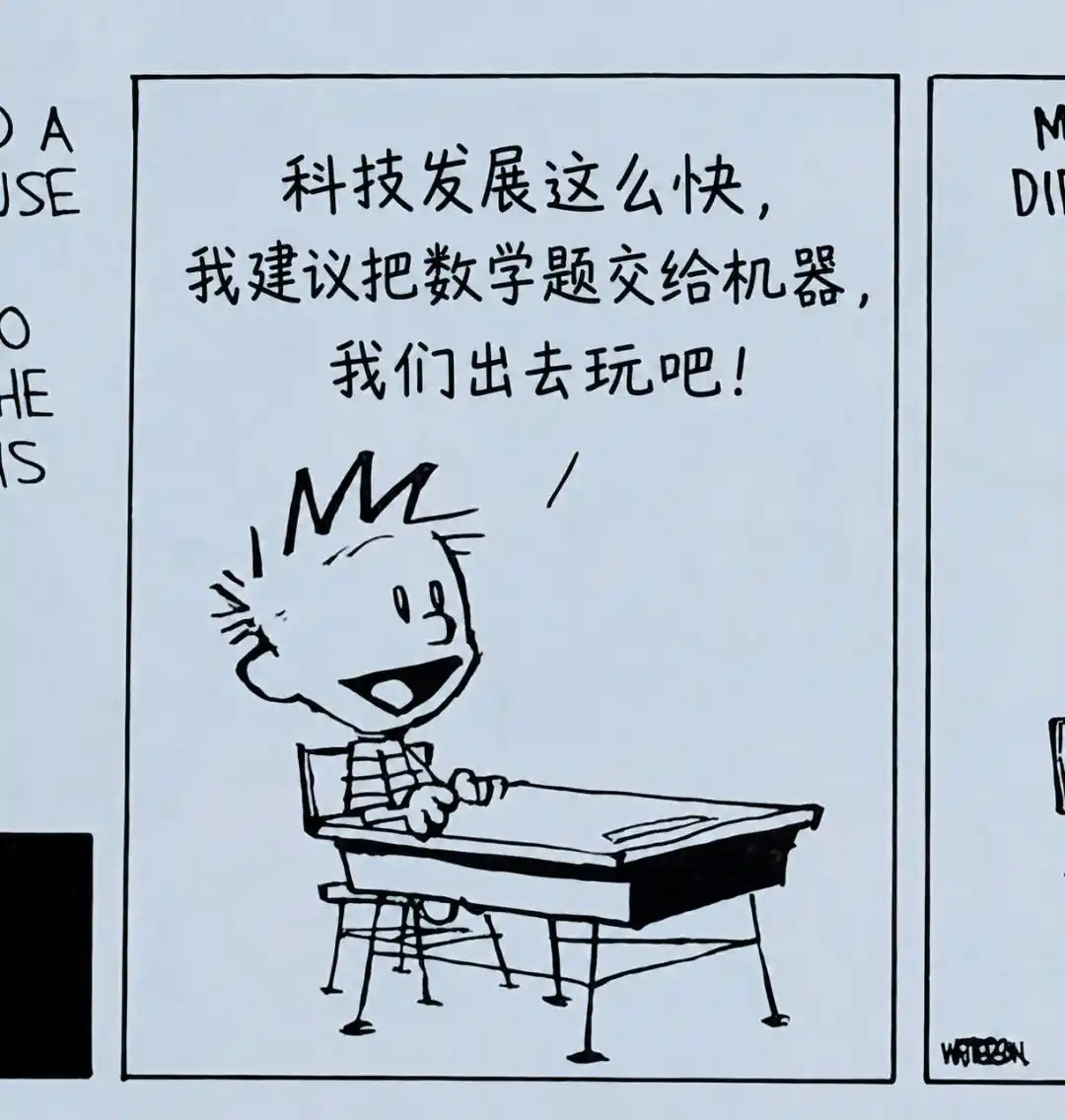
249-Page PDF, Truly Astounding
The reason this 249-page paper has shaken the mathematical world is not in computational derivation, but in the way the AI, like a master mathematician, simultaneously delivered proofs and disproofs with a dimensionality-reduction strike across fields like geometry, algebra, and group theory.
Achieving multiple hardcore breakthroughs in several different fields at once is perhaps unparalleled. This in itself is deeply impressive. Here we mainly introduce 3 major problems.
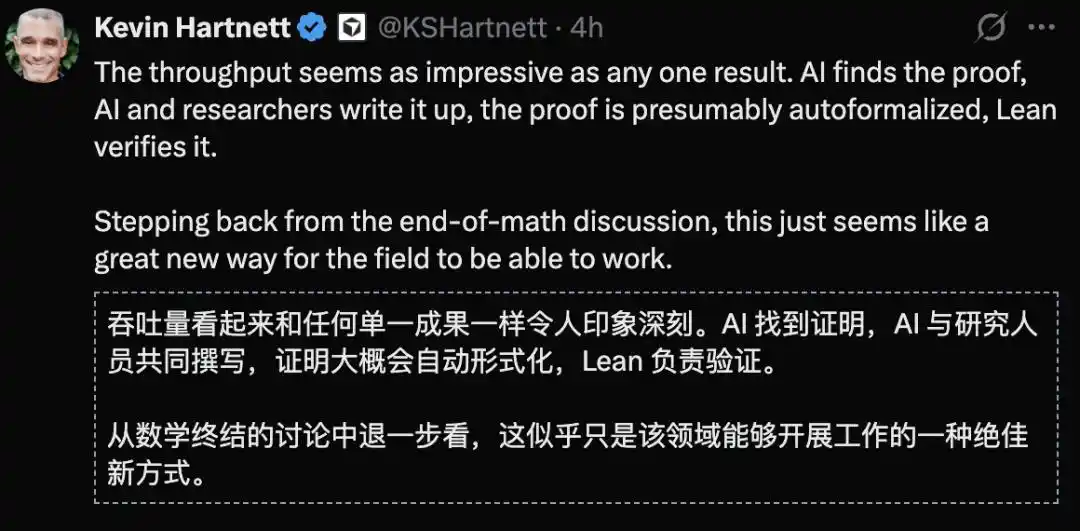
Cutting a Century-Old Obsession: Finding the First Ever "Non-Sofic Group"
In 1999, Russian mathematician and Abel Prize laureate (the "Nobel Prize of Mathematics") Mikhail Gromov introduced the concept of sofic groups.
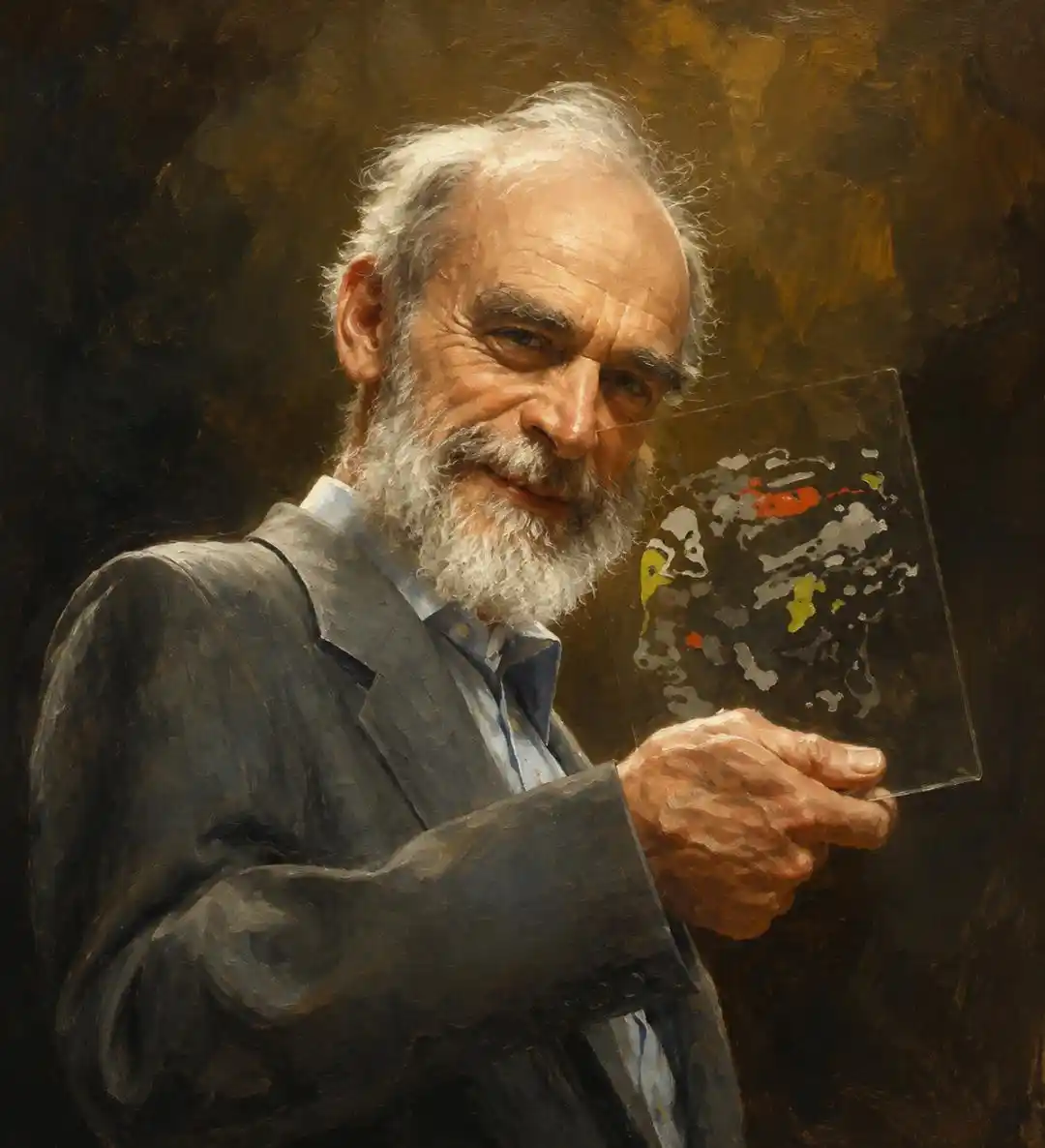
"Sofic" comes from the Hebrew word for "finite."
Simply put, if an infinitely large, complex group can be perfectly approximated and simulated locally by finite permutations, then it is sofic.
You can think of it as "no matter how complex an infinite three-dimensional model is, it can be perfectly rendered with a finite number of pixels (voxels)".
The question then arises: Are all countable groups sofic groups?
This is not an obscure technical detail. The properties of sofic groups influence an entire landscape of mathematical theory including sofic entropy theory, ergodic theory of dynamical systems, and operator algebras. If the answer to this question is "no," it means there exists a type of group that is fundamentally impossible to approximate with finite structures—the entire theoretical framework must be re-examined.
For 27 years, countless top mathematicians have attempted to construct counterexamples, all without success.
The answer Astra gives: Construct an infinite, finitely presented non-sofic group.
OpenAI Astra directly pulled an existing structure from the mathematical codebase: "the unitary group of the binary Leavitt algebra," then delivered an impeccable proof: this group absolutely cannot be approximated by finite permutations!
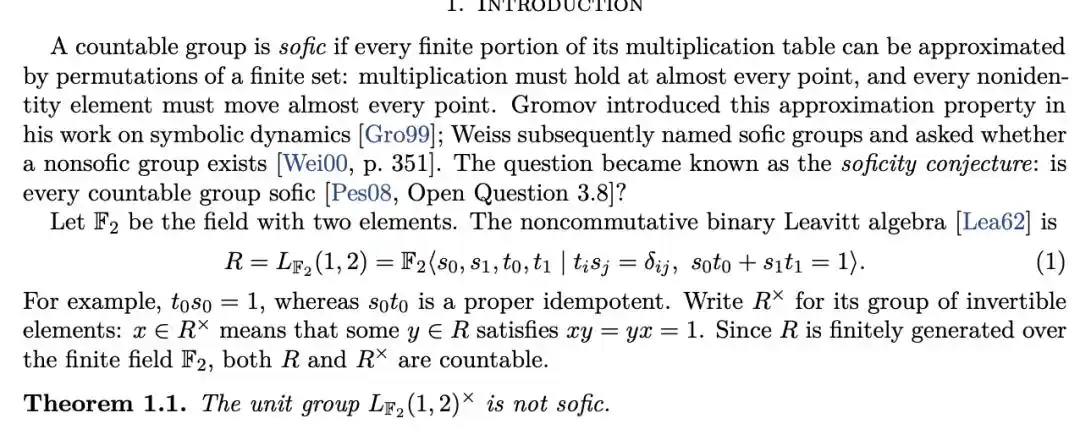
To prove this, the AI's operation was incredibly brutal. It fused Kun-Thom expansion graph theory with the famous "Thompson's group V," forcibly squeezing out a logical contradiction.
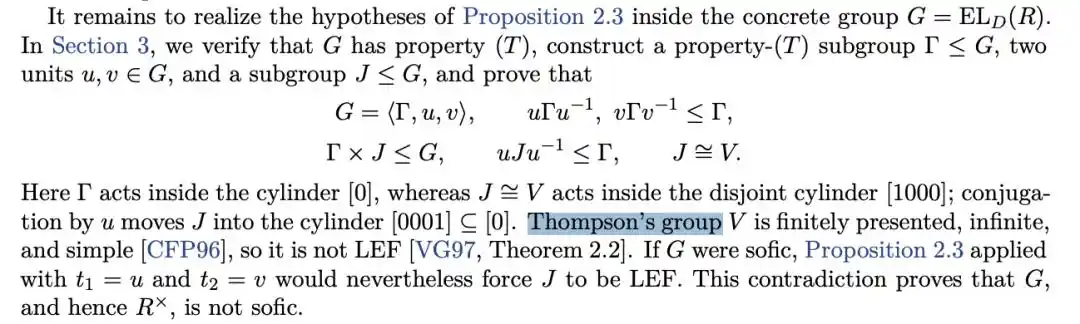
It's as if humans were searching everywhere for a substance that cannot be pixelated, and AI just points at a high-dimensional Rubik's cube on the table and says, "Stop looking. It's this one. I'll prove it to you."
Complete construction. With arguments. With details.
More crucially: It performed formal verification using Lean 4 and attached machine-verifiable certificates.
This is the watershed. The Lean 4 certificate means every step of the reasoning has undergone formal machine verification; there's no room for hand-waving or "feeling right."
Mathematician Elliot Glazer confirmed the news immediately, calling it the "most important AI-assisted mathematical result to date".
Shattering a 46-Year Frozen Barrier: The High-Dimensional Sphere Packing Problem
Imagine you have a box; how do you pack the most oranges inside?
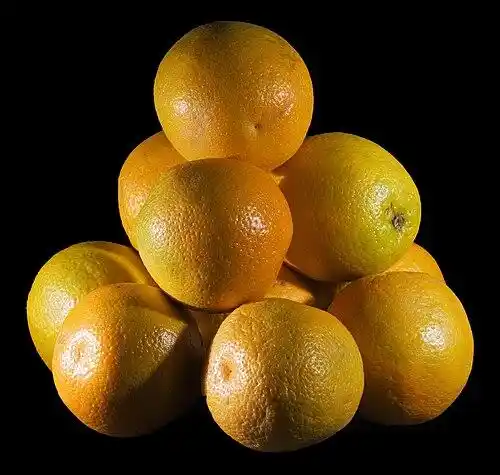
In the three-dimensional world, it took humans until a few centuries ago to figure it out with the Kepler conjecture. In higher-dimensional spaces, this problem becomes nightmarish.
In 2022, mathematician Maryna Serhiivna Viazovska won the highest honor in mathematics, the Fields Medal, for solving the sphere packing problem in 8 and 24 dimensions.
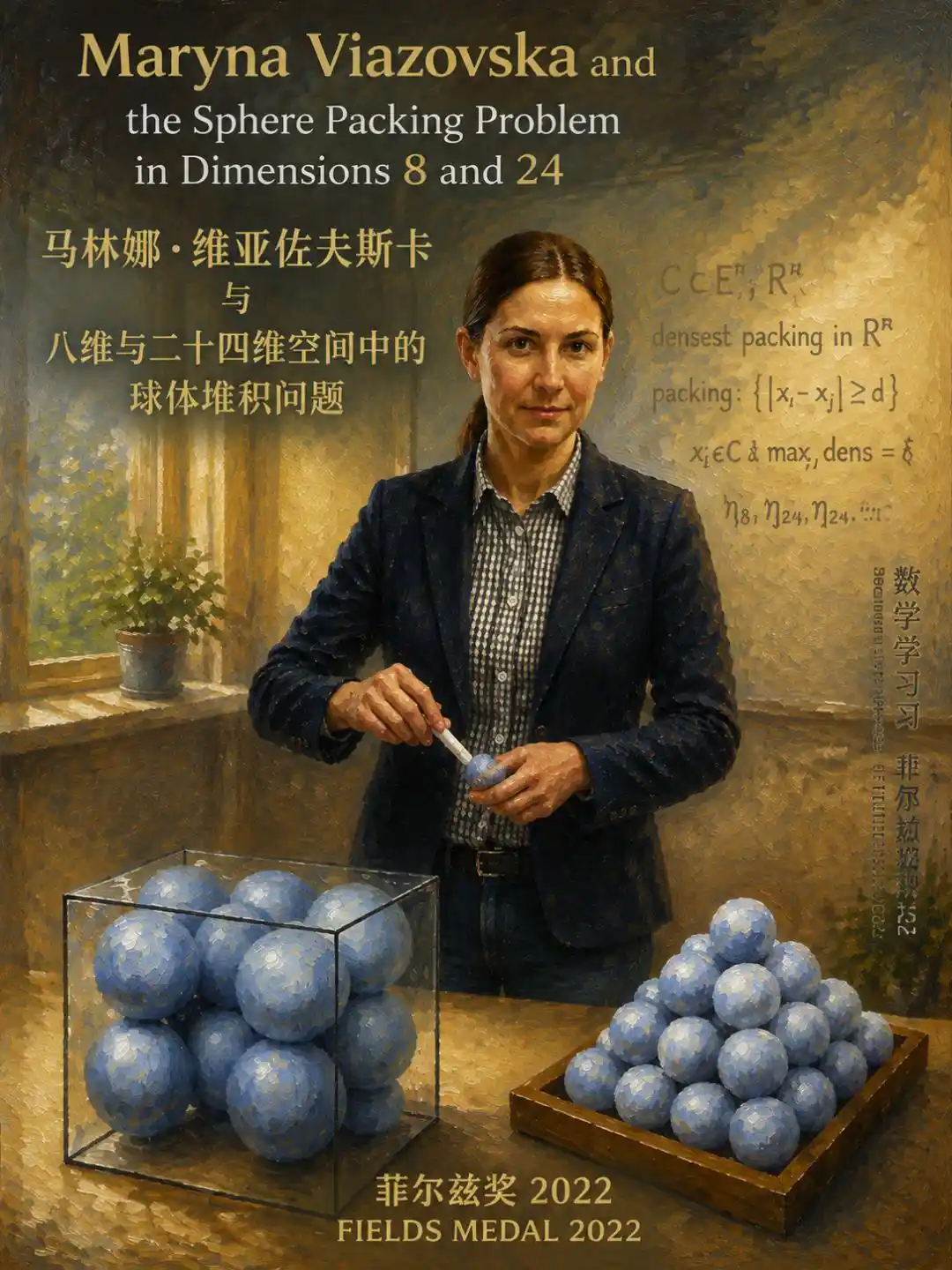
The shocking point: it directly broke the "intellectual ceiling" humans have faced in this field since 1978.
But note, she solved it for "specific dimensions."
If the dimension tends to infinity, what exactly is the upper density limit?
Since two Soviet mathematicians gave a limit in 1978, for a full 46 years, the world's top mathematicians have been stuck, unable to improve even a few decimal places.
And this time, AI walked into this dead-end alley with ease.
Not only did it provide a new proof, but it also precisely calculated the exponential decay rate for the Cohn-Elkies linear programming bound, breaking through the 1978 boundary for the first time!
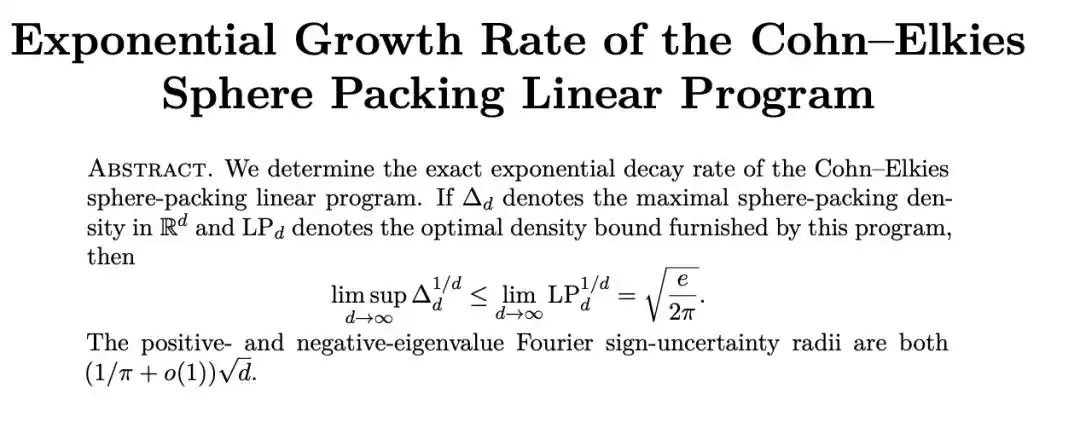
It's as if humans had been climbing this mountain for half a century and couldn't move forward, and AI just took a helicopter to the summit and paved the road up as well.
Surpassing a Fields Medalist's Intuition, Overturning Connes's Rigidity Conjecture
The 1982 Fields Medalist and founder of non-commutative geometry, Alain Connes, proposed the famous "rigidity conjecture": for a certain extremely special class of groups, the von Neumann algebra they generate is as unique as a fingerprint.
For decades, mathematicians wandered in the maze of this conjecture.
As a result, OpenAI's new model not only walked out of the maze but tore the maze down.
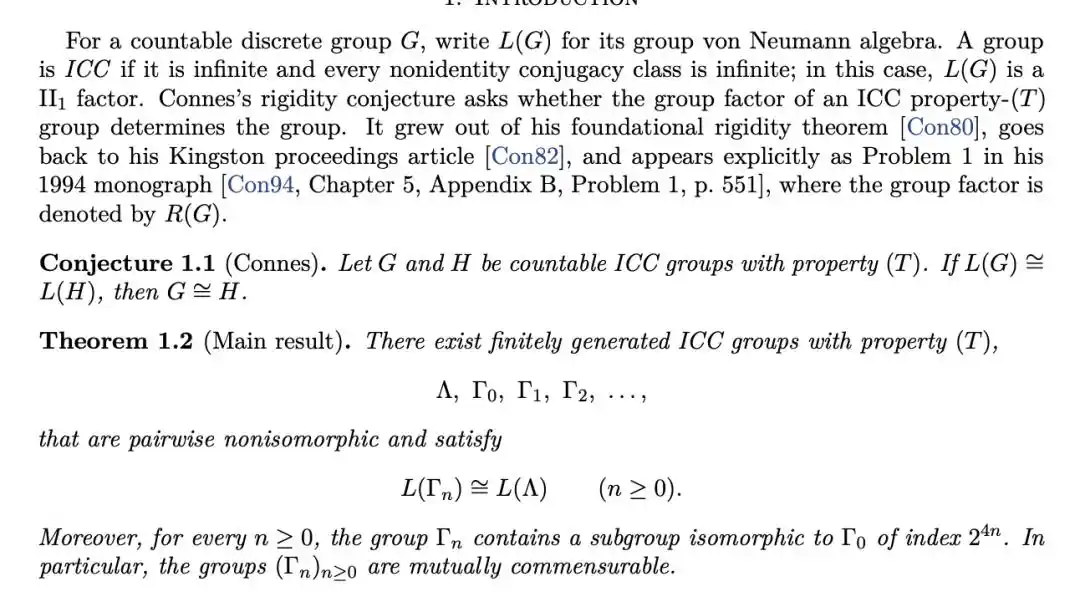
It not only proved Connes wrong but also gave an extremely overpowering way of disproving it: it didn't just find one counterexample but directly constructed a "countably infinite family of groups."
These groups are not isomorphic to each other (they look completely different), but the von Neumann algebras they generate are completely identical!
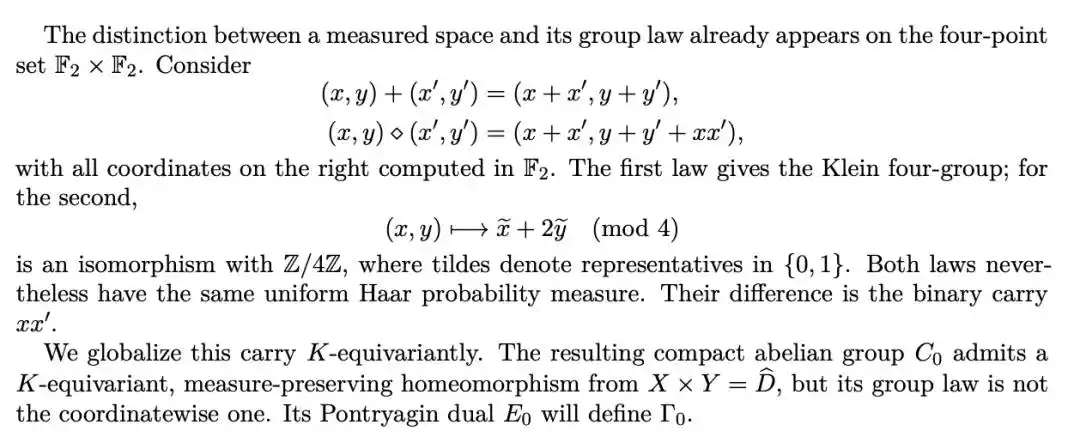
It's as if Connes had asserted that "no two snowflakes in the world have the same internal atomic structure," and AI not only found two, but it turned around and unleashed a snowstorm, where each snowflake looks different, but their core algebraic structures are all congruent.
The Mathematicians' "Wall-Breaker" Has Arrived
"Godfather of AI" Hinton predicted:
In the next 10 to 20 years, AI may even create new mathematics that humans cannot understand.
>And OpenAI's results make that timeline look too conservative.Beyond hardcore mathematical proofs, OpenAI's next-generation model Astra also knows how to use "conditional probability" to tackle quantum entanglement games and how to use "polynomial derivation" to establish computational complexity lower bounds.
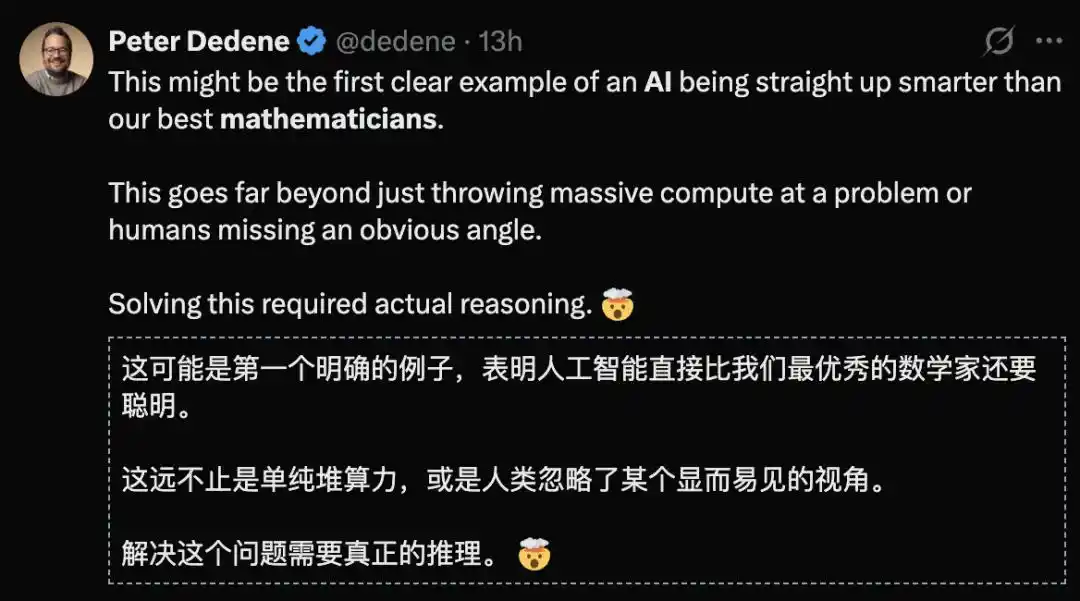
Solving such problems requires genuine reasoning. OpenAI Astra has mastered an exceptionally deep intuition and constructive ability in pure mathematics. OpenAI also specifically made the complete reasoning process public this time:
https://cdn.openai.com/pdf/reasoning-walkthroughs.pdf
This might be a clear example: AI is smarter than the best human mathematicians.
For the mathematical community, this paper is tantamount to an announcement: the mathematicians' "wall-breaker" has arrived.
References:
https://cdn.openai.com/pdf/ten-proofs-oai.pdf
https://openai.com/index/ten-advances-in-mathematics/
https://x.com/stalkermustang/status/2083485500250198453
Editor: David
This article is from WeChat official account "Xin Zhi Yuan" (New Wisdom), author: ASI Revelations


















