The First Prediction Market Stock Has Emerged!

marsbit2026-06-15 tarihinde yayınlandı2026-06-15 tarihinde güncellendi

Özet

"Prediction Market Unicorn Emerges!" While the World Cup drives record trading volumes in prediction markets, the industry leader Kalshi faces a new threat from a former key ally. In March 2025, Kalshi partnered with online broker Robinhood to offer prediction market services, allowing users to bet on events. This deal was mutually beneficial: Kalshi gained access to Robinhood's massive retail user base, with an estimated 25-35% of its volume coming through this channel, while Robinhood earned significant fees, reporting a 320% year-over-year increase in "other transaction revenue" to $147 million in Q1 2026, largely fueled by prediction markets. However, Robinhood's ambitions have grown. Recognizing that its user base and distribution power are the scarcest resources, it initiated a plan to bring operations in-house. In late 2025, Robinhood partnered with Susquehanna to acquire CFTC-regulated exchange MIAXdx, renaming it Rothera Exchange. By June 2026, Robinhood launched its own prediction market product on Rothera, strategically using the World Cup as a launchpad. Initial data shows Rothera processing tens of millions of contracts within days, directly siphoning volume away from Kalshi. This shift marks a pivotal moment: control is moving from the market infrastructure provider (Kalshi) to the entity controlling user distribution (Robinhood). The story illustrates a recurring internet era dynamic: "He who controls distribution controls everything." As more platforms with...

Author | Azuma (@Azuma_eth)

The flames of the World Cup have ignited, and the total global trading volume of prediction markets continues to hit new highs. However, as the industry leader, Kalshi may not be in the best mood at the moment.

The reason is not a fluctuation in Kalshi's own business data, but because Kalshi now "suddenly" faces another formidable rival after Polymarket, and this opponent was once its most important ally.
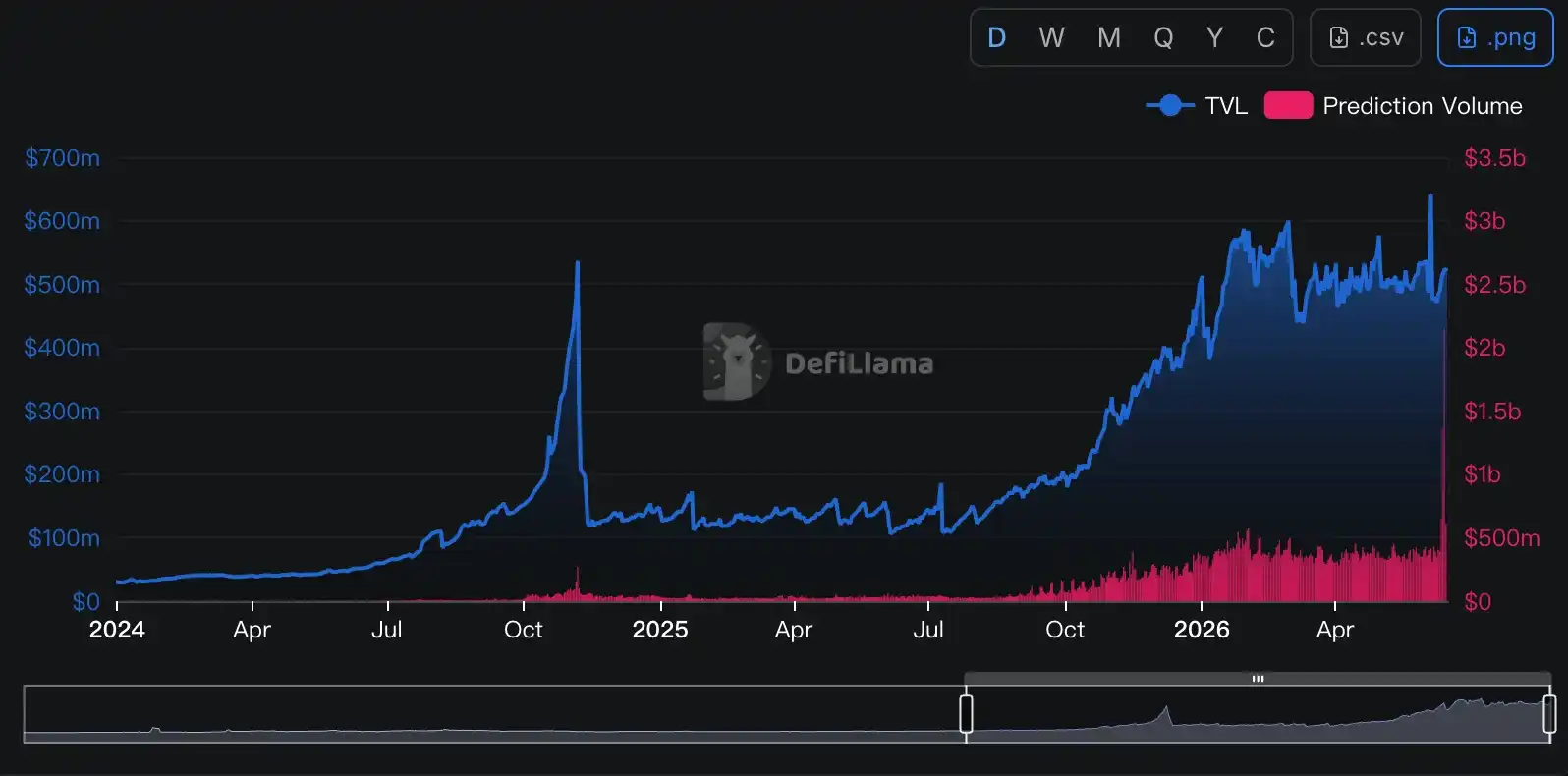
  • Odaily Note: Data sourced from Defillama.

Kalshi's Most Important Traffic Channel — Robinhood

Rewind to March 2025. At that time, Kalshi announced a partnership with the US online brokerage Robinhood. The latter would use Kalshi's services to provide its users with prediction market trading, allowing users to place bets on political, economic, sports, and other events.

From a business model perspective, this was a classic case of "mutual benefit" — Robinhood, responsible for user access and order flow distribution, could directly utilize Kalshi's mature product; Kalshi, responsible for the underlying market, matching, clearing, and regulatory compliance systems, could access Robinhood's massive pool of retail traffic.

The subsequent story proved the "win-win" outcome of this collaboration. Through Robinhood's channel distribution, Kalshi indirectly gained a massive amount of users and transaction volume. Piper Sandler analysts once estimated that "transactions completed through the Robinhood channel accounted for about 25%-35% of Kalshi's total trading volume." These orders ultimately translated into revenue for both parties — Robinhood charges an independent fee for all Kalshi event contracts traded through this channel, $0.01 per contract per side, and then shares the revenue with Kalshi (the specific split was not disclosed).
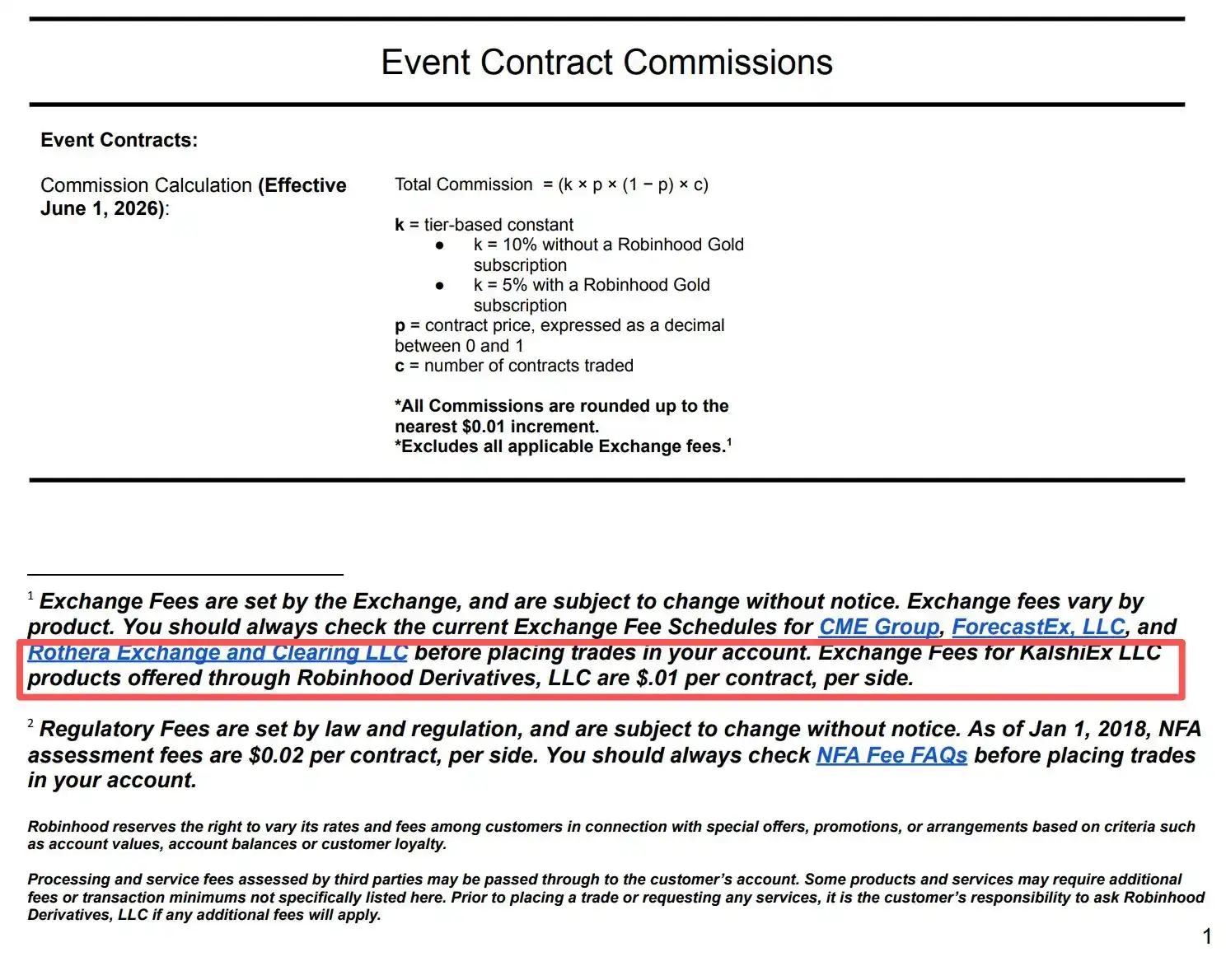
The Q1 financial report released at the end of April this year showed that Robinhood achieved trading of 8.8 billion event contracts in Q1, driving "other transaction revenue" to grow 320% year-over-year, reaching $147 million. Prediction markets have become the most eye-catching new growth engine in Robinhood's product line.

But recently, this relationship has undergone some subtle changes.

Robinhood's Ambition: Reclaiming the Cake Shared with Kalshi

As countless episodes in internet history have proven, when a channel gains sufficient influence, it is no longer content with just being a channel. Robinhood is no exception.

Although the cooperation with Kalshi also brought Robinhood considerable revenue, with prediction markets becoming one of the fastest-growing new businesses on the platform, Robinhood was no longer satisfied with the current revenue-sharing arrangement.

In their partnership model, Kalshi provided the market and infrastructure, while Robinhood provided the users and order flow. However, as the cooperation deepened, Robinhood gradually realized that what was truly scarce might not be the market itself, but the user access point it firmly controlled. After all, for most Robinhood users, they don't care whether their orders are ultimately executed on Kalshi or another platform — users only see a trading entry point within the Robinhood app, not the underlying infrastructure provider.

In other words, Robinhood always controlled one of the most critical resources in prediction markets — distribution power. If the users belong to Robinhood, why should the orders flow to someone else?

In fact, while Robinhood was quickly validating the demand for prediction markets with Kalshi, another Plan B was launched shortly after.

In November 2025, Robinhood announced the establishment of a joint venture with Wall Street quantitative trading giant Susquehanna, planning to acquire the CFTC-regulated derivatives exchange MIAXdx. According to the official statement, the joint venture would operate an independent futures and derivatives exchange and clearing agency in the future, with prediction markets being one of its key focuses. At the time, the outside world mostly viewed this as an infrastructure investment. However, with subsequent information disclosures, people gradually realized that Robinhood's goal was far beyond just finding a new partner for prediction markets.

In January 2026, the deal was officially completed. Robinhood and Susquehanna gained 90% control of MIAXdx, simultaneously acquiring a complete CFTC regulatory framework, including Designated Contract Market (DCM) and Derivatives Clearing Organization (DCO) qualifications. Subsequently, MIAXdx was renamed Rothera Exchange, and its clearing agency was renamed Rothera Clearing.

Thus, Robinhood now possessed the core elements needed to independently operate a prediction market. The only thing lacking was a mature product comparable to Kalshi's, but for Robinhood, with its rich experience in internet product development, this was clearly not a difficult task.

Rothera's Opportunity: The World Cup

In June 2026, after about six months of accelerated development, the Rothera product took shape, and Robinhood finally made the move that was almost destined to happen — gradually shifting orders that originally flowed to Kalshi into its own controlled system.

Robinhood specifically chose an excellent launch battleground for Rothera — the World Cup. For prediction markets, the World Cup is undoubtedly one of the most traffic-generating trading themes. Whether it's match outcomes, qualification results, or the ultimate champion, related markets can attract a large number of new users to trade in a short period. For Rothera's nascent platform, there is no better scenario for a cold start than the World Cup.

According to Robinhood's official disclosure, during this World Cup, which comprises a total of 104 matches, part of the event contracts will be directed to Rothera for matching and clearing, including markets for single World Cup match results, the ultimate World Cup champion, total goals in a single match, etc. Compared to the previous model that completely relied on Kalshi, this marks the first time Robinhood has directed prediction market orders into its own trading system on a large scale.
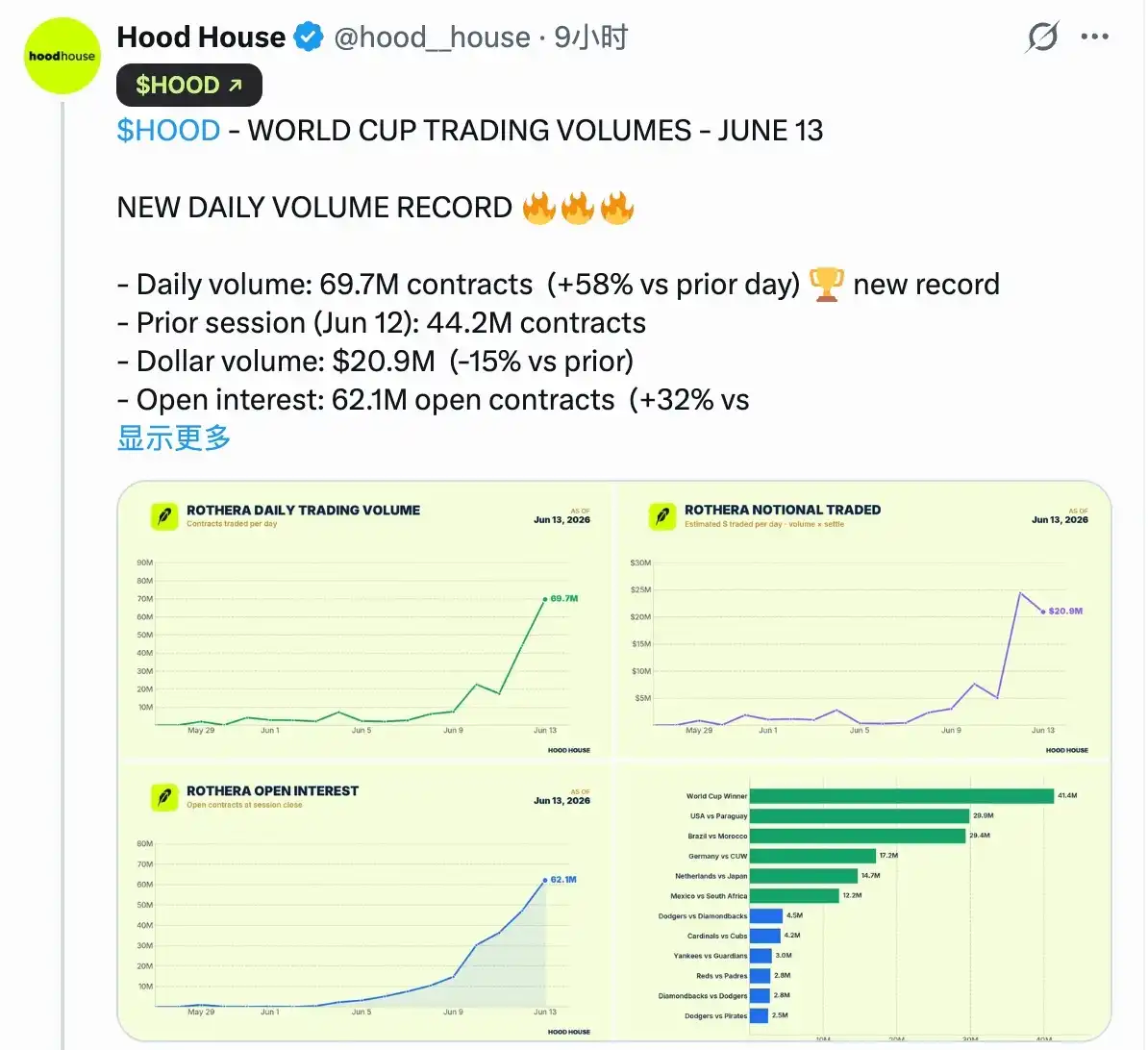
Judging by the results, Rothera clearly seized this opportunity. According to data disclosed by Hood House, a research-focused自媒体 tracking Robinhood's activities, on June 12th, Rothera completed 44.2 million contract trades, corresponding to approximately $24.4 million in dollar trading volume; on June 13th, Rothera completed 69.7 million contract trades, corresponding to approximately $20.9 million in dollar trading volume... Although these figures still lag behind Kalshi's popular markets, which often see hundreds of millions or even billions of dollars in volume, considering that Rothera has literally just launched a few days ago, this performance is sufficiently successful.

For both Robinhood and Kalshi, this means the balance of cooperation between them has begun to tilt. From Robinhood's perspective, the transaction fee revenue that previously had to be shared with Kalshi can now be retained more within its own ecosystem; from Kalshi's perspective, this means that one of its former most important growth engines has begun to show signs of weakening.

And the World Cup is clearly just the beginning of Rothera's encroachment on Kalshi. Looking further into the future, Robinhood will inevitably expand Rothera's coverage to more sports events, as well as economic and political themes. Those orders that originally flowed to Kalshi will then be intercepted one by one by Rothera.

Since Robinhood and Kalshi have never publicly disclosed their revenue-sharing ratio, we cannot know the exact value of this interception. However, considering that Robinhood alone generated $147 million in prediction market-related revenue in Q1, and with the World Cup in Q2 and the midterm elections later expected to bring even larger-scale trading activities, the annual value of this interception could reach billions of dollars.

Who Controls Distribution, Controls Everything

The drama of Robinhood and Kalshi moving from allies to rivals once again illustrates a logic repeatedly verified in the internet market — products are easy to build, traffic is hard to find; whoever controls distribution controls everything.

Over the past few years, the market generally believed that Kalshi's core moat came from regulatory licenses, exchange qualifications, and clearing capabilities. Therefore, whether it was brokerages like Robinhood or various media outlets, communities, and traffic platforms, they were essentially just Kalshi's channels and traffic inlets. However, the emergence of Rothera proves one thing: in today's market where products are highly homogenized, the product itself might not be the most important element. What remains truly scarce is always the users.

Where the users are, the liquidity is; where the liquidity is, the market will be. When Robinhood controls the access point to tens of millions of retail users, it has the full ability to direct these users to any trading venue. For users, they don't care whether their orders are ultimately executed on Kalshi or Rothera. As long as the experience isn't significantly different, it doesn't matter who is behind the matching and clearing.

If the theme of the prediction market industry in the past few years was the market competition between Polymarket and Kalshi, then the theme for the coming years might become a channel war. Robinhood incubating Rothera is, in essence, a reverse integration launched by the channel side towards the market layer. As more and more platforms with traffic inlets begin to recognize the strategic value of prediction markets, similar stories are likely to continue. Whether they are exchanges, brokerages, social platforms, or media platforms, all could become new gateways to prediction markets.

And when inlets begin to control markets, and channels begin to possess pricing power, the ultimate winner in the prediction market industry might no longer be the platform responsible for matching orders, but the one closest to the users, the one that best controls distribution.

It was true in the internet era, and it was true in the mobile internet era. This time, there are no exceptions either.


Trend Kriptolar

İlgili Sorular

QWhy is the article titled 'The First Stock of the Prediction Market Concept Has Appeared!'?

AThe title refers to the financial markets potentially viewing 'Robinhood' (HOOD), a publicly traded brokerage platform, as a stock heavily exposed to and benefiting from the growth of the prediction market industry. The article details how Robinhood, initially a distributor for Kalshi, has now built its own prediction market infrastructure (Rothera), positioning itself as a major player and capturing more value from this high-growth segment.

QWhat was the nature of the initial partnership between Robinhood and Kalshi, and why did it break down?

AThe initial partnership (March 2025) was symbiotic: Kalshi provided the regulated prediction market platform (licenses, matching, clearing), while Robinhood provided its massive retail user base and distribution. It broke down because Robinhood realized the scarcity and strategic value of its user access point. As prediction markets became a key growth driver, Robinhood wanted to capture more of the revenue by bringing the trading infrastructure in-house, leading it to develop its own platform, Rothera.

QHow did Robinhood build its own prediction market platform, Rothera?

ARobinhood built Rothera through a strategic acquisition. In November 2025, it announced a joint venture with Susquehanna to acquire MIAXdx, a CFTC-regulated derivatives exchange. The deal closed in January 2026, giving them a Designated Contract Market (DCM) and Derivatives Clearing Organization (DCO) license. MIAXdx was renamed Rothera Exchange/Rothera Clearing, providing Robinhood with the core regulated infrastructure to independently operate a prediction market.

QWhy did Robinhood choose the 2026 FIFA World Cup to launch Rothera?

ARobinhood chose the 2026 FIFA World Cup as the launchpad for Rothera because it is a premier, high-traffic event for prediction markets. Sports events, especially the World Cup, naturally attract a large volume of speculative trading on outcomes like match winners and champions. This provided Rothera with a perfect 'cold start' scenario to attract a surge of new users and generate immediate trading volume, proving the viability of their new platform.

QWhat is the core argument the article makes about the future of the prediction market industry?

AThe article argues that the future competitive landscape of prediction markets will shift from a 'market war' (between platforms like Polymarket and Kalshi) to a 'channel war.' The core thesis is that 'who controls distribution, controls everything.' The ultimate winners may not be the companies that build the trading engines (like Kalshi), but rather the entities (like Robinhood) that own the user interface, the customer relationships, and the primary access points, as they hold the power to direct traffic and capture value.

İlgili Okumalar

Gate Research Institute: Analysis of Chart Patterns and Breakout Trading Strategies

Gate Research Institute: Chart Pattern Analysis and Breakout Trading Strategies Chart patterns are crucial tools in technical analysis for observing market supply and demand shifts, trend continuations, and reversals. This analysis involves a comprehensive evaluation of trend, volume, support/resistance, time cycles, and breakout validity, not just rote pattern recognition. Patterns are broadly categorized into reversal patterns (e.g., Double Tops/Bottoms, Head and Shoulders) and continuation patterns (e.g., Flags, Triangles, Rectangles). An effective breakout, key for trading, requires clear support/resistance, prolonged consolidation, a prevailing trend backdrop, and volume confirmation. However, breakouts are not guaranteed, as false breakouts are common. Risk must be managed through position sizing, stop-loss orders, pullback confirmations, and profit-taking in stages. Key pattern types discussed include: * **Rectangle Patterns:** Indicate market indecision within parallel support and resistance, with breakouts projecting a move equal to the pattern's width. * **Flag & Pennant Patterns:** Short-term continuation patterns following sharp price moves ("flagpoles"). * **Triangle Patterns:** Symmetrical, Ascending (bullish bias), and Descending (bearish bias) triangles, representing consolidation before a directional move. * **Head and Shoulders Patterns:** Major reversal patterns signaling trend exhaustion. The article details breakout trading strategies, defining valid breakouts by price closing beyond a key level with increased volume and minimal immediate re-entry into the prior range. It contrasts range trading with breakout trading and outlines entry methods (immediate entry, pullback entry, scaling in), stop-loss placement (based on pattern failure), and profit-taking techniques (target-based, structure-based, trend-following). It further classifies breakout outcomes: 1. **Valid Breakouts:** Strong, sustained moves in the breakout direction. 2. **Pullback Breakouts:** Price breaks out, retests the breakout level as support/resistance, then resumes the trend—offering a lower-risk entry. 3. **False Breakouts:** Price briefly breaches a level but quickly reverses back into the prior range, a common risk managed by strict stop-losses. Key validation tools for breakouts include volume analysis, the principle of support/resistance role reversal, and momentum indicators like ATR, Moving Averages, Bollinger Bands, and RSI. In conclusion, while chart patterns and breakout analysis provide a structured framework, their effectiveness relies on multiple confirming factors—trend context, volume, and proper risk management. They should be integrated into a broader trading system rather than used as standalone signals.

marsbit31 dk önce

Gate Research Institute: Analysis of Chart Patterns and Breakout Trading Strategies

marsbit31 dk önce

Joseph Chalom: Ethereum is Becoming the "Settlement Layer of Trust" for Global Finance

In a speech titled "The Industrialization of Trust," Sharplink CEO Joseph Chalom (former BlackRock digital assets head) discussed the future transformation of global finance. Drawing from 20 years at BlackRock, where he led the launch of Bitcoin/ETH ETFs and tokenized funds, Chalom highlighted the immense hidden costs of establishing trust in traditional finance—estimated at over $9.3 trillion annually in the US alone due to fragmented systems, multi-day settlements, and countless reconciliations. He argued that Ethereum is emerging as the global financial "settlement layer for trust," with its robust, decentralized infrastructure securing over $300 billion in on-chain assets and most stablecoins and tokenized assets. The future, he stated, will be driven by three accelerating pillars: stablecoins (evolving beyond crypto gateways to become efficient cross-border payment rails), tokenized assets (enabling 24/7 trading and reshaping capital markets), and DeFi (providing automated, accessible financial services). A potential game-changer, Chalom added, is the fourth pillar: "Agentic Finance," where AI agents autonomously execute programmable financial transactions via smart contracts and stablecoins. He envisions individuals soon having AI-powered "CFOs in their pockets" to optimize idle capital and manage tokenized portfolios. This shift, facilitated by Ethereum's trustless settlement, could multiply on-chain transaction volume 1000x within a year, moving finance toward a seamless, digitized future.

marsbit31 dk önce

Joseph Chalom: Ethereum is Becoming the "Settlement Layer of Trust" for Global Finance

marsbit31 dk önce

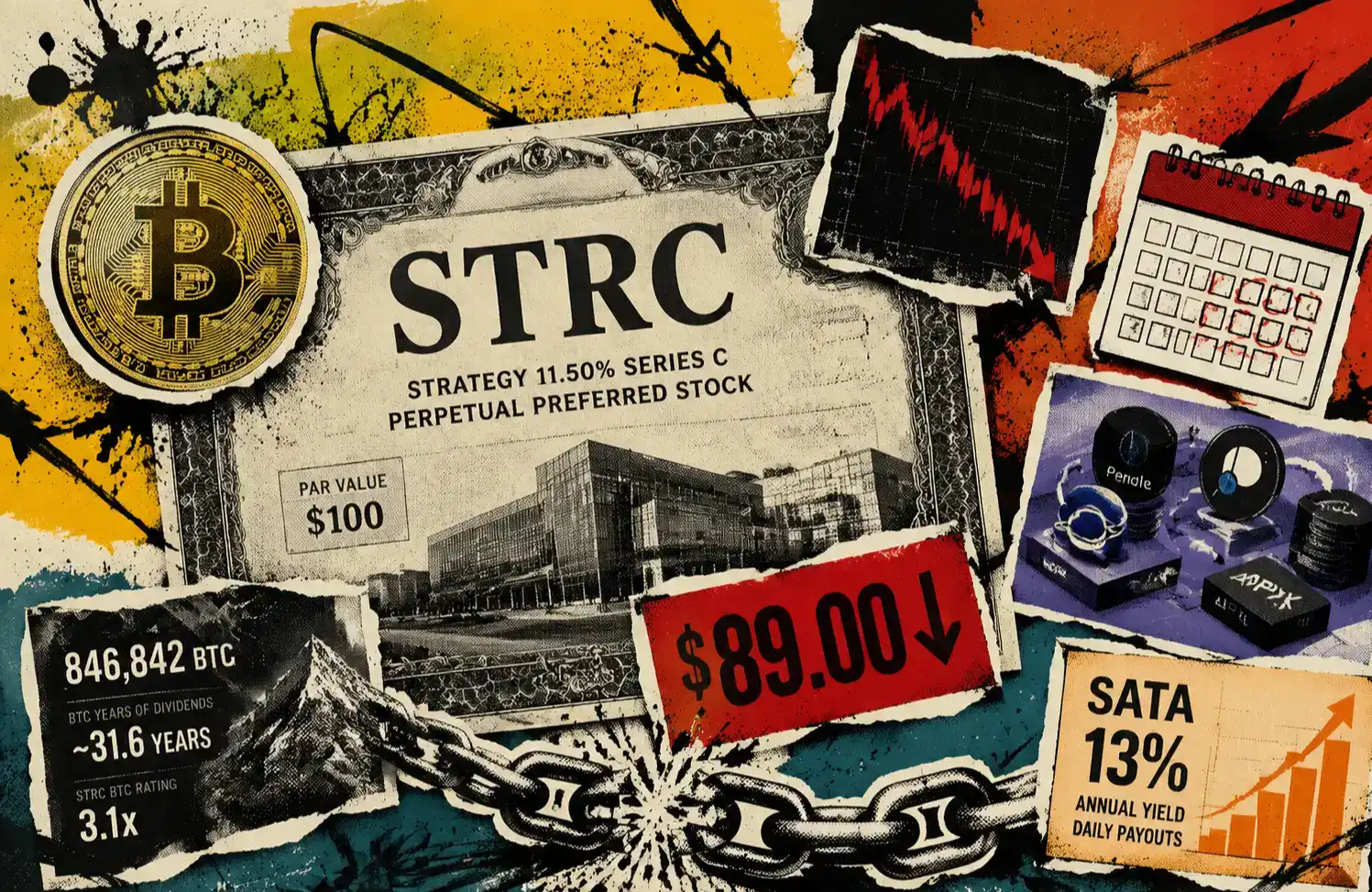
STRC Severely Unpegged, What Risks Is the Market Pricing In?

The article analyzes the recent significant de-pegging of Strategy's perpetual preferred stock, STRC, whose price fell to approximately $89, far below its $100 face value. This discount has pushed its simple yield to around 12.9%, creating a paradox. The stock was designed as a high-yield instrument trading near par, and Strategy maintains an 11.5% annual dividend, even recently switching to semi-monthly payments to support the price. The author explores several reasons why the high yield hasn't attracted enough buying pressure to restore the par value. A key factor is potential reverse deleveraging from carry trades, where leveraged investors may be forced to sell due to margin calls as the price falls, creating a self-reinforcing downward spiral. Additionally, the tokenization and integration of STRC into DeFi protocols (like Apyx, Saturn, Pendle) have introduced faster, more transparent, and potentially more volatile price adjustment mechanisms through leverage and yield-splitting products. The emergence of a competing product, Strive's SATA, offering a 13% yield with daily dividends, has also changed the yield benchmark, challenging STRC's unique high-yield narrative. Furthermore, the market is questioning the distinction between Strategy's substantial Bitcoin reserves, which provide long-term balance sheet coverage, and the certainty of stable near-term cash flow for dividends. Ultimately, the price dip represents a stress test for this type of BTC-backed, high-yield financing tool. The future path of STRC depends on whether Strategy acts to reinforce the $100 peg (e.g., by adjusting dividends), whether DeFi-related leverage unwinds further, and how investors ultimately price the risks of leverage, competition, and cash flow uncertainty against the offered yield.

marsbit43 dk önce

STRC Severely Unpegged, What Risks Is the Market Pricing In?

marsbit43 dk önce

LIT Token Hits Six-Month High: How Long Can the Buyback Flywheel Keep Burning Fuel?

The LIT token of decentralized perpetual exchange Lighter surged to a six-month high above $1.90 on June 18th, with a market cap of $425 million. After a price correction earlier this year, the recent rebound is attributed to its core "buyback flywheel" mechanism. All protocol fee revenue is used for programmatic, hourly market buybacks of LIT. Since its TGE in December 2025, approximately 15 million LIT (6% of circulating supply) has been repurchased for around $21 million. Additional price support comes from the LLP (Lighter Liquidity Pool), where providers must stake LIT worth 10% of their deposited USDC, locking significant token supply. However, challenges persist. Trading volume has declined amidst a sluggish market, with total volume at $1.68 trillion, significantly lower than leading competitor Hyperliquid's $4.37 trillion. While Lighter focuses on perpetual contracts, RWA, and Pre-IPO markets, Hyperliquid has expanded into prediction markets and boasts a U.S. spot ETF, attracting institutional investment and influencer endorsements like from Arthur Hayes. In contrast, LIT currently lacks similar high-profile backing. With 75% of LIT's total 1 billion supply still locked (team and investor tokens begin a 3-year linear unlock in December 2026), there is no immediate unlock selling pressure. The token's future performance hinges on sustaining trading volume growth, successful product iteration, and executing its transparent buyback strategy against a dominant competitor.

Foresight News1 saat önce

LIT Token Hits Six-Month High: How Long Can the Buyback Flywheel Keep Burning Fuel?

Foresight News1 saat önce

İşlemler

Spot
Futures

Popüler Makaleler

T Nasıl Satın Alınır

HTX.com’a hoş geldiniz! Threshold Network Token (T) satın alma işlemlerini basit ve kullanışlı bir hâle getirdik. Adım adım açıkladığımız rehberimizi takip ederek kripto yolculuğunuza başlayın. 1. Adım: HTX Hesabınızı OluşturunHTX'te ücretsiz bir hesap açmak için e-posta adresinizi veya telefon numaranızı kullanın. Sorunsuzca kaydolun ve tüm özelliklerin kilidini açın. Hesabımı Aç2. Adım: Kripto Satın Al Bölümüne Gidin ve Ödeme Yönteminizi SeçinKredi/Banka Kartı: Visa veya Mastercard'ınızı kullanarak anında Threshold Network Token (T) satın alın.Bakiye: Sorunsuz bir şekilde işlem yapmak için HTX hesap bakiyenizdeki fonları kullanın.Üçüncü Taraflar: Kullanımı kolaylaştırmak için Google Pay ve Apple Pay gibi popüler ödeme yöntemlerini ekledik.P2P: HTX'teki diğer kullanıcılarla doğrudan işlem yapın.Borsa Dışı (OTC): Yatırımcılar için kişiye özel hizmetler ve rekabetçi döviz kurları sunuyoruz.3. Adım: Threshold Network Token (T) Varlıklarınızı SaklayınThreshold Network Token (T) satın aldıktan sonra HTX hesabınızda saklayın. Alternatif olarak, blok zinciri transferi yoluyla başka bir yere gönderebilir veya diğer kripto para birimlerini takas etmek için kullanabilirsiniz.4. Adım: Threshold Network Token (T) Varlıklarınızla İşlem YapınHTX'in spot piyasasında Threshold Network Token (T) ile kolayca işlemler yapın.Hesabınıza erişin, işlem çiftinizi seçin, işlemlerinizi gerçekleştirin ve gerçek zamanlı olarak izleyin. Hem yeni başlayanlar hem de deneyimli yatırımcılar için kullanıcı dostu bir deneyim sunuyoruz.

479 Toplam GörüntülenmeYayınlanma 2024.12.10Güncellenme 2026.06.02

T Nasıl Satın Alınır

Tartışmalar

HTX Topluluğuna hoş geldiniz. Burada, en son platform gelişmeleri hakkında bilgi sahibi olabilir ve profesyonel piyasa görüşlerine erişebilirsiniz. Kullanıcıların T (T) fiyatı hakkındaki görüşleri aşağıda sunulmaktadır.

活动图片