Litecoin ETF’s Slow Start Shows Altcoin Funds Still Face A Demand Test

bitcoinist2026-06-19 tarihinde yayınlandı2026-06-19 tarihinde güncellendi

Özet

The Canary Capital spot Litecoin ETF (LTCC) has had a slow start, with reported inflows of around $9.3 million since launch and assets under management at a lower level. This highlights the significant gap in institutional demand compared to Bitcoin and Ethereum ETFs. While Litecoin has an established history, its more modest narrative around payments and longevity hasn't yet made it a must-own institutional product. The case demonstrates that regulatory approval alone does not guarantee strong investor allocation. For the broader altcoin ETF thesis, future products may see different demand, but Bitcoin and Ethereum are likely to remain the primary institutional channels for the foreseeable future.

Canary Capital’s LTCC fund page confirms the spot Litecoin ETF product, while flow tracking cited in market reports shows a slow demand profile compared with Bitcoin and Ethereum ETF giants.

TL;DR

  • Canary Capital’s LTCC is an early test of secondary crypto ETF demand.
  • Reported trailing inflows are around $9.3 million, while AUM is lower due to market movement and fund activity.
  • The slow start highlights how far altcoin ETF demand trails BTC and ETH products.
  • ETF approval alone does not guarantee institutional allocation.

A Slow Start For A Secondary Crypto ETF

Canary Capital’s Litecoin ETF, LTCC, has become an early test of how much investor demand exists beyond Bitcoin and Ethereum products. The official fund page confirms the product structure, while flow tracking cited by The Defiant puts trailing inflows around $9.3 million since launch. That is a small number compared with the scale of spot Bitcoin ETFs and even Ethereum products.

The contrast matters. For years, crypto investors have argued that approval of Bitcoin ETFs would open the door for a wider altcoin ETF market. LTCC gives that thesis an early real-world data point, and so far the signal looks cautious rather than explosive.

Flows And AUM Tell Slightly Different Stories

The flow picture needs careful handling. The reported $9.3 million in trailing inflows is not the same thing as current assets under management. Canary’s fund page lists net assets at a lower level, around $5.43 million in the source pack, which can reflect price movement in Litecoin, redemptions, trading activity, and the difference between cumulative flows and present fund value.

That discrepancy should not be treated as a contradiction. ETF flows and AUM often move differently, especially when the underlying asset is volatile. The point is that both numbers tell the same broad story: institutional demand for a spot Litecoin product remains limited compared with BTC and ETH.

Why Litecoin Demand Is Different

Litecoin has long been one of crypto’s most established proof-of-work assets, and it has often been discussed as a commodity-like network in regulatory conversations. But that history does not automatically translate into institutional demand. For allocators, liquidity, narrative strength, derivatives depth, custody familiarity, and portfolio fit all matter.

Bitcoin has the strongest macro store-of-value pitch. Ethereum has the smart-contract and staking economy narrative. Litecoin’s case is more modest: longevity, payments history, and a relatively clean regulatory profile. That may be enough for a niche ETF, but the early flow data suggests it has not yet become a must-own product for institutions.

What This Means For Altcoin ETFs

The LTCC numbers do not kill the altcoin ETF thesis, but they do make it more selective. Future products tied to Solana, XRP, or other larger narratives may see different demand. Still, the Litecoin example shows that approval alone is not enough. Investors need a reason to allocate.

For traders, the message is straightforward. ETF availability can improve access, but it does not create demand by itself. Until secondary crypto products show stronger flows, Bitcoin and Ethereum are likely to remain the main institutional ETF lanes, while smaller altcoin funds fight for more specialized capital.

This article was written by the News Desk and edited by Samuel Rae.

This report is based on information from Canary Capital and The Defiant. at Canary Capital

Trend Kriptolar

İlgili Sorular

QWhat is the LTCC ETF and what does its early performance indicate about investor demand for altcoin ETFs?

AThe LTCC ETF is Canary Capital's spot Litecoin exchange-traded fund. Its early performance, with reported trailing inflows of around $9.3 million and lower assets under management (AUM), indicates that investor demand for altcoin ETFs currently lags far behind that for Bitcoin and Ethereum ETF products. This slow start suggests the market for secondary crypto ETFs is selective and not automatically driven by regulatory approval alone.

QAccording to the article, what is the difference between the reported $9.3 million in inflows and the fund's lower AUM, and why does this discrepancy occur?

AThe reported $9.3 million represents cumulative trailing inflows since the ETF's launch. The lower Assets Under Management (AUM) figure reflects the fund's current net value. The discrepancy occurs due to factors like price movement in Litecoin, investor redemptions, trading activity, and the general volatility of the underlying asset. Both metrics, however, tell the same story of limited institutional demand relative to major crypto ETFs.

QWhat are the key factors that the article suggests explain the different demand levels for Bitcoin, Ethereum, and Litecoin ETFs?

AThe article suggests that institutional demand is driven by liquidity, narrative strength, derivatives depth, custody familiarity, and portfolio fit. Bitcoin has a strong macro store-of-value narrative. Ethereum has the smart-contract and staking economy narrative. Litecoin's case is more modest, based on its longevity, payments history, and relatively clean regulatory profile, which makes it a niche product rather than a must-own for institutions.

QWhat does the Litecoin ETF's 'slow start' imply for the broader thesis that Bitcoin ETF approval would open doors for other altcoin ETFs?

AThe Litecoin ETF's slow start implies that while Bitcoin ETF approval may open regulatory doors for other altcoin ETFs, it does not guarantee significant investor demand or institutional capital allocation. The thesis becomes more selective, indicating that future altcoin ETFs will need a strong, compelling narrative and utility to attract substantial flows, rather than relying solely on regulatory clearance.

QWhat is the key takeaway for traders regarding ETF availability and demand for altcoins like Litecoin?

AThe key takeaway for traders is that ETF availability improves access to an asset but does not create demand by itself. For secondary crypto products like the Litecoin ETF, stronger investor flows are not automatic. Bitcoin and Ethereum are likely to remain the primary institutional ETF investment channels, while smaller altcoin funds will compete for more specialized and niche capital.

İlgili Okumalar

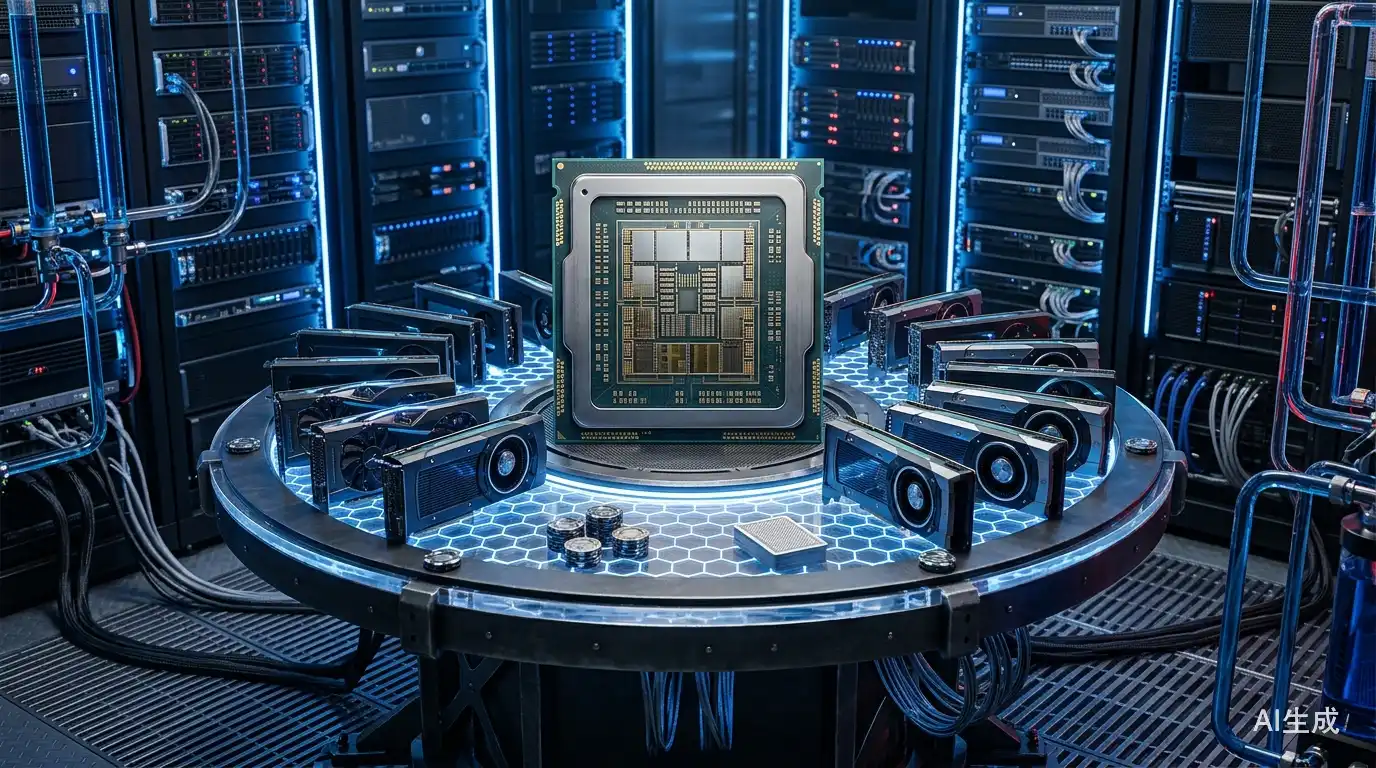
CPU Makes a Comeback to the Table, A $170 Billion "Power Seizure" Drama Begins

A new era is dawning for the server CPU (Central Processing Unit), driven by the shift from AI model training to large-scale reasoning and the rise of Agentic AI. This article explores how the CPU is reclaiming a central role in the AI data center. For years, the focus has been on the GPU (Graphics Processing Unit) for AI training. However, as AI moves to the inference and Agent phase—where tasks involve complex, multi-step reasoning, tool calls, and data management—the workload balance is flipping. Studies show CPUs now handle over 70% of the workload in Agentic AI, up from 10-30% in training. This is because Agent tasks generate massive intermediate data (KV Cache) that exceeds GPU memory, forcing it to be offloaded to the CPU's larger, more scalable memory pools. This increased importance is translating into market changes. Major players are taking note: NVIDIA launched its first standalone CPU line, Vera, based on ARM architecture and optimized for Agent performance. AMD doubled its server CPU market forecast to over $1200 billion by 2030. Analyst reports project the total server CPU market could reach $1700 billion by 2030, with AI-driven demand being a primary driver. Furthermore, the classic ratio of CPUs to GPUs in AI servers is rapidly changing, converging from 1:8 toward 1:1 for Agent deployments. This surge in demand has led to a rare industry-wide price increase of 10-15% for server CPUs from Intel and AMD, breaking a decade-long trend of "more performance for the same price." Demand is bifurcating into high-core-count CPUs for in-rack GPU support and moderate-core CPUs for standalone Agent task orchestration. In China, this global trend presents an opportunity for domestic CPU manufacturers like Hygon (海光信息) and Huawei Kunpeng, who are bolstered by both growing AI infrastructure needs and national policies promoting technological self-reliance ("xin chuang"). The maturity of their software ecosystems is also accelerating, evidenced by faster adaptation to new AI models. In conclusion, the narrative is shifting from a GPU-centric view to one where CPU-GPU synergy is critical. The CPU is no longer a peripheral component but a performance-defining bottleneck and a key growth driver in the AI hardware stack, opening a massive new market estimated in the hundreds of billions of dollars.

marsbit10 saat önce

CPU Makes a Comeback to the Table, A $170 Billion "Power Seizure" Drama Begins

marsbit10 saat önce

TechFlow Intelligence: AMD AI Director Publicly Criticizes Claude Code for "Becoming Dumber and Lazier", Trump Claims Full Ceasefire in Hormuz But Strait Still Has 80 Unexploded Mines

TechFlow Intelligence Report: This daily digest covers key developments in AI, crypto, hardware, and geopolitics. In AI, SK Telecom faces US export control scrutiny over its partnership with Anthropic, while a Gemini user reports being misled in a scam scenario, sparking safety debates. China's Z.AI launches the GLM-5.2 model, rivaling Claude Opus without NVIDIA chips. In crypto, Bithumb lists ReProtocol, and Upbit delists KernelDAO. On the hardware front, MIT researchers build a custom OS to study chips, ASML denies US claims its advanced lithography machines are in China, and Amazon considers selling its in-house AI chips. Apple's future A21 Pro chip may use TSMC's latest N2P process. Major tech issues include 10,000 GitHub repositories distributing malware and Apple patching a critical eavesdropping flaw in Beats earbuds. US stocks rise, led by semiconductors, with Intel surging 10.6%, while SpaceX falls 3.5%. Geopolitically, despite a US-Iran deal, the Strait of Hormuz remains risky with ~80 uncleared mines, stalling 80M barrels of oil on standby tankers. Iran postpones Switzerland talks, and Trump calls the agreement an "unconditional surrender." The report highlights a contrast: temporary geopolitical calm versus the ongoing, fundamental restructuring of tech supply chains and chip independence.

marsbit10 saat önce

TechFlow Intelligence: AMD AI Director Publicly Criticizes Claude Code for "Becoming Dumber and Lazier", Trump Claims Full Ceasefire in Hormuz But Strait Still Has 80 Unexploded Mines

marsbit10 saat önce

İşlemler

Spot
Futures

Popüler Makaleler

LTC Nasıl Satın Alınır

HTX.com’a hoş geldiniz! Litecoin (LTC) satın alma işlemlerini basit ve kullanışlı bir hâle getirdik. Adım adım açıkladığımız rehberimizi takip ederek kripto yolculuğunuza başlayın. 1. Adım: HTX Hesabınızı OluşturunHTX'te ücretsiz bir hesap açmak için e-posta adresinizi veya telefon numaranızı kullanın. Sorunsuzca kaydolun ve tüm özelliklerin kilidini açın. Hesabımı Aç2. Adım: Kripto Satın Al Bölümüne Gidin ve Ödeme Yönteminizi SeçinKredi/Banka Kartı: Visa veya Mastercard'ınızı kullanarak anında Litecoin (LTC) satın alın.Bakiye: Sorunsuz bir şekilde işlem yapmak için HTX hesap bakiyenizdeki fonları kullanın.Üçüncü Taraflar: Kullanımı kolaylaştırmak için Google Pay ve Apple Pay gibi popüler ödeme yöntemlerini ekledik.P2P: HTX'teki diğer kullanıcılarla doğrudan işlem yapın.Borsa Dışı (OTC): Yatırımcılar için kişiye özel hizmetler ve rekabetçi döviz kurları sunuyoruz.3. Adım: Litecoin (LTC) Varlıklarınızı SaklayınLitecoin (LTC) satın aldıktan sonra HTX hesabınızda saklayın. Alternatif olarak, blok zinciri transferi yoluyla başka bir yere gönderebilir veya diğer kripto para birimlerini takas etmek için kullanabilirsiniz.4. Adım: Litecoin (LTC) Varlıklarınızla İşlem YapınHTX'in spot piyasasında Litecoin (LTC) ile kolayca işlemler yapın.Hesabınıza erişin, işlem çiftinizi seçin, işlemlerinizi gerçekleştirin ve gerçek zamanlı olarak izleyin. Hem yeni başlayanlar hem de deneyimli yatırımcılar için kullanıcı dostu bir deneyim sunuyoruz.

845 Toplam GörüntülenmeYayınlanma 2024.12.11Güncellenme 2026.06.02

LTC Nasıl Satın Alınır

Tartışmalar

HTX Topluluğuna hoş geldiniz. Burada, en son platform gelişmeleri hakkında bilgi sahibi olabilir ve profesyonel piyasa görüşlerine erişebilirsiniz. Kullanıcıların LTC (LTC) fiyatı hakkındaki görüşleri aşağıda sunulmaktadır.

活动图片