TechFlow Intelligence Report: Huawei Unveils "Tao" Law, Semiconductor Sector Surges; Meta Cuts 10% of Workforce

marsbit2026-05-25 tarihinde yayınlandı2026-05-25 tarihinde güncellendi

Özet

"TechFlow Intelligence Brief": Huawei's new "Tau Law" in semiconductors and Meta's 10% layoffs headline today's tech landscape. In AI, breakthroughs include an AI solving 9 high-difficulty pure math problems for just a few hundred dollars each, and DeepSeek's new Reasonix programming agent challenging commercial models. However, research highlights a "constraint decay" issue in LLM-generated backend code. Open-source model Qwen 3.6 27B achieves high speeds on older GPUs, sparking debate on NVIDIA's future dominance. In Crypto/Web3, Ethereum Foundation plans to downsize, possibly reducing ETH selling pressure. Fake news about CZ ignited a meme coin frenzy, showing the market's sensitivity to celebrity narratives. DeFi sees a new trend in HELOC-backed Real World Asset (RWA) pools. The chip sector is stirred by Huawei's proposed "Tau (τ) Law," aiming for 1.4nm-equivalent performance by 2031 through architectural innovation, causing related stocks to surge. A report notes memory now constitutes nearly two-thirds of AI chip cost. Meanwhile, executives at 7 Chinese semiconductor firms sold shares after price peaks. Meta announces 10% layoffs as it pivots to AI. Google's CEO faced student protests over AI ethics during a speech, and the company controversially published a Chromium exploit before patching was complete. Xiaomi permanently banned installers for AC installation fraud. In US stocks, AMD is seen as a potential challenger to NVIDIA, while a survey reveals 99% of CEOs ...

Successfully solved 9 out of 353 open mathematical problems, each costing only a few hundred dollars. This is the first time AI has demonstrated practical value in the high-difficulty field of pure mathematics, potentially changing the paradigm of mathematical research.

Source: Reddit r/singularity

DeepSeek Reasonix Launches Native Programming Agent

Focusing on high cache hit rates and low costs, its performance rivals commercial models like Claude. The community is debating whether its reasoning capabilities can truly be consistently maintained in practical programming tasks.

Source: Hacker News

Research Reveals LLM Agent Backend Code Generation Suffers from "Constraint Decay" Issue

A paper points out that large models tend to lose constraint conditions in complex backend tasks, leading to decreased usability of generated code. This may be a core bottleneck preventing current AI programming tools from fully replacing humans.

Source: arXiv | Discussion: Hacker News

Qwen 3.6 27B Achieves 1000 tokens/sec Generation Speed on V100

Open-source community tests show that older GPUs can also achieve extremely high throughput, with AMD RDNA3 graphics cards gaining native support through hipEngine. The local reasoning cost-performance war has officially begun.

Discussion: The community is debating whether NVIDIA will still be the sole optimal choice for local LLMs in 2026, as AMD and open-source solutions are challenging its monopoly.

Source: Reddit r/LocalLLaMA

> Spicy Comment: Solving Erdős problems for a few hundred dollars—mathematicians might consider switching to prompt engineering.

Crypto / Web3

Ethereum Foundation to "Downsize" and Reduce ETH Sell-offs

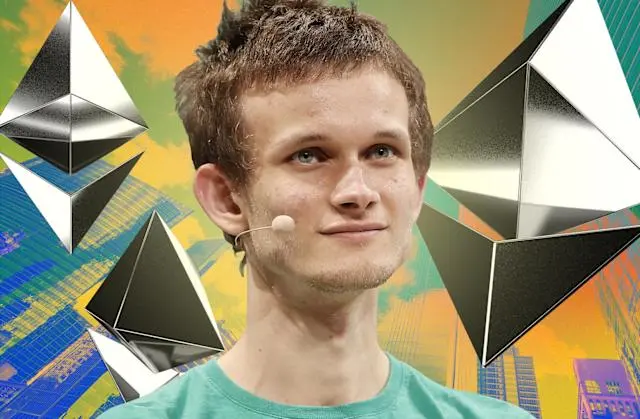
Vitalik Buterin stated the foundation will become a "smaller ship," following a wave of researcher departures. This is a response to community criticism and may also ease ETH selling pressure.

Source: The Block

CZ "Surfing Accident" Rumor Triggers Meme Coin Frenzy

False news spawned multiple eponymous meme coins on Solana and BNB Chain, with trading volume skyrocketing. Once again confirming the crypto market's extreme sensitivity to celebrity narratives.

Source: BeInCrypto

DeFi Mortgage Loan Pools (HELOC-backed RWA) Emerge as New Trend

Real World Assets (RWA) are expanding from treasury bonds to home equity loans, accelerating the on-chain movement of traditional financial products. However, liquidation mechanisms and legal compliance remain the biggest challenges.

Source: Reddit r/defi

Chips / Hardware

Huawei First Proposes "Tao (τ) Law" to Counter Moore's Law

Aims to achieve 1.4nm equivalent performance by 2031 through architectural innovation rather than solely process advancement. People's Daily published an article stating "China's definition will rewrite the world," and the semiconductor sector surged accordingly.

Source: Wall Street News | Cailian Press

Memory Cost Share in AI Chips Nears Two-Thirds

Epoch AI data shows memory has become the largest cost component in AI chips, forcing the industry to shift from compute-first to memory-optimized architectures. HBM supply chain competition will intensify.

Source: Epoch AI | Discussion: Hacker News

7 Semiconductor Companies' Executives Sell Shares After Stock Price Hits Highs, Cashing Out 12.7 Billion Yuan

Concentrated selling by executives of Chinese semiconductor companies at stock price highs has sparked controversy. The market questions whether this signals distrust in long-term prospects or is normal financial operation.

Source: Zhihu

> Spicy Comment: Moore's Law is dead, Tao Law is here—from Silicon Valley to Shenzhen, even the invention right of 'laws' is being localized.

Tech Companies

Meta Cuts 10% of Workforce, Zuckerberg Warns "Success is Not Inevitable"

Amid a wave of 8,000 layoffs, some employees reportedly volunteered to be laid off. Meta accelerates its AI transformation while cutting traditional businesses, creating a tense internal atmosphere.

Source: NBC News

Google CEO's Commencement Speech Met with Boos, Says "You Will Shape the Future of AI"

Sundar Pichai faced protests during his speech at Stanford, with students expressing discontent over AI ethics and job impacts. The PR dilemma for tech giants is becoming increasingly apparent.

Source: Business Insider

Google Publicly Releases Chromium Exploit Code, Millions of Users at Risk

Releasing the exploit before patches were fully rolled out drew criticism from the security community. Google stated this is its "transparency first" policy, but the timing is heavily questioned.

Source: Ars Technica

Xiaomi Reports Air Conditioner Installation Fraud, Permanently Blacklists Two Technicians

Fraud in the "vacuum extraction" step could severely shorten AC lifespan. Xiaomi's tough response shows its emphasis on service quality, but doubts remain about eradicating industry-wide unspoken rules.

Source: Zhihu

U.S. Stocks

AMD Seen as Potential to Hit $1 Trillion Market Cap, Challenging NVIDIA

Reddit investors believe AMD's market share growth in the AI chip market is underestimated. However, NVIDIA's software ecosystem moat remains the biggest obstacle.

Source: Reddit r/stocks

99% of CEOs Expect AI-Driven Layoffs Within Next Two Years

A survey shows nearly all business leaders plan to replace some positions with AI. This is no longer a technological trend but a definitive business decision.

Discussion: Reddit focus shifts from "Will AI take jobs?" to "Which jobs will survive until 2028?".

Source: Gizmodo

Palantir Wins $3.9 Million Contract to Monitor Federal Employees

The US government uses Palantir to monitor employees at the Department of Agriculture, Social Security Administration, and Department of Veterans Affairs, sparking privacy concerns. The boundary between tech companies and government surveillance is blurring again.

Source: The American Prospect

BlackBerry Regains Attention, Transitions to Cybersecurity and Automotive Software

No longer a phone company, BlackBerry finds a new position in IoT security. Reddit investors consider it severely undervalued.

Source: Reddit r/stocks

Finance / Macro

WTI Crude Plunges 6%, Strait of Hormuz Reopening Seen Likely

Trump calls US-Iran negotiations "constructive progress," oil price plummets to $90.80/barrel. Global stock markets rise, but the blockade will continue until a formal agreement is signed.

Source: Barron's | CNBC

Spot Silver Rises Over 4%, Reaching $78.80/Oz

Safe-haven sentiment and inflation expectations jointly drive precious metals higher. Market expectations for Fed rate cuts are heating up.

Source: 6551/macro

Global Oil Inventories May Fall Below 100 Days of Demand

Continued Strait of Hormuz blockade leads to supply tightness, Asian and European markets are nearing "tank bottom." Energy security is again a top priority for nations.

Source: Nikkei Asia

> Spicy Comment: Cheering a 6% oil price drop, forgetting the good old $50 days three months ago—this is the 2026 version of the "peace dividend."

New Products / New Trends

YouTube/Podcasts Can Be Embedded with Inaudible Hidden Commands to Hijack AI Voice Assistants

Cybersecurity research reveals a new "auditory prompt injection" attack where users can trigger unauthorized commands without detection. AI security boundaries are breached again.

Source: Cybernews

CBS Halts Deletion of Pirated Uploads of Stephen Colbert's Early Public TV Episodes

The copyright holder compromised after community protest. This reflects a new consensus on protecting "cultural heritage" in the streaming era.

Source: Variety

Today's Undercurrent

From Google AI solving mathematical puzzles for a few hundred dollars, to 99% of CEOs planning AI layoffs, to Huawei announcing the "Tao Law" challenging Western chip discourse—today's news weaves a clear narrative: The race in AI and chips is no longer just a technical issue; it's a comprehensive game involving employment, geopolitics, and civilizational discourse power. The oil price crash and US-Iran talks are just interludes. The real battlefield lies in computing power, laws, and who defines "intelligence."

İlgili Sorular

QWhat is the 'Tao (τ) Law' recently proposed by Huawei, and what is its goal according to the article?

AHuawei has proposed the 'Tao (τ) Law' as a counterpart to Moore's Law. Its goal is to achieve 1.4nm equivalent performance by 2031 through architectural innovation rather than simply advancing semiconductor manufacturing processes.

QWhat significant AI achievement in pure mathematics is reported, and what is notable about its cost?

AAI successfully solved 9 out of 353 open mathematical problems. The notable aspect is the cost, which was only a few hundred dollars per problem, showcasing practical value in high-level pure mathematics.

QWhat action did Meta take regarding its workforce, and what was the reason given by Mark Zuckerberg?

AMeta laid off 10% of its employees, affecting approximately 8,000 people. Mark Zuckerberg warned that 'success is not inevitable,' indicating the company is accelerating its AI transformation while cutting traditional business units.

QAccording to a survey mentioned in the article, what percentage of CEOs expect AI-driven layoffs in the next two years?

A99% of CEOs expect AI-driven layoffs to occur within the next two years, viewing it as a definitive business decision rather than just a technological trend.

QWhat new type of cybersecurity attack involving AI voice assistants is revealed in the article?

AThe article reveals a new type of cybersecurity attack called 'audio prompt injection,' where hidden commands inaudible to humans can be embedded into YouTube videos or podcasts to hijack AI voice assistants without the user's knowledge.

İlgili Okumalar

DeFi Has Reached Its Most Dangerous Moment: The Real Vulnerabilities Are Not in the Code

DeFi in Peril: The Real Vulnerability Isn't in the Code April 2026 marked a paradigm shift in DeFi security, with over $625 million lost across 30 incidents—the worst month in crypto history by event count. Crucially, none of the major exploits (Drift Protocol: $285M, KelpDAO: $292M, Wasabi Protocol: $4.5M) resulted from smart contract vulnerabilities. Instead, failures occurred in the operational "plumbing": social engineering to compromise multi-signature councils, a single-point-of-failure 1-of-1 bridge validator, and stolen admin private keys. These events expose a fundamental misalignment: the industry's security model has long focused on code audits, while the actual attack surface has shifted to privileged access points and off-chain infrastructure. The article introduces the term "OpenFi" to describe this reality: permissionless, on-chain, yet operationally dependent on trusted third parties (admins, validators, oracles) at key junctures. The KelpDAO exploit vividly demonstrated asymmetric "contagion risk." A configuration error in a smaller protocol triggered a panic, causing approximately $13.2 billion in outflows from larger, unaffected protocols like Aave within 48 hours, as users fled uncertain collateral. The core dilemma is the double-edged sword of centralization. Operational levers like emergency councils (e.g., Arbitrum freezing stolen funds post-KelpDAO) enable crisis response but also create catastrophic attack surfaces if compromised (e.g., Drift). The path forward demands radical honesty: protocols must clearly disclose their trust assumptions, operational levers, and failure modes. The industry must treat operational security (key management, configurations, incident response) with the same rigor as code security. Survival depends on building systems whose risks can be understood, priced, and insured, moving beyond the outdated "code is law" mantra to a mature model of disclosed and managed trust.

链捕手1 saat önce

DeFi Has Reached Its Most Dangerous Moment: The Real Vulnerabilities Are Not in the Code

链捕手1 saat önce

Vitalik's Article Emphasizes Ethereum Must Be 'Amazing', But Foundation Is Not the Center

Vitalik Buterin has published a lengthy response to recent community criticism directed at the Ethereum Foundation (EF). Acknowledging a sense of "unease," he addresses concerns about the EF's strategic direction, its perceived disconnect from ETH's price performance, and calls for its reduced central role. Vitalik rejects the notion that the EF should be the central governing body of Ethereum, framing it instead as one "node with a clear mandate" among many within the ecosystem. He highlights the EF's limited ETH holdings (≈0.16% of supply) compared to other blockchain foundations and states it will no longer sell significant amounts of ETH. Its future focus will be on long-term, critical projects that align with Ethereum's core values of censorship-resistance and decentralization, which might not otherwise happen. A core argument is that Ethereum must be "amazing," but not by merely chasing higher transaction speeds at the cost of decentralization. He proposes focusing on the "CROPS" dimensions: creating a Cryptographically provable, Reliable, Open, Private, and Secure network. This includes pursuing goals like a formally verifiable, bug-free Ethereum client and minimizing protocol-level reliance on intermediaries. The article concludes by noting that while Vitalik clarifies the EF's refocused role, he does not directly address community suggestions for creating a new organization explicitly aligned with ETH's economic interests. This "alignment gap" is presented as a key challenge for Ethereum's future.

链捕手1 saat önce

Vitalik's Article Emphasizes Ethereum Must Be 'Amazing', But Foundation Is Not the Center

链捕手1 saat önce

Galxe: How a Quest Platform Evolved into Web3's Growth Infrastructure

Galxe, once perceived as a simple Web3 quest platform, has evolved into a core growth infrastructure within the Web3 ecosystem. It addresses a fundamental Web3 growth dilemma: the lack of a mature, systematic user acquisition and retention system akin to Web2's advertising and analytics platforms. While users complete quests (social tasks, on-chain interactions) for rewards, Galxe's true innovation lies in transforming these fragmented, one-off actions into lasting, verifiable identity credentials. This process of *behavioral assetization* creates a persistent record of a user's activities across projects and chains. For users, their wallet accumulates a valuable history that can unlock future access and rewards, fostering a "profile-building" mentality. For projects, Galxe provides a pre-screened user pool with rich behavioral data, enabling targeted outreach to users based on their specific on-chain history and community engagement. Galxe employs a gamefied growth path, guiding users from low-friction social tasks into deeper, valuable on-chain interactions through a structured progression of quests. This solves the incentive-behavior mismatch common in Web3, filtering users by their willingness to engage. Beyond quests, products like Passport (identity verification) and Starboard (community analytics) position Galxe as a comprehensive growth operating system. The platform's defensible advantage is its self-reinforcing data and network flywheel: more projects attract more users, enriching behavioral data; richer data enables better user targeting, attracting more projects. Ultimately, Galxe is shifting Web3's growth logic from short-term "reward-driven" traffic towards a long-term "identity-driven" relationship model, where a user's accumulated on-chain履历 becomes a core asset.

marsbit1 saat önce

Galxe: How a Quest Platform Evolved into Web3's Growth Infrastructure

marsbit1 saat önce

İşlemler

Spot
Futures
活动图片