Institutional Dominance in the Crypto Market: The End of Decentralization or the Dawn of a New Era?

marsbit2025-12-11 tarihinde yayınlandı2025-12-11 tarihinde güncellendi

Özet

In 2025, institutional investors now account for approximately 95% of cryptocurrency inflows, while retail participation has declined to just 5–6%, marking a structural shift in the market. According to Aishwary Gupta of Polygon Labs, this transition is driven by maturing infrastructure rather than sentiment. Major asset managers like BlackRock and Apollo are allocating portions of their portfolios to digital assets via ETFs and on-chain tokenized products, leveraging blockchain for yield generation and operational efficiency. Gupta highlights that institutional adoption is progressing in two phases: first, through yield-bearing products like tokenized treasuries and regulated staking, and second, via efficiency gains such as faster settlement and programmable assets. While retail interest waned due to meme coin losses, he expects gradual return as more transparent, regulated products emerge. Addressing concerns about centralization, Gupta argues that institutional involvement can enhance blockchain’s without compromising decentralization, provided infrastructure remains open. He envisions a future financial system where DeFi, NFTs, and traditional assets coexist on public chains. Although compliance may limit some experimentation, it fosters more sustainable innovation. Increased institutional participation is expected to reduce volatility and accelerate growth in areas like real-world asset tokenization and cross-chain interoperability. Ultimately, this trend signifies cr...

Author: Centreless

In 2025, the cryptocurrency market reached a structural turning point: institutional investors have become the absolute dominant force, while retail investors have noticeably cooled. Aishwary Gupta, Global Head of Payments and Real-World Assets at Polygon Labs, recently stated in an interview that institutional capital now accounts for approximately 95% of overall cryptocurrency inflows, with retail participation dwindling to just 5%-6%, marking a significant shift in market dominance.

He explained that this institutional shift is not driven by sentiment but is a natural outcome of maturing infrastructure. Major asset management giants, including BlackRock, Apollo, and Hamilton Lane, are allocating 1%-2% of their portfolios to digital assets, accelerating their deployment through ETFs and on-chain tokenized products. Gupta cited Polygon's collaboration cases as examples, such as JPMorgan testing DeFi transactions under the supervision of the Monetary Authority of Singapore, Ondo's tokenized treasury project, and AMINA Bank's regulated staking, all demonstrating that public chains can now meet the compliance and auditing requirements of traditional finance.

The two main drivers of institutional entry are yield demand and operational efficiency. The first phase primarily focuses on generating stable returns through tokenized treasuries and bank-grade staking; the second phase is propelled by the efficiency gains brought by blockchain, such as faster settlement speeds, shared liquidity, and programmable assets, which are prompting large financial institutions to experiment with on-chain fund structures and settlement models.

In contrast, the retreat of retail investors is mainly due to losses and a loss of trust caused by previous Meme coin cycles. However, Gupta emphasized that this is not a permanent exit; as more regulated and transparent risk products emerge, retail investors will gradually return.

Addressing concerns that institutional entry might undermine the decentralized ethos of cryptocurrency, Gupta argued that as long as the infrastructure remains open, institutional participation will not centralize blockchains but instead enhance their legitimacy. He pointed out that the future financial network will be a fused system where DeFi, NFTs, treasuries, ETFs, and other asset classes coexist on the same public chain.

Regarding whether institutional dominance might stifle innovation, he acknowledged that some experimentation would be constrained in a more compliance-focused environment. However, in the long run, this will help the industry build a more robust and scalable path for innovation, rather than relying on high-speed trial-and-error that "breaks the rules."

Looking ahead, he stated that institutional liquidity will continue to enhance market stability, with reduced speculation leading to lower volatility. The tokenization of real-world assets (RWA) and institutional-grade staking networks will develop rapidly. Interoperability will also become critical, as institutions require infrastructure capable of seamlessly transferring assets across chains and cross-rollup layers.

Gupta emphasized that institutional entry is not a "takeover" of crypto by traditional finance but a collaborative process of building new financial infrastructure. Cryptocurrency is evolving from a speculative asset into a core underlying technology of the global financial system.


İlgili Sorular

QWhat is the current proportion of institutional inflows in the cryptocurrency market, according to Aishwary Gupta?

AInstitutional investors now account for approximately 95% of the total inflows into the cryptocurrency market.

QWhat are the two main drivers for institutional entry into the crypto market as mentioned in the article?

AThe two main drivers are yield generation (through products like tokenized treasuries and bank-grade staking) and operational efficiency (faster settlement, shared liquidity, and programmable assets).

QHow does Aishwary Gupta respond to concerns that institutional participation undermines the decentralized nature of crypto?

AHe argues that as long as the infrastructure remains open, institutional involvement does not centralize the ecosystem but instead enhances its legitimacy.

QWhat long-term impact does institutional dominance have on market stability and volatility?

AIt is expected to increase market stability and reduce volatility, as speculative activity decreases.

QWhat does Gupta say about the future financial network regarding different asset types?

AHe states that the future financial network will be a fusion system where various assets like DeFi, NFTs, treasuries, and ETFs coexist on the same public blockchain.

İlgili Okumalar

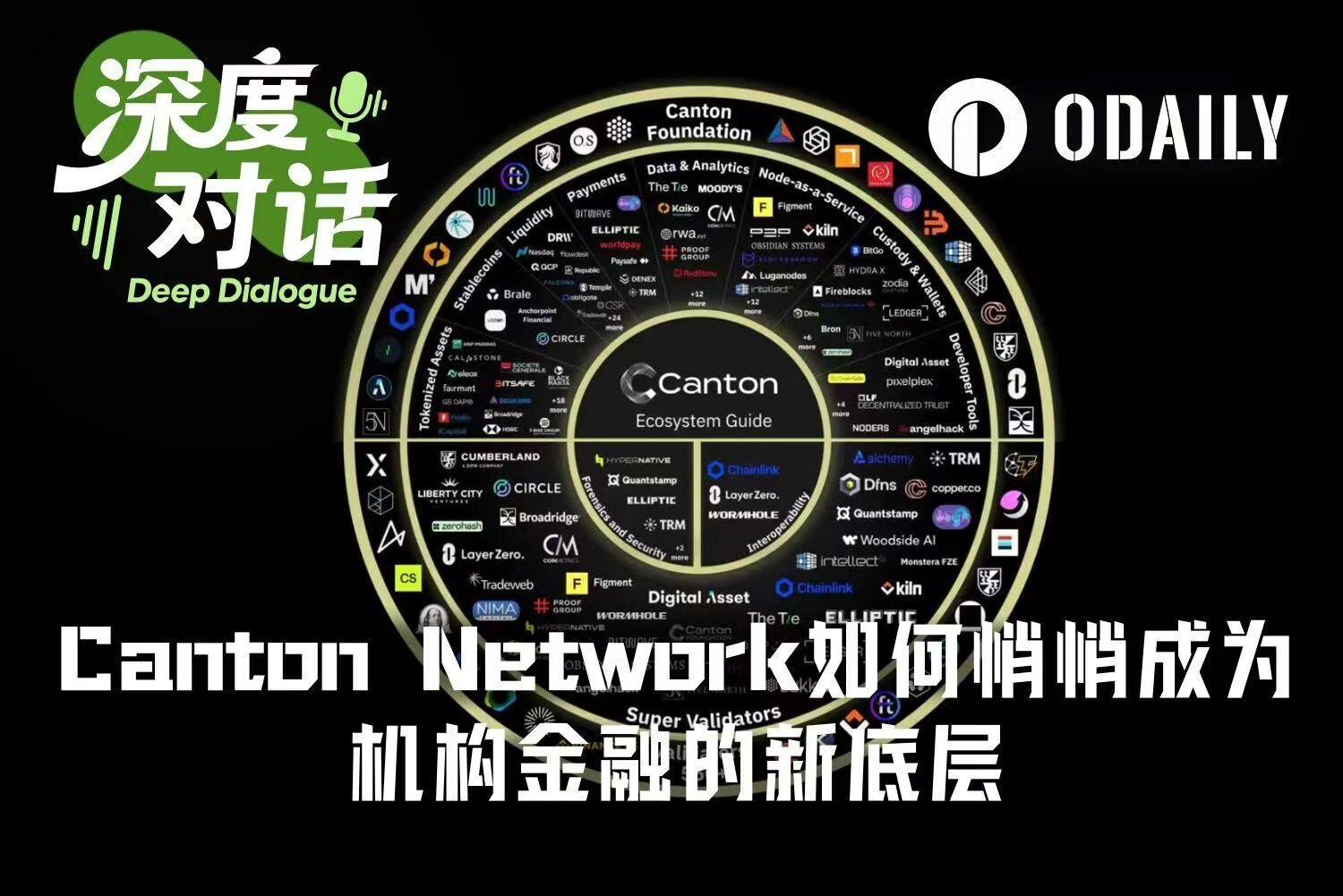
Putting Markets On-Chain: Canton Network Quietly Becoming the New Backbone for Institutional Finance

Canton Network: A New Institutional Financial Infrastructure Emerges Visa's rapid three-day approval as a super-validator on Canton Network in March 2026 marks a significant institutional endorsement. Unlike public blockchains like Ethereum, which prioritize transparency, Canton is designed for regulated financial institutions. Its core innovation is built-in data visibility control, where transaction details are only visible to direct participants. This enables institutions like Goldman Sachs, JPMorgan, and DTCC to conduct private, secure business on-chain without exposing sensitive strategies or positions. Canton, developed by Wall Street-focused Digital Asset, emphasizes slow, methodical development to meet stringent institutional requirements. Current on-chain activity, exceeding $9 trillion monthly, involves real balance-sheet operations like tokenized repos, treasury settlements, and collateral movement—not retail speculation. Key applications include JPMorgan's deposit token (JPM Coin), DTCC's U.S. Treasury tokenization, and Visa-enabled atomic settlement, aiming to synchronize asset delivery and payment instantly. The network's CC token is a utility asset, with value tied to real financial activity volume. It features no pre-mine or VC allocations, aligning with institutional preferences for transparency. Canton's 3–5 year vision is to become an "invisible" foundational layer for global finance—facilitating real-time cross-border capital flows, institutional stablecoin settlement, and native on-chain operations for major asset classes. While regulatory harmonization and legacy system integration remain challenges, Canton represents a pragmatic shift towards embedding markets themselves into blockchain infrastructure.

Odaily星球日报6 saat önce

Putting Markets On-Chain: Canton Network Quietly Becoming the New Backbone for Institutional Finance

Odaily星球日报6 saat önce

İşlemler

Spot
Futures

Popüler Makaleler

HPP Nasıl Satın Alınır

HTX.com’a hoş geldiniz! House Party Protocol (HPP) satın alma işlemlerini basit ve kullanışlı bir hâle getirdik. Adım adım açıkladığımız rehberimizi takip ederek kripto yolculuğunuza başlayın. 1. Adım: HTX Hesabınızı OluşturunHTX'te ücretsiz bir hesap açmak için e-posta adresinizi veya telefon numaranızı kullanın. Sorunsuzca kaydolun ve tüm özelliklerin kilidini açın. Hesabımı Aç2. Adım: Kripto Satın Al Bölümüne Gidin ve Ödeme Yönteminizi SeçinKredi/Banka Kartı: Visa veya Mastercard'ınızı kullanarak anında House Party Protocol (HPP) satın alın.Bakiye: Sorunsuz bir şekilde işlem yapmak için HTX hesap bakiyenizdeki fonları kullanın.Üçüncü Taraflar: Kullanımı kolaylaştırmak için Google Pay ve Apple Pay gibi popüler ödeme yöntemlerini ekledik.P2P: HTX'teki diğer kullanıcılarla doğrudan işlem yapın.Borsa Dışı (OTC): Yatırımcılar için kişiye özel hizmetler ve rekabetçi döviz kurları sunuyoruz.3. Adım: House Party Protocol (HPP) Varlıklarınızı SaklayınHouse Party Protocol (HPP) satın aldıktan sonra HTX hesabınızda saklayın. Alternatif olarak, blok zinciri transferi yoluyla başka bir yere gönderebilir veya diğer kripto para birimlerini takas etmek için kullanabilirsiniz.4. Adım: House Party Protocol (HPP) Varlıklarınızla İşlem YapınHTX'in spot piyasasında House Party Protocol (HPP) ile kolayca işlemler yapın.Hesabınıza erişin, işlem çiftinizi seçin, işlemlerinizi gerçekleştirin ve gerçek zamanlı olarak izleyin. Hem yeni başlayanlar hem de deneyimli yatırımcılar için kullanıcı dostu bir deneyim sunuyoruz.

173 Toplam GörüntülenmeYayınlanma 2026.04.29Güncellenme 2026.04.29

HPP Nasıl Satın Alınır

GENIUS Nedir

I. Proje Tanıtımı1. Genius Nedir?Genius (GENIUS), “nihai on-chain terminal” olarak konumlandırılan, gizlilik ve hız odaklı merkeziyetsiz bir ticaret platformudur. En üst düzey gizlilik teknolojilerini entegre ederek, BNB Chain gibi ağlar üzerinde, kullanıcıların merkezi borsalara benzer kesintisiz bir deneyimle on-chain etkileşimde bulunmalarını sağlayacak bir sonraki nesil gizlilik ticaret altyapısını inşa etmeyi hedeflemektedir.2. Genius Nasıl Çalışır?Genius'un temel teknik mimarisi şu şekilde yapılandırılmıştır:(1) Zincir-görünmez: Kullanıcıların, çapraz zincir işlemleri, varlık sarmalama veya karmaşık gaz yönetimi için çok adımlı onayları manuel olarak yönetmelerine gerek yoktur.(2) İmzasız Ticaret: Turnkey gibi entegrasyonlar aracılığıyla, Genius, pop-up onayları veya işlem başına yetkilendirme olmadan anlık ticareti mümkün kılar.(3) Agregatörlerin Agregatörü: Genius, 150'den fazla DEX ile entegre edilmiş en iyi sınıf bir agregasyon yığını ile desteklenmektedir ve rakip ürünlere kıyasla üstün teklif verimliliği iddia etmektedir.(4) Hesap Yönetimi: Platform, saklama dışı bir mimari benimsemekte ve anahtar yönetimi için Turnkey ve Lit Protocol'ü kullanarak, kullanıcıların hesaplarına güvenli bir şekilde geçiş anahtarları aracılığıyla erişmelerini sağlamaktadır.3. Genius'u Kim Yarattı?Resmi Hizmet Şartlarına göre, Genius, Shuttle Labs, Inc. tarafından geliştirilmiştir. Projenin resmi X hesabına göre, Ryan Myher, Ghost protokolünün piyasaya sürülmesi gibi ürün iterasyonunu yönlendiren ana katkı sağlayıcılardan biridir ve daha geniş topluluk katılımını sağlamaktadır.Binance kurucusu CZ, ekibin daha hızlı ve gizliliği koruyan bir on-chain ticaret deneyimi inşa etmesine yardımcı olmak amacıyla resmi olarak projeye danışman olarak katılmıştır.Ayrıca, proje, Genius ve Genius Bridge Protocol (GBP) temelini korumaktan sorumlu Genius Vakfı ile birlikte çalışan YZi Labs'dan güçlü destek almıştır.4. Genius TokenomisiGENIUS, Genius ekosisteminin yerel token'ıdır. Şu anda, proje tam bir tokenomi belgesi yayınlamamıştır.Son resmi açıklamalara göre, Genius, deflasyonist bir mekanizma içermekte ve toplam token arzının %4.6'sı, erken lansman aşamasında zaten yakılmıştır.Genius Puanları (GP) Sistemi:(1) Ticaretle Kazan: Platform, 200 milyon Genius Puanı ödül havuzu oluşturmuş ve kullanıcılar terminal aracılığıyla gerçekleştirilen her ticaret için GP kazanmaktadır.(2) Seviye ve Rozetler: Genius, Akıllı'dan Tanrı'ya kadar uzanan bir ilerleme tabanlı rozet sistemi sunmakta olup, daha yüksek seviyeler ek avantajlar ve faydalar sunmaktadır.(3) Yerel Getiri: Gösterge panelinde usdGG gibi belirlenen varlıklara sahip kullanıcılar, karmaşık staking süreçlerine girmeden doğrudan yerel getiri kazanabilirler.(4) Yönlendirme Teşvikleri: Yönlendirenler, USDC cinsinden %45'ten fazla ücret iadesi kazanabilir ve ek GP alabilirler.5. Zaman Çizelgesi & Ana Dönüm NoktalarıMart 2020: Projenin resmi X hesabı oluşturuldu ve erken hazırlık aşamasının başlangıcını işaret etti.13 Ocak 2026: Genius, YZi Labs'tan çok milyon dolarlık bir yatırım aldığını duyurdu ve aynı zamanda gizlilik ticaret altyapısının inşasını hızlandırmak için CZ'yi danışman olarak onayladı.18 Nisan 2026: Proje, Ghost gizlilik protokolünün yakında piyasaya sürüleceğini duyurdu.29 Nisan 2026: Ghost protokolü, ilk 50 testçisine resmi olarak açıldı ve BNB Chain'de gizlilik ticareti için yeni bir dönemin başlangıcını işaret etti. Aynı zamanda, ekip %4.6'lık token'ın yakıldığını doğruladı.​II. Token Bilgileri1) Temel BilgilerToken adı: GENIUS (Genius)III. İlgili BağlantılarWeb sitesi:https://www.tradegenius.com/homeKeşif Araçları:https://bscscan.com/address/0x1f12b85aac097e43aa1555b2881e98a51090e9a6Sosyal Medya:https://x.com/GeniusTerminalNot: Proje tanıtımı, resmi proje ekibi tarafından yayınlanan veya sağlanan materyallerden gelmektedir ve yalnızca referans amaçlıdır, yatırım tavsiyesi niteliğinde değildir. HTX, herhangi bir doğrudan veya dolaylı kayıptan sorumluluk kabul etmemektedir.

298 Toplam GörüntülenmeYayınlanma 2026.04.29Güncellenme 2026.05.12

GENIUS Nedir

GENIUS Nasıl Satın Alınır

HTX.com’a hoş geldiniz! Genius (GENIUS) satın alma işlemlerini basit ve kullanışlı bir hâle getirdik. Adım adım açıkladığımız rehberimizi takip ederek kripto yolculuğunuza başlayın. 1. Adım: HTX Hesabınızı OluşturunHTX'te ücretsiz bir hesap açmak için e-posta adresinizi veya telefon numaranızı kullanın. Sorunsuzca kaydolun ve tüm özelliklerin kilidini açın. Hesabımı Aç2. Adım: Kripto Satın Al Bölümüne Gidin ve Ödeme Yönteminizi SeçinKredi/Banka Kartı: Visa veya Mastercard'ınızı kullanarak anında Genius (GENIUS) satın alın.Bakiye: Sorunsuz bir şekilde işlem yapmak için HTX hesap bakiyenizdeki fonları kullanın.Üçüncü Taraflar: Kullanımı kolaylaştırmak için Google Pay ve Apple Pay gibi popüler ödeme yöntemlerini ekledik.P2P: HTX'teki diğer kullanıcılarla doğrudan işlem yapın.Borsa Dışı (OTC): Yatırımcılar için kişiye özel hizmetler ve rekabetçi döviz kurları sunuyoruz.3. Adım: Genius (GENIUS) Varlıklarınızı SaklayınGenius (GENIUS) satın aldıktan sonra HTX hesabınızda saklayın. Alternatif olarak, blok zinciri transferi yoluyla başka bir yere gönderebilir veya diğer kripto para birimlerini takas etmek için kullanabilirsiniz.4. Adım: Genius (GENIUS) Varlıklarınızla İşlem YapınHTX'in spot piyasasında Genius (GENIUS) ile kolayca işlemler yapın.Hesabınıza erişin, işlem çiftinizi seçin, işlemlerinizi gerçekleştirin ve gerçek zamanlı olarak izleyin. Hem yeni başlayanlar hem de deneyimli yatırımcılar için kullanıcı dostu bir deneyim sunuyoruz.

229 Toplam GörüntülenmeYayınlanma 2026.04.29Güncellenme 2026.05.12

GENIUS Nasıl Satın Alınır

Tartışmalar

HTX Topluluğuna hoş geldiniz. Burada, en son platform gelişmeleri hakkında bilgi sahibi olabilir ve profesyonel piyasa görüşlerine erişebilirsiniz. Kullanıcıların A (A) fiyatı hakkındaki görüşleri aşağıda sunulmaktadır.

活动图片