From $300 Million to $10 Million: Messari Was Still Sold at a Discount

Foresight News2026-06-15 tarihinde yayınlandı2026-06-15 tarihinde güncellendi

Özet

Blockworks has acquired its long-time competitor Messari for over $10 million, a significant discount from Messari's peak valuation of approximately $300 million in 2022. The deal highlights survival pressures on high-valuation crypto startups and industry consolidation during a bear market. Following the acquisition, Messari's data platform and API—covering assets, markets, news, research, and more—will be integrated into Blockworks. Messari CEO Diran Li will join Blockworks in a senior leadership role. Blockworks, founded in 2018, initially focused on media and events but has shifted toward building institutional data, investor relations, and compliance tools. Its recent Series A extension funding, aimed at consolidating fragmented crypto data, facilitated this acquisition. Messari, also founded in 2018, raised a $35 million Series B at its $300 million valuation but faced challenges post-2022 market downturn, including staff reductions and leadership changes. The acquisition combines Blockworks' strengths in issuer-side disclosure and compliance workflows with Messari's extensive datasets and API capabilities. The move aligns with a broader trend of mergers in the crypto sector as firms seek efficiency and aim to build comprehensive, standardized data infrastructure akin to traditional financial platforms like Bloomberg.


Author: Ma He, Foresight News


On June 12, Blockworks, a leading platform in crypto data and capital markets, announced the acquisition of its long-time competitor Messari for a transaction price exceeding $10 million. Messari had reached a valuation of approximately $300 million in 2022, making this sale price a significant discount. This highlights the survival pressures faced by high-valuation startups and the consolidation wave in the data infrastructure sector during a deep bear market.


In the official announcement, Jason Yanowitz, Co-founder of Blockworks, stated, "For eight years, Messari has provided the industry with transparency, market intelligence, and comprehensive data coverage for every crypto asset, building the industry's most extensive dataset. This integration will combine Blockworks' strengths in issuer disclosure, investor relations, and compliance workflows with Messari's strengths in data breadth and API capabilities, jointly building a 'single source of truth' for on-chain markets."


Transaction Details


According to Blockworks' official announcement and confirmation by multiple media outlets, following the acquisition, Messari CEO Diran Li will join Blockworks in a senior leadership role.


Diran Li


Messari's core assets, including its data platform and API, will be integrated into the Blockworks system. This API supports multi-dimensional data such as assets, markets, exchanges, news, research, stablecoins, protocols, networks, token unlocks, fundraising, social sentiment, event monitoring, and watchlists, and is already used by funds, exchanges, developers, and various market participants.


Blockworks indicated that this transaction is its first major acquisition following the completion of its Series A extension funding several weeks ago. That funding round valued the company at approximately $192 million, was co-led by ParaFi Capital and Reciprocal Ventures with participation from Coinbase Ventures, and its stated purpose was to consolidate the fragmented data and information landscape in the crypto space.


Blockworks and Messari


Founded in 2018 by Jason Yanowitz and Michael Ippolito and headquartered in New York, Blockworks initially focused on media and events, accumulating significant influence among crypto professionals and investors through podcasts (like Empire), research reports, and offline summits.


Jason Yanowitz and Michael Ippolito


As the industry matured, the company gradually pivoted from content creation to an on-chain capital markets intelligence platform, focusing on building institutional-grade data, investor relations, and compliance tools.


Around October 2025, Blockworks shut down its news department, concentrating resources on the data, investor relations, and compliance services segments, with its Blockworks Intelligence business line becoming a key growth area. The Series A extension funding completed this April was precisely to fuel this transition and subsequent M&A. Yanowitz publicly stated that the company's revenue is scaling rapidly, and this funding round was explicitly aimed at "consolidating the fragmented crypto data and information landscape."


Blockworks' strength lies in its issuer-side capabilities: helping on-chain asset issuers (protocols, chains, foundations, applications, stablecoin and RWA issuers, prediction markets, etc.) establish standardized disclosure frameworks, investor relations processes, and compliance workflows. Its products already serve institutions looking to enter on-chain markets, providing end-to-end support from due diligence to continuous monitoring.


Messari, also founded in 2018 and headquartered in New York, was established by Ryan Selkis and Dan McArdle. The company initially focused on professional-grade crypto research and data analysis, quickly becoming the go-to platform for institutional and retail investors seeking reliable information.
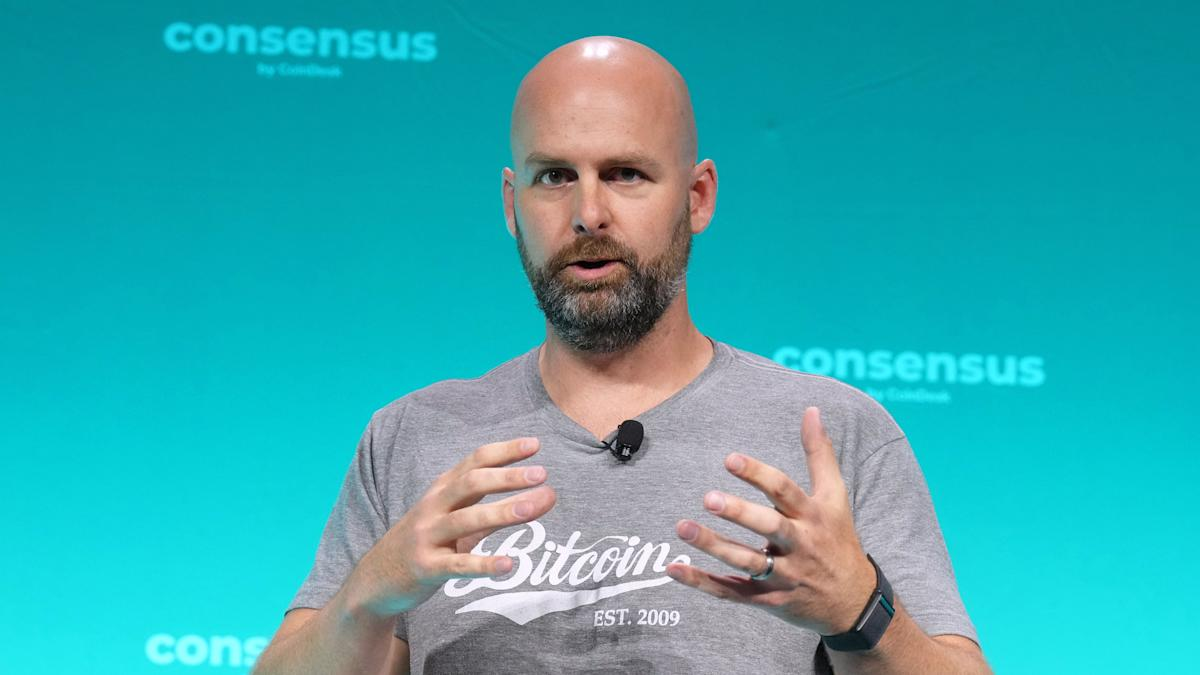

Ryan Selkis


In September 2022, Messari raised $35 million in a Series B funding round led by Brevan Howard Digital and followed by Point72 Ventures among others, valuing the company at approximately $300 million. This funding round occurred at the tail end of the bull market, reflecting the strong demand for high-quality data infrastructure at the time. However, the prolonged bear market post-2022, with tightening crypto project funding and trading volume pressures, presented real challenges for Messari. Following the departure of co-founder and former CEO Ryan Selkis in 2024, the company underwent workforce optimization. In a bear market environment, high-valuation data companies struggled to sustain previous growth expectations, facing increasing survival pressure.


Behind the Acquisition


According to Architect Partners' data, there have been 144 M&A transactions so far in 2026, totaling $11.8 billion, an increase of about 3.5% compared to the same period last year. Against a backdrop of pressure on trading volumes and token prices, some high-valuation startups are opting for mergers and acquisitions to achieve resource consolidation or exit.


Eric Risley, Founder of Architect Partners, pointed out that the industry is in a phase of divergence, where pressure may lead to more distress sales. The gap between Messari's $300 million valuation and its final sale price of just over $10 million exemplifies this phenomenon—early valuations based on growth narratives are being recalibrated against fundamentals and capital efficiency.


Yanowitz emphasized in the announcement: "This acquisition connects two sides of the market — issuers maintaining verifiable records of their operations, and investors, exchanges, and regulators consuming those records through research, APIs, and automated workflows." The core data foundation provided by Messari is precisely the prerequisite for AI agents to function effectively: an agent's capability depends on the data it can access and the APIs it can call.


The crypto industry is currently at a critical inflection point: institutional adoption is accelerating on-chain, sectors like stablecoins, RWA, and prediction markets continue to expand, driving surging demand for standardized disclosure, compliance monitoring, real-time data, and programmable access. In traditional financial markets, platforms like Bloomberg, FactSet, and S&P Global built data moats through long-term consolidation; the crypto field similarly requires such infrastructure but must adapt to the characteristics of on-chain native, real-time, and structured data.


By building upon Messari's vast dataset and overlaying its own issuer-side disclosure and IR capabilities, Blockworks aims to form a full-cycle solution from data collection, verification, and analysis to distribution and compliance. The introduction of AI will further accelerate this process, as high-quality, structured data is the core fuel for training and operating on-chain agents. For the Messari team, joining a platform with greater resources and strategic clarity allows its data assets to deliver value within a larger ecosystem, rather than continuing to contract under the pressure of independent operation.


The crypto data and research sector is transitioning from a period of flourishing diversity to consolidation of the fittest. Through market cycles, data and trust constitute long-term moats, and consolidation is often one of the optimal paths to navigate these cycles.

İlgili Sorular

QWhat is the key difference between Messari's valuation in 2022 and its recent acquisition price by Blockworks, and what does this signify?

AIn 2022, Messari was valued at approximately $300 million. It was recently acquired by Blockworks for a price exceeding $10 million. This significant devaluation, from $300 million to just over $10 million, highlights the survival pressure faced by high-valuation startups and the consolidation wave within the crypto data infrastructure sector during the prolonged bear market.

QWhat are the core assets of Messari that will be integrated into Blockworks, and what capabilities do they provide?

AMessari's core assets being integrated into Blockworks are its data platform and its API. This API provides multi-dimensional data support covering assets, markets, exchanges, news, research, stablecoins, protocols, networks, token unlocks, fundraising, social sentiment, event monitoring, watchlists, etc. It is utilized by funds, exchanges, developers, and various market participants.

QHow did Blockworks' business focus shift over time, leading up to the acquisition of Messari?

ABlockworks initially started in 2018 with a core focus on media and events (podcasts, research reports, conferences). As the industry matured, the company transitioned towards becoming an on-chain capital markets intelligence platform. It shifted its focus to building institutional-grade data, investor relations, and compliance tools. This strategic shift culminated in the acquisition of Messari to strengthen its data capabilities.

QWhat strategic goal did Blockworks aim to achieve by acquiring Messari, according to its co-founder?

AAccording to Blockworks co-founder Jason Yanowitz, the acquisition aims to build the 'single source of truth' for on-chain markets. The strategy is to connect the market's two sides by combining Blockworks' strengths in issuer disclosure, investor relations, and compliance workflows with Messari's strengths in data breadth and API capabilities.

QWhat broader trend in the crypto industry does the Messari acquisition represent, according to the data from Architect Partners?

AAccording to data from Architect Partners, the Messari acquisition represents a broader trend of consolidation and pressure-induced 'distressed' sales in the crypto industry. The data shows 144 M&A deals worth $11.8 billion year-to-date in 2026, a roughly 3.5% increase year-over-year. This indicates that in a bearish market with low trading volume and token price pressure, high-valuation startups are opting for mergers and acquisitions to consolidate resources or exit.

İlgili Okumalar

From a $300 Million Valuation to a 'Fire Sale' at Tens of Millions: What Happened to Messari?

On June 12, leading crypto data and capital markets platform Blockworks announced its acquisition of competitor Messari for over $10 million. This price represents a significant discount from Messari's 2022 valuation peak of approximately $300 million, highlighting the survival pressures faced by high-valuation startups during the bear market and a consolidation wave in data infrastructure. Blockworks, founded in 2018, began as a media and events company but has pivoted to focus on institutional-grade data, investor relations, and compliance tools. Its recent Series A extension round, valuing the company at $192 million, aimed to fund this shift and strategic acquisitions like this one. Messari, also founded in 2018, grew as a go-to platform for professional crypto research and data, raising a $35 million Series B at its $300 million valuation in late 2022. However, the prolonged bear market and subsequent internal changes, including founder Ryan Selkis's departure in 2024, increased operational pressures. The acquisition integrates Messari's extensive data platform and API capabilities with Blockworks's strengths in issuer-side disclosure, investor relations, and compliance workflows. The combined entity aims to build a unified "system of record" for the on-chain market. This reflects a broader industry trend where high-quality, structured data is becoming critical for institutional adoption, AI agents, and creating data moats akin to traditional financial platforms like Bloomberg. The deal exemplifies how market consolidation is reshaping the fragmented crypto data landscape.

marsbit29 dk önce

From a $300 Million Valuation to a 'Fire Sale' at Tens of Millions: What Happened to Messari?

marsbit29 dk önce

If the AI Bubble Is Already Bursting, Who Will Truly Survive?

If the AI Bubble is Bursting, Who Will Remain? The debate over an AI bubble is intensifying, with figures like Ray Dalio warning of high levels and Jensen Huang seeing immense, early-stage opportunity. Both views hold truth: a speculative bubble in capital markets likely exists, mirroring the dot-com era, but the underlying technological shift is real and transformative. History shows that while bubbles burst—wiping out overvalued companies and speculative capital—they often leave behind critical physical and digital infrastructure. The dot-com bust, for instance, eliminated many firms but left the global fiber optic networks and data centers that enabled the rise of Amazon, Netflix, and cloud computing. Today's massive AI infrastructure investments (projected at trillions by 2030) in data centers, power, cooling, and GPUs may follow a similar path, creating the foundation for future applications. A key divergence from past bubbles is the "Jevons Paradox" effect in AI. As the cost of AI inference has plummeted by over 99.7% since 2023, enterprise spending on AI has skyrocketed. Cheap "tokens" have unlocked vast, previously uneconomical use cases, moving AI from simple chatbots into core business workflows—code generation, legal document review, scientific simulation, and financial analysis. The market is now in a phase of self-correction, weeding out superficial "API-wrapper" startups, but this cleansing process strengthens the ecosystem. The long-term trajectory is clear. The value is gradually shifting from capital expenditure (CapEx) on hardware to operational expenditure (OpEx) on transformative applications. As AI becomes a utility, the winners will be firms that deeply integrate it to solve vertical industry problems in law, healthcare, finance, and manufacturing. The泡沫 will recede, but the foundational shift towards an AI-powered era across all sectors is irreversible. The underlying productive force of AI contains no bubble.

marsbit1 saat önce

If the AI Bubble Is Already Bursting, Who Will Truly Survive?

marsbit1 saat önce

If the AI Bubble Is Already Bursting, Who Will Truly Remain?

**Summary: If the AI Bubble is Bursting, What Will Remain?** The debate around an AI bubble is intensifying, with figures like Ray Dalio warning of high valuations while Jensen Huang sees immense opportunity. This echoes the dot-com bubble, which saw massive wealth destruction but ultimately left behind critical infrastructure like undersea cables and broadband, enabling future giants like Amazon and Netflix. Similarly, today's AI boom involves trillions invested in data centers, power, cooling, and GPUs, while application-layer revenue remains comparatively modest. This investment-disparity signals a bubble. However, the core technological progress is real and accelerating. AI inference costs have plummeted by over 99.7% since 2023, making intelligence increasingly cheap and accessible. This cost collapse is unlocking vast new demand. Instead of reducing spending, enterprises are tripling their AI cloud expenditure. Cheap "tokens" enable AI to move beyond simple chatbots into complex workflows—automating code writing, legal document review, financial analysis, and scientific research. This follows "Jevons's paradox": improved efficiency leads to greater total consumption. The market is now undergoing a necessary purification, weeding out "API-wrapper" startups with no real moat. The deeper evolution involves a shift from capital expenditure (CapEx) on infrastructure to operational expenditure (OpEx) on value-creation in applications. While hardware vendors currently profit most, long-term value will migrate to AI-native firms solving vertical industry problems. Ultimately, a market correction will cleanse speculative excess but will not reverse the AI+ trend. The massive physical and algorithmic infrastructure being built will endure, becoming a cheap, utility-like foundation. Just as the internet became indispensable to all industries post-2000, AI is poised to empower and redefine every sector, moving society irreversibly toward an intelligence-augmented era. The bubble may burst, but the underlying productive momentum is solid.

链捕手1 saat önce

If the AI Bubble Is Already Bursting, Who Will Truly Remain?

链捕手1 saat önce

İşlemler

Spot
Futures
活动图片