A Chip Company Releases AIDC Energy Storage Certification Standards. Why NVIDIA? Computing Power Reshapes Power Supply Logic. Who's in the Lead and Who's Left Out?

marsbit2026-06-23 tarihinde yayınlandı2026-06-23 tarihinde güncellendi

Özet

NVIDIA has released a "Battery Energy Storage System Self-Certification Guide," setting strict technical standards for energy storage systems specifically for AI data centers (AIDC). The guide focuses solely on certifying the Power Conversion System (PCS), not the batteries, with 10 mandatory performance metrics and 12 validation tests requiring real-world and simulation comparisons. Key requirements include rapid dynamic response to AI workloads, high-frequency system telemetry, and detailed electromagnetic transient models. The move is driven by the extreme and fluctuating power demands of next-generation AI hardware. Modern AIDCs require energy storage systems to act as intelligent, controllable grid assets, not just passive backup, to manage instantaneous, massive power load shifts that traditional UPS systems cannot handle. This redefines the competitive landscape for energy storage providers, shifting focus from capacity and cost to advanced control capabilities and system integration. While the market potential is significant—with forecasts of hundreds of GWh in new demand by 2030—the certification creates a high barrier to entry. It requires proven PCS delivery volumes and credible plans for rapid capacity scaling, favoring established, well-resourced players. Early movers like Fluence (partnering with Siemens) and several Chinese companies have secured projects ahead of the standard, but new entrants must now navigate this rigorous, costly, and time-intensive certi...

Foresee Energy learned that NVIDIA recently released a "Self-Certification Guide for Energy Storage Systems," which sets 10 mandatory metrics, 12 items requiring actual measurements plus simulation comparisons, with measurement accuracy strictly defined at voltage ±0.2% and current ±0.2%. A graphics card company is drawing the entry line for the energy storage industry.

Most people's initial reaction is probably: You don't even manufacture energy storage equipment, what gives you the right to set the rules?

But in reality, as NVIDIA is redefining computing power, it's also redefining how data centers consume electricity.

From the GB200 in 2025 which first introduced the 800V HVDC architecture, to the Vera Rubin NVL72 in 2026 with a single cabinet power consumption approaching 225kW. In the Agentic AI era, thousands of GPUs within an AIDC can ramp from 10% to 100% power in milliseconds. For a 100MW AIDC, this could cause grid load to surge by tens of thousands of kilowatts instantaneously. Traditional UPS systems and diesel generators simply cannot keep up. While energy storage is being integrated into the top-level design of AI data centers, the method of its integration—through certification thresholds set by a chip company—leaves the entire industry both excited and uneasy.

01

Certification Boundary Drawn on the AC Side

It Tests the PCS, Not the Battery

The uniqueness of NVIDIA's guide lies in the fact that it focuses solely on the PCS (Power Conversion System). Battery capacity? Irrelevant. DC-side topology? Irrelevant. Battery cell type? Also irrelevant. The certification boundary is set on the AC side, with the PCS being the sole object of assessment.

Among the 10 mandatory metrics, "AI Buffer Dynamic Response" requires the system to avoid oscillations or control "chasing" during rapid power conversion; "Telemetry & Control" demands polling of all nodes at a 1Hz frequency, supporting 3 concurrent Modbus TCP connections; "Control Transparency" requires providing EMT (Electromagnetic Transient) models and impedance/admittance scan verification, and compliance with NERC reliability guidelines. All 12 items require both hardware measurements and simulation comparisons before submission for certification. Beyond the technical threshold, manufacturers must also submit their PCS delivery volume over the past 12 months and a viable plan to achieve a 10x production expansion within 24 months.

In a technical blog, NVIDIA stated: A BESS (Battery Energy Storage System) is an "intelligent, controllable electrical asset," not a passive storage warehouse. The complexity of a BESS in an AIDC factory far exceeds capacity rating—it's a control system deeply interacting with the grid, requiring full-stack co-design of hardware and software, rather than "determining capacity first, then matching control." Hardware specs alone cannot solve control issues; rapid telemetry, real-time analytics, and coordinated control architecture are key to the design. No matter how large the battery, poor control logic means failure to pass certification.

This means the competition dimensions the energy storage industry has focused on in recent years—capacity and cost—become invalid under this standard.

02

The Game Has Changed

Those Who Jumped the Gun Are Already on the Road

In early June, Siemens officially released its reference electrical and power architecture design for the NVIDIA DSX Vera Rubin NVL72 platform. Fluence's SmartStack battery energy storage system was incorporated, becoming the only explicitly designated battery storage partner in this reference design, which was met with a 43.8% stock surge on the same day. This reference design has a total facility capacity of 136MW, with IT load at 100MW. The SmartStack energy storage system configured by Fluence is 120MW/240MWh.

However, Fluence securing this position is less a victory in a technical bid and more a case of pre-emptive locking of industry chain influence. Fluence itself is a joint venture between Siemens and the American power company AES. Being included in the parent company's official reference design is essentially "niche inheritance." Other independent energy storage companies find it difficult to replicate this structural advantage.

With the release of NVIDIA's guide, the path has become clearer, but also dauntingly narrow. The market potential is not small, but are the competitors really enough? CLSA estimates that AIDC construction in China over the next five years will bring 125GWh of new demand for energy storage batteries. Guosheng Securities forecasts that just AIDC deployments in the US from 2026 to 2028 could drive incremental demand of 10GWh, 27GWh, and 39GWh, respectively. Morgan Stanley predicts that by 2030, AI data centers will generate 321GWh of annual new energy storage demand.

Some are already racing ahead. In February of this year, Nanjing Guanlong Power won a bid for a backup power project at an NVIDIA data center in Asia, supplying two sets of 1MW grid-forming energy storage converter integrated systems to replace diesel generators, enabling zero-delay seamless backup during power loss. WeiGuang Energy signed an agreement for the Changzhou Xinbei District, planning to build a solid-state transformer production base for AIDC scenarios over the next three years. Its "Xihe 2.0" system directly converts 10kV medium voltage to 800V DC, achieving a system efficiency of 98.6% and a volume only one-third that of a traditional UPS. According to Eastmoney.com, Sungrow Power had secured over 11GWh of AIDC energy storage orders by the first half of 2026. Trina Solar's energy storage business grew by over 300% year-on-year in Q1 2026, with overseas business accounting for over 90% of the total. In April, Far East Smarter Energy's orders involving smart battery storage and computing power/AI amounted to a combined 7.37 billion yuan.

However, all these projects broke ground before the formal release of the certification standards. After the standards are out, latecomers must follow the new rules from scratch.

03

The Threshold is Set

Who Can Pass, and Who Cannot?

The most brutal part of the certification guide is hidden in its final pages. Manufacturers must submit their PCS delivery volume from the past 12 months and a credible plan for 10x production expansion within 24 months. These two requirements alone shut out small manufacturers—they can't even gather the materials for certification, let alone provide delivery records or expansion commitments.

AIDC power supply energy storage systems involve multi-dimensional testing covering electrical safety, thermal runaway protection, and cybersecurity. The certification cycle, capital costs, and technical rectification difficulty are incomparable to those of typical commercial & industrial energy storage. A complete AIDC integrated energy solution isn't a single device certification; it's a combined verification of energy storage batteries, converters, power distribution equipment, and monitoring systems. It requires simultaneous completion of dozens of standard tests like UL1973 for battery cell safety, UL9540A for cabinet-level thermal runaway propagation, and IEC62443 for industrial network protection. The entire process typically takes 12 to 24 months, with cumulative costs for testing, rectification, and certification services reaching millions of RMB.

Price wars in the energy storage industry have escalated from competition at the "fen" level to the "li" level. NVIDIA's guide essentially draws a new starting line. Those lacking sufficient control capability don't even get a seat at the table. At the 2026 Two Sessions, National People's Congress representative Xu Yanming pointed out that AIDCs require energy storage systems to possess instantaneous high-current output capability and millisecond-level response speed. However, existing energy storage products still struggle to fully meet the high dynamic load demands in terms of rate performance, dynamic response, and long-term operational stability.

NVIDIA isn't trying to do the work of an energy storage association; it's drawing blueprints for its own factories. Whoever defines the computing power requirements has the right to define the power supply standards. This door has been opened, but whether one can step through depends on whether each company's PCS control algorithms are fast enough, their delivery records solid enough, and their expansion plans credible enough. Piling batteries higher won't solve this problem.

This article is from the WeChat public account "Foresee Energy," author: Zhao Jianan.

Trend Kriptolar

İlgili Sorular

QWhat is the core focus of NVIDIA's 'Self-Certification Guide for Energy Storage Systems' for AIDC?

AThe guide focuses exclusively on certifying the Power Conversion System (PCS), not the batteries themselves. It sets stringent performance and control requirements for PCS, such as dynamic response, telemetry frequency, control transparency, and the need to provide historical delivery data and scalable production plans.

QWhy is NVIDIA, a chip company, setting certification standards for energy storage in data centers?

ABecause NVIDIA's high-power AI chips (like GB200, Vera Rubin NVL72) are redefining power consumption in data centers, causing extreme, instantaneous power load surges. To ensure the reliability of its AI data centers (AIDC), NVIDIA is defining the power supply standards. It dictates the energy storage performance requirements because it designs the primary power-consuming systems.

QAccording to the article, how does NVIDIA's standard change the competitive landscape for energy storage companies?

AIt shifts the competition from a focus on scale, capacity, and cost to a focus on high-level control technology, software-hardware integration, and proven delivery capabilities. Companies with advanced PCS control algorithms, strong delivery records, and credible expansion plans have an advantage. Smaller companies without these capabilities may be excluded.

QWhich company was highlighted as an early beneficiary of the trend towards AIDC energy storage, and why?

AFluence (a Siemens & AES joint venture) was highlighted. Its SmartStack BESS was designated as the sole energy storage partner in Siemens's official reference design for NVIDIA's Vera Rubin NVL72 platform. This advantage is described as 'ecological niche inheritance,' leveraging its structural ties within the industrial ecosystem, making it hard for independent companies to replicate.

QWhat are the major practical barriers for companies seeking NVIDIA's AIDC energy storage certification?

AMajor barriers include: 1) High technical requirements for PCS control and integration. 2) The need to submit 12 months of PCS delivery history and a credible 24-month plan for 10x production scale-up. 3) Lengthy (12-24 months) and expensive (potentially millions in fees) multi-standard certification processes covering electrical safety, thermal runaway, and cybersecurity for the entire energy system.

İlgili Okumalar

Ethlabs Founded, Treasury Companies to Fund Ethereum Post-EF

Former Ethereum Foundation (EF) core researchers Ansgar Dietrichs, Barnabé Monnot, Caspar Schwarz-Schilling, Josh Rudolf, and Julian Ma announced the launch of Ethlabs, an independent non-profit R&D lab focused on Ethereum core protocol research and institutional-grade infrastructure. The initiative, backed by over 50 community participants including ETH treasury companies BitMine and Sharplink, Joseph Lubin, Hayden Adams, and Jesse Pollak, aims to make Ethereum the global economic settlement layer. This move comes amidst significant pressure on the EF, which has seen key departures and a strategic narrowing of its focus. A critical funding gap of approximately $30 million annually for core client development, following the expiration of the client incentive program, poses a near-term risk to the network's development. The context includes the evolution of ETH's value narrative. While mechanisms like EIP-1559 and the Merge previously supported the "ultrasound money" thesis, the success of L2 scaling via EIP-4844 has drastically reduced L1 fee revenue, leading to net ETH issuance and challenging that narrative. Ethlabs has listed ETH monetary economics as a primary research focus. Backing from corporate ETH treasuries like BitMine and Sharplink represents a strategic alignment, as these entities' asset values are directly tied to Ethereum's health and adoption. Their support is an investment rather than a pure donation. Ethereum's governance is shifting from a centralized EF model to a distributed network of specialized "manager nodes," including Ethlabs and a streamlined EF. While this promotes efficiency and reduces single-point failure risk, it introduces new challenges in coordination, priority alignment, and filling critical funding gaps across the decentralized ecosystem.

Foresight News15 dk önce

Ethlabs Founded, Treasury Companies to Fund Ethereum Post-EF

Foresight News15 dk önce

From Logo to Bo Niu: TRON Further Perfects Its Brand Visual Assets

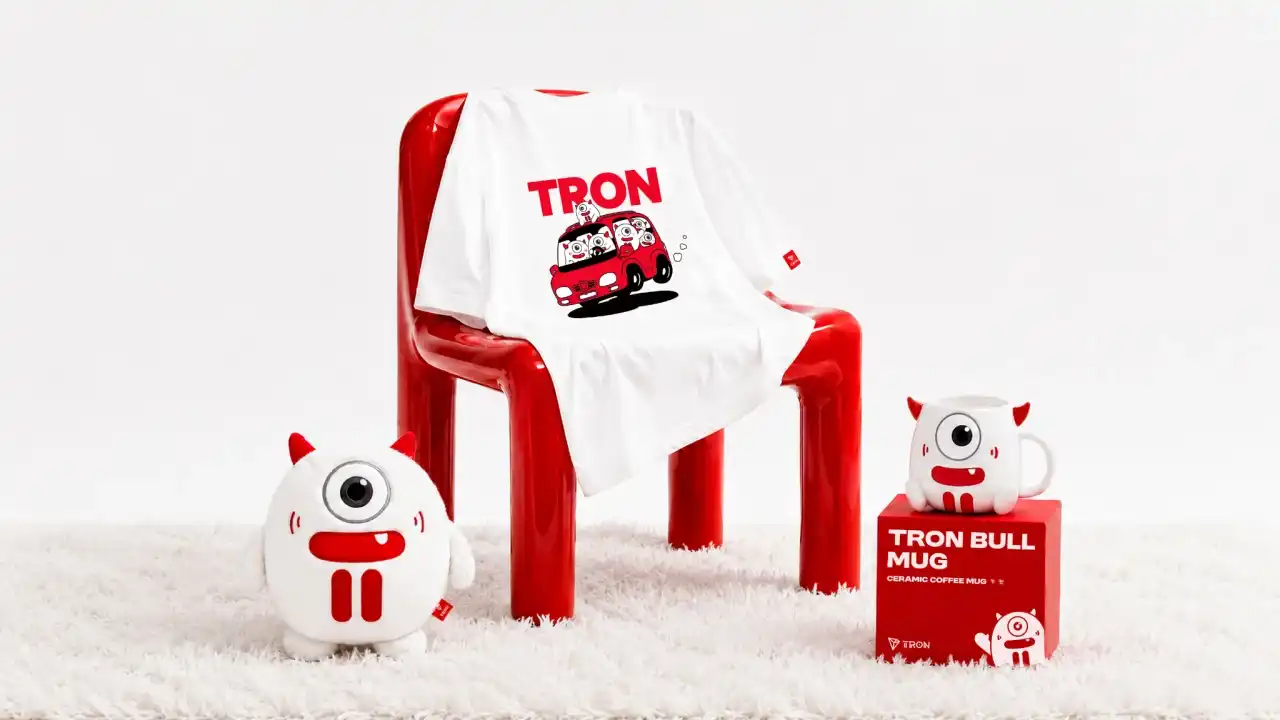
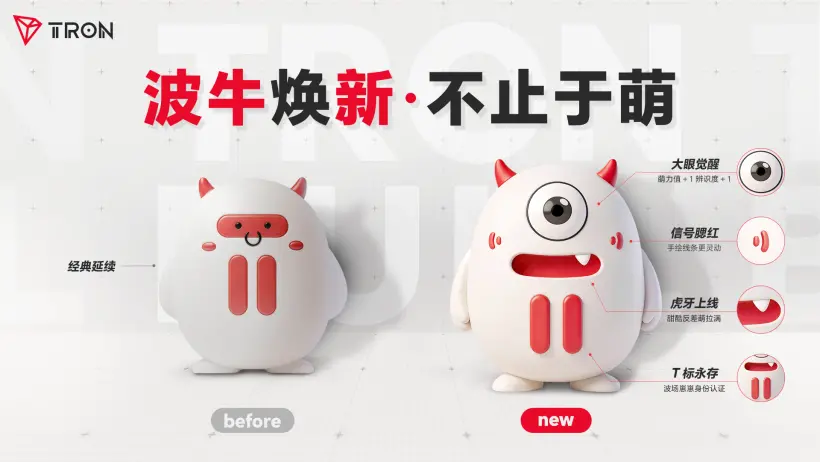
On June 23rd, TRON completed a significant upgrade to its official mascot, Bo Niu. The revamped character features larger, brighter eyes, more expressive facial details, and a clearer "T" structural motif, while retaining its signature red-and-white color scheme and horned design. This refresh aims to enhance Bo Niu's approachability, emotional range, and versatility for use across social media, community interactions, offline events, and branded merchandise. The redesign focuses on creating a stronger first impression. A more open facial structure with distinct, expressive eyes and the addition of a mouth with a small fang make the character friendlier and more suitable for dynamic content like animations and emojis. Subtle brand elements are integrated, such as stylized cheek lines inspired by "signal" icons, referencing the "wave" in "TRON," and a "T" shape formed by its smile and chest markings. Bo Niu has also been given a more defined personality as "TRON's Chief Luck Officer," with traits like being playful and sweet. This persona provides a more accessible and emotionally resonant entry point to the TRON brand, contrasting with often technical Web3 narratives. This mascot upgrade is part of TRON's ongoing effort to build a comprehensive and extensible visual identity system, following its recent logo refresh. Bo Niu is positioned as a key asset to connect with users, foster community, and convey brand warmth in everyday contexts.

marsbit19 dk önce

From Logo to Bo Niu: TRON Further Perfects Its Brand Visual Assets

marsbit19 dk önce

TRON Refreshes the Bull Image, Creating a More Approachable Brand Character

TRON's official mascot "BONiu" (Wave Bull) has received a comprehensive visual upgrade. Retaining its core red-and-white color scheme, horned silhouette, and brand DNA, the refreshed character features larger, brighter eyes, more expressive facial details including a mouth with a small fang, and enhanced emotive capabilities. The redesign aims to strengthen the mascot's亲和力, emotional expressiveness, and adaptability across various scenarios. Key updates include a clearer facial structure for instant recognition, a simplified and more intuitive五官 design, and the integration of subtle brand language. The cheek blushes are now inspired by a "signal" icon, while the smile and chest lines form a stable "T" structure, creating a cohesive超级符号 for the brand. The character has also been equipped with a 12-phoneme lip-sync system to support future动画 and interactive content. Beyond its visual role, BONiu's persona has been enriched. Now titled "TRON's Chief Luck Officer," it carries playful personality tags like "foodie enthusiast" and "full-of-tricks," allowing it to engage with the community in a more approachable and relatable manner. This update provides a lower-barrier, emotionally warm entry point for users amidst the often technical and abstract narratives of Web3. This mascot revamp is part of TRON's ongoing effort to refine its visual asset system, following the earlier logo update. By evolving from a static visual into a dynamic, expressive brand角色, the new BONiu is positioned to become a key asset for connecting with users, building brand记忆, and conveying TRON's personality across社交传播, community互动,线下活动, and merchandise.

链捕手35 dk önce

TRON Refreshes the Bull Image, Creating a More Approachable Brand Character

链捕手35 dk önce

İşlemler

Spot
Futures

Popüler Makaleler

CHIP Nasıl Satın Alınır

HTX.com’a hoş geldiniz! USD.AI (CHIP) satın alma işlemlerini basit ve kullanışlı bir hâle getirdik. Adım adım açıkladığımız rehberimizi takip ederek kripto yolculuğunuza başlayın. 1. Adım: HTX Hesabınızı OluşturunHTX'te ücretsiz bir hesap açmak için e-posta adresinizi veya telefon numaranızı kullanın. Sorunsuzca kaydolun ve tüm özelliklerin kilidini açın. Hesabımı Aç2. Adım: Kripto Satın Al Bölümüne Gidin ve Ödeme Yönteminizi SeçinKredi/Banka Kartı: Visa veya Mastercard'ınızı kullanarak anında USD.AI (CHIP) satın alın.Bakiye: Sorunsuz bir şekilde işlem yapmak için HTX hesap bakiyenizdeki fonları kullanın.Üçüncü Taraflar: Kullanımı kolaylaştırmak için Google Pay ve Apple Pay gibi popüler ödeme yöntemlerini ekledik.P2P: HTX'teki diğer kullanıcılarla doğrudan işlem yapın.Borsa Dışı (OTC): Yatırımcılar için kişiye özel hizmetler ve rekabetçi döviz kurları sunuyoruz.3. Adım: USD.AI (CHIP) Varlıklarınızı SaklayınUSD.AI (CHIP) satın aldıktan sonra HTX hesabınızda saklayın. Alternatif olarak, blok zinciri transferi yoluyla başka bir yere gönderebilir veya diğer kripto para birimlerini takas etmek için kullanabilirsiniz.4. Adım: USD.AI (CHIP) Varlıklarınızla İşlem YapınHTX'in spot piyasasında USD.AI (CHIP) ile kolayca işlemler yapın.Hesabınıza erişin, işlem çiftinizi seçin, işlemlerinizi gerçekleştirin ve gerçek zamanlı olarak izleyin. Hem yeni başlayanlar hem de deneyimli yatırımcılar için kullanıcı dostu bir deneyim sunuyoruz.

355 Toplam GörüntülenmeYayınlanma 2026.04.21Güncellenme 2026.06.02

CHIP Nasıl Satın Alınır

Tartışmalar

HTX Topluluğuna hoş geldiniz. Burada, en son platform gelişmeleri hakkında bilgi sahibi olabilir ve profesyonel piyasa görüşlerine erişebilirsiniz. Kullanıcıların CHIP (CHIP) fiyatı hakkındaki görüşleri aşağıda sunulmaktadır.

活动图片