Recent On-Chain Review: No Clear Narrative Under U.S. Stock Market Pressure, Just Hype

marsbit2026-06-12 tarihinde yayınlandı2026-06-12 tarihinde güncellendi

Özet

This article analyzes the current state of the Solana meme coin and community token ecosystem, highlighting a market caught between two dominant forces: attention-based PvP and a gradual return to community-centric projects. The first part explores the "Attention PvP" dynamic, where success is driven by celebrity endorsements, viral events, and speed. Examples include $JOTCHUA, which surged after its meme creator's social media activity, and $WORLDCUP, which outperformed a similar Base chain project ($PITCH) largely due to influencer support. The recent "pump.fun GO" feature, allowing bounty tasks for token promotion, is critiqued for fostering sensationalist and often negative stunts—like people getting token tickers tattooed on their bodies for rewards—reminiscent of old internet shock content. In contrast, the article points to a resurgence of organic, community-driven tokens that survive market volatility through strong holder bases and shared ideology, not just hype. Influencer Ansem is cited, arguing that durable meme coins rely on communities willing to endure losses and promote their core message daily. Examples given are older tokens like $neet (anti-work ethos), $troll, $buttcoin, and $triplet, which have maintained relative price stability. A prime example of this community-build model is the new project $KINS, the token for the browser-based MMORPG Kintara. Its success stems not from advanced graphics but from consistently delivering updates, fostering player t...

After the ETH mainnet gradually grew quiet, degens have returned to be active on Solana once again. Despite this, it's hard to say there is a clear main narrative for the activity on Solana. To summarize, it might be fitting to describe it as "oscillating between a return to community and attention PvP."

Attention PvP

Ever since Trump issued a token, the meme coin market has grown accustomed to the playbook of relying on celebrity endorsements, hot events, and competing on speed for a long time.

Everyone is used to it, so even with poor liquidity, people still follow this playbook to find opportunities, thus forming an inertia for this kind of strategy.

$JOTCHUA, a dog meme that became popular in Spanish and English-speaking circles in 2021. On January 24, 2021, Instagram user @_kingorange uploaded an inspirational poster featuring a crudely drawn dog picture with the text "JOTCHUA," which received over 29,000 likes within three months.
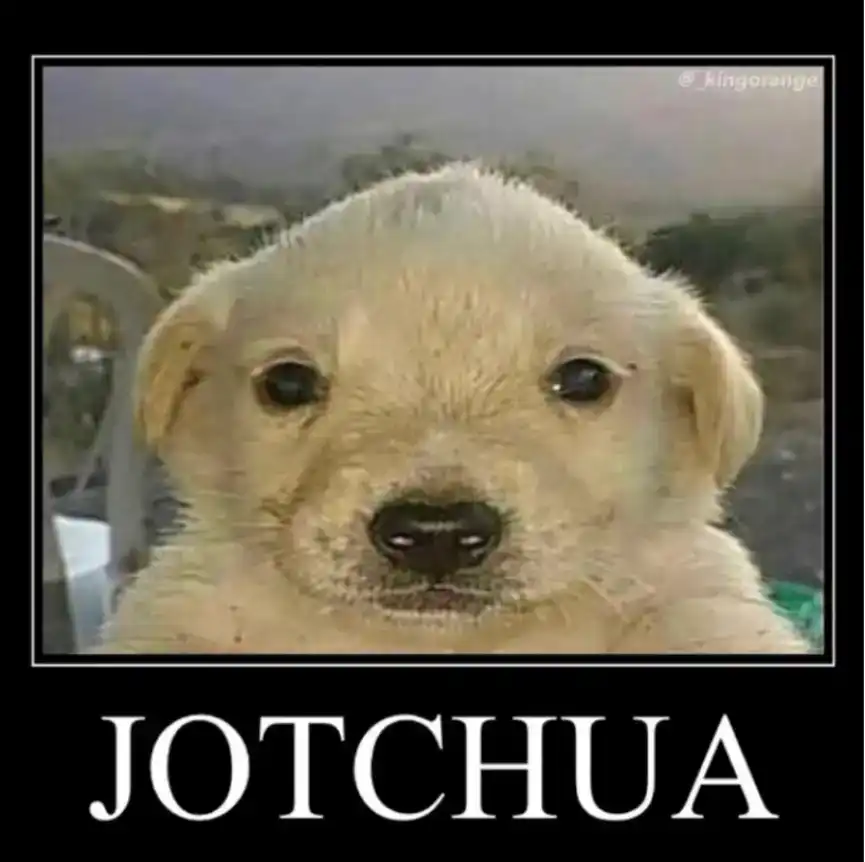
Its market cap once neared $9 million at its peak. The community has significant debates over whether this token is "organic," because its launch did not occur after the meme's creator @_kingorange claimed it, making it almost impossible to say the "claim" was the direct cause of the price surge.

Many players believe this token is another instance of "setting up a play," or attribute it to KOL Ansem sparking market speculation about his purchase being related to this token when he claimed on June 9th that he had returned to buying Solana meme coins for the first time in over a year.

The same concept, even the same ticker, but your coin just doesn't pump. $JOTCHUA on the ETH mainnet was deployed as early as December 2023, and has had consistent content and community, but it couldn't compete with getting the creator to click a few buttons and claim it.

A similar situation happened with the World Cup concept. $WORLDCUP on Solana, due to bonkguy's purchase and detailed analysis, saw its market cap surge from around $5 million to once break $12 million. Meanwhile, the World Cup concept project $PITCH on Base had fallen from a peak market cap of about $7 million to nearly $700,000.

Although $PITCH indeed has its own issues, mainly on the communication front. The project is not inactive, it keeps updating, but the dev rarely speaks up, and their X (Twitter) account got repeatedly suspended and still hasn't sorted out a new one. But admittedly, without any endorsements, similar concepts and playstyles lose out in the battle for attention.

The recent new feature from pump.fun, pump.fun GO, allows anyone to post paid bounty tasks on pump.fun.

This did attract mainstream media attention, but unfortunately, once again in a negative light reaching the masses.

$Bountywork, this token's market cap once approached $2.5 million at its peak. Its dev @ayushquantt's strategy is to continuously post new tasks on pump.fun, creating hype for this token.

He certainly succeeded—by offering a bounty of 40 SOL to have someone tattoo $bountywork on their forehead.

An Indian man actually got it tattooed, and strictly followed a typo the dev made in the description—missing an 'n', incorrectly writing the ticker as $boutywork.
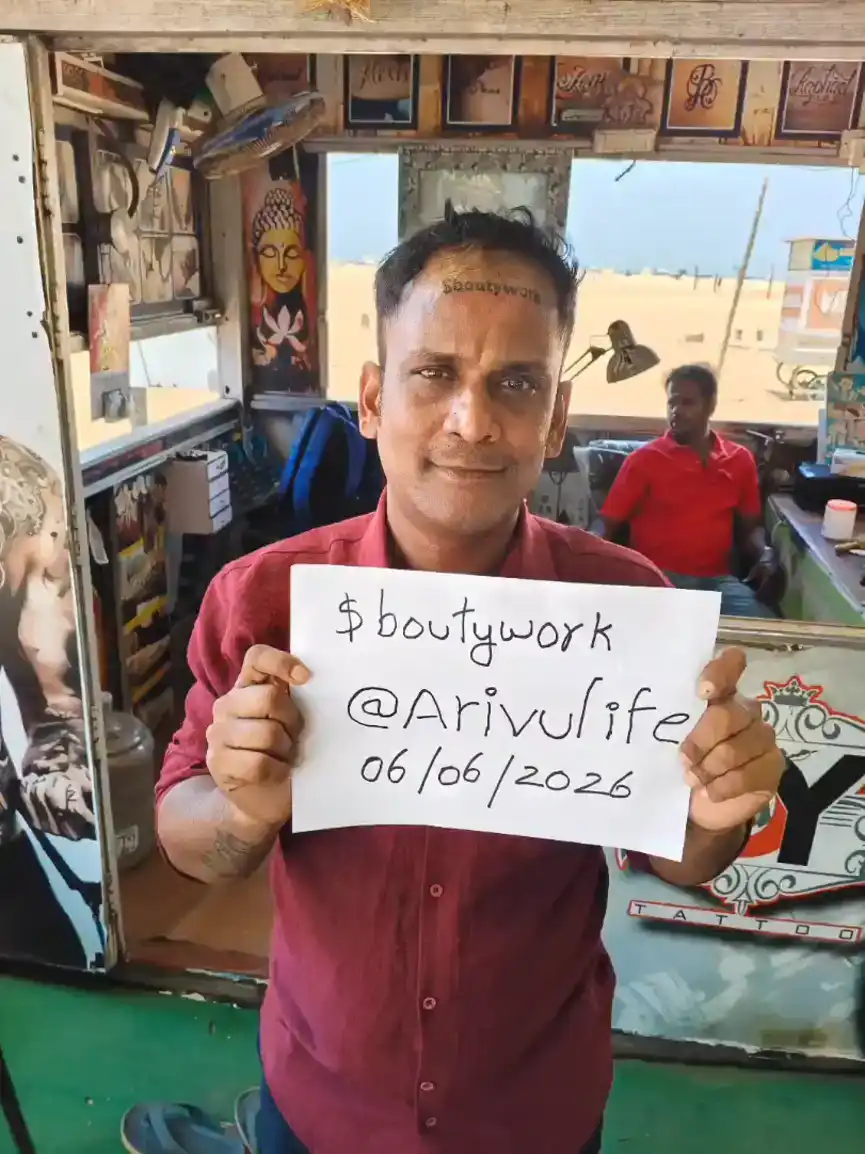
Initially, his bounty application was rejected because the tattoo was missing the letter 'n', and the dev demanded he correct the tattoo. Then, someone launched a new token using the incorrect tattoo as the ticker, $boutywork.

Finally, the 40 SOL bounty reward was still given to him, and the creator revenue from the new token was also given to him, earning him a total of about $48,000.

Then, as the hype faded, $boutywork has essentially gone to zero. The dev of $Bountywork is still continuously posting new bounties trying to replicate this "success," for example, having someone eat 3 insects on camera while wearing a $Bountywork t-shirt.
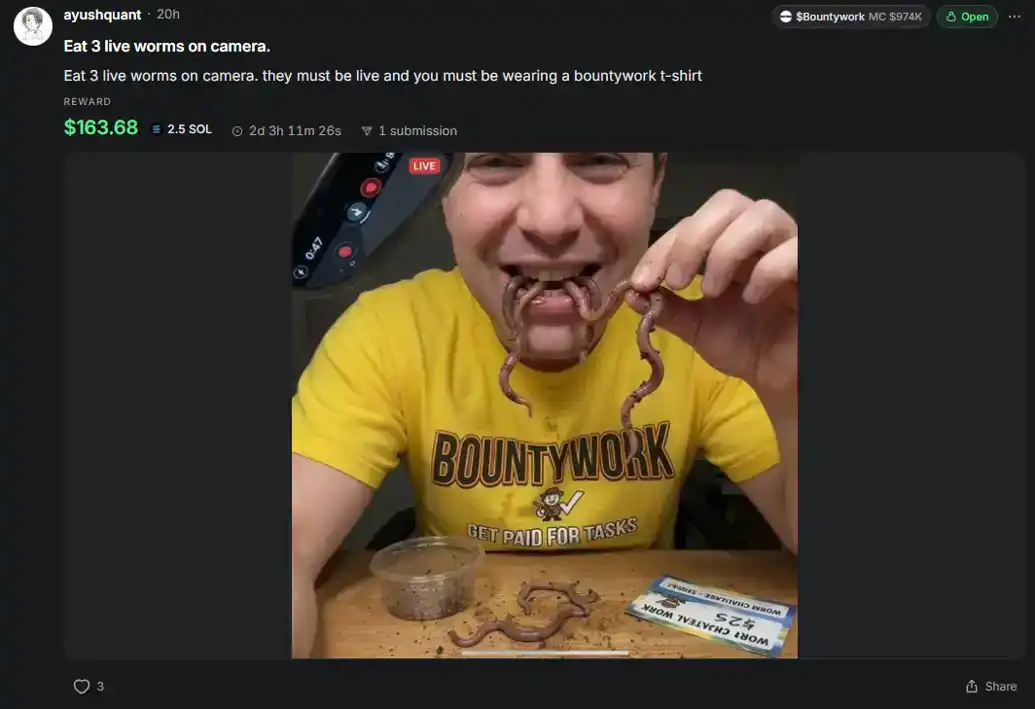
There are quite a few tattoo-related tasks on pump.fun; some have received up to 200 SOL in return for tattooing their own face.
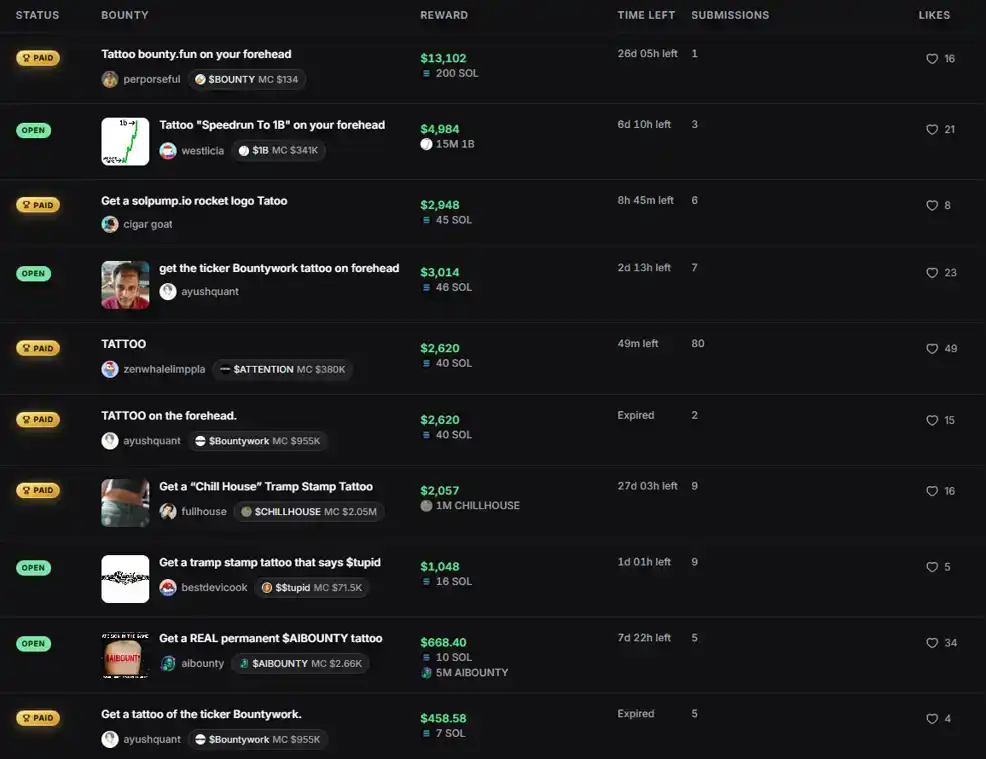
Honestly, this isn't much different from the days when big brothers on Kuaishou tipped people to eat raw eggs or gulp down white liquor...

The Return of Community

Let's continue the discussion around pump.fun's new feature. Almost all bounty tasks are related to generating attention-hype for specific tokens. The only one not treated as a joke might be this bounty task for $neet—organizing a gathering in New York for people who resist work.
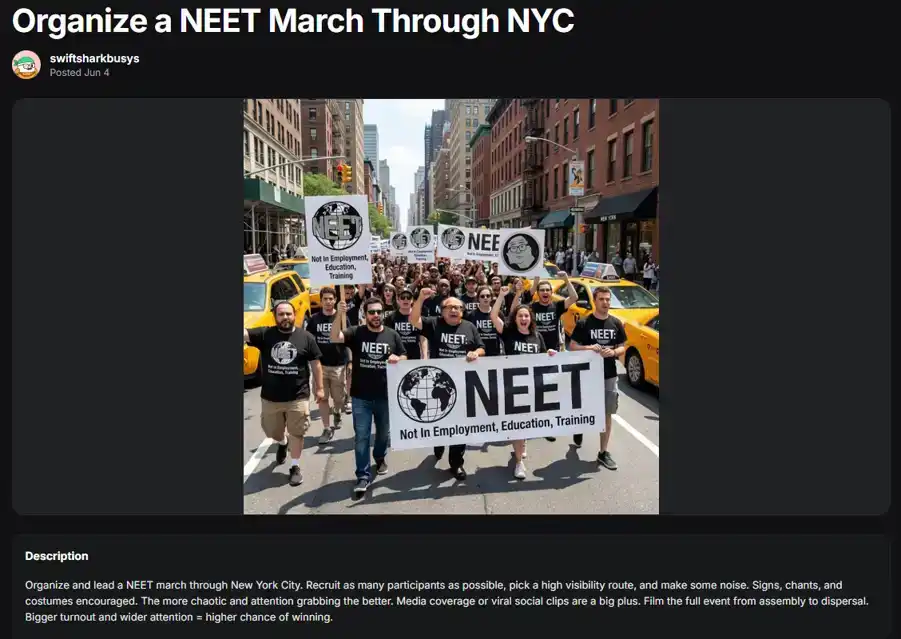
The reward for this bounty is paid in $neet, equivalent to over $15,000. The $neet community has previously self-organized 2 offline "anti-work gatherings" in the US; if this bounty is completed, it will be the 3rd.

Although it's unclear what pump.fun's intention is in supporting community-type meme coins, their official Twitter always features promotions for such community tokens. Although the performance of these tokens varies—for instance, $chillhouse's price has been sluggish for a while—the ones pump.fun officially picks out are generally quite community-driven and organic.

Currently, those with relatively stable visibility and price performance, besides $neet, include $troll, $buttcoin, and $triplet. A brief introduction to the survival status and themes of these community-type tokens:

- $neet: Deployed 410 days ago, peak market cap ~$51 million, current market cap ~$27 million. The community's mission is to make more people realize that dedicating most of one's life to work means losing one's own life.

- $troll: Deployed 416 days ago, holds the copyright to the classic meme Troll, listed on Coinbase. Peak market cap ~$290 million, current market cap ~$65 million.

- $triplet: Deployed 107 days ago, an abbreviation for "Tung Tung Tung Sahur," the hottest breakout character from last year's viral "Italian Classic of Mountains and Seas." Peak market cap ~$13.6 million, current market cap ~$6.6 million.

- $buttcoin: Deployed 153 days ago, originated from a 2011 joke on the Bitcoin forum, a pun on Bitcoin as "Buttcoin" (Butt coin). Peak market cap ~$68.6 million, current market cap ~$27 million.

Mentioning these tokens and the return of community-type coins brings us back to Ansem. After he mentioned returning to buy Solana memes, someone told him to just post the CA (contract address), and if he did, they would aggressively buy 1% to add to their position.
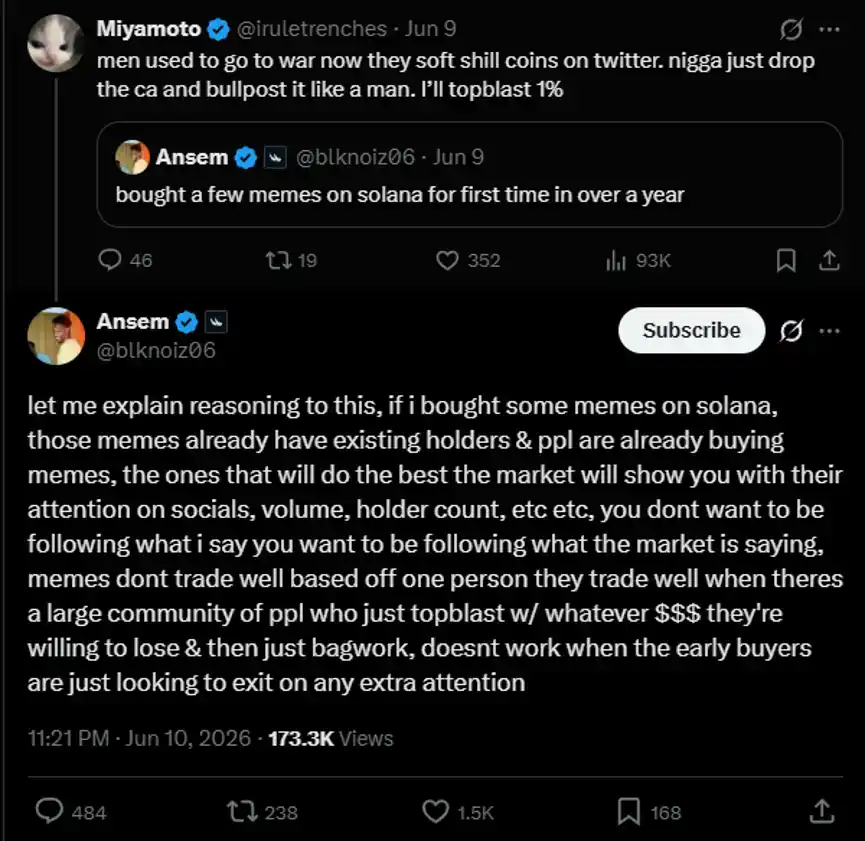
Ansem's response sparked much discussion:

"Let me explain why I don't post CAs. If I buy some Solana meme coins, and these coins already have good holders, the market will tell you which ones are good through social media performance, trading volume, holder count, etc. You shouldn't listen to me, but to the market. Meme coins relying on a group of holders who just compete on speed, wait for endorsements to dump, won't be good. Only tokens with a large community, where people within the community are willing to endure losses and promote their beliefs day after day, will succeed. Tokens dependent on a single celebrity won't do well."

Besides the older tokens mentioned above that have survived long and maintained relatively stable prices, there are indeed new tokens emerging that align with Ansem's view, such as $KINS.

$KINS is the token for Kintara, which is a blockchain game. Interestingly, Kintara hasn't led the Solana gaming sector because its rise wasn't due to the game's polish, but rather its step-by-step actions to earn community trust.

A brief introduction to $KINS' mechanism. This is an MMORPG playable in a browser; to play, your wallet needs 1,000 $KINS. Once in, you can chop wood, mine, fish, buy houses, fight monsters and bosses, and PvP.
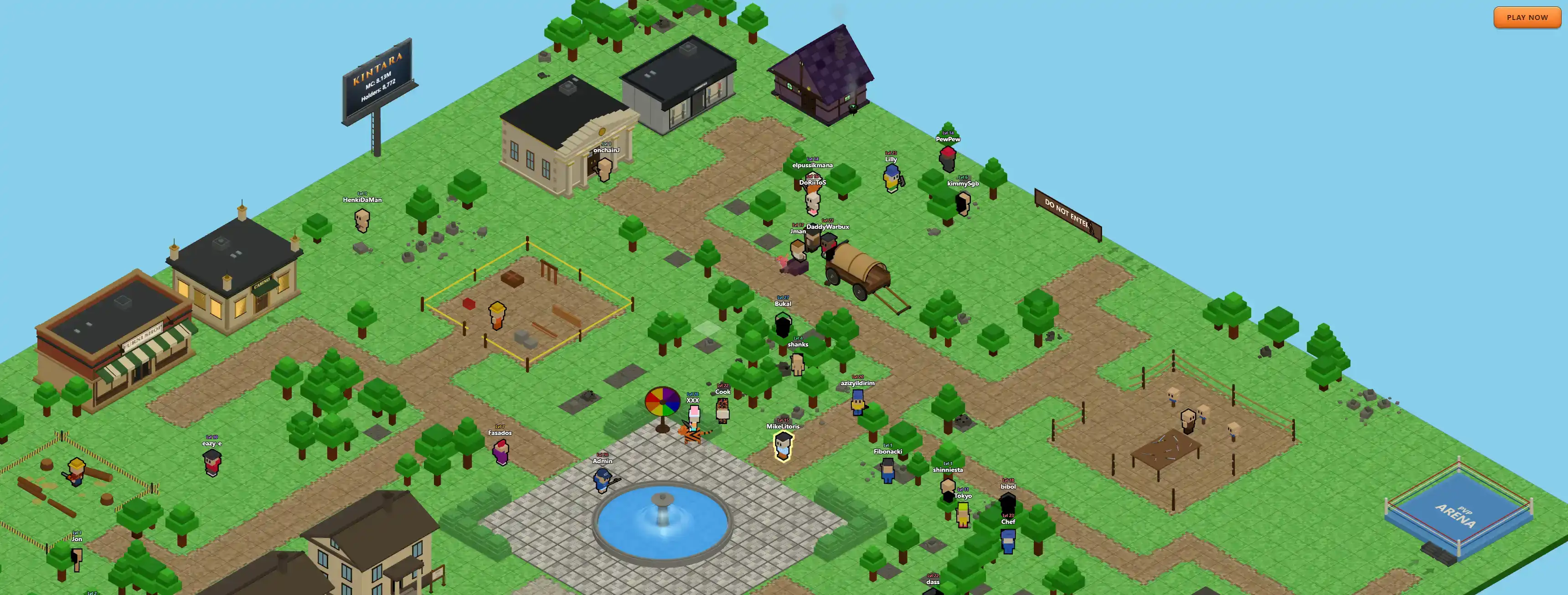
The game has no other pay-to-win options, only a reward wheel. If players don't want to spin only once a day, they can spend $3 worth of $KINS to continue spinning. 50% of this revenue is used for token buyback and burn, 50% for project maintenance and development.

The core gameplay loop is roughly: gather resources -> craft items -> challenge tougher monsters. If players lack resources, they need to use the in-game currency "Gold" to buy from other players. Players can sell "Gold" in the game priced in $KINS, with 5% going to the treasury and 95% to the player.

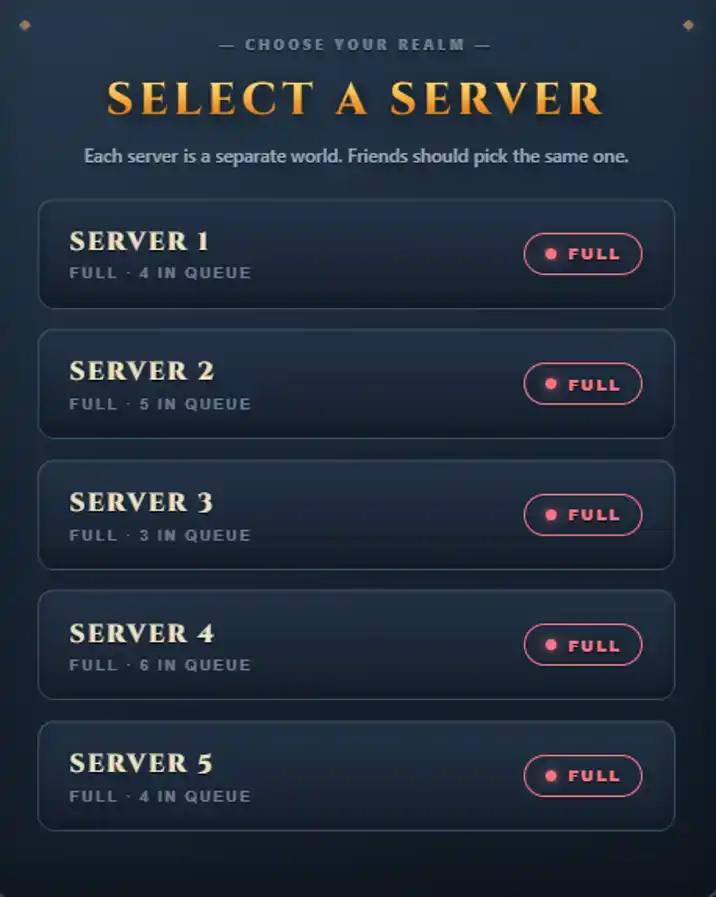
It sounds fairly ordinary, and the data isn't particularly impressive either (so far, 0.5% of $KINS has been repurchased), but the project's consistent delivery has built solid trust. Perhaps because the market is so disheartening, many players have genuinely gotten into it. The number of people fishing in the game daily is increasing. The project has expanded to 5 servers, but there's still a queue...
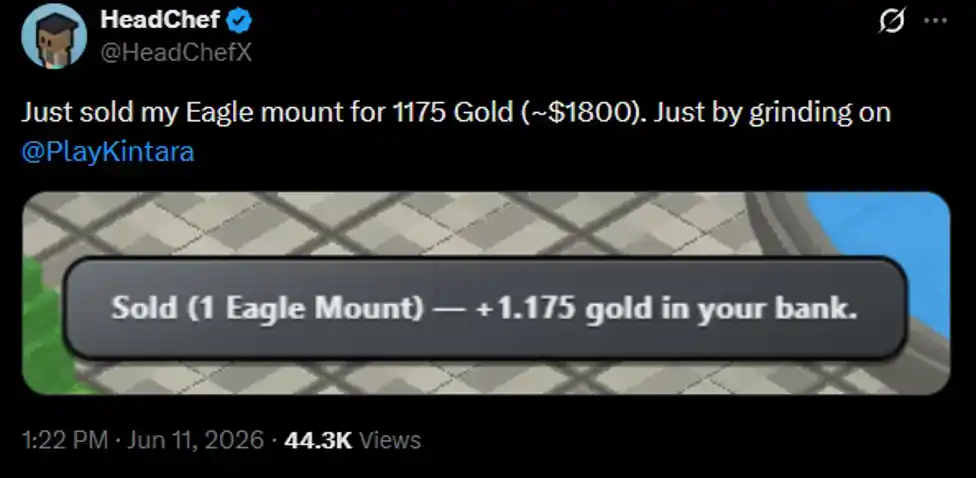
A player successfully sold a rare mount obtained from fishing and earned $1,800:
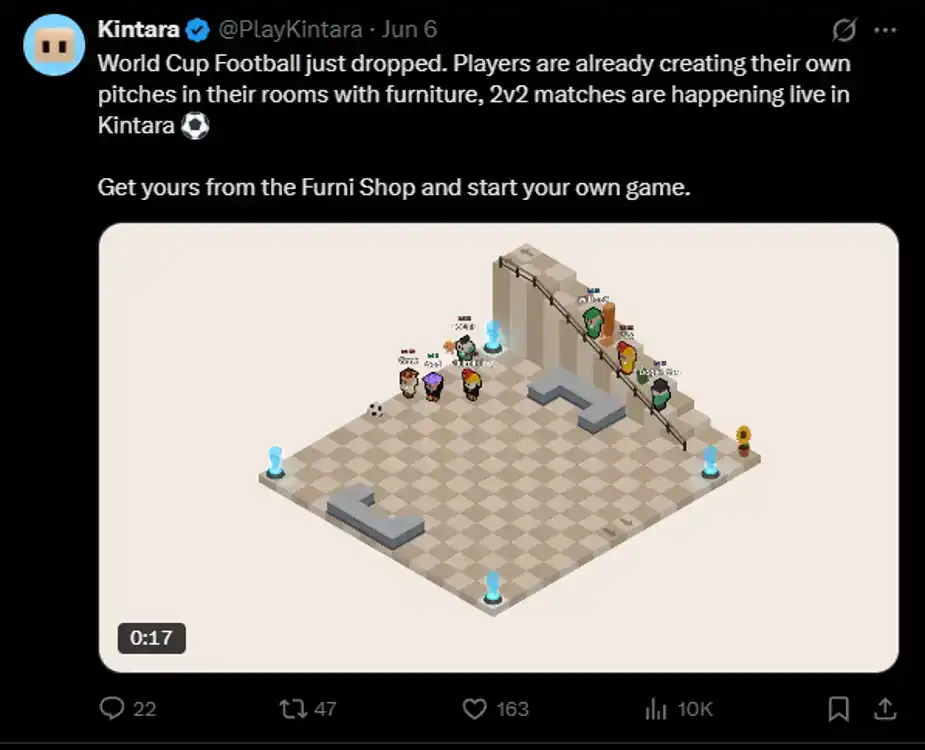
The project team of this game almost "doesn't promote play-to-earn," instead focusing heavily on "how to build network effects and a sense of player belonging." For example, integrating various Solana community meme coins or newly hot tokens into game elements, such as auctioning mansions in the game.

Or, promoting people organizing World Cup football matches in their houses:
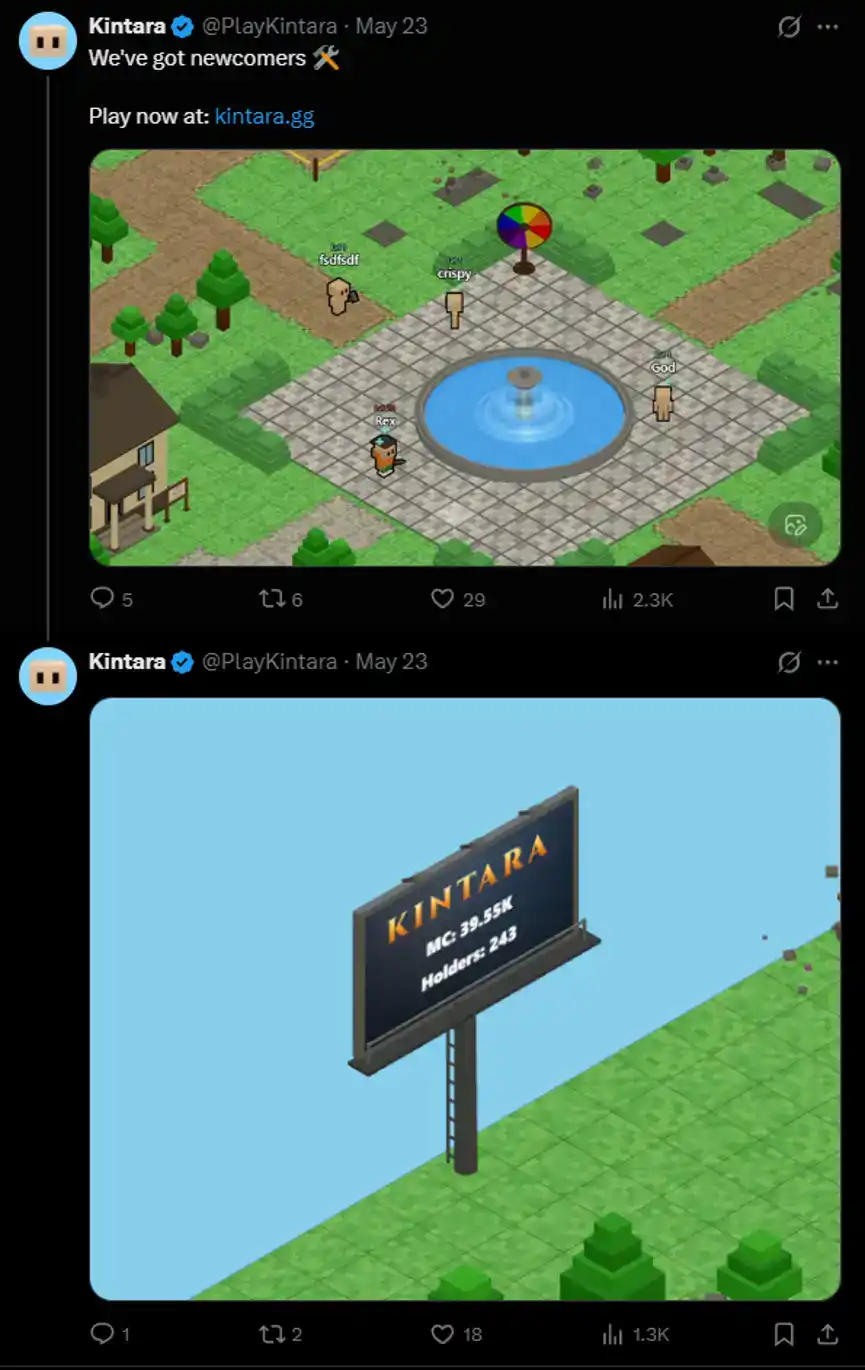
When it was still obscure, with less than $40,000 market cap and 243 holders, this early phase of "unheard of and unknown" was written on the stats board in the game's main map. Everyone watched Kintara persistently and rapidly update game content, slowly gaining people's trust, gradually attracting KOLs like Gake and Ansem to become part of the game as players.
So no one calls this kind of project a "set-up play."

"What are we constantly chasing after all along? A game of mutual trust, or a game of mutual deception?"

This is a recent question Zhàn Háo has been asking himself.

Hopefully, such questioning can persist and ultimately lead to a healthier market.

İlgili Sorular

QWhat are the two main competing themes or approaches observed in the current Solana meme coin market, according to the article?

AThe two main competing themes are 'Attention PvP' and the 'Return of the Community'. Attention PvP relies on quick, hype-driven plays involving celebrity endorsements, hot events, and speed-based speculation. The Return of the Community focuses on meme coins with organic, long-term communities built around a shared culture or purpose, where members are willing to endure price fluctuations and consistently promote their project's ideals.

QHow did the $JOTCHUA meme coin benefit from the 'Attention PvP' dynamic, and what controversy surrounded its success?

AThe $JOTCHUA coin gained attention and its price surged largely after the meme's creator, @_kingorange, 'claimed' the coin on social media. However, its success is controversial because the coin's launch and initial pump did not happen after the creator's claim. Many believe the surge was due to market speculation triggered by KOL Ansem announcing his return to buying Solana meme coins, suggesting it was another 'pump group' setup rather than an organic community-driven event.

QWhat is the core mission of the $neet community, and how does it distinguish itself from typical 'Attention PvP' coins?

AThe core mission of the $neet community is to promote the idea that dedicating most of one's life to work means losing one's own life. It distinguishes itself from 'Attention PvP' coins by being a long-term, community-driven project. The community has organically organized offline 'anti-work' gatherings in the U.S. and focuses on a shared cultural belief rather than relying on short-term hype or celebrity endorsements for price action.

QAccording to Ansem's statement quoted in the article, what are the key characteristics of a successful meme coin that does not rely on a single influencer?

AAccording to Ansem, a successful meme coin that doesn't rely on a single influencer should have a large, genuine community. Members of this community should be willing to endure losses and consistently promote the project's underlying philosophy or culture day after day. Success should be indicated by market data like social media activity, trading volume, and holder count, not by the endorsement of any single key opinion leader (KOL).

QHow did the project behind the $KINS token (Kintara) build trust and a sustainable community, as described in the article?

AThe Kintara project ($KINS) built trust and a sustainable community through consistent delivery and focusing on player engagement rather than financial speculation. Key strategies included: rapidly updating game content, integrating other community meme coins into the game, organizing in-game community events (like house auctions and soccer tournaments), and having a transparent tokenomics model where 50% of optional spin revenue is used for token buyback/burns. This approach fostered a sense of belonging and network effect, attracting genuine players and even respected KOLs who became part of the community.

İlgili Okumalar

MoneyGram: Why Did We Launch Our Own Stablecoin?

MoneyGram, a global leader in cross-border remittances for over 80 years, has launched its own stablecoin, MGUSD. The initiative aims to evolve from single-transaction services to becoming a more integral part of users' financial lives. By allowing customers to hold a stable US dollar balance within the MoneyGram app, MGUSD enables not only remittances but also everyday spending, currency exchange, cash access, and future financial services. Targeting the billions globally who face challenges like currency volatility or lack of bank accounts, MGUSD leverages Stellar blockchain technology with a self-custody wallet architecture. This gives users control over their assets while providing a secure, compliant experience through a trusted brand. The approach focuses on solving existing customer pain points within MoneyGram's established network, rather than competing for broad crypto market liquidity. A key advantage is MoneyGram's hybrid model, combining digital services with the world's largest physical network for crypto-to-cash conversions. The stablecoin also modernizes the company's internal infrastructure, streamlining treasury management and partner settlements, with annual forex volume via stablecoins already reaching $2 billion. The project was delivered in about a year, driven by a reorganization into agile, cross-functional teams that operate with startup-like speed while leveraging decades of institutional expertise. Partners include Stablecoin (issuance), Crossmint (wallet APIs), Fireblocks (enterprise treasury), m0 (smart contracts), and the Stellar network. MoneyGram emphasizes that enhancing direct consumer offerings strengthens its partner ecosystem. The future direction is clear: to provide users worldwide with stable value storage, better financial tools, and greater control over their funds through a trusted, existing network.

Foresight News21 dk önce

MoneyGram: Why Did We Launch Our Own Stablecoin?

Foresight News21 dk önce

BIP-110 Controversy Intensifies: Bitcoin May Face Its Most Divisive Hard Fork Battle in Years

Bitcoin is approaching a critical block height of 961,632, which could activate the controversial BIP-110 proposal. This proposal aims to restrict the amount of non-financial data, such as inscriptions and other large data payloads, within Bitcoin transactions. Supporters, including some node operators and Bitcoin purists, argue that BIP-110 is necessary to preserve Bitcoin's core function as a monetary settlement layer by reducing network congestion and node operational burdens caused by non-essential data. They frame it as a correction to keep the network true to its original purpose. However, critics, including prominent figures like Blockstream's Adam Back and developer Jameson Lopp, warn that the proposal's implementation mechanism is dangerously flawed. They highlight that its low 55% miner signaling threshold, coupled with a contentious enforcement mechanism allowing nodes to unilaterally reject non-compliant blocks, significantly increases the risk of a chain split. Opponents argue this sets a dangerous precedent for transaction censorship, undermines Bitcoin's protocol neutrality, and creates excessive uncertainty for developers and businesses, especially since the rule is proposed as a temporary one-year measure. Market analysts, such as those from Bitfinex, suggest a full-scale network split is unlikely due to a lack of broad economic consensus. Major mining pools remain neutral, and adoption of the new rules is minimal. They view the situation more as a governance stress test. The primary risk is operational disruption: if a minority chain persists, major exchanges and custodians may need to temporarily suspend Bitcoin deposits and withdrawals to manage security and liquidity, potentially unsettling newer institutional investors. While BIP-110 is not expected to succeed in overtaking the main chain, its approach has ignited a significant debate about Bitcoin's governance, core values, and resilience.

Foresight News58 dk önce

BIP-110 Controversy Intensifies: Bitcoin May Face Its Most Divisive Hard Fork Battle in Years

Foresight News58 dk önce

NEAR to Airdrop 330,000 Tokens, Betting on TVL Reaching $70 Million

On June 11th, NEAR Protocol launched the Near@3.33 Milestone Incentive Program, targeting users of its Confidential Intents privacy cross-chain execution feature. The program will distribute 333,333 milestone tokens when the Confidential Intents Total Value Locked (TVL) reaches $70 million. Users must have conducted Confidential transactions on near.com and maintain a Confidential balance above $100 in any asset to qualify, with a single wallet capped at 2% of the current airdrop pool. The milestone tokens will be locked upon receipt and cannot be sold or transferred. They can only be converted 1:1 to NEAR tokens once NEAR's Volume Weighted Average Price (VWAP) maintains $3.33 or higher for three consecutive trading days. As of the report, Confidential Intents TVL exceeds $20.69 million, needing roughly a 3x increase to trigger the airdrop. Confidential Intents, launched in February 2026, is NEAR's privacy execution layer designed to prevent MEV, front-running, and strategy leaks by building confidentiality directly into the execution environment. Its TVL has grown from zero to approximately $15 million in about three months. NEAR token price, which surged from around $1 in April to a peak of $3.08, currently trades near $2. The program aims to boost user activity for Confidential Intents, with future incentive rounds planned as community engagement increases.

Foresight News2 saat önce

NEAR to Airdrop 330,000 Tokens, Betting on TVL Reaching $70 Million

Foresight News2 saat önce

Crypto Market Makers Are Collectively Seeking Change as Money Becomes Harder to Earn

**Summary: Crypto Market Makers Adapt as Margins Shrink** Leading crypto market maker GSR exemplifies a broader industry shift, moving beyond traditional market-making to become a full-service "Web3 investment bank." Its recent strategic acquisitions—including an SEC-registered broker-dealer, rebranded as GSR Securities—and purchases of token advisory firms aim to create an integrated platform covering token design, fundraising, listing, liquidity provision, and asset management. This includes launching an ETF and investing in tokenization platforms like Libeara, backed by a strategic investment from Standard Chartered's SC Ventures. This transformation is not unique to GSR. Other major players like Keyrock, B2C2, Wintermute, and DWF Labs are also expanding geographically, pursuing regulatory licenses (especially under frameworks like MiCA in the EU), and diversifying into over-the-counter (OTC) trading, asset management, and real-world asset tokenization. The driving force behind this collective pivot is a rapidly changing market. Profits from traditional altcoin market-making are declining due to fewer viable projects, reduced client budgets, increased competition, and smarter, more demanding clients. Simultaneously, regulatory pressures are mounting, making compliance a baseline cost. Extreme market events further expose teams lacking robust risk controls. Consequently, the crypto market-making business model is evolving from one reliant on information asymmetry and volatility to a more institutionalized, regulated, and service-diverse industry. Survival now depends on building systemic capabilities beyond mere liquidity provision.

marsbit2 saat önce

Crypto Market Makers Are Collectively Seeking Change as Money Becomes Harder to Earn

marsbit2 saat önce

İşlemler

Spot
Futures

Popüler Makaleler

HYPE Nasıl Satın Alınır

HTX.com’a hoş geldiniz! Hyperliquid (HYPE) satın alma işlemlerini basit ve kullanışlı bir hâle getirdik. Adım adım açıkladığımız rehberimizi takip ederek kripto yolculuğunuza başlayın. 1. Adım: HTX Hesabınızı OluşturunHTX'te ücretsiz bir hesap açmak için e-posta adresinizi veya telefon numaranızı kullanın. Sorunsuzca kaydolun ve tüm özelliklerin kilidini açın. Hesabımı Aç2. Adım: Kripto Satın Al Bölümüne Gidin ve Ödeme Yönteminizi SeçinKredi/Banka Kartı: Visa veya Mastercard'ınızı kullanarak anında Hyperliquid (HYPE) satın alın.Bakiye: Sorunsuz bir şekilde işlem yapmak için HTX hesap bakiyenizdeki fonları kullanın.Üçüncü Taraflar: Kullanımı kolaylaştırmak için Google Pay ve Apple Pay gibi popüler ödeme yöntemlerini ekledik.P2P: HTX'teki diğer kullanıcılarla doğrudan işlem yapın.Borsa Dışı (OTC): Yatırımcılar için kişiye özel hizmetler ve rekabetçi döviz kurları sunuyoruz.3. Adım: Hyperliquid (HYPE) Varlıklarınızı SaklayınHyperliquid (HYPE) satın aldıktan sonra HTX hesabınızda saklayın. Alternatif olarak, blok zinciri transferi yoluyla başka bir yere gönderebilir veya diğer kripto para birimlerini takas etmek için kullanabilirsiniz.4. Adım: Hyperliquid (HYPE) Varlıklarınızla İşlem YapınHTX'in spot piyasasında Hyperliquid (HYPE) ile kolayca işlemler yapın.Hesabınıza erişin, işlem çiftinizi seçin, işlemlerinizi gerçekleştirin ve gerçek zamanlı olarak izleyin. Hem yeni başlayanlar hem de deneyimli yatırımcılar için kullanıcı dostu bir deneyim sunuyoruz.

283 Toplam GörüntülenmeYayınlanma 2024.12.11Güncellenme 2026.06.02

HYPE Nasıl Satın Alınır

Tartışmalar

HTX Topluluğuna hoş geldiniz. Burada, en son platform gelişmeleri hakkında bilgi sahibi olabilir ve profesyonel piyasa görüşlerine erişebilirsiniz. Kullanıcıların HYPE (HYPE) fiyatı hakkındaki görüşleri aşağıda sunulmaktadır.

活动图片