Recently, a pair of "Middle Eastern Prince" brothers were sentenced in the United States to 24 and 23 years in prison respectively and ordered to pay a total of $21.2 million in restitution and back taxes.
These two have long claimed to be members of a Middle Eastern royal family, but in reality, their identities were entirely self-bestowed. By fabricating investment projects and cryptocurrency mining schemes, they swindled a number of investors out of their money, pocketing $21 million over three-plus years.
For those who have watched short dramas, imagine this: you become the domineering CEO from a short drama and walk into a high-end political and business banquet where you meet this pair of Middle Eastern prince brothers:
The older brother is the mature and steady heir to a wealthy Middle Eastern family, married to an Emirati royal princess, and appointed as the city's official "International Economic Advisor." The younger brother is a young hedge fund manager, savvy in finance and money-making, investing in high-tech cryptocurrency projects.
The key is that the person introducing you to these brothers is the mayor's assistant, who constantly mingles in the city's top social circles.
Then they ask you, wouldn't you like to get rich with them, invest in some high-return projects, and achieve financial freedom?
Even I, listening to this, would want to pull out my wallet.
Unfortunately, in reality, opening your wallet means getting scammed, ending up losing everything.
1. Poor Brothers Pretend to be Middle Eastern Princes, Renting Rolls-Royces + Private Jets? All Acting?
Recently, a pair of "Middle Eastern Prince" brothers were sentenced in the United States to 24 and 23 years in prison respectively and ordered to pay a total of $21.2 million in restitution and back taxes.
These two have long claimed to be members of a Middle Eastern royal family, but in reality, their identities were entirely self-bestowed. By fabricating investment projects and cryptocurrency mining schemes, they swindled investors out of money, which they used to buy private jets, luxury cars, expensive watches, even a gold-plated AK-47, and traveled the world shopping and vacationing, pocketing $21 million (approximately 140 million RMB) over three-plus years.
The older brother is named Zubair Al Zubair, and the younger brother is named Muzamir Al Zubair. Given that one is chubby and the other skinny, let's call them Chubby Bro and Skinny Bro.
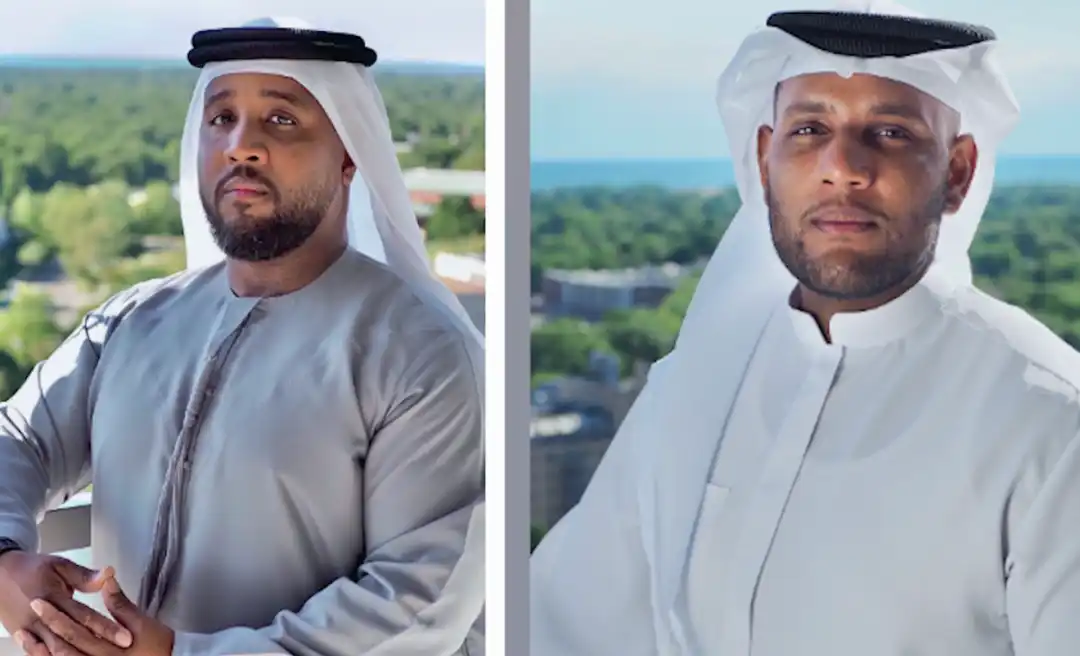
Chubby Bro is 42 this year, Skinny Bro is 33. Not only do they dress impressively, but their personas are also intimidating:
Chubby Bro publicly claimed to have married an Emirati princess, is a member of the Emirati royal family, has access to immense wealth, drives luxury cars, is surrounded by bodyguards and beautiful women, and was appointed as the "International Economic Advisor" for the City of East Cleveland.
Skinny Bro is supposedly a hedge fund manager overseeing massive funds for the Emirati royal family, specifically serving high-net-worth individuals and global investors. In reality, Skinny Bro doesn't even have a formal education. His ability to talk about finance for hours on end comes entirely from watching the TV show "Billions."
To be more convincing, they spared no expense renting Rolls-Royces, Bentleys, and other luxury cars, traveled the world on private jets, and bragged about their wealth on social media.
They also created a company website with a name and photos dripping with "Gulf" flavor:
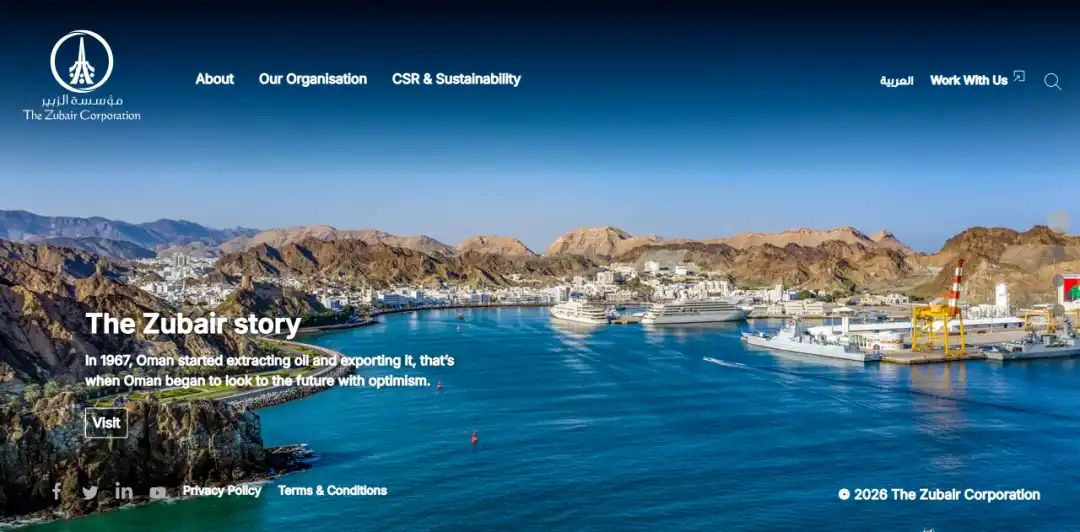
Most importantly, they had a genuine big shot—no, the big shot's secretary—to vouch for them! That was Smothers, the Mayor of East Cleveland's Chief of Staff and Executive Assistant, essentially the city's top aide.
The brothers often treated the top aide to high-end steakhouses with Japanese Wagyu beef, Brazilian cigars, and famous French wines. They also gifted him luxury box tickets for football games and even promised him a high-salary position at their company in the future for a cushy retirement.
In short, whether this top aide was duped or colluding, he provided the brothers with considerable help. He appointed Chubby Bro as the city's "International Economic Advisor," issued recommendation letters and project support letters on official city letterhead for the brothers, used government funds to support their investment projects, provided "police escorts" and government office buildings for the brothers to use in deceiving investors during signing ceremonies, and could even summon a group of local officials to attend key events.
With everything ready, the brothers began soliciting investments.
They didn't need to worry about investment projects; a lead investor called "Dubai Bridge Investments" would handle that, and other investors just needed to follow along.
The investment target was a large industrial park, with ready-made land and factory buildings:
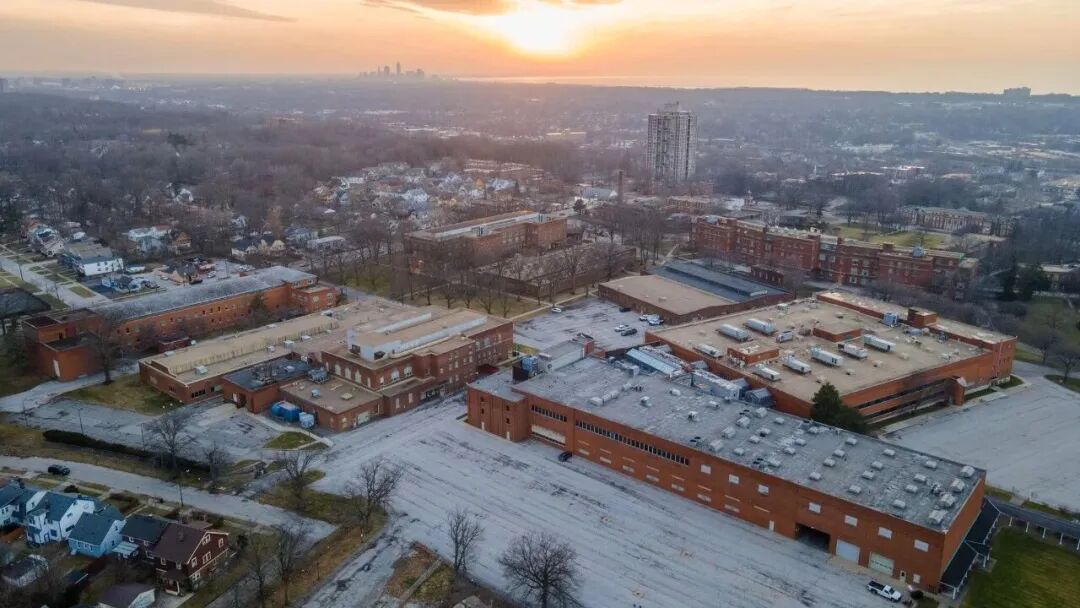
Where was this place? It was the Nela Park industrial area in East Cleveland, formerly the headquarters campus of General Electric Lighting, Thomas Edison's base, the first planned industrial park in U.S. history, where Einstein once held seminars with GE experts.
Friends in Beijing can imagine this park is like the Shougang area—formerly an industrial zone, now abandoned factory buildings for visitors.
The brothers' scam took place mainly from 2020 to 2023. They publicly announced that this area was about to be revitalized into a cryptocurrency mining farm for Bitcoin mining, kicking off a series of elaborate deceptions.
2. Chinese Investor Swindled Out of 120 Million, Didn't Even Spare His Own Girlfriend?
Actually, not many local white millionaires were fooled by these brothers.
The bulk of the victims was a Chinese investor, who contributed $18 million of the $21 million the brothers swindled. This Chinese investor was a wealthy woman from Sichuan, suspected to have run a Bitcoin mining farm in Ya'an earlier, leveraging cheap hydropower to accumulate assets worth hundreds of millions, gaining some fame in the crypto circle.
Later, when mining was banned domestically, she went to the U.S., coincidentally arriving in East Cleveland, Ohio, where she met the brothers. They promised that the cryptocurrency mining farm project would receive special electricity rate discounts and tax exemptions from the local government.
American media reported that the Chinese investor was first required to pay about $3 million in cash, then separately purchase about $6 million worth of mining machines and equipment for deployment in the so-called industrial park. There were also subsequent additional investments and operational funds, bringing the total losses close to $18 million.
The $6 million worth of mining equipment, over 1000 mining machines, was secretly moved by the brothers and sold off for $5.5 million.
However, being an insider in the crypto world, her team monitored these devices and immediately noticed that the hash rate data for all 1000+ mining machines had dropped to zero. They called Chubby Bro to inquire, and he said, "Ohio's power grid is undergoing renovations, temporarily shut down. Don't worry, these losses are covered by government subsidies."
You can't deceive forever. A month later, with still no activity, the wealthy woman flew to Cleveland to find Chubby Bro. He continued to lie, handing her an $800,000 check, saying it was the first quarter's profit share and telling her not to make a fuss. This small sum couldn't placate her. Soon, she began investigating them. The FBI and IRS jointly investigated, discovering the brothers had massive unexplained wealth and tax evasion. Eventually, pulling up the radish brought out the mud, and the mayor's top aide wasn't spared either.
Even harsher, Chubby Bro didn't even spare his Emirati ex-girlfriend, swindling her out of $737,000 (approximately 5.01 million RMB). She wasn't the only ex-girlfriend; most of Chubby Bro's victims were women, many lured in through romantic relationships. Moreover, he was extremely controlling. These wealthy women were very compliant when being scammed. If not for encountering this powerful Sichuanese wealthy woman, the brothers might not have been caught so easily.
Finally, the local court sentenced:
Chubby Bro to 24 years, plus 3 years of supervised release after serving his sentence; Skinny Bro to 23 years, plus 3 years of supervised release; the top aide to 8 years and 1 month, also with 3 years of supervised release.
Regarding money, they need to repay victim investors $19.2 million. Additionally, the brothers need to pay the IRS $2.05 million in back taxes and interest. However, this money is likely irrecoverable.
As for their remaining assets, there are only 70 guns (including a gold-plated AK-47) and a motorcycle, all confiscated. The planes, Rolls-Royces, and mansions they usually used were all rented.
3. The Emergence of "Fake Middle Eastern Princes": Savvy Wealthy People Also Need Anti-Scam Apps
"With a cloth on the head, I'm the richest in the world." When it comes to Middle Easterners, everyone thinks they are tycoons; the young ones are princes, the older ones are sheikhs. The result is that more and more people are appearing under titles like "Middle Eastern Prince," "Dubai Prince," "Emirati Royal" to scam others.
In early 2024, a self-proclaimed "Sheikh Ali Al Maktoum, His Highness the Prince of Dubai" made a bold claim, saying he would invest $500 million to establish a family office in Hong Kong, China.
This was over three billion RMB, a huge sum, immediately causing a stir. However, on the eve of the opening of his family office, this young man left, urgently flying back to Dubai.
Soon, the South China Morning Post discovered that this "Dubai Prince" was actually a Filipino singer. He had given an interview earlier, saying,
"My parents are pure Dubai nationals, no Filipino blood. Because I like the kindness and warmth of Filipinos, I sing Filipino songs."
Further digging revealed more shocking details. Before the official establishment of his family office in Hong Kong, China, there were already two individuals in charge. The executive director was Cheng Zhanghe, who operated a virtual currency platform and had been warned by the U.S. SEC. The vice-chairman, Mai Yirui, had her company, Zhongtang SkyRail, already listed as a失信公司 (dishonest company).
However, Shen Yunlong, founding president of the "China Hong Kong Middle East Economic and Trade Association," said he had personally seen Ali's passport, which indeed stated "Sheikh" and "HH" (His Highness), and the letterhead bore the national emblem.
The Consulate General of the UAE in Hong Kong, responding to media inquiries, confirmed that Prince Ali indeed "comes from the ruling family" and can be respectfully addressed as "Sheikh." However, Prince Ali is at best a distant relative of UAE Vice President Mohammed Al Maktoum. As for the $500 million supposedly to establish the family office, there's been no trace of it.
This Ali is not the first "Dubai Prince" to come and bluff.
In the 2023 "Shenzhen Finance First Thunder" case involving Dingyifeng, there were also two "Dubai Princes."
Dingyifeng-affiliated companies claimed on numerous internet platforms that Middle Eastern financial groups intended to invest in them:
A young Emirati prince would set up the China office of a $700 billion fund at Dingyifeng; an Emirati elder prince was negotiating to entrust the management of a $2.5 trillion sovereign wealth fund to Dingyifeng's president, Sui Guangyi, for investment.
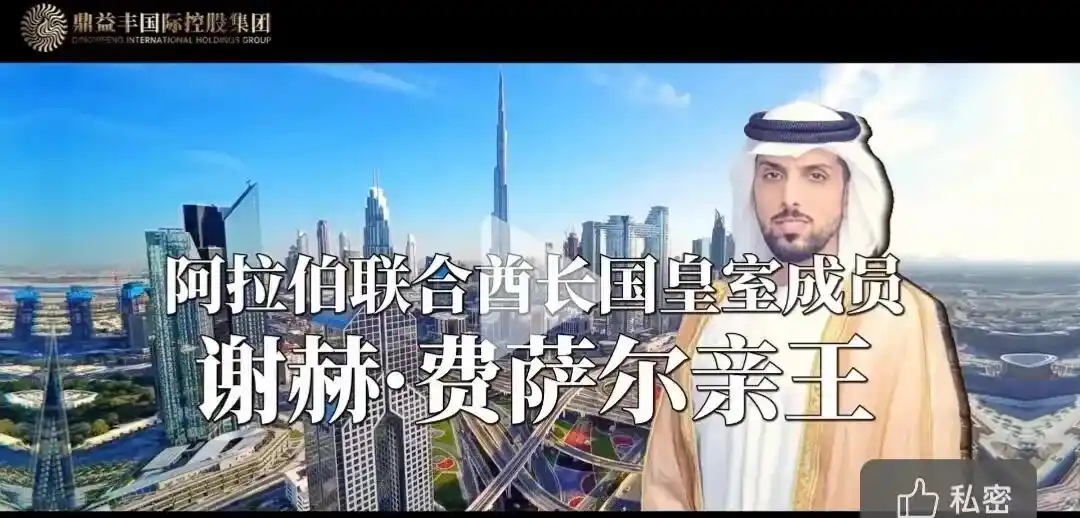
Promotional videos introduced that Sheikh Mohammed bin Juma Al Qasimi from Sharjah, UAE, cooperated with Dingyifeng's controller Sui Guangyi and related personnel for inspections. The investment also sounded plausible: "Emirati prince representing the royal family visited the group for cooperation," "Both parties have signed an agreement, with an intention to invest $30 billion, first tranche $1 billion."
However, Sui Guangyi, the old Taoist from Dingyifeng, was a scammer himself, and the two "Dubai Princes" might have just been props he hired for show. After all, he even invited foreign former political leaders to his annual meetings.
From this perspective, Middle Eastern princes swaggering and swindling in China don't last long. For long-term deception, you have to look at the United States.
In 2019, a Colombian man was sentenced to prison in the U.S. Named Anthony Gignac, he impersonated a Saudi prince for over thirty years.
Anthony started building his "Saudi royal family member" identity at 18, often wearing traditional Saudi attire, living in a luxury penthouse in Miami's affluent area, traveling in Rolls-Royces or driving Ferraris with diplomatic license plates, and constantly showing off planes, yachts, sports cars, Rolexes, etc., on Instagram.
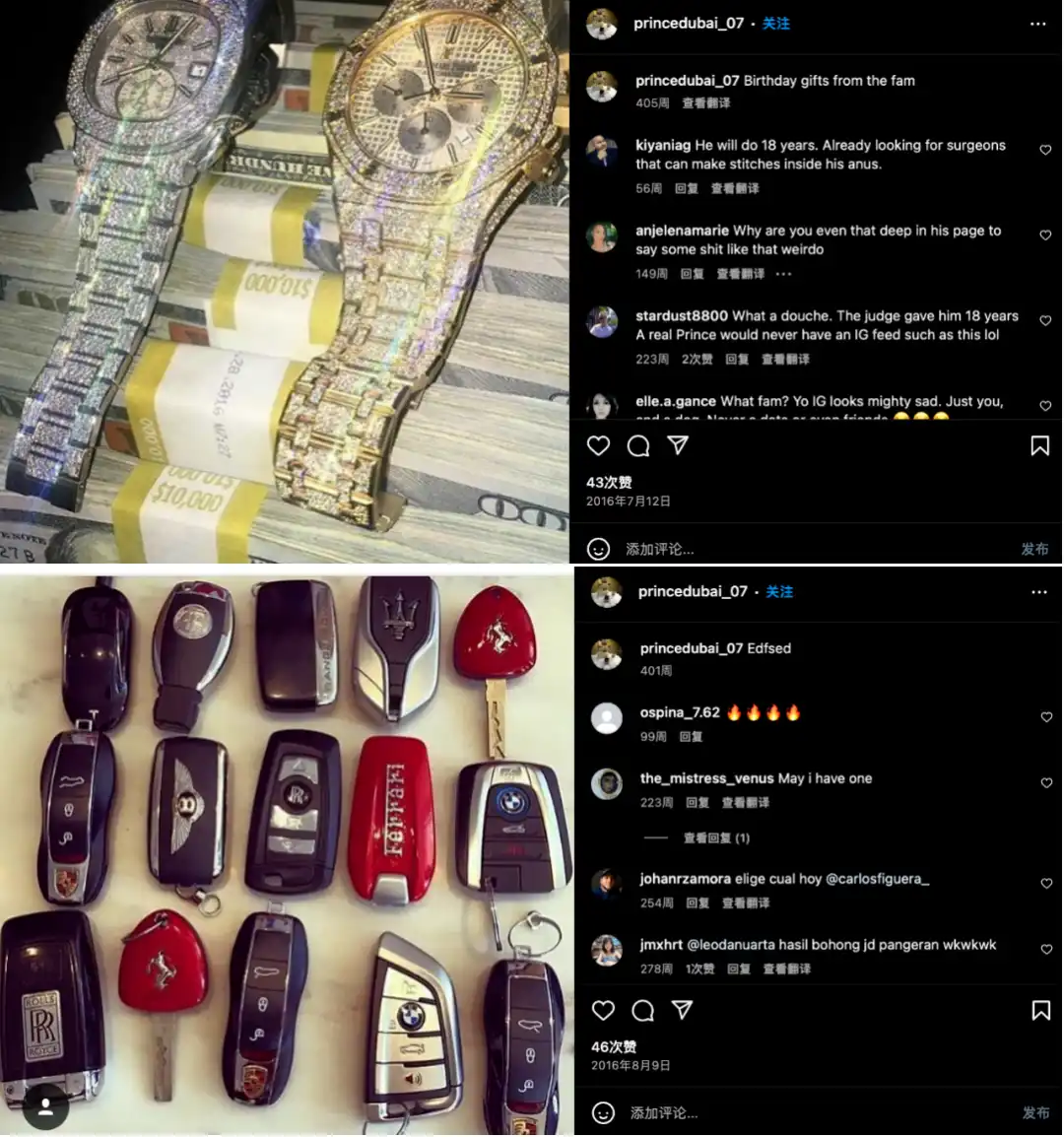
He was always surrounded by a group of butlers and bodyguards, had dedicated personnel handling his business affairs, and liked to "have FaceTime calls with his king father."
He presented himself as "Prince Khalid." Besides freeloading everywhere, he successfully got American Express to give him a credit card with a $200 million limit. He also pretended to represent "Saudi Aramco," swindling nearly $8 million from over twenty investors! Finally, he attempted to "acquire" a 30% stake in Miami's Fontainebleau Hotel for $440 million, but that deal fell through.
In 2017, this "Prince Khalid" ordered prosciutto at a dinner party. Soon, the news of a "Muslim Prince eating pork" spread through Miami's wealthy circles. The scammed millionaires collectively began investigating and quickly had him arrested at the airport. Ultimately, he was sentenced in 2019 to 18 years and 8 months in prison.
Fake tycoons come in many varieties. Fortunately, they target wealthy people and can't scam ordinary folks like us.
So, wealthy people, be more careful!