The Real Battlefield of AI Lies in the 'Dark Forest'

marsbit2026-04-18 tarihinde yayınlandı2026-04-18 tarihinde güncellendi

Özet

The article "AI's Real Battlefield is in the 'Dark Forest'" discusses the shifting dynamics in the global AI landscape, contrasting the strategic directions of Chinese and U.S. AI developers. Chinese companies like Alibaba (with its "HappyHorse" video model), ByteDance (Seedance 2.0), and Kuaishou (Kling 3.0) have taken the lead in text-to-video generation, surpassing OpenAI’s now-discontinued Sora. These models are deeply integrated into their parent companies’ content ecosystems (e.g., Douyin, Kuaishou), serving to reduce content creation costs and enhance user engagement rather than operating as standalone profit centers. In contrast, U.S. firms are pivoting toward high-stakes enterprise and security applications. Anthropic’s Claude Mythos model demonstrates advanced capabilities in autonomously discovering and exploiting software vulnerabilities, prompting concern at the highest levels of U.S. financial and governmental institutions. OpenAI responded with its own GPT-5.4-Cyber, signaling a strategic shift from consumer-facing products to enterprise-grade tools focused on cybersecurity and programming. The divergence is attributed to fundamental differences in resources and market structures. U.S. companies, backed by vast computational resources (e.g., Amazon and Google supply Anthropic with substantial funding and TPU access), can pursue deep, specialized R&D in high-value B2B sectors. Chinese firms, facing significant compute power constraints and a less mature ente...


By | FunTalk, Author | Lin Shu, Editor | Liu Yuxiang

The battle of text-to-video AI is over.

On April 8th, a horse named HappyHorse descended from the sky, sweeping aside contenders like Seedance 2.0 and Kling 3.0 on the Artificial Analysis video evaluation leaderboard to claim the top spot. The mystery was solved—it came from Alibaba's ATH Innovation Business Unit, a unified Transformer video generation model with 15B parameters, supporting text and image joint generation of video with synchronized audio. The news sent shockwaves through the entire AI video sector.

Just a few days before HappyHorse's debut, another muffled sound came from across the ocean: on March 24th, OpenAI officially announced the shutdown of Sora, with the web and App versions going offline on April 26th, and the API being discontinued on September 24th. OpenAI's official shutdown of Sora came just three months after signing a multi-year cooperation agreement with Disney.

Two years ago, Sora's initial release amazed the entire tech world, while domestic video AI was still in its infancy.

Now, ByteDance's Seedance 2.0, released on February 7th, 2026, redefined industrial-grade AI video with native 2K clarity and director-level cinematography; Kuaishou's Kling 3.0 followed closely behind, topping the leaderboard with an Elo score of 1249 upon its release on February 5th; Alibaba's HappyHorse later surpassed them all, directly crushing its predecessors.

It is an indisputable fact that domestic AI has come from behind to lead the video generation track.

But on the other side of the dazzling fireworks, another hidden worry is approaching.

Across the ocean, Anthropic, which had never ventured into multimodal AI, stirred Washington and Wall Street with its latest Claude Mythos model. It not only significantly outperforms the previous flagship model in various capabilities but has also demonstrated the ability to autonomously discover network vulnerabilities and exploit them—which is why Anthropic claims it dares to publicly release the model, albeit with limited access only to a few vetted organizations.
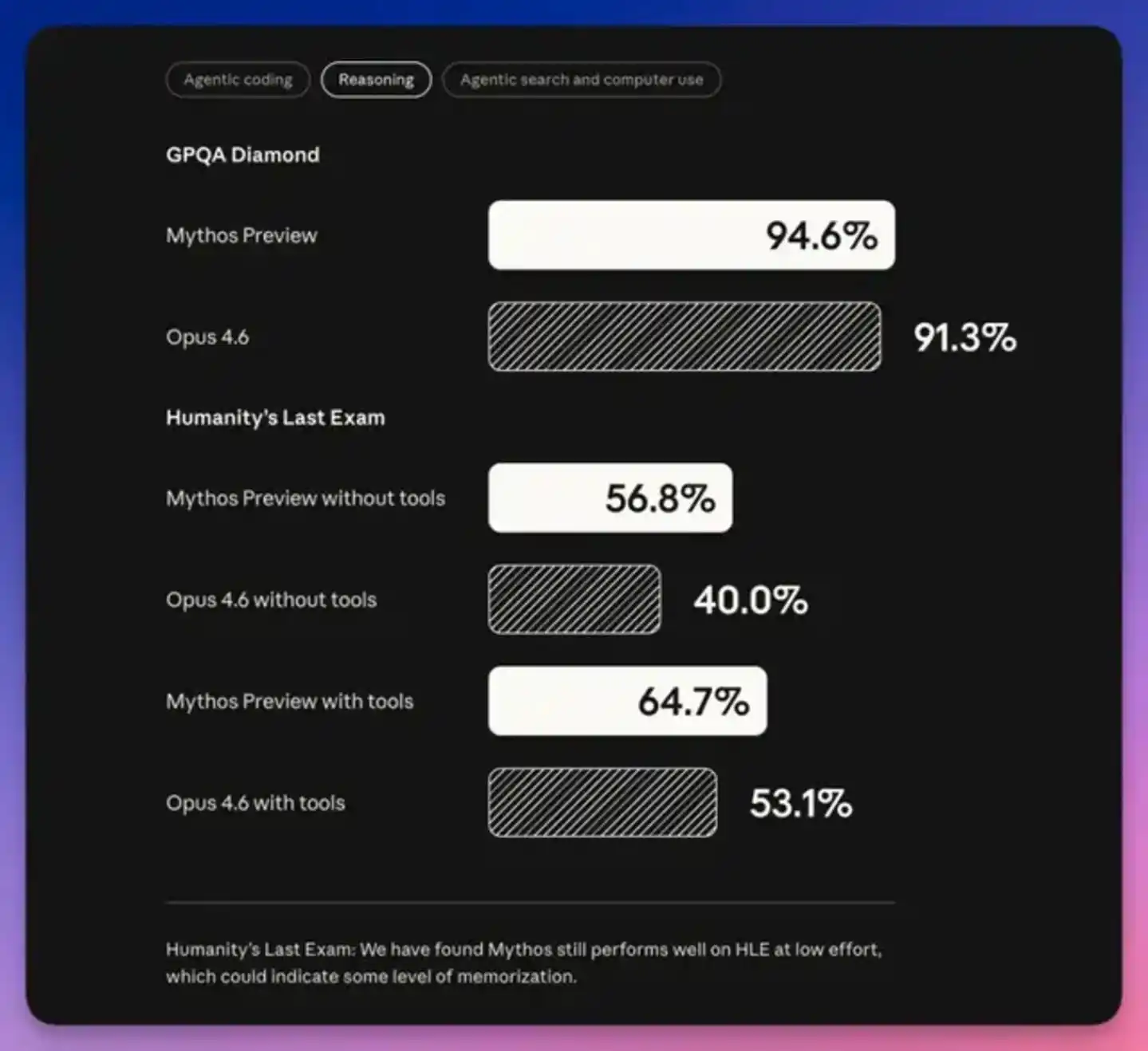
According to media reports, after the release of Mythos, U.S. Treasury Secretary Besant and Federal Reserve Chairman Powell urgently met with CEOs of Wall Street giants like Citigroup, Morgan Stanley, and Bank of America at the Treasury Department headquarters in Washington. The core agenda was singular: the systemic cybersecurity risks that the Mythos model could trigger.

Similarly, on April 9th, OpenAI also released GPT-5.4-Cyber, a model with advanced cybersecurity capabilities, also available only to a limited number of partners—a direct response to Anthropic's Mythos.

This is the other portrayal of the current Sino-US AI landscape:

Using the same gunpowder, some make fireworks, while others have already forged weapons.

One's Poison, Another's Nectar

Besides shutting down Sora, OpenAI's main business is also struggling.

As of February 2026, ChatGPT's weekly active users had reached 900 million, boasting the largest AI user base globally. But these 900 million users do not equate to 900 million profits. The fundamental reality of its business model—earning $1 for every $1.7 burned—remains unchanged.

To this day, OpenAI still cannot shake Google and Meta's dominance in the digital advertising market, making it difficult to monetize through ad scale, and subscriptions alone cannot cover costs. OpenAI's 2026 ARR is approximately $24 billion, seemingly massive, yet it remains unprofitable.

In contrast, Anthropic never took the consumer route from the start. Claude was positioned as a productivity tool, with Claude Code capturing 54% of the AI programming market, serving over 300,000 enterprises. By April 2026, Anthropic's ARR had surpassed $30 billion, officially overtaking OpenAI. This figure was just $9 billion a year ago.

More crucially, over 1,000 of Anthropic's enterprise customers pay over $1 million annually, exhibiting extremely high customer stickiness—this is not luck; it's a victory of strategy.

Therefore, this year, OpenAI changed its core strategy, shifting from consumer entertainment products to enterprise productivity tools, streamlining its model product line and concentrating resources on the GPT-5.4 series and the next-generation "Spud" model. Sora's shutdown is a manifestation of this strategy.

It is foreseeable that this year's main AI battlefield will be in the to-B sector. Anthropic's series of new product releases and growth curve prove that the ceiling for AI To-B is high, and OpenAI, burdened with huge losses, is also adjusting its direction in time, continuing to double down on the productivity tool direction.

Chinese manufacturers widely distributed red envelopes during the Spring Festival, with Yuanbao, Qwen, and Douban entering the下沉 (down-market) consumer market. Now, Seedance2.0, Kling 3.0, and "HappyHorse" have defeated Sora in the text-to-video field. On the surface, the main offensive directions on both sides of the Pacific have diverged.

Objectively speaking, Chinese manufacturers' AI products have cost advantages, with revenue mainly coming from API calls and C-end subscriptions. For example, Kuaishou's Kling ARR exceeded $300 million by January 2026, with single-month revenue surpassing $20 million in December 2025—a benchmark achievement domestically.

But compared to Anthropic's $30 billion ARR, the gap remains a hundredfold.

However, simply comparing revenue numbers is unfair and inaccurate. The Chinese AI market, unlike the US, has its own logic.

Sora is a pure money-loser in OpenAI's hands, but Seedance2.0 is a booster for ByteDance. Seedance 2.0 is part of the Douyin ecosystem; its task is not independent profitability but rather reducing creator costs on the supply side and injecting more content into the platform. Even if the model invocation cost is high and revenue cannot cover costs, as long as the created content enhances Douyin users' usage time and stickiness, leading to sustained growth in Douyin advertising, the overall account is still profitable. It is worth noting that, according to reports, Douyin's net profit reached $50 billion in 2025, approaching Meta's level.

The same logic applies to Kuaishou's Kling—it is the infrastructure of Kuaishou's content ecosystem, and Kuaishou is not stingy in continuously investing in infrastructure, with 2026 Capex expected to reach 26 billion RMB, most of which will be invested in Kling and basic large model computing power construction.

More importantly, Chinese big tech companies are both consumers and suppliers of AI. ByteDance and Alibaba are developing their own chips, and the optimization space for inference costs is far greater than outsiders imagine. Alibaba Cloud has seen triple-digit growth in AI-related product revenue for ten consecutive quarters, with Q3 cloud revenue in fiscal year 2026 increasing 36% year-on-year to 43.284 billion RMB.

It can be said that compared to Anthropic and OpenAI, which have to build their own commercial ecological闭环 (closed loops) alone, Chinese tech giants with rich ecosystems and application scenarios are much more从容 (composed/at ease).

Additionally, the B-end for Chinese manufacturers is not blank; it just follows an "embedded platform" route—embedding AI capabilities as infrastructure for Alibaba Cloud, Douyin, Taobao, rather than directly selling independent AI products like Anthropic.

But the problem is, while this "embedded" strategy is稳健 (steady/robust), it始终停留在 (always remains at) the level of helping creators and businesses "降本增效" (reduce costs and increase efficiency), or is concentrated in the cloud service field. High-barrier fields that truly determine digital world discourse power, like programming and cybersecurity, have not been deeply涉足 (ventured into) by Chinese manufacturers like Anthropic.

In contrast, Anthropic has made programming and security its core competitiveness since its founding. Most of the 250+ engineers on the Claude team work on programming language understanding, code auditing, and security reasoning—this is functional specialization. Domestic manufacturers treat programming tools as a "functional module" of the large model and will not invest hundred-person specialized teams to turn it into a moat-level product.

The Computing Power Chasm

That Sino-US AI have taken two截然不同的 (completely different) routes is, to some extent, the optimal solution each found under different computing power hierarchies.

Anthropic doesn't engage in multimodal AI, focusing solely on programming and security. This seems like克制 (restraint), but is actually a luxury. It is backed by $8 billion in real money from Amazon, plus 1 million TPUs provided by Google. With such an arsenal, Anthropic can focus single-mindedly on深度研发 (deep R&D) in one direction without having to急于 (rush to) prove its value through C-end monetization like Chinese manufacturers.

The benefits of this frontal assault are obvious. Claude Code capturing 54% of the AI programming market is the best example of technical depth transforming into a commercial moat. The Mythos model is so strong it can discover vulnerabilities in software systems that are difficult for human engineers to detect. This capability is both a defensive weapon and a potential offensive one.

OpenAI closely followed with the release of GPT-5.4-Cyber, indicating that the US AI industry has formed a consensus: AI in cybersecurity and programming is the true strategic high ground.

But this model also has its cost: The support from Amazon and Google is essentially a form of "computing power feudalism"—exchanging TPUs and Trainium for equity and technical binding with AI companies.

In April 2026, Anthropic signed a 3.5GW TPU contract with Google and Broadcom, expected to go online in 2027.

This means Anthropic cannot摆脱 (break away from) Google's chips in the short term. Even if Nvidia's GPUs are better, it must优先跑在 (prioritize running on) Amazon's own chips.

This is also why Anthropic is cooperating with Broadcom to develop its own chips—a measure to hedge the risks of this dependency.

The fundamental reason Chinese manufacturers focus on 2C is the lack of computing power hegemony to依附 (attach to). Every penny spent must be reflected in growth on the financial statements.

This is no exaggeration. According to incomplete statistics, as of the end of 2025, the US actually controlled about 75% of the world's leading AI computing power, while China accounted for about 17%–18%, and a considerable part of that was存量 (stock) Nvidia chips purchased before the export controls were implemented.

Currently, the global AI training computing power总量 (total) is on the order of 10^27 FLOPS. The computing power单独拥有 (individually owned) by a leading US tech giant may exceed the sum total of all Chinese enterprises. More棘手的是 (troublesome is), due to the lower energy efficiency of domestic chips, Chinese enterprises consume about 40% more electricity to achieve the same FLOPS of computing power. Of course, the good news is that domestic computing chips are catching up, and electricity prices are cheaper than in the US.

Besides the gap in computing power, the willingness of the US B-end to pay also provides soil for this route difference. Taking just the cybersecurity field targeted by Mythos as an example, the US cybersecurity market size in 2026 is about $100 billion, and globally it exceeds $520 billion. Such a huge market is enough to support Anthropic's massive investment in Mythos.

In contrast, the advantage of Chinese AI in the consumer track reflects the genes of the entire Chinese internet: the world's most competitive short video ecosystem, the most discerning content creators, and the most完善的 (complete) mobile payment system. This soil naturally孕育出 (gives birth to) the explosive power of C-end AI products.

But翻到硬币的另一面 (turning to the other side of the coin), the reality of China's B-end is: GDP has reached 70% of the US, but the enterprise SaaS market size is less than one-twentieth of the US's. This悬殊的比例 (disparate ratio) is not entirely due to technological backwardness but is rooted in deeper market structures—Chinese enterprises have long been accustomed to buyout software, have low willingness to pay, and renewal culture is far less mature than in the US.

This structural difference directly determines the business logic: In China, making high-barrier, high-unit-price B-end AI products has a天然失衡 (naturally imbalanced) input-output ratio. The market does not reward depth, only scale.

AI Dark Forest

If AI were purely about market competition, then both sides could go their own ways based on their respective resource endowments. But now AI is no longer just about economic benefits, especially after the advent of Mythos.

Mythos's ability is to find vulnerabilities, but the other side of the coin is offense. When an AI model can find security vulnerabilities in large financial systems within minutes, it is only a thin layer of policy constraints away from being used as a cyber weapon.

In this sense, the AI competition is shifting from "whose PPTs and videos look better" to "who can destroy the opponent's digital infrastructure." This is not alarmism but the industry direction indicated by the simultaneous appearance of Mythos and GPT-5.4-Cyber.

Anthropic甩出 (threw out) Mythos, and OpenAI's comprehensive shift to enterprise productivity tools both预示 (foreshadow) that the AI competition has entered the second half, which we might call the "Dark Forest Competition"—the competition for To-B hard power. Economies lacking relevant capabilities will become prey for others.

On the C-end, the battle lines are relatively solidified, and no major changes are expected. Whether Chinese tech giants or US companies like Google and Meta, they all have rich ecosystems and scenarios. AI is just the icing on the cake,提高流量的货币化速率 (increasing the monetization rate of traffic). In the short term, AI newcomers cannot shake their status.

This is perhaps the reason why Anthropic and OpenAI turned to the B-end one after another. In the B-end and G-end markets, the winner-takes-all rule applies, which refers not only to market share but also to the fact that for AI products面向 (facing) enterprises and governments, the loser stands to lose not just revenue and advertising fees, but potentially the initiative of the entire digital security system.

In the foreseeable future, countries will increasingly重视 (pay attention to) this field. But有趣的是 (interestingly), this field may not be the best battlefield for existing giants like Alibaba and ByteDance. Their positioning, ecology, and organizational structure are naturally more suitable for large-scale C-end applications. Although big tech companies have cloud security departments, those are more of a supportive existence. None of the major companies have such huge independent budgets and computing power to create a Chinese version of Mythos.

After all, even in the US, Mythos was not created by big companies like Microsoft or Google.

Mythos's security capabilities (like discovering zero-day vulnerabilities, writing exploits) were not obtained through specialized training but were "natural emergences" resulting from the comprehensive improvement of code, reasoning, and autonomy capabilities. This is precisely the opportunity for the "AI Six Little Dragons" and emerging AI startups.

On March 27th, 2026, Zhipu AI released GLM-5.1,刷新了 (refreshed) the global best score on the SWE-bench Pro benchmark, surpassing Claude Opus 4.6 and GPT-5.4. With 754B parameters, its programming capability reached 94.6% of Claude Opus 4.6's, but the price was only one-fifth, and the weights were open-sourced under the MIT license.

The emergence of GLM-5.1 proves one thing: In the critical field of programming, the technical gap of Chinese models can be narrowed.

But expecting the Six Little Dragons to produce products comparable to Mythos in the short term can easily slide into a kind of armchair idealism.

Yang Zhilin, Yan Junjie, and others certainly know the strategic value of the programming and cybersecurity fields. But if computing power is firmly卡住 (stuck), if the domestic B-end/G-end market暂时给不出 (temporarily cannot provide) hundreds of billions of dollars in ARR to support R&D, if even生存的现金流 (survival cash flow) is a problem, then mere "awareness and vigilance" obviously cannot conjure up tens of thousands of H100s to train a monster like Mythos.

Since the frontal battlefield is constrained by the iron curtain of computing power, what Chinese AI manufacturers really should conduct is an asymmetric war. They must advance on both software and hardware fronts. On one hand, big tech companies and the Six Little Dragons increase investment in coding. For example, Alibaba has been enhancing the coding capability in the Qwen foundation model and launched a dedicated Coding model; Kimi K2.5's Coding capability, released in early 2026, was widely regarded as one of the strongest code generation models among domestic open-source models.

On the other hand, domestic models are also being adapted to domestic computing power infrastructure (chips, interconnects, frameworks). It is reported that progress is being made in this regard, and during this period, they must also keep the technology stack from falling behind.

In terms of commercialization, if a domestic Mythos appears, there will definitely be G-end orders, and B-end financial institutions also have demand. Besides, there is also出海 (going global). Vast markets in the Global South—Southeast Asia, the Middle East, Africa, Latin America—enterprises in these markets同样有 (also have) B-end digitalization and cybersecurity needs. If Anthropic and OpenAI continue to hide and conceal, then it is likely to replicate the scene with open-source models—US manufacturers固守 (hold fast to) the closed-source market, maintaining profit margins, but the vast market space is occupied by Chinese open-source models.

Cybersecurity is a bit like the dark forest法则 (law) in Liu Cixin's writing—everyone wants to protect themselves, but if possible, also wants to destroy others. You are not sure if others have good intentions. The safest strategy is to think the worst of them, prepare for battle, and a猜忌链 (chain of suspicion) forms.

In the dark forest, the one who shoots first may not necessarily survive to the end, but the one without a gun definitely cannot walk out of the forest alive.


İlgili Sorular

QWhat is the main difference between the AI development strategies of Chinese and American companies as described in the article?

AChinese companies focus on consumer-facing applications like video generation and content creation, integrating AI as infrastructure within existing platforms (e.g., Douyin, Kuaishou) to enhance user engagement and reduce costs. American companies like Anthropic and OpenAI prioritize high-barrier enterprise and security applications, such as AI-powered programming tools and cybersecurity, targeting B2B markets with high-value contracts.

QWhy did OpenAI shut down Sora, and what does it indicate about their strategic shift?

AOpenAI shut down Sora as part of a strategic shift from consumer entertainment products to enterprise productivity tools. This move reflects their focus on resource consolidation for models like GPT-5.4 and future iterations, aiming to address profitability challenges and compete in high-value B2B sectors.

QWhat capabilities does Anthropic's Claude Mythos model possess that raised concerns in Washington and Wall Street?

AClaude Mythos can autonomously discover and exploit network vulnerabilities, posing potential systemic cybersecurity risks. This capability alarmed U.S. financial and regulatory leaders, prompting emergency discussions about its implications for critical infrastructure security.

QHow does the article characterize the 'compute power gap' between the U.S. and China in AI development?

AThe U.S. controls about 75% of global advanced AI compute power, with individual American tech giants potentially owning more than all Chinese companies combined. Chinese firms face higher energy costs for equivalent compute output due to less efficient domestic chips, though cheaper electricity and ongoing chip development offer some mitigation.

QWhat is the 'Dark Forest' analogy used in the article to describe the future of AI competition?

AThe 'Dark Forest' analogy depicts AI competition evolving into a security-centric arena where nations and companies must develop offensive and defensive capabilities to protect digital infrastructure. Lack of such capabilities could make entities vulnerable to attacks, mirroring a high-stakes environment of mutual suspicion and preparedness.

İlgili Okumalar

Why Do You Always Lose Money on Polymarket? Because You're Betting on News, While the Pros Read the Rules

Why do you always lose money on Polymarket? Because you bet on news, while the pros study the rules. This article explains how top traders ("che tou") profit by meticulously analyzing market rules, not just predicting events. Polymarket, a prediction market platform, often sees disputes over event outcomes due to ambiguous rule wording. For instance, a market asking "Who will be the leader of Venezuela by the end of 2026?" was misinterpreted by many who bet on Delcy Rodríguez, assuming she held power. However, the rules specified "officially holds" as the formally appointed, sworn-in individual. Since Nicolás Maduro was still recognized as president officially, he won the market—even being in prison. To resolve such disputes, Polymarket uses a decentralized arbitration system via UMA protocol. The process involves: 1. Proposal: Anyone can propose a market outcome by staking 750 USDC, earning 5 USDC if unchallenged. 2. Dispute: A 2-hour window allows challenges with a 750 USDC stake; successful challengers earn 250 USDC. 3. Discussion: A 48-hour period on UMA Discord for evidence and debate. 4. Voting: UMA token holders vote in two 24-hour phases (blind then public). Outcomes require >65% consensus and 5M tokens voted; otherwise, four re-votes occur before Polymarket intervention. 5. Settlement: Results are final and automatic. Unlike traditional courts, Polymarket’s system lacks separation between arbitrators and stakeholders—voters often hold market positions, creating conflicts of interest. This leads to herd mentality in discussions and non-transparent outcomes without explanatory rulings, preventing precedent formation. Thus, success on Polymarket hinges on deep rule interpretation, not just event prediction, exploiting gaps between reality and contractual wording.

marsbit1 saat önce

Why Do You Always Lose Money on Polymarket? Because You're Betting on News, While the Pros Read the Rules

marsbit1 saat önce

DeepSeek Funding: Liang Wenfeng's 'Realist' Pivot

DeepSeek, a leading Chinese AI company, has initiated its first external funding round, aiming to raise at least $300 million at a valuation of no less than $10 billion. This move marks a significant shift from its founder Liang Wenfeng’s previous idealistic stance of rejecting external capital to maintain independence. Despite strong financial backing from its parent company, quantitative trading firm幻方量化 (Huanfang Quant), which provided an estimated $700 million in revenue in 2025 alone, DeepSeek faces mounting challenges. Key issues include a 15-month gap in major model updates, delays in its flagship V4 release, and the loss of several core researchers to competitors offering significantly higher compensation. The company is also undergoing a strategic pivot by migrating its infrastructure from NVIDIA’s CUDA to Huawei’s Ascend platform, a move aligned with China’s push for technological self-reliance amid U.S. export controls. However, DeepSeek lags behind rivals like智谱AI and MiniMax—both now publicly listed—in areas such as product ecosystem, multimodal capabilities, and commercialization. The funding round, though relatively small in scale, is seen as a way to establish a market-validated valuation anchor, making employee stock options more competitive and facilitating talent retention. It also signals DeepSeek’s transition from a pure research-oriented organization to a commercially-driven player in the global AI ecosystem.

marsbit1 saat önce

DeepSeek Funding: Liang Wenfeng's 'Realist' Pivot

marsbit1 saat önce

İşlemler

Spot
Futures

Popüler Makaleler

GROK AI Nedir

Grok AI: Web3 Döneminde Konuşma Teknolojisini Devrim Niteliğinde Yenilik Giriş Hızla gelişen yapay zeka alanında, Grok AI, ileri teknoloji ve kullanıcı etkileşimi alanlarını birleştiren dikkate değer bir proje olarak öne çıkıyor. Ünlü girişimci Elon Musk'ın liderliğindeki xAI tarafından geliştirilen Grok AI, yapay zeka ile etkileşim şeklimizi yeniden tanımlamayı hedefliyor. Web3 hareketi devam ederken, Grok AI, karmaşık sorgulara yanıt vermek için konuşma yapay zekasının gücünden yararlanmayı amaçlıyor ve kullanıcılara sadece bilgilendirici değil, aynı zamanda eğlenceli bir deneyim sunuyor. Grok AI Nedir? Grok AI, kullanıcılarla dinamik bir şekilde etkileşimde bulunmak üzere tasarlanmış sofistike bir konuşma yapay zeka sohbet botudur. Birçok geleneksel yapay zeka sisteminin aksine, Grok AI, genellikle uygunsuz veya standart yanıtların dışında kabul edilen daha geniş bir sorgu yelpazesini benimsemektedir. Projenin temel hedefleri şunlardır: Güvenilir Akıl Yürütme: Grok AI, bağlamsal anlayışa dayalı mantıklı yanıtlar sağlamak için sağduyu akıl yürütmeyi vurgular. Ölçeklenebilir Denetim: Araç yardımı entegrasyonu, kullanıcı etkileşimlerinin hem izlenmesini hem de kalite için optimize edilmesini sağlar. Resmi Doğrulama: Güvenlik en önemli önceliktir; Grok AI, çıktılarının güvenilirliğini artırmak için resmi doğrulama yöntemlerini entegre eder. Uzun Bağlam Anlayışı: AI modeli, kapsamlı konuşma geçmişini saklama ve hatırlama konusunda mükemmel bir performans sergileyerek anlamlı ve bağlamsal olarak farkında tartışmaların yapılmasını kolaylaştırır. Saldırgan Dayanıklılık: Manipüle edilmiş veya kötü niyetli girdilere karşı savunmalarını geliştirmeye odaklanarak, Grok AI kullanıcı etkileşimlerinin bütünlüğünü korumayı hedefler. Özünde, Grok AI sadece bir bilgi alma cihazı değil; dinamik diyalogu teşvik eden, etkileyici bir konuşma partneridir. Grok AI'nın Yaratıcısı Grok AI'nın arkasındaki beyin, otomotiv, uzay yolculuğu ve teknoloji gibi çeşitli alanlarda yenilikle özdeşleşen Elon Musk'tır. Yapay zeka teknolojisini faydalı yollarla geliştirmeye odaklanan xAI çatısı altında, Musk'ın vizyonu, yapay zeka etkileşimlerinin anlaşılmasını yeniden şekillendirmeyi amaçlıyor. Liderlik ve temel etik, Musk'ın teknolojik sınırları zorlamaya olan bağlılığı tarafından derinden etkilenmektedir. Grok AI'nın Yatırımcıları Grok AI'yi destekleyen yatırımcılarla ilgili spesifik detaylar sınırlı kalmakla birlikte, projenin kuluçka merkezi olan xAI'nin, esasen Elon Musk tarafından kurulduğu ve desteklendiği kamuya açık bir şekilde kabul edilmektedir. Musk'ın önceki girişimleri ve mülkleri, Grok AI'nın güvenilirliğini ve büyüme potansiyelini daha da artıran sağlam bir destek sağlar. Ancak, şu anda Grok AI'yı destekleyen ek yatırım fonları veya kuruluşlarıyla ilgili bilgiye kolayca erişim sağlanamamaktadır; bu da potansiyel gelecekteki keşif alanını işaret etmektedir. Grok AI Nasıl Çalışır? Grok AI'nın operasyonel mekanikleri, kavramsal çerçevesi kadar yenilikçidir. Proje, benzersiz işlevselliklerini kolaylaştıran birkaç son teknoloji ürünü teknolojiyi entegre eder: Sağlam Altyapı: Grok AI, konteyner orkestrasyonu için Kubernetes, performans ve güvenlik için Rust ve yüksek performanslı sayısal hesaplama için JAX kullanılarak inşa edilmiştir. Bu üçlü, sohbet botunun verimli çalışmasını, etkili bir şekilde ölçeklenmesini ve kullanıcılara zamanında hizmet vermesini sağlar. Gerçek Zamanlı Bilgi Erişimi: Grok AI'nın ayırt edici özelliklerinden biri, X platformu (önceden Twitter olarak biliniyordu) aracılığıyla gerçek zamanlı verilere erişim yeteneğidir. Bu yetenek, yapay zekaya en son bilgilere erişim sağlar ve diğer yapay zeka modellerinin gözden kaçırabileceği zamanında yanıtlar ve öneriler sunmasına olanak tanır. İki Etkileşim Modu: Grok AI, kullanıcılara “Eğlenceli Mod” ve “Normal Mod” arasında seçim yapma imkanı sunar. Eğlenceli Mod, daha eğlenceli ve mizahi bir etkileşim tarzı sağlarken, Normal Mod, kesin ve doğru yanıtlar vermeye odaklanır. Bu çok yönlülük, çeşitli kullanıcı tercihlerine hitap eden özelleştirilmiş bir deneyim sağlar. Özünde, Grok AI performansı etkileşimle birleştirerek, hem zenginleştirici hem de eğlenceli bir deneyim yaratmaktadır. Grok AI'nın Zaman Çizelgesi Grok AI'nın yolculuğu, gelişim ve dağıtım aşamalarını yansıtan önemli dönüm noktalarıyla işaretlenmiştir: İlk Geliştirme: Grok AI'nın temel aşaması, modelin ilk eğitim ve ince ayarının yapıldığı yaklaşık iki ay boyunca gerçekleşmiştir. Grok-2 Beta Yayını: Önemli bir ilerleme olarak, Grok-2 beta duyurulmuştur. Bu sürüm, sohbet etme, kodlama ve akıl yürütme yetenekleriyle donatılmış iki versiyon—Grok-2 ve Grok-2 mini—sunmuştur. Halka Açık Erişim: Beta geliştirmesinin ardından, Grok AI X platformu kullanıcılarına sunulmuştur. Telefon numarasıyla doğrulanan ve en az yedi gün aktif olan hesap sahipleri, sınırlı bir versiyona erişim sağlayarak teknolojiyi daha geniş bir kitleye ulaştırmaktadır. Bu zaman çizelgesi, Grok AI'nın kuruluşundan kamu etkileşimine kadar sistematik büyümesini kapsar ve sürekli iyileştirme ve kullanıcı etkileşimine olan bağlılığını vurgular. Grok AI'nın Ana Özellikleri Grok AI, yenilikçi kimliğine katkıda bulunan birkaç ana özelliği kapsamaktadır: Gerçek Zamanlı Bilgi Entegrasyonu: Güncel ve ilgili bilgilere erişim, Grok AI'yı birçok statik modelden ayırarak, etkileyici ve doğru bir kullanıcı deneyimi sağlar. Çeşitli Etkileşim Tarzları: Farklı etkileşim modları sunarak, Grok AI çeşitli kullanıcı tercihlerine hitap eder ve yapay zeka ile konuşurken yaratıcılığı ve kişiselleştirmeyi teşvik eder. Gelişmiş Teknolojik Altyapı: Kubernetes, Rust ve JAX kullanımı, projeye güvenilirlik ve optimal performans sağlamak için sağlam bir çerçeve sunar. Etik Tartışma Dikkati: Görüntü üreten bir işlevin dahil edilmesi, projenin yenilikçi ruhunu sergiler. Ancak, aynı zamanda tanınabilir figürlerin saygılı bir şekilde tasvir edilmesi ve telif hakkı ile ilgili etik konuları da gündeme getirir—bu, yapay zeka topluluğunda süregelen bir tartışmadır. Sonuç Konuşma yapay zekası alanında öncü bir varlık olarak Grok AI, dijital çağda dönüştürücü kullanıcı deneyimlerinin potansiyelini kapsar. xAI tarafından geliştirilen ve Elon Musk'ın vizyoner yaklaşımıyla yönlendirilen Grok AI, gerçek zamanlı bilgiyi gelişmiş etkileşim yetenekleriyle birleştirir. Yapay zekanın neler başarabileceği konusunda sınırları zorlamayı hedeflerken, etik konulara ve kullanıcı güvenliğine odaklanmayı sürdürmektedir. Grok AI, sadece teknolojik ilerlemeyi değil, aynı zamanda Web3 manzarasında yeni bir konuşma paradigmasını da temsil eder ve kullanıcılara hem yetkin bilgi hem de eğlenceli etkileşim sunma vaadinde bulunur. Proje gelişmeye devam ederken, teknolojinin, yaratıcılığın ve insan benzeri etkileşimin kesişim noktasında nelerin başarılabileceğinin bir kanıtı olarak durmaktadır.

250 Toplam GörüntülenmeYayınlanma 2024.12.26Güncellenme 2024.12.26

GROK AI Nedir

ERC AI Nedir

Euruka Tech: $erc ai ve Web3'teki Hedefleri Üzerine Bir Genel Bakış Giriş Blockchain teknolojisi ve merkeziyetsiz uygulamaların hızla gelişen manzarasında, her biri benzersiz hedefler ve metodolojilerle yeni projeler sıkça ortaya çıkmaktadır. Bu projelerden biri, kripto para ve Web3 alanında faaliyet gösteren Euruka Tech'tir. Euruka Tech'in, özellikle $erc ai token'ının ana odak noktası, merkeziyetsiz teknolojinin büyüyen yeteneklerinden yararlanmak için tasarlanmış yenilikçi çözümler sunmaktır. Bu makale, Euruka Tech'in kapsamlı bir genel görünümünü, hedeflerini, işlevselliğini, yaratıcısının kimliğini, potansiyel yatırımcılarını ve Web3'teki daha geniş bağlam içindeki önemini keşfetmeyi amaçlamaktadır. Euruka Tech, $erc ai Nedir? Euruka Tech, Web3 ortamının sunduğu araçlar ve işlevsellikleri kullanan bir proje olarak tanımlanmaktadır ve operasyonlarında yapay zekayı entegre etmeye odaklanmaktadır. Projenin çerçevesine dair spesifik detaylar biraz belirsiz olsa da, kullanıcı etkileşimini artırmayı ve kripto alanındaki süreçleri otomatikleştirmeyi amaçlamaktadır. Proje, yalnızca işlemleri kolaylaştırmakla kalmayıp, aynı zamanda yapay zeka aracılığıyla öngörücü işlevsellikleri de entegre eden merkeziyetsiz bir ekosistem yaratmayı hedeflemektedir; bu nedenle token'ının adı $erc ai'dir. Amaç, büyüyen Web3 alanında daha akıllı etkileşimleri ve verimli işlem işleme süreçlerini kolaylaştıran sezgisel bir platform sunmaktır. Euruka Tech'in Yaratıcısı Kimdir, $erc ai? Şu anda, Euruka Tech'in arkasındaki yaratıcı veya kurucu ekip hakkında bilgi verilmemiştir ve bu durum biraz belirsizdir. Bu veri eksikliği, ekibin geçmişi hakkında bilgi sahibi olmanın genellikle blockchain sektöründe güvenilirlik oluşturmak için gerekli olduğu endişelerini doğurmaktadır. Bu nedenle, somut detaylar kamuya sunulana kadar bu bilgiyi bilinmeyen olarak sınıflandırdık. Euruka Tech'in Yatırımcıları Kimlerdir, $erc ai? Benzer şekilde, Euruka Tech projesinin yatırımcıları veya destekleyen organizasyonları hakkında mevcut araştırmalarla kolayca sağlanan bir bilgi yoktur. Euruka Tech ile etkileşimde bulunmayı düşünen potansiyel paydaşlar veya kullanıcılar için kritik bir unsur, kurumsal finansal ortaklıklar veya saygın yatırım firmalarından gelen destekle sağlanan güvencedir. Yatırım ilişkileri hakkında açıklamalar olmadan, projenin finansal güvenliği veya sürdürülebilirliği hakkında kapsamlı sonuçlar çıkarmak zordur. Bulunan bilgilere paralel olarak, bu bölüm de bilinmeyen durumundadır. Euruka Tech, $erc ai Nasıl Çalışır? Euruka Tech için detaylı teknik spesifikasyonların eksik olmasına rağmen, yenilikçi hedeflerini göz önünde bulundurmak önemlidir. Proje, yapay zekanın hesaplama gücünden yararlanarak kripto para ortamında kullanıcı deneyimini otomatikleştirmeyi ve geliştirmeyi hedeflemektedir. AI'yi blockchain teknolojisiyle entegre ederek, Euruka Tech otomatik ticaret, risk değerlendirmeleri ve kişiselleştirilmiş kullanıcı arayüzleri gibi özellikler sunmayı amaçlamaktadır. Euruka Tech'in yenilikçi özü, kullanıcılar ile merkeziyetsiz ağların sunduğu geniş olanaklar arasında kesintisiz bir bağlantı yaratma hedefinde yatmaktadır. Makine öğrenimi algoritmaları ve AI kullanarak, ilk kez kullanıcı zorluklarını en aza indirmeyi ve Web3 çerçevesindeki işlem deneyimlerini düzene sokmayı amaçlamaktadır. AI ve blockchain arasındaki bu simbiyoz, $erc ai token'ının önemini vurgulamakta ve geleneksel kullanıcı arayüzleri ile merkeziyetsiz teknolojilerin gelişmiş yetenekleri arasında bir köprü işlevi görmektedir. Euruka Tech, $erc ai Zaman Çizelgesi Maalesef, Euruka Tech hakkında mevcut olan sınırlı bilgiler nedeniyle, projenin yolculuğundaki önemli gelişmeler veya kilometre taşları hakkında detaylı bir zaman çizelgesi sunamıyoruz. Genellikle bir projenin evrimini haritalamak ve büyüme eğrisini anlamak için değerli olan bu zaman çizelgesi şu anda mevcut değildir. Önemli olaylar, ortaklıklar veya işlevsel eklemeler hakkında bilgiler belirgin hale geldikçe, güncellemeler kesinlikle Euruka Tech'in kripto alanındaki görünürlüğünü artıracaktır. Diğer “Eureka” Projeleri Üzerine Açıklama Birden fazla projenin ve şirketin “Eureka” benzeri bir isimlendirmeye sahip olduğunu belirtmek önemlidir. Araştırmalar, robotlara karmaşık görevler öğretmeye odaklanan NVIDIA Research'ten bir AI ajanı gibi girişimleri, ayrıca eğitim ve müşteri hizmetleri analitiğinde kullanıcı deneyimini geliştiren Eureka Labs ve Eureka AI'yi tanımlamıştır. Ancak, bu projeler Euruka Tech'ten farklıdır ve hedefleri veya işlevleri ile karıştırılmamalıdır. Sonuç Euruka Tech, $erc ai token'ı ile birlikte, Web3 manzarasında umut verici ancak şu anda belirsiz bir oyuncuyu temsil etmektedir. Yaratıcısı ve yatırımcıları hakkında detaylar açıklanmamış olsa da, yapay zekayı blockchain teknolojisiyle birleştirme konusundaki temel hedefi ilgi odağı olmaktadır. Projenin, gelişmiş otomasyon aracılığıyla kullanıcı etkileşimini teşvik etme konusundaki benzersiz yaklaşımları, Web3 ekosistemi ilerledikçe onu farklı kılabilir. Kripto piyasası gelişmeye devam ederken, paydaşların Euruka Tech etrafındaki gelişmelere dikkat etmeleri önemlidir; belgelenmiş yeniliklerin, ortaklıkların veya tanımlanmış bir yol haritasının gelişimi, önümüzdeki dönemde önemli fırsatlar sunabilir. Şu an itibarıyla, Euruka Tech'in potansiyelini ve rekabetçi kripto manzarasındaki konumunu açığa çıkarabilecek daha somut içgörüler beklemekteyiz.

228 Toplam GörüntülenmeYayınlanma 2025.01.02Güncellenme 2025.01.02

ERC AI Nedir

DUOLINGO AI Nedir

DUOLINGO AI: Dil Öğrenimini Web3 ve AI İnovasyonu ile Entegre Etmek Teknolojinin eğitimi yeniden şekillendirdiği bir çağda, yapay zeka (AI) ve blok zinciri ağlarının entegrasyonu dil öğrenimi için yeni bir ufuk açmaktadır. DUOLINGO AI ve ona bağlı kripto para birimi $DUOLINGO AI ile tanışın. Bu proje, önde gelen dil öğrenme platformlarının eğitimsel yeteneklerini merkeziyetsiz Web3 teknolojisinin faydalarıyla birleştirmeyi hedefliyor. Bu makale, DUOLINGO AI'nın temel yönlerini, hedeflerini, teknolojik çerçevesini, tarihsel gelişimini ve gelecekteki potansiyelini incelerken, orijinal eğitim kaynağı ile bu bağımsız kripto para girişimi arasındaki netliği korumaktadır. DUOLINGO AI Genel Görünümü DUOLINGO AI'nın temelinde, öğrenicilerin dil yeterliliğinde eğitimsel kilometre taşlarına ulaşmaları için kriptografik ödüller kazanabilecekleri merkeziyetsiz bir ortam oluşturma hedefi yatmaktadır. Akıllı sözleşmeler uygulayarak, proje beceri doğrulama süreçlerini ve token tahsislerini otomatikleştirmeyi amaçlamakta, şeffaflık ve kullanıcı sahipliğini vurgulayan Web3 ilkelerine uymaktadır. Model, dil edinimindeki geleneksel yaklaşımlardan ayrılarak, token sahiplerinin kurs içeriği ve ödül dağıtımları üzerinde iyileştirmeler önermesine olanak tanıyan topluluk odaklı bir yönetişim yapısına dayanmaktadır. DUOLINGO AI'nın bazı dikkat çekici hedefleri şunlardır: Oyunlaştırılmış Öğrenme: Proje, dil yeterlilik seviyelerini temsil etmek için blok zinciri başarıları ve değiştirilemez tokenleri (NFT'ler) entegre ederek, katılımcıları motive eden dijital ödüller sunmaktadır. Merkeziyetsiz İçerik Üretimi: Eğitmenler ve dil meraklılarının kendi kurslarını katkıda bulunmalarına olanak tanıyarak, tüm katkıda bulunanların fayda sağladığı bir gelir paylaşım modeli oluşturmaktadır. AI Destekli Kişiselleştirme: Gelişmiş makine öğrenimi modellerini kullanarak, DUOLINGO AI dersleri bireysel öğrenme ilerlemesine uyacak şekilde kişiselleştirmekte, köklü platformlarda bulunan uyarlamalı özelliklere benzer bir deneyim sunmaktadır. Proje Yaratıcıları ve Yönetişim Nisan 2025 itibarıyla, $DUOLINGO AI'nın arkasındaki ekip takma isimler kullanmaktadır; bu, merkeziyetsiz kripto para alanında sıkça görülen bir uygulamadır. Bu anonimlik, bireysel geliştiricilere odaklanmak yerine kolektif büyümeyi ve paydaş katılımını teşvik etmek amacıyla tasarlanmıştır. Solana blok zincirinde dağıtılan akıllı sözleşme, geliştiricinin cüzdan adresini not etmekte, bu da yaratıcıların kimliğinin bilinmemesine rağmen işlemlerle ilgili şeffaflık taahhüdünü simgelemektedir. Yol haritasına göre, DUOLINGO AI, Merkeziyetsiz Otonom Organizasyon (DAO) haline gelmeyi hedeflemektedir. Bu yönetişim yapısı, token sahiplerinin özellik uygulamaları ve hazine tahsisleri gibi kritik konularda oy kullanmalarına olanak tanımaktadır. Bu model, çeşitli merkeziyetsiz uygulamalarda bulunan topluluk güçlendirme ethosu ile uyumlu olup, kolektif karar verme sürecinin önemini vurgulamaktadır. Yatırımcılar ve Stratejik Ortaklıklar Şu anda, $DUOLINGO AI ile bağlantılı olarak kamuya açık tanımlanabilir kurumsal yatırımcılar veya risk sermayedarları bulunmamaktadır. Bunun yerine, projenin likiditesi esas olarak merkeziyetsiz borsa (DEX) kaynaklıdır ve bu, geleneksel eğitim teknolojisi şirketlerinin finansman stratejileriyle keskin bir zıtlık oluşturmaktadır. Bu tabandan gelen model, merkeziyetsizliğe olan bağlılığını yansıtan topluluk odaklı bir yaklaşımı işaret etmektedir. DUOLINGO AI, beyaz kitabında, kurs tekliflerini zenginleştirmeyi amaçlayan belirsiz “blok zinciri eğitim platformları” ile işbirlikleri kurmayı planladığını belirtmektedir. Belirli ortaklıklar henüz açıklanmamış olsa da, bu işbirlikçi çabalar, blok zinciri yeniliğini eğitim girişimleri ile birleştirmeyi amaçlayan bir stratejiyi ima etmektedir ve çeşitli öğrenme yollarında erişimi ve kullanıcı katılımını genişletmektedir. Teknolojik Mimari AI Entegrasyonu DUOLINGO AI, eğitimsel tekliflerini geliştirmek için iki ana AI destekli bileşen içermektedir: Uyarlanabilir Öğrenme Motoru: Bu sofistike motor, kullanıcı etkileşimlerinden öğrenmekte olup, büyük eğitim platformlarından gelen özel modellere benzer. Belirli öğrenici zorluklarını ele almak için ders zorluğunu dinamik olarak ayarlamakta ve zayıf alanları hedeflenmiş alıştırmalarla pekiştirmektedir. Konuşma Ajanları: GPT-4 destekli sohbet botlarını kullanarak, DUOLINGO AI kullanıcıların simüle edilmiş konuşmalara katılmalarına olanak tanıyarak, daha etkileşimli ve pratik bir dil öğrenme deneyimi sunmaktadır. Blok Zinciri Altyapısı $DUOLINGO AI, Solana blok zincirinde inşa edilmiş kapsamlı bir teknolojik çerçeve kullanmaktadır: Beceri Doğrulama Akıllı Sözleşmeleri: Bu özellik, yeterlilik testlerini başarıyla geçen kullanıcılara otomatik olarak token ödülleri vermekte, gerçek öğrenim sonuçları için teşvik yapısını güçlendirmektedir. NFT Rozetleri: Bu dijital tokenler, öğrenicilerin kurslarının bir bölümünü tamamlamak veya belirli becerileri ustalaşmak gibi ulaştıkları çeşitli kilometre taşlarını simgelemekte ve bunları dijital olarak takas etmelerine veya sergilemelerine olanak tanımaktadır. DAO Yönetişimi: Token sahibi topluluk üyeleri, anahtar öneriler üzerinde oy kullanarak yönetişime katılabilir, bu da kurs teklifleri ve platform özelliklerinde yeniliği teşvik eden katılımcı bir kültürü kolaylaştırmaktadır. Tarihsel Zaman Çizelgesi 2022–2023: Kavramsallaştırma DUOLINGO AI için temel, dil öğrenimindeki AI ilerlemeleri ile blok zinciri teknolojisinin merkeziyetsiz potansiyeli arasındaki sinerjiyi vurgulayan bir beyaz kağıdın oluşturulmasıyla başlar. 2024: Beta Lansmanı Sınırlı bir beta sürümü, popüler dillerdeki teklifleri tanıtarak, erken kullanıcıları token teşvikleri ile ödüllendirir ve projenin topluluk katılım stratejisinin bir parçası olarak sunulmaktadır. 2025: DAO Geçişi Nisan ayında, tokenlerin dolaşıma girmesiyle tam bir ana ağ lansmanı gerçekleşir ve topluluk, Asya dillerine ve diğer kurs gelişmelerine olası genişlemeler hakkında tartışmalara başlar. Zorluklar ve Gelecek Yönelimleri Teknik Engeller Hırslı hedeflerine rağmen, DUOLINGO AI önemli zorluklarla karşı karşıyadır. Ölçeklenebilirlik, AI işleme ile merkeziyetsiz bir ağı sürdürme maliyetleri arasında denge kurma konusunda sürekli bir endişe kaynağıdır. Ayrıca, merkeziyetsiz bir teklif arasında kaliteli içerik üretimi ve moderasyonu sağlamak, eğitim standartlarını koruma konusunda karmaşıklıklar yaratmaktadır. Stratejik Fırsatlar İleriye dönük olarak, DUOLINGO AI, akademik kurumlarla mikro yeterlilik ortaklıkları kurma potansiyeline sahiptir ve dil becerilerinin blok zinciri ile doğrulanmış onaylarını sağlamaktadır. Ayrıca, çapraz zincir genişlemesi, projenin daha geniş kullanıcı tabanlarına ve ek blok zinciri ekosistemlerine erişim sağlamasına olanak tanıyabilir, böylece birlikte çalışabilirliğini ve erişimini artırabilir. Sonuç DUOLINGO AI, yapay zeka ve blok zinciri teknolojisinin yenilikçi bir birleşimini temsil etmekte olup, geleneksel dil öğrenim sistemlerine topluluk odaklı bir alternatif sunmaktadır. Takma isimli geliştirme süreci ve ortaya çıkan ekonomik modeli bazı riskler taşısa da, projenin oyunlaştırılmış öğrenme, kişiselleştirilmiş eğitim ve merkeziyetsiz yönetişim konusundaki taahhüdü, Web3 alanında eğitim teknolojisi için bir yol haritası aydınlatmaktadır. AI gelişmeye devam ederken ve blok zinciri ekosistemi evrim geçirirken, DUOLINGO AI gibi girişimler, kullanıcıların dil eğitimi ile etkileşim biçimlerini yeniden tanımlayabilir, toplulukları güçlendirebilir ve yenilikçi öğrenme mekanizmaları aracılığıyla katılımı ödüllendirebilir.

232 Toplam GörüntülenmeYayınlanma 2025.04.11Güncellenme 2025.04.11

DUOLINGO AI Nedir

Tartışmalar

HTX Topluluğuna hoş geldiniz. Burada, en son platform gelişmeleri hakkında bilgi sahibi olabilir ve profesyonel piyasa görüşlerine erişebilirsiniz. Kullanıcıların AI (AI) fiyatı hakkındaki görüşleri aşağıda sunulmaktadır.

活动图片