Morning Post | Michael Saylor Releases Bitcoin Tracker Info; Aave Publishes Kelp rsETH Bridge Attack Post-Incident Investigation; Gravity Bridge Announces Service Suspension Following Attack

链捕手2026-06-01 tarihinde yayınlandı2026-06-01 tarihinde güncellendi

Özet

ChainCatcher Daily Summary - June 1, 2026 In regulatory news, the U.S. OCC granted preliminary conditional approval for Laser Digital to establish a federally regulated trust bank. In Vietnam, a draft law amendment proposes allowing SMEs to use digital and virtual assets as loan collateral. Hong Kong's SFC chairman reported that trading volume on the city's 12 licensed virtual asset platforms grew nearly 300% YoY in Q1 2026. Notable incidents include the Cosmos ecosystem cross-chain bridge Gravity Bridge pausing services after an attack. Aave published a post-mortem on the April 18th Kelp rsETH bridge attack, attributing it to a third-party bridge infrastructure vulnerability via an RPC poisoning attack, not the Aave protocol itself. In market developments, MicroStrategy's Michael Saylor hinted at a potential upcoming Bitcoin purchase announcement. Fed Governor Waller commented that widespread stablecoin adoption could amplify the impact of U.S. monetary policy. Meanwhile, sentiment analysis from Santiment indicates a record-high Bitcoin long/short ratio of 2.23, potentially signaling a short-term price correction, while Ethereum shows signs of FUD among commentators. In legal matters, the SEC sued the founder of Privvy Investments for an alleged $12.3 million crypto AI trading bot scam. In China, a Qingdao man was sentenced to 10 years and 9 months for stealing 107 BTC by obtaining a victim's wallet seed phrase. Top trending meme tokens on ETH, Solana, and Base networks...

Compiled by: ChainCatcher


Key News:

  • Digital asset firm Laser Digital receives preliminary conditional approval from US OCC to establish a federally regulated trust bank
  • Aave publishes Kelp rsETH bridge attack post-incident investigation
  • Vietnam plans to allow SMEs to use digital assets and virtual assets as collateral for bank loans
  • Cosmos ecosystem cross-chain bridge Gravity Bridge announces service suspension following an attack
  • Hong Kong SFC Chairman: Trading volume of 12 licensed virtual asset trading platforms in Q1 2026 increased nearly threefold year-on-year
  • Michael Saylor releases Bitcoin Tracker info again, may disclose acquisition data next week

What important events happened in the last 24 hours?

Fed Governor Waller: Stablecoin adoption will amplify policy influence

ChainCatcher news, according to Jinshi reports, Fed Governor Waller stated at the 32nd Dubrovnik Economic Conference that the global adoption of stablecoins could amplify the influence of Fed policy.

He noted that for countries adopting stablecoins, it's like a fixed exchange rate regime, effectively expanding the reach of US monetary policy.

Michael Saylor releases Bitcoin Tracker info again, may disclose acquisition data next week

ChainCatcher news, Bitcoin treasury company Strategy founder Michael Saylor has again released information related to the Bitcoin Tracker.

Based on previous patterns, Strategy always discloses bitcoin acquisition information the day after related messages are posted.

Hong Kong SFC Chairman: Trading volume of 12 licensed virtual asset trading platforms in Q1 2026 increased nearly threefold year-on-year

ChainCatcher news, Hong Kong SFC Chairman Tim Wong revealed in his latest speech that the 2025 trading volume of Hong Kong's 12 licensed virtual asset trading platforms has exceeded HKD 640 billion, with the Q1 2026 trading volume surging nearly threefold year-on-year.

Furthermore, commission income for brokerages engaged in virtual asset-related business increased by over 80% year-on-year last year.

Cosmos ecosystem cross-chain bridge Gravity Bridge announces service suspension following an attack

Vietnam plans to allow SMEs to use digital assets and virtual assets as collateral for bank loans

ChainCatcher news, according to Viet Nam News, Vietnam's Ministry of Finance proposes in the draft amended "Small and Medium-sized Enterprise Support Law" to allow SMEs to use digital assets, virtual assets, intellectual property, intangible assets, and future-forming assets as collateral for bank loans, aiming to improve financing accessibility for private enterprises and tech startups.

The draft also encourages credit institutions to grant loans more based on credit ratings, business plans, market expansion potential, and corporate cash flow, reducing reliance on traditional collateral like real estate. The Vietnamese Ministry of Finance stated this policy aims to unlock resources in the private economy and align with Resolution No. 68-NQ/TW.

Aave publishes Kelp rsETH bridge attack post-incident investigation

ChainCatcher news, regarding the April 18th attack on the Kelp rsETH LayerZero V2 bridge, Aave published a post-incident investigation on X, emphasizing that the exposure primarily stemmed from third-party bridge infrastructure, not the protocol itself. The attacker used an RPC poisoning attack, targeting a single validator of LayerZero, and forged a cross-chain message. This led to the release of 116,500 rsETH on the Ethereum side without actual burning on Unichain. The attacker subsequently deposited the stolen rsETH into Aave V3 (Ethereum Core and Arbitrum), borrowing approximately 82,650 WETH and 821 wstETH.

The Aave Protocol Guardian and Risk Steward immediately implemented protective measures for the rsETH and WETH reserves. Currently, in the affected V3 deployments, the WETH and rsETH markets are operating normally. The attacker's rsETH on Arbitrum has been burned, the LayerZero OFT adapter has been fully replenished in five batches, rsETH support has been fully restored, and Kelp has reopened withdrawal, bridging, and claim functions for rsETH. The WETH LTV in the affected markets has been reset to pre-attack values, and aside from rsETH, Aave V3 is fully operational across all markets.

Arbitrum DAO has voted to authorize the transfer of the frozen ETH to Aave LLC, currently awaiting on-chain execution. The court is still deliberating the merits of the restraining order, and Aave LLC will continue to comply with the order during the court's consideration. Ongoing projects include: Llama Risk's Aave risk framework, bridge assessment framework, release of evaluation reports for currently listed assets, on-chain execution of the Arbitrum DAO vote, and the court's deliberation on the restraining order.

Chinese Qingdao man who stole 107 BTC while "helping acquaintance register wallet" convicted of theft, sentenced to 10 years 9 months

ChainCatcher news, the People's Procuratorate of Licang District, Qingdao City, Shandong Province, China, recently handled a bitcoin theft case. Defendant Zhang Moumou obtained the mnemonic phrase while assisting an acquaintance in registering a virtual currency wallet, later transferring away 107 BTC in multiple transactions, equivalent to over RMB 50 million at current market prices. Zhang Moumou argued his actions constituted "protective takeover," but prosecutors found he transferred the stolen BTC through multiple trading platforms and converted it into over RMB 660,000. The Licang District Court sentenced Zhang Moumou to 10 years and 9 months in prison for theft in the first instance, with a fine of RMB 100,000; the second instance upheld the original judgment.

Reports indicate that the case prosecutor strictly followed laws and judicial policies, conducting in-depth analysis. They concluded that while China's regulatory policy denies the legal tender status of virtual currency, it does not deny its property attributes, nor does it prohibit citizens from legally holding and transferring it. Bitcoin requires investment in computing power, capital, and other costs to obtain, possessing economic value; rights holders can achieve exclusive control and management through private keys and mnemonic phrases, aligning with the core characteristics of "property" in criminal law and making it a viable target for theft crimes. In determining the amount, due to the lack of official pricing for virtual currency, the Licang District Procuratorate abandoned market price estimation, using the actual proceeds from selling the stolen goods, RMB 660,000, as the theft amount, achieving accurate conviction, appropriate sentencing, and unity of crime, responsibility, and punishment.

Santiment: Bitcoin long/short ratio surges to 2.23, hitting yearly high, may signal short-term pullback

ChainCatcher news, crypto sentiment platform Santiment published an analysis stating that the ratio of positive to negative comments on Ethereum has shifted from strong FOMO sentiment in late April to clear FUD sentiment now. Harvard University fully divested its $87 million Ethereum ETF holdings one quarter after purchase; an Ethereum Foundation researcher announced resignation; and David Hoffman publicly stated he is stepping away from the Ethereum project. The Santiment team interprets this trend as a moderately bullish signal, similar to the sharp rise following the market sentiment low in mid-2023.

Despite the panic, the number of non-empty Ethereum wallets remains high at 192.92 million, over three times more than Bitcoin's approximately 59 million. DeFi and staking transaction activity spiked at the beginning of the year, later normalizing, but new wallet creation continues at a healthy pace. Foundational data on holders and activity does not support the notion that "the Ethereum network is dying." Additionally, the Bitcoin long/short ratio is as high as 2.23, reaching the highest level since 2026. The previous two highest daily long/short ratios coincided with short-term price pullbacks, while extremely low long/short ratios marked local bottoms. The current optimism starkly contrasts with the short fund flows in ETFs, thus caution is advised.

US SEC files lawsuit against Privvy founder over alleged $12.3 million crypto scam

ChainCatcher news, according to The Block, the US SEC filed a lawsuit in Houston federal court, alleging that Cypress, Texas resident Nathan Fuller operated a cryptocurrency scam project involving up to $12.3 million, which used a fake artificial intelligence trading bot.

Nathan Fuller told investors that his proprietary AI-based bot could automatically scan cryptocurrency exchanges, capture tiny price gaps through high-frequency arbitrage, and promised returns of 40% to 50% within 30 to 45 days. Some investors were even told they could get guaranteed returns of over 100% in 21 days.

The SEC alleges that Privvy Investments LLC founder and sole member Nathan Fuller raised these funds from about 150 investors across nine states and two foreign countries between October 2022 and mid-2024. He also operated under the alias "Gateway Digital Investments."

Allegedly, only about 3% of the funds were actually used for cryptocurrency trading, while Fuller himself misappropriated at least $6.2 million and paid about $5.5 million to early investors in a Ponzi-like scheme.

Digital asset firm Laser Digital receives preliminary conditional approval from US OCC to establish a federally regulated trust bank

ChainCatcher news, according to an official announcement, Laser Digital has received preliminary conditional approval from the US Office of the Comptroller of the Currency (OCC) to establish Laser Digital National Trust Bank, an entity that will serve as a federally regulated trust institution for institutional clients.

Upon receiving the formal charter, its business scope will include foreign exchange and stablecoin intermediation, cross-margin collateral management for digital and traditional assets, and multi-asset trust custody for tokenized assets and traditional assets.

Meme Hotlist

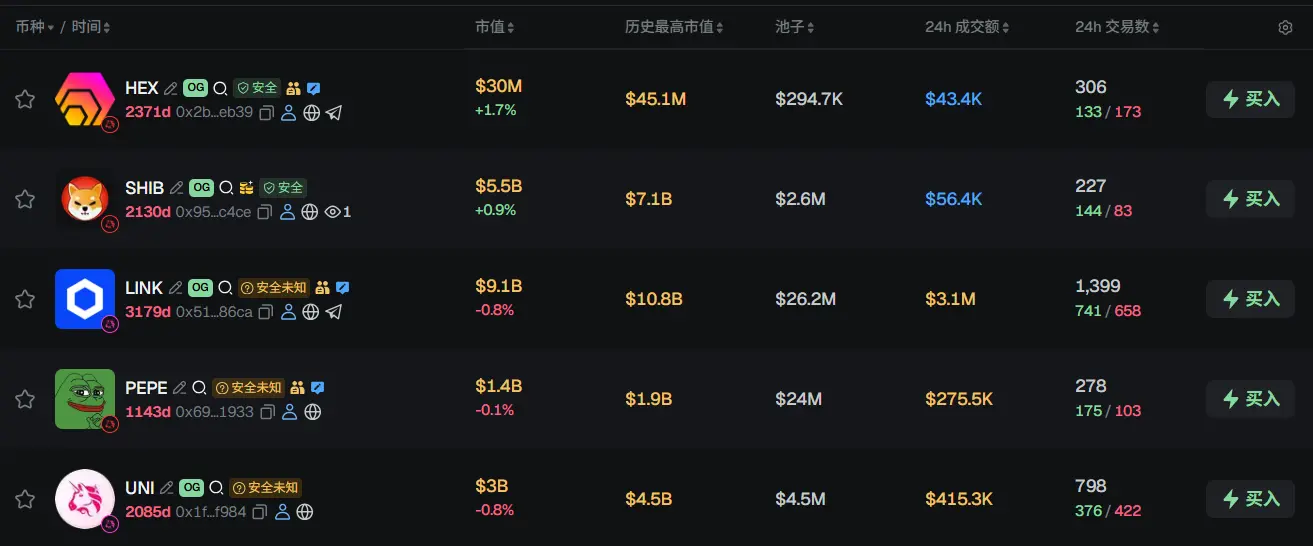
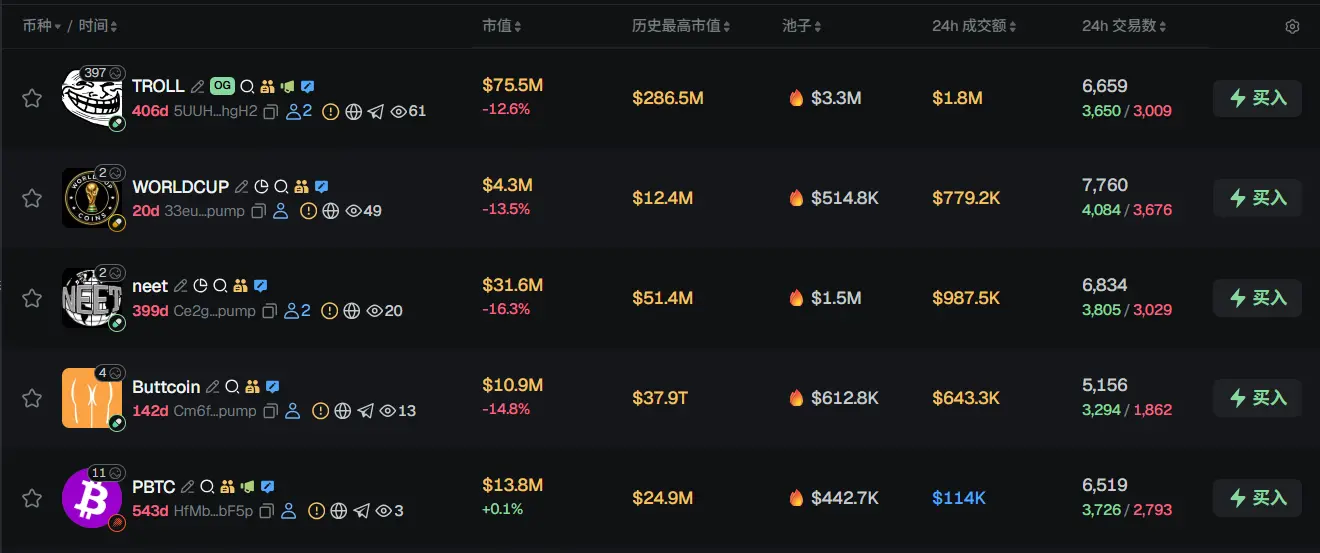
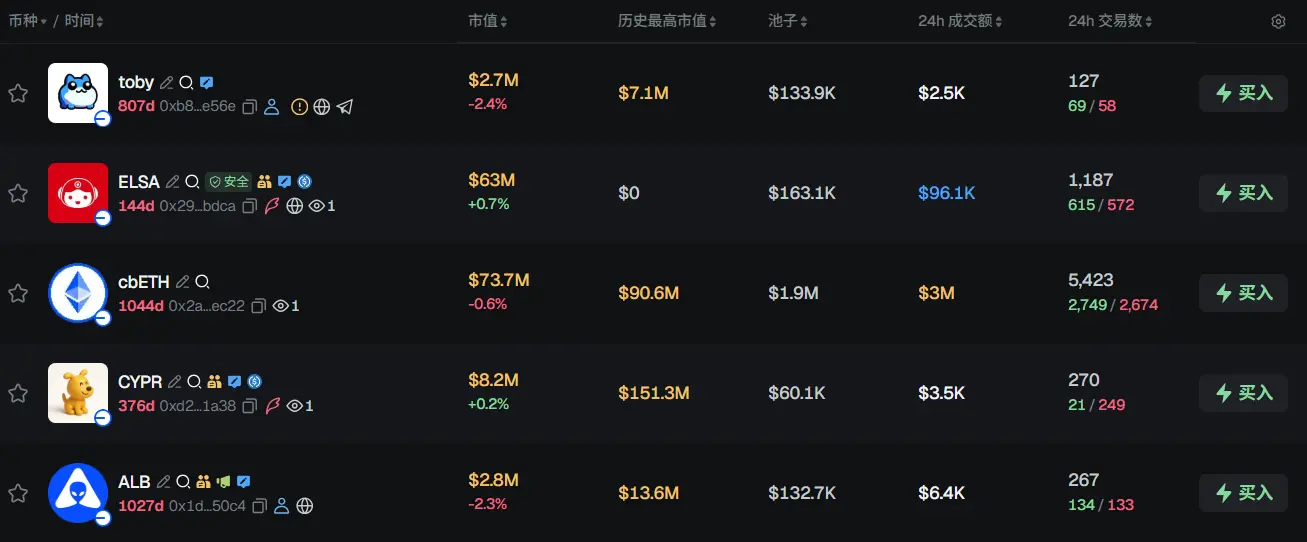
According to market data from the Meme token tracking and analysis platform GMGN, as of 09:00, June 1,

The top five popular ETH tokens in the past 24h are: HEX, SHIB, LINK, PEPE, UNI
The top five popular Solana tokens in the past 24h are: TROLL, WORLDCUP, neet, Buttcoin, PBTC
The top five popular Base tokens in the past 24h are: toby, ELSA, cbETH, CYPR, ALB
What worthwhile articles were there to read in the past 24 hours?

Three Years Later: Revisiting My 2023 Predictions on ChatGPT

On March 6, 2023, soon after ChatGPT emerged and before GPT-4 was released, Sarah and I conducted an interview about ChatGPT—the third episode of the "Plain Talk" series of Traders' Talk (Plain Talk about ChatGPT podcast is released, welcome to listen).

At that time, ChatGPT had just come out, and very few people had actually used it. This three-hour interview later topped the ChatGPT category on Xiaoyuzhou. I made about twenty judgments and predictions in it, purely based on intuition and limited information, with little data. The full transcript of that interview remains on the public account.

It's now late May 2026, three years have passed, and AI has grown into something unimaginable back then.


İlgili Sorular

QWhat major security events are reported in the article?

AThe article reports two major security events. First, the Cosmos ecosystem cross-chain bridge Gravity Bridge was attacked and subsequently announced a service suspension. Second, Aave published a post-mortem investigation into the attack on the Kelp rsETH LayerZero V2 bridge, which resulted from an RPC poisoning attack targeting a single validator, leading to significant fund losses that were then used on Aave's platforms.

QWhat are the key regulatory and institutional developments mentioned?

AThe article highlights several regulatory and institutional developments. 1) Digital asset company Laser Digital received preliminary conditional approval from the U.S. OCC to establish a federally regulated trust bank. 2) Vietnam is considering allowing SMEs to use digital assets and virtual assets as collateral for bank loans. 3) The chairman of Hong Kong's SFC reported that trading volume on the 12 licensed virtual asset trading platforms grew nearly threefold year-on-year in Q1 2026.

QWhat is the sentiment analysis provided by Santiment regarding Bitcoin and Ethereum?

ASantiment's analysis indicates a shift in market sentiment. For Ethereum, the ratio of positive to negative comments has shifted from strong FOMO in late April to noticeable FUD, which Santiment interprets as a mildly bullish signal. For Bitcoin, the long/short ratio has surged to 2.23, a new high for the year 2026. Historically, such high ratios have preceded short-term price pullbacks, suggesting a need for caution despite the prevailing optimism.

QWhat legal action did the U.S. SEC take according to the news?

AThe U.S. Securities and Exchange Commission (SEC) filed a lawsuit in a Houston federal court against Nathan Fuller, the founder of Privvy. He is accused of operating a $12.3 million cryptocurrency scam that used a fake AI trading bot, promising investors returns of 40-50% within 30-45 days. The SEC alleges that only about 3% of the funds were used for actual trading, with Fuller misappropriating at least $6.2 million and using about $5.5 million in a Ponzi-like scheme to pay earlier investors.

QWhat comment did Federal Reserve Governor Waller make about stablecoins?

AFederal Reserve Governor Christopher Waller stated at the 32nd Dubrovnik Economic Conference that the widespread global adoption of stablecoins could amplify the influence of U.S. monetary policy. He explained that for countries adopting stablecoins, it would be akin to a fixed exchange rate regime, effectively expanding the reach of American monetary policy.

İlgili Okumalar

A 134% Surge, 75 P/E Ratio: Why Is the Market Paying Up for Murata's 'Zero Growth'?

Murata Manufacturing, the world's largest passive components maker, saw its stock price surge 134% over the past year and hit a record high on May 28th, despite reporting nearly zero growth in operating profit for its latest fiscal year. This has pushed its valuation to a P/E ratio of approximately 75x. The disconnect is driven by a fundamental market re-rating. The catalyst was a late-May meeting where management upgraded the AI investment cycle outlook to "lasting until around 2030" and noted that demand for its components is roughly double its supply capacity, with customers prioritizing securing volume over price. While Murata's revenue grew only 5.0% and operating profit stagnated at ¥281.8 billion for the fiscal year ending March 2026, its guidance for the current fiscal year projects a 34.8% jump in operating profit to ¥380 billion. This sharp growth is underpinned by expectations that its AI/data center-related revenue will nearly double from ¥170 billion to ¥325 billion, becoming a key pillar of its business. Analysts highlight that this growth stems not from broad price hikes but from a shift towards higher-value, cutting-edge MLCCs for AI servers, where Murata holds over 70% market share. The market is now pricing Murata not as a cyclical component maker but as a critical "AI pick-and-shovel" supplier with structural pricing power. However, the high valuation also carries risk if future AI demand or quarterly guidance falls short of the elevated expectations.

marsbit18 dk önce

A 134% Surge, 75 P/E Ratio: Why Is the Market Paying Up for Murata's 'Zero Growth'?

marsbit18 dk önce

a16z: Why Do Prediction Markets Matter?

Prediction markets, which allow users to trade on the outcome of future events, have gained significant traction, especially in the U.S. At their core, these markets function like any other market by aggregating information from all participants and translating it into a price signal—in this case, the perceived probability of a specific event occurring. Unlike polls or surveys that offer static snapshots, prediction markets provide dynamic, quantifiable probability estimates that update in real-time as new information and participants enter. A key advantage is the incentive structure: participants risk their own capital, which encourages serious research and trading based on genuine knowledge. This can surface information that traditional methods might miss. Furthermore, prediction markets can be created for a vast array of specialized questions—from geopolitical events to AI model performance—that aren't covered by traditional financial markets. However, several challenges remain. Infrastructure issues include reliably determining event outcomes and resolving disputes. Market design must ensure participation from well-informed individuals while preventing manipulation, such as insider trading or attempts to sway public perception by artificially moving prices. Addressing these concerns around rules, participation, and contract design is crucial. If these hurdles are overcome, prediction markets could evolve into a powerful, widely-used tool for forecasting and navigating uncertainty.

marsbit29 dk önce

a16z: Why Do Prediction Markets Matter?

marsbit29 dk önce

Interview with 7 Ordinary Professionals: After AI Arrived, How Are You Doing?

This article interviews seven professionals from diverse fields like Web3, bulk chemical trading, digital agriculture, and traditional wholesale to examine the impact of AI on their work. Key themes emerge from the discussions. AI has become integral to their workflows, primarily for increasing efficiency in tasks such as coding, content creation, research, and data analysis. Individuals across roles, from developers to managers, report that AI tools like ChatGPT and Claude have significantly reduced workloads and accelerated learning, creating opportunities for "super individuals" or one-person teams. However, this efficiency comes with a double-edged sword. It intensifies competition, pushing professionals to constantly learn new tools and adapt, leading to widespread anxiety about job security and a heightened pressure to keep pace. Interviewees anticipate significant job reductions in roles like administrative support, finance, HR, customer service, and some creative fields. A recurring view is that AI acts as a "great equalizer," amplifying the capabilities of those who use it effectively while leaving others behind, potentially deepening polarization. Despite AI's capabilities, interviewees identify enduring human strengths. AI struggles with tasks requiring deep contextual understanding, complex judgment in areas like risk assessment and system stability (especially in finance/Web3), nuanced human communication, and handling exceptions in logistics and manufacturing. These areas remain firmly in the human domain. Consequently, many professionals are refocusing their career strategies. They plan to evolve from task executors into "complex system owners," "super coordinators" managing AI agents, or specialists in high-level areas like business context, risk control, product design, and personal branding. In summary, the article portrays AI not as an optional tool but as a transformative force reshaping job demands. While it automates routine work, it also creates new forms of pressure and competition. The future, as seen by these professionals, belongs to those who can strategically integrate AI to augment uniquely human skills like judgment, responsibility, and strategic oversight.

marsbit44 dk önce

Interview with 7 Ordinary Professionals: After AI Arrived, How Are You Doing?

marsbit44 dk önce

Satoshi Nakamoto Sued? $83.7 Billion Worth of BTC Up for 'Legal Claim'

An anonymous individual known as Noah Doe, along with two Wyoming LLCs, has filed a lawsuit in the New York Supreme Court. They are attempting to use New York's "lost and found" laws to claim legal ownership of approximately 837 billion USD worth of Bitcoin held in 39,069 dormant addresses. Crucially, this list includes addresses believed to belong to Bitcoin's creator, Satoshi Nakamoto (holding around 837 billion USD), alongside other long-inactive addresses from Mt. Gox and early Bitcoin holders. The plaintiff's legal strategy hinges on classifying these public Bitcoin addresses as "lost property." They submitted a USB drive containing only the public addresses to the New York Police Department, sent OP_RETURN notifications on the Bitcoin blockchain, and issued press releases. Their argument is that after these efforts and a waiting period, they should be granted ownership. A key, and highly controversial, claim is an unnamed "independent expert" valuing each address at under 10 USD, allowing for a faster legal process. Analysts from Galaxy point out major flaws in the case. The plaintiff never physically possessed the Bitcoin or private keys. The "under 10 USD" valuation is considered unrealistic, and allowing anonymous companies to claim such vast assets is highly unusual. Even if the plaintiff wins, they would only receive a court declaration of ownership, not the actual private keys to move the Bitcoin. The real danger lies in this court document acting as a "cloud on title." If any of these Bitcoins are later transferred to a regulated exchange or custodian, the plaintiff could present the judgment to freeze the assets, forcing the true owner into lengthy and de-anonymizing litigation to prove ownership. The outcome is uncertain, but the case highlights potential legal risks for dormant cryptocurrency holdings.

marsbit49 dk önce

Satoshi Nakamoto Sued? $83.7 Billion Worth of BTC Up for 'Legal Claim'

marsbit49 dk önce

İşlemler

Spot
Futures
活动图片