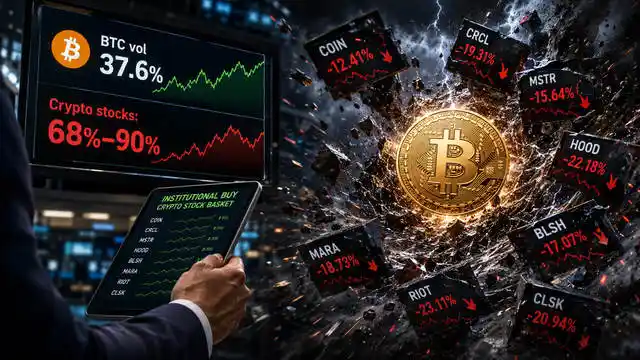
Crypto Welcomes the 'July Rebound'? On-Chain Bottom Signals Align, Reversal Still Requires Breakthrough Above $70k

marsbit2026-07-06 tarihinde yayınlandı2026-07-06 tarihinde güncellendi

Özet

The cryptocurrency market is showing signs of a potential "July rebound," with Bitcoin leading a recovery above $63,000 and total market cap rising. This bounce is attributed to improved macro expectations (weaker US jobs data easing Fed hike fears), a short squeeze in derivatives, and signs of whale accumulation. Key on-chain metrics signal a potential bottom, including the Sharpe Ratio hitting extreme lows, the AHR999 index nearing historic buy zones, and miner pressure reaching significant levels. However, analysts caution this is likely a corrective rebound rather than a confirmed trend reversal. Persistent challenges include weak spot demand, negative Coinbase Premium indicating institutional caution, and ongoing selling pressure in the altcoin market. Market sentiment remains in "extreme fear" territory, and the AVIV ratio suggests the average active Bitcoin investor is still at a loss. For a true bullish reversal, Bitcoin needs to convincingly break above the key $70,000 level (aligned with the Short-Term Holder Realized Price). The path to a new parabolic bull market is seen as dependent on attracting substantially more capital, as capital efficiency has declined. While prices may be approaching a cyclical bottom zone (with estimates between $37k-$60k), the market requires more sustained positive signals for a definitive uptrend.

Author: Nancy, PANews

Reversing the downtrend at the end of June, the crypto market has recently experienced a noticeable rebound. Led by Bitcoin, mainstream crypto assets have quickly recouped previous losses, and multiple on-chain indicators have successively released signs of a bottom, adding optimistic expectations for future market trends.

However, while the market is showing signs of warming up, issues such as insufficient spot demand, institutional capital waiting on the sidelines, and continued pressure on altcoins still bring uncertainty to the subsequent market movement.

Has the July Rebound Arrived? Crypto Market Sees Collective Minor Rally

Historical patterns show that July is typically the strongest performing month of the summer for the crypto market. After entering July, the market is welcoming a rebound, with crypto assets recovering across the board and regaining upward momentum.
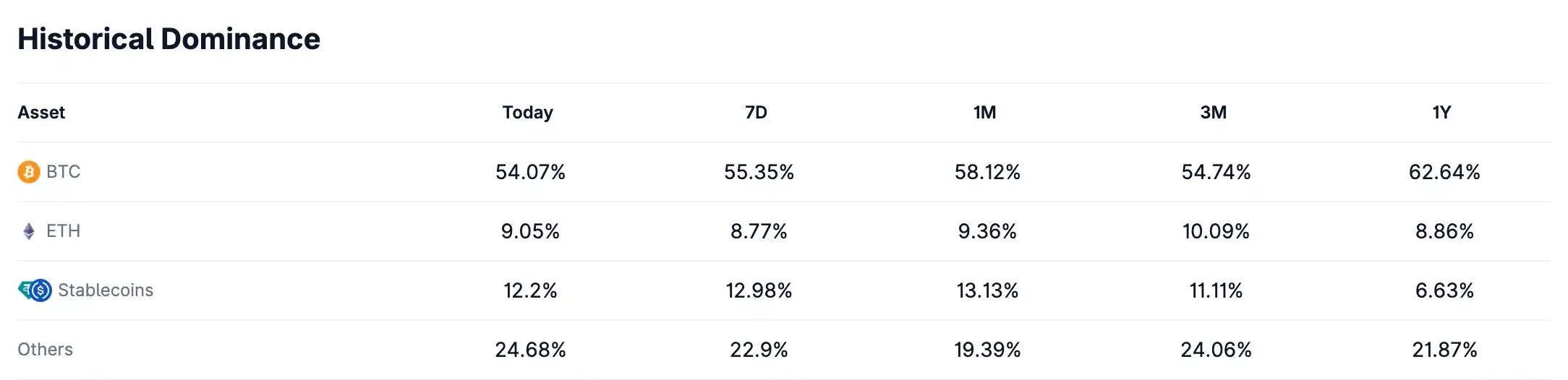
CoinGecko data shows the total crypto market capitalization has rebounded from a recent stage low of $2.1 trillion to the current $2.28 trillion. Among them, Bitcoin has rebounded strongly, climbing back above $63,000 to hit a two-week high, reclaiming all losses from the end of June; Ethereum continued its upward trend, gaining 12.9% weekly, with its market dominance recovering to 9.05%; the altcoin market (excluding stablecoins) also saw a clear recovery, with its market dominance rising from 19.39% a month ago to 24.68%.

It is worth mentioning that, driven by celebrity tokens like ANSEM, CZ, and TCC, the MEME coin sector on Solana and BNB Chain has shown recovery recently, with on-chain transaction volume and active address counts rising significantly.

This minor rebound is primarily driven by multiple factors including improved macro expectations, capital inflows, and a short squeeze in the derivatives market.

The macro level served as an important catalyst. The US June non-farm payrolls data was significantly lower than expected, adding only 57,000 jobs, far below market expectations. The labor force participation rate fell to a new low in over five years, leading to a marked cooling of market expectations for a Fed rate hike in September. At the same time, the new Federal Reserve Chair Wash released slightly dovish signals, further dampening speculation of rate hikes within the year. With liquidity expectations improving, capital is flowing back into assets like crypto and gold, with risk appetite significantly warming.

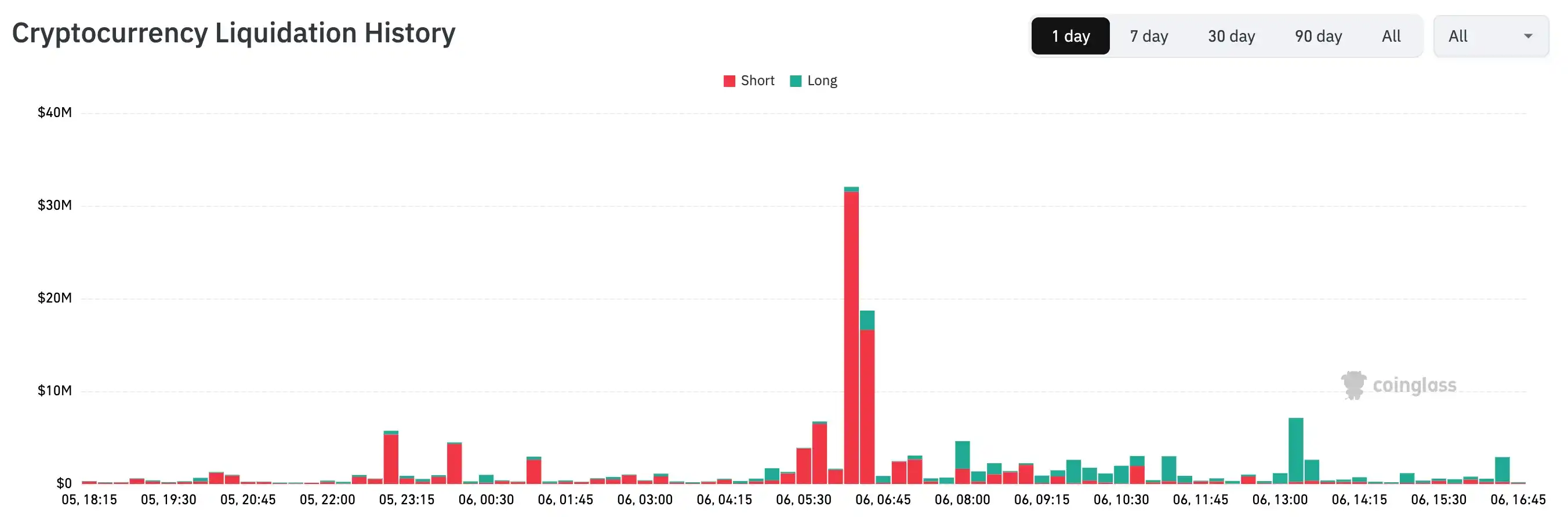
The derivatives market further amplified this rebound. As Bitcoin quickly broke through resistance levels, a large number of short positions were forced to close, with the short squeeze pushing prices further up. Taking data from July 6th as an example, Coinglass data shows that the total amount of short liquidations across the network exceeded $92.04 million, far higher than the $40.71 million in long liquidations.
The capital level also released positive signals. US spot Bitcoin ETFs ended a 10-day streak of net outflows, with a single-day net inflow of approximately $220 million on July 2nd. Meanwhile, Bitcoin whales continued to buy at lower levels. According to Bitfinex analysts, wallets holding over 1,000 BTC increased their holdings against the trend during the market sell-off, accumulating over 270,000 BTC (approx. $16.7 billion) in the past two weeks. Their holdings have rebounded to highs seen over the past six months.

Multiple Bottom Indicators Flash, But Still Face Tests of Sentiment and Capital

Despite multiple on-chain indicators frequently releasing bottom signals, the overall crypto market has not yet shaken off the pessimistic atmosphere, with sentiment and capital flow showing no substantial improvement.

Currently, crypto market sentiment remains at historically low levels. Looking at the Crypto Fear & Greed Index, the current reading is only 23, still in the "Extreme Fear" zone. The 7-day and 30-day moving averages are 18 and 16, respectively.

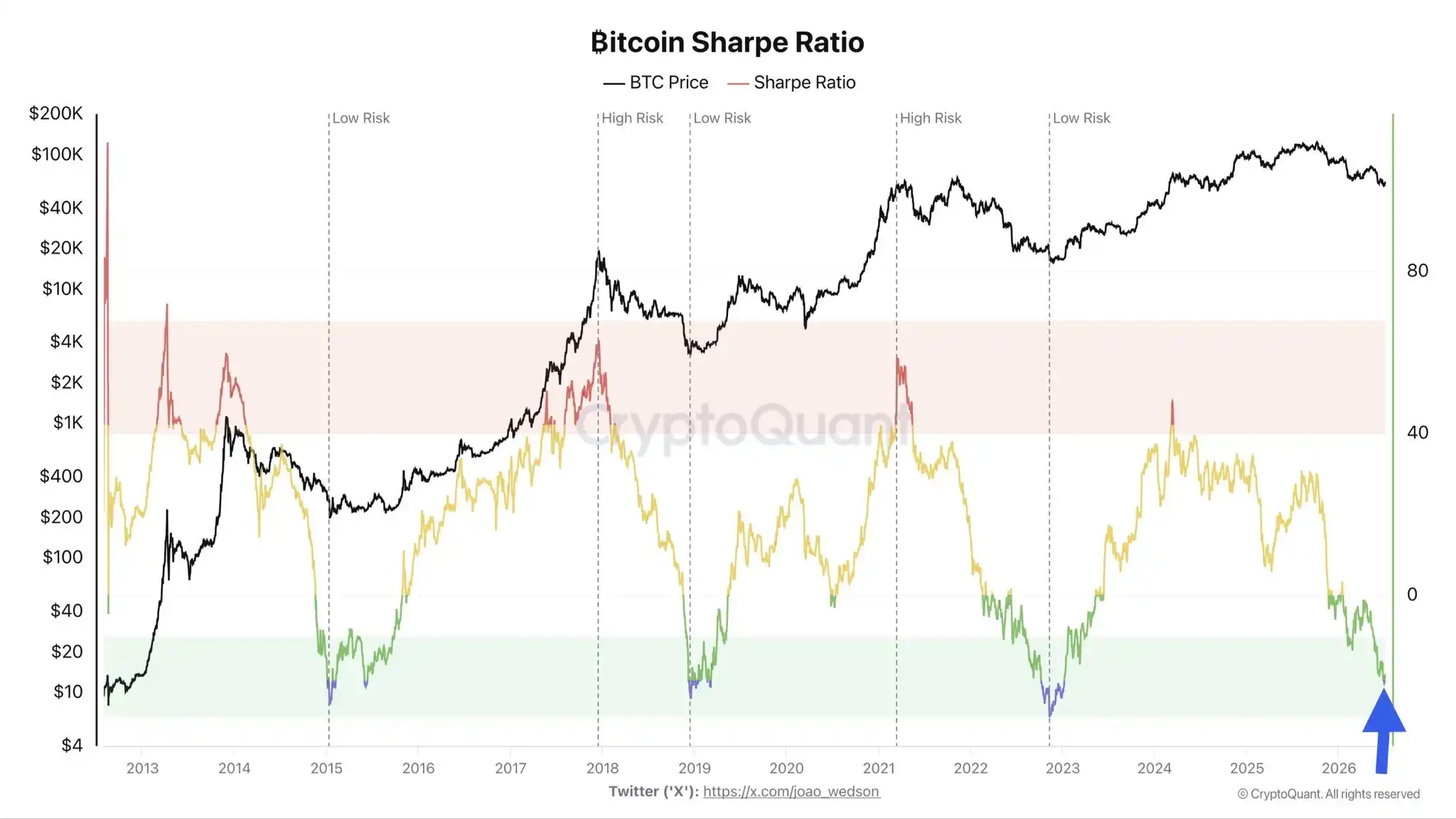
On-chain risk-reward indicators also reflect continued low investor sentiment. CryptoQuant analyst Darkfost points out that Bitcoin's Sharpe Ratio recently fell below -20 again. Although it has slightly recovered since then, historical experience shows that this level typically only appears during periods of extreme market pessimism. The Sharpe Ratio measures the return per unit of risk. Falling into negative territory means the risk investors are taking exceeds the reward obtained. Similar extreme pessimism phases often last for weeks or even months, accompanied by the market repeatedly finding a bottom.
Currently, active Bitcoin investors are still generally at a loss. Darkfost analyzes that the AVIV (Active Value/Investor Value) Ratio is currently hovering around 0.8, meaning active Bitcoin investors as a whole are floating at an average loss of about 20%. Compared to the extreme levels of 0.5 to 0.6 during previous bear market bottoms (corresponding to investor losses of 40%-50%), the current overall investor loss level has not reached extreme bear market levels. This means that while the market has entered a value zone, there is still some distance from a typical bear market bottom. However, he also emphasizes that Bitcoin still follows its own cycle rules, and a short-term rebound may not require waiting for all indicators to hit historical extremes, but the pressure environment created by widespread unrealized losses must be acknowledged.
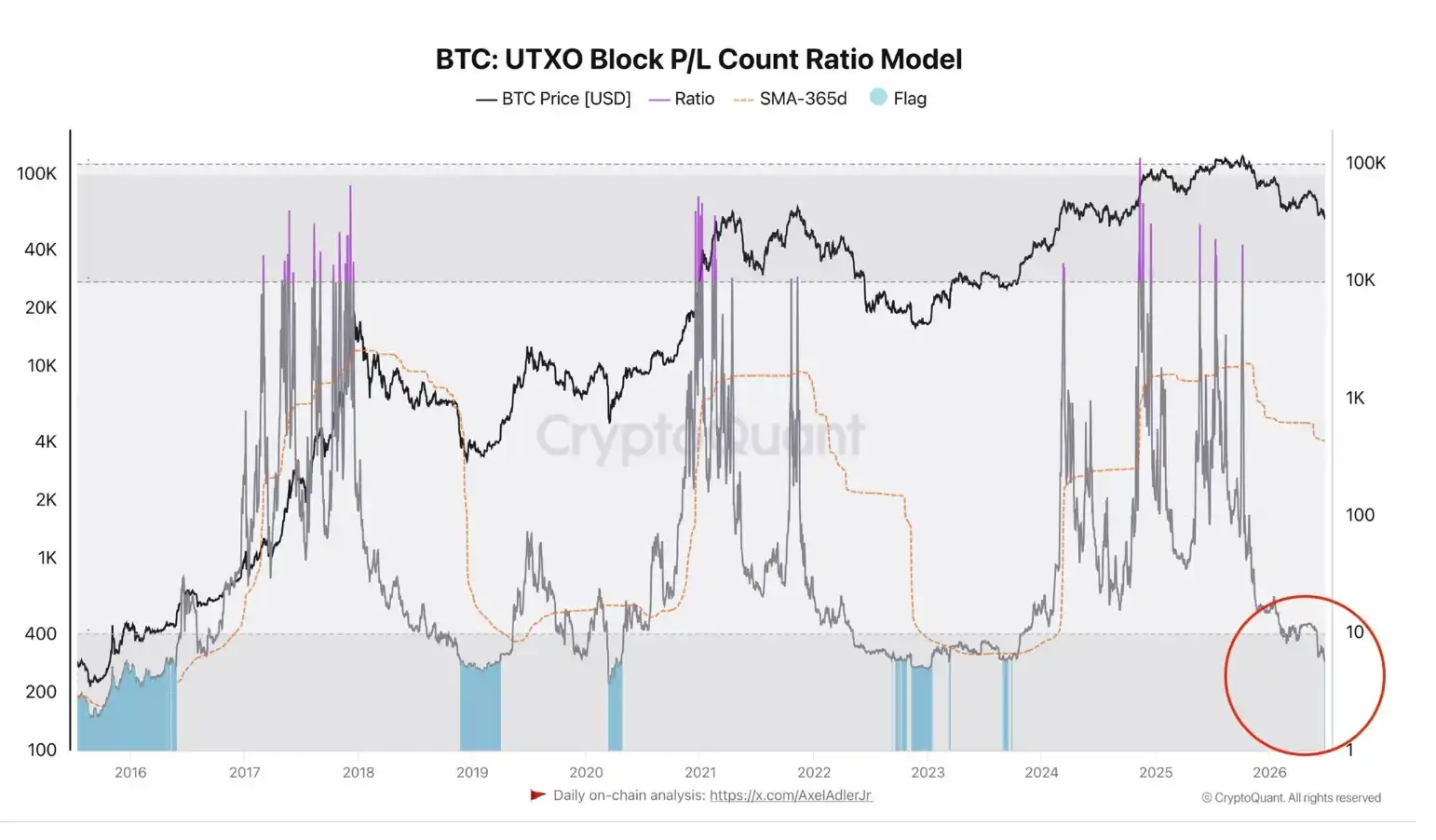
Meanwhile, on-chain data indicates the market has entered a clear "capitulation" phase. Darkfost further points out that the UTXO Profit/Loss Ratio has triggered the first "capitulation" signal of this bear market. The current proportion of on-chain loss-making transactions compared to profitable transactions has fallen to the lowest level of this bear market. Historically, this indicator has appeared multiple times in market bottom regions. The last time it fell to a similar level was during the bear market trough in mid-2023 when Bitcoin prices fell to around $26,000.

Institutional capital also remains cautious. According to Coinglass data, the Coinbase Bitcoin Premium Index has remained negative for 48 consecutive days since May 19th, setting the longest streak of consecutive negative premiums since the indicator's launch, surpassing the approximately 30-day streak of negative premiums during the "10/11 crash." The Coinbase Premium Index is primarily used to assess professional and institutional demand for Bitcoin. Historical experience shows that prolonged negative premiums are often accompanied by US institutional capital exiting, warranting caution about short-term pullback pressure.

However, looking at the Bitcoin Accumulation Trend Index AHR999, the indicator has currently dropped to 0.32, approaching the historical extreme low range. Over the past decade, this indicator has fallen below 0.3 only during extreme market environments, including the early market in 2011, the bottom of the 2018 bear market, the "March 12 Flash Crash" triggered by the pandemic in 2020, and during the FTX collapse in 2022. Although it has not yet broken below 0.3, it is already at a historically rare level.
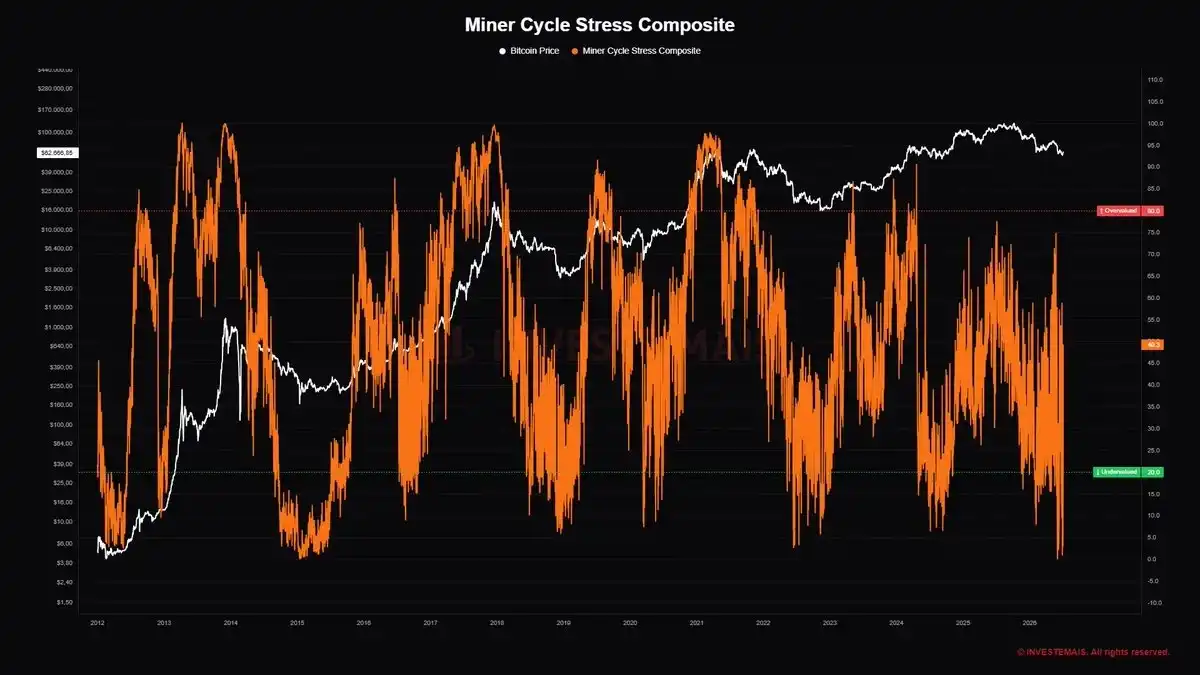
Besides investors, pressure on miners continues to increase. On-chain analyst @gaah_im points out that the Bitcoin Miner Cycle Pressure Composite Index has fallen to its lowest level since 2026 and re-entered the historical undervalued zone. This indicator combines the Puell Multiple and the Reverse Miner Capitulation Index, reflecting changes in miner revenue and miner selling pressure, respectively. Historical data shows this indicator has previously signaled near important market bottoms in 2015, 2018, 2020, 2022, and 2024. Among them, during the 2015 market capitulation, the composite index previously hit zero only during that period, with Bitcoin's price also falling from around $300 to $160 in a short time. The indicator exhibiting similar behavior in 2026 marks that miner pressure has again reached historically rare levels.

Still in a Recovery Rally, $70k May Be the Key Level for Trend Reversal

For now, this round of rise seems more like a recovery bounce following the previous oversold conditions.

Crypto analyst Murphy also points out that during this Bitcoin rebound, spot relative trading volume has declined rapidly. In the absence of spot demand driving such rises, they usually find it difficult to evolve into a trend reversal and are often just sentiment-driven recovery rallies. Follow-up attention should be paid to the sustainability of the rebound.
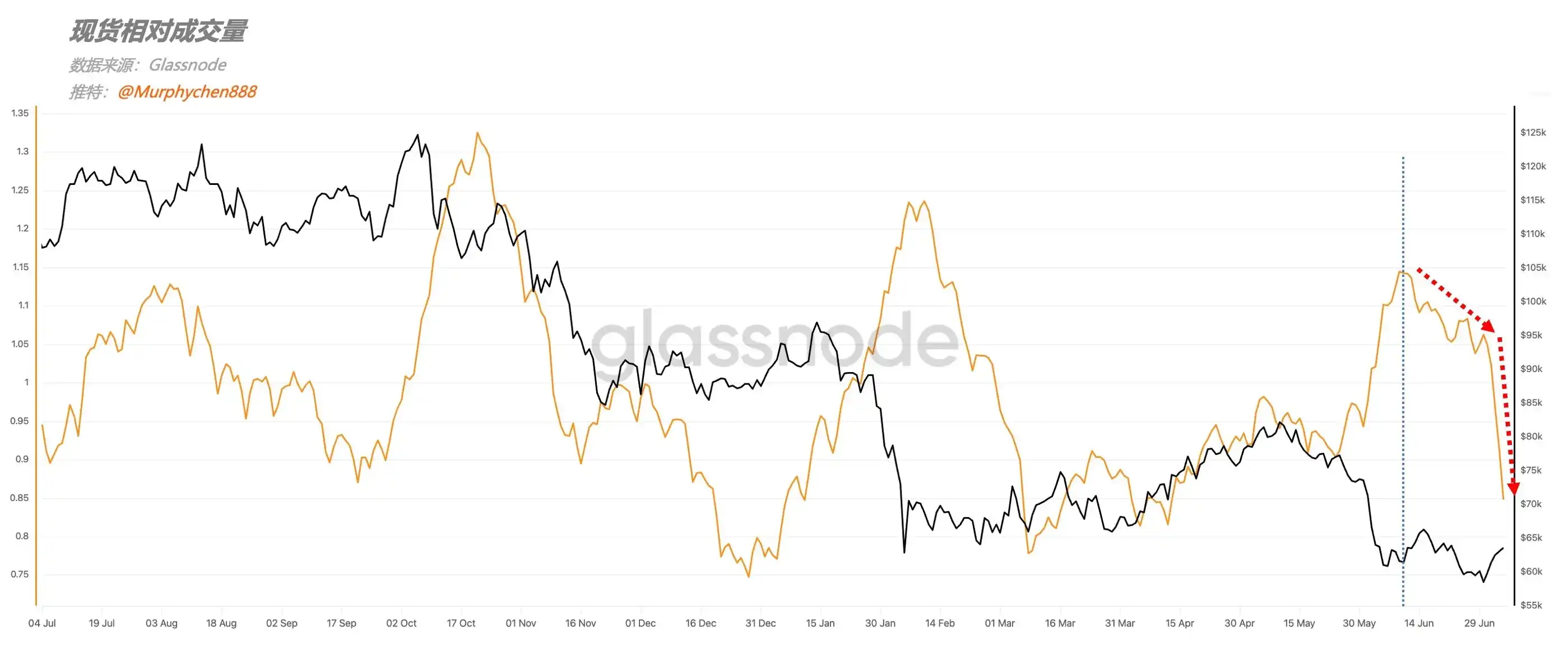
However, Murphy points out some positive changes in capital flow. On the positive side, the USDC/USDT exchange rate has fallen from 1.001 to 1.0006, indicating weakened exit intention and rising trading willingness in the market; simultaneously, mainstream stablecoins on exchanges are still in a state of net outflow, but the outflow magnitude continues to narrow. The marginal improvement in capital flow pressure provides some support for the continuation of the rebound. However, the weakening of spot driving force means the weight of derivatives has relatively increased. The 7-day moving average of perpetual contract funding rates continues to rise to $160k/hour, indicating Taker buy orders are continuously pushing perpetual contract prices above spot prices; although the current open interest has declined somewhat, it remains significantly higher than the level in February this year. The current funding rate is still within a relatively normal range, but as the rebound continues, the risk of a long squeeze will accumulate. Once open interest rebounds again, intense long-short battles will cause volatility to come faster and more sharply, which is worth particular attention.
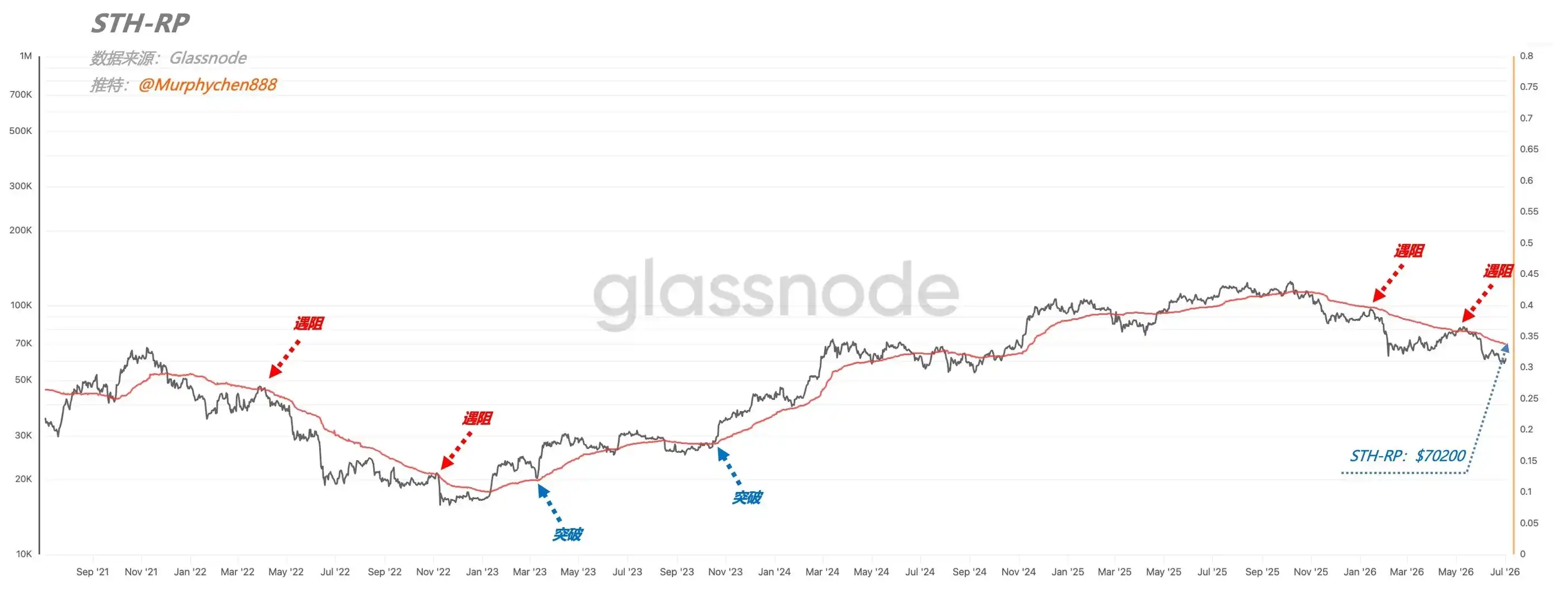
Regarding the potential rebound range, Murphy divides the target zone into three levels: $64,000, $68,000, and $70,000. Among them, $64,000 and $68,000 correspond to Bitcoin's short-term cost concentration zones (holdings under 1 month and under 3 months); $70,000 corresponds to the Short-Term Holder Realized Price (STH-RP). The STH-RP is often seen as the line dividing bull and bear sentiment. Historically, trend reversals have often started with prices effectively breaking through this key level, thus $70,000 is also seen as the ceiling for this bear market rally.
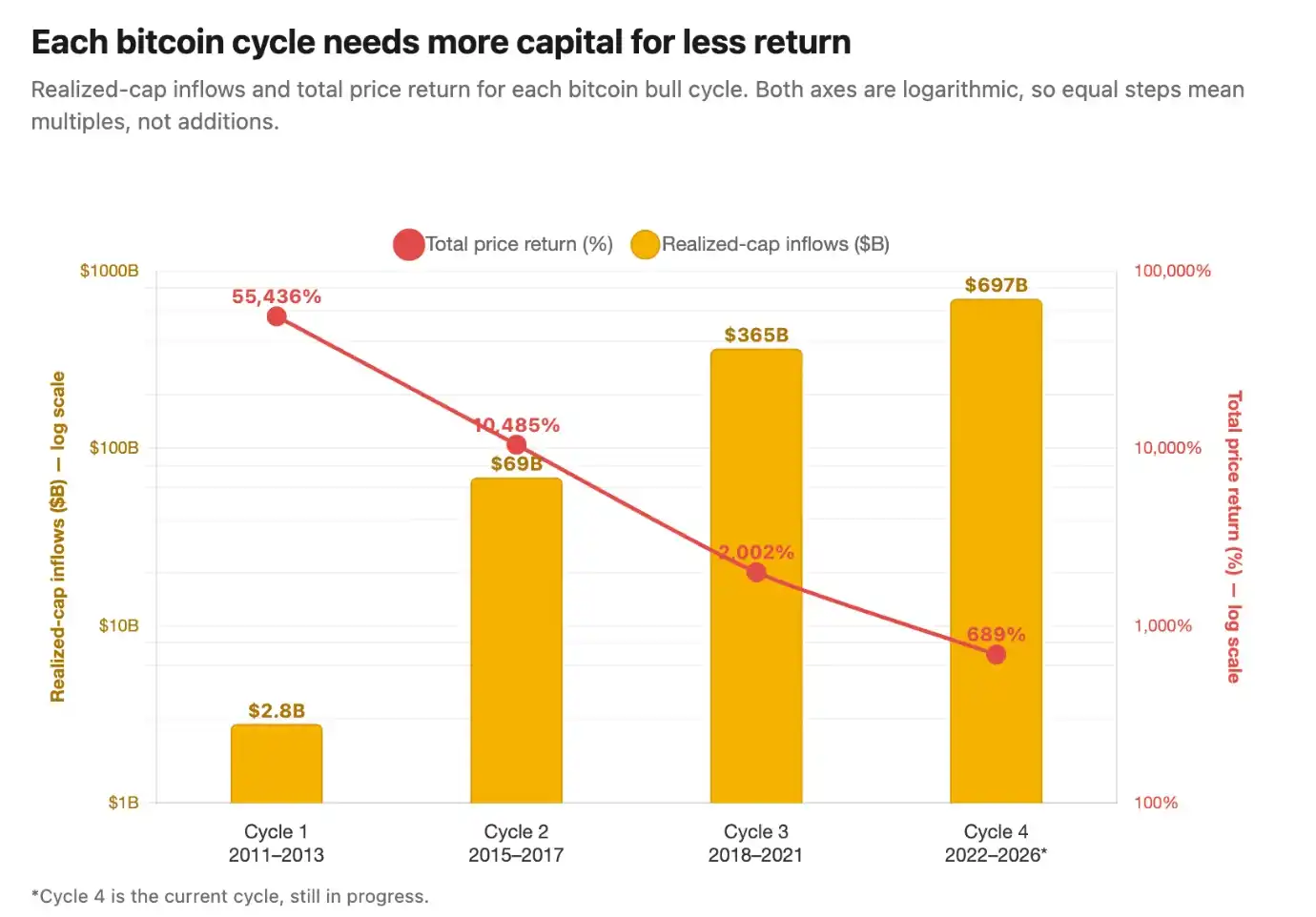
Extending the time horizon further, the challenges facing Bitcoin's bull market become more apparent. CryptoQuant founder Ki Young Ju believes that for Bitcoin to start the next parabolic bull run, it needs to truly grow into a core global macro asset, rather than relying primarily on retail sentiment and ETF fund flows. He estimates that the next bull market may need to attract over $1 trillion in new capital, far exceeding the current scale of institutional capital allocation. Historical data shows that the capital efficiency of Bitcoin bull markets is continuously declining. The 2011 cycle saw about $2.8 billion in net inflows driving a roughly 550x price increase; the 2015 cycle saw about $69 billion driving nearly a 100x increase; the 2018 cycle saw about $365 billion driving about a 20x increase; in the current cycle since 2022, about $697 billion in new capital corresponds to only about a 689% price increase. This means that as Bitcoin's market capitalization continues to expand, increasingly larger amounts of incremental capital will be needed to drive prices to achieve similar magnitude gains in the future. However, this long-term logic still faces practical challenges. US spot Bitcoin ETFs recently experienced consecutive net outflows for a period, retail capital continues to withdraw, and institutional capital has not yet formed a sufficiently large scale of incremental inflows. The market still has some distance to go before the next full-scale bull market.

Meanwhile, the altcoin market still shows no significant improvement. CryptoQuant analyst IT Tech indicates that the altcoin market (excluding Bitcoin and Ethereum) remains under continued pressure. Data shows that the cumulative buy/sell volume divergence for altcoins in June has hit an extreme low for the past five years and is still further declining, reflecting that the spot market is still dominated by sustained net selling. Since the decline from the high in early 2025, selling pressure has not shown significant relief, and the market has not yet shown clear signs of stabilization.

Despite near-term market pressures, several veteran investors believe Bitcoin prices are gradually approaching the bottom range of past cycles. For example, early investor Bruno Ver anticipates Bitcoin could still potentially retreat to around $50,000; CryptoQuant's calculated Bitcoin Realized Price is approximately $53,400, which has historically served as an important bottom reference in bear markets; while multiple on-chain models from Glassnode place the potential bottom range between $37,000 and $60,000.

Overall, July has brought a long-awaited breathing opportunity for the crypto market, but a true trend reversal still requires more confirmation signals.


İlgili Sorular

QWhat are the main factors driving the recent rebound in the cryptocurrency market mentioned in the article?

AThe rebound is primarily driven by improved macro expectations, capital inflows, and short squeezes in the derivatives market. Specifically, weak U.S. non-farm payroll data lowered expectations for a Fed rate hike, improving liquidity expectations and risk appetite. Additionally, a short squeeze forced liquidations of bearish positions, amplifying the price increase.

QWhat on-chain indicators are flashing bottom signals for Bitcoin according to the article?

ASeveral on-chain indicators are signaling a potential bottom, including: the UTXO Profit/Loss Ratio triggering a 'capitulation' signal, the Bitcoin Sharpe Ratio dipping below -20 (indicating extreme pessimism), the AHR999 bottom-buying index falling close to 0.3 (a historically rare low), and the Miner Cycle Pressure Composite Index reaching its lowest level since 2026, entering a historically undervalued range.

QWhat key price level does analyst Murphy identify as the potential ceiling for the current bear market rally in Bitcoin?

AAnalyst Murphy identifies $70,000 as the key ceiling for the current bear market rally. This level corresponds to the Short-Term Holder Realized Price (STH-RP), which is historically viewed as a dividing line between bull and bear market sentiment. A sustained breakout above this level is often needed for a true trend reversal.

QWhat does the prolonged negative Coinbase Premium Index indicate about institutional demand for Bitcoin?

AThe prolonged negative Coinbase Premium Index, which had been negative for a record 48 consecutive days, indicates weak or negative demand for Bitcoin from professional and institutional investors in the United States. Historically, sustained negative premiums often accompany outflows of U.S. institutional capital, suggesting caution and a potential source of short-term selling pressure.

QAccording to CryptoQuant founder Ki Young Ju, what is a major challenge for Bitcoin to initiate its next parabolic bull run?

AKi Young Ju states that a major challenge for Bitcoin's next parabolic bull run is the need to attract massive new capital inflows, estimated at over $1 trillion. He argues that Bitcoin must evolve into a core global macro asset, moving beyond reliance primarily on retail sentiment and ETF flows. The capital efficiency for bull runs has been declining, meaning increasingly larger amounts of money are needed to generate similar percentage price increases as Bitcoin's market cap grows.

İlgili Okumalar

Reviewing 8 'Cash Cow' Projects in the Bear Market: The Leader Repurchased $283 Million Worth This Year

This article highlights eight cryptocurrency projects that have demonstrated strong cash-generating capabilities and implemented significant token buyback programs during the bear market of 2026. These projects, dubbed "cash cows," are repurchasing their own tokens, often reducing supply. According to data from Tokenomist, the projects with notable buyback activity from January 1st to June 30th are: Meteora (MET), Pump.fun (PUMP), GMX, Rollbit (RLB), Metaplex (MPLX), Hyperliquid (HYPE), Lighter (LIT), and Aave. Notably, MET's buybacks equaled 71% of its January token supply, while HYPE executed the largest buyback by value at $283 million. Key project summaries include: - **Hyperliquid (HYPE):** The leader by dollar value, its perpetual DEX protocol has repurchased and burned 44 million HYPE tokens (approx. 4.4% of supply) using a significant portion of trading fees, with total buybacks exceeding $1.1 billion since March 2025. - **Meteora (MET):** Its buyback of 336.2 million MET tokens had the greatest proportional impact on its circulating supply, equivalent to 71% of its supply at the start of the year. - **Pump.fun (PUMP):** The popular memecoin launchpad has cumulatively bought back over $400 million worth of PUMP since July 2025, using 50% of net revenue for buybacks and burns since April. - **Aave (AAVE):** Despite facing a major security incident earlier in the year, the lending protocol has continued its buyback program, repurchasing over 200,000 AAVE tokens. Its team is designing a new automated buyback mechanism. - **GMX, Lighter (LIT), Rollbit (RLB), and Metaplex (MPLX)** also have active buyback mechanisms funded by protocol fees or revenues. The article concludes that while token buybacks and burns do not guarantee price appreciation—as market conditions, news, and other factors play a role—these projects stand out for their ability to generate consistent cash flow in a challenging market environment.

marsbit2 dk önce

Reviewing 8 'Cash Cow' Projects in the Bear Market: The Leader Repurchased $283 Million Worth This Year

marsbit2 dk önce

Ethereum Sheds Its Load? What Ethereum Supporters Think About the Lean Ethereum Upgrade and the Future Market

Ethereum is back in focus with the announcement of the "Lean Ethereum" upgrade roadmap, described by Vitalik Buterin as Ethereum's third major update. This proposal aims to fundamentally redesign the consensus, data, and execution layers from first principles, striving to make Ethereum **simpler, more secure (quantum-resistant), more verifiable, and more scalable.** The announcement comes amidst a broader restructuring within the ecosystem, including a 20% staff reduction at the Ethereum Foundation and the emergence of new organizations like EthLabs. This has sparked a debate among Ethereum supporters ("E-bizens"). **Optimists** view Lean Ethereum as a critical refocusing on core protocol fundamentals: * **sassal.eth** calls it the ultimate bullish catalyst, envisioning a future where running a node is so lightweight it could be done on a smartwatch, greatly enhancing decentralization. * **Ryan Sean Adams** sees it as Ethereum moving from "narrative expansion" to "protocol hardening," addressing long-term foundational issues like security and scalability. * Analysts like **BITWU** and **蓝狐 (Blue Fox)** frame it as a third-phase evolution towards a "minimal, durable, and credible base layer" designed for the next decade. * **gigi发财猪** interprets the organizational changes as Ethereum "shedding old baggage and forming new teams" for a lighter, more agile approach. * **Xiyu** notes that the roadmap itself provides a much-needed new narrative for market sentiment recovery. **Cautious voices** acknowledge the vision but emphasize execution and market timing: * **Ignas** warns that while the roadmap addresses key community requests, it overlooks tokenomics, and competitors are gaining ground in areas like RWA. Timely delivery is crucial; delays could be bearish. * **Dankrad Feist**, a former Ethereum Foundation researcher, agrees on direction but criticizes the proposed 3-4 year timeline as too slow for the current market pace, especially with AI-aided development available. **In summary,** optimists believe Lean Ethereum reaffirms Ethereum's long-term value proposition as a decentralized world computer, while the cautious argue that its success hinges on faster delivery and tangible results to maintain market relevance. Despite ongoing criticism, the move signals Ethereum's effort to regroup and reclaim initiative at the protocol level.

marsbit49 dk önce

Ethereum Sheds Its Load? What Ethereum Supporters Think About the Lean Ethereum Upgrade and the Future Market

marsbit49 dk önce

AI Folding: Fable 5 and GPT-5.6 Are Becoming the Privilege of a Few

【AI Accessibility Gap Widens: Elite Tools Like Fable 5 and GPT-5.6 Are Becoming Privileged】 We are witnessing a growing "AI divide." A stark reality is emerging: a tiny fraction of elites, primarily in tech, are using powerful next-generation models like Fable 5 or the upcoming GPT-5.6, while the vast majority of the public only has access to "toys" - free, limited models equivalent to ChatGPT's basic versions (8B to 30B parameters). This creates a massive experiential chasm and cognitive dissonance. Industry outsiders see AI as overhyped and ineffective, unable to grasp its transformative potential, while insiders leverage these advanced models for a decisive competitive edge. The gap isn't just about model quality but product functionality. Free users get a simple chatbot. Paying elites get integrated workflow systems—capable of creating specialized agents, processing complex data, and handling real-world tasks like management, coding, and planning. Demos showcasing AI planning weddings or building apps feel disconnected from everyday needs like managing bills, groceries, or health. The cost barrier is immense, with reports of engineers spending $1000 daily on Fable 5 inference. Elite users employ sophisticated multi-model workflows, combining different AIs for ideation, architecture, execution, and review, completing complex projects in minutes instead of weeks. This divide extends to critical areas like healthcare, where free models are dangerously unreliable for medical queries. However, some argue that for 90% of common business tasks, mid-tier models like GPT-5.5 are sufficient; the perceived limitation often stems from poor integration and lack of context, not model intelligence. Ultimately, unequal access to cutting-edge AI is creating a new form of social stratification, where the most powerful tools are becoming the exclusive privilege of a few.

marsbit1 saat önce

AI Folding: Fable 5 and GPT-5.6 Are Becoming the Privilege of a Few

marsbit1 saat önce

Cathie Wood's June $77M Investment: Are Crypto Stocks a True 'Substitute' for Bitcoin?

In June, Cathie Wood's ARK Invest purchased $77 million worth of publicly traded crypto-related stocks, including Coinbase, Circle, and Bullish, during Bitcoin's worst monthly performance in four years. This aligns with the investment thesis that such stocks offer a compliant way to gain exposure to the crypto cycle without directly holding Bitcoin. However, data analysis reveals significant drawbacks. A group of nine U.S.-listed crypto companies showed 30-day annualized realized volatility between 68% and 90%, nearly double Bitcoin's 37.6%. Over 90 days, Circle's volatility reached 103.6% versus Bitcoin's 37.8%. Drawdowns were also more severe for stocks like Circle (-51.4%) and MicroStrategy (-48.6%) compared to Bitcoin's -36.4% from its January high. Correlation analysis shows most stocks share only a moderate link to Bitcoin. For example, Circle, Robinhood, and Bullish have a 90-day correlation coefficient of just 0.55–0.58 with BTC, meaning only about one-third of their price movement is explained by Bitcoin's action. The rest stems from company-specific risks: earnings, competition, fundraising, and equity dilution. MicroStrategy (MSTR) is the notable exception, acting as a leveraged Bitcoin proxy with a beta of 1.59 and 0.85 correlation. Coinbase offers relatively balanced exposure. Circle exemplifies "crypto-wrapped" corporate risk, with its recent crash tied to stablecoin competition, not Bitcoin. Robinhood's diversified business insulates it from crypto downturns but also limits upside. Bitcoin miners like RIOT and MARA have posted significant gains year-to-date, driven primarily by their pivot to AI compute services, not Bitcoin's price. The article highlights that investing in crypto stocks often means accepting amplified volatility or layering on business-specific risks absent from direct Bitcoin ownership. For instance, MicroStrategy's recent challenges—its market value falling below its Bitcoin holdings (mNAV <1) and facing potential Bitcoin sales for liquidity—demonstrate equity-specific hazards like dilution and financing pressures not faced by a direct Bitcoin holder. ARK's buying spree represents a bet on a basket of different business models with varying crypto exposure, not a simple, lower-risk substitute for holding Bitcoin.

marsbit1 saat önce

Cathie Wood's June $77M Investment: Are Crypto Stocks a True 'Substitute' for Bitcoin?

marsbit1 saat önce

İşlemler

Spot
活动图片