Shenzhen Competing for 'Tsinghua Faction' Talent

marsbit2026-08-11 tarihinde yayınlandı2026-08-11 tarihinde güncellendi

Özet

Shenzhen is actively attracting Tsinghua University-affiliated technology ventures, as highlighted during the "X-Day" Xili Lake Roadshow held in Nanshan. The event featured six startup projects from Tsinghua alumni, spanning semiconductors, AI, materials, and healthcare. The showcased companies include: Zhichen Semiconductor, developing edge AI chips; Guangsu Evolution, creating AI-powered home security systems; Qingli Technology, commercializing "self-superlubricating" technology; Shu Yu Technology, offering an AI Agent for analog chip design; Heyi Intelligent Control, providing AI-driven building management systems; and Shengshengyi, applying AI to assisted reproductive medicine. These ventures represent a trend of deep-tech innovation closely linked to academic research. The roadshow series, initiated a year ago, underscores a strategic shift in Shenzhen's investment landscape. Venture capital is moving earlier into the innovation cycle, seeking projects directly from laboratories and research papers. Tsinghua University serves as a key source for such early-stage, technology-intensive startups. Over the past two years, Tsinghua alumni projects have accounted for nearly 30% of the approximately 280 billion RMB in early-stage deep-tech funding in Shenzhen. The "X-Day" platform has facilitated significant growth. To date, its 19 roadshows have connected companies with investors thousands of times, leading to over 3.3 billion RMB in equity financing for 58 firms. Past part...

Tsinghua alumni are appearing in great numbers.

On August 6th, the "X-Day" Xili Lake Demo Event's Tsinghua Alumni Electronics & Information Special Session and the first anniversary of the South Tsinghua Public Welfare Demo were held in Nanshan, Shenzhen. Six projects took the stage, spanning chips, materials, AI, healthcare, and other fields.

One still remembers a year ago, when a batch of Tsinghua startup projects were unveiled collectively at Shenzhen's Xili Lake. Later, among them, Transcendence Intelligent (夸维智能), which emerged from the pack, recently completed a Series B financing of 10 billion RMB, with its valuation surpassing 100 billion RMB; Zero Dimension (零次方), after 18 months of establishment, completed 4 rounds of financing, with orders exceeding 100 million RMB.

Time passes, but Xili Lake always sees new faces taking the stage, and people continually move from here into the broader depths of industry.

A Group of Tsinghua Faction Appears in Shenzhen

The first to take the stage that day was Zhichen Semiconductor (智辰半导体).

This Shenzhen-headquartered company is dedicated to building a new paradigm edge AI chip platform. Founder Wang Xiaobin is a chip veteran with nearly 30 years of industry experience, having worked long-term at HiSilicon (Huawei), participating in the R&D and commercialization of multiple generations of the Kirin mobile phone chips.

Zhichen Semiconductor judges that as models continue to grow larger, more AI tasks will run locally, placing new demands on chip power consumption, storage capacity, and cost. The company is thus building the T-series edge AI chips, planning to enter scenarios like PCs, robotics, automotive, and edge servers.

The next to appear was Lightspeed Evolution (光速进化), which brought AI into the home.

Founder Li Shaozhang is a Tsinghua Computer Science alumnus with 20 years of experience in the smart hardware industry, having worked at TP-Link, 360, Meituan, and Lexar. In 2025, he started a new venture, founding Lightspeed Evolution.

The company's first product targets home security, using edge visual language models and local AI computing power to enable devices to recognize family members, strangers, pets, vehicles, and abnormal behavior, and supports functions like fall detection and safety protection.
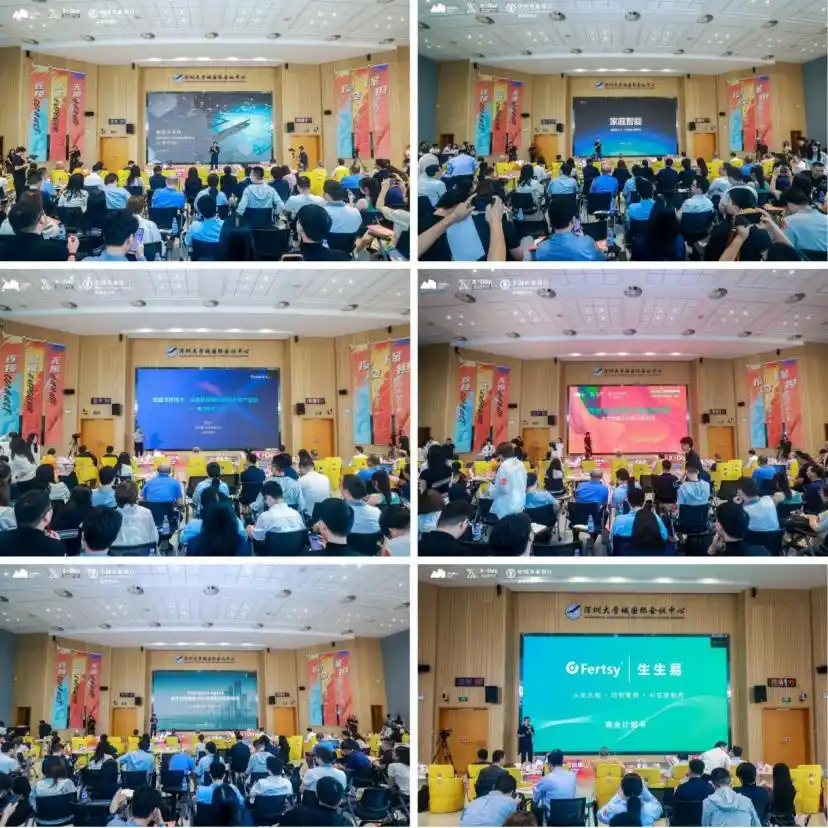
Qingli Technology (清力技术) was founded by Academician Zheng Quanshui of the Chinese Academy of Sciences, a professor at Tsinghua University. For over 20 years, Zheng Quanshui has been researching "self-superlubricity" technology – in simple terms, achieving extremely low friction and wear when two solid surfaces slide in contact without lubricant.

Qingli Technology was officially established in 2019. Today, leveraging the "zero-wear" advantage of self-superlubricity technology, it adopts a "self-superlubricity + X" model, focusing on core technological pain points in national strategic industries and future potential tracks. It has successfully developed products like MEMS RF switches, micro-generators, and special micro-motors, and has secured small-batch orders, accelerating the provision of breakthrough solutions for fields like humanoid robots, AI computing chip testing, and 6G communication.

Later, a Tsinghua Ph.D. brought a chip design Agent. Wang Jiacheng, CEO of ShuYu Technology (枢宇科技), holds a Ph.D. in Electronic Information from Tsinghua. The company starts with analog chips – a category with a vast number of SKUs, where different application scenarios often require redesign, creating high demand for experienced analog chip engineers.

ShuYu Technology hopes to use an AI Agent to undertake part of this design work. Its core product, Orvix Pilot, uses a self-developed multi-agent framework to connect the entire circuit design process from specification input, topology generation, parameter optimization to simulation verification. It is delivered in a software-hardware integrated machine form purely for intranet use, ensuring zero data leaves the enterprise.

Heyi Intelligent Control (合一智控) grew out of the Research Center for Building Space Edge Autonomous Control at the Shenzhen Tsinghua Research Institute. The team is developing a spatial intelligence agent based on spatial perception and AI decision-making, aiming to enable buildings to perceive occupants, environment, and equipment status, and then automatically perform corresponding control.

Currently, the company's systems have entered over 200 projects, covering an area of more than one million square meters. According to the company's on-site disclosure, real-world projects have generally achieved over 20% energy savings.

The last company, ShengShengYi (生生易), brought AI into assisted reproduction. Dedicated to improving clinical decision-making, laboratory safety, and operational efficiency in fertility centers through AI software and smart medical devices, ShengShengYi has formed a product portfolio including AI embryo assessment, intelligent liquid nitrogen storage monitoring, egg retrieval vacuum pumps, and AI incubators.

Currently, the company holds two Class II National Medical Products Administration (NMPA) registrations, US FDA 510(k) clearance, and certifications for ISO 13485 and ISO 9001 quality management systems. Its products and collaborations have covered markets in China, Japan, Europe, the Middle East, and North America, continuously promoting original Chinese reproductive medicine AI technology to go global.

The six companies are at different stages of progress, yet they constitute the most authentic cross-section of Chinese technology innovation today: hard-tech startups are moving closer and closer to the source of scientific research.

From Tsinghua Garden to Xili Lake

These projects share a similar starting point: they all hail from Tsinghua.

A year ago, the first "X-Day" Tsinghua Alumni Project Special Session was held at Xili Lake, bringing together 21 Tsinghua hard-tech companies and simultaneously kicking off the first stop of the South Tsinghua Public Welfare Demo. Now, new entrepreneurial teams continue to emerge, and some projects that appeared at that time have progressed even further.

Why are Tsinghua startup projects appearing so densely here? One obvious change is that hard-tech investment is continuously extending its reach earlier. During the roundtable discussion that day, the topic most discussed by several investors was how to reach the source of technology sooner.
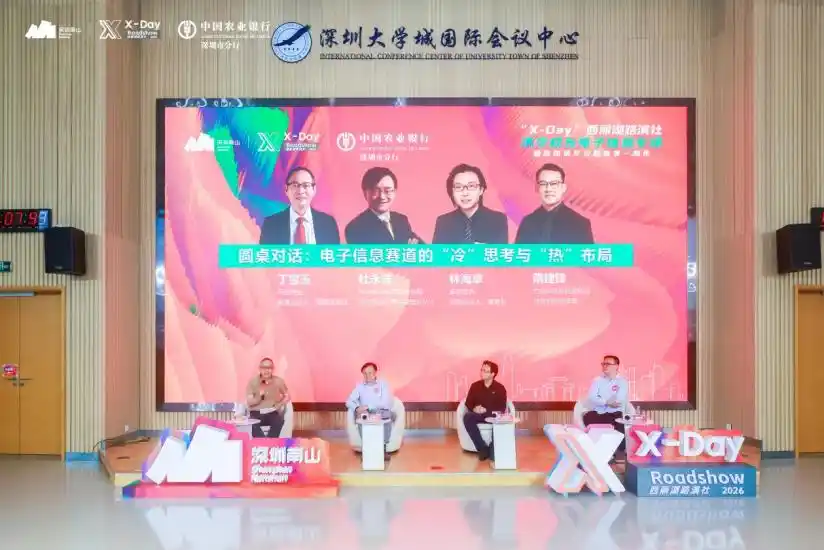
"This is the hottest half-year I have seen in my nearly 20-year career," said Du Yongbo, Managing Partner at Huaxing New Economy Fund, referring to the bustling scene in the venture capital circle this year.

Lin Haizhuo, Founding Partner of Zhuoyuan Asia, noted that investment is continuing to move earlier: many VC firms are entering the scientific research stage even while technological paths are still being explored. He summarized this phenomenon as the "academization" of technology investment.

Subtly, this has also changed how investment institutions find projects. "This poses more challenges for venture capital institutions, compelling us to follow the technology itself more closely and dig for projects beneath the surface," said Sui Jianfeng, General Manager of Leaguer Venture Capital. By the time a company truly enters the public eye, its financing may have already rapidly passed two or three rounds. Truly early-stage investment is moving towards professors, academic papers, and laboratories.

And Tsinghua happens to have a batch of such source projects, with electronic information being one of the densest areas. From chips and artificial intelligence to optoelectronics and smart hardware, a number of technical teams have left the laboratory and entered the stages of product definition, engineering, and commercial validation. Compared to mature companies, these projects are earlier, smaller, and also more reliant on industrial scenarios, supply chains, and the first pot of patient capital.

Over the past two years, the scale of early-stage hard-tech financing in Shenzhen has approached 280 billion RMB, with Tsinghua alumni startup projects accounting for nearly 30%; in key areas like chips, communications, and autonomous driving, the financing success rate of Tsinghua-faction projects is also significantly higher than the industry average.

Xu Ao, COO of Shuimu Nanguo Technology & Innovation (水木南国科创), introduced that the South Tsinghua Public Welfare Demo started from Nanshan a year ago, has held 17 sessions, serving 117 Tsinghua alumni startup projects. The next step will continue to link capital, industry, and policy resources, promoting more early-stage projects toward industrial implementation.

This path from universities to industry is gradually extending in Shenzhen's Nanshan District. Those entrepreneurial teams that once stood on the Xili Lake demo stage have successively grown into representative companies in their respective tracks.

To date, the "X-Day" Xili Lake Demo Club has held 19 themed demo events, cumulatively facilitating connections for about 4,500 institutions, with 58 enterprises obtaining equity financing exceeding 3.316 billion RMB. Transcendence Intelligent (跨维智能), which was on the demo stage last year, recently completed a 10 billion RMB Series B financing, with its valuation exceeding 100 billion RMB; the Tsinghua post-2000s team Zero Dimension (零次方), after 18 months of establishment, completed 4 rounds of financing, with orders exceeding 100 million RMB.

Batch after batch of projects meet at Xili Lake, and from there, they head towards more distant horizons.

This article is from WeChat Official Account "Investment Community" (ID: pedaily2012), author: Wang Lu

İlgili Sorular

QWhat is the main theme of the article titled '深圳开抢清华系'?

AThe article's main theme is the concentrated emergence of technology startups founded by Tsinghua University alumni in Shenzhen, particularly around the Xili Lake area. It highlights how these 'Tsinghua system' projects are attracting investment and accelerating their growth within Shenzhen's innovation ecosystem.

QWhat event is described at the beginning of the article, and what was its focus?

AThe event described is the 'X-Day' Xili Lake Roadshow Society's Tsinghua Alumni Electronic Information Special Session, held in Nanshan, Shenzhen on August 6th. It focused on showcasing six Tsinghua-affiliated startup projects spanning fields like chips, materials, AI, and healthcare.

QName two Tsinghua-affiliated startups mentioned in the article that have shown significant growth after participating in the Xili Lake roadshows.

ATwo such startups are Kuawei Intelligent (跨维智能), which recently completed a 10 billion RMB Series B financing with a valuation over 100 billion RMB, and Lingcifang (零次方), which secured 4 rounds of financing in 18 months and achieved over 100 million RMB in orders.

QAccording to the investors quoted in the article, what trend is occurring in venture capital investment for hard tech?

AInvestors note a trend of investment moving earlier into the research and development cycle. This 'scientification' of tech investment means VCs are engaging with projects at the laboratory or even theoretical research stage, seeking to identify and fund promising technologies at their source.

QWhat role does the 'Nan Guo Tsinghua Public Welfare Roadshow' play, according to the article?

AThe 'Nan Guo Tsinghua Public Welfare Roadshow' serves as a platform to connect Tsinghua alumni startups with capital, industry resources, and policy support. Having held 17 sessions and served 117 projects in one year, it aims to facilitate the transition of early-stage projects from the lab to industrial application and commercialization.

İlgili Okumalar

Vitalik Updates Ethereum Roadmap: From Merge to 'Lean Refactoring', with STARK, AI, and Privacy Reshaping the Technical Foundation

Vitalik Buterin has updated Ethereum's long-term roadmap, outlining a major shift from the post-Merge evolution toward a "Lean Ethereum" vision. The update builds on the 2023 framework but reorders priorities and introduces new concepts. Key continuations include improving consensus (single-slot finality), scaling data availability (larger blobs), simplifying light client verification with SNARKs/STARKs, and protocol simplification. Major adjustments involve significantly prioritizing quantum resistance due to heightened perceived threats, while deprioritizing items like VDFs and some EVM improvements. Technical replacements are planned, such as moving from Verkle trees to a unified Binary Tree and eventually PBTs, and rethinking state management with "New State Types." Notable new additions are: 1. Making **privacy a top-tier priority**, aiming to build it natively into the protocol. 2. **Radical scaling under post-quantum conditions**, using techniques like leanSPHINCS signatures and zkzk frames. 3. **Protocol "Lean-ification" and formal verification**, leveraging modern AI tools to make full formal verification feasible. 4. Exploring **Blob and Gas futures** for future capacity. 5. Developing **Native Rollups**, deeply integrating rollup capabilities into the protocol. 6. **Reimagining the EVM's future**, potentially exposing a simpler, modern instruction set (e.g., leanISA or RISC-V), with EVM becoming a compatibility layer. The core philosophy shifts toward specializing mechanisms for high-load activities (transfers, swaps, privacy) to gain scalability, rather than attempting to infinitely scale all activities. It also elevates **recursive STARKs and AI-assisted formal verification** as foundational infrastructure. In summary, Ethereum is embarking on a systemic "third-generation" redesign—Lean Ethereum—involving replacements or rewrites of major components. The goal is to achieve a quantum-safe, privacy-first, secure, decentralized, and highly scalable network while maintaining a lean and verifiable protocol.

marsbit4 dk önce

Vitalik Updates Ethereum Roadmap: From Merge to 'Lean Refactoring', with STARK, AI, and Privacy Reshaping the Technical Foundation

marsbit4 dk önce

China Monopolizes the Humanoid Market: The U.S. Is Forced to Defend Itself

China's Humanoid Robot Market Domination and US Response According to a report by Smart Analytics Global (SAG), Chinese manufacturers supplied over 97% of the global humanoid robot shipments (approximately 19,100 units) in the first half of 2026, a 272% year-on-year increase. Shanghai-based AGIBOT led with a 44% market share, followed by Unitree Robotics with 31%. Together, these two firms accounted for about 75% of global shipments. China itself represented over 85% of global demand for these devices, with industrial and commercial applications now comprising more than 70% of shipments. Key factors driving China's leadership include strong state support, abundant funding, expanding production capacity, IPO waves for developers, and a vast manufacturing ecosystem for rapid testing and deployment. Furthermore, over 90% of key components for humanoid robots are now sourced domestically. In response, the US Federal Communications Commission (FCC) banned federal agencies and subsidy recipients from purchasing or using foreign "advanced robotic devices," including humanoid and quadruped robots, citing national security concerns in July 2026. SAG forecasts global shipments to approach 60,000 units for full-year 2026, with industry revenue around $1.6 billion, projecting 500,000 units by 2030. The analysis notes potential challenges for Chinese expansion, such as reputational risks from alleged ties to China's defense sector and the precedent of trade disputes seen in solar panels and batteries, potentially triggered by the current low average robot price.

cryptonews.ru22 dk önce

China Monopolizes the Humanoid Market: The U.S. Is Forced to Defend Itself

cryptonews.ru22 dk önce

What's New in Ethereum's Roadmap: Privacy, Quantum Security, Native Rollup?

On August 10, 2024, Ethereum co-founder Vitalik Buterin revealed an updated technical roadmap, highlighting significant changes in priorities and new focus areas. Key new additions include: - **Strong Privacy Protection**: Elevated to a top-tier protocol concern. Proposals like EIP-8250 (keyed nonces for concurrency), EIP-8272 (recent roots for verification), and EIP-8182 (shared protocol-level privacy pools) aim to enable private transfers of ETH and ERC-20s, moving toward default private accounts. - **Quantum Resilience**: Priority increased. The plan addresses risks to ECDSA/BLS signatures, KZG commitments, and ZK systems, exploring solutions like leanSPHINCS signatures, STARK proofs (considered quantum-resistant), and streamlined verification processes. A full L1 upgrade is tentatively targeted for ~2029. - **Native Rollups**: A novel concept where rollups could reuse Ethereum's core validation infrastructure via a new EXECUTE precompile (EIP-8079 draft). This aims to reduce custom code and enhance security for certain L2s, while specialized chains will continue to exist. - **Protocol Simplification & Formal Verification**: Leveraging AI tools to make full-protocol formal verification feasible, aiming for more rigorous and machine-verifiable specifications. Other notable shifts: - State storage is evolving from Verkle trees to a Partitioned Binary Tree (PBT, EIP-8347 draft). - Some 2023 items like VDFs and certain EVM improvements were deprioritized. - Long-term discussions include blob/gas futures and non-EVM instruction sets (e.g., RISC-V). The "Strawmap" outlines potential upgrades through ~2029 but is a directional guide, not a firm timeline. Key milestones to watch include the Glamsterdam (Q4 2026) and Hegotá (2027) forks. Many proposals remain in draft or research phases.

marsbit43 dk önce

What's New in Ethereum's Roadmap: Privacy, Quantum Security, Native Rollup?

marsbit43 dk önce

Hyperliquid Trading Volume Soars, So Why Are Profits Falling?

Hyperliquid, a leading decentralized perpetuals trading platform, has seen its open interest surge to a record high above $11 billion, capturing roughly 9% of the global market share. Trading volume remains robust, nearing $178 billion over 30 days, driven largely by the explosive growth of third-party markets offering tokenized real-world assets (RWAs) like stocks and commodities. Despite this growth, the platform's protocol revenue has declined for four consecutive quarters, falling 43% from its Q3 2025 peak of $357 million to approximately $202 million in Q2 2026. This divergence is primarily attributed to the HIP-3 governance proposal, which allows external developers to launch their own markets and keep up to half of the generated fees. These third-party markets now account for nearly 50% of total volume. Consequently, the share of revenue redistributed to developers, market makers, and the treasury has tripled from 6% to 18% in a year. This directly reduces the funds allocated to the platform's buyback-and-burn mechanism for its native HYPE token, weakening a key price support. HYPE's price has fallen 28% from its all-time high. The platform's growth is also heavily concentrated, with a single entity, Trade.xyz, responsible for over 90% of HIP-3 open interest, introducing systemic risk. Additionally, the ecosystem lacks diversity beyond HYPE, faces ongoing token unlocks adding sell pressure, and is encountering increased regulatory scrutiny and new competition from platforms like Robinhood Chain. While still a major revenue generator in crypto, Hyperliquid's model of sharing fees to fuel expansion is currently compressing its own earnings and token economics.

marsbit43 dk önce

Hyperliquid Trading Volume Soars, So Why Are Profits Falling?

marsbit43 dk önce

İşlemler

Spot
活动图片