Ethlabs Founded, Treasury Companies to Fund Ethereum Post-EF

Foresight News2026-06-23 tarihinde yayınlandı2026-06-23 tarihinde güncellendi

Özet

Former Ethereum Foundation (EF) core researchers Ansgar Dietrichs, Barnabé Monnot, Caspar Schwarz-Schilling, Josh Rudolf, and Julian Ma announced the launch of Ethlabs, an independent non-profit R&D lab focused on Ethereum core protocol research and institutional-grade infrastructure. The initiative, backed by over 50 community participants including ETH treasury companies BitMine and Sharplink, Joseph Lubin, Hayden Adams, and Jesse Pollak, aims to make Ethereum the global economic settlement layer. This move comes amidst significant pressure on the EF, which has seen key departures and a strategic narrowing of its focus. A critical funding gap of approximately $30 million annually for core client development, following the expiration of the client incentive program, poses a near-term risk to the network's development. The context includes the evolution of ETH's value narrative. While mechanisms like EIP-1559 and the Merge previously supported the "ultrasound money" thesis, the success of L2 scaling via EIP-4844 has drastically reduced L1 fee revenue, leading to net ETH issuance and challenging that narrative. Ethlabs has listed ETH monetary economics as a primary research focus. Backing from corporate ETH treasuries like BitMine and Sharplink represents a strategic alignment, as these entities' asset values are directly tied to Ethereum's health and adoption. Their support is an investment rather than a pure donation. Ethereum's governance is shifting from a centralized ...


Author: Sanqing, Foresight News


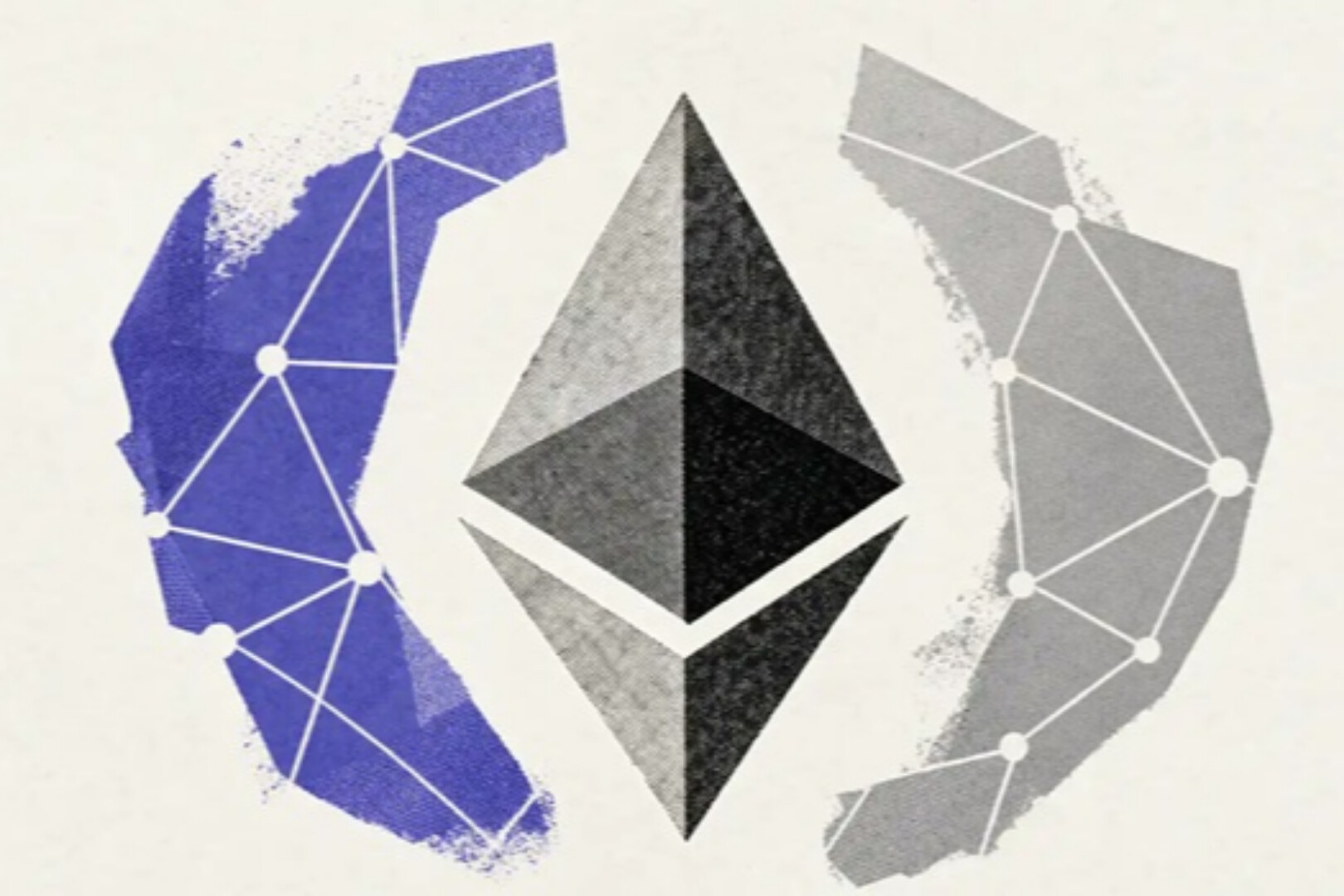
On June 22nd, five former core researchers from the Ethereum Foundation (EF) – Ansgar Dietrichs, Barnabé Monnot, Caspar Schwarz-Schilling, Josh Rudolf, and Julian Ma – officially announced the establishment of Ethlabs, an independent non-profit R&D (Research and Development) laboratory focused on Ethereum core protocol research and institutional-grade infrastructure. The initial supporters include Ethereum treasury companies BitMine (BMNR) and Sharplink (SBET), as well as over 50 community and ecosystem participants such as Ethereum co-founder Joseph Lubin, Uniswap founder Hayden Adams, and Base lead Jesse Pollak.
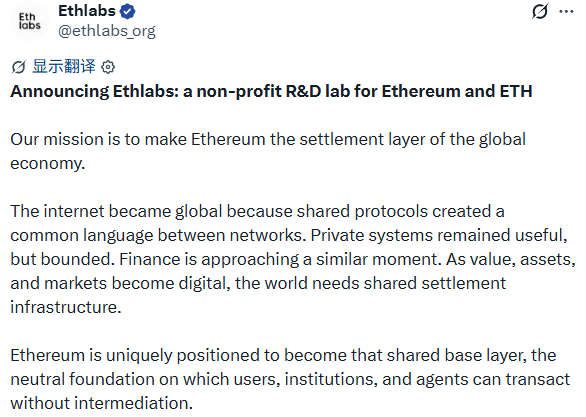


Ethlabs' mission directly targets the core: "Make Ethereum the settlement layer for the global economy." The official statement lists four core beliefs: credible neutrality, ETH as programmable value storage, the value of open markets in DeFi, and translating these principles into real-world adoption. All five founders served at EF for many years, deeply involved in crucial protocol work such as the Dencun upgrade (EIP-4844), Proposer-Builder Separation (PBS), the anti-censorship mechanism FOCIL, and the ETH monetary economics framework.


EF Faces Dual Pressures on Funding and Talent


From early 2026, the EF underwent a wave of intensive personnel changes. Co-Executive Director Tomasz Stańczak left at the end of February, moving into AI. Co-Executive Director Hsiao-Wei Wang stepped down in mid-June, citing a need to "re-evaluate priorities."


Key personnel including Josh Stark, Trent Van Epps, and Alex Stokes departed successively, with total attrition around 19 people. EF currently has only Bastian Aue performing executive functions, with no succession structure or public timeline.


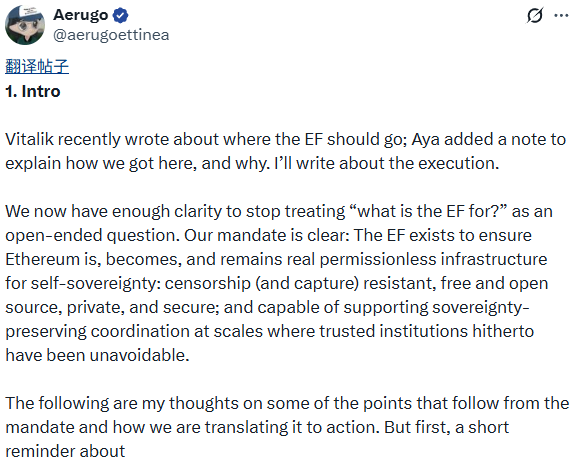
The EF itself is acutely aware of this and proactively frames it as a "return to a leaner core mission." Its latest operational plan, the "EF Way," narrows the focus to core issues like MEV mitigation, privacy protection, and ETH payments, explicitly abandoning the all-encompassing, full-stack coordination role.


However, beyond this proactive adjustment, there are more urgent structural pressures.


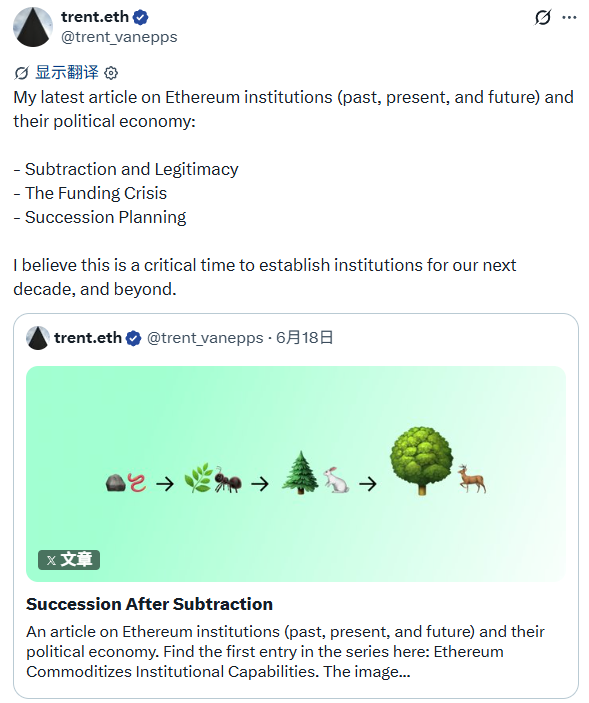
Former EF contributor Trent Van Epps warned in a post after his departure: The "Client Incentive Program" supporting over 10 core client teams like Geth, Erigon, and Lighthouse expired in April 2026, with no renewal arrangements yet. He estimates the annual operational cost for Ethereum's core development to be around $30 million. If this funding gap is not filled, it will gradually become apparent within 3 to 9 months.


The dilemma for the EF is that it has long shouldered a function not ideally suited for a single entity in a decentralized protocol. The EF has been simultaneously a protocol researcher, a funder, and an external spokesperson. As the network scales, pressure on any of these layers is amplified by the community into a broader governance issue.


The Evolution of ETH Value Capture Narratives


In 2021, EIP-1559 introduced a burn mechanism. In 2022, the Merge compressed ETH issuance to historical lows, making "ultrasound money" the most compelling narrative for ETH: a continuously deflationary, censorship-resistant, programmable store of value. This narrative self-reinforced during ETH's price ascent cycles, forming a closed loop.


In March 2024, the Dencun upgrade activated EIP-4844, introducing an independent blob fee market, which reduced L2 data availability costs by 10 to 100 times. A significant amount of activity migrated to L2s, causing the L1 base fee to plummet. Daily ETH burn volume dropped sharply post-Merge from thousands of ETH. According to The Block, it hit a historical low of 53 ETH on a single day in 2026.
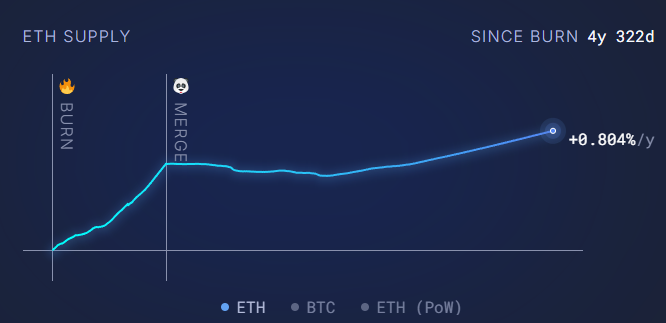


Meanwhile, staking issuance remains at approximately 1,700 ETH per day, keeping net issuance consistently positive. According to ultrasound.money data, Ethereum's annualized net inflation rate has risen to about 0.8%, with mainnet gas fees as low as 0.1 Gwei, and recent block burns near zero. The "ultrasound money" narrative has temporarily lost its effect.


The fundamental contradiction is perennial: the more successful Ethereum's L2 scaling strategy becomes, the less fee capture L1 sees, and the weaker the direct returns for ETH holders.


Controversy follows. Critics argue that L2s are "siphoning" value from L1, with value flowing to L2 operators, dApp protocols, and stablecoin issuers, not ETH holders. Supporters contend that ETH's structural position as the ultimate settlement layer, security provider, and liquidity hub is irreplaceable, and value will ultimately flow back. However, this requires time and new mechanism designs.


It is precisely in this context that Ethlabs lists the "ETH monetary economics framework" as one of its initial research priorities. The five founders were deeply involved in designing EIP-4844 and PBS; they understand the boundaries of these mechanisms better than anyone.


Entry of Treasury Companies


BitMine, led by Fundstrat Chairman Tom Lee, is the most aggressive corporate ETH treasury company, publicly stating its goal is to hold 5% of Ethereum's circulating supply. As of June 21, 2026, BitMine holds approximately 5.67 million ETH, valued at about $10.7 billion (estimated at $1,733 per ETH). Of this, 4.719 million ETH are staked, making it the second-largest cryptocurrency treasury globally and the largest Ethereum treasury.


Sharplink transformed into an ETH treasury company in 2025 after a $425 million private placement, with Joe Lubin appointed Chairman. As of May 2026, Sharplink holds approximately 869,000 ETH, valued at about $1.5 billion, making it the world's second-largest publicly-listed Ethereum treasury company, with almost its entire holdings staked.


The core logic both companies are betting on is that Ethereum will become the neutral foundational layer for global financial settlement, with ETH as the native reserve asset on this layer. Supporting Ethlabs is a natural extension of this logic.


The fundamental difference between these corporate treasury entities and traditional Ethereum funders (foundations, protocol treasuries) is their significant ETH holdings. The health of Ethereum's protocol layer and its institutional adoption can impact the ETH price, thereby affecting their asset value and stock performance.


Funding core R&D thus becomes strategic support highly aligned with their own asset value, rather than unconditional donation. Ethlabs' funding structure is designed for this isolation: an independent funding manager will be responsible for fund selection and allocation. Supporters receive transparent reports and audits but do not interfere with research directions or technical decisions.


At the Consensus 2026 conference, Joe Lubin publicly stated that the tokenization of the global economy is "inevitable" and strongly endorsed the corporate ETH treasury model as "permanent long-term capital for Ethereum." He simultaneously warned of systemic risks in imitative projects built on weak tokens.


Specialized Division of Labor with Associated Coordination Costs


Ethlabs writes in its official statement: "Ethlabs is independent, but Ethereum is a shared project. We are just one node in a larger network of stewards. This is the multi-node future."


Ethereum's governance structure is shifting from a single centralized entity (EF) towards a distributed collaboration of multiple independent, focused "steward nodes" with distinct specialties. The EF itself is actively driving this transformation, repositioning itself as a high-level coordination and funding body, encouraging external, specialized entities to undertake specific research and development work.


Protocol research, client development, institutional adoption, and standard setting are inherently different types of work. Having them independently advanced by specialized bodies can improve efficiency and reduce systemic risk from a single point of failure.


Ethlabs' funding isolation design is timely: an independent funding manager handles fund selection and allocation, providing supporters with transparent reporting and annual audits, without interfering in any research direction or technical decisions.


However, distributed collaboration itself introduces new problems. Who coordinates priority conflicts among multiple nodes? If Ethlabs' research direction diverges from the EF roadmap, can Ethereum's community consensus mechanisms effectively converge? Who fills the $30 million client funding gap under a "multi-node" framework?


A distributed structure lacking sufficient coordination layers risks transforming the complexity of protocol governance from a "single entity's execution problem" into a "multi-entity coordination cost problem."


Ethereum's experiment continues.

Trend Kriptolar

İlgili Sorular

QWhat is Ethlabs, and what is its core mission according to the article?

AEthlabs is an independent non-profit R&D laboratory focused on Ethereum core protocol research and institutional-grade infrastructure, founded by five former Ethereum Foundation core researchers. Its core mission is 'to make Ethereum the settlement layer for the global economy.'

QWhat is the 'client incentive program' mentioned in the article, and what is its current status?

AThe 'client incentive program' was a funding mechanism that supported core client teams like Geth, Erigon, and Lighthouse. According to the article, the program expired in April 2026 and currently has no renewal arrangement, potentially creating a $30 million annual funding gap for Ethereum core development.

QHow has the 'ultrasound money' narrative for ETH been impacted according to the article, and what is the cited reason?

AThe 'ultrasound money' narrative has been temporarily invalidated. This is due to the success of Ethereum's L2 scaling strategy, specifically the Dencun upgrade (EIP-4844), which drastically reduced L1 transaction fees and daily ETH burn. With low L1 activity and ongoing staking issuance, Ethereum has experienced net positive issuance, with an annualized rate around 0.8%.

QWhat role do treasury companies like BitMine and Sharplink play in supporting Ethlabs, and what distinguishes them from traditional donors?

ABitMine and Sharplink are among the first supporters of Ethlabs. As corporate ETH treasury companies holding large amounts of ETH, their support is a strategic investment tied to the health of the Ethereum protocol and its adoption, which directly affects their asset value and stock performance. This differs from unconditional donations from foundations or protocol treasuries.

QWhat potential challenge does the article highlight regarding Ethereum's shift towards a more distributed governance structure with entities like Ethlabs and EF?

AThe article highlights the challenge of coordination costs. While a distributed structure with specialized entities like Ethlabs can increase efficiency, it may transform governance complexity from an 'execution problem of a single institution' into a 'coordination cost problem among multiple institutions.' Questions arise about who resolves priority conflicts and fills funding gaps, like the one for client teams, in this multi-node framework.

İlgili Okumalar

Will the STRC Issue Price Determined by ChatGPT Lead to a Death Spiral?

A "death spiral" concerns surround the "STRC" preferred shares from MicroStrategy, a financial instrument designed by CEO Michael Saylor with significant AI consultation to trade near a $100 face value. Since its July 2025 launch alongside a ~40% Bitcoin (BTC) decline, STRC has traded at a discount, hitting a low of $82.53 and pushing its effective dividend yield above 12.9%. The debate centers on whether STRC's structure—which relies on MicroStrategy issuing more shares to fund Bitcoin purchases and dividends—is sustainable or a "centralized Ponzi scheme," as economist Peter Schiff claims. Skepticism grew after Saylor revealed the product's design involved extensive AI dialogue to create a legally viable, monthly-dividend, price-stable preferred share—a novel concept. MicroStrategy's recent sale of 32 BTC to cover dividends, coupled with a sharp slowdown in its weekly Bitcoin buys (from billions to ~$100 million in June), has intensified fears. The "at-the-market" equity issuance, a key funding mechanism, is paused while STRC trades below par. This raises the "death spiral" risk: a lower STRC price triggers automatic dividend rate hikes, increasing cash obligations and potentially forcing more share sales or Bitcoin divestments. Bullish analysts like Jesse Myers argue the sell-off stems from leveraged positions unwinding, not fundamental failure, noting the company can cover dividends for decades if BTC appreciates modestly. The shift to semi-monthly dividends and the high yield at discounted prices may attract new buyers. Major AI models (ChatGPT, Grok, Claude) suggest a return to $100 is possible but conditional on restored market confidence, sustainable dividend coverage without asset sales, and a Bitcoin price recovery. The critical test arrives as new dividend rules take effect June 30, likely raising rates again with STRC below $95. The central question remains: Can MicroStrategy fulfill its obligations without selling Bitcoin, or will the mechanism accelerate its own decline?

marsbit4 dk önce

Will the STRC Issue Price Determined by ChatGPT Lead to a Death Spiral?

marsbit4 dk önce

Why Did NVIDIA's Bond Issue Go Unnoticed While SpaceX's Caused a Plunge?

The article analyzes the contrasting market reactions to recent bond issuances by SpaceX and NVIDIA. While NVIDIA's $25 billion bond offering was met with strong demand and seen as securing long-term capital for its already profitable AI business, SpaceX's move to raise at least $20 billion in bonds (primarily to refinance bridge loans) triggered a sell-off in its stock (SPCX). The key difference lies in the stage of cash flow validation for their respective core narratives. For NVIDIA, the AI boom is generating substantial, visible revenue and profits, making debt a tool to amplify a proven growth curve. For SpaceX, despite a strong cash position post-IPO and a revenue-generating business in Starlink, its valuation is heavily tied to future, capital-intensive projects like Starship, global satellite networks, and potential AI infrastructure. The bond issuance acted as a trigger, shifting market focus from SpaceX's long-term vision to the pressing question of whether Starlink's profits can fund these ambitious, unproven ventures before they generate their own returns. Thus, the market penalizes not the act of borrowing itself, but the perceived gap between high capital expenditure and the speed of cash flow realization. SpaceX's valuation recovery hinges on demonstrating that Starlink's profitability can outpace the burn rate of its futuristic projects or that those projects (like Starship achieving reliable, low-cost reusability) can soon transition from costly visions to commercial realities.

marsbit9 dk önce

Why Did NVIDIA's Bond Issue Go Unnoticed While SpaceX's Caused a Plunge?

marsbit9 dk önce

Will the STRC Issue Price Determined by ChatGPT Really Fall into a Death Spiral?

"Strategy's" (STRC) preferred share, a financial instrument designed by CEO Michael Saylor in consultation with AI to trade steadily at $100, faces mounting pressure. Since its July 2025 launch alongside a ~40% Bitcoin price drop, STRC has traded at a steep discount, hitting a low of $82.53. This discount pushes its effective dividend yield above 12.9%. The core debate revolves around whether STRC's structure is sustainable or a "centralized Ponzi scheme," as economist Peter Schiff claims. The mechanism relies on issuing new shares ("at-the-market" offerings) to fund Bitcoin purchases and dividend payments. However, the deep discount has paused these ATM offerings, slowing Bitcoin accumulation and forcing a minor sale of 32 BTC to cover obligations. Proponents, like The Smarter Web Company's Jesse Myers, argue the sell-off is a leveraged unwinding, not a fundamental failure. They note Strategy has ample resources to cover dividends for years if Bitcoin appreciates modestly. The deep discount also makes STRC attractive for yield-seeking buyers, as dividends are calculated on the $100 face value. The key test is whether Strategy can maintain dividends without sustained Bitcoin sales. A critical watchpoint is June 30th, when STRC switches to semi-monthly dividends. An automatic rule will likely raise the dividend rate further because the price remains below $95$, potentially creating a "death spiral": lower prices trigger higher yields, increasing the cash burden and forcing more dilution or asset sales. The question of whether this AI-designed "flywheel" is a stable instrument or a flawed accelerator will be answered by its price action and Strategy's funding choices in the coming months.

链捕手10 dk önce

Will the STRC Issue Price Determined by ChatGPT Really Fall into a Death Spiral?

链捕手10 dk önce

Ethereum's Next Stop Glamsterdam: The Core Upgrades You Must Know

The Glamsterdam upgrade, scheduled for late 2026, is a major Ethereum hard fork combining the Amsterdam execution layer and Glasgow consensus layer updates. Its primary goal is not simply increasing throughput but restructuring Ethereum's block production, validation, and resource pricing to enable future scaling. Key technical changes include **EIP-7732 (ePBS)**, which formally enshrines proposer-builder separation into the protocol. This decouples consensus and execution tasks, extending the execution payload propagation window to ~9 seconds. This provides more time for node verification, allowing for safer increases in block capacity (Gas limit) in the future. Another core component is **EIP-7928 (Block-Level Access Lists - BAL)**. It mandates a list of all state accessed within a block, moving this feature from an optional transaction-level (EIP-2930) to a mandatory block-level requirement. This explicit access list enables client optimizations like parallel disk reads and state root computations, paving the way for parallel execution. To manage long-term state growth, **EIP-8037** increases the cost of creating new state (e.g., accounts, storage slots), separating the pricing of permanent database bloat from temporary computation. This allows execution capacity to scale more aggressively without causing state size to explode proportionally. The planned upgrade bundle includes around 10 EIPs categorized into: 1) Core protocol restructuring (ePBS, BAL), 2) Resource pricing adjustments (state costs, calldata costs), and 3) EVM/developer improvements. Several other EIPs, including those potentially improving staker exit liquidity (EIP-8061, EIP-8080), are under consideration. The technical development coincides with significant personnel changes within the Ethereum Foundation's Protocol team. The Foundation's official communications frame this as part of a broader shift towards a "coalition of organizations" working on the Ethereum roadmap, citing new entities like ethlabs and the Ethereum Economic Zone. In summary, Glamsterdam represents a foundational re-engineering of Ethereum's block pipeline and economic model—focusing on ePBS, BAL, and multi-dimensional resource pricing—to prepare the network for sustainable, high-throughput scaling in the years ahead.

Foresight News22 dk önce

Ethereum's Next Stop Glamsterdam: The Core Upgrades You Must Know

Foresight News22 dk önce

The Ethereum Foundation Has Split?! An In-depth Look at Ethlabs' "Bright Future"

"Ethereum Foundation Splits? Understanding Ethlabs and Its 'Bright Future'" Former Ethereum Foundation members Ansgar Dietrichs, Barnabé Monnot, Caspar Schwarz-Schilling, Josh Rudolf, and Julian Ma have announced the launch of Ethlabs, an independent non-profit research and development lab. Announced on June 22nd, the initiative comes amidst discussions about the need for new organizational structures within the Ethereum ecosystem, a point highlighted by Bankless founder David Hoffman. Ethlabs' mission is to establish Ethereum as the foundational settlement layer for the global economy. The organization positions itself as a bridge connecting frontline developers, applications, and user needs with the core protocol. It aims to translate real-world demands into protocol improvements, industry standards, and deployable products. The founding team brings significant expertise: Dietrichs and Monnot are highly cited researchers in areas like Proposer-Builder Separation (PBS) and MEV, while Schwarz-Schilling, Rudolf, and Ma contribute backgrounds in economic modeling, consensus research, and applied cryptography. Initial supporters include BitMine, a major corporate ETH treasury; Sharplink, another treasury firm; and Consensys founder Joe Lubin in a personal capacity. Community backers include figures like Uniswap's Hayden Adams and Base's Jesse Pollak. The timing coincides with internal Ethereum Foundation discussions about "spinout" projects. While Ethlabs and the Foundation share research interests like MEV mitigation, Ethlabs frames its role not as a competitor but as part of a shift from a "single-core coordination model" to a "multi-R&D entity collaboration model." It views Ethereum as a public project belonging to all builders, with Ethlabs as one node in a broader governance network. Ultimately, Ethlabs represents an organizational evolution within the maturing Ethereum ecosystem. The key question is whether multiple research bodies can collaborate effectively to advance Ethereum as a competitive global settlement infrastructure.

Odaily星球日报26 dk önce

The Ethereum Foundation Has Split?! An In-depth Look at Ethlabs' "Bright Future"

Odaily星球日报26 dk önce

İşlemler

Spot
Futures

Popüler Makaleler

ETH 2.0 Nedir

ETH 2.0: Ethereum için Yeni Bir Dönem Giriş ETH 2.0, Ethereum 2.0 olarak da bilinir, Ethereum blok zincirinde önemli bir yükseltmeyi işaret eder. Bu geçiş yalnızca bir yüz değiştirme değil; ağın ölçeklenebilirliğini, güvenliğini ve sürdürülebilirliğini temelinden geliştirmeyi hedeflemektedir. Enerji yoğun Proof of Work (PoW) konsensüs mekanizmasından daha verimli olan Proof of Stake (PoS) mekanizmasına geçişle birlikte, ETH 2.0 blok zinciri ekosistemine dönüştürücü bir yaklaşım vaat etmektedir. ETH 2.0 Nedir? ETH 2.0, Ethereum'un yeteneklerini ve performansını optimize etmeye odaklanmış özel, birbirine bağlı güncellemelerin bir derlemesidir. Yenileme, mevcut Ethereum mekanizmasının karşılaştığı kritik zorlukları, özellikle işlem hızı ve ağ tıkanıklığı ile ilgili sorunları ele almak üzere tasarlanmıştır. ETH 2.0'ın Amaçları ETH 2.0'ın ana amaçları, üç temel unsuru geliştirmeye odaklanmaktadır: Ölçeklenebilirlik: Ağın saniye başına işleyebileceği işlem sayısını önemli ölçüde artırmayı hedefleyen ETH 2.0, mevcut yaklaşık 15 işlem/saniye sınırlamasını aşmayı ve potansiyel olarak binlerce işleme ulaşmayı planlamaktadır. Güvenlik: Geliştirilmiş güvenlik önlemleri, özellikle siber saldırılara karşı daha iyi direnç sağlama ve Ethereum'un merkeziyetsiz görünümünü koruma açısından ETH 2.0 için hayati öneme sahiptir. Sürdürülebilirlik: Yeni PoS mekanizması, sadece verimliliği artırmakla kalmayıp aynı zamanda enerji tüketimini de önemli ölçüde azaltma hedefiyle tasarlanmış olup, Ethereum'un operasyonel çerçevesini çevresel kaygılarla uyumlu hale getirmektedir. ETH 2.0'ın Yaratıcısı Kimdir? ETH 2.0'ın yaratılması Ethereum Vakfı'na atfedilebilir. Ethereum'un gelişimini destekleme konusunda kritik bir rol oynayan bu kar amacı gütmeyen kuruluş, dikkat çekici kurucu ortağı Vitalik Buterin tarafından yönetilmektedir. Daha ölçeklenebilir ve sürdürülebilir bir Ethereum vizyonu, bu yükseltmenin arkasındaki itici güç olmuştur ve protokolü geliştirmek için kendini adamış küresel bir geliştici ve meraklı topluluğunun katkılarını içermektedir. ETH 2.0'ın Yatırımcıları Kimlerdir? ETH 2.0 yatırımcıları ile ilgili detaylar kamuoyuna açıklanmamış olsa da, Ethereum Vakfı'nın blok zinciri ve teknoloji alanında çeşitli kuruluşlar ve bireyler tarafından desteklendiği bilinmektedir. Bu ortaklar arasında merkeziyetsiz teknolojilerin ve blok zinciri altyapısının geliştirilmesine karşılıklı ilgi duyan girişim sermayesi şirketleri, teknoloji firmaları ve hayır kurumları yer almaktadır. ETH 2.0 Nasıl Çalışır? ETH 2.0, onu öncüsünden ayıran bir dizi önemli özelliği tanıtmasıyla dikkat çekmektedir. Proof of Stake (PoS) PoS konsensüs mekanizmasına geçiş, ETH 2.0'ın en belirgin değişikliklerinden biridir. İşlem doğrulama için enerji yoğun madenciliğe dayanmak yerine, PoS kullanıcıların ağa yatırdıkları ETH miktarına göre işlemleri doğrulayıp yeni bloklar oluşturmalarına olanak tanır. Bu, enerji verimliliğinin artırılmasına yol açarak tüketimi yaklaşık %99,95 oranında azaltmakta ve Ethereum 2.0'ı önemli ölçüde daha çevre dostu bir alternatif haline getirmektedir. Shard Zincirleri Shard zincirleri, ETH 2.0'ın diğer bir kritik yeniliğidir. Bu daha küçük zincirler, ana Ethereum zinciri ile paralel olarak çalışarak birden fazla işlemin aynı anda işlenmesine olanak tanır. Bu yaklaşım, ağın genel kapasitesini artırarak Ethereum'u rahatsız eden ölçeklenebilirlik sorunlarını ele alır. Beacon Zinciri ETH 2.0'ın temelinde, ağı koordine eden ve PoS protokolünü yöneten Beacon Zinciri yer almaktadır. Bu, bir tür organizatör olarak işlev görür: doğrulayıcıları denetler, shard'ların ağa bağlı kalmasını sağlar ve blok zinciri ekosisteminin genel sağlığını izler. ETH 2.0 Zaman Çizelgesi ETH 2.0'ın yolculuğu, bu önemli yükseltmenin evrimini gösteren birkaç önemli dönüm noktası ile tanımlanmıştır: Aralık 2020: Beacon Zinciri'nin başlatılması, PoS'un tanıtımını işaret etmiş ve ETH 2.0’a geçiş için sahneyi hazırlamıştır. Eylül 2022: "The Merge" tamamlanması, Ethereum ağının başarılı bir şekilde PoW'den PoS çerçevesine geçiş yaptığı kritik bir anı temsil etmekte ve Ethereum için yeni bir dönemi müjdelemektedir. 2023: Shard zincirlerinin beklenen dağıtımı, Ethereum ağının ölçeklenebilirliğini daha da artırmayı hedeflemekte ve ETH 2.0'ı merkeziyetsiz uygulamalar ve hizmetler için sağlam bir platform haline getirmeyi pekiştirmektedir. Ana Özellikler ve Faydalar Geliştirilmiş Ölçeklenebilirlik ETH 2.0'ın en önemli avantajlarından biri, geliştirilmiş ölçeklenebilirliğidir. PoS ve shard zincirlerinin kombinasyonu, ağın kapasitesini artırarak, eski sistemle kıyaslandığında çok daha fazla işlem hacmi karşılayabilmesini sağlamaktadır. Enerji Verimliliği PoS'un uygulanması, blok zinciri teknolojisinde enerji verimliliği yönünde büyük bir adım teşkil etmektedir. Enerji tüketimini ciddi şekilde azaltarak, ETH 2.0 yalnızca işletme maliyetlerini düşürmekle kalmaz, aynı zamanda küresel sürdürülebilirlik hedefleriyle daha yakın bir uyum sağlar. Geliştirilmiş Güvenlik ETH 2.0'ın güncellenmiş mekanizmaları, ağ genelinde güvenliğin artırılmasına katkıda bulunmaktadır. PoS'un uygulanması ve shard zincirleri ile Beacon Zinciri aracılığıyla geliştirilen yenilikçi kontrol önlemleri, potansiyel tehditlere karşı daha yüksek bir koruma sağlar. Kullanıcılar için Düşük Maliyetler Ölçeklenebilirlik geliştikçe, işlem maliyetleri üzerindeki etkiler de belirgin hale gelecektir. Artan kapasite ve azalan tıkanıklığın, kullanıcılar için düşük ücretler anlamına gelmesi beklenmekte ve Ethereum'u günlük işlemler için daha erişilebilir hale getirmektedir. Sonuç ETH 2.0, Ethereum blok zinciri ekosisteminde önemli bir evrimi işaret etmektedir. Ölçeklenebilirlik, enerji tüketimi, işlem verimliliği ve genel güvenlik gibi temel sorunları ele alırken, bu güncellemenin önemi abartılamaz. Proof of Stake'e geçiş, shard zincirlerinin tanıtımı ve Beacon Zinciri'nin altyapı çalışmaları, Ethereum'un merkeziyetsiz piyasalarının artan taleplerini karşılayabileceği bir geleceği göstermektedir. Yenilik ve ilerleme ile şekillenen bir sektörde, ETH 2.0, blok zinciri teknolojisinin daha sürdürülebilir ve verimli bir dijital ekonomi için yol açmadaki yeteneklerinin bir kanıtıdır.

185 Toplam GörüntülenmeYayınlanma 2024.04.04Güncellenme 2024.12.03

ETH 2.0 Nedir

ETH 3.0 Nedir

ETH3.0 ve $eth 3.0: Ethereum'un Geleceği Üzerine Derinlemesine Bir İnceleme Giriş Hızla evrilen kripto para ve blok zinciri teknolojisi ortamında, ETH3.0, sıklıkla $eth 3.0 olarak adlandırılmakta, önemli bir ilgi ve spekülasyon konusu haline gelmiştir. Bu terim, netleştirilmesi gereken iki temel kavramı kapsamaktadır: Ethereum 3.0: Bu, mevcut Ethereum blok zincirinin yeteneklerini artırmayı hedefleyen olası bir gelecekteki güncellemeyi temsil eder, özellikle ölçeklenebilirlik ve performansı iyileştirmeye odaklanmaktadır. ETH3.0 Meme Token: Bu ayrı kripto para projesi, Ethereum blok zincirini kullanarak meme merkezli bir ekosistem oluşturmayı amaçlamakta ve kripto para topluluğu içinde etkileşimi artırmaktadır. ETH3.0'ün bu yönlerini anlamak, yalnızca kripto meraklıları için değil, aynı zamanda dijital alandaki daha geniş teknolojik trendleri gözlemleyenler için de hayati öneme sahiptir. ETH3.0 Nedir? Ethereum 3.0 Ethereum 3.0, zaten kurulmuş olan Ethereum ağına önerilen bir güncelleme olarak duyurulmaktadır; bu ağ, kuruluşundan bu yana birçok merkeziyetsiz uygulamanın (dApp'ler) ve akıllı sözleşmelerin belkemiği olmuştur. Tasarlanan iyileştirmeler, esasen ölçeklenebilirlik üzerine yoğunlaşmakta – shardlama ve sıfır bilgi kanıtları (zk-proofs) gibi ileri teknolojileri entegre etmektedir. Bu teknolojik yenilikler, saniyede eşi benzeri görülmemiş sayıda işlem (TPS) gerçekleştirmeyi kolaylaştırmayı amaçlamakta olup, muhtemelen milyonlara ulaşarak mevcut blok zinciri teknolojisinin karşılaştığı en büyük sınırlamalardan birine çözüm getirmektedir. İyileştirme yalnızca teknik değil, aynı zamanda stratejiktir; Ethereum ağını, merkeziyetsiz çözümlere olan artan talep ile belirginleşen bir geleceğe hazırlamak için tasarlanmıştır. ETH3.0 Meme Token Ethereum 3.0'ın aksine, ETH3.0 Meme Token, internet meme kültürünü kripto para dinamikleriyle birleştirerek daha hafif ve eğlenceli bir alanda hareket etmektedir. Bu proje, kullanıcıların Ethereum blok zincirinde meme alım, satım ve ticaret yapmalarına izin vererek, yaratıcılık ve ortak ilgi alanları aracılığıyla topluluk etkileşimini teşvik eden bir platform sunmaktadır. ETH3.0 Meme Token, blok zinciri teknolojisinin dijital kültürle nasıl kesişebileceğini göstererek, hem eğlenceli hem de finansal olarak sürdürülebilir kullanım senaryoları oluşturmayı hedeflemektedir. ETH3.0'un Yaratıcısı Kimdir? Ethereum 3.0 Ethereum 3.0'a yönelik girişim, esas olarak Ethereum topluluğundaki bir geliştirici ve araştırmacı konsorsiyumu tarafından yönlendirilmektedir ve bunlar arasında Justin Drake de bulunmaktadır. Ethereum'un evrimine yönelik içgörüleri ve katkılarıyla tanınan Drake, Ethereum'u “Beam Chain” olarak adlandırılan yeni bir konsensüs katmanına geçirme konusundaki tartışmalarda öne çıkan bir figür olmuştur. Geliştirmeye yönelik bu iş birliği yaklaşımı, Ethereum 3.0'ın tek bir yaratıcının ürünü olmadığını, aksine blok zinciri teknolojisini ilerletmeye odaklanmış kolektif bir dehanın tezahürü olduğunu göstermektedir. ETH3.0 Meme Token ETH3.0 Meme Token'ın yaratıcısına dair detaylar şu anda izlenemez durumdadır. Meme tokenların doğası, genellikle daha merkeziyetsiz ve topluluk odaklı bir yapıya yol açmakta olup, bu da spesifik bir atıf eksikliğini açıklayabilir. Bu durum, yeniliğin genellikle iş birliği yerine bireysel çabalardan ortaya çıktığı kripto topluluğunun genel felsefesiyle uyumludur. ETH3.0 Yatırımcıları Kimlerdir? Ethereum 3.0 Ethereum 3.0'a olan destek, esasen Ethereum Vakfı ve hevesli bir geliştirici ve yatırımcı topluluğu tarafından sağlanmaktadır. Bu temel birliktelik, yıllar süren ağ operasyonlarıyla inşa edilen güven ve itibarından yararlanarak önemli bir meşruiyet sağlamaktadır. Kripto para dünyasının hızla değişen ikliminde, topluluk desteği, gelişim ve benimsemeyi yönlendirmede kritik bir rol oynamakta ve Ethereum 3.0'ı gelecekteki blok zinciri ilerlemeleri için ciddi bir rakip haline getirmektedir. ETH3.0 Meme Token Mevcut kaynaklar, ETH3.0 Meme Token'ı destekleyen yatırım temelleri veya kuruluşları hakkında net bilgiler sağlamasa da, bu durum meme tokenlar için tipik olan finansman modelini göstermektedir; bu model genellikle tabandan destek ve topluluk katılımına dayanır. Bu tür projelerdeki yatırımcılar genellikle toplum odaklı yenilik potansiyeli ve kripto topluluğunda bulunan iş birliği ruhuyla motive olmuş bireylerden oluşmaktadır. ETH3.0 Nasıl Çalışır? Ethereum 3.0 Ethereum 3.0'ın ayırt edici özellikleri, önerilen shardlama ve zk-proof teknolojisinin uygulanmasında yatmaktadır. Shardlama, blok zincirini daha küçük, yönetilebilir parçalara veya “parçalara” ayırma yöntemidir; bu parçalar işlemleri ardışık değil, eşzamanlı olarak işleyebilir. Bu işlem yükünün merkeziyetsizliği, tıkanıklığı önlemeye yardımcı olur ve ağın yoğun yük altında bile yanıt verebilir olmasını sağlar. Sıfır bilgi kanıtı (zk-proof) teknolojisi, işleme katılan temel verileri ifşa etmeden işlem doğrulaması sağlamasıyla başka bir sofistike katman ekler. Bu yön, sadece gizliliği artırmakla kalmaz, aynı zamanda ağın genel verimliliğini de artırır. Bu güncellemeye, ağın yeteneklerini ve faydasını daha da artırarak sıfır bilgi Ethereum Sanal Makinesi (zkEVM) entegrasyonunun da eklenmesi gündeme gelmektedir. ETH3.0 Meme Token ETH3.0 Meme Token, meme kültürünün popülaritesinden yararlanarak kendini farklılaştırmaktadır. Kullanıcıların sadece eğlence için değil, aynı zamanda potansiyel ekonomik kazançlar için meme ticareti yapmalarına olanak tanıyacak bir pazar yeri oluşturur. Stake etme, likidite sağlama ve yönetim mekanizmaları gibi özelliklerin entegrasyonu sayesinde, proje topluluk etkileşimini ve katılımını teşvik eden bir ortam oluşturur. Eğlence ve ekonomik fırsatların eşsiz bir karışımını sunarak, ETH3.0 Meme Token, kripto tutkunlarından gündelik meme meraklılarına kadar çeşitli bir kitleyi çekmeyi hedeflemektedir. ETH3.0 Zaman Çizelgesi Ethereum 3.0 11 Kasım 2024: Justin Drake, ölçeklenebilirlik iyileştirmeleri etrafında şekillenen yaklaşan ETH 3.0 güncellemesine işaret ediyor. Bu duyuru, Ethereum'un gelecekteki mimarisi hakkında resmi tartışmaların başlangıcını simgeliyor. 12 Kasım 2024: Ethereum 3.0'a yönelik beklenen önerinin, Bangkok'taki Devcon'da açıklanması planlanıyor ve bu, daha geniş topluluk geri bildirimi ve gelişim için olası sonraki adımların zeminini hazırlıyor. ETH3.0 Meme Token 21 Mart 2024: ETH3.0 Meme Token, CoinMarketCap'ta resmi olarak listeleniyor, bu da kamusal kripto alanına adım atarak meme merkezli ekosisteminin görünürlüğünü artırıyor. Ana Noktalar Sonuç olarak, Ethereum 3.0, gelişmiş teknolojiler aracılığıyla ölçeklenebilirlik ve performansla ilgili sınırlamaların üstesinden gelmeye odaklanan Ethereum ağındaki önemli bir evrimi temsil etmektedir. Önerilen güncellemeleri, gelecekteki talepler ve kullanılabilirlik için proaktif bir yaklaşımı yansıtmaktadır. Öte yandan, ETH3.0 Meme Token, kripto para alanındaki topluluk odaklı kültürün özünü kapsamakta, meme kültürünü kullanarak kullanıcı yaratıcılığını ve katılımını teşvik eden etkileşimli platformlar oluşturmayı hedeflemektedir. ETH3.0 ve $eth 3.0'un farklı amaçlarının ve işlevlerinin anlaşılması, kripto alanındaki gelişmeleri takip eden herkes için hayati öneme sahiptir. Her iki girişim de benzersiz yollar çizerek, blok zinciri yeniliğinin dinamik ve çok yönlü doğasını birlikte vurgulamaktadır.

178 Toplam GörüntülenmeYayınlanma 2024.04.04Güncellenme 2024.12.03

ETH 3.0 Nedir

ETH Nasıl Satın Alınır

HTX.com’a hoş geldiniz! Ethereum (ETH) satın alma işlemlerini basit ve kullanışlı bir hâle getirdik. Adım adım açıkladığımız rehberimizi takip ederek kripto yolculuğunuza başlayın. 1. Adım: HTX Hesabınızı OluşturunHTX'te ücretsiz bir hesap açmak için e-posta adresinizi veya telefon numaranızı kullanın. Sorunsuzca kaydolun ve tüm özelliklerin kilidini açın. Hesabımı Aç2. Adım: Kripto Satın Al Bölümüne Gidin ve Ödeme Yönteminizi SeçinKredi/Banka Kartı: Visa veya Mastercard'ınızı kullanarak anında Ethereum (ETH) satın alın.Bakiye: Sorunsuz bir şekilde işlem yapmak için HTX hesap bakiyenizdeki fonları kullanın.Üçüncü Taraflar: Kullanımı kolaylaştırmak için Google Pay ve Apple Pay gibi popüler ödeme yöntemlerini ekledik.P2P: HTX'teki diğer kullanıcılarla doğrudan işlem yapın.Borsa Dışı (OTC): Yatırımcılar için kişiye özel hizmetler ve rekabetçi döviz kurları sunuyoruz.3. Adım: Ethereum (ETH) Varlıklarınızı SaklayınEthereum (ETH) satın aldıktan sonra HTX hesabınızda saklayın. Alternatif olarak, blok zinciri transferi yoluyla başka bir yere gönderebilir veya diğer kripto para birimlerini takas etmek için kullanabilirsiniz.4. Adım: Ethereum (ETH) Varlıklarınızla İşlem YapınHTX'in spot piyasasında Ethereum (ETH) ile kolayca işlemler yapın.Hesabınıza erişin, işlem çiftinizi seçin, işlemlerinizi gerçekleştirin ve gerçek zamanlı olarak izleyin. Hem yeni başlayanlar hem de deneyimli yatırımcılar için kullanıcı dostu bir deneyim sunuyoruz.

3.6k Toplam GörüntülenmeYayınlanma 2024.12.10Güncellenme 2026.06.02

ETH Nasıl Satın Alınır

Tartışmalar

HTX Topluluğuna hoş geldiniz. Burada, en son platform gelişmeleri hakkında bilgi sahibi olabilir ve profesyonel piyasa görüşlerine erişebilirsiniz. Kullanıcıların ETH (ETH) fiyatı hakkındaki görüşleri aşağıda sunulmaktadır.

活动图片