US Spot Bitcoin ETFs Near Yearly Outflow Territory

TheNewsCrypto2026-05-25 tarihinde yayınlandı2026-05-25 tarihinde güncellendi

Özet

US spot Bitcoin ETFs are nearing net annual outflows following six consecutive days of withdrawals, with a significant $105.2 million outflow on Friday alone. This streak, which began May 14, has reduced the total net inflows for 2026 to $536 million. Major funds like BlackRock's IBIT and Fidelity's FBTC led the recent outflows, contributing to an overall withdrawal of $1.55 billion since mid-May. This trend indicates a potential cooling of institutional interest in Bitcoin, with notable reductions in ETF holdings by firms like Jane Street and Goldman Sachs earlier in the year. While the broader US Bitcoin ETF market remains in net positive territory for 2026, inflows are dominated by IBIT and are not expected to reach 2025's levels. In contrast, spot Ether ETFs have seen net outflows, and new altcoin ETFs have struggled to gain traction. A positive note is the Morgan Stanley Bitcoin Trust (MSBT), launched in April, which has attracted $264 million in net inflows.

The US spot Bitcoin exchange-traded fund market is about to see net outflows for the year after six days of withdrawals that began on Friday. After Friday’s market loss of $105.2 million—$68.9 million for BlackRock’s iShares Bitcoin Trust (IBIT) and $36.3 million for Fidelity Wise Origin Bitcoin Fund (FBTC)—net inflows into Bitcoin ETFs for 2026 have decreased to $536 million.

Withdrawal Streak Shrinks 2026 Inflows

The outflow on Friday added to the $1.55 billion that has been drained from the ETFs since May 14, when the last net inflow was reported, even though no other Bitcoin ETF based in the US saw a change in flows.

It is possible to gauge the level of institutional interest in Bitcoin and the flow of new money into the cryptocurrency market by looking at the net inflows into US spot Bitcoin ETFs. The first quarter saw a 70% reduction in Bitcoin ETF holdings at institutional market maker Jane Street and a 10% reduction at investment bank Goldman Sachs.

The majority of the $2.7 billion in net inflows to the US Bitcoin ETF market this year have originated from IBIT, however the industry as a whole is still seeing net inflows for 2026.

While most of its rivals have seen a decline in 2026, its inflows this year are not expected to surpass the $25 billion it received in 2025. So far in 2026, there have been net outflows from US-based spot Ether ETFs, and new altcoin ETFs have failed to meet the same level of demand as their predecessors.

The Morgan Stanley Bitcoin Trust ETF (MSBT) is one encouraging trend; it debuted on April 8 and has received $264 million in net inflows so far.

Highlighted Crypto News Today:

VItalik Buterin Defends Long-Term Vision Amid Token Price Concerns

TagsAltcoinBitcoin

İlgili Sorular

QWhat is the main concern regarding the US spot Bitcoin ETF market as mentioned in the article?

AThe US spot Bitcoin ETF market is nearing net outflows for the year, having seen six consecutive days of withdrawals starting from a certain Friday.

QWhat were the specific outflow amounts for BlackRock's IBIT and Fidelity's FBTC on the mentioned Friday?

AOn that Friday, BlackRock's iShares Bitcoin Trust (IBIT) had an outflow of $68.9 million and the Fidelity Wise Origin Bitcoin Fund (FBTC) had an outflow of $36.3 million.

QWhat does the article suggest is a potential indicator of institutional interest in Bitcoin?

AThe article suggests that net inflows into US spot Bitcoin ETFs can be used to gauge the level of institutional interest in Bitcoin and the flow of new money into the cryptocurrency market.

QAccording to the article, which new Bitcoin ETF showed an encouraging trend and what were its inflows?

AThe Morgan Stanley Bitcoin Trust ETF (MSBT), which debuted on April 8, showed an encouraging trend with $264 million in net inflows so far.

QWhat is the current state of net inflows for US spot Ether ETFs and new altcoin ETFs in 2026 according to the article?

AThe article states that so far in 2026, there have been net outflows from US-based spot Ether ETFs, and new altcoin ETFs have failed to meet the same level of demand as their predecessors.

İlgili Okumalar

Huawei's "Tao Law": A Comprehensive Overview of Core Companies

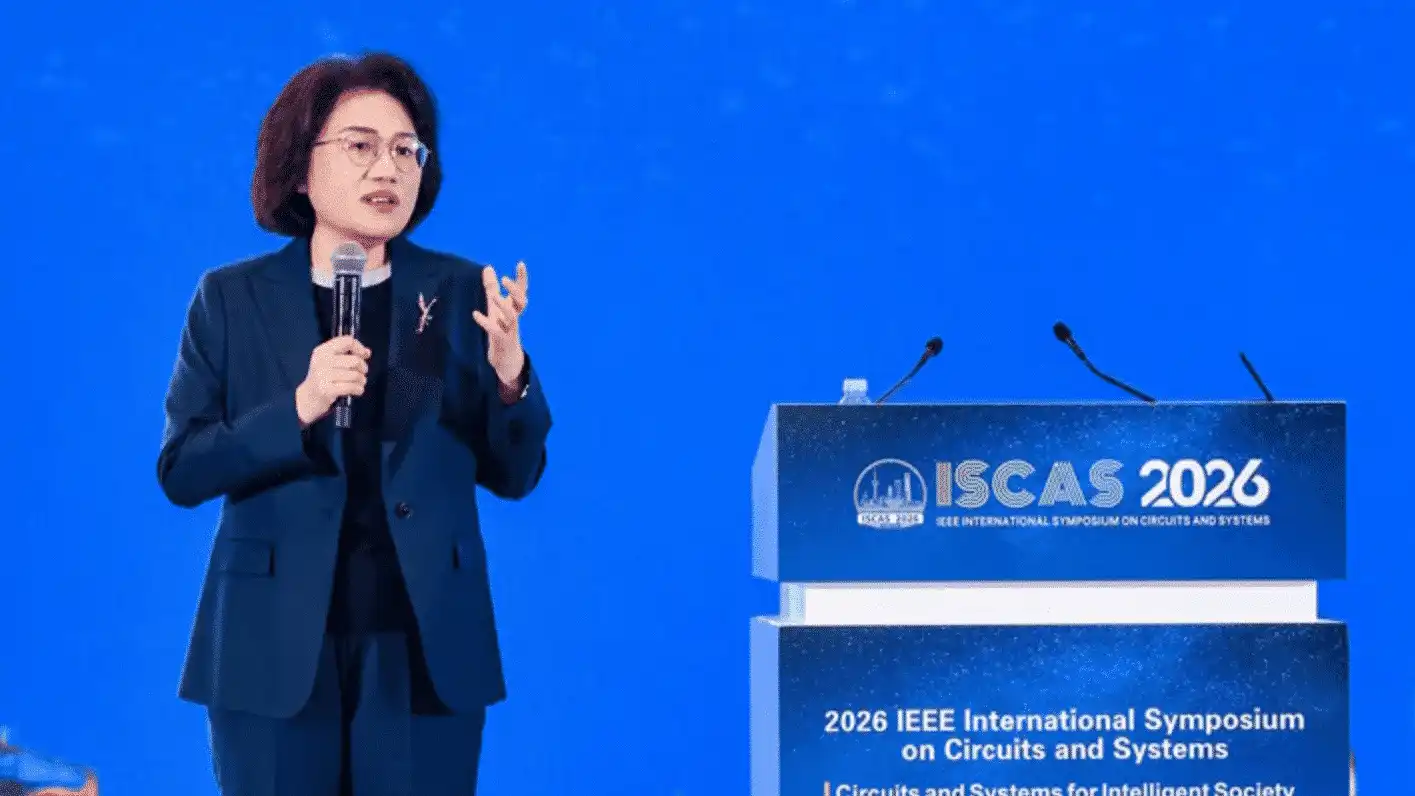
Huawei's "Tau Law": Core Companies Overview On May 25, 2026, Huawei's Director and President of the Semiconductor Business Division, He Tingbo, formally introduced the "Tau (τ) Law" at ISCAS 2026, marking a significant principle guiding industry development in the global semiconductor field from China. The Tau Law shifts focus from traditional Moore's Law, which pursues geometric transistor scaling, to "time scaling"—continuously compressing signal propagation delay (time constant τ) without solely relying on extreme feature size reduction. The core implementation path is "logic folding." This technique transforms circuit layouts from two-dimensional planes to multi-layer 3D stacks, using short vertical interconnects to replace long horizontal wiring, thereby drastically reducing τ. Huawei has already designed and mass-produced 381 chips following this principle over the past six years, with plans to launch a Kirin chip utilizing logic folding in Fall 2026. By 2031, high-end chips based on the Tau Law are expected to achieve performance levels equivalent to a 1.4nm process node. This development impacts several key industry segments, with related Chinese companies poised to benefit: 1. **EDA Design Software**: Essential for circuit-level optimization. Key players include: * **Empyrean Technology** (Huada Jiutian): China's largest full-flow EDA provider. * **Primarius Technologies** (Gailun Dianzi): Specializes in device modeling and verification. * **Semitronix** (Guangliwei): Focuses on yield enhancement and test chip EDA. 2. **Chiplet & Advanced Packaging**: Logic folding's 3D stacking necessitates advanced packaging (e.g., TSV, hybrid bonding). Core participants are: * **Tongfu Microelectronics**: A leader in advanced packaging and a key partner for AMD's Chiplet products. * **JCET Group** (Changdian Keji) & **Tianshui Huatian Technology**: Major OSATs with advanced packaging capabilities. * **VeriSilicon** (Xinyuan Gufen): Provides Chiplet-based design platforms and IP. 3. **Foundry Manufacturing**: Optimization must be implemented in transistor structures and process parameters. Potential foundries for Huawei's future chips include: * **SMIC**: China's leading foundry with advanced FinFET capabilities, the most likely candidate for next-gen Kirin chips. * **Hua Hong Semiconductor** (Huahong Gongsi): A leader in specialty processes (power, embedded memory). * **Nexchip Semiconductor** (Jinghe Jicheng): Major foundry for display driver ICs and MCUs. The Tau Law represents a strategic move towards architectural innovation and design-process co-optimization, driving demand across the domestic semiconductor supply chain.

marsbit56 dk önce

Huawei's "Tao Law": A Comprehensive Overview of Core Companies

marsbit56 dk önce

TechFlow Intelligence Report: Huawei Unveils "Tao" Law, Semiconductor Sector Surges; Meta Cuts 10% of Workforce

"TechFlow Intelligence Brief": Huawei's new "Tau Law" in semiconductors and Meta's 10% layoffs headline today's tech landscape. In AI, breakthroughs include an AI solving 9 high-difficulty pure math problems for just a few hundred dollars each, and DeepSeek's new Reasonix programming agent challenging commercial models. However, research highlights a "constraint decay" issue in LLM-generated backend code. Open-source model Qwen 3.6 27B achieves high speeds on older GPUs, sparking debate on NVIDIA's future dominance. In Crypto/Web3, Ethereum Foundation plans to downsize, possibly reducing ETH selling pressure. Fake news about CZ ignited a meme coin frenzy, showing the market's sensitivity to celebrity narratives. DeFi sees a new trend in HELOC-backed Real World Asset (RWA) pools. The chip sector is stirred by Huawei's proposed "Tau (τ) Law," aiming for 1.4nm-equivalent performance by 2031 through architectural innovation, causing related stocks to surge. A report notes memory now constitutes nearly two-thirds of AI chip cost. Meanwhile, executives at 7 Chinese semiconductor firms sold shares after price peaks. Meta announces 10% layoffs as it pivots to AI. Google's CEO faced student protests over AI ethics during a speech, and the company controversially published a Chromium exploit before patching was complete. Xiaomi permanently banned installers for AC installation fraud. In US stocks, AMD is seen as a potential challenger to NVIDIA, while a survey reveals 99% of CEOs expect AI-driven layoffs within two years. Palantir secured a government contract for employee monitoring, raising privacy concerns. Macro developments include a 6% drop in WTI crude oil on hopes for reopened Hormuz Strait, and silver prices rising over 4%. Global oil inventories are nearing critical lows. New trends highlight a "audio prompt injection" attack targeting AI voice assistants via hidden commands, and CBS pausing takedowns of pirated Stephen Colbert episodes after public pushback. The underlying narrative connects AI's cost-effective problem-solving, widespread planned job displacement, and Huawei's challenge to Western tech hegemony, framing the AI and chip race as a broader contest over employment, geopolitics, and the very definition of intelligence.

marsbit1 saat önce

TechFlow Intelligence Report: Huawei Unveils "Tao" Law, Semiconductor Sector Surges; Meta Cuts 10% of Workforce

marsbit1 saat önce

NeoCloud Three Giants: NBIS, IREN, CRWV – Which One Has More Investment Value?

This conversation analyzes the three leading "Neocloud" companies—NBIS (Nebius), IREN, and CRWV (CoreWeave)—in the context of the AI compute boom. The core thesis is that a severe GPU shortage will persist for 3-5 years, creating a massive, durable opportunity for specialized GPU cloud providers to supplement hyperscalers like AWS and Azure. Key differentiators are highlighted: CoreWeave is the early leader with the highest activated power and revenue, focusing on high-value AI training. IREN possesses the largest locked-in power capacity (4.5 GW) but has only secured Microsoft as a major customer so far. Nebius is positioned as the long-term pick due to its unique focus on building an inference-focused software stack ("token factory") and its exceptional engineering-centric team, led by a mathematician CEO with a proven track record. The discussion debunks bearish narratives, noting that Nebius recently raised prices for H100/B200 GPUs by 30-70%, indicating strong pricing power and contradicting fears of rapid GPU depreciation. A simple revenue model is presented: 1 MW of power equates to ~$10M in annual revenue. Nebius's guidance of 5 GW by 2030 implies $50B in revenue, vastly exceeding current consensus. All three companies are expected to succeed in the near-to-medium term due to overwhelming demand. However, for long-term (5+ year) investment, the preference is for Nebius due to its team, software strategy, and valuable stakes in subsidiaries like ClickHouse. The conversation also identifies the networking layer (e.g., Arista Networks) as a critical, underappreciated adjacent opportunity in the AI infrastructure build-out.

marsbit2 saat önce

NeoCloud Three Giants: NBIS, IREN, CRWV – Which One Has More Investment Value?

marsbit2 saat önce

İşlemler

Spot
Futures
活动图片