Is Satoshi in Legal Trouble? $83.7 Billion Worth of BTC Might Be 'Legally Claimed'

Odaily星球日报2026-06-01 tarihinde yayınlandı2026-06-01 tarihinde güncellendi

Özet

An anonymous plaintiff, “Noah Doe,” and two shell companies have filed a lawsuit in New York Supreme Court, seeking a declaratory judgment granting them ownership of 39,069 dormant Bitcoin addresses containing approximately 3.8 million BTC (worth ~$293.5 billion). Their claim is based on New York’s lost property law, arguing these addresses are abandoned assets. The plaintiff “found” the addresses, stored them on a USB drive, and delivered it to a police station, followed by chain notifications (OP_RETURN) and a press release. Notably, the list includes addresses linked to Bitcoin creator Satoshi Nakamoto (holding ~1.1 million BTC), a Mt. Gox hacker address, a provably unspendable burn address, and other long-inactive wallets. The plaintiff’s “independent expert” controversially values each address at under $10 to invoke a fast-track legal process. Critical issues question the lawsuit's validity: the lost property law is designed for physical items, not publicly viewable blockchain addresses; the valuation is implausible; and the plaintiff’s anonymity is contested. Even if successful, the plaintiff would only receive a paper judgment, not the private keys. However, such a ruling could create a “title defect,” allowing them to challenge future transactions of these coins on regulated platforms, potentially freezing assets and forcing anonymous holders to reveal themselves in legal disputes. The court is unlikely to grant a broad default judgment given the novel and high-stak...

Originally fromGalaxy

Compiled / Odaily Planet Daily Golem(@web 3_golem)
Who would have thought that Bitcoin creator Satoshi Nakamoto would one day face a lawsuit, with the 'ownership' of wallet addresses potentially being taken away. And you, reading this article right now, might also be one of the 'defendants,' as long as you have dormant Bitcoin addresses.

In March of this year, the New York State Supreme Court accepted a lawsuit: the plaintiff is attempting to confirm their ownership of over 3.7 million Bitcoins (approximately $274 billion) associated with 39,069 Bitcoin addresses. The plaintiff goes by the pseudonym Noah Doe and two unnamed Wyoming limited liability companies (pseudonyms 'ABC Company' and 'XYZ Company').

The plaintiff is requesting the New York State Supreme Court to confirm their ownership of these dormant assets through a declaratory judgment action based on New York State's lost and found laws. More importantly, among these 39,069 addresses are addresses suspected to belong to Bitcoin creator Satoshi Nakamoto (a total of 21,744 addresses, holding approximately 1.09 million Bitcoins, valued at about $83.7 billion at current prices).

Simply put, an anonymous individual and their company registered in Wyoming are trying to get a New York court to rule that Satoshi Nakamoto's Bitcoins (and many other cryptocurrencies) are lost property, and they should legally own them for 'finding' these Bitcoins. Galaxy analyzed the plaintiff's potential motives and identity, the impact on Bitcoin, and the plaintiff's likelihood of success.

Odaily Planet Daily has condensed and compiled the full text as follows, enjoy~

Case Overview and Analysis of Plaintiff's Strategy

The plaintiff has filed an application with the New York State Supreme Court, asking the court to declare that they own 39,069 dormant Bitcoin addresses and all assets within them. The legal basis is the declaratory judgment for confirming ownership under Article 3001 of the New York Civil Practice Law and Rules (CPLR), which is fundamentally based on New York State's lost and found law, specifically Article 7-B of the Personal Property Law. This provision states that a finder of lost property who turns it over to the police and does not face a denial from the owner within a specified waiting period may ultimately acquire ownership of the lost item. The plaintiff is attempting to apply this old framework to Bitcoin.

The specific strategy is: Noah Doe, as the finder, delivered a USB drive containing the addresses (not the private keys or proof of holding the addresses, just the public addresses) to the New York City Police Department's 17th Precinct, substituting this for turning over the lost property to the police; then issued notifications via OP_RETURN on the Bitcoin blockchain and published press releases, substituting this for contacting the owner; finally, had an expert appraise each address's value at under $10, allowing the entire case to enter the fastest process stipulated by that provision.

It is necessary to clarify that even if the plaintiff wins completely, they will only receive a piece of paper—a court declaration—nothing more. They will not receive any private keys, nor can they transfer any Bitcoin.

The real value of a New York judgment lies elsewhere. It would serve as a 'title defect': if any of these Bitcoins appear in any regulated venue in the future, the plaintiff could present this document to contest exchanges or custodians. This is the potential risk this case poses to Bitcoin holders and why this seemingly absurd lawsuit still warrants careful scrutiny.

Case Timeline

The following timeline consists of two parts: one is the plaintiff's factual narrative of discovering the addresses, and the other is the procedural history of the case in court.

  • October 2024: Noah Doe claims he discovered 'security issues' with certain addresses and developed an 'algorithm' to tag abandoned addresses. (In reality, these addresses do not have 'security issues');
  • December 26, 2024: Noah Doe first 'found' approximately 1,625 addresses. A USB drive containing the addresses was delivered to NYPD's 17th Precinct on January 1, 2025;
  • February 2025: Noah Doe hired Solomon Brothers Strategic Advisors as a consultant;
  • March 31 and April 14, 2025: Noah Doe again 'found' 546 addresses and 39,911 addresses respectively, delivering USB drives with addresses to the police precinct each time;
  • June 30 to July 10, 2025: Noah Doe sent 'abandonment notices' to each address via OP_RETURN;
  • August 7, 2025: Issued a press release to global media. CoinDesk, Bitcoinist, Yahoo Finance, Investing.com, and Galaxy Digital's research report all covered it;
  • August 2025 to February 2026: Solomon Brothers received threatening emails, including over 50 emails containing only '4 8 15 16 23 42', demanding $1.5 million and 50 Bitcoins;
  • October 10, 2025: The 90-day period for owner claims ended;
  • December 2025: Noah Doe transferred these addresses to ABC Company and placed 98% of its interests into an irrevocable trust; ABC Company transferred 17.7% of its interests to XYZ Company;
  • March 11, 2026: Original summons and complaint filed. Judge Arlene P. Bruce annotated the original order to show cause;
  • March 23, 2026: Judge Emily Morales-Minerva recused herself from the case;
  • March 25 to April 17, 2026: Judge Carlos J. Voltron signed the order to show cause (allowing use of pseudonyms) and an order authorizing alternative service via OP_RETURN (without notice to the opposing party);
  • May 1, 2026: First amended complaint expanded the defendant scope to 1 to 39,069 individuals and attached a full list of addresses;
  • May 21-22, 2026: On-chain service execution: 98 batch transactions in Bitcoin blocks 950,446 to 950,576;
  • May 22, 2026: Carlos J. Voltron filed the affidavit of service, including verification reports for each batch and 39,069 lines of verification details (Documents 27-29).

Legal Basis and Strategy Proposed by Plaintiff

Article 7-B of the New York Personal Property Law (Sections 251-258) establishes a brief lost and found regime. It provides two distinct pathways for a finder to acquire ownership, both of which the plaintiff in this case invokes.

  • Pathway A: Custody (Sections 252, 253/254, 257(1)). Section 252 requires a person who finds lost property worth $20 or more to return it to the owner or deliver it to police custody within 10 days; Sections 253(7) and 254 stipulate different police custody periods based on property value: under $100 for 3 months, $100-$500 for 6 months, $500-$5,000 for 1 year, and $5,000 or more for 3 years.
  • Pathway B: The Under-$10 Shortcut (Section 257(2)). For lost property valued under $10, if the finder 'has made reasonable efforts to find the owner and return it, but has been unsuccessful,' ownership vests in the finder one year after finding, without requiring police delivery.

The complaint's (unnamed) 'independent expert' appraised the 'as-is' value of each address at under $10, citing low likelihood of recovery. This valuation determines the entire procedural progression of the case, as it places every address under the uniform one-year vesting period of Section 257(2). It also makes Pathway A's process shorter, as property valued under $100 requires only a three-month police hold per Section 254.

Plaintiff's Arguments

The complaint lists several arguments by the plaintiff, each must hold for the next to follow, forming a chain of logic.

  • These addresses are lost property. Addresses are treated as property, akin to bank accounts. Under this view, losing a private key does not destroy the property; thus, its contents are merely 'lost' and can be reclaimed by a finder.
  • Noah Doe is the finder, and NYPD's custody complies with the relevant statute. Section 252 of Article 7-B requires the finder to deliver the property to the police. The plaintiff argues that the USB drive containing address information delivered to the 17th Precinct satisfies this.
  • Ownership has vested in the finder. For property valued under $10, Section 257(2) states ownership vests in the finder one year after finding if the finder has made reasonable efforts to locate the owner but failed. OP_RETURN notifications, press releases, and the 90-day claim period are considered reasonable efforts.
  • These addresses have been abandoned. Noah Doe's 'algorithm' flags addresses that are in self-custody, unused for at least five years, and inactive during significant price increases. About 424 owners who reacted by moving tokens were removed from the list; the remaining 39,069 non-responsive owners became defendants.
  • Service via OP_RETURN notification is lawful. Since the owners are allegedly unknown and cannot be located, the court authorized alternative service under CPLR 308(5) by sending an on-chain notice pointing to the complaint to each address.
  • The plaintiff can proceed anonymously. Given the known kidnapping risks for large Bitcoin holders, the plaintiff was permitted to use pseudonyms in the lawsuit.

Who Are the Owners?

Galaxy analyzed the addresses claimed to be 'found' by plaintiff Noah Doe using their Bitcoin full node and internal research database.

As of May 25, 2026, the 39,069 'Noah Doe addresses' hold 3,799,629 Bitcoins, valued at approximately $293.5 billion at $77,245 per Bitcoin. This value is not evenly distributed but concentrated in several distinct clusters, each telling a different story.
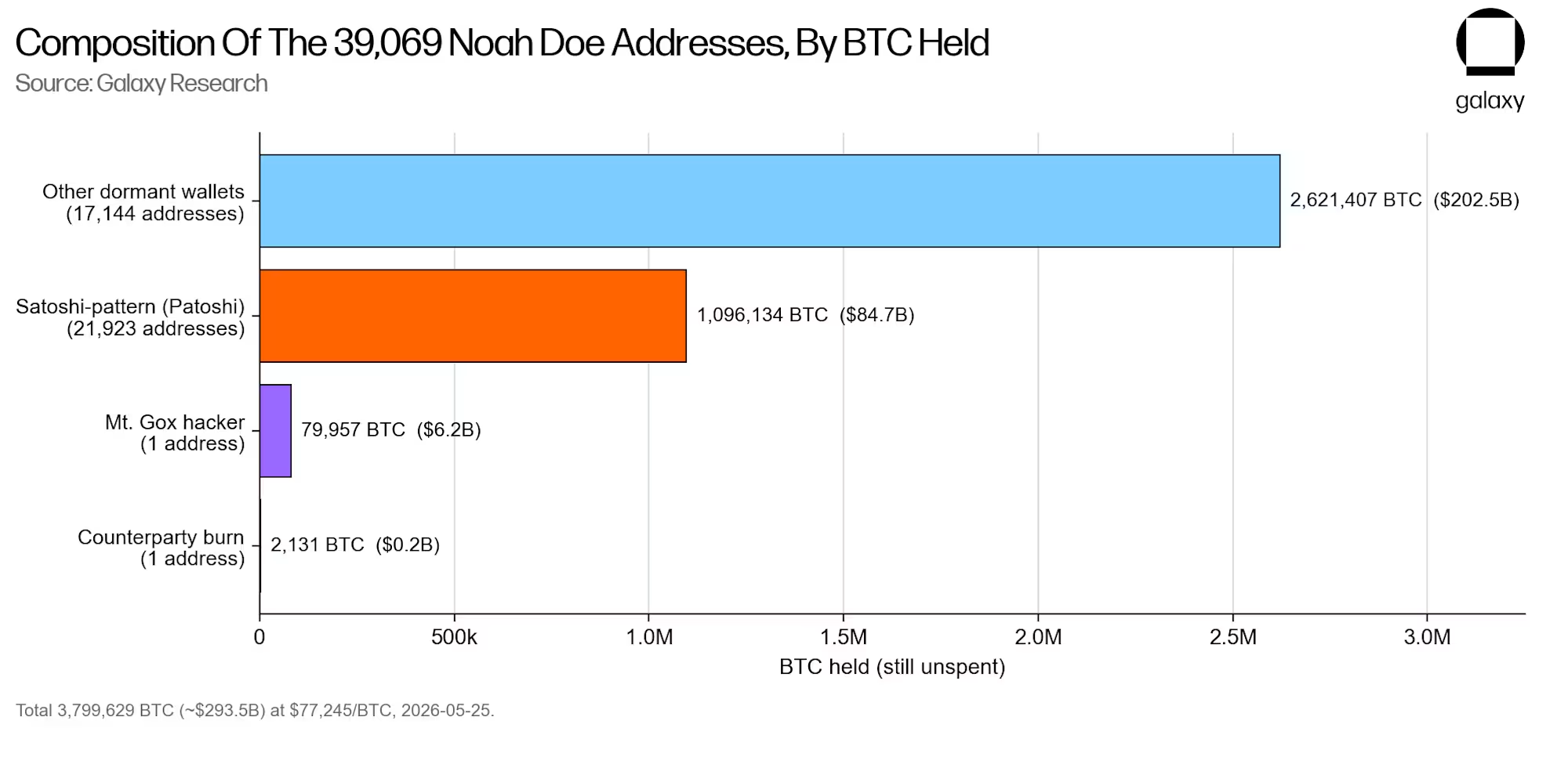
Composition of Addresses 'Found' by Noah Doe

Satoshi (Patoshi) Addresses

Comprising 21,923 addresses, approximately 1,096,134 Bitcoins (about $84.7 billion). These are early-mined Bitcoins linked to Bitcoin's creator through the 'Patoshi' nonce pattern. They have never moved.

Mt. Gox Hacker Address

Only 1 address, approximately 79,957 Bitcoins (about $6.2 billion). This is John Doe #1. These Bitcoins were stolen from the early Bitcoin exchange Mt. Gox and have been untouched since 2011. They are disputed property that investigators have tracked for years.

Counterparty Burn Address

Only 1 address, approximately 2,131 Bitcoins (about $160 million). This is John Doe #104, a provably unspendable 'burn' address. No one has ever held its key because, by design, such a key does not exist.

Other Dormant Addresses

7,144 addresses, approximately 2,621,407 Bitcoins (about $202.5 billion). These addresses contain a large number of early holders and exchange-era Bitcoins that have not moved for many years.

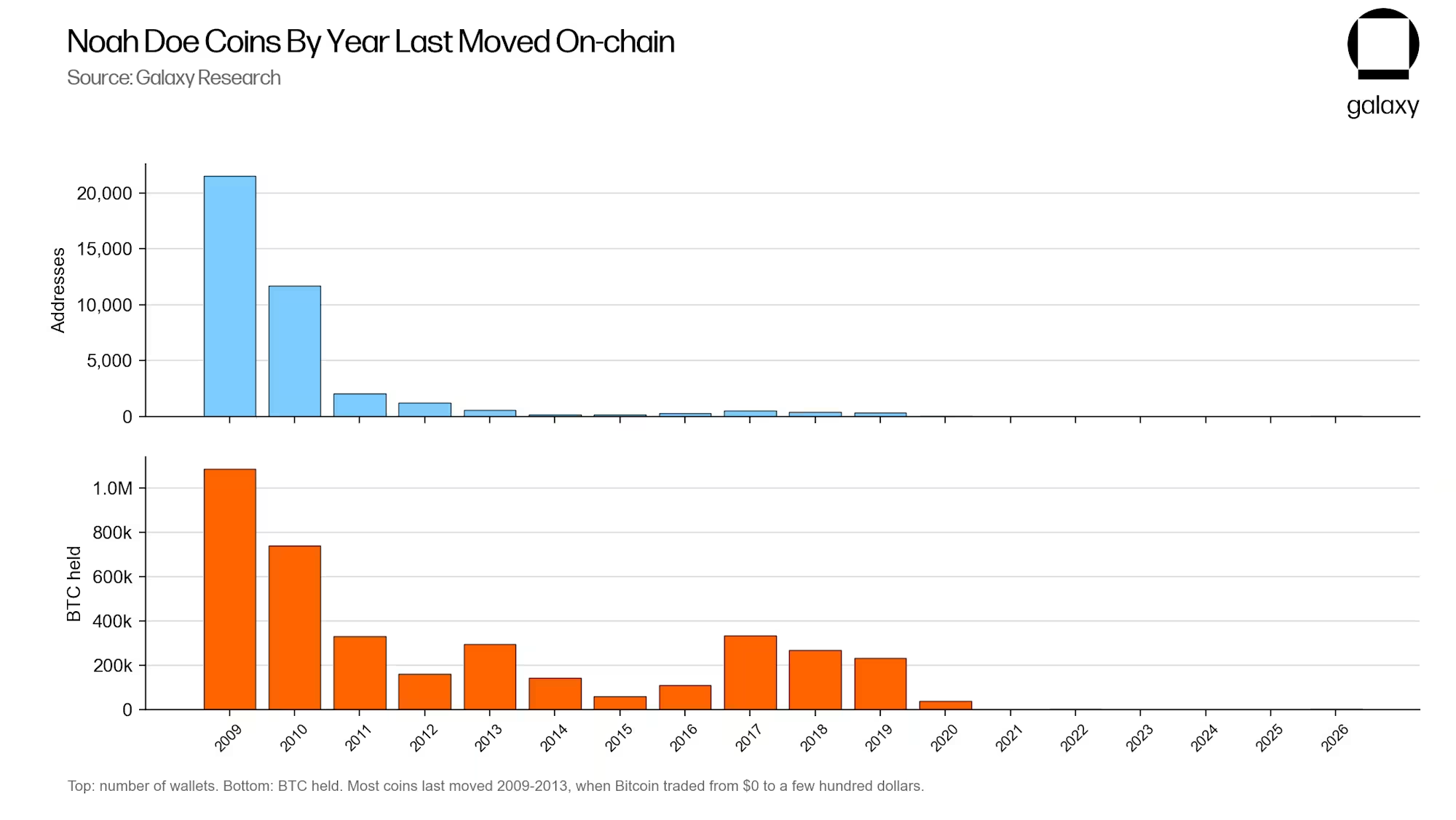
This dormancy is long-standing. If we sort each address by the year its Bitcoins last moved on-chain, we find most of the Bitcoins last moved in Bitcoin's early years. The vast majority of these Bitcoins last transacted between 2009 and 2013, during which Bitcoin's price soared from nearly zero to several hundred dollars.
But many of these addresses have been claimed before. In Kleiman v. Wright (Southern District of Florida, 2018), Australian businessman Craig Wright submitted a list of 16,404 early-block addresses he claimed belonged to him as part of his later-dismissed claim to be Satoshi Nakamoto.

We compared the Bitcoin addresses Wright claimed to own in the Kleiman litigation with Noah Doe's addresses to see their overlap.
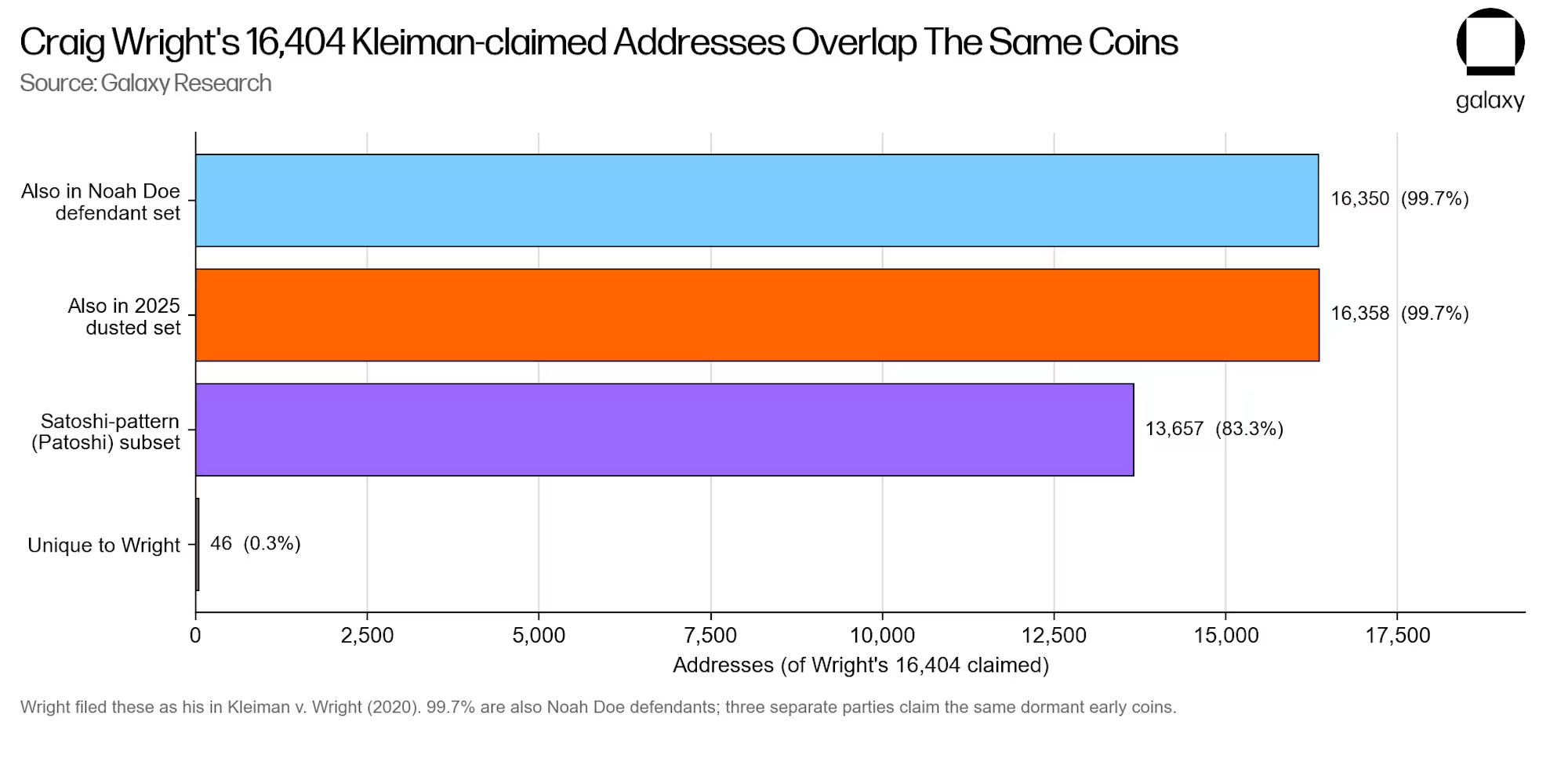
Address Overlap Between Noah Doe and Craig Wright

The overlap is almost identical. Of the 16,404 addresses Wright claimed, 16,350 (99.7%) are also claimed by Noah Doe's defendants, holding approximately 817,513 Bitcoins. We cannot determine if Craig Wright has any connection to the Noah Doe case, but the overlap is notable. Craig Wright has attempted for years to claim these Bitcoins through litigation but was found in contempt of court by a UK court in 2024.

Questionable Aspects of the Case

While we are not lawyers, just looking at the court record and relevant statutes, this case is full of doubts.

Does the Lost and Found Law Apply?

Before any valuation or service issues, there's a more fundamental question: the lost and found law was designed for physical objects that a finder picks up, holds, and delivers to the police. Noah Doe never held these coins or keys. He merely looked at public addresses on a ledger that anyone can read. Viewing a public address is far from holding lost property. Delivering a USB drive with listed addresses to the police is also different from actually delivering the lost item.

The statute envisions a finder who can return the item if the owner comes forward. But in this case, the finder never held the coins and could not possibly deliver them to anyone—neither to the police who allegedly have custody, nor to a claiming owner. The core issue goes beyond ownership; losing a private key does not deprive the true owner of any rights. The Bitcoin remains on-chain; the true key holder can move it at any time, which is exactly what hundreds of owners who lost their Bitcoin have done.

It seems clear that ownership cannot effectively transfer to a finder who can never touch the asset.

Valuation Is Not Credible

The average holding of a Noah Doe address is 97.25 Bitcoins, worth about $7.5 million; the median is 50.00 Bitcoins, worth about $3.86 million. Compared to these figures, the claim that each address is worth less than $10 is untenable. This appears to be a tactic to push these assets through the legal process at the fastest speed.

Two other details further undermine this valuation. The expert proposing the 'under $10' figure is not named in the filings, so this single number dictating the entire timeline cannot be examined or challenged. If the 'as-is recoverable' logic is applied universally, then almost all self-custodied Bitcoin would be valued near zero, which is diametrically opposed to how any user, especially one going through the trouble of filing this lawsuit, treats their Bitcoin.

Anonymity of the Parties

Noah Doe's use of anonymity in this case is also highly questionable. He seeks anonymity to avoid being targeted as a large holder, yet the rights he seeks would force the actual address holders to reveal their identities to defend their cryptocurrency. The protection the plaintiff wants for himself is precisely what he seeks to strip from all defendants.

Even if an individual could present a genuine personal safety theory, that theory exists to protect natural persons. ABC Company and XYZ Company are shell LLCs. A corporation has no physical entity to be threatened and no privacy to expose, so the logic of fearing extortion does not apply. Allowing two companies to claim trillions in property under shell names is astounding.

Moreover, New York State does not favor anonymous entities. New York courts rarely allow pseudonyms. While New York historically permitted anonymous LLC ownership, the state's LLC Transparency Act now mandates disclosure of beneficial ownership, though federal law has narrowed its scope to foreign-formed LLCs.

Potential Development of Subsequent Litigation

Even setting aside these details, the 'audacity' of this lawsuit becomes apparent. It is unthinkable that a New York court would award legal ownership of approximately $293 billion worth of Bitcoin (including some belonging to Satoshi Nakamoto) to anonymous individuals based on a dubious 'lost and found' theory with an under-$10 valuation. Courts are typically reluctant to entertain such novel and far-reaching cases, especially when property is disputed and judgments could have broad implications.

Since this is a declaratory action about property ownership, under CPLR 1012(a)(3), the true owners of the addresses have the right to intervene directly in the lawsuit; non-owners with a related interest may apply for permission to intervene under CPLR 1013. However, while the principle allows intervention, there is a massive practical obstacle. To intervene, an owner must come forward and prove control over the registered address, which is precisely the de-anonymization that cautious Bitcoin whales have spent a lifetime trying to avoid.

The defendant addresses are all pseudonymous and deliberately not publicly listed. Therefore, by the end of June 2026, about 30 days after service, a technical default judgment is almost certain to occur. A motion for default judgment will likely be filed in the summer. However, for many reasons, the court is unlikely to swiftly grant a default judgment fully satisfying all plaintiff's demands.

First, a declaration of ownership is not a default service provided by the clerk for a fixed sum; it requires an application to the court, and the court retains discretion to require a hearing and demand actual evidence. Second, the theory is novel and the stakes are enormous—factors that often trigger judicial skepticism, not 'rubber-stamp' approval. Furthermore, the validity of OP_RETURN service itself is debatable, and a questionable affidavit of service gives the court reason to proceed cautiously. Finally, any actual holder who intervenes could turn a previously uncontested case into a real contest.

Galaxy estimates the likelihood of the court granting a full ownership declaration in a default judgment is low, and even if it does rule, it's more likely to be after a hearing and in a narrowed scope.

What if the Plaintiff Wins?

Even if the plaintiff wins completely, they still cannot seize any Bitcoin. All they would hold is a New York State declaration, not a set of private keys. The principle 'Not your keys, not your coins' applies to them as well.

Therefore, the danger is not that the plaintiff could seize Satoshi's Bitcoin or any other Bitcoin mentioned in the Noah Doe defendant addresses. The danger is that if any of these Bitcoins are transferred to a centralized exchange or custodian, the plaintiff could present their New York judgment to that institution and attempt to place a lien on those Bitcoins. Such action could freeze assets, spark years of litigation, and force the holder who moved the Bitcoin decades later to come forward to prove ownership, thereby compromising their own anonymity.

The paper ownership certificate is leverage against regulated intermediaries and those who rely on them. This almost certainly explains why, even though a judgment may never directly affect the Bitcoin itself, it is still worth pursuing for those behind this case.


İlgili Sorular

QWhat is the core legal strategy used by 'Noah Doe' to claim ownership of the dormant Bitcoin addresses?

AThe core legal strategy is to apply New York State's lost property law, specifically Article 7-B of the Personal Property Law, to Bitcoin addresses. The plaintiff argues that these dormant addresses constitute 'lost property.' They physically delivered a USB drive listing the addresses to a police precinct, sent notifications via Bitcoin's OP_RETURN function, and published news releases as 'reasonable efforts' to find the owners. Crucially, they had an unnamed 'independent expert' value each address's 'as-is' worth at less than $10, which allows the fastest procedural pathway under the law for claiming ownership after a one-year period without the owner coming forward.

QAccording to the article, what is the potential risk to Bitcoin holders if the plaintiffs win the lawsuit?

AThe primary risk is not the direct seizure of the Bitcoins, as the plaintiffs would not gain the private keys. The risk is that the New York court judgment would act as a 'title defect' or a cloud on the title. If any of the Bitcoin from these addresses is later transferred to a regulated institution like a centralized exchange or custodial service, the plaintiffs could present the judgment to that institution and attempt to place a lien or freeze on those assets. This could force the actual owner to engage in lengthy litigation and potentially reveal their identity to defend their ownership, compromising their anonymity.

QWhat significant overlap does the article highlight between the addresses claimed by 'Noah Doe' and another controversial figure in the crypto space?

AThe article highlights a near-total overlap between the addresses claimed by 'Noah Doe' and those previously claimed by Craig Wright in the *Kleiman v. Wright* case. Craig Wright submitted a list of 16,404 early Bitcoin addresses, claiming they belonged to him as part of his (since discredited) claim to be Satoshi Nakamoto. Of those 16,404 addresses, 16,350 (99.7%) also appear on 'Noah Doe's' list of claimed addresses. These overlapping addresses hold approximately 817,513 Bitcoin.

QWhat are the main arguments presented in the article against the validity of the plaintiffs' case?

AThe article raises several key arguments against the case's validity: 1) **Misapplication of Law:** Lost property laws are designed for physical items one can pick up and hand over. The plaintiffs never possessed the Bitcoins or private keys; they only looked at publicly available address lists. 2) **Incredible Valuation:** Claiming each multi-million dollar address is worth 'less than $10' is a transparent procedural maneuver to speed up the legal process and is not credible. 3) **Hypocritical Anonymity:** The plaintiffs argue for anonymity for their own safety but seek a judgment that would force the actual address owners to potentially reveal their identities to defend their assets. 4) **Corporate Shells:** The involvement of anonymous LLCs (ABC and XYZ companies) further complicates the legitimacy, as corporations cannot claim the same personal safety risks as individuals.

QWhat does the article suggest is the most likely outcome of the lawsuit, and why?

AThe article, citing Galaxy's analysis, suggests it is unlikely the court will grant a full default judgment declaring complete ownership to the plaintiffs. The novelty of the legal theory, the astronomical sums involved, the questionable valuation and service of process (OP_RETURN notifications), and the court's likely caution all make a quick, rubber-stamp approval improbable. Instead, the court might require a hearing or issue a narrower ruling if it grants any judgment at all. Furthermore, any actual owner of the addresses who comes forward to intervene in the case could turn it into a contested proceeding, further reducing the chance of an easy win for the plaintiffs.

İlgili Okumalar

Five Cryptos That Could Outperform Bitcoin Over the Next Cycle Due To Higher Growth Velocity

Bitcoin's growth often sets market trends, but analysts believe the next cycle's highest percentage gains may come from assets with greater growth velocity. While Bitcoin provides stability, several cryptocurrencies are positioned for stronger relative upside. This article highlights five such assets, with a particular focus on Ozak AI as the potential high-growth standout of the cycle. Ethereum (ETH) is noted for its ongoing evolution and institutional adoption. Solana (SOL) is recognized for its high throughput and history of sharp rallies. Chainlink (LINK) is highlighted as essential infrastructure for DeFi and AI applications. Avalanche (AVAX) is mentioned for its subnet architecture and enterprise potential. Ozak AI ($OZ) is presented as a distinct early-stage opportunity, currently in presale at $0.014 with a target listing price of $1.00. The project is building a full AI-native blockchain ecosystem, including prediction agents, a data stream network, and structured data vaults. Analysts suggest its early valuation stage and focus on AI infrastructure could allow for exponential growth velocity compared to more mature assets like Bitcoin, which requires massive capital inflows for significant price movement. The final takeaway positions Ozak AI as a high-asymmetry bet for investors seeking exponential upside alongside more stable assets.

TheNewsCrypto39 dk önce

Five Cryptos That Could Outperform Bitcoin Over the Next Cycle Due To Higher Growth Velocity

TheNewsCrypto39 dk önce

What's New in Jensen Huang's 'Agent Factory'?

In a keynote at COMPUTEX 2026, NVIDIA CEO Jensen Huang shifted the company's focus from hardware "full-stack" solutions to the era of AI Agents. The centerpiece is the Vera Rubin platform, now in production, which is designed specifically for Agent workloads and offers 10x the efficiency of its predecessor. The platform features the new Vera CPU, built for AI, and incorporates Spectrum-X Ethernet Photonics with CPO technology for improved networking and energy efficiency. NVIDIA introduced DSX, an integrated toolkit for designing, simulating, and operating AI data centers, aiming to streamline "AI factory" deployment and management. For end-user deployment, the company unveiled DGX Station for Windows, a desktop AI supercomputer for running Agents locally, and the RTX Spark SoC for AI PCs. On the software front, NVIDIA launched the 550B-parameter Nemotron 3 Ultra model for enterprise Agents and the Cosmos 3 foundation model for physical AI, unifying visual reasoning and action prediction. In robotics, a partnership with Unitree yielded the H2 Plus, a reference humanoid robot built on the Isaac GR00T platform to lower development barriers. Security was emphasized with enhanced confidential computing for Vera Rubin and new data path security features for the BlueField-4 STX storage platform. The presentation highlighted a strategic pivot: NVIDIA is reorganizing its entire technology stack—from chips and data centers to models, software, and robots—around the emerging ecosystem of autonomous, practical AI Agents.

marsbit1 saat önce

What's New in Jensen Huang's 'Agent Factory'?

marsbit1 saat önce

İşlemler

Spot
Futures

Popüler Makaleler

BITCOIN Nedir

HarryPotterObamaSonic10Inu (ERC-20)'yu ve Kripto Alanındaki Yerini Anlamak Son yıllarda, kripto para piyasası, hem ticaret yapanların hem de topluluk etkileşimi ve eğlence değeri arayanların ilgisini çeken meme coin'lerin popülaritesinde bir artış gördü. Bu benzersiz token'lar arasında, kripto para dokusuna kültürel referansları harmanlayan ilginç bir proje olan HarryPotterObamaSonic10Inu (ERC-20) bulunmaktadır. Bu makale, HarryPotterObamaSonic10Inu'nun temel yönlerini, mekanizmalarını, topluluk odaklı ethosunu ve daha geniş kripto manzarasıyla etkileşimini incelemektedir. HarryPotterObamaSonic10Inu (ERC-20) Nedir? Adından da anlaşılacağı gibi, HarryPotterObamaSonic10Inu, Ethereum blok zinciri üzerinde inşa edilen bir meme coin'dir ve ERC-20 standardı altında sınıflandırılmaktadır. Geleneksel kripto paraların pratik kullanılabilirlik veya yatırım potansiyeline odaklandığı durumların aksine, bu token eğlence değeri ve topluluğunun gücü üzerine kuruludur. Proje, bağlı kullanıcıların bir araya gelebileceği, fikirlerini paylaşabileceği ve çeşitli kültürel fenomenlerden ilham alan etkinliklere katılabileceği bir ortam yaratmayı hedeflemektedir. HarryPotterObamaSonic10Inu'nun dikkate değer özelliklerinden biri işlemlerde sıfır vergi olmasıdır. Bu çekici unsur, küçük ölçekli yatırımcıları caydırabilecek ek ücretlerden yoksun olarak ticareti ve topluluk katılımını teşvik etmeyi amaçlamaktadır. Coin'in toplam arzı bir milyar token olarak belirlenmiştir; bu, topluluk içinde önemli bir dolaşım sağlama niyetini göstermektedir. HarryPotterObamaSonic10Inu (ERC-20) Yaratıcısı HarryPotterObamaSonic10Inu'nun kökenleri bir miktar gizemlidir; yaratıcısı hakkında spesifik bilgilerin ne olduğu bilinmemektedir. Bu token'ın geliştirilmesi, belirli bir ekip veya açık bir plan eksikliği ile gerçekleşmiştir; bu durum, meme coin sektöründe oldukça yaygındır. Proje, topluluğunun heyecanı ve katılımına dayalı olarak organik bir şekilde ortaya çıkmıştır. HarryPotterObamaSonic10Inu (ERC-20) Yatırımcıları Dış yatırımlar ve destekler söz konusu olduğunda, HarryPotterObamaSonic10Inu da belirsiz kalmaktadır. Token, bilinen herhangi bir yatırım fonunu veya önemli bir kurumsal desteği listelememektedir. Bunun yerine, projenin can damarı, kolektif eylem ve kripto alanındaki katılım yoluyla büyüme ve sürdürülebilirlik sağlayan temel topluluğudur. HarryPotterObamaSonic10Inu (ERC-20) Nasıl Çalışır? Bir meme coin olarak, HarryPotterObamaSonic10Inu, genellikle varlık değerini yöneten geleneksel çerçevelerin dışında çalışmaktadır. Projenin nasıl çalıştığını tanımlayan birkaç özelliği vardır: Sıfır Vergi İşlemleri: İşlemlerde vergi ücreti olmadan, kullanıcılar gizli maliyet endişesi olmadan token'ı serbestçe alıp satabilirler. Topluluk Etkileşimi: Proje, topluluk etkileşimi üzerine kuruludur ve sosyal medya platformlarını kullanarak heyecan yaratarak katılımı kolaylaştırır. Tartışmalar, içerik paylaşımı ve katılım, projenin erişimini genişletmeye ve destekleyiciler arasında sadakat oluşturmaya yardımcı olan kritik unsurlardır. Pratik Kullanılabilirlik Yok: HarryPotterObamaSonic10Inu'nun mali ekosistem içinde somut bir kullanılabilirlik sunmadığı belirtilmelidir. Daha ziyade, eğlence ve topluluk etkinlikleri için bir token olarak sınıflandırılmaktadır. Kültürel Referans: Token, popüler kültürden unsurları zekice harmanlayarak ilgi çekmektedir ve hem meme meraklıları hem de kripto takipçileriyle bağlantı kurmaktadır. HarryPotterObamaSonic10Inu, meme coin'lerin, daha geleneksel kripto para projelerinden nasıl farklı çalıştığını örneklendirmektedir; bu projeler, utilitarist varlıklar yerine yenilikçi sosyal yapıların bir parçası olarak piyasaya girmektedir. HarryPotterObamaSonic10Inu (ERC-20) Zaman Çizelgesi HarryPotterObamaSonic10Inu'nun tarihi, birkaç dikkate değer kilometre taşı ile işaretlenmiştir: Oluşum: Token, birçok kripto meraklısının hayal gücünü yakalayan bir viral meme'den ortaya çıkmıştır. Spesifik yaratım tarihleri mevcut değildir ve bu onun organik yükselişini vurgulamaktadır. Borsa Listelemeleri: HarryPotterObamaSonic10Inu, topluluğun daha kolay erişim ve ticaret yapabilmesini sağlamak için çeşitli borsalarda yer bulmuştur. Topluluk Katılım İnisiyatifleri: Yarışmalar, sosyal medya kampanyaları ve hayranlar ile destekçilerden içerik üretimini içeren topluluk etkileşimini artırmayı amaçlayan devam eden etkinlikler. Gelecek Genişleme Planları: Projenin yol haritası, kültürel temalarına ilişkin bir NFT koleksiyonu, ticari ürünler ve bir e-ticaret sitesi başlatılmasını içermektedir; bu da topluluğun daha fazla katılımını sağlamayı ve ekosistemine daha fazla boyut kazandırmayı hedeflemektedir. HarryPotterObamaSonic10Inu (ERC-20) Hakkında Kilit Noktalar Topluluk Odaklı Doğası: Proje, kullanıcı katılımını geliştirme önceliği taşır ve böylece kullanıcıların sürecin en önünde yer almasını sağlar. Meme Coin Sınıflandırması: Eğlenceye dayalı kripto paranın doruk noktasıdır ve geleneksel yatırım araçlarından ayrılmaktadır. Bitcoin ile Doğrudan İlişki Yok: Ticker ismindeki benzeliğe rağmen, HarryPotterObamaSonic10Inu ayırt edicidir ve Bitcoin veya diğer yerleşik kripto paralarla herhangi bir ilişkisi yoktur. İşbirliğine Odaklanma: HarryPotterObamaSonic10Inu, sahipleri arasında işbirliği ve hikaye paylaşımı için bir alan oluşturmak üzere tasarlanmıştır ve bu da yaratıcılık ve topluluk bağlarını sağlamaktadır. Gelecek Beklentileri: Başlangıçta belirlendiği temalardan NFTs ve ticari ürünlere genişleme arzusu, projenin dijital kültürde daha ana akıma girebilmesi için bir yol haritası çizmektedir. Meme coin'ler, kripto para topluluğunun hayal gücünü çalmaya devam ederken, HarryPotterObamaSonic10Inu (ERC-20), kültürel bağları ve topluluk merkezli yaklaşımıyla öne çıkmaktadır. Geleneksel bir hizmet odaklı token modeliyle uyumlu olmasa da, özünde destekçileri arasında sağlanan neşe ve dostluğu vurgulayarak, giderek dijitalleşen bir çağda kripto paraların evrilen doğasını göstermektedir. Proje gelişmeye devam ettikçe, topluluk dinamiklerinin blockchain teknolojisi dünyasındaki seyrini nasıl etkilediğini izlemek önemli olacaktır.

1.7k Toplam GörüntülenmeYayınlanma 2024.04.01Güncellenme 2024.12.03

BITCOIN Nedir

BTC Nasıl Satın Alınır

HTX.com’a hoş geldiniz! Bitcoin (BTC) satın alma işlemlerini basit ve kullanışlı bir hâle getirdik. Adım adım açıkladığımız rehberimizi takip ederek kripto yolculuğunuza başlayın. 1. Adım: HTX Hesabınızı OluşturunHTX'te ücretsiz bir hesap açmak için e-posta adresinizi veya telefon numaranızı kullanın. Sorunsuzca kaydolun ve tüm özelliklerin kilidini açın. Hesabımı Aç2. Adım: Kripto Satın Al Bölümüne Gidin ve Ödeme Yönteminizi SeçinKredi/Banka Kartı: Visa veya Mastercard'ınızı kullanarak anında Bitcoin (BTC) satın alın.Bakiye: Sorunsuz bir şekilde işlem yapmak için HTX hesap bakiyenizdeki fonları kullanın.Üçüncü Taraflar: Kullanımı kolaylaştırmak için Google Pay ve Apple Pay gibi popüler ödeme yöntemlerini ekledik.P2P: HTX'teki diğer kullanıcılarla doğrudan işlem yapın.Borsa Dışı (OTC): Yatırımcılar için kişiye özel hizmetler ve rekabetçi döviz kurları sunuyoruz.3. Adım: Bitcoin (BTC) Varlıklarınızı SaklayınBitcoin (BTC) satın aldıktan sonra HTX hesabınızda saklayın. Alternatif olarak, blok zinciri transferi yoluyla başka bir yere gönderebilir veya diğer kripto para birimlerini takas etmek için kullanabilirsiniz.4. Adım: Bitcoin (BTC) Varlıklarınızla İşlem YapınHTX'in spot piyasasında Bitcoin (BTC) ile kolayca işlemler yapın.Hesabınıza erişin, işlem çiftinizi seçin, işlemlerinizi gerçekleştirin ve gerçek zamanlı olarak izleyin. Hem yeni başlayanlar hem de deneyimli yatırımcılar için kullanıcı dostu bir deneyim sunuyoruz.

7.7k Toplam GörüntülenmeYayınlanma 2024.12.12Güncellenme 2026.06.01

BTC Nasıl Satın Alınır

$BITCOIN Nedir

DİJİTAL ALTIN ($BITCOIN): Kapsamlı Bir Analiz DİJİTAL ALTIN ($BITCOIN) Tanıtımı DİJİTAL ALTIN ($BITCOIN), geleneksel değerli metallerin özelliklerini merkeziyetsiz teknolojilerin yeniliği ile birleştirmeyi amaçlayan Solana ağı üzerinde çalışan blockchain tabanlı bir projedir. Bitcoin ile aynı isme sahip olmasına rağmen, genellikle bir değer saklama aracı olarak algılandığı için “dijital altın” olarak anılmaktadır; DİJİTAL ALTIN, Web3 ortamında benzersiz bir ekosistem yaratmak için tasarlanmış ayrı bir tokendir. Hedefi, uygulanabilir bir alternatif dijital varlık olarak kendini konumlandırmaktır, ancak uygulamaları ve işlevleri ile ilgili ayrıntılar hala gelişmektedir. DİJİTAL ALTIN ($BITCOIN) Nedir? DİJİTAL ALTIN ($BITCOIN), Solana blockchain'inde kullanılmak üzere açıkça tasarlanmış bir kripto para tokenidir. Bitcoin'in yaygın olarak tanınan bir değer saklama rolü sağlamasının aksine, bu token daha geniş uygulamalara ve özelliklere odaklanıyor gibi görünmektedir. Dikkate değer yönler şunlardır: Blockchain Altyapısı: Token, yüksek hızlı ve düşük maliyetli işlemleri yönetme kapasitesi ile bilinen Solana blockchain'inde inşa edilmiştir. Arz Dinamikleri: DİJİTAL ALTIN'ın maksimum arzı 100 katrilyon token (100P $BITCOIN) ile sınırlıdır, ancak dolaşımdaki arzı ile ilgili ayrıntılar şu anda açıklanmamıştır. Kullanım Alanı: Kesin işlevler açıkça belirtilmemiş olsa da, token'ın merkeziyetsiz uygulamalar (dApps) veya varlık tokenizasyon stratejileri ile ilgili çeşitli uygulamalar için kullanılabileceğine dair işaretler bulunmaktadır. DİJİTAL ALTIN ($BITCOIN) Yaratıcısı Kimdir? Şu anda, DİJİTAL ALTIN ($BITCOIN) arkasındaki yaratıcıların ve geliştirme ekibinin kimliği bilinmemektedir. Bu durum, merkeziyetsiz finans ve meme coin fenomenleriyle uyumlu olan birçok yenilikçi proje arasında yaygındır. Böyle bir anonimlik, topluluk odaklı bir kültürü teşvik edebilirken, yönetişim ve hesap verebilirlik konusundaki endişeleri artırmaktadır. DİJİTAL ALTIN ($BITCOIN) Yatırımcıları Kimlerdir? Mevcut bilgiler, DİJİTAL ALTIN ($BITCOIN) için bilinen herhangi bir kurumsal destekçi veya önde gelen risk sermayesi yatırımı olmadığını göstermektedir. Proje, geleneksel finansman yolları yerine topluluk desteği ve benimsemeye odaklanan bir eşler arası modelde çalışıyor gibi görünmektedir. Faaliyetleri ve likiditesi esas olarak PumpSwap gibi merkeziyetsiz borsalarda (DEX'ler) yer almakta olup, bu da onun taban hareketine vurgu yapmaktadır. DİJİTAL ALTIN ($BITCOIN) Nasıl Çalışır DİJİTAL ALTIN ($BITCOIN) 'ın operasyonel mekanikleri, blockchain tasarımı ve ağ özellikleri temelinde açıklanabilir: Konsensüs Mekanizması: Solana'nın benzersiz tarih kanıtı (PoH) ile bir hisse kanıtı (PoS) modelini birleştirerek, proje ağın yüksek performansına katkıda bulunan verimli işlem doğrulamasını sağlar. Tokenomik: Belirli deflasyonist mekanizmalar kapsamlı bir şekilde detaylandırılmamış olsa da, geniş maksimum token arzı, henüz tanımlanmamış mikro işlemler veya niş kullanım durumlarına hitap edebileceğini ima etmektedir. Etkileşim: Solana'nın daha geniş ekosistemi ile entegrasyon potansiyeli bulunmaktadır; bu, çeşitli merkeziyetsiz finans (DeFi) platformlarını içermektedir. Ancak, belirli entegrasyonlarla ilgili ayrıntılar belirtilmemiştir. Önemli Olayların Zaman Çizelgesi DİJİTAL ALTIN ($BITCOIN) ile ilgili önemli kilometre taşlarını vurgulayan bir zaman çizelgesi: 2023: Token'ın Solana blockchain'inde ilk dağıtımı, sözleşme adresi ile işaretlenmiştir. 2024: DİJİTAL ALTIN, PumpSwap gibi merkeziyetsiz borsalarda işlem görmeye başladıkça görünürlük kazanır ve kullanıcıların bunu SOL karşısında ticaret yapmasına olanak tanır. 2025: Proje, topluluk odaklı etkileşimlere yönelik potansiyel ilgi ve ara sıra ticaret faaliyetleri görür, ancak şu ana kadar dikkate değer ortaklıklar veya teknik ilerlemeler belgelenmemiştir. Kritik Analiz Güçlü Yönler Ölçeklenebilirlik: Temel Solana altyapısı, yüksek işlem hacimlerini destekleyerek $BITCOIN'in çeşitli işlem senaryolarındaki faydasını artırabilir. Erişilebilirlik: Token başına potansiyel düşük ticaret fiyatı, perakende yatırımcıları çekebilir ve parçalı mülkiyet fırsatları sayesinde daha geniş katılımı kolaylaştırabilir. Riskler Şeffaflık Eksikliği: Kamuya açık olarak bilinen destekçilerin, geliştiricilerin veya bir denetim sürecinin olmaması, projenin sürdürülebilirliği ve güvenilirliği konusunda şüpheler doğurabilir. Piyasa Volatilitesi: Ticaret faaliyeti büyük ölçüde spekülatif davranışa dayanmakta olup, bu da yatırımcılar için önemli fiyat dalgalanmalarına ve belirsizliklere yol açabilir. Sonuç DİJİTAL ALTIN ($BITCOIN), hızla gelişen Solana ekosisteminde ilginç ama belirsiz bir proje olarak ortaya çıkmaktadır. “Dijital altın” anlatısını kullanmaya çalışırken, Bitcoin'in değer saklama rolünden ayrılması, amaçlanan faydasının ve yönetişim yapısının daha net bir şekilde tanımlanması gerekliliğini vurgulamaktadır. Gelecekteki kabul ve benimseme, mevcut belirsizliklerin giderilmesine ve operasyonel ile ekonomik stratejilerinin daha açık bir şekilde tanımlanmasına bağlı olacaktır. Not: Bu rapor, Ekim 2023 itibarıyla mevcut olan sentezlenmiş bilgileri kapsamaktadır ve araştırma döneminin ötesinde gelişmeler yaşanmış olabilir.

92 Toplam GörüntülenmeYayınlanma 2025.05.13Güncellenme 2025.05.13

$BITCOIN Nedir

Tartışmalar

HTX Topluluğuna hoş geldiniz. Burada, en son platform gelişmeleri hakkında bilgi sahibi olabilir ve profesyonel piyasa görüşlerine erişebilirsiniz. Kullanıcıların BTC (BTC) fiyatı hakkındaki görüşleri aşağıda sunulmaktadır.

活动图片