İlgili Okumalar

NVIDIA's Jensen Huang Latest Article: The 'Five-Layer Cake' of AI

NVIDIA's Jensen Huang articulates AI not merely as a software application but as a fundamental infrastructure, comparable to electricity or the internet, in a layered "five-layer cake" structure. This stack begins with **Energy** as the foundational constraint, powering real-time intelligence generation. Above it, **Chips** convert energy into computational power efficiently. The **Infrastructure** layer comprises data centers and systems that function as "AI factories." **Models** form the next layer, processing diverse data types like language, biology, and physics. At the top, **Applications**—such as drug discovery, autonomous vehicles, and robotics—create economic value. Huang emphasizes that AI is an industrial-scale transformation, driving massive global infrastructure expansion requiring trillions in investment and a skilled workforce—from electricians to network technicians—beyond just computer scientists. He notes that AI has recently crossed a threshold: models are now reliable enough for widespread use, reducing hallucinations and improving reasoning, which accelerates real-world applications. Open-source models, like DeepSeek-R1, further propel growth across the entire stack. This infrastructure revolution will reshape energy consumption, manufacturing, labor, and economic growth. Every company and country will participate, though the field remains early-stage, with vast opportunities and responsibilities ahead.

marsbit8 dk önce
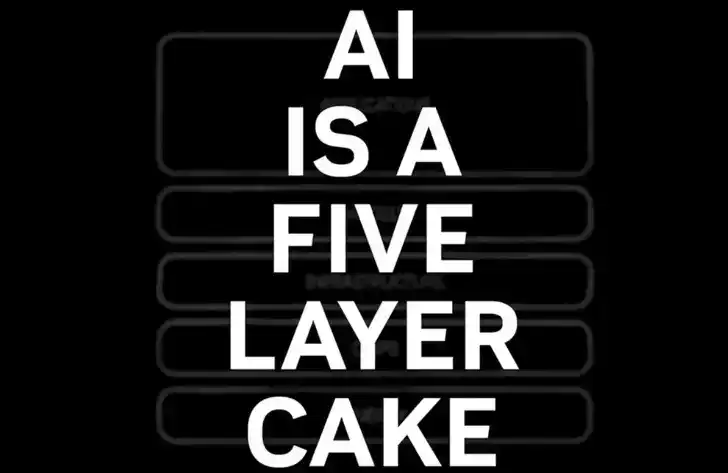
NVIDIA's Jensen Huang Latest Article: The 'Five-Layer Cake' of AI

marsbit8 dk önce

Making Money While Laying Off: Where Did Silicon Valley's 170,000 Workers Go?

A significant wave of layoffs is sweeping through the U.S. tech industry, with over 170,000 jobs cut in 2025—surpassing levels seen during both the 2008 financial crisis and the 2020 pandemic. Unlike previous downturns driven by external economic shocks, the current restructuring is characterized by profitable companies proactively reducing headcount despite record revenues. The trend accelerated in early 2026, with more than 30,000 additional layoffs in the first six weeks alone. Major firms like Amazon, Block, Autodesk, and Salesforce announced significant cuts, often citing strategic shifts rather than financial distress. While AI and automation are frequently cited as causes, data shows that only about 28.5% of layoffs are directly attributable to AI adoption. The primary driver appears to be a correction after years of over-hiring during the low-interest, high-growth pandemic era. Companies are now prioritizing efficiency, smaller teams, and AI-integrated workflows in what analysts term a "structural reset"—meaning many eliminated roles may not return. The shift is creating a polarized job market: high demand for AI-specialized talent contrasts with shrinking opportunities in generalist roles like product operations and traditional engineering. Economists warn that continued tech sector contraction could slow U.S. GDP growth to near-recession levels. However, some data suggests the rate of layoffs may be moderating compared to 2024. Ultimately, the industry is undergoing a fundamental reorganization centered on redefining the role of human labor in an AI-driven ecosystem—a transition with no clear endpoint.

比推42 dk önce

Making Money While Laying Off: Where Did Silicon Valley's 170,000 Workers Go?

比推42 dk önce

İşlemler

Spot
Futures
活动图片