What to expect from crypto the year after FTX

Cointelegraph2022-12-29 tarihinde yayınlandı2022-12-29 tarihinde güncellendi

Özet

Users are still seeking to move their funds away from centralized exchanges, paving the way for blockchain-based alternatives to thrive.

Cryptocurrency had its Lehman moment with FTX — or, perhaps, another Lehman moment. The macroeconomic downturn has not spared crypto, and as November rolled around, nobody knew that we were in for the collapse of an empire worth billions of dollars.

As the rumors of bankruptcy began to take hold, a bank run was inevitable. Sam “SBF” Bankman-Fried, the once effective altruist now under house arrest, continued to claim that assets were “fine.” Of course, they were not. From Genesis to Gemini, most major crypto organizations have been affected by the contagion effect in the aftermath.

The problem with exchanges like Binance, Coinbase and FTX

Time and time again, the feeble layer of stability has been broken down by the hammer of macroeconomic stress in an atmosphere of centralization. It can be argued that centralized systems grow quickly for the same reason: They value efficiency over stress tolerance. While traditional finance realizes economic cycles in a span of decades, the fast-paced nature of Web3 has helped us appreciate — or rather scorn — the dangers posed by centralized exchanges.

The problems they pose are simple yet far-reaching: They trap skeptical and intelligent investors in a false sense of security. As long as we’re in a “bull” market, be it organic or manipulated, there are far fewer reports to be published about failing balance sheets and shady backgrounds. The drawback of complacency resides in precisely the moment where this fails to be the case.

The way forward, for most people who got hurt by the FTX collapse, would be to start using self-custody wallets. As retail investors scramble to get their crypto off centralized exchanges, most of them need to understand the scope of the centralization problem. It doesn’t stop with retail investors parking their assets in hot or cold wallets; rather, it simply transforms into another question: Which asset are you parking your wealth under?

Often hailed as the backbone of the crypto ecosystem, Tether has come under fire numerous times for allegedly not having the assets to back its users’ deposits. That means that in the case of a bank run, Tether wouldn’t be able to pay back these deposits and the system would collapse. Though it has stood the test of time — and bear markets — some risk-averse people might not push their luck against a potential depeg event. Your next option is, of course, USD Coin, which is powered by Circle. It was a reliable option for crypto veterans until the USDC associated with the Tornado Cash protocol was frozen by Circle itself, reminding us once again about the dangers of centralization. While Binance USD (BUSD) is literally backed by Binance, a centralized exchange, Dai is minted after overcollateralized Ether is deposited into the Maker protocol, making the stable system rely on the price of risky assets.

There is also a counterparty risk involved here, as you have to take the word of auditors when they say that a particular protocol has the assets to return your deposits. Even in the bull run, there were cases when these assessments were found unreliable, so it makes little sense to outright believe them in such trying circumstances. For an ecosystem that relies so much on independence and verification, crypto seems to be putting up quite a performance of iterative “trust me” pleadings.

Where does that leave us now? Regulators eye the crypto industry with the wrath of justice, while enthusiasts point fingers at multiple actors for leading up to this moment. Some say that SBF is the main culprit, while others entertain the hypothesis that Binance CEO Changpeng Zhao is responsible for the undoing of trust in the ecosystem. In this “winter,” regulators seem convinced that human beings and the protocols they come up with require legislation and regulation.

Users leaving FTX, Binance, Coinbase and other exchanges is cause for hope

It is no longer a question of whether the industry should abandon centralized exchanges. Rather, it is a question of how we can make decentralized finance (DeFi) better in a way that doesn’t infringe upon privacy while also reducing the current notions of it being the “Wild West.” Regulators — alongside investors — are awakening to the refurbished idea of centralized organizations collapsing under stress. The wrong conclusion to derive would be that centralized exchanges need to be more tightly regulated. The optimistic and honest one is that they need to be abandoned in favor of DeFi at a much higher pace.

DeFi has been developed to avoid these risks entirely. One such method is to develop agent-based simulators that model the risk of any lending protocol. Using on-chain data, battle-tested risk assessment techniques and the composability of DeFi, we are stress-testing the lending ecosystem. DeFi offers the transparency needed for such activities, unlike its centralized counterparts, which allow funds to be obfuscated and privately rehypothecated to the point of collapse.

Such monitoring can be done in real-time in DeFi, allowing users to have a constant view of the health of a lending protocol. Without such monitoring, insolvency events that have taken place in the centralized finance industry are made possible and can then go on to trigger a cascade of liquidation as the daisy chain of exposure crumbles.

Imagine if all of FTX’s assets were being monitored in real time and shown in a publicly available resource. Such a system would have prevented FTX from acting in bad faith to its customers from the start, but even if there were too much uncollateralized leverage that would lead to a collapse, it would have been seen, and the contagion would have been mitigated.

A lending system’s stability depends on the collateral value that the borrowers provide. At any point in time, the system must have adequate capital to become solvent. Lending protocols enforce it by requiring the users to overcollateralize their borrows. While this is the case with DeFi lending protocols, it isn’t the case when someone uses a centralized exchange and uses immense amounts of leverage with little to no collateral.

This means that DeFi lending protocols, specifically, are protected from three main vectors of failure: centralization (i.e., human error and humans falling to greed from conflicts of interest), lack of transparency and undercollateralization.

As a final note to regulators, moving away from centralized systems doesn’t absolve them of the responsibility — or eradicate the necessity — of regulating even decentralized spaces. Given that such systems can be regulated only up to a certain extent, they’re much more reliable for decision-making and predictability. A code will reenact its contents unless a systemic risk is found within it, and that’s why it’s easier to narrow down on particular codes and come up with regulations around them rather than believing that each human party will act in the interest of the group at large. For starters, regulators can start stress-testing DeFi applications regarding their transaction sizes and transparency.

Trend Kriptolar

İlgili Okumalar

IOSG Founder: Ethereum Doesn't Need Another Leap of Technical Faith, It Needs a Musk-style Compromise

Jocy, founder of IOSG Ventures, argues that Ethereum does not need renewed technological faith but a "Musk-like compromise." The recent formation of ETHLabs—funded by major ETH holders like BitMine and Lubin—highlights a market-driven move to fill a gap left by the Ethereum Foundation (EF), signaling a loss of confidence in its decentralized, hands-off approach. The core critique contrasts Vitalik Buterin's (V) idealistic, technology-first vision with Elon Musk's pragmatic, business-driven execution. The author asserts Ethereum's current shortage is not another technical roadmap but a clear, real-world application narrative and a leader willing to engage directly with commercial realities—like Musk. Internal issues are emphasized, citing EF's management problems and talent drain. While the new decentralized model with independent nodes like ETHLabs addresses the single foundation's limitations, it risks fragmentation without cohesive direction. True cohesion, the author suggests, must come from a shared, compelling narrative around ETH's value, not just from aligned financial interests. Independence claims for new entities are seen as aspirational, needing years of transparency to build trust. The ultimate threat is not competitors like Solana, but the broader shift of attention and talent toward AI. Ethereum has a limited window—12 to 18 months—to recapture focus by delivering tangible, real-world applications. The conclusion urges V to shift from abstract ideals to grounded, pragmatic leadership. The time for this crucial pivot is running out.

marsbit55 dk önce

IOSG Founder: Ethereum Doesn't Need Another Leap of Technical Faith, It Needs a Musk-style Compromise

marsbit55 dk önce

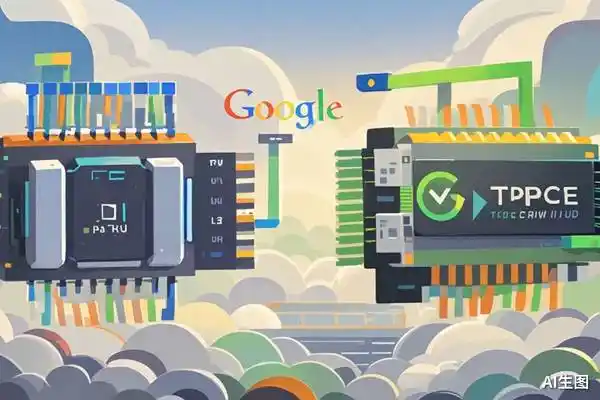
Google Starts Selling TPUs, Big Tech Aims to Produce "Low-Cost Tokens" with AI Chips

Google has begun selling its proprietary TPU chips and AI computing hardware directly to third-party data centers and clients, marking a strategic shift. Previously only accessible via cloud rentals, TPUs are specialized processors designed for the matrix and tensor operations central to AI models. By combining thousands into supercomputing clusters managed by CPUs, Google achieves high-efficiency AI processing. This move enables Google’s Gemini AI to offer competitive token pricing, challenging rivals like OpenAI. It also signals a broader industry trend where AI compute is becoming a commoditized resource like electricity. While NVIDIA remains dominant with its CUDA ecosystem and high-performance GPUs, the focus is shifting from raw power to cost efficiency and system integration. Google’s approach mirrors NVIDIA’s by selling an entire ecosystem—hardware, software, and data center expertise—rather than just chips. This threatens NVIDIA’s grip on the mid-range inference market, where lower-cost, efficient solutions are increasingly demanded. Similarly, cloud providers like Huawei Cloud and Alibaba Cloud in China are developing their own AI chip ecosystems (e.g., Ascend, Zhenwu), packaging chips, clusters, and tools into full-stack solutions. They aim to reduce token costs and capture market share through integrated systems. In summary, the AI infrastructure race is evolving from a competition for the strongest chips to a contest for the most efficient and cost-effective systems. Google’s TPU sales highlight this transition, emphasizing that future success lies in delivering affordable, scalable AI compute as a foundational service.

marsbit1 saat önce

Google Starts Selling TPUs, Big Tech Aims to Produce "Low-Cost Tokens" with AI Chips

marsbit1 saat önce

İşlemler

Spot
Futures

Popüler Makaleler

$USDC Nedir

Klasik USDC: Kapsamlı Bir Genel Bakış Klasik USDC'ye Giriş Kripto para piyasasının hızla değişen manzarasında, stabilcoinler kritik bileşenler olarak ortaya çıktı; özellikle dijital varlıkları karakterize eden dalgalanmalara karşı stabilite sağlamada. Bu projelerden biri Klasik USDC’dir; bu dijital para birimi girişimi, stabil ve güvenilir bir değişim aracı sunmayı amaçlamaktadır. ABD doları ile 1:1 oranında bir bağ kurarak, Klasik USDC kullanıcılarına, web3 ve kripto para ekosistemlerinde çeşitli uygulamalar için donatılmış güvenilir bir dijital varlık sunmayı hedeflemektedir. Klasik USDC Nedir? Klasik USDC, temel olarak fiyat dalgalanmasını en aza indirmek üzere tasarlanmış bir kripto para türü olan stabilcoin'dir. Özellikle, Klasik USDC ABD dolarının değerini yakından temsil etmeyi amaçlayarak, kullanıcıların bu dijital para birimini işlemler, tasarruflar ve diğer finansal faaliyetler için kullanabilmelerini sağlamakta; böylece birçok kripto paranın karşılaştığı aniden meydana gelen fiyat dalgalanmalarından dolayı duyacakları korkuyu ortadan kaldırmaktadır. Klasik USDC'nin ana hedefi, ABD dolarının güvenilir ve güvenilir bir dijital eşdeğerini sağlamak; böylece geniş bir yelpazede web3 uygulamalarına, merkeziyetsiz finans (DeFi) platformlarına ve diğer kripto ile ilgili finansal sistemlere sorunsuz bir entegrasyon sağlamaktır. Stabil bir dijital para sunarak, Klasik USDC günlük ticareti kolaylaştırmayı, blok zinciri teknolojisini daha kullanıcı dostu hale getirmeyi ve kripto paraların ana akım kullanıma kabulünü teşvik etmeyi amaçlamaktadır. Klasik USDC'nin Yaratıcısı Klasik USDC'nin yaratıcısının veya geliştirme ekibinin kimliği büyük ölçüde bilinmemektedir ve şeffaflık eksikliği, projenin kökenleri hakkında bir belirsizlik yaratmıştır. Birçok kripto para girişimi kurucularını ve geliştirme ekiplerini öne çıkartırken, Klasik USDC, yaratıcısıyla ilgili kesin bilgi sunmamaktadır; bu durum, potansiyel kullanıcıların veya yatırımcıların projenin güvenilirliğini ve dayanıklılığını değerlendirirken zorluklar yaşamasına neden olmaktadır. Klasik USDC Yatırımcıları Yaratıcılarıyla ilgili belirsizliğin yanı sıra, Klasik USDC’nin yatırımcıları konusunda da spesifiklikten yoksundur. Bir projenin finansal desteği, sıklıkla ona güvenilirlik kazandırabilir ve operasyonlarını stabilize edebilir; ancak Klasik USDC'yi destekleyen belgeye dayalı yatırım fonlarının veya kuruluşlarının yokluğu, fonlama yapısına dair sorular doğurmaktadır. Bu belirsizlik, paydaşların projeye olan güvenini potansiyel olarak baltalayabilir. Klasik USDC Nasıl Çalışır? Klasik USDC'nin operasyonel mekanikleri, bir stabilcoin'in temelini oluşturan rezerv sistemi üzerine yoğunlaşmaktadır. Klasik USDC, dolaşımdaki dijital para biriminin değerine doğrudan karşılık gelen bir varlık rezervi tutmayı taahhüt etmektedir. Özellikle, her bir Klasik USDC token’i için, nakit veya nakit benzeri varlıklar şeklinde, karşılık gelen bir miktar destekleyici varlık rezervde tutulmaktadır. Bu strateji, kullanıcıların token’larını ABD doları karşılığında ne zaman olursa olsun geri alabilecekleri güvenini sunarak Klasik USDC'nin değerini koruyabilmesi için tasarlanmıştır. Bu rezerv yapısı, Klasik USDC’nin stabilitesini ve güvenilirliğini artırmayı amaçlamakta ve onu kripto para piyasasında güvenli bir alternatif haline getirmektedir. Klasik USDC'nin değerinin sürekli olarak ABD doları ile ilişkili olmasını sağlayarak, proje, geniş pazar dinamiklerinden endişe duyan kullanıcılar arasında güven inşa etmeyi hedeflemektedir. Klasik USDC'nin Zaman Çizelgesi Klasik USDC'nin tarihi, kripto para ekosistemindeki yolculuğunu ve evrimini yansıtan birkaç önemli kilometre taşları ile işaretlenmiştir: 2021: Klasik USDC'nin başlangıcı, stabilite için tasarlanmış yeni bir dijital para seçeneği sunmasıyla kaydedilmiştir. Bu yıl, token’in etkinliğine dair ilk kayıtlar ortaya çıkmış ve başlangıç fiyat seviyeleri belirlenmiştir. 2024: Klasik USDC, kripto pazarının genel olarak çeşitli trendlerle ve kullanıcı duyarlılığıyla mücadele etmesiyle dikkat çeken fiyat dalgalanmaları yaşamaya başlamıştır. Gelecek potansiyeline dair tahminler ortaya çıkmakta, pazar gözlemcileri ve analistlerin büyüme fırsatlarına duyduğu güçlü ilgiyi işaret etmektedir. Gelecek Tahminleri Uzmanlar, Klasik USDC'nin önümüzdeki yıllarda daha yüksek kabul ve stabilite seviyelerine ulaşabileceğini, potansiyel olarak 2025 ve 2026 civarında daha fazla gelişme beklenebileceğini speküle etmektedir. Ancak, bu tahminlere temkinli bir iyimserlikle yaklaşılmalıdır; çünkü kripto para piyasası doğası gereği öngörülemezdir ve çeşitli dış faktörler Klasik USDC'nin seyri üzerinde etkili olabilir. Klasik USDC Hakkında Önemli Noktalar Stabilite: Klasik USDC'nin temel tezi, ABD dolarının değeri ile paralel bir dijital para sunmak etrafında döner; böylece sık sık dalgalanan bir pazarda stabilite sağlar. Rezerv Sistemi: Projenin değerini desteklemek için bir varlık rezervi tutma taahhüdü, güvenilirliğini ve operasyonel sağlamlığını vurgulamaktadır. Web3 ve Kripto Entegrasyonu: Klasik USDC, çeşitli uygulamalar içinde kolay entegrasyonu sağlamak üzere tasarlanmış ve kullanıcı deneyimini artırmanın yanı sıra günlük işlemlerde kripto paraların kabulünü genişletmeyi hedeflemektedir. Gelecek Büyüme Potansiyeli: Hala gelişmekte olan Klasik USDC, stabilcoinlerin web3 ve kripto bağlamında kullanımının artmasıyla potansiyel büyüme yolları sunmaktadır. Sonuç Klasik USDC, kripto para alanında dikkate değer bir stabilcoin girişimi olarak kendini göstermekte; kullanıcılarına ABD dolarının stabilitesini temsil eden güvenilir bir dijital para sunmayı hedeflemektedir. Yaratıcıları ve finansal destekle ilgili belirsizliklere rağmen, Klasik USDC'nin arkasındaki ilkeler – rezerv destekli güvenceler etrafında şekillenen – onu dijital ekonomi içinde bireyler ve işletmeler için güvenilir bir seçenek olarak konumlandırma çabasındadır. Geleceğe yönelik bir bakışla, piyasa analistleri Klasik USDC'nin kripto para manzarasındaki değişen dinamiklere nasıl yanıt verdiğini gözlemlemek konusunda heveslidir; bu durum, onu stabilcoinler alanında önemli bir oyuncu haline getirebilir.

51 Toplam GörüntülenmeYayınlanma 2024.05.01Güncellenme 2024.12.03

$USDC Nedir

USDC Nasıl Satın Alınır

HTX.com’a hoş geldiniz! USD Coin (USDC) satın alma işlemlerini basit ve kullanışlı bir hâle getirdik. Adım adım açıkladığımız rehberimizi takip ederek kripto yolculuğunuza başlayın. 1. Adım: HTX Hesabınızı OluşturunHTX'te ücretsiz bir hesap açmak için e-posta adresinizi veya telefon numaranızı kullanın. Sorunsuzca kaydolun ve tüm özelliklerin kilidini açın. Hesabımı Aç2. Adım: Kripto Satın Al Bölümüne Gidin ve Ödeme Yönteminizi SeçinKredi/Banka Kartı: Visa veya Mastercard'ınızı kullanarak anında USD Coin (USDC) satın alın.Bakiye: Sorunsuz bir şekilde işlem yapmak için HTX hesap bakiyenizdeki fonları kullanın.Üçüncü Taraflar: Kullanımı kolaylaştırmak için Google Pay ve Apple Pay gibi popüler ödeme yöntemlerini ekledik.P2P: HTX'teki diğer kullanıcılarla doğrudan işlem yapın.Borsa Dışı (OTC): Yatırımcılar için kişiye özel hizmetler ve rekabetçi döviz kurları sunuyoruz.3. Adım: USD Coin (USDC) Varlıklarınızı SaklayınUSD Coin (USDC) satın aldıktan sonra HTX hesabınızda saklayın. Alternatif olarak, blok zinciri transferi yoluyla başka bir yere gönderebilir veya diğer kripto para birimlerini takas etmek için kullanabilirsiniz.4. Adım: USD Coin (USDC) Varlıklarınızla İşlem YapınHTX'in spot piyasasında USD Coin (USDC) ile kolayca işlemler yapın.Hesabınıza erişin, işlem çiftinizi seçin, işlemlerinizi gerçekleştirin ve gerçek zamanlı olarak izleyin. Hem yeni başlayanlar hem de deneyimli yatırımcılar için kullanıcı dostu bir deneyim sunuyoruz.

378 Toplam GörüntülenmeYayınlanma 2024.12.11Güncellenme 2026.06.02

USDC Nasıl Satın Alınır

Tartışmalar

HTX Topluluğuna hoş geldiniz. Burada, en son platform gelişmeleri hakkında bilgi sahibi olabilir ve profesyonel piyasa görüşlerine erişebilirsiniz. Kullanıcıların USDC (USDC) fiyatı hakkındaki görüşleri aşağıda sunulmaktadır.

活动图片