美联储进入密集政策发声期:“鹰王”布拉德表示市场低估了加息的可能性,威廉姆斯暗示2024年降息

比推2022-12-01 tarihinde yayınlandı2022-12-02 tarihinde güncellendi

Özet

美联储政策制定者周一强调,他们将进一步提高借贷成本以抑制通胀,一位主要官员表示,他认为利率将略高于他几个月前的预测。

-威廉姆斯表示,随着通胀下降,利率可能会在 2024 年下降

-布拉德表示市场低估了加息的可能性

美联储政策制定者周一强调,他们将进一步提高借贷成本以抑制通胀,一位主要官员表示,他认为利率将略高于他几个月前的预测。

纽约联邦储备银行行长约翰威廉姆斯周一在纽约联储主办的一次活动后对记者说:“劳动力需求强劲,经济需求比我之前想象的要强劲,然后基础通胀有所上升,表明政策路径相对于 9 月份略微走高。” “变化不大,但有所提高。

在另一场活动中,圣路易斯联邦储备银行行长詹姆斯布拉德是该央行最鹰派的官员之一,他表示,他认为“市场有点低估了FOMC将不得不更加激进的风险,以便遏制我们在美国遇到的非常严重的通货膨胀。”

在连续四次加息 75 个基点后,美联储官员已表示他们计划在 12 月 13 日至 14 日的年度最后一次会议上将基准利率上调 50 个基点。政策制定者在会议期间更新经济预测时,也可能会提高他们对利率最终会达到多高的预测——尽管还不清楚提高多少。

主要利率目前处于 3.75% 至 4% 的目标范围内。根据期货合约的定价,投资者认为它明年将达到 5% 左右的峰值。

威廉姆斯同时担任制定政策的联邦公开市场委员会副主席,他考虑了最终降息的途径,但表示那一刻至少还需要一年时间。

“我确实看到一个时间点,可能在 2024 年,我们将开始降低名义利率,因为通胀正在下降,我们希望实际利率处于适当的位置,”他说。

美联储进入密集政策发声期:“鹰王”布拉德表示市场低估了加息的可能性,威廉姆斯暗示2024年降息
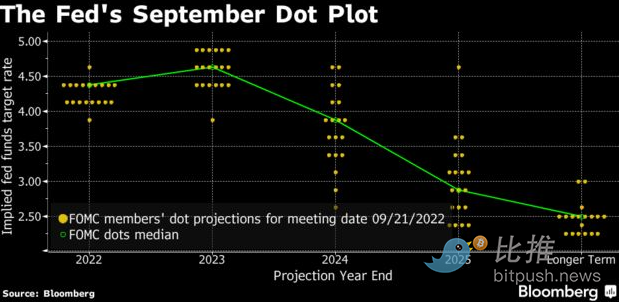
美联储 9 月点阵图

尽管从 9 月份开始的最新预测确实表明美联储官员预计 2024 年会降息,但政策制定者基本上回避讨论太远的预测,而是将重点放在加息和保持高利率以确保通胀下降的必要性上。

此外,克利夫兰联邦储备银行行长洛雷塔梅斯特在周一发表的英国《金融时报》采访中表示,央行尚未暂停加息行动。

威廉姆斯在纽约经济俱乐部主办的虚拟活动中表示,他的“基本观点是,我们将需要在目前的水平基础上进一步加息”,并且“我们将需要保持限制性政策一段时间”,至少到 2023 年。

布拉德在接受 MarketWatch 和巴伦周刊的网络直播采访时重申了他的观点,即美联储至少需要达到 5% 至 7% 区间的底部,才能实现政策制定者的目标,即采取足够的限制措施来遏制近四十年来最高的通胀水平。

“我认为我们必须在这里避免这种诱惑,真正保持政策利率的限制水平更长时间,以确保我们将通胀推回 2% 的目标,”他说。

11 月 1 日至 2 日的会议纪要显示,官员们普遍支持调整他们的行动,“绝大多数”同意很快就会放慢加息步伐。但关于他们最终需要将借贷成本提高到多高的看法并不那么明确,“各种”决策者认为有必要将利率提高到比预期更高的水平。

周一晚些时候,美联储副主席莱尔布雷纳德表示,在全球通胀可能不如近几十年来稳定的情况下,美国央行行长必须应对通胀预期升至 2% 目标以上的风险。

“在存在一系列长期供应冲击和高通胀的情况下,货币政策采取风险管理姿态以避免通胀预期漂移至目标之上的风险非常重要,”她说。 “一连串不利的供应冲击具有长期限制潜在产出的累积效应,可能需要收紧货币政策以恢复供需平衡。”


İlgili Okumalar

OpenAI's "Most Open" Move: Codex No Longer Exclusively Favors GPT

OpenAI has significantly opened up its Codex programming agent by introducing a "model provider" configuration layer that allows users to connect it with various open-source models, not just its proprietary GPT. Through a configuration file or a simple `--oss` command-line flag, Codex can now route requests to local services like Ollama or LM Studio, or to third-party APIs such as Mistral or DeepSeek. This move is seen as one of OpenAI's most "open" steps, potentially lowering costs and enhancing privacy for developers who can run code generation offline. However, integration isn't seamless for all models. Codex primarily uses OpenAI's newer Responses API, while many open-source models rely on the older Chat Completions interface. This creates compatibility issues, especially for advanced features like function calling. The developer community is already building "routing" or adapter layers (e.g., CC Switch, LiteLLM) to translate between these protocols, enabling hybrid setups where GPT handles planning and open-source models handle execution. Analysts interpret this as a strategic shift for OpenAI: from competing solely on model superiority to controlling the platform and interface standards. By making Codex a flexible, pluggable entry point for AI-assisted programming, OpenAI aims to become the central hub in the developer toolchain ecosystem, even as users gain the freedom to switch underlying models.

marsbit8 dk önce

OpenAI's "Most Open" Move: Codex No Longer Exclusively Favors GPT

marsbit8 dk önce

When 500 Million People Abandon ChatGPT

ChatGPT's Global AI Assistant Market Share Drops Below 50% Three and a half years after its groundbreaking launch, ChatGPT faces a pivotal moment. While it remains the largest AI assistant globally, its market share has fallen below 50% for the first time, reaching 46.4% as of May, according to Sensor Tower's 2026 AI landscape report. Google's Gemini (27.7%) and Anthropic's Claude (10.3%) are now its main competitors, with Grok, Perplexity, and others also gaining ground. The market has evolved from awe and initial adoption into a phase of product comparison, ecosystem integration, and commercialization. User behavior has matured significantly. Loyalty is low; users readily switch between assistants for specific tasks. Gemini benefits from deep integration within Google's ecosystem (Search, Gmail, Android), while Claude has carved a niche among productivity-focused users with strong retention, nearly matching ChatGPT's. User choice is now influenced by a complex mix of capability, ecosystem, price, use case, and even brand trust. Commercialization is accelerating. AI app downloads continue but growth is slowing, while user spending is rising. Over $4.2 billion was spent in-app during H1 2026. Claude leads in premium subscription conversion rates (13%). OpenAI is expanding its revenue streams, testing ads shown to 17% of ChatGPT users daily by May. This shift highlights the immense financial pressure of model training and inference costs. Despite revenue growth, OpenAI's cash burn is intense, reaching $3.7 billion in Q1 2026. The company projects this could rise to $25-57 billion in the coming years, underscoring the industry-wide challenge of scaling profitably. The symbolism is clear: ChatGPT no longer defines the AI assistant market alone. The era of a single dominant product is over. Gemini, Claude, and specialized tools are collectively shaping user habits and business models. As AI assistants move from novelty to utility—judged on accuracy, efficiency, and value—they are becoming embedded in everyday digital life. ChatGPT may have lost its majority, but AI as a whole is winning, entering a mature, competitive, and diverse new phase.

marsbit10 dk önce

When 500 Million People Abandon ChatGPT

marsbit10 dk önce

İşlemler

Spot
Futures
活动图片