[Анализ рынка от Huobi] Объём торгов BTC и ETH на миниумах, ENS может показать бычий прорыв

HTX News2022-10-10 tarihinde yayınlandı2022-10-10 tarihinde güncellendi

Özet

Курс биткоина (BTC) по-прежнему не может восстановиться над круглой отметкой $20 000, однако на долгосрочных графиках появляются бычьи сигналы.

1. Объёмы торгов BTC значительно сократились, медведи готовятся

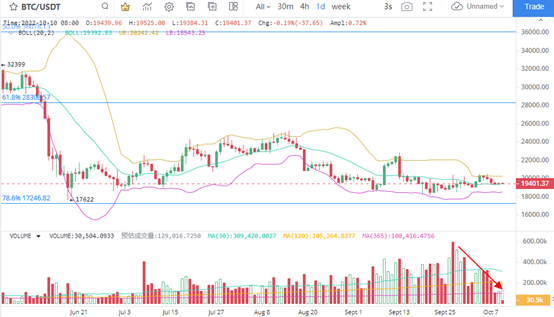
На дневном графике объем торгов BTC сокращался в течение двух торговых дней подряд. В это же время цена не показывала резких движений в какую-либо сторону и следовала боковому тренду на уровне средней скользящей полос Боллинджера. Дневной объем торгов BTC существенной упал с 27 сентября и сейчас находится на очень низком уровне – практически минимально с июля этого года. В настоящее время такое падение объемов торгов выгодно тем, кто занимает короткие позиции, поэтому, вероятно, в скоро времени можно будет ожидать падения цены.

2. Коэффициент финансового рычага BTC значительно вырос

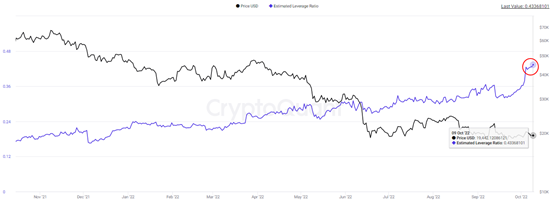
После того как в последнее время с бирж было выведено довольно большое количество BTC, расчетный коэффициент финансового рычага BTC значительно вырос. Расчетный коэффициент финансового рычага, на 9 октября, достиг максимума 0,43, самого высокого уровня за последние два года. Это говорит о том, что коэффициент финансового рычага инвесторов стремительно растет, что благоприятно сказывается на изменении курса BTC. Расчетный коэффициент финансового рычага (ELR) рассчитывается как отношение открытого интереса по активу к его количеству на биржах.

3. Волатильность ETH упала ниже 2%

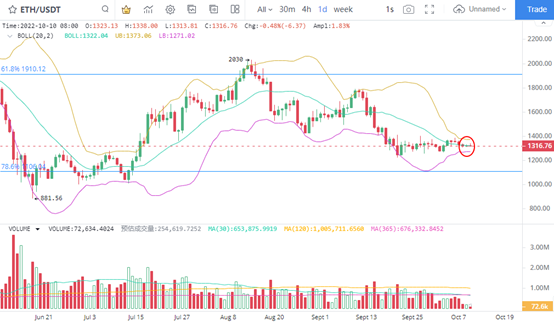
На ТФ 1 день интенсивность колебаний цены Ethereum 8 и 9 октября 2022 года составила всего 1,65% и 1,83% соответственно. Помимо падения волатильности, также снизился и объем торгов – до самого низкого уровня с 23 апреля. На данный момент для второй криптовалюты наступил штиль, но вместе с ростом объёма торгов, можно будет ожидать и отчётливого движения вверх или вниз.

4. Давление продаж ETH усиливается

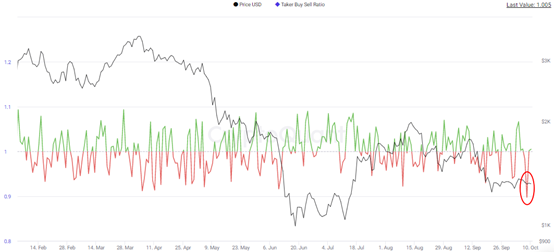
На рынках есть два типа покупателей и продавцов. Либо трейдер покупает или продает мгновенно по лучшей доступной рыночной цене (тейкер), либо покупает/продает с лимитным ордером (мейкер). В данной метрике мы рассматриваем только объем тейкеров по сравнению с общим объемом. Таким образом, она может показать нам, готовы ли трейдеры покупать актив по более высокой цене или продавать по более низкой. Это хороший показатель того, где в данный момент находится давление продаж.

В данный момент данный показатель в отношении Ethereum упал до самого низкого уровня за последнее время, достигнув 8 октября 0,897. Последний раз столь низкий уровень наблюдался 4 ноября 2021 года – тогда он составлял 0,895. Это указывает на то, что в данный момент больше трейдеров готовы продавать свои ETH по более низкой цене, что свидетельствует о том, что давление со стороны продавцов сильнее, чем давление со стороны покупателей.

5. ENS выглядит сильно в краткосрочной перспективе

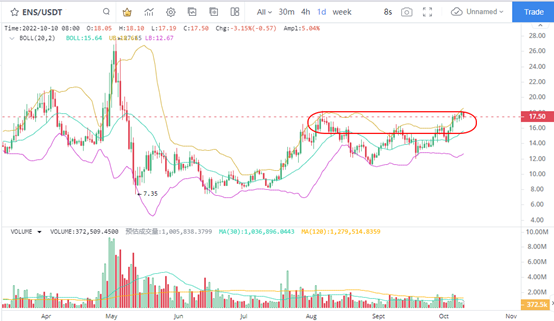
В условиях, когда рынок в целом находится в стадии коррекции, ENS, нативный токен доменных имён сети Еthereum - Еthereum Name Service, демонстрирует сильные показатели. Цена ENS уже третий раз протестировала уровень 17,5 долларов США и, скорее сего, в ближайшем времени можно ожидать бычий прорыв.

Что касается фундаментальных данных, количество новых доменных имен, зарегистрированных в Еthereum Name Service ENS в сентябре, превысило 430000, что является рекордным показателем. Кроме того, общее количество доменных имен, зарегистрированных ENS, достигло 2642046, что является хорошим драйвером роста цены ENS.

İlgili Okumalar

When Billions Begin to Operate Everything by Voice, How Far is ‘All Assets on Chain’?

In June 2026, WeChat began a limited rollout of "Xiaowei," its native AI assistant. This move is more than an upgrade to a smarter chatbot; it signals a crucial step from "universal internet access" toward the broader vision of "full asset tokenization." Xiaowei, powered primarily by WeChat's in-house WeLM model, demonstrates four key capabilities: 1) direct voice/web chat control of app functions, 2) automated access to mini-programs for services, 3) instant comprehension and summarization of complex documents like PDFs, and 4) generating functional mini-program prototypes from simple natural language requests. This represents a fundamental shift from GUI (Graphical User Interface) to LUI (Language User Interface), eliminating friction in human-digital interaction. The rollout is pivotal because it brings AI Agents to China's massive user base with zero friction—no new app downloads or accounts needed. This "seamless access" mirrors past platform revolutions like the App Store or WeChat Mini-Programs, potentially unlocking a global AI Agent market projected to grow from $7.92 billion in 2025 to nearly $295 billion by 2035. The article argues that China's internet evolution has moved from "connecting everyone" to "putting all services online." The next phase is "tokenizing all assets"—a concept broader than just Real World Assets (RWA) like real estate. It encompasses tokenizing personal assets like social influence, attention, and credit history. RWA tokenization itself is forecast to explode from $35 billion in 2025 to over $500 billion in 2026. The convergence of ubiquitous AI Agents and rapidly tokenizing assets points to a future paradigm for wealth management. Your AI Agent could autonomously manage a globally diversified, tokenized portfolio based on your preferences. Initiatives like EXIO Group's full-stack RWA services aim to lower investment barriers, paralleling WeChat's democratization of AI access. In conclusion, the launch of Xiaowei is not merely a technical upgrade but a historic inflection point. It marks AI Agents' transition from niche tools to essential utilities and accelerates the movement toward a future where voice commands seamlessly interact with tokenized value, redefining humanity's relationship with the digital and financial worlds.

marsbit10 dk önce

When Billions Begin to Operate Everything by Voice, How Far is ‘All Assets on Chain’?

marsbit10 dk önce

SoftBank CEO Masayoshi Son's New Trillion-Dollar "Gamble"

SoftBank founder Masayoshi Son is embroiled in a new trillion-dollar "bet" on Physical AI and humanoid robotics, even as his massive wager on OpenAI faces uncertainty ahead of its potential IPO. Recent reports reveal OpenAI's steep losses—$85 billion net loss by Q1 2026 and a $38.5 billion loss in 2025—casting doubt on its path to a trillion-dollar valuation. SoftBank, OpenAI's second-largest external shareholder with a planned 13% stake, stands to gain hugely if OpenAI succeeds. Undeterred, Son is already pushing forward with his next ambitious venture: consolidating SoftBank's AI and robotics assets into a new U.S.-based company named "Roze," targeting a $100 billion IPO as early as late 2026. This move aligns with his belief that Physical AI, merging AI cognition with robotic physical execution, is the next trillion-dollar frontier. Son's confidence stems from recent AI wins; SoftBank's stock surged and he briefly regained the title of Asia's richest person, largely due to OpenAI's soaring valuation. However, his aggressive strategy has raised internal concerns about over-reliance on OpenAI and strained finances. With competitors like Anthropic advancing rapidly and OpenAI's IPO timing uncertain, Son is racing to capitalize on the AI boom. His long-term vision for Physical AI includes a decade of investments in robotics, from Boston Dynamics to recent acquisitions like ABB's robotics unit, and a planned $1 trillion investment in U.S.-based AI robotics industrial parks. Yet, challenges remain: humanoid robotics firms like Figure AI lack the clear revenue paths of AI software companies, and Roze's lofty valuation faces skepticism. For Son, these bets are also driven by an unfulfilled promise of massive returns to key investors like Saudi Arabia's PIF. Despite risks, he continues to double down, betting that the fusion of AI and physical machines will define the next technological era.

marsbit17 dk önce

SoftBank CEO Masayoshi Son's New Trillion-Dollar "Gamble"

marsbit17 dk önce

İşlemler

Spot
Futures
活动图片