【龙虎榜】XIDO路线清晰价格飙升,APE新上市热度不减

火必研究院2022-03-18 tarihinde yayınlandı2022-03-21 tarihinde güncellendi

Özet

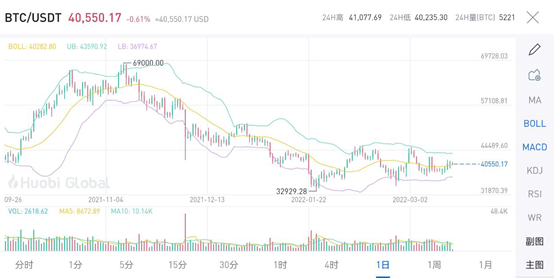
BTC波动空间较小,价格围绕布林线中轨运行期间,继续完成三角形的调整形态。

1、大盘走势:价格小幅震荡,等待方向确认

BTC波动空间较小,价格围绕布林线中轨运行期间,继续完成三角形的调整形态。在此之前,行情还不会有太多的变化。目前来看,交易量提升的活跃度依然不少很高。近期整体市场表现对BTC影响偏正面。美股三大指数同步反弹,大宗商品大幅度上行,都为BTC止跌提供了机会。因此,近期可低吸买入,仓位上可小幅提升。
2、消息面解读:

美联储强调了近期地缘事件对美国经济和金融稳定可能带来的高度不确定性影响。虽然美联储选择稳健做法,加息25个基点。但是今后地缘政治风险加剧通胀压力。接下来,抑制高通胀依然非常重要。预期美联储持续加息配合提前缩表会同步进行,对金融市场的紧缩效果显现,因此对BTC价格的预期需要非常紧缩。俄乌局势方面,近期双方动向趋于缓和,俄乌双方准备好了一份在乌克兰保持中立、裁军的前提下实施的停火撤军计划。因此,该局势对市场影响减弱,BTC价格近期反弹压力减少。

3、龙虎榜:

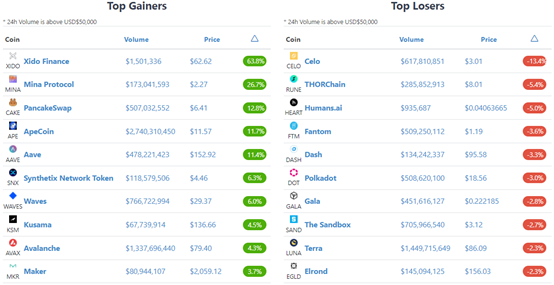
龙虎榜涨幅靠前币种里,有多个币种与DeFi概念有关。XIDO大幅度领涨回升,因此与XIDO相关的币种表现较好。AAVE、SNX、Maker等涨幅排名前十以内。不同生态代币方面,波卡测试网代表KSM,雪崩生态AVAX涨幅排名靠前。CAKE作为去中心化交易所,短线持续技术反弹,涨幅较大。
XIDO

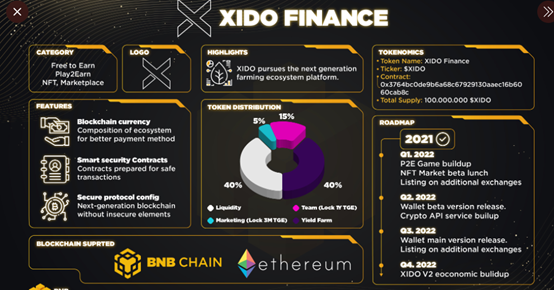
XIDO作为DeFi平台里新一代挖矿生态,有独特的代币分配设计。XIDO支持许多平台和合作伙伴,以创建一个可扩展的区块链结构。

对于2020年的发展,XIDO制定了详细的规划,包括P2E游戏建设、NFT市场等都在首季度规划中。价格方面,XIDO月内大幅度飙升500%以上,价格表现可继续关注。
Mina

MINA24小时内涨幅达到了26.7%,在市值前100币种排名中位居第二位,是短线表现非常强势的币种。究其原因,消息面影响可适当关注。
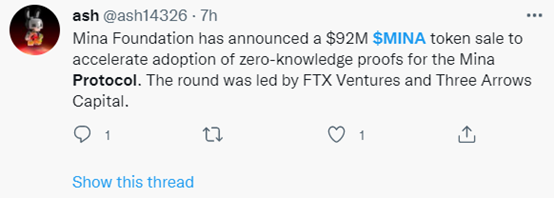
Mina基金会宣布一项9200万美元MINA的加速计划,旨在推进Mina协议零知识正面的推进。这一轮由FTX Ventures和三箭资本领投。因此在价格表现上,MINA短线连续3个交易日放量反弹,一扫缩量调整的阴霾。
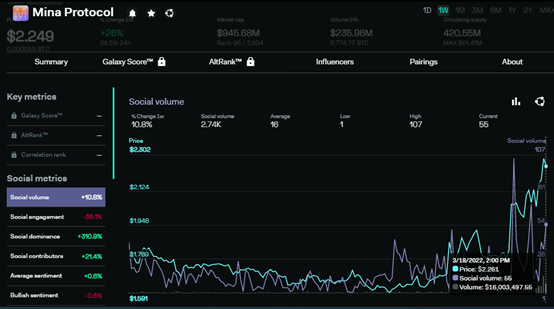
数据方面,近期MINA的社交活跃度异常增长,社交成交量表现为增长200%,投资者关注度极高,这也进一步推动了MINA价格上涨。

AAVE:

Aave是一个开源的去中心化借贷协议,为用户提供存款和借贷服务。借贷双方用户的存款利率与贷款利率是根据平台借款量和存款量通过算法来计算得到的,并且平台采用Chainlink的预言机来保证抵押物价格的公平性。

AAVE流通市值20.9亿美元,链上TVL达到122.3亿美元。受到消息面影响,AAVE24小时飙升空间达到了11.4%,在龙虎榜诸多DeFi概念币里排名靠前,在龙虎榜单中排名第五位。
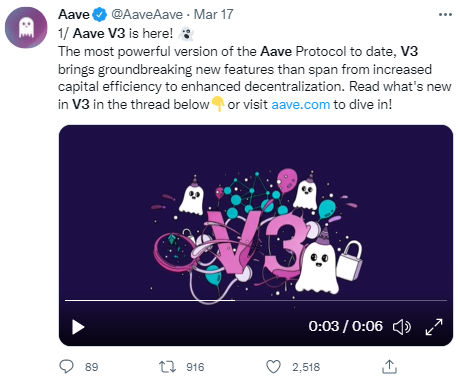
消息面利好推动AAVE飙升:Aave将正式推出V3版本,并且引入跨链资产等功能

去中心化借贷协议Aave宣布在六个不同的区块链上推出Aave V3,包括Polygon、Arbitrum、Avalanche、Fantom、Harmony和Optimism,以太坊主网上线日期尚未确定。本次更新提升用户在各网络之间资产流动性,同时提升资本效率和安全性。此外,V3版本将暂时不会对机构DeFi产品Aave Arc产生影响。

Ape:

生态治理系统代币ApeCoin(APE)正式推出,为Bored Ape Yacht Club(BAYC)发布。

此前消息,BAYC母公司Yuga Labs收购CryptoPunks和Meebits。先是收购两个NFT大作,再然后发行生态代币,步骤紧凑,环环相扣。

判断ApeCoin投资价值,首先要明确BAYC的价值以及Mutant Ape的价值。因为APE的15%的总供应量将会空投给BAYC/MAYC NFT持有者。

因为APE与BAYC和MAYC挂钩,BAYC目前市值为8.7亿美元,MAYC市值为4.8亿美元。APE当前流通市值为42.6亿美元,总供应市值为153亿美元,分别是BAYC+MAYC的3.15倍和11.3倍,估值可作为投资参考。

İlgili Okumalar

What Happens When Two Miners Find a Block in the Same Second? How the 'Orphan Race' Unfolds

Bitcoin mining is a race without a real-time referee. A newly mined block must physically propagate across the global peer-to-peer network before consensus is reached on the chain's tip. This takes seconds, sometimes longer on congested connections. If a second miner finds a valid block before learning of a competing one, they build on their last-known version and broadcast their own block. For a short time, two equally valid blocks exist at the same height, creating a temporary chain split. The network resolves this not by voting or timestamps, but by Proof-of-Work: the chain that accumulates the most work becomes canonical. Blocks on the losing side are "orphaned" or "stale." Their miners lose the block reward and fees, though unconfirmed transactions return to the mempool. Usually, a single subsequent block resolves the tie. A notable two-block reorganization occurred on March 24, 2026. Antpool and Foundry USA mined competing versions of block 941,881 seconds apart. ViaBTC extended Antpool's chain, while Foundry extended its own, creating a one-block split. Foundry then pulled ahead by mining six consecutive blocks, making its chain the heaviest. All nodes switched to Foundry's chain, orphaning blocks from Antpool and ViaBTC. While such multi-block reorganizations are rare, the underlying race condition is common. Analysis shows about 9.2% of block intervals in a sample period were under 60 seconds, each representing a potential short-lived race. Fast relay networks have reduced propagation delays, making prolonged splits rarer. However, the event highlighted a trend of hash rate concentration, where well-resourced pools have a higher chance of winning any specific race and mining consecutive blocks, marginalizing smaller miners.

cryptonews.ru5 dk önce

What Happens When Two Miners Find a Block in the Same Second? How the 'Orphan Race' Unfolds

cryptonews.ru5 dk önce

AmericanFortress proposed a scheme to protect crypto wallets from quantum threats

AmericanFortress has published a preprint detailing ZKPoSP, a cryptographic scheme designed to protect hierarchically deterministic (HD) cryptocurrency wallets from potential quantum attacks without requiring users to change their addresses. The proposed scheme replaces classical digital signatures with non-interactive zero-knowledge (NIZK) proofs, aiming to maintain compatibility with existing address formats. The company also introduced the QBIP32 scheme, intended to generate a signing scalar, a separate quantum-resistant proof, and a chain code in a single function call. According to the authors, QBIP32 can be applied to various elliptic curves of prime order, including secp256k1 and Ed25519. The post-quantum security of the scheme is described as "conjectured," relying on the quantum resistance of the underlying hash functions and NIZK proofs. However, for the scheme to function in a given blockchain network (like Bitcoin, Ethereum, or Solana), nodes would need to support verification of these new proofs instead of standard signatures—a capability currently not implemented. An implementation in Rust using RISC Zero reportedly takes 12–13 seconds to generate a proof and 9–10 milliseconds to verify it. The publication follows other industry efforts to address quantum threats, including reports from Galaxy on vulnerable assets, new hardware wallets like the PQ1, and consortiums like the Bitcoin Security Consortium pledging funding for post-quantum cryptography research. This new work specifically focuses on HD wallets and positions ZKPoSP/QBIP32 as a general mechanism for multiple curves and networks.

cryptonews.ru15 dk önce

AmericanFortress proposed a scheme to protect crypto wallets from quantum threats

cryptonews.ru15 dk önce

Weekly On-Chain Data Review: Robinhood Chain Explodes, FWA Goes Viral, Mantle Doubles Down on RWA

**Chain Data Weekly Digest: Vault Regulation, Robinhood Memecoin Surge, and FWA's NFT Gamble** * **Vault Managers Face SEC Scrutiny:** SEC Commissioner Hester Peirce warned that some DeFi Vault strategies could trigger investment advisor regulations. This may lead to licensing requirements, potentially sidelining smaller managers while bringing more traditional finance firms on-chain. The industry debates whether Vaults are purely code-driven or resemble discretionary portfolio management. * **Robinhood Chain's Memecoin-Led Boom:** Despite its initial RWA focus, Robinhood Chain has seen explosive early growth driven by memecoin trading and launchpads, which now dominate its DEX volume. The chain facilitates memecoin trading via tokenized stock pairs. It boasts over $800M in on-chain assets, $5B in stablecoin market cap, and strong fee revenue, positioning it as a consumer trading hub. * **FWA Revives NFT Activity with a Gamble:** The Fake World Assets (FWA) protocol, a gachapon-style system on Ethereum where users pay to randomly win deposited NFTs, has rapidly captured 10% of Ethereum's mainnet gas consumption in its first week. It demonstrates how simple, consumer-facing mechanics can reignite NFT engagement, attracting a broad user base. * **CEX Consolidation & DEX Growth:** The closures of BitMEX and BitMart highlight intense central exchange (CEX) competition and consolidation. Meanwhile, the DEX/CEX spot trading volume ratio hit a record high of 24.3% in July, signaling a shift of trading activity and innovation to on-chain venues. * **Mantle's RWA Focus at 3 Years:** Celebrating its third anniversary, Mantle Network is solidifying its role as a "full-stack distribution layer" for tokenized real-world assets (RWA). It ended Q2 with $1.2B in DeFi TVL, $955M in stablecoin market cap, and a growing suite of native RWA trading infrastructure like Fluxion and xChange.

marsbit25 dk önce

Weekly On-Chain Data Review: Robinhood Chain Explodes, FWA Goes Viral, Mantle Doubles Down on RWA

marsbit25 dk önce

İşlemler

Spot
活动图片