【一周靓文】擒获50万倍涨幅Meme币复盘,国内数藏增长100倍的原因曝光

火币资讯2022-10-01 tarihinde yayınlandı2022-10-03 tarihinde güncellendi

Özet

Meme币概念已成为加密货币领域最受关注的投资机会之一,整体市值达160亿美元。

一周靓文,介绍过去一周最值得关注的热点文章,帮助投资者深刻理解市场动态。

1、《现在谁拥有以太坊?》

以太坊合并已经过去一周多了,涟漪已经开始显现。加密碳评级研究所(CCRI)委托发布的一份报告显示,能源使用量下降了,甚至超过了预期。来自“以以太坊为中心的软件公司ConsenSys”的CCRI报告称,以太坊现在使用的能源比合并完成前减少了约99.99%。它还表明区块链的碳足迹也下降了99.99%以上,”Decrypto网站上的一篇文章写道。减少能源使用是合并的主要目标之一。

点击查看

2、《ETH质押平台对比:Lido等流动性质押平台的衍生品负溢价更低,使用范围更广》

ETH的质押量还有数倍的上升空间,提供“质押即服务”的第三方运营商有可能成为以太坊质押叙事的关键。

以太坊本次合并后由PoW转向PoS,能源消耗减少99.95%,每年发行的ETH减少90%左右。在PoS区块链中,验证者锁定原生代币来为网络提供安全性。截至9月26日,根据Staking Rewards的数据,在主要的PoS网络中,以太坊12%的质押率显得较低,市值紧随其后的BNB Chain、Cardano、Solana原生代币的质押率均在70%及以上。

点击查看

3、《擒获50万倍涨幅:Meme币投资规律复盘》

meme币概念已成为加密货币领域最受关注的投资机会之一。根据CoinGecko统计,meme币赛道约有200-300个项目,整体市值约160亿美元。正常项目在牛市大概率会有5-20倍的收益回报,而DOGE上涨400倍,SHIB上涨50万倍,均进入整体市值前20。一定程度上可以说DOGE和SHIB的成功是meme文化的变现。

点击查看

4、《比特币闪电网络就是最牛,不接受反驳!》

它的目的是使在线支付从一方直接发送到另一方,而不必经过受信任的第三方。

在现实世界中,我们可以互相支付,而不需要信任一些使用现金的第三方。当我们使用Venmo、Paypal或任何其他非加密的在线服务时,我们相信这些服务会保护我们的资金。

我们无法在网上进行点对点支付。你可以承诺把现金邮寄给他们,但很难在这种信任和延迟付款时间的基础上开展业务。因此,我们使用Stripe和VISA等服务为我们处理支付,并为每笔交易支付约3%的服务费。

点击查看

5、《为什么5年内数藏有100倍增长?2022年中国数字藏品行业研究最新报告 》

传稻士社区获得艾瑞咨询授权,转载近期发布《2022年中国数字藏品行业研究报告》。报告帮助用户更清晰的了解数字藏品行业发展情况,了解数字藏品底层区块链技术及国内各大数字藏品交易平台应用模式、剖析具体应用场景的价值,并对企业未来使用数字藏品商业化落地提供思路。

数字藏品是NFT的一种应用形式,2022年,国内数字藏品在5月份之前,增长态势迅猛,5月份发行数量达到496. 9万件。

点击查看

İlgili Okumalar

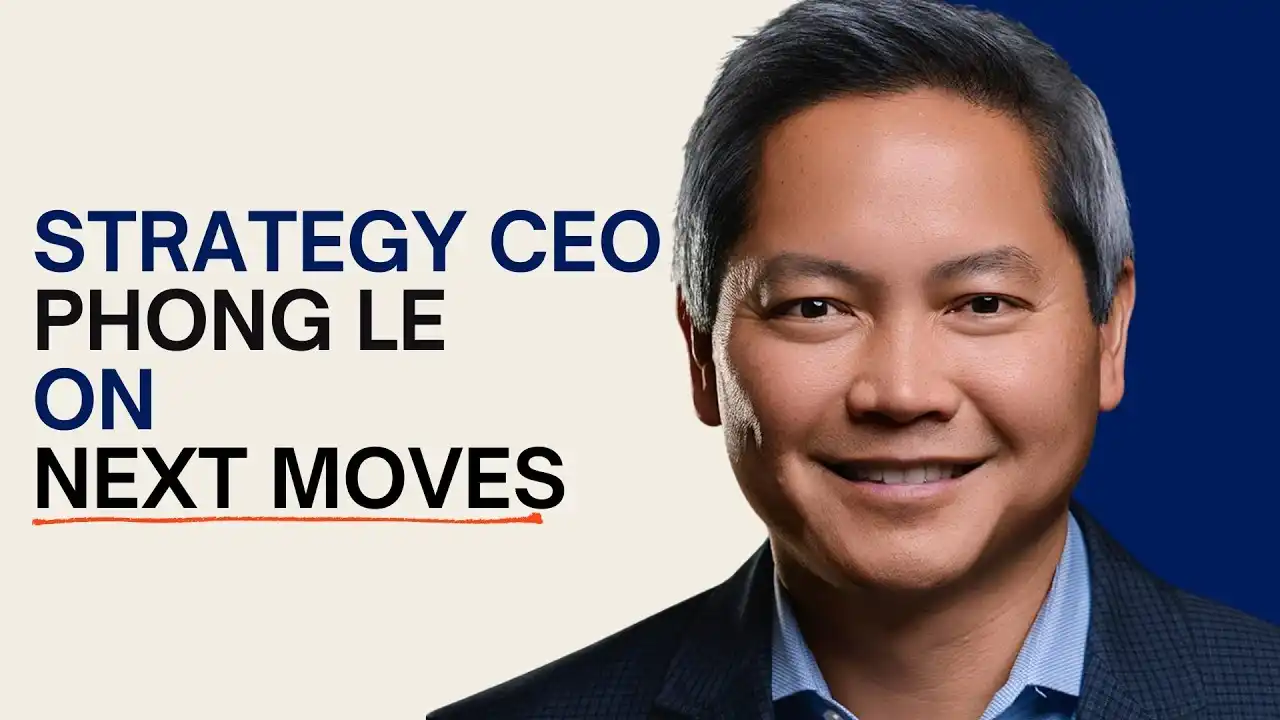
Interview with Strategy CEO: Can STRC Recover After Selling Bitcoin?

Interview with Strategy CEO Phong Le on the recent sale of 32 Bitcoin and its impact. He clarifies the move was a small, strategic action to demonstrate liquidity to debt holders, test internal processes, and prove operational discipline—not a response to fears of a "death spiral" from DeFi protocols leveraging STRC (Strategy's preferred stock product), which he notes holds less than 10% of STRC. Le emphasizes Strategy’s long-term focus as the largest corporate Bitcoin holder, using the adage that markets are a "voting machine" short-term but a "weighing machine" long-term. Decision-making is data-driven, involving the board, complex modeling, and multiple stakeholder considerations, moving beyond a founder-centric model. He outlines various capital options but stresses the strategic importance of "doing nothing" as a valid choice, citing resilience built during the 2022 bear market. Le expresses unwavering belief in Bitcoin's foundational value for global sovereignty and its future role in an AI-driven economy with trillions of autonomous agents. Addressing STRC's current price below its $100 face value, Le explains recent pressure was due to using dollar reserves for bond buybacks. He expects STRC to return to par as reserves are replenished and its semi-monthly dividend payments begin, noting the product is heavily over-collateralized. Finally, Le confirms the company sold Bitcoin the week prior to May 31st, as disclosed in an 8-K filing, leaving prediction market interpretations to others. The overarching philosophy remains "Spread Bitcoin with love," embracing all methods of gaining Bitcoin exposure.

marsbit18 dk önce

Interview with Strategy CEO: Can STRC Recover After Selling Bitcoin?

marsbit18 dk önce

IOSG Founder: Ethereum Doesn't Need Another Leap of Technical Faith, It Needs a Musk-style Compromise

Jocy, founder of IOSG Ventures, argues that Ethereum does not need renewed technological faith but a "Musk-like compromise." The recent formation of ETHLabs—funded by major ETH holders like BitMine and Lubin—highlights a market-driven move to fill a gap left by the Ethereum Foundation (EF), signaling a loss of confidence in its decentralized, hands-off approach. The core critique contrasts Vitalik Buterin's (V) idealistic, technology-first vision with Elon Musk's pragmatic, business-driven execution. The author asserts Ethereum's current shortage is not another technical roadmap but a clear, real-world application narrative and a leader willing to engage directly with commercial realities—like Musk. Internal issues are emphasized, citing EF's management problems and talent drain. While the new decentralized model with independent nodes like ETHLabs addresses the single foundation's limitations, it risks fragmentation without cohesive direction. True cohesion, the author suggests, must come from a shared, compelling narrative around ETH's value, not just from aligned financial interests. Independence claims for new entities are seen as aspirational, needing years of transparency to build trust. The ultimate threat is not competitors like Solana, but the broader shift of attention and talent toward AI. Ethereum has a limited window—12 to 18 months—to recapture focus by delivering tangible, real-world applications. The conclusion urges V to shift from abstract ideals to grounded, pragmatic leadership. The time for this crucial pivot is running out.

marsbit1 saat önce

IOSG Founder: Ethereum Doesn't Need Another Leap of Technical Faith, It Needs a Musk-style Compromise

marsbit1 saat önce

Google Starts Selling TPUs, Big Tech Aims to Produce "Low-Cost Tokens" with AI Chips

Google has begun selling its proprietary TPU chips and AI computing hardware directly to third-party data centers and clients, marking a strategic shift. Previously only accessible via cloud rentals, TPUs are specialized processors designed for the matrix and tensor operations central to AI models. By combining thousands into supercomputing clusters managed by CPUs, Google achieves high-efficiency AI processing. This move enables Google’s Gemini AI to offer competitive token pricing, challenging rivals like OpenAI. It also signals a broader industry trend where AI compute is becoming a commoditized resource like electricity. While NVIDIA remains dominant with its CUDA ecosystem and high-performance GPUs, the focus is shifting from raw power to cost efficiency and system integration. Google’s approach mirrors NVIDIA’s by selling an entire ecosystem—hardware, software, and data center expertise—rather than just chips. This threatens NVIDIA’s grip on the mid-range inference market, where lower-cost, efficient solutions are increasingly demanded. Similarly, cloud providers like Huawei Cloud and Alibaba Cloud in China are developing their own AI chip ecosystems (e.g., Ascend, Zhenwu), packaging chips, clusters, and tools into full-stack solutions. They aim to reduce token costs and capture market share through integrated systems. In summary, the AI infrastructure race is evolving from a competition for the strongest chips to a contest for the most efficient and cost-effective systems. Google’s TPU sales highlight this transition, emphasizing that future success lies in delivering affordable, scalable AI compute as a foundational service.

marsbit1 saat önce

Google Starts Selling TPUs, Big Tech Aims to Produce "Low-Cost Tokens" with AI Chips

marsbit1 saat önce

İşlemler

Spot
Futures
活动图片