Quant explains how whales moved before and after Ethereum Merge

newsbtc2022-09-18 tarihinde yayınlandı2022-09-18 tarihinde güncellendi

Özet

A quant has explained how the movement of whales differed between before and after the Ethereum merge went live.

A quant has explained how the movement of whales differed between before and after the Ethereum merge went live.
""

Ethereum Funding Rates Reached An All-Time Low Just Before The Merge
""

As pointed out by an analyst in a CryptoQuant post, a lot of ETH investors bet on the price going down around the merge’s completion.

""

The relevant indicator here is the “funding rate,” which measures the periodic fee that perpetual futures contract traders exchange between each other.
""

When the value of this metric is positive, it means long investors are paying a premium to the short holders right now to hold onto their positions. Such a trend shows a bullish sentiment is more dominant in the market currently.
""

On the other hand, negative values of the indicator suggest shorts are overwhelming the longs at the moment as the majority are feeling bearish.
""

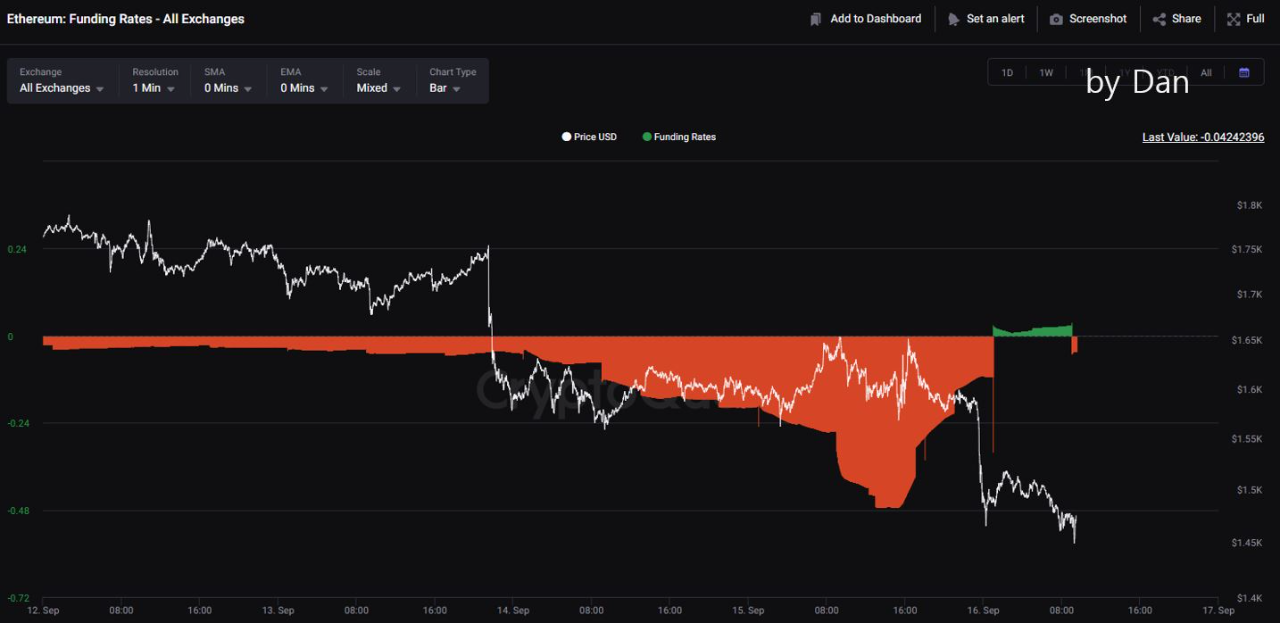
Now, here is a chart that shows the trend in the Ethereum funding rates over the last few days:
Ethereum Funding Rate

Looks like the metric had a deep red value not too long ago | Source: CryptoQuant
""

As you can see in the above graph, the Ethereum funding rates had been going down only a couple of days back, and reached a new negative peak right as the merge arrived.
""

The quant explains that this was because investors thought the PoS transition hype had already impacted the market, and so they bet on short positions, believing that the price would go down during the aftermath of the much anticipated event.
""

But just following the merge, the price actually rather saw a slight improvement. Seeing that the decline they had waited for didn’t come, these short holders quickly started closing up their positions, leading to the funding rates sharply moving up.
""

Right as this happened, the whales who had been waiting jumped in and dumped their ETH, causing the price to plunge down hard. The analyst notes that this is a display of whales trying to make a move in such a way that nets them the largest gains. “To read those moves, we need to utilize both on-chain data and charts,” says the quant.
""

ETH Price
""

At the time of writing, Ethereum’s price floats around $1.4k, down 7% in the last seven days. Over the past month, the crypto has lost 24% in value.
""

The below chart shows the trend in the price of the coin over the last five days.

Ethereum Price Chart

The value of the crypto seems to have been going down during the last few days | Source: ETHUSD on TradingView
""

Ethereum has been trending down since the merge took place, and right now it’s unclear when the crypto may show some reversal.


İlgili Okumalar

The Hunter Becomes the Hunted: The Most Profitable MEV Bot Gets Hacked

A well-known and highly profitable Ethereum MEV Bot, Jaredfromsubway.eth, suffered a sophisticated on-chain attack this Saturday, losing over $7.5 million. Analysis by Blockaid and others reveals this was not a conventional phishing or smart contract exploit, but a targeted "counter-MEV honeypot attack." The attacker meticulously laid a trap over several weeks, deploying 66 fake token contracts and liquidity pools disguised as major assets like WETH and USDC. These pools created the illusion of arbitrage opportunities. The MEV Bot's automated system detected these signals, executed trades, and in the process, granted approval permissions to attacker-controlled contracts. These approvals were not revoked, creating a persistent vulnerability. The attacker then exploited this in a single transaction, draining the bot's ETH, USDC, and USDT holdings. Jaredfromsubway.eth is notorious as one of Ethereum's most active and profitable MEV Bots, primarily known for executing "sandwich attacks" to profit from transaction slippage. Estimates suggest it has earned tens of millions in MEV revenue. The incident highlights escalating crypto security threats, demonstrating that even top-tier automated "predators" are vulnerable to novel, logic-based attacks designed to exploit their own operational rules. Following the hack, an unverified X account impersonating Jaredfromsubway.eth emerged, falsely offering a bounty for the return of funds, prompting developer warnings for users to stay vigilant.

marsbit59 dk önce

The Hunter Becomes the Hunted: The Most Profitable MEV Bot Gets Hacked

marsbit59 dk önce

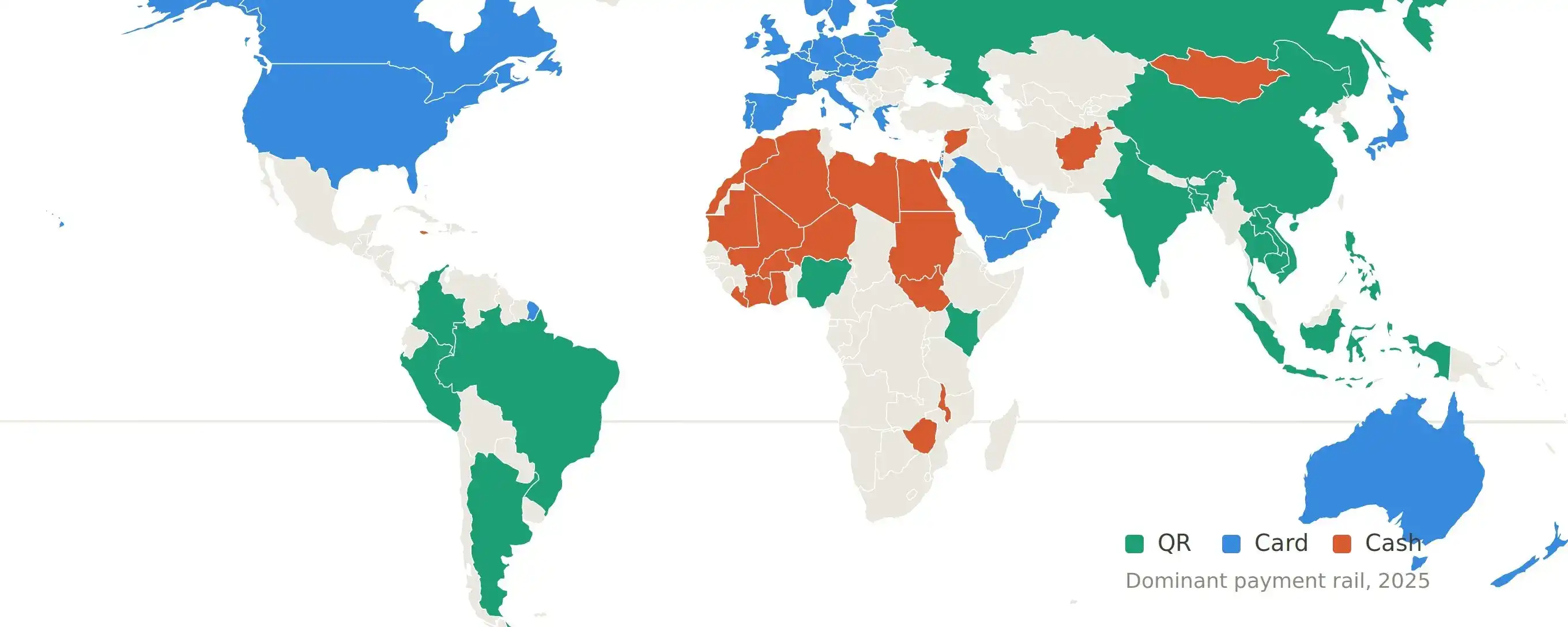
The Reality of Payments in Latin America Is Not What You Think

The payment landscape in Latin America is undergoing a fundamental shift, driven by on-the-ground realities that challenge common perceptions. Based on over 500 hours of field research across the region, key insights emerge. Firstly, QR code payments, like Brazil's Pix, are becoming the dominant payment method in most emerging markets, overtaking cards. However, these domestic instant payment systems lack international interoperability, creating a significant gap for cross-border users. Secondly, the narrative around crypto cards is often misunderstood; their primary volume comes from high-net-worth professionals using them for salary conversions (e.g., USDT to local currency via Pix), not retail micro-payments. Competition in payments is shifting from customer acquisition to controlling the settlement layer, leading fintechs to acquire banking licenses for efficiency. Thirdly, treating "Latin America" as a single market is a mistake. Countries like Argentina, Brazil, and Mexico have distinct economic realities, user segments, and regulatory approaches. Brazil alone has at least five distinct user segments with different financial flows. Overlooked markets like Guatemala, Honduras, and El Salvador (the "forgotten five") offer high remittance volumes with lower competitive density. Finally, regulation in Latin America is often ahead of the US, with clearer frameworks for digital assets and a pragmatic approach from regulators focused on safety rather than obstruction. The margin on stablecoin forex is rapidly compressing toward zero, meaning future winners will be those building value-added services on top of the infrastructure, not just the cheapest exchange.

marsbit1 saat önce

The Reality of Payments in Latin America Is Not What You Think

marsbit1 saat önce

Making Music in a Bear Market: The Survival Experiment of a Bitcoin Band

"Orange Pill Jam: A Bitcoin Band's Survival in the Bear Market" Orange Pill Jam is a musical group exploring themes of financial sovereignty and privacy, born from the Bitcoin community. Formed after singer Mermaid performed her song "Dollar Apocalypse" at a 2022 conference, the band creates music intended for both Bitcoin enthusiasts and general audiences. Their creative process involves Mermaid writing lyrics and melodies, which producer/multi-instrumentalist Michi then shapes with a precise, rhythm-focused approach, often demanding numerous retakes to achieve his unique standard of timing. Their songs, like "Cypherpunks' Manifesto" and "Fire of Freedom," tackle concepts of digital privacy, the pitfalls of "free" services, and personal sovereignty, influenced by experiences in places like El Salvador. Despite operating in a crypto bear market with a Copyleft model (offering music for free sharing/remixing and accepting optional Bitcoin donations), they face practical challenges. Their growth is slow on platforms like YouTube and Spotify, which aren't optimized for their niche content. The band also navigates the rise of AI-generated music. While acknowledging AI's efficiency for certain tasks, they believe human creativity occupies a unique space that algorithms cannot replicate—the ability to create new genres and capture intangible rhythmic feeling. For Orange Pill Jam, the core argument for both Bitcoin in a downturn and human artistry in the AI age lies in this irreplaceable, intentional, and imperfectly human creative process. Their project persists as an anti-algorithm experiment, valuing the unquantifiable impact of music over scalable metrics.

marsbit1 saat önce

Making Music in a Bear Market: The Survival Experiment of a Bitcoin Band

marsbit1 saat önce

İşlemler

Spot
Futures
活动图片