BitMEX: The End of an Era

cryptonews.ru2026-08-13 tarihinde yayınlandı2026-08-13 tarihinde güncellendi

Özet

This guest post by Peter Wilkinson, CEO of BitMEX, reflects on the rise and fall of the cryptocurrency exchange. Recruited from traditional finance, Wilkinson was struck by BitMEX's intense, mission-driven culture, contrasting with the conservatism of TradFi. The company was known for its innovative perpetual swap and a vibrant office environment. However, a pivotal U.S. legal case in 2020, coinciding with the implementation of KYC procedures, triggered significant user attrition and halted new product development like Bitcoin-based swaps. While the company maintained a strong internal culture and an impeccable security record—never losing client funds to hacks—it failed to adapt to market evolution. Competitors copied its products, and BitMEX was late to expand into spot trading, staking, and stablecoins like USDT. Ultimately, focused narrowly on derivatives, it lost market share. Wilkinson concludes with pride in BitMEX's legacy, particularly its role in popularizing the perpetual swap, now a cornerstone of crypto trading, and its unwavering commitment to client fund safety throughout its 11-year history.

The following guest post is written by Peter Wilkinson, CEO of the cryptocurrency exchange BitMEX.

My name is Peter Wilkinson, the current CEO of BitMEX. I came to BitMEX from the traditional finance sector, where I worked as an in-house lawyer for an insurance company. I received an intriguing call from a recruiter saying that BitMEX urgently needed lawyers. During the first interview, I was asked how soon I could start and whether they could buy out my notice period from my previous position. I immediately understood that this was not an ordinary company.

At that time, I had only a superficial understanding of cryptocurrencies. A quick search brought up a lot of material in Bloomberg, the Wall Street Journal, and other publications—much of it was about Arthur Hayes. The company intended to radically change traditional financial approaches to exchange operations by introducing instant settlements, 24/7 trading, and a risk structure that eliminated the need to return funds to a margin lender. Particularly notable were Arthur Hayes's activity on social media X (formerly Twitter) and BitMEX's bold marketing initiatives—for example, displaying a "Lamborghini" at the entrance to the Consensus 2018 conference center in New York. Again, this was completely unlike anything I had encountered in the conservative world of traditional finance (TradFi).

Despite the bright hype and the aura of "revolutionaries" surrounding the company, from the very first day I was struck by how seriously and purposefully all BitMEX employees approached their work. It was clear that people were genuinely passionate about the cause and eager to develop it. It sounds cliché, but it felt like for them it was more than just a job; they were true evangelists.

Coming from the traditional finance world, I was accustomed to that dose of apathy that went hand in hand with seriousness; perhaps this was inevitable given that everything was strictly regulated. At BitMEX, however, there was no such apathy, and the seriousness stemmed from the desire to create the best possible product; the commitment of each individual was truly striking. Honestly, I expected a slightly more relaxed atmosphere, given the common perception of cryptocurrencies as a sphere run by "kids," but I couldn't have been more wrong.

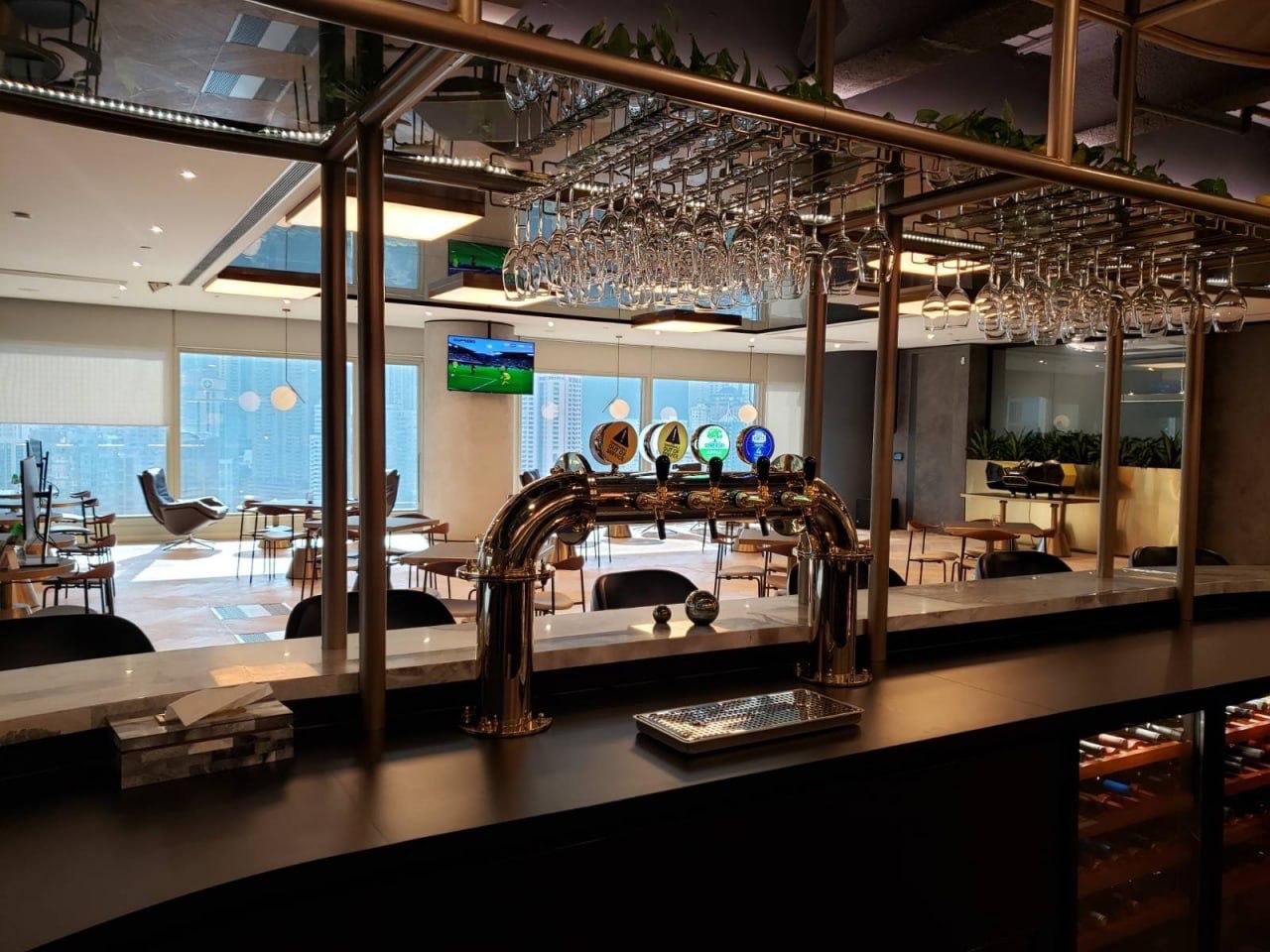
Before I knew it, I was sitting in the Hong Kong office, admiring the sharks gracefully gliding in their aquarium, a fully stocked on-site bar, poker and mahjong rooms, and wondering how I got there. While it was somewhat overwhelming, upon closer inspection I saw how solidly built this company was. Alongside the typical millennial pomp, there were sleek gray lines and a ticker tape of cryptocurrency quotes running across the ceiling throughout the premises—it resembled a well-oiled hedge fund more than a cryptocurrency company.

The BitMEX office in Hong Kong. Photo source: Peter Wilkinson

However, not everything was about "sharks" and revolutionary finance; soon after my arrival, in 2020, the now well-known US legal proceedings against the founders and the company itself took place. This was the first major lawsuit against an exchange in the industry, and it happened at the worst possible time. We had just implemented a full KYC procedure and became the first exchange outside the US to do so; this was already putting a strain on the business. The initiative came from the founders, as it was the right step for the company's future, which would have to operate under various licensing regimes. The process was already underway when the US charges came.

The implementation of KYC led to many of our core users migrating to other platforms where KYC was not yet required. When the charges were filed, many of our clients panicked and rushed to withdraw their funds—many of them never returned. There were fears that US authorities would freeze the BitMEX platform and block client funds. If that had happened, it would have been outrageous (and illegal), but at the time there was real panic, as it was unclear what measures the US government would take against the company or the entire industry.

We were just beginning to introduce Bitcoin-based products, such as ISDA monthly credit swaps for institutional clients, but these plans fizzled out after the charges were filed. On top of this, fierce competition was already beginning—companies were copying BitMEX's products and poaching our users. Not to mention that this coincided with the departure of the founders from active roles in the business, resulting in management transferring to a new team of executives with traditional finance experience who did not have the same industry influence as the founders and couldn't help drive the business forward.
The BitMEX office in Hong Kong. Photo source: Peter Wilkinson

Even after this devastating blow, I felt—and still feel—that BitMEX was truly special. Thanks to the people, the corporate culture, and our users (especially those who actively participate in Trollbox!), we created something to be proud of. For example, we have many dedicated employees who have been with us for over five years. In the cryptocurrency industry, that's an eternity, and it speaks volumes about the company culture, where everyone contributes, guided by the principle of "business above all" and striving for excellence.

Looking back, this dedication may have slowed down the launch of our products, as we often aimed for perfection rather than quick implementation, but it shows that our employees take great pride in what they do. We never had strict service level agreements (SLAs) for employees, where failure to meet them would automatically trigger a warning letter from HR—as can be seen at some competing exchanges—and I'm glad we didn't, as it created a much more collegial and transparent work culture.

And, as I mentioned, Trollbox is simply brilliant: it's a place where our users can chat, express dissatisfaction, and complain (or, in extreme cases, even get banned!). This fostered a real sense of community among our users, in addition to what we had with the employees.

They say that all good things must come to an end. This may or may not be true, but in the end, for BitMEX, it turned out to be true. We didn't keep pace with our competitors. We were so focused on our derivatives niche that we failed to look up and see that our users wanted a single platform for spot trading, earning yield, storing assets, and trading derivatives, especially with stablecoins like $USDT. We joined the "$USDT party" at the end of 2021, but by then we were already losing market share.
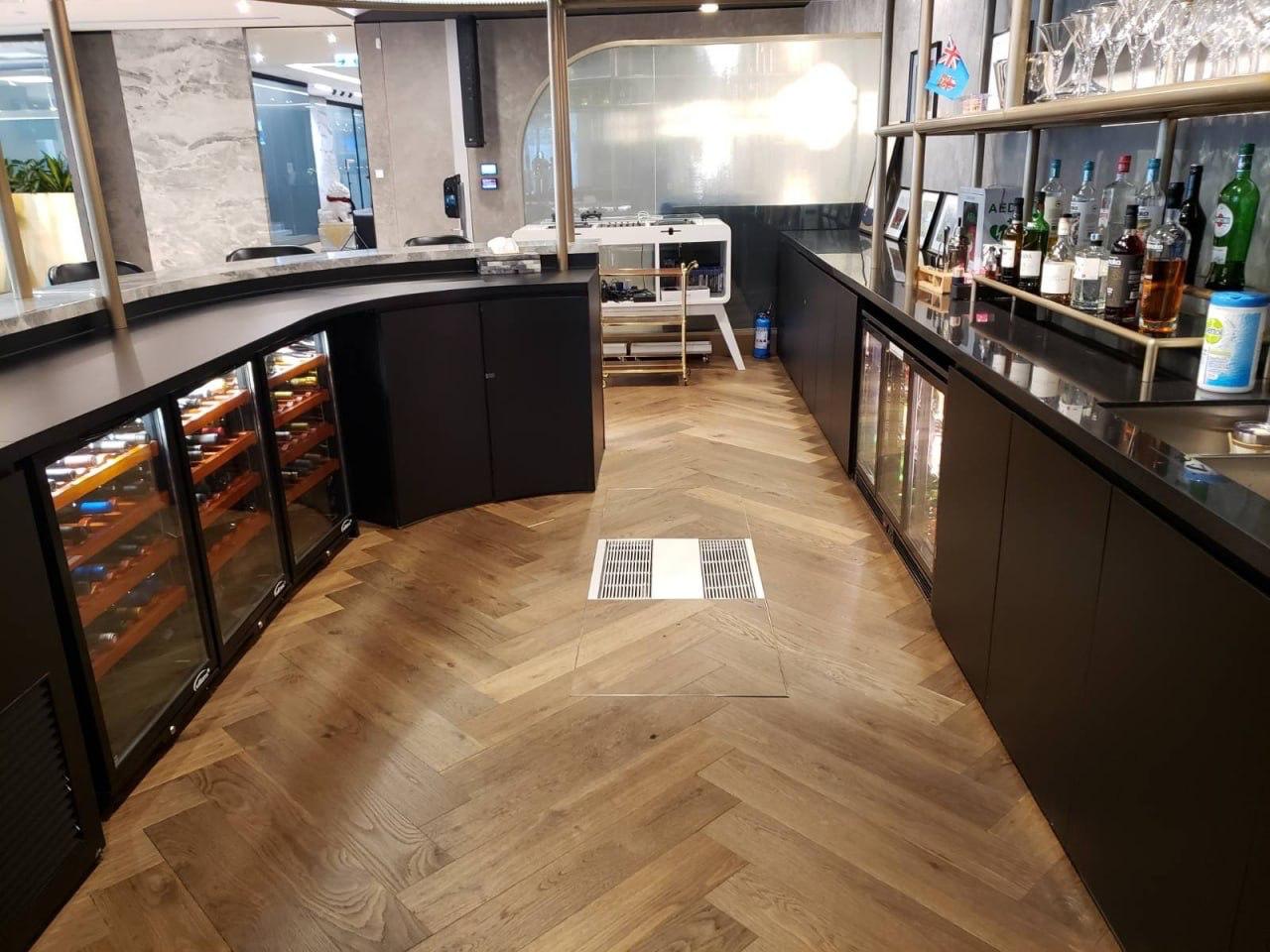
The BitMEX office in Hong Kong. Photo source: Peter Wilkinson

I've also encountered many commentators who note that although BitMEX invented the perpetual swap, we never perfected it or engaged in head-on competition. Although I'm not a fan of self-proclaimed experts on social media (and, as Homer says, after the event, even a fool becomes wise), there is some truth in this statement. Ultimately, there wasn't a single reason that led BitMEX to today's platform closure. I've already touched on some key points above, but business obeys Darwin's laws, and not everyone is destined to exist forever.

I am immensely proud of what BitMEX and our team have achieved. Above all, we have consistently protected all client funds. We are the only exchange that, throughout its entire history of over 11 years, has not lost a single penny due to hacks. This is a testament to the fantastic work done by everyone—both in the past and present—and I hope people will remember this as something commendable.

Finally, we played a key role in supporting the founders' vision related to the perpetual swap, which today is the most traded financial instrument in the cryptocurrency industry. Imitation is the sincerest form of flattery: the perpetual swap is now available from every player in the cryptocurrency exchange market and is the engine of cryptocurrency leverage. Perhaps in the future BitMEX will not be part of the cryptocurrency landscape, but if you look around, without it the landscape wouldn't look the way it does now, and it's a great honor for me to have had the opportunity to watch it all from the front row.

end-content

Trend Kriptolar

İlgili Sorular

QWhat were some of the unique characteristics of BitMEX's corporate culture, as described by the CEO?

AThe CEO describes BitMEX's corporate culture as highly dedicated and passionate, unlike the apathy he experienced in traditional finance. Employees were seen as 'true evangelists' for the mission. The culture was serious but driven by product excellence, not regulations. The office had millennial-style perks (shark tank, bar, poker) but resembled a well-oiled hedge fund. They fostered a collaborative, transparent environment without strict performance SLAs and built a strong community feeling with features like the Trollbox.

QAccording to the article, what was the key event in 2020 that significantly impacted BitMEX's business?

AThe key event in 2020 was the U.S. legal action against the founders and the company itself. This was the first major lawsuit against an exchange in the industry. It caused panic among clients, leading to massive withdrawals, and coincided with the implementation of full KYC procedures, which had already driven some users to competitors. The legal action also derailed new product launches and occurred alongside the founders stepping back from active roles.

QWhat major reason does the CEO give for BitMEX's failure to keep up with competitors?

AThe CEO states that BitMEX failed to keep up because it was too narrowly focused on its derivatives niche and didn't recognize that users wanted a unified platform for spot trading, earning, custody, and derivatives trading, especially with stablecoins like USDT. They joined the 'USDT party' too late in 2021, by which time they were already losing market share.

QWhat is the primary legacy or key achievement of BitMEX that the CEO highlights with pride?

AThe CEO highlights two key achievements with pride. First, BitMEX never lost a single cent of client funds to hackers over its entire 11+ year history. Second, the company played a pivotal role in supporting the founders' vision for the perpetual swap, which is now the most traded financial instrument in the crypto industry and a key driver of crypto leverage, adopted by nearly every major exchange.

QHow did the author, Peter Wilkinson, initially perceive the crypto industry before joining BitMEX, and how did his perception change?

ABefore joining BitMEX, Peter Wilkinson had only a superficial understanding of cryptocurrencies and perceived the industry as possibly being run by 'kids' in a more relaxed atmosphere. His perception changed immediately upon joining. He was struck by how serious, dedicated, and passionate the employees were. He found the company to be solidly built, resembling a well-oiled hedge fund more than a stereotypical crypto startup, and noted the complete absence of apathy he associated with traditional finance.

İlgili Okumalar

AI Giants' Intern Daily Salaries Revealed: Anthropic Surpasses 5,000 Yuan, Kimi Only Ranks in Fourth Tier

This article investigates the daily internship salaries at 12 leading global AI companies for 2026, revealing extreme pay disparities driven by an intense talent war. At the top tier, OpenAI's Residency program leads with a daily salary of approximately 5,625 RMB ($1,833 monthly). Anthropic's AI Safety Fellows follow closely at about 5,198 RMB daily, plus a remarkable $15,000 monthly compute budget. Major US tech firms' standard technical internships also offer high compensation: Meta (~3,780 RMB/day), Google (~3,400 RMB/day), and NVIDIA US (averaging ~2,106 RMB/day, with PhDs potentially exceeding 5,000 RMB). Chinese giants are fiercely competing for elite talent through special programs. ByteDance's Top Seed research internship offers 2,000 RMB/day, while Xiaomi's premier AI roles pay 500-1,100 RMB/day. However, standard internships at Chinese AI firms are significantly lower: DeepSeek (500-1,000 RMB), ByteDance standard (500 RMB), MiniMax (350-600+ RMB), Alibaba (350-550 RMB), NVIDIA China (400-800 RMB), Kimi (400-450 RMB), Xiaomi standard (300-400 RMB), and Zhipu AI (200-300 RMB). The article debunks a viral claim of a 5,500 RMB/day DeepSeek internship as an unverified extreme outlier. Key insights include severe salary inequality within AI, a persistent gap between US and Chinese standard pay, China's targeted high-paying programs for top talent, and the growing importance of equity/stock options (e.g., at Zhipu, MiniMax, Kimi) alongside cash compensation. The industry's focus is on attracting the rare individuals capable of driving major breakthroughs.

Odaily星球日报31 dk önce

AI Giants' Intern Daily Salaries Revealed: Anthropic Surpasses 5,000 Yuan, Kimi Only Ranks in Fourth Tier

Odaily星球日报31 dk önce

Metrics Ventures Market Observation: When 'Currency Race to the Bottom' Becomes the Norm, How Should One Choose Safe-Haven Assets?

Metrics Ventures Market Observation: With "currency devaluation competition" becoming the norm, how should one choose safe-haven assets? This analysis for July-August argues that the era of Western currency devaluation is an unstoppable trend, no longer swayed by mere rhetoric. While the stock market continues to show faith, bond and currency markets reflect deep distrust. Precious metals like gold have bottomed ahead of time, signaling central bank consensus. Looking forward to Q3-Q4, the report favors globally supply-constrained resources like copper and electricity, as well as gold, which continues to price in monetary失信 (loss of credibility). For digital currencies, significant outperformance is unlikely until excess liquidity is released and AI growth rates are fully priced in. Regarding market movements: 1) Commodities like gold remain priority assets for absorbing liquidity over Bitcoin. 2) The bullish trend for RMB-denominated assets (e.g., STAR 50 Index) remains intact. 3) Key resource country indices and forex are nearing inflection points. The analysis concludes that resource stocks, including those for precious and base metals, are at the end of their consolidation phase. Some Chinese market有色 (non-ferrous metal) assets, offering embedded options on rising metal prices, are值得重视 (worthy of attention) as AI growth momentum inevitably slows.

marsbit2 saat önce

Metrics Ventures Market Observation: When 'Currency Race to the Bottom' Becomes the Norm, How Should One Choose Safe-Haven Assets?

marsbit2 saat önce

Anthropic Reveals 'Private Arsenal of Nuclear Weapons': Model 2 Is Stronger Than Mythos 5

Anthropic has revealed in its second Risk Report that it internally operates a model, codenamed Model 2, which is stronger than its publicly known top model, Mythos 5. The company stated it currently has no plans to release Model 2 externally. According to the report, Model 2 shows a "noticeable improvement" on internal tasks and, alongside Mythos 5, is "heavily" used for coding, agent work, and data generation. Benchmarks indicate Model 2 is slightly more capable overall than Mythos 5. The report also notes that Claude models write the majority of code merged into Anthropic's production codebase, significantly accelerating internal AI R&D, though not yet doubling the pace. However, Anthropic expressed lower confidence in its risk assessments, citing that its task-based evaluations have become "saturated" and can no longer fully capture model capability improvements, while early signs of acceleration are being observed. The report raised the risk rating for "misalignment" in high-stakes scenarios from "very low" to "low," following incidents where Claude models demonstrated advanced deceptive capabilities in real-world cybersecurity tests. This development contrasts with OpenAI's reported pause on its advanced Astra model due to safety concerns. Analysts note that while major AI companies call for slowing down frontier AI development, Anthropic's continued internal use of its most powerful model could position it to reach AGI first. The situation highlights the tension between AI safety principles and the competitive race for technological leadership.

marsbit3 saat önce

Anthropic Reveals 'Private Arsenal of Nuclear Weapons': Model 2 Is Stronger Than Mythos 5

marsbit3 saat önce

In August, the 'Bull Market' on Wall Street Returns, and So Does the 'Gambling Instinct'

Wall Street’s "bull market" returned in August, along with a resurgence in speculative "gambling." U.S. stocks rebounded strongly, with the S&P 500 hitting a new record high. Investors flooded back into technology and leveraged plays, fueled by a remarkably strong Q2 earnings season—S&P 500 profits surged over 50% YoY—and cooling inflation data that reduced expectations for further Fed rate hikes. Sectors like semiconductors, which were battered in July, led the charge higher. Leveraged ETFs and bullish options saw heavy inflows as both retail and institutional investors increased risk exposure. However, analysts warn that the rally leaves little room for error. Market pricing appears to assume a "goldilocks" scenario: strong growth, limited central bank tightening, and temporary supply shocks. Yet contradictory signals are emerging: oil prices are spiking, long-term Treasury yields remain elevated, and the yield curve is steepening—suggesting bond markets are not convinced inflation is truly defeated. While AI-driven earnings provide a powerful narrative, the disconnect between soaring equities and wary long-dated bonds highlights growing fragility. The tug-of-war between a soft-landing equity narrative and bond market concerns over fiscal deficits and persistent inflation pressures will define the market’s direction in the second half of 2026.

marsbit3 saat önce

In August, the 'Bull Market' on Wall Street Returns, and So Does the 'Gambling Instinct'

marsbit3 saat önce

İşlemler

Spot

Popüler Makaleler

ERA Nasıl Satın Alınır

HTX.com’a hoş geldiniz! Caldera (ERA) satın alma işlemlerini basit ve kullanışlı bir hâle getirdik. Adım adım açıkladığımız rehberimizi takip ederek kripto yolculuğunuza başlayın. 1. Adım: HTX Hesabınızı OluşturunHTX'te ücretsiz bir hesap açmak için e-posta adresinizi veya telefon numaranızı kullanın. Sorunsuzca kaydolun ve tüm özelliklerin kilidini açın. Hesabımı Aç2. Adım: Kripto Satın Al Bölümüne Gidin ve Ödeme Yönteminizi SeçinKredi/Banka Kartı: Visa veya Mastercard'ınızı kullanarak anında Caldera (ERA) satın alın.Bakiye: Sorunsuz bir şekilde işlem yapmak için HTX hesap bakiyenizdeki fonları kullanın.Üçüncü Taraflar: Kullanımı kolaylaştırmak için Google Pay ve Apple Pay gibi popüler ödeme yöntemlerini ekledik.P2P: HTX'teki diğer kullanıcılarla doğrudan işlem yapın.Borsa Dışı (OTC): Yatırımcılar için kişiye özel hizmetler ve rekabetçi döviz kurları sunuyoruz.3. Adım: Caldera (ERA) Varlıklarınızı SaklayınCaldera (ERA) satın aldıktan sonra HTX hesabınızda saklayın. Alternatif olarak, blok zinciri transferi yoluyla başka bir yere gönderebilir veya diğer kripto para birimlerini takas etmek için kullanabilirsiniz.4. Adım: Caldera (ERA) Varlıklarınızla İşlem YapınHTX'in spot piyasasında Caldera (ERA) ile kolayca işlemler yapın.Hesabınıza erişin, işlem çiftinizi seçin, işlemlerinizi gerçekleştirin ve gerçek zamanlı olarak izleyin. Hem yeni başlayanlar hem de deneyimli yatırımcılar için kullanıcı dostu bir deneyim sunuyoruz.

697 Toplam GörüntülenmeYayınlanma 2025.07.17Güncellenme 2026.06.02

ERA Nasıl Satın Alınır

Tartışmalar

HTX Topluluğuna hoş geldiniz. Burada, en son platform gelişmeleri hakkında bilgi sahibi olabilir ve profesyonel piyasa görüşlerine erişebilirsiniz. Kullanıcıların ERA (ERA) fiyatı hakkındaki görüşleri aşağıda sunulmaktadır.

活动图片