ChatGPT đột ngột cấm cửa, cả thế giới viết AI mất nguồn chỉ sau một đêm

marsbit2026-07-31 tarihinde yayınlandı2026-07-31 tarihinde güncellendi

Özet

Thời đại hoàng kim của viết bằng AI đang sụp đổ khi OpenAI áp dụng lệnh cấm đột ngột. Dù mô hình ngày càng mạnh, chất lượng bài viết lại trở nên kém hấp dẫn, thiếu đi dấu ấn cá nhân và khả năng ghi nhớ. Nghiên cứu từ Cambridge chỉ ra rằng AI được tối ưu hóa cho mã code và toán học, nhưng khả năng diễn đạt ngôn ngữ và lập luận đơn giản lại không được cải thiện đồng bộ. Nguyên nhân là thiếu tín hiệu phản hồi rõ ràng để đánh giá chất lượng văn chương. Đồng thời, ChatGPT bắt đầu từ chối bắt chước phong cách của các tác giả nổi tiếng như Stephen King hay J.K. Rowling dựa trên tên tuổi của họ, mặc dù vẫn có thể điều chỉnh theo các đặc điểm trừu tượng. Điều này làm gián đoạn quy trình làm việc của nhiều người viết phụ thuộc vào AI. Tóm lại, kỳ vọng về AI viết lách đang thay đổi. Nó không còn được xem như một tác giả tự động, mà trở lại vị trí công cụ hỗ trợ: tra cứu, sắp xếp cấu trúc và chỉnh sửa câu. Giá trị thực sự trong việc viết lách—kinh nghiệm, phán đoán và khát vọng biểu đạt—vẫn thuộc về con người.

Kỷ nguyên vàng của viết lách AI đang sụp đổ!

Càng tiến vào, mô hình thế hệ sau mạnh hơn thế hệ trước, nhưng bài viết thì ngày một tệ hơn.

Nó biết lúc nào nên liệt kê vài lời khuyên, chỗ nào chèn tiêu đề phụ, cũng không quên bổ sung một câu kết luận ở cuối.

Nhưng đọc xong toàn bài, trong đầu chẳng đọng lại được câu nào.

Mô hình càng mạnh, bài viết càng không giống lời con người

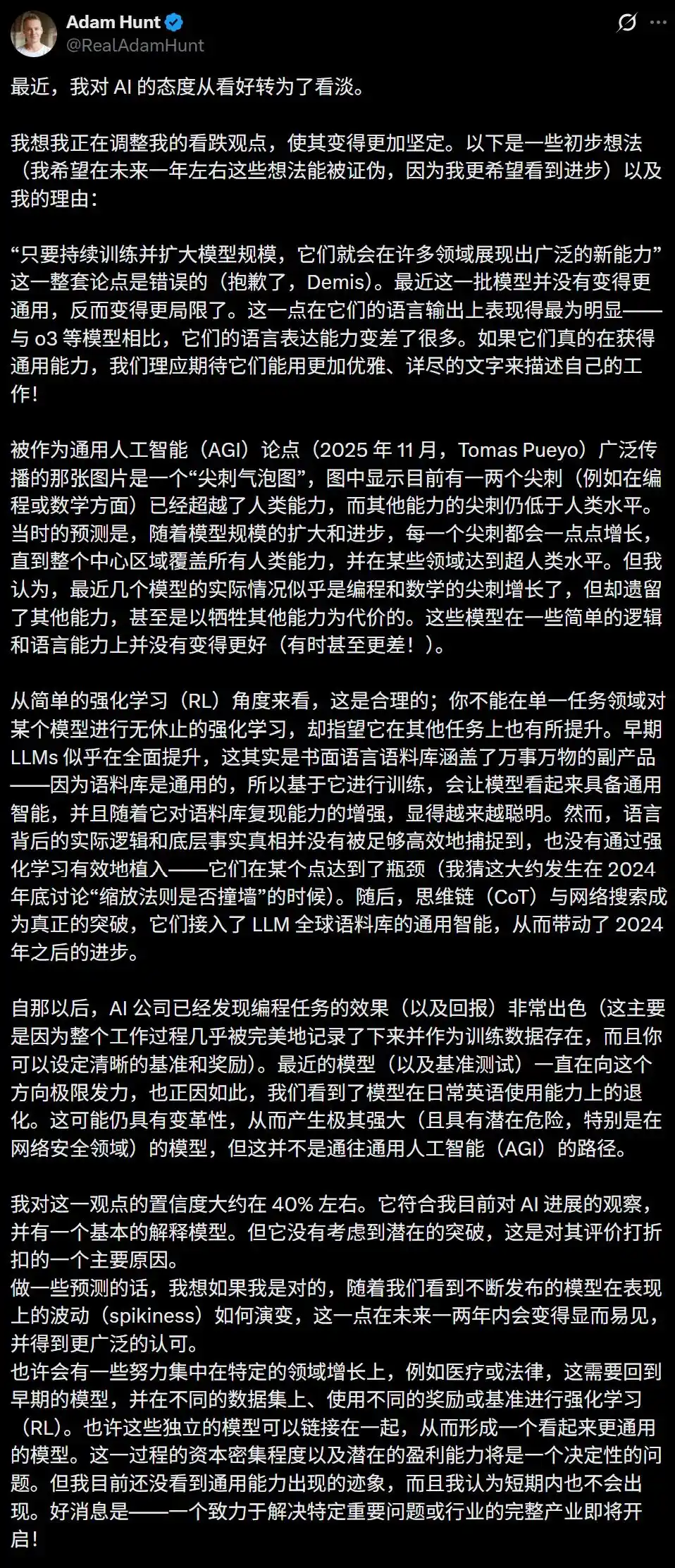
Gần đây, Tiến sĩ sau Tiến sĩ Adam Hunt tại Đại học Cambridge cũng nhận thấy hiện tượng này. Hướng nghiên cứu của ông là tâm thần học tiến hóa và tiến hóa loài người.

Trước đây, Hunt luôn ủng hộ AI. Nhưng đến ngày 28 tháng 7, ông thừa nhận trong một bài đăng dài: bản thân ngày càng bi quan hơn.
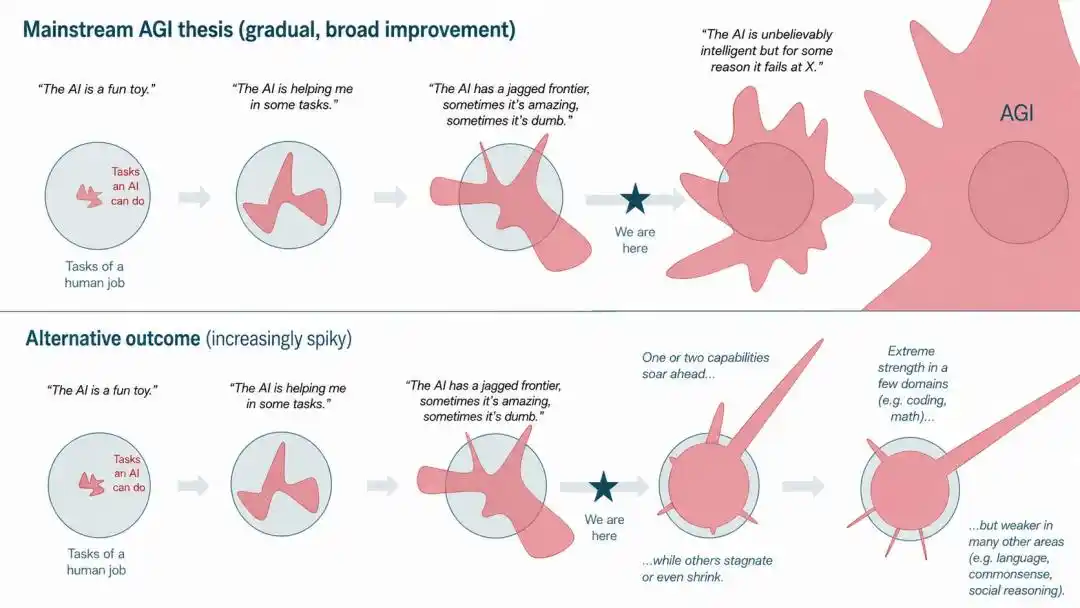
Trước đây có một phép ẩn dụ phổ biến, đó là vẽ năng lực mô hình thành một vòng tròn có đỉnh nhọn.

Đầu tiên là mã và toán học vượt trội hơn con người, sau đó khi quy mô mở rộng, mỗi hướng dần phát triển, cuối cùng đạt được AGI (Trí tuệ nhân tạo phổ quát).

Nhưng thực tế, phần đỉnh nhọn về mã và toán học ngày càng dài ra, còn biểu đạt ngôn ngữ và tư duy đơn giản thì không được nâng cao đồng bộ.
Từ góc độ học tăng cường, điều này gần như là tất yếu.

Mấy thế hệ LLM đầu trông có vẻ 'thông minh toàn diện', là do bản thân dữ liệu huấn luyện bao quát mọi lĩnh vực, từ thơ ca đến luận văn, toàn bộ internet đều ở trong đó.

Tuy nhiên, đó chỉ là sản phẩm phụ của dữ liệu, không phải 'khả năng thấu hiểu' thực sự của mô hình.

Chuỗi suy nghĩ (Chain of Thought) và tìm kiếm web sau đó ra đời, kéo dài tuổi thọ cho mô hình thêm một thời gian. Nhưng rốt cuộc con đường này cũng chạm tường.

Tiếp theo, các công ty AI nôn nóng lật ngược thế cờ đã nhắm tới mã nguồn.

Lý do rất đơn giản, nó có nguồn dữ liệu huấn luyện liên tục không ngừng.

Các lần commit, review, pull request trên GitHub đều có sẵn. Và giống như toán học, mã nguồn có tín hiệu phản hồi rõ ràng: chạy được là chạy được.

Còn viết bài thì sao? Bạn dùng thứ gì để tự động chấm điểm 'một đoạn văn xuôi có hay không'? Không có phần thưởng, RL (Học tăng cường) sẽ không tối ưu hóa theo hướng đó.

Thế là, tất cả hỏa lực huấn luyện đều chuyển hướng sang mã nguồn, còn biểu đạt ngôn ngữ chỉ có thể ăn mòn vốn cũ từ giai đoạn tiền huấn luyện.

Vốn cũ sẽ càng ngày càng cạn, thậm chí để phối hợp với sự nâng cao ở các lĩnh vực khác, còn có thể xuất hiện thoái hóa.

Đây chính là nơi Định luật Goodhart dễ lộ diện.

Khi một chỉ số trở thành mục tiêu huấn luyện, nó sẽ không còn phản ánh chính xác năng lực thực tế. Phòng thí nghiệm dùng bài kiểm tra chuẩn để tối ưu mô hình, rồi lại dùng các bài kiểm tra cùng loại để chứng minh mô hình mạnh hơn.

Tỷ lệ chính xác trên bảng xếp hạng vẫn sẽ tiếp tục tăng. Nhưng trải nghiệm sử dụng thực tế có thể bị trì trệ, thậm chí suy giảm.

Lần này, việc mô phỏng cũng bị hạn chế

Trong khi năng lực đang thoái hóa, một việc khác cũng đang diễn ra.

Một người dùng Reddit đăng bài phàn nàn, anh ta đã dùng ChatGPT viết sách trong vài tháng, đã đăng ký mô hình cao cấp. Giữa chừng nghỉ ngơi một thời gian.

Khi anh ta quay lại, prompt (câu lệnh) vẫn dùng được suốt bấy lâu, đột nhiên trả về từ chối.

Bản thân prompt không phức tạp: chỉ định một nhà văn, yêu cầu tăng hội thoại, làm phong phú chi tiết, tránh câu văn rời rạc.

Trước đây, chỉ cần ghi rõ tên nhà văn, mô hình có thể tạo ra nội dung gần với phong cách viết của họ, không cần giải thích thêm về độ dài câu, nhịp điệu, góc nhìn.

Bây giờ, loại prompt này không dùng được nữa.

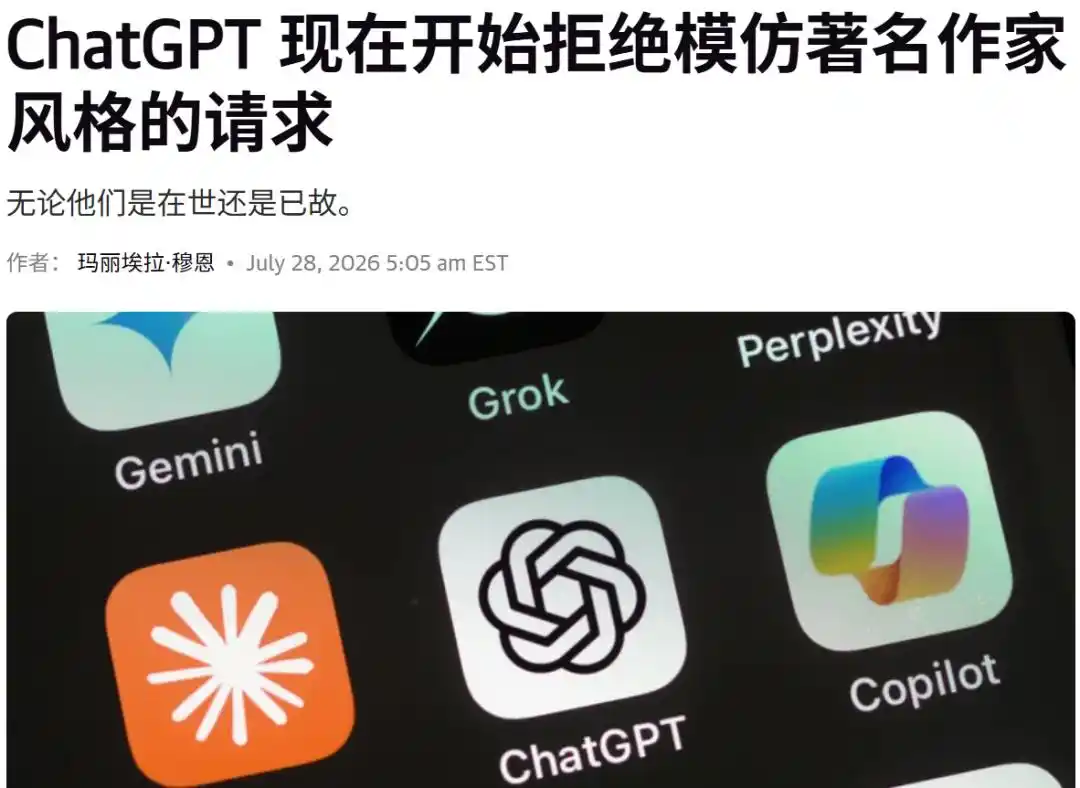
Ars Technica đã thử nghiệm với Stephen King, J.K. Rowling, Amy Tan, Dickens, Hemingway, còn Engadget thử nghiệm với Agatha Christie, ChatGPT đều từ chối mô phỏng.

Nếu bạn không chỉ tên, chỉ yêu cầu các đặc trưng trừu tượng như 'cường độ kịch tính', 'nhịp điệu kể chuyện', 'mật độ hội thoại' thì vẫn có thể xuất ra. Nhưng cái 'chất' thì không còn là cái chất như trước nữa.
Kỷ nguyên vàng của viết lách AI, sụp đổ rồi

Ngày nay, cuộc tranh cãi này đã lung lay kỳ vọng cơ bản của người dùng về viết lách AI.

Mô hình chưa chắc đã viết ngày càng hay, prompt cũng không còn hiệu quả lâu dài.

Nền tảng một khi thay đổi quy tắc, cả dây chuyền viết lách xây dựng xung quanh một mô hình cụ thể có thể sụp đổ ngay lập tức.

Tuy nhiên, viết lách AI sẽ không biến mất, nó chỉ quay trở lại vị trí mà nó đáng lẽ phải ở: công cụ.

Nó có thể tra cứu tài liệu, sắp xếp cấu trúc, sửa câu, nhưng không thể thay tác giả quyết định viết cái gì, tại sao viết.

Nói cách khác, kinh nghiệm, phán đoán và khát vọng biểu đạt của con người, đang ngày càng có giá trị.

Tài liệu tham khảo: https://arstechnica.com/ai/2026/07/chatgpt-stops-cloning-famous-writers-voices-but-may-capture-a-similar-feeling/

Bài viết này đến từ tài khoản công chúng WeChat "Tân Trí Nguyên" (新智元), tác giả: ASI Khải Thị Lục


Trend Kriptolar

İlgili Sorular

QTại sao tác giả cho rằng thời kỳ hoàng kim của viết bằng AI đang sụp đổ?

ATác giả cho rằng thời kỳ hoàng kim của viết bằng AI đang sụp đổ vì hai lý do chính. Thứ nhất, năng lực viết ngôn ngữ tự nhiên của các mô hình không cải thiện đồng bộ với các khả năng khác như lập trình hay toán học, dẫn đến bài viết ngày càng 'không giống lời nói của con người'. Thứ hai, các nền tảng như ChatGPT đã hạn chế hoặc cấm sử dụng lệnh yêu cầu mô phỏng phong cách của các nhà văn nổi tiếng, làm đứt gãy quy trình làm việc của nhiều người dùng.

QTheo bài viết, lý do nào dẫn đến việc các mô hình AI viết bài không tiến bộ về mặt ngôn ngữ?

ATheo bài viết, việc các mô hình AI viết bài không tiến bộ về mặt ngôn ngữ là do cơ chế huấn luyện. Các công ty AI tập trung nguồn lực vào việc tối ưu hóa các lĩnh vực có dữ liệu và phản hồi rõ ràng như lập trình (ví dụ: code chạy được hay không). Trong khi đó, việc đánh giá 'một bài văn hay' rất khó để tạo ra tín hiệu phần thưởng (reward signal) tự động cho việc học tăng cường (RL). Do đó, khả năng biểu đạt ngôn ngữ chỉ 'ăn mòn' vốn liếng từ giai đoạn tiền huấn luyện và thậm chí có thể bị thoái hóa.

QChatGPT đã thay đổi chính sách như thế nào liên quan đến việc bắt chước phong cách nhà văn?

AChatGPT đã thay đổi chính sách bằng cách từ chối thực hiện các lệnh yêu cầu mô phỏng phong cách viết của các nhà văn nổi tiếng cụ thể, như Stephen King, J.K. Rowling, hay Hemingway. Trước đây, người dùng chỉ cần đề cập tên nhà văn, mô hình sẽ tạo ra văn bản có phong cách gần giống. Giờ đây, các lệnh kiểu này bị từ chối. Tuy nhiên, người dùng vẫn có thể yêu cầu các đặc điểm trừu tượng như 'cường độ kịch tính' hay 'nhịp điệu kể chuyện', nhưng kết quả sẽ không còn giống 'hương vị' nguyên bản nữa.

QĐịnh luật Goodhart được đề cập trong bài có ý nghĩa gì trong bối cảnh phát triển AI?

ATrong bối cảnh phát triển AI được bài viết đề cập, Định luật Goodhart ('Khi một số liệu trở thành mục tiêu, nó sẽ không còn là một số liệu tốt') giải thích hiện tượng các mô hình được tối ưu hóa quá mức cho các bài kiểm tra chuẩn (benchmark) cụ thể. Điều này khiến điểm số trên bảng xếp hạng tăng lên, nhưng khả năng thực tế trong việc ứng dụng (như viết lách tự nhiên) có thể bị trì trệ hoặc thậm chí suy giảm, vì mô hình học cách 'đánh bại' bài kiểm tra thay vì thực sự hiểu và giỏi một kỹ năng tổng quát.

QVai trò của con người trong viết lẽ được dự đoán sẽ thay đổi như thế nào theo quan điểm của bài viết?

ATheo quan điểm của bài viết, AI viết lẽ sẽ không biến mất mà lui về đúng vị trí của nó: một công cụ hỗ trợ. Nó có thể giúp tra cứu tài liệu, sắp xếp cấu trúc, hoặc sửa câu, nhưng không thể thay thế con người trong việc quyết định 'viết cái gì' và 'tại sao phải viết'. Do đó, kinh nghiệm, sự phán đoán và khát vọng biểu đạt của con người sẽ ngày càng trở nên có giá trị. Con người vẫn là người chỉ đạo và truyền cảm hứng cho quá trình sáng tạo nội dung.

İlgili Okumalar

PA Graphics Explanation | One Chart to Understand the Major Web3 Events in August 2026

**PANews Crypto Calendar: Key Web3 Events in August 2026** PANews introduces its revamped crypto calendar, featuring comprehensive coverage, flexible filtering, and easy export options. The market in August will be shaped by multiple key events across macroeconomics, regulation, tokenomics, and project developments: * **Macro & Policy:** Key US economic data releases (July Non-Farm Payrolls, CPI), the Federal Reserve meeting minutes, and the Jackson Hole Economic Symposium will be in focus. On the regulatory front, the US Senate plans to release a new draft of the *CLARITY Act*, while the EU's expanded crypto ban against Belarus comes into effect. * **Token Unlocks:** Significant token unlocks are scheduled for assets including ENA, AVAX, CONX, ZRO, and KAITO, which may influence market volatility. * **Project Updates & Shutdowns:** Several services, including Exchange Art, Ctrl Wallet, Zapper, NFTfi, and Summer.fi, are set to cease operations or undergo major adjustments. Users are advised to manage their assets accordingly. * **Corporate Activity:** Q2 earnings reports from companies like SpaceX, Circle, and Nvidia are due. Unitree Robotics will initiate its IPO subscription on the STAR Market, and Moonshot AI plans to begin a Pre-IPO financing round. * **Industry Events:** Major conferences such as Bitcoin Asia 2026 and the 2026 Digital Expo will take place. The overarching market narrative for August will revolve around macroeconomic expectations, regulatory developments, token unlock schedules, and ongoing industry consolidation.

marsbit6 dk önce

PA Graphics Explanation | One Chart to Understand the Major Web3 Events in August 2026

marsbit6 dk önce

Wall Street's Most Famous 'Cassandra' Now Has His Sights Set on Nvidia

Michael Burry, the famed "Big Short" investor, has once again captured Wall Street's attention with a series of short positions against major tech and semiconductor stocks, most notably Nvidia. In late June and July, through his "Cassandra Unchained" newsletter, Burry disclosed short bets against Nvidia, Tesla, Applied Materials, Caterpillar, the SOXX semiconductor ETF, and later, Micron Technology. His core thesis revolves around potential distortions in the AI infrastructure boom, specifically questioning whether extended depreciation schedules (e.g., 6 years vs. a realistic 2-3 years for AI chips) by cloud giants like Microsoft and Google artificially inflate profits. He also raises concerns about possible "off-balance-sheet circular financing," where chip demand might be propped up by vendor-backed funding to clients. Nvidia's stock experienced volatility following these disclosures, briefly dipping but largely holding near Burry's reported entry points, leaving his positions roughly flat or slightly underwater as of late July. This move is part of a pattern for Burry, whose track record since his legendary 2008 bet is mixed. He has faced notable losses, such as on Tesla in 2021, while scoring on broader market turns like the 2020 pandemic crash. His methodology focuses intensely on free cash flow and scrutinizing original financial documents to spot overvaluation and structural risks, but it often struggles with timing the market. The article contrasts Burry's stance with other prominent investors. Steve Eisman, another "Big Short" figure, is not shorting Nvidia, citing strong fundamentals but expressing nervousness about sustainability. Jim Chanos agrees with the broad "accounting mismatch" concern—comparing it to the dot-com bubble—but targets financial leverage in private equity firms rather than the chip stocks themselves. While Nvidia's short interest remains relatively low at 1.3-1.4% of float, the massive stock size means absolute short losses have been significant, exceeding $5 billion earlier this year. The piece concludes that for ordinary investors, the key takeaway is not replicating specific short bets but learning from the critical frameworks these investors use: questioning rosy accounting, identifying structural vulnerabilities, and maintaining skepticism during market euphoria, even if pinpointing the exact catalyst for a downturn remains elusive.

marsbit31 dk önce

Wall Street's Most Famous 'Cassandra' Now Has His Sights Set on Nvidia

marsbit31 dk önce

Weekly Selection丨Epic Stock Market Volatility, Changxin Tech's IPO Reshapes Storage Landscape, Saylor Aims to Re-Anchor STRC Around September 8th

PANews Weekly Digest: Market Turmoil, Tech Breakthroughs, and Crypto Developments. The week saw significant volatility across global markets. South Korea's KOSPI index experienced extreme turbulence, including multiple trading halts, largely driven by sharp declines in AI hardware stocks like SK Hynix. In contrast, China's Changxin Xinqiao (CXC) achieved a landmark IPO with a market cap surpassing 4 trillion yuan, marking a major success for the domestic DRAM industry after a decade of losses. In the crypto and Web3 space, several key narratives emerged. AI is driving demand for new infrastructure, with projects like AI agent wallets and programmable payments gaining traction, attracting interest from firms like Coinbase. The Bitcoin mining sector is pivoting, with companies like MARA focusing on energy management as electricity becomes a core AI-era asset. Meanwhile, the RWA (Real World Assets) sector faces a "utilization puzzle," with hundreds of billions in on-chain assets remaining dormant. Notable market movements included a historic single-day surge of over 17% for the KOSPI index and a significant migration of $16.5 billion in staked ETH within the Lido ecosystem. Michael Saylor announced a target to re-peg the STRC stablecoin around September 8th. Other highlights include discussions on Ethereum's ambitious 2030 roadmap for scaling and privacy, analysis showing high protocol revenues not always translating to token price gains, and warnings from Citi about potential extreme commodity price shocks by late 2026.

marsbit36 dk önce

Weekly Selection丨Epic Stock Market Volatility, Changxin Tech's IPO Reshapes Storage Landscape, Saylor Aims to Re-Anchor STRC Around September 8th

marsbit36 dk önce

When the Market Begins to Question AI Capex: A Full Analysis of Q2 Earnings Reports from Five Tech Giants

In late July 2026, five major US tech giants—Alphabet, Intel, Microsoft, Meta, and Apple—released their Q2 earnings reports. While all companies exceeded revenue and profit expectations, driven by strong AI-related business growth, investor reactions diverged sharply due to concerns over escalating AI capital expenditures (capex) and their impact on free cash flow. Alphabet reported strong revenue growth and a surging cloud business, but its stock fell after announcing a doubled year-on-year capex and negative quarterly free cash flow for the first time. Intel posted its strongest revenue growth in over 15 years, but its stock experienced volatile trading after significantly raising its full-year capex guidance. Microsoft saw its stock surge after beating estimates and, crucially, lowering its capex forecast while projecting positive free cash flow. Meta faced the most severe sell-off as its profits declined despite revenue beats, with free cash flow plunging over 90% and its capex guidance raised. Apple reported record June-quarter results, but its stock plummeted after providing Q4 revenue guidance that fell short of expectations, citing supply chain constraints and forex headwinds. The overall takeaway is that the market's focus has shifted from validating AI demand to scrutinizing the timeline for returns on massive AI investments. Companies demonstrating a clearer path to managing capex and preserving free cash flow, like Microsoft, were rewarded, while those signaling continued aggressive spending faced investor skepticism.

Odaily星球日报45 dk önce

When the Market Begins to Question AI Capex: A Full Analysis of Q2 Earnings Reports from Five Tech Giants

Odaily星球日报45 dk önce

a16z: From Companies to DAOs, DUNA May Become the Next Generation Organizational Form

This article, "From Companies to DAOs: How DUNA Could Become the Next Organizational Form," traces the 500-year evolution of business collaboration. It begins with medieval structures like the *commenda* and Florentine *compagnia*, which exposed partners to personal risk. The modern corporation, exemplified by the Dutch East India Company (VOC), was a revolutionary leap, enabling large-scale, capital-intensive ventures by offering limited liability and reducing coordination costs. However, corporations introduced new challenges like principal-agent problems and bureaucratic overhead. The piece argues that software and internet-native protocols are now reducing these traditional overheads. Decentralized Autonomous Organizations (DAOs) emerged as a new model for coordination without centralized management. Yet, DAOs face a significant legal vacuum: they lack legal recognition, leaving members exposed to unlimited personal liability, and their tokens are vulnerable to being classified as securities under unclear regulations (e.g., the Howey Test). This has forced projects into suboptimal workarounds like offshore foundations. The article identifies the Decentralized Unincorporated Nonprofit Association (DUNA) as a potential solution. Recently legalized in states like Wyoming, the DUNA provides a legal wrapper for decentralized networks. It grants key protections—legal personality, limited liability, and perpetual existence—to a group without imposing a traditional hierarchical management structure. This allows token-holder communities to govern, hold assets, and contract as a single legal entity, aligning with their decentralized nature. While DUNA doesn't solve all governance challenges or magically resolve securities law questions, it represents a crucial step. It fills the legal recognition gap, offering a native legal form for internet-scale, decentralized collaboration and extending the separation of personal risk from organizational venture into a new domain.

marsbit1 saat önce

a16z: From Companies to DAOs, DUNA May Become the Next Generation Organizational Form

marsbit1 saat önce

İşlemler

Spot

Popüler Makaleler

BAN Nasıl Satın Alınır

HTX.com’a hoş geldiniz! Comedian (BAN) satın alma işlemlerini basit ve kullanışlı bir hâle getirdik. Adım adım açıkladığımız rehberimizi takip ederek kripto yolculuğunuza başlayın. 1. Adım: HTX Hesabınızı OluşturunHTX'te ücretsiz bir hesap açmak için e-posta adresinizi veya telefon numaranızı kullanın. Sorunsuzca kaydolun ve tüm özelliklerin kilidini açın. Hesabımı Aç2. Adım: Kripto Satın Al Bölümüne Gidin ve Ödeme Yönteminizi SeçinKredi/Banka Kartı: Visa veya Mastercard'ınızı kullanarak anında Comedian (BAN) satın alın.Bakiye: Sorunsuz bir şekilde işlem yapmak için HTX hesap bakiyenizdeki fonları kullanın.Üçüncü Taraflar: Kullanımı kolaylaştırmak için Google Pay ve Apple Pay gibi popüler ödeme yöntemlerini ekledik.P2P: HTX'teki diğer kullanıcılarla doğrudan işlem yapın.Borsa Dışı (OTC): Yatırımcılar için kişiye özel hizmetler ve rekabetçi döviz kurları sunuyoruz.3. Adım: Comedian (BAN) Varlıklarınızı SaklayınComedian (BAN) satın aldıktan sonra HTX hesabınızda saklayın. Alternatif olarak, blok zinciri transferi yoluyla başka bir yere gönderebilir veya diğer kripto para birimlerini takas etmek için kullanabilirsiniz.4. Adım: Comedian (BAN) Varlıklarınızla İşlem YapınHTX'in spot piyasasında Comedian (BAN) ile kolayca işlemler yapın.Hesabınıza erişin, işlem çiftinizi seçin, işlemlerinizi gerçekleştirin ve gerçek zamanlı olarak izleyin. Hem yeni başlayanlar hem de deneyimli yatırımcılar için kullanıcı dostu bir deneyim sunuyoruz.

534 Toplam GörüntülenmeYayınlanma 2024.12.11Güncellenme 2026.06.02

BAN Nasıl Satın Alınır

Tartışmalar

HTX Topluluğuna hoş geldiniz. Burada, en son platform gelişmeleri hakkında bilgi sahibi olabilir ve profesyonel piyasa görüşlerine erişebilirsiniz. Kullanıcıların BAN (BAN) fiyatı hakkındaki görüşleri aşağıda sunulmaktadır.

活动图片