事到如今最对不起家人,币圈高手们在股票市场栽了个跟头

marsbit2026-07-30 tarihinde yayınlandı2026-07-30 tarihinde güncellendi

Özet

“事到如今,最对不起的就是家人。”这句话近期在投资圈频繁出现,道出了一场剧烈的市场反转和许多破碎的心。韩股SK海力士股价自高点腰斩,韩国综合指数年内多次熔断,美股存储板块也集体跳水。这场跨市场的暴跌,让许多曾在加密货币市场赚得第一桶金甚至财富自由的大V和交易员损失惨重,纷纷反思或宣告退圈。 由于加密市场持续低迷,而AI叙事推动韩美股市此前大涨,许多币圈投资者转而高位追逐存储类股票,却在随后的暴跌中亏损超过30%。习惯于高波动和杠杆操作的他们,在股票市场遭遇了水土不服。一方面,许多人使用高杠杆产品(如两倍做多ETF),导致跌幅被放大;另一方面,不同股市的交易规则(如韩股的盘前交易)通过链上合约传导,引发了剧烈的价格插针和清算。例如,一笔极小的盘前成交就曾导致链上永续合约闪崩,清算数千万美元。 血洗过后,投资者们开始反思。有人总结,巴菲特的长寿秘诀在于不加杠杆、永不满仓、留有现金,而普通人却常因杠杆而焦虑。多位资深交易员指出,当不同认知框架的聪明人形成共识却集体亏损时,意味着市场已超出原有认知。有人后悔跨界到认知和资金对手更强的股票市场,陷入自我否定;也有人将其视为学费,认为认清自身边界才是长久生存之道。市场能持续盈利者极少,能多走一程的,往往是那些在不同阶段看清自己能力范围的人。

“事到如今,最对不起的就是家人”。

最近听到这句话的频率,不亚于两个月前的“你相信光吗”、“你要站在光里,而不是光站在那里”。

简短两句话道出了180°反转的行情,和一地破碎的心。

据公开数据,韩股 SK 海力士较 6 月高点已经腰斩,总市值蒸发超 1000 万亿韩元(约 8000 亿美元)。韩股 KOSPI 自高点回撤约三成,年内已发生 9 次熔断。

7月28日,SK海力士跌超10%。美股存储链也集体跳水,闪迪、西部数据、希捷、美光单日普遍跌了 8% 到 13%。

7月29日,SK海力士再次大跌,盘中跌近20%,2倍做多海力士基金跌超30%,双双创下历史最大单日跌幅。
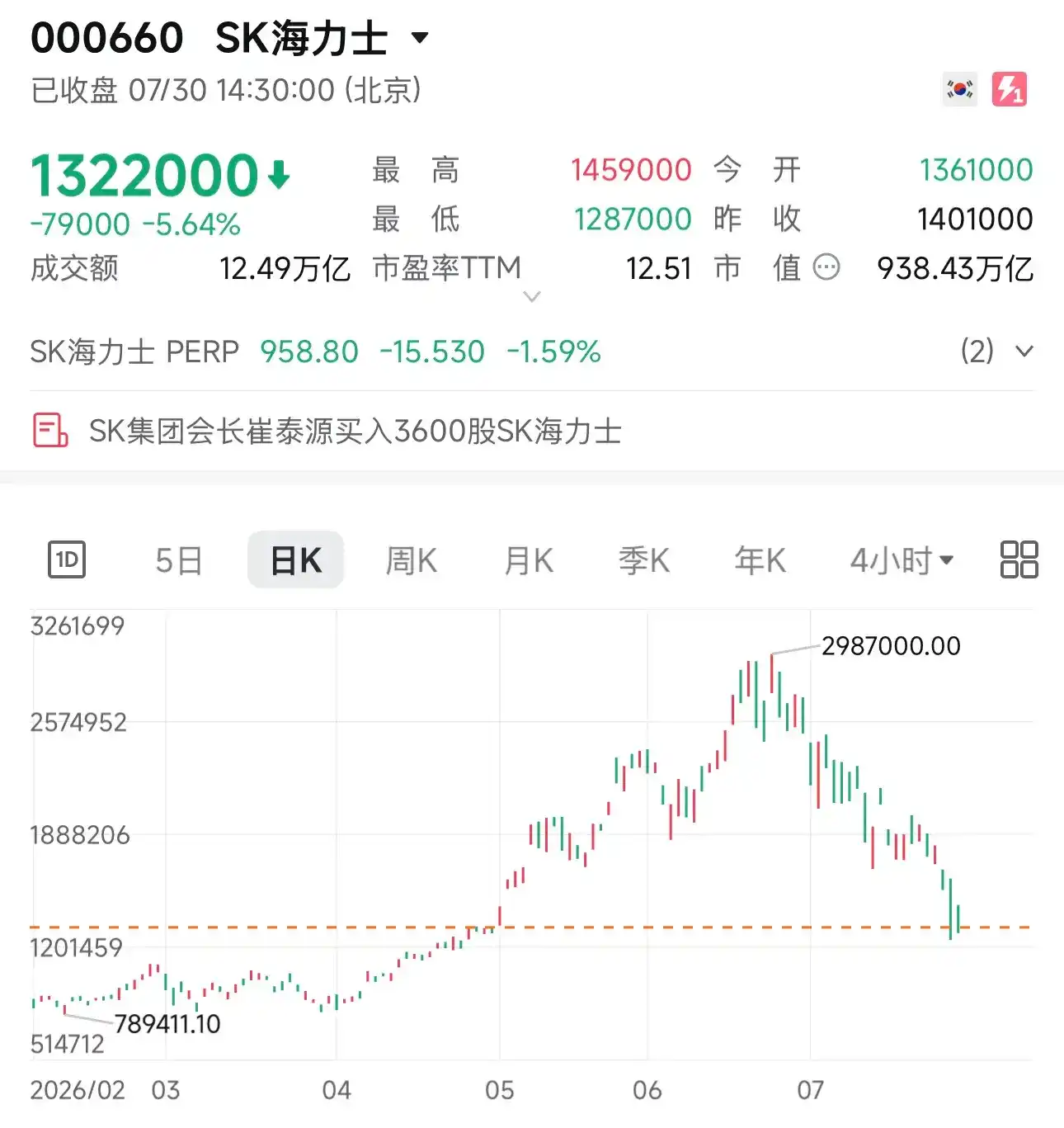
一场跨市场的血洗就这样铺开。极端行情里炸出一堆来自币圈的大 V 和交易员,他们中有人曾在加密市场赚到人生第一桶金,有人已经实现财富自由。现在只剩反思,和一句句退圈的宣言。
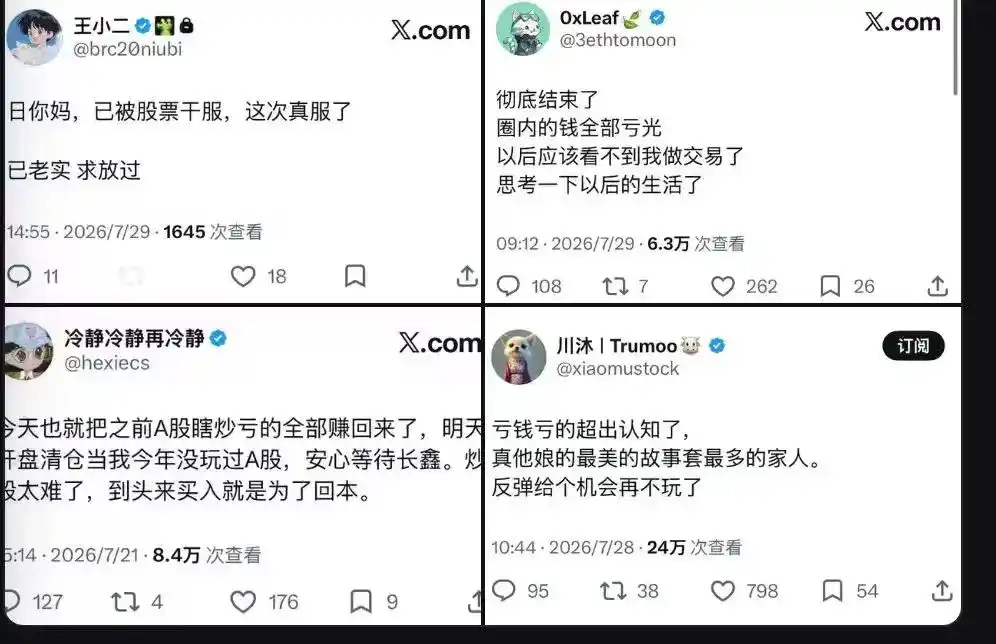
一半是行情,一半是人性

或许是因为加密市场闷得太久,存储股成了活跃资金最好去处

Dp大鹏(@Dp520888)发帖称,从去年底到今年上半年,币圈一路阴跌,比特币好不容易在 6 万美元附近喘口气,同期韩美股市却被 AI 叙事推上了天,各大交易所又为了开拓市场纷纷接通了股票交易。

他表示,看到很多炒币的同行,忍痛割肉币圈资产,在高位梭哈美光和闪迪,随后又亏掉 30% 以上。而这笔钱要是留在币圈,最起码还能扛到比特币跌至 4 万美元。

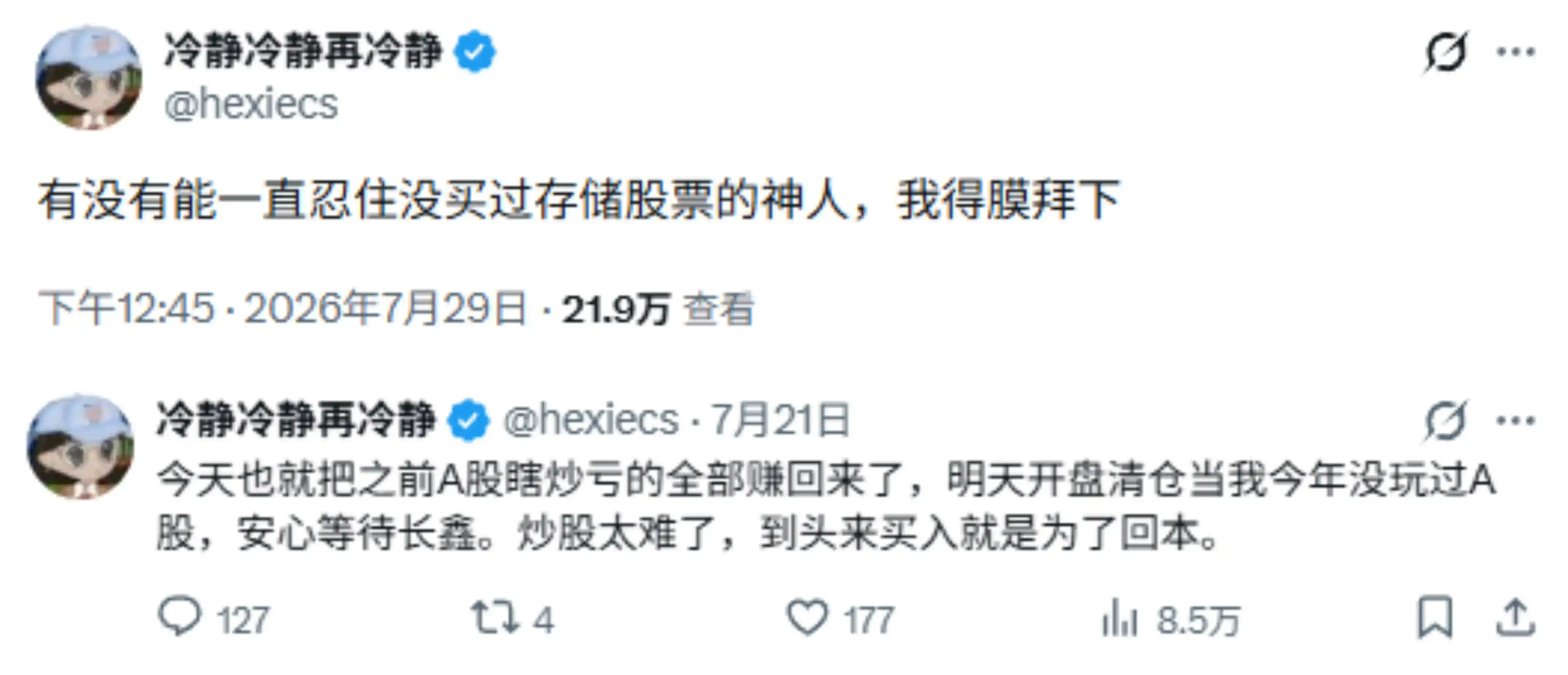
习惯了高波动、又被赚钱效应折磨了大半年的人,很难忍住不去追那个看起来更肥的市场。正如@hexiecs发的那句,“有没有能一直忍住没买过存储股票的神人,我得膜拜下”。
然而,AI、GPU、存储,这些叙事在资本市场表现来得快,去得也快。5月份英伟达股价见顶,目前已经磨平今年涨幅,最近市值重新苹果超越。现在只是轮到存储

所以,这场翻车的起点,一半是行情,一半是人性。

这一波为什么翻车?

从币圈转战股市的人,其实很容易水土不服。

一方面,是杠杆习惯。很多人上手就是两倍做多,或者在链上永续上加更高杠杆。同样一根阴线,砸在现货账户上只是回撤,砸在杠杆账户上就是爆仓。

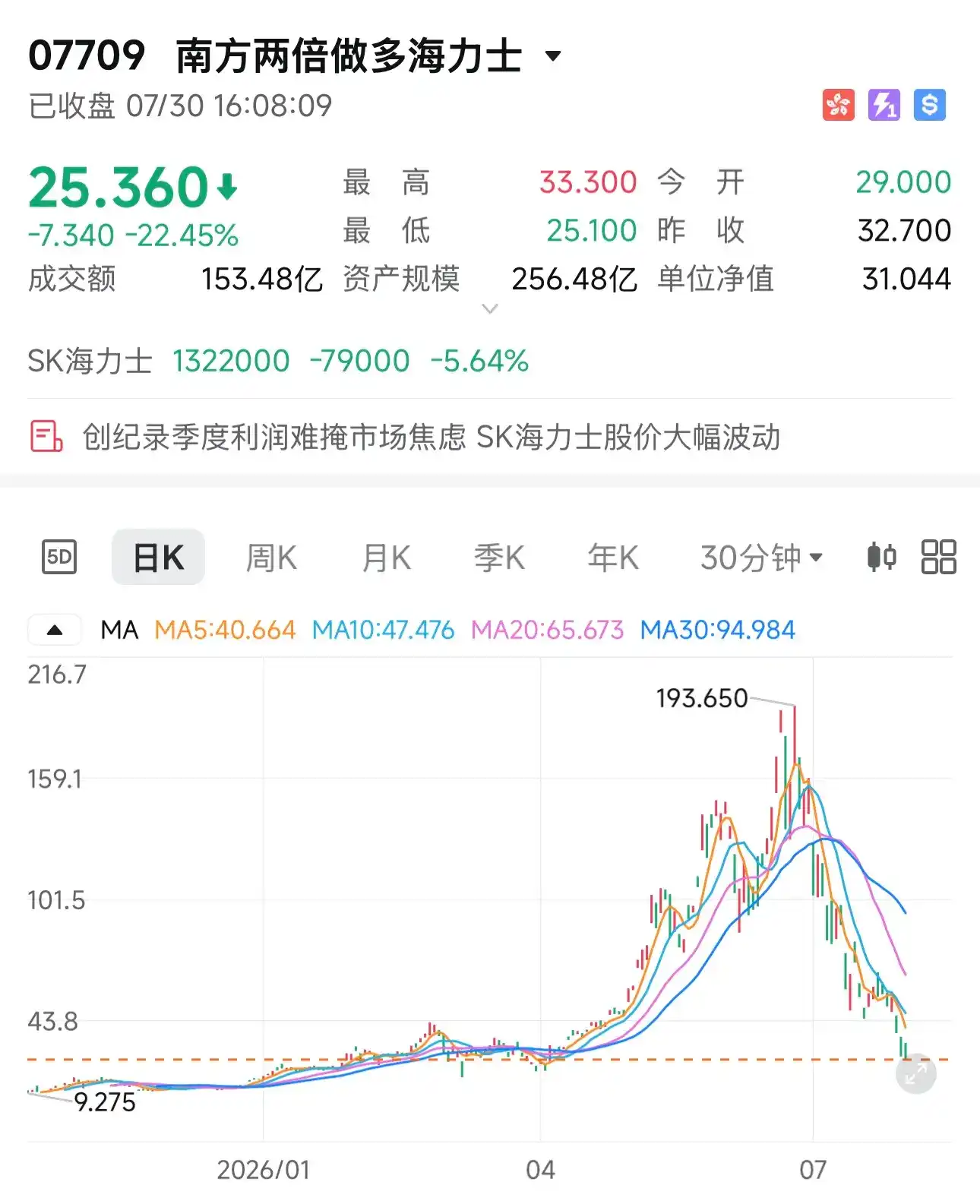
这一轮的杠杆产品有多惨,看看南方两倍做多海力士 ETF 就知道了这只基金一度是全球规模最大的个股杠杆产品,峰值规模约 1300 亿港元。7 月以来累计跌幅已超 80%,最新规模只剩 256 亿港元。另一只两倍做多三星电子ETF本月也跌了大约 70%。
据 Hyperliquid 数据,7 月 29 日,平台上海力士相关合约 SKHX 与 SKHY 24 小时内交易量合计达 17.65 亿美元,成了平台交易量第一的活跃资产,热度和交易量甚至盖过了BTC。

另一方面,是规则差。股票市场本身就分好几套,美股有盘后,韩股有 NXT 盘前,A 股有涨跌停,港股又是另一套,各有各的交易时段、价格带和结算节奏。

当这些标的被打包成链上永续合约,别人家的极端规则也被一起打包了进来。7 月 28 日那次Hyperliquid上的插针就是活例。

据悉,当天韩国盘前市场只有一股 SK 海力士以约 868 美元成交,比前一日收盘低约三成,正好卡在韩股价格带的下限附近。这笔不足 900 美元的真实成交,顺着预言机喂价砸进链上,SKHX 永续合约一分钟内闪跌约 18%。

据链上数据,此后四小时清算约 8000 万美元,未平仓合约蒸发约 1.5 亿美元。
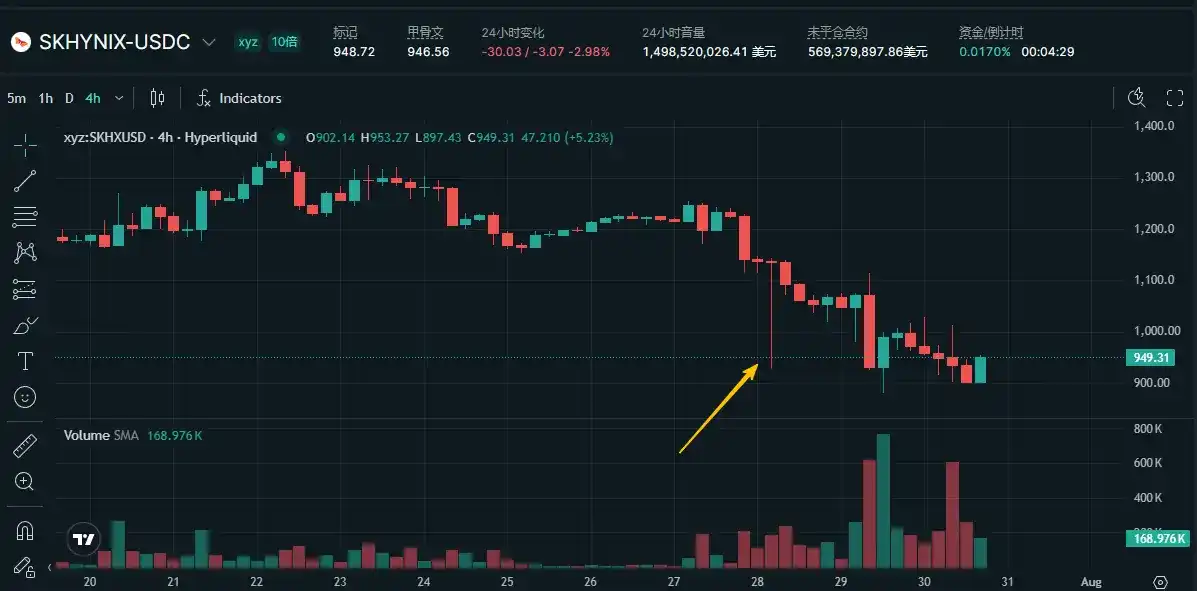
Trade.xyz 公告称,这个价格是从韩国盘前那笔真实成交同步过来的,预言机按既定规格运作,技术层面没有出错。尽管 Trade.xyz 决定对这次清算损失一次性全额赔付,但特意声明这不构成对未来类似情形的担保。

血洗过后的反思

这一波血洗过后,X 上多位大 V 开始反思。他们复盘的重点,很多都落在自己这些年赖以赚钱的那套方法上,换了个市场之后,到底还灵不灵。

川沐(@xiaomustock) 表示,他今年赚也存储、亏也存储,巴菲特能在资本市场活这么久,跟不加杠杆、不满仓、手里始终留着大量闲钱的风格脱不开关系。普通人要么为了暴富上杠杆焦虑得睡不着,要么赚了钱后继续带杠杆,盈亏都焦虑。
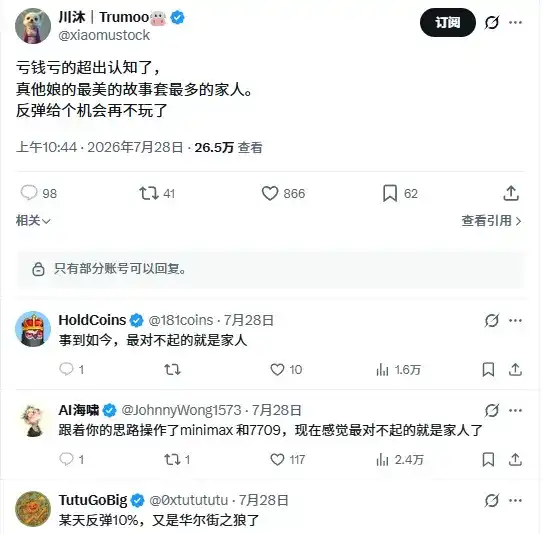
KOL 嗯哼(@EnHeng456)则梳理了自己入行以来的三次重大亏损,这一轮存储行情是最重的一次,几个账户合计回撤上千万,好在全程现货、没有加杠杆。

他还指出,多位判断力一向很强、认知框架各不相同的交易员陆续进场,最后几乎一致亏损。当这样一群人在同一个位置形成共识,却仍被市场一起教育,说明这次的亏损确实超出了原有认知。
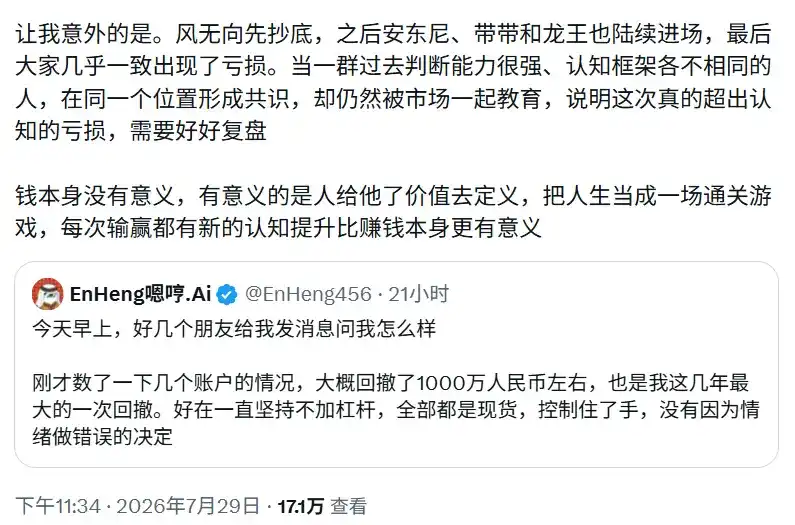
自称半导体爆仓 2000 万美金的子时(@silverfang888) 也表示,最后悔的就是从币圈跑去炒股票。在他看来,自己不过是个见识短浅的加密圈玩家,跑到美股这个场子里,对面坐的都是认知和资金都远在自己之上的人。

不少人在爆仓之后陷入了激烈的自我否定,把这几个月的亏损归结为自己见识太浅、认知太低。这类情绪集中爆发,也提醒每一个把杠杆当放大器的人,市场收走的从来不只是本金。

也有人出来安慰,谁的交易生涯里没经历过几次这样的回撤,钱亏了就当交学费,人还在、心气还在,总有下一程。

其实市场里能持续赢下去的人,本就极少。能多走几程的,往往是那些在不同阶段还能看清自己边界的人。

Trend Kriptolar

İlgili Sorular

Q这篇文章主要讲述了什么事件导致币圈高手们在股票市场遭受重大损失?

A文章主要讲述了币圈交易员和KOL们因加密货币市场低迷,转而追逐由AI叙事推动、表现强劲的股票市场(特别是韩美股市的存储类股票),但在这些股票(如SK海力士、美光等)近期出现极端暴跌行情后遭受了重大亏损,许多人因使用高杠杆而爆仓。

Q根据文章,币圈交易员在股票市场“翻车”的主要原因有哪些?

A主要原因有两个方面:一是“水土不服”,习惯了加密货币的高波动性和操作模式,在股票市场过度使用杠杆(如两倍做多ETF、链上永续合约),导致风险被放大;二是对股票市场(美股、韩股等)的不同交易规则(如盘前盘后、价格带、涨跌停)缺乏了解,容易因规则差异导致的极端价格(如插针)而爆仓。

Q文章中提到的Hyperliquid平台上SK海力士合约“插针”事件具体是怎么回事?

A7月28日,韩国股市盘前市场仅有一笔不足900美元的SK海力士股票以远低于前日收盘价的价格成交,该价格触发了韩股价格带下限。这笔极小额的真实成交价格通过预言机被同步到Hyperliquid链上永续合约中,导致SKHX合约在一分钟内闪跌约18%,进而引发了大规模清算,四小时内清算约8000万美元,未平仓合约蒸发约1.5亿美元。

Q文章中提到的大V们对这次亏损有哪些反思?

A大V们的反思主要集中在:1. 认识到巴菲特式投资风格(不加杠杆、不满仓、留足现金)的长期价值;2. 意识到即使一群认知框架不同、判断力强的交易员形成共识,也可能被市场教育,说明亏损超出了原有认知;3. 后悔跨界到不熟悉的股票市场,认为自己的认知和资金无法与成熟市场的对手抗衡;4. 认识到杠杆不仅会放大亏损,还会摧毁人的心态和自信。

Q从文章的描述来看,这次“跨市场血洗”对相关投资者造成了哪些具体影响?

A具体影响包括:1. 巨额财务损失:有人亏损上千万,有人自称爆仓2000万美元;2. 心理打击:许多投资者陷入自我否定,认为自己是“见识短浅的加密圈玩家”;3. 行为改变:出现了大量“退圈宣言”和深刻的交易反思;4. 产品冲击:相关杠杆ETF(如南方两倍做多海力士ETF)规模急剧缩水,单月跌幅巨大。

İlgili Okumalar

PA Graphics Explanation | One Chart to Understand the Major Web3 Events in August 2026

**PANews Crypto Calendar: Key Web3 Events in August 2026** PANews introduces its revamped crypto calendar, featuring comprehensive coverage, flexible filtering, and easy export options. The market in August will be shaped by multiple key events across macroeconomics, regulation, tokenomics, and project developments: * **Macro & Policy:** Key US economic data releases (July Non-Farm Payrolls, CPI), the Federal Reserve meeting minutes, and the Jackson Hole Economic Symposium will be in focus. On the regulatory front, the US Senate plans to release a new draft of the *CLARITY Act*, while the EU's expanded crypto ban against Belarus comes into effect. * **Token Unlocks:** Significant token unlocks are scheduled for assets including ENA, AVAX, CONX, ZRO, and KAITO, which may influence market volatility. * **Project Updates & Shutdowns:** Several services, including Exchange Art, Ctrl Wallet, Zapper, NFTfi, and Summer.fi, are set to cease operations or undergo major adjustments. Users are advised to manage their assets accordingly. * **Corporate Activity:** Q2 earnings reports from companies like SpaceX, Circle, and Nvidia are due. Unitree Robotics will initiate its IPO subscription on the STAR Market, and Moonshot AI plans to begin a Pre-IPO financing round. * **Industry Events:** Major conferences such as Bitcoin Asia 2026 and the 2026 Digital Expo will take place. The overarching market narrative for August will revolve around macroeconomic expectations, regulatory developments, token unlock schedules, and ongoing industry consolidation.

marsbit11 dk önce

PA Graphics Explanation | One Chart to Understand the Major Web3 Events in August 2026

marsbit11 dk önce

Wall Street's Most Famous 'Cassandra' Now Has His Sights Set on Nvidia

Michael Burry, the famed "Big Short" investor, has once again captured Wall Street's attention with a series of short positions against major tech and semiconductor stocks, most notably Nvidia. In late June and July, through his "Cassandra Unchained" newsletter, Burry disclosed short bets against Nvidia, Tesla, Applied Materials, Caterpillar, the SOXX semiconductor ETF, and later, Micron Technology. His core thesis revolves around potential distortions in the AI infrastructure boom, specifically questioning whether extended depreciation schedules (e.g., 6 years vs. a realistic 2-3 years for AI chips) by cloud giants like Microsoft and Google artificially inflate profits. He also raises concerns about possible "off-balance-sheet circular financing," where chip demand might be propped up by vendor-backed funding to clients. Nvidia's stock experienced volatility following these disclosures, briefly dipping but largely holding near Burry's reported entry points, leaving his positions roughly flat or slightly underwater as of late July. This move is part of a pattern for Burry, whose track record since his legendary 2008 bet is mixed. He has faced notable losses, such as on Tesla in 2021, while scoring on broader market turns like the 2020 pandemic crash. His methodology focuses intensely on free cash flow and scrutinizing original financial documents to spot overvaluation and structural risks, but it often struggles with timing the market. The article contrasts Burry's stance with other prominent investors. Steve Eisman, another "Big Short" figure, is not shorting Nvidia, citing strong fundamentals but expressing nervousness about sustainability. Jim Chanos agrees with the broad "accounting mismatch" concern—comparing it to the dot-com bubble—but targets financial leverage in private equity firms rather than the chip stocks themselves. While Nvidia's short interest remains relatively low at 1.3-1.4% of float, the massive stock size means absolute short losses have been significant, exceeding $5 billion earlier this year. The piece concludes that for ordinary investors, the key takeaway is not replicating specific short bets but learning from the critical frameworks these investors use: questioning rosy accounting, identifying structural vulnerabilities, and maintaining skepticism during market euphoria, even if pinpointing the exact catalyst for a downturn remains elusive.

marsbit36 dk önce

Wall Street's Most Famous 'Cassandra' Now Has His Sights Set on Nvidia

marsbit36 dk önce

Weekly Selection丨Epic Stock Market Volatility, Changxin Tech's IPO Reshapes Storage Landscape, Saylor Aims to Re-Anchor STRC Around September 8th

PANews Weekly Digest: Market Turmoil, Tech Breakthroughs, and Crypto Developments. The week saw significant volatility across global markets. South Korea's KOSPI index experienced extreme turbulence, including multiple trading halts, largely driven by sharp declines in AI hardware stocks like SK Hynix. In contrast, China's Changxin Xinqiao (CXC) achieved a landmark IPO with a market cap surpassing 4 trillion yuan, marking a major success for the domestic DRAM industry after a decade of losses. In the crypto and Web3 space, several key narratives emerged. AI is driving demand for new infrastructure, with projects like AI agent wallets and programmable payments gaining traction, attracting interest from firms like Coinbase. The Bitcoin mining sector is pivoting, with companies like MARA focusing on energy management as electricity becomes a core AI-era asset. Meanwhile, the RWA (Real World Assets) sector faces a "utilization puzzle," with hundreds of billions in on-chain assets remaining dormant. Notable market movements included a historic single-day surge of over 17% for the KOSPI index and a significant migration of $16.5 billion in staked ETH within the Lido ecosystem. Michael Saylor announced a target to re-peg the STRC stablecoin around September 8th. Other highlights include discussions on Ethereum's ambitious 2030 roadmap for scaling and privacy, analysis showing high protocol revenues not always translating to token price gains, and warnings from Citi about potential extreme commodity price shocks by late 2026.

marsbit41 dk önce

Weekly Selection丨Epic Stock Market Volatility, Changxin Tech's IPO Reshapes Storage Landscape, Saylor Aims to Re-Anchor STRC Around September 8th

marsbit41 dk önce

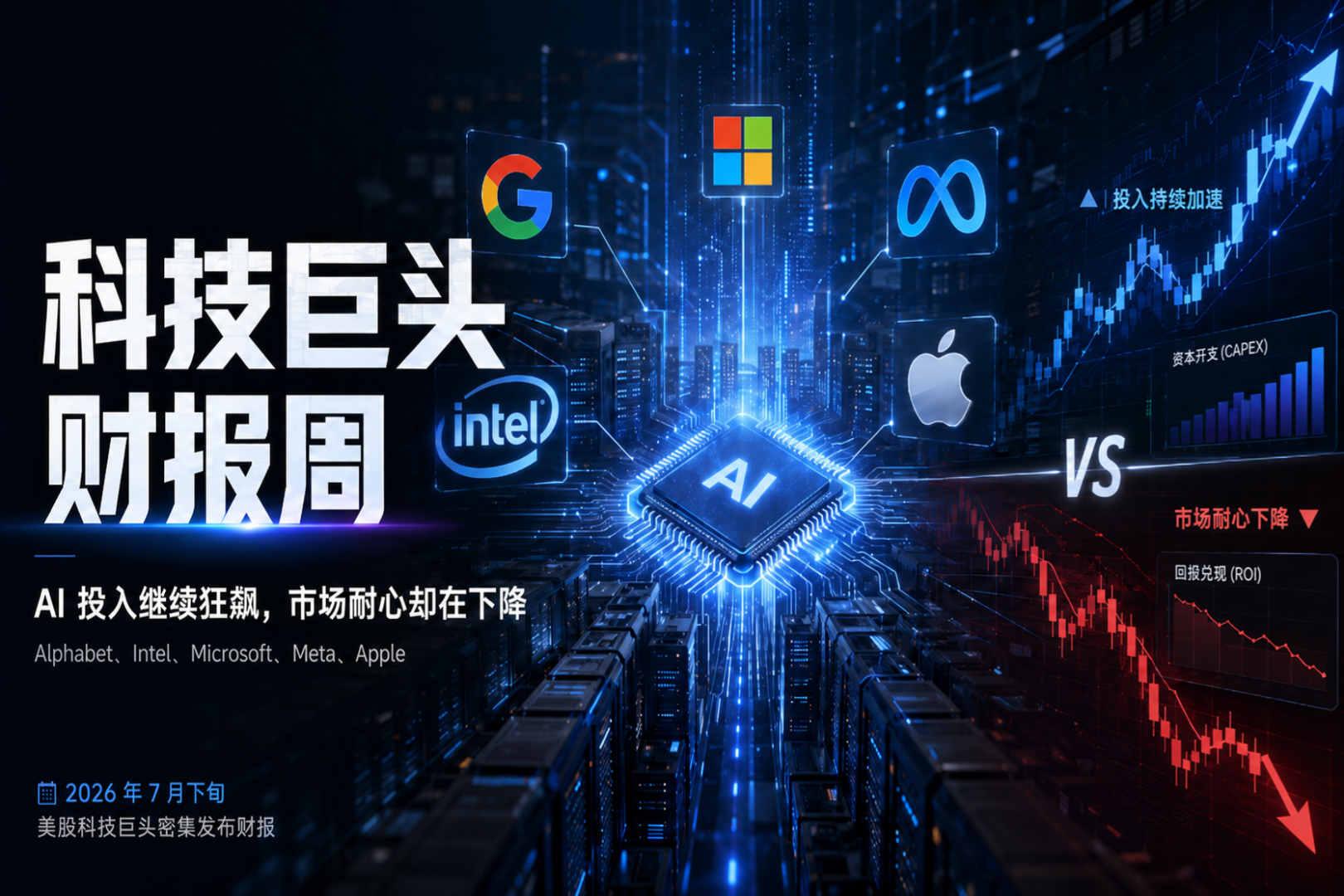
When the Market Begins to Question AI Capex: A Full Analysis of Q2 Earnings Reports from Five Tech Giants

In late July 2026, five major US tech giants—Alphabet, Intel, Microsoft, Meta, and Apple—released their Q2 earnings reports. While all companies exceeded revenue and profit expectations, driven by strong AI-related business growth, investor reactions diverged sharply due to concerns over escalating AI capital expenditures (capex) and their impact on free cash flow. Alphabet reported strong revenue growth and a surging cloud business, but its stock fell after announcing a doubled year-on-year capex and negative quarterly free cash flow for the first time. Intel posted its strongest revenue growth in over 15 years, but its stock experienced volatile trading after significantly raising its full-year capex guidance. Microsoft saw its stock surge after beating estimates and, crucially, lowering its capex forecast while projecting positive free cash flow. Meta faced the most severe sell-off as its profits declined despite revenue beats, with free cash flow plunging over 90% and its capex guidance raised. Apple reported record June-quarter results, but its stock plummeted after providing Q4 revenue guidance that fell short of expectations, citing supply chain constraints and forex headwinds. The overall takeaway is that the market's focus has shifted from validating AI demand to scrutinizing the timeline for returns on massive AI investments. Companies demonstrating a clearer path to managing capex and preserving free cash flow, like Microsoft, were rewarded, while those signaling continued aggressive spending faced investor skepticism.

Odaily星球日报50 dk önce

When the Market Begins to Question AI Capex: A Full Analysis of Q2 Earnings Reports from Five Tech Giants

Odaily星球日报50 dk önce

a16z: From Companies to DAOs, DUNA May Become the Next Generation Organizational Form

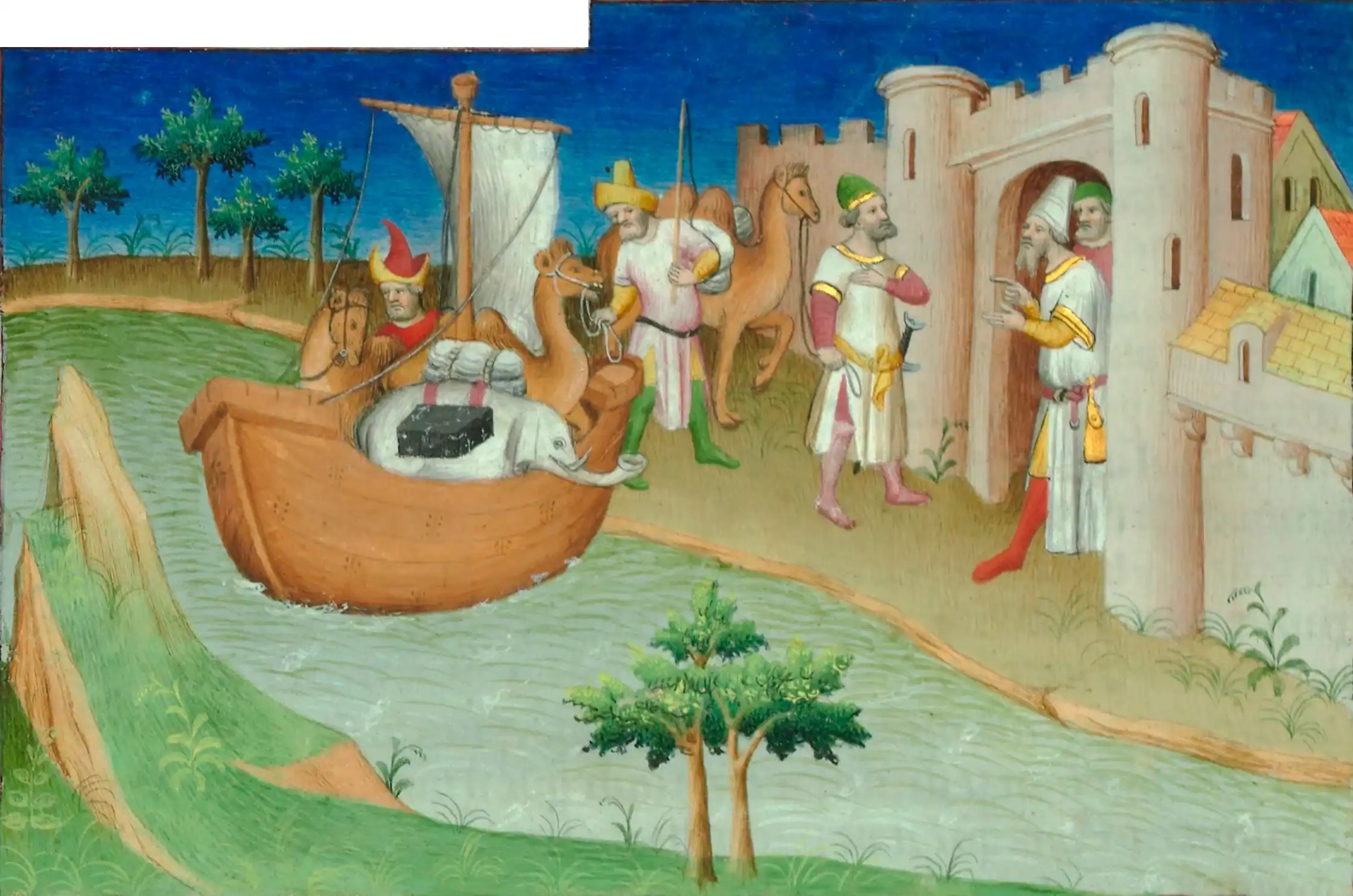
This article, "From Companies to DAOs: How DUNA Could Become the Next Organizational Form," traces the 500-year evolution of business collaboration. It begins with medieval structures like the *commenda* and Florentine *compagnia*, which exposed partners to personal risk. The modern corporation, exemplified by the Dutch East India Company (VOC), was a revolutionary leap, enabling large-scale, capital-intensive ventures by offering limited liability and reducing coordination costs. However, corporations introduced new challenges like principal-agent problems and bureaucratic overhead. The piece argues that software and internet-native protocols are now reducing these traditional overheads. Decentralized Autonomous Organizations (DAOs) emerged as a new model for coordination without centralized management. Yet, DAOs face a significant legal vacuum: they lack legal recognition, leaving members exposed to unlimited personal liability, and their tokens are vulnerable to being classified as securities under unclear regulations (e.g., the Howey Test). This has forced projects into suboptimal workarounds like offshore foundations. The article identifies the Decentralized Unincorporated Nonprofit Association (DUNA) as a potential solution. Recently legalized in states like Wyoming, the DUNA provides a legal wrapper for decentralized networks. It grants key protections—legal personality, limited liability, and perpetual existence—to a group without imposing a traditional hierarchical management structure. This allows token-holder communities to govern, hold assets, and contract as a single legal entity, aligning with their decentralized nature. While DUNA doesn't solve all governance challenges or magically resolve securities law questions, it represents a crucial step. It fills the legal recognition gap, offering a native legal form for internet-scale, decentralized collaboration and extending the separation of personal risk from organizational venture into a new domain.

marsbit1 saat önce

a16z: From Companies to DAOs, DUNA May Become the Next Generation Organizational Form

marsbit1 saat önce

İşlemler

Spot

Popüler Makaleler

T Nasıl Satın Alınır

HTX.com’a hoş geldiniz! Threshold Network Token (T) satın alma işlemlerini basit ve kullanışlı bir hâle getirdik. Adım adım açıkladığımız rehberimizi takip ederek kripto yolculuğunuza başlayın. 1. Adım: HTX Hesabınızı OluşturunHTX'te ücretsiz bir hesap açmak için e-posta adresinizi veya telefon numaranızı kullanın. Sorunsuzca kaydolun ve tüm özelliklerin kilidini açın. Hesabımı Aç2. Adım: Kripto Satın Al Bölümüne Gidin ve Ödeme Yönteminizi SeçinKredi/Banka Kartı: Visa veya Mastercard'ınızı kullanarak anında Threshold Network Token (T) satın alın.Bakiye: Sorunsuz bir şekilde işlem yapmak için HTX hesap bakiyenizdeki fonları kullanın.Üçüncü Taraflar: Kullanımı kolaylaştırmak için Google Pay ve Apple Pay gibi popüler ödeme yöntemlerini ekledik.P2P: HTX'teki diğer kullanıcılarla doğrudan işlem yapın.Borsa Dışı (OTC): Yatırımcılar için kişiye özel hizmetler ve rekabetçi döviz kurları sunuyoruz.3. Adım: Threshold Network Token (T) Varlıklarınızı SaklayınThreshold Network Token (T) satın aldıktan sonra HTX hesabınızda saklayın. Alternatif olarak, blok zinciri transferi yoluyla başka bir yere gönderebilir veya diğer kripto para birimlerini takas etmek için kullanabilirsiniz.4. Adım: Threshold Network Token (T) Varlıklarınızla İşlem YapınHTX'in spot piyasasında Threshold Network Token (T) ile kolayca işlemler yapın.Hesabınıza erişin, işlem çiftinizi seçin, işlemlerinizi gerçekleştirin ve gerçek zamanlı olarak izleyin. Hem yeni başlayanlar hem de deneyimli yatırımcılar için kullanıcı dostu bir deneyim sunuyoruz.

671 Toplam GörüntülenmeYayınlanma 2024.12.10Güncellenme 2026.06.02

T Nasıl Satın Alınır

Tartışmalar

HTX Topluluğuna hoş geldiniz. Burada, en son platform gelişmeleri hakkında bilgi sahibi olabilir ve profesyonel piyasa görüşlerine erişebilirsiniz. Kullanıcıların T (T) fiyatı hakkındaki görüşleri aşağıda sunulmaktadır.

活动图片