Franklin Templeton Joins Wall Street Support for CLARITY Act as Senate Vote Deadline Nears

TheNewsCrypto2026-07-28 tarihinde yayınlandı2026-07-28 tarihinde güncellendi

Özet

Institutional support for cryptocurrencies is growing as legislative deadlines approach. Franklin Templeton, managing about $1.79 trillion in assets, has endorsed the CLARITY Act, joining other major financial institutions like BlackRock and Fidelity, which together represent over $30 trillion in assets. The Act aims to provide regulatory clarity by assigning oversight of digital assets as securities to the SEC and as commodities to the CFTC. Despite strong industry backing and passage in the House of Representatives, the bill faces a significant challenge in the U.S. Senate, where it requires 60 votes and bipartisan support. Some Democratic senators remain undecided, and recent Republican amendments have been deemed insufficient by Democrats. With the Senate Majority Leader suggesting the bill may fail before the August break, Galaxy Research has reduced its chances of passage in 2026 to 30%.

Institutional support for cryptocurrencies is continuing to grow as lawmakers find themselves with less and less time to pass legislation on digital assets. Franklin Templeton, which manages about USD 1.79 trillion in assets, has now added its endorsement to the CLARITY Act, another financial institution supporting the framework of US crypto market structure.

Franklin Templeton has stated this via X, saying that the legislation will create regulatory clarity in terms of digital assets. According to Franklin Templeton, the legislation would allow investors to know what protections were available, while also providing companies with clarity in regard to regulatory requirements.

Wall Street Aligns Around Regulatory Structure

Franklin Templeton is one of the companies joining BlackRock, Fidelity, Goldman Sachs, and Charles Schwab to back the CLARITY Act. Combined, these organizations have over USD 30 trillion worth of managed assets, which shows a high level of institutional support for more regulatory clarity around cryptocurrencies. The proposed legislation will allocate different forms of regulation to two commissions–the SEC and CFTC.

According to the Act, the SEC should be responsible for digital assets categorized as securities, and the CFTC will be regulating commodities in tokens. The main goal of the proposal is to bring legal clarity to replace several years of uncertainty on the matter. The company has made numerous developments in blockchain technology and tokenization over recent years.

Senate Vote Becomes Biggest Challenge for the Legislation

Despite strong industry support for the CLARITY Act, it remains a challenging legislative path for it to become law in the U.S. Senate. Indeed, the House of Representatives passed the bill by 294-134 in July 2025, while the Senate Banking Committee voted it forward by 15-9 in May. Nevertheless, the bill needs 60 votes in the Senate, which means that it needs bipartisan support. Even though big banks still support the bill, some of the Democratic senators have not made a decision in favor of it.

Republicans have recently amended the bill to include temporary restrictions on crypto earnings for certain federal officials covered by the act, such as the President and Congress, but Democrats consider them to be insufficient. Additionally, Senate Majority Leader John Thune has already stated that the bill may fail before the coming August break. At this point, Galaxy Research reduced the chances of passage to 30% in 2026.

Highlighted Crypto News:
Stablecoin Market Shrinks for First Time in Four Years as Transaction Volume Hits Record Low


TagsBlockchainClarity ACTCryptocurrencyFranklin TempletonSenate cryptoU.S SenateUS Senate

İlgili Sorular

QWhich major financial institution recently endorsed the CLARITY Act, and what is the approximate size of its managed assets?

AFranklin Templeton recently endorsed the CLARITY Act. It manages approximately USD 1.79 trillion in assets.

QAccording to the article, what is the main regulatory goal of the proposed CLARITY Act?

AThe main goal of the CLARITY Act is to provide legal clarity and replace years of regulatory uncertainty by allocating oversight of digital assets between the SEC (for securities) and the CFTC (for commodity tokens).

QWhat recent legislative progress has the CLARITY Act made in the U.S. Congress, and what is its next major hurdle?

AThe CLARITY Act passed the House of Representatives in July 2025 and was voted forward by the Senate Banking Committee in May. Its next major hurdle is securing 60 votes for passage in the full Senate, which requires bipartisan support.

QWhy does the article suggest the CLARITY Act faces challenges in the Senate despite strong institutional backing?

AThe article suggests challenges because the bill requires 60 votes in the Senate, needing bipartisan support. Some Democratic senators have not decided in its favor, and recent Republican amendments related to crypto earnings for federal officials are viewed by Democrats as insufficient.

QAccording to Galaxy Research cited in the article, what are the estimated chances of the CLARITY Act passing in 2026?

AGalaxy Research reduced the estimated chances of the CLARITY Act passing in 2026 to 30%.

İlgili Okumalar

Stocks of Companies in Bitcoin Mining and AI Infrastructure Soar, Short Sellers Face Losses

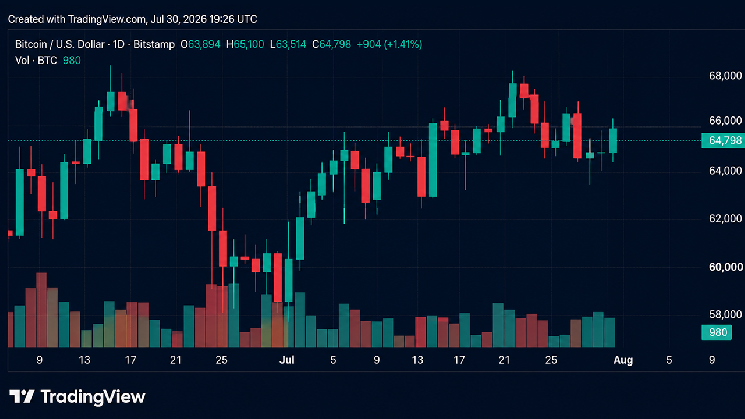
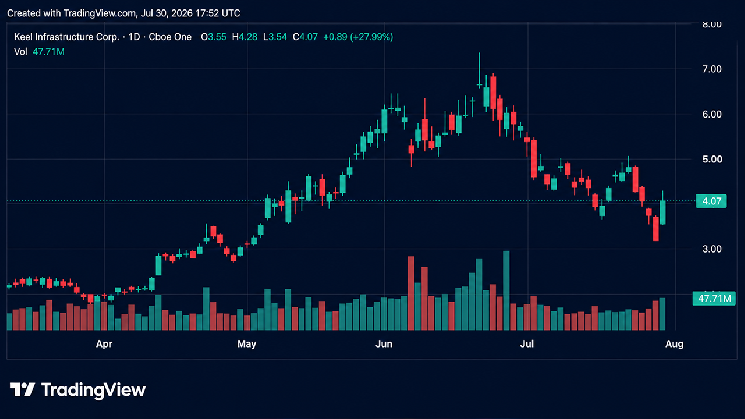
Shares of companies involved in Bitcoin mining and AI infrastructure surged, causing losses for short sellers. On Thursday, July 30, 2026, Keel Infrastructure (formerly Bitfarms) led the gains, rising 29.13%, followed by Nebius Group, Cipher Digital, and IREN Limited with jumps over 27%. Other notable gainers included Riot Platforms, Bitdeer, Core Scientific, Hut 8, and Cleanspark, with increases mostly ranging from 17% to 24%. The rally was attributed to a short squeeze triggered by a hedge fund's forced liquidation of its holdings, which were largely bought by Citadel. Additionally, Bitcoin trading above $64,000 and strong Microsoft earnings, highlighting AI's profitability, boosted market sentiment. Coreweave also announced a deal to provide AI cloud services for U.S. defense and intelligence agencies. This surge reflects a broader, longer-term trend of Bitcoin miners pivoting to AI data centers, leveraging their existing energy infrastructure and land. Recent multi-billion dollar deals by companies like Hut 8, IREN, and Terawulf for AI cloud services underscore this strategic shift. Other gainers, including Sandisk, Micron, Bloom Energy, and Cerebras, are suppliers critical to the AI infrastructure build-out. While the rally provided relief after July's losses, questions remain about capital expenditures, power availability, and long-term AI demand. The sustainability of these gains depends on these companies successfully converting their energy contracts and AI service deals into stable revenue streams.

cryptonews.ru40 dk önce

Stocks of Companies in Bitcoin Mining and AI Infrastructure Soar, Short Sellers Face Losses

cryptonews.ru40 dk önce

İşlemler

Spot
活动图片