Claude写完代码不直接交了:4个Skill自查一遍,改好再找你

marsbit2026-07-27 tarihinde yayınlandı2026-07-27 tarihinde güncellendi

Özet

AI编码助手Claude推出“验证循环”功能,使AI在生成代码后能自动进行四步自查:代码审查抓bug、简化实现清冗余、端到端验证功能、核对设计规范。这一机制将传统“生成-人工检查”流程升级为包含自动验证和修复的闭环,旨在解决代码生成速度提升后带来的验证瓶颈。 Claude Code团队内部已使用四个核心自查技能:/code-review、/simplify、/verify和/design。用户也可根据自身需求,将重复的手动检查步骤封装为定制化Skill,从而将团队经验沉淀为可复用的自动化流程。 验证支持四种触发模式:手动调用、嵌入任务、链式串联或每次提交自动执行。这标志着AI编程竞争重点正从代码生成转向自我验证能力。随着验证机制完善,AI能更独立可靠地运行,减少人工干预。这种基于开放标准的工作流程优化,让不同团队利用相同AI工具可能产生显著效率差异,核心在于是否构建了有效的自动化验证体系。

写代码这件事,AI已经替你干了。可验收这件事,还压在你身上。

一段代码到底写没写对,AI不负责,最后还得你自己一行行看过去:这道坎,卡住了许多人。

最近,Anthropic把AI验收也做进了循环。

他们让Claude写完代码之后,不直接交差,而是自己接着跑四道检查:

/code-review先揪bug,/simplify把冗余的实现清理干净,/verify做一遍端到端验证,如果这次动了界面,再用/design对着DESIGN.md核一遍视觉。

四道跑完,才算交付。

7月22日,Claude Code团队公开了这套内部的「验证循环」。
换句话说,Claude写完代码,会自己先找错,改到没问题再回来找你。

这意味着AI开始从「会写代码」,进化到「会检查自己写的代码」。

智能体干活的闭环,多了一个验证

Anthropic给这套东西起了个名字,叫验证循环(verification loop)。

官方的定义很简单,它是一个Claude检查并尝试修复自己工作的迭代过程。

它改动的,是智能体干活的闭环。

以前是「收集上下文→执行动作→人工检查」,最后那一步卡在人身上:AI把活儿交出来,你得自己一行行看。

现在这条线,被拉长成了「收集上下文→执行动作→自动验证→修复→再验证」,检查和修复,被塞回了循环里面。
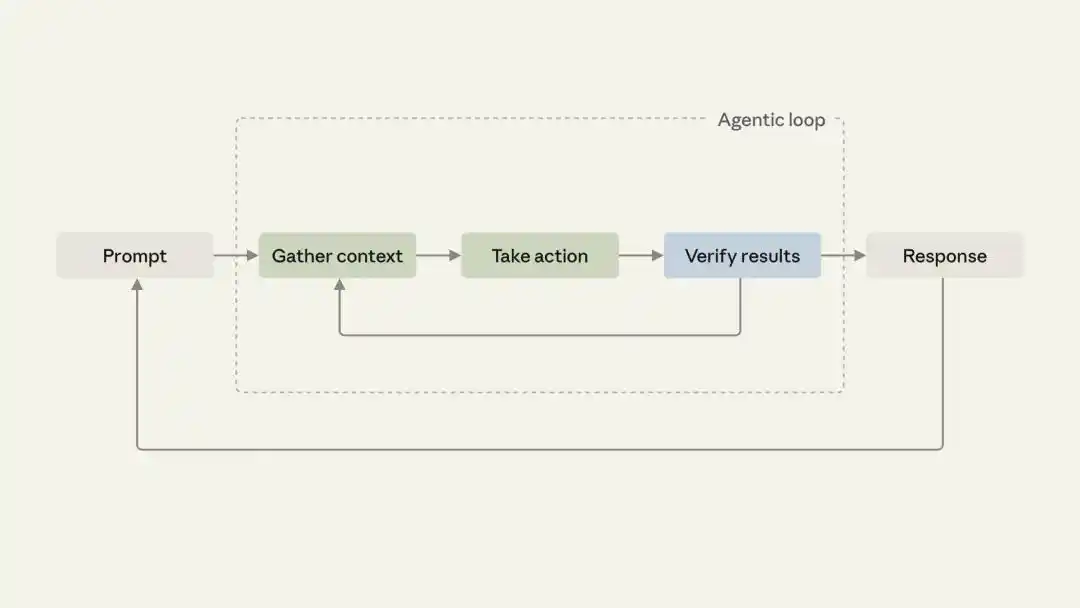
Anthropic官方的智能体循环示意图:提示进来后,Claude收集上下文、执行动作、验证结果,验证不过就打回重跑,通过才返回。

有些检查Claude本来就会做。代码库里那些确定性的信号,比如type checker、linter、跑测试、运行时报错,它读得懂,也会顺手改掉。

真正麻烦的是另一类:界面改得对不对、用户流程顺不顺、这次改动有没有埋下看不见的坑......

这些过去只能靠人盯着,同样的检查做上几十上百次。

Anthropic的解法,是把你每次都要手动做一遍的那些检查,一条条写下来,封装成Skill,交给Claude在每次任务里自动执行。

过去几十年,软件工程所有的流程:写需求、做规划、层层评审、开不完的会,本质上都是因为:写代码太慢,工程师的时间太值钱。

可当AI把写代码这一环变快、变便宜,这个前提就不复存在了。

Claude Code团队自己的判断是:瓶颈没有消失,它只是转移了:从「写代码」转移到了验证、代码评审、安全这些环节。

代码生成得太快,新的问题变成了这些代码到底对不对,谁来维护,人还跟不跟得上审代码的节奏。

面对这个新瓶颈,Claude Code团队先在自己身上做了实验。

Claude Code团队,每天在用的4个自查Skill

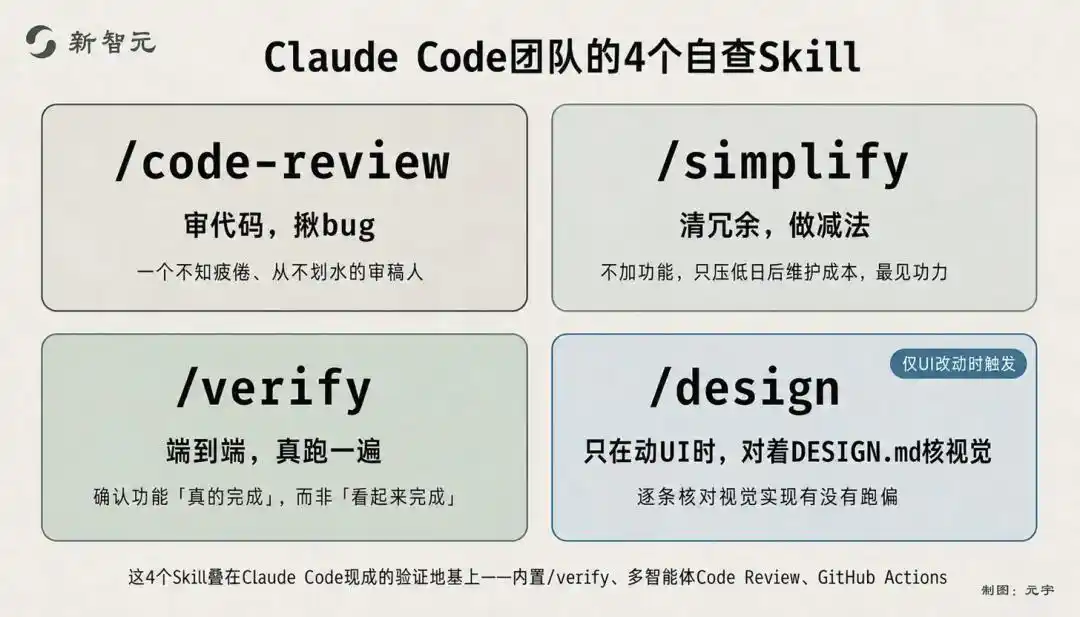
Claude Code团队内部,每天都在用这四个自查的Skill。

/code-review,专审代码改动,把潜在的bug揪出来,顺带给一份review意见。

这等于给自己配了个不知疲倦的审稿人。

/simplify,清理这次改动的diff,把绕来绕去的复杂实现删掉,让结构变简单。

它不给你加功能,而是清掉冗余、简化实现,把日后的维护成本向下压。

这一点很重要,也最见功力。多数人写代码都是往上堆,能主动做减法的工具,尤为难得。

/verify,做端到端验证,真刀真枪跑一遍,确认功能是真的完成了,而非「看起来完成了」。

/design,只在动了UI时上场。它对着仓库里的DESIGN.md,逐条核对你的视觉实现有没有跑偏。

这4个Skill不是凭空长出来的。

它们的底层,Claude Code已铺了一层现成的验证支持:

内置的/verify能把应用跑起来观察变化,你在CLAUDE.md里写清楚构建和测试命令,它就照着执行;还有专门在PR上做多智能体审查的Code Review、能在每次提交时自动开火的GitHub Actions。

团队那4个Skill,等于在这层通用地基上,又加了一道自己的工序。
怎么写一个自己的验证Skill?

Anthropic给的办法也很简单:

把你每次都要手动做的那一步,用大白话写下来,就当你在给一个第一天入职的新同事交代注意事项。

要是你连这步检查该怎么描述都卡壳,可以先让Claude给一版通用最佳实践,再在上面改。

你的版本大概率会在某几个点上跟通用做法不一样,而那几处不一样,恰恰就是最该被记下来的东西。

检查也不一定非得是「感觉对不对」这种模糊判断。

举个例子:任何删掉数据库字段、却没配套数据迁移步骤的改动,一律打回。这是一条通用linter永远抓不到、却是你项目专属的「土规矩」。

凡是你一直靠手动死盯才守得住的红线,都值得写成一个循环。

写完怎么办?

丢给skill-creator让它反过来采访你几句,或者干脆自己往.claude/skills/里扔一个Markdown文件。

最简单的验证Skill,就是几行说明加一段正文。然后在一个新任务上调一次,确认这步检查真的跟着跑了,不对再改。

碰到那些你改不动的Skill,比如内置的、插件托管的,也有应对办法:写一个外壳Skill,让它先调原来的,再调你的验证。绕一下,照样把检查嵌进去。

验证不是一刀切,它有4档

检查封装成Skill之后,下一个问题是:这玩意儿什么时候触发?

Anthropic给了4档自动化程度,从松到紧。

Standalone:你自己想起来,手动调一下。

Embedded:嵌进某个任务流程,跟着一起跑。

Chained:好几个验证Skill串成一条链,一个接一个自动跑完。

On every PR:最狠的一档,每次提交代码都自动过一遍。

官方管中间这层跃迁,叫「从习惯到契约」。

本来是「我每次都记得在/simplify后面补跑一次/verify」的个人习惯,串成链之后,就变成「/simplify跑完,自动就调/verify」的固定契约。

整条链自己把开发循环走完,只在需要你拍板时才回来找你。

链条拉得越长,可靠性越高,但官方特意嘱咐了一句:链式验证会实打实地烧token。

所以别一上来就把所有检查都设成PR gate、每次提交必卡,正确姿势是先看它稳不稳,再一步步往上加。

4个Skill背后,AI编程正在换赛道

4个Skill背后,AI编程的竞争,正在从生成转向验证。

Claude Code之父,也给过同一个判断。

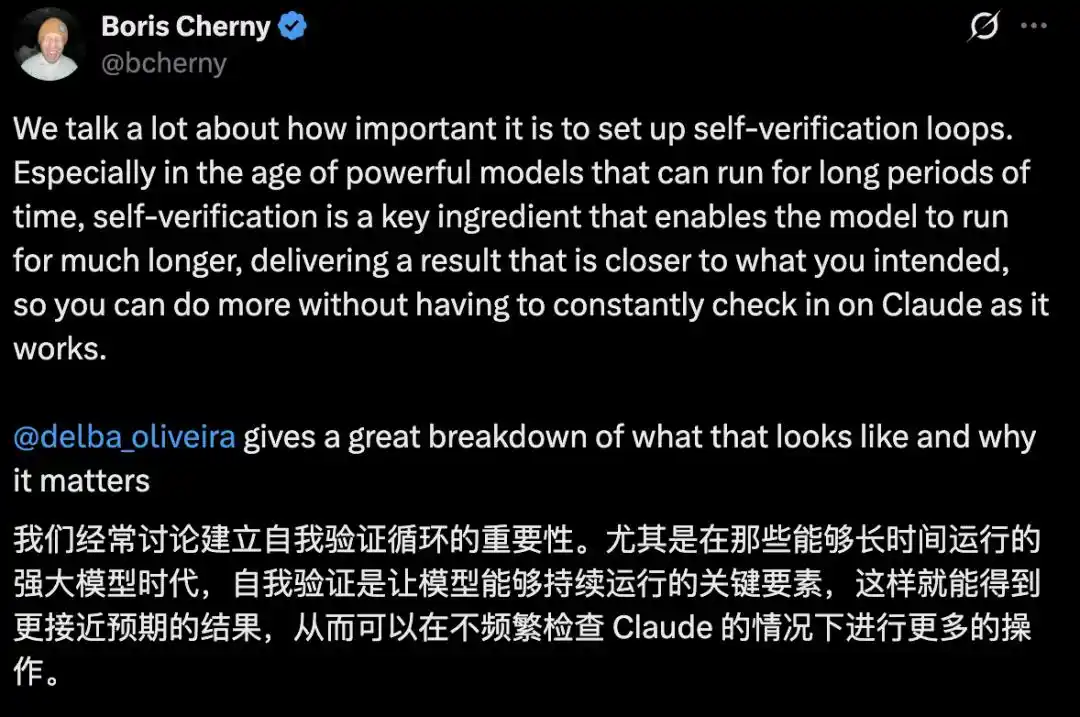
今年6月9日,他发推说:在强大模型能长时间自主运行的时代,自我验证是让模型跑得更久、结果更贴近你预期的关键:你不必守在一旁频繁盯着Claude,就能把更多活儿交出去。

说白了,验证做得越扎实,智能体才敢放开了跑;跑得越久,人越省心。
过去我们靠提示词,可它也有个天花板:只解决这一次的任务,下次还得从头再来。

这里先纠正一个常见的误解:Skill不是一段Markdown提示词。

它是一个能力模块,里面装着指令、文件结构、脚本、工具调用、配置和一整套工作流程,是把团队的检查步骤、设计规范、踩过的坑,沉淀成一个随叫随到的包,Claude需要时自己去翻。

更关键的是,Skill正在从Claude Code的一个特性,变成跨厂商的开放标准。

据业界的梳理,GitHub Copilot、Cursor、OpenAI Codex、Gemini CLI都已经采用同一套格式。

这意味着,你为团队沉淀的那些Skill,不会被锁死在某一家工具上,它会把团队的经验、规范、检查流程沉淀下来,变成一块能反复调用的能力。

这也引出这样一个扎心的现实:同一个Claude,不同团队用出来的效率,可能差出好几倍,造成这个差距不在模型,而在于工作流:

你有没有把检查写成Skill,有没有搭起验证循环,有没有让智能体自己把反馈闭环跑通。

说到底,智能体的能力,就是一道加法题:模型,加工具,加验证机制,加工作流程。

模型这一项,各家越来越接近。真正拉开距离的是后面那三项,它们全掌握在用户手里。

当然,这篇博客所展示的,是AI辅助开发的流程优化,而非「AI已经能独立写软件」。它仍离不开工程师,也没法脱离人去做生产级交付。

因此,它不是智能体要来抢人类工程师的饭碗,但方向已经很清楚了。

过去,我们一直在教AI怎么写代码,现在要开始教它验证自己写得对不对。

对于一个天天要用AI写代码的人来说,等到「下班前还得手动复查一遍」这件事终于能安心交给AI的那天,它才算真正开始替你扛活了。

参考资料:

https://claude.com/blog/building-verification-loops-in-claude-code-with-skills

https://claude.com/blog/getting-started-with-loops?utm_source=chatgpt.com

本文来自微信公众号“新智元”,作者:ASI启示录

Trend Kriptolar

İlgili Sorular

QClaude Code团队提出的「验证循环」具体包含哪几个自查步骤?

AClaude Code团队提出的「验证循环」包含四个自查步骤:1. `/code-review`:审查代码改动,揪出潜在bug并提供review意见。2. `/simplify`:清理diff,简化实现结构,去除冗余代码。3. `/verify`:进行端到端验证,真实运行以确认功能完成。4. `/design`:在改动UI时,对照仓库中的DESIGN.md核对视觉实现。

Q根据文章,AI编程的瓶颈从「写代码」转移到了哪里?

A根据文章,AI编程的瓶颈已经从「写代码」转移到了验证、代码评审和安全等环节。因为代码生成变得快速且廉价,新的问题变成了如何确保代码的正确性、谁来维护以及人工能否跟上代码评审的节奏。

QSkill与一段Markdown提示词的核心区别是什么?

ASkill与一段Markdown提示词的核心区别在于,Skill是一个能力模块,其中不仅包含指令,还封装了文件结构、脚本、工具调用、配置和一整套工作流程。它将团队的检查步骤、设计规范和过往经验沉淀成一个可复用的包,供Claude在需要时自主调用。它旨在固化工作流,而非仅解决单次任务。

QClaude Code团队提到的验证自动化程度有哪四档?

AClaude Code团队提到的验证自动化程度从松到紧分为四档:1. Standalone:手动触发执行。2. Embedded:嵌入特定任务流程中自动执行。3. Chained:多个验证Skill串联成一条链,自动依次执行。4. On every PR:最严格的一档,每次提交代码(Pull Request)时都自动执行所有验证。

Q文章认为,未来决定不同团队使用AI编程效率差距的关键因素是什么?

A文章认为,未来决定不同团队使用AI编程效率差距的关键因素不在于模型本身,而在于工作流。具体来说,差距在于:是否将检查步骤编写成Skill、是否建立起有效的验证循环、以及是否能让AI智能体自主完成反馈闭环。这些因素能将团队的经验和规范沉淀下来,形成可复用的能力,从而显著提升效率。

İlgili Okumalar

Breaking: Google Earth Urgently Pulls Back Nano Banana 2 Image Generation Feature!

Google Earth's newly launched "Create image" feature, powered by the Nano Banana 2 AI image generation model, was abruptly withdrawn shortly after its release due to being "played" by users. The feature allowed users to generate and overlay AI-created visuals directly onto real-world satellite and 3D maps in Google Earth. The tool enabled creative applications like historical recreations (e.g., visualizing ancient Pompeii), generating informational graphics for landmarks, and envisioning architectural projects or futuristic cityscapes on real terrain. It operated under "geospatial grounding," meaning the AI respected the underlying geography, topography, and perspective of the chosen map view. The model also integrated with Gemini to retrieve relevant factual information. However, upon release, users quickly tested its limits. A prominent example involved reimagining Philadelphia's historic Independence Hall as a post-apocalyptic ruin overrun by "happy" zombies, evil clowns, and giant alien mechs. This highlighted both the feature's playful potential and its risks regarding the generation of inappropriate or misleading content on realistic maps, leading to its swift temporary removal. Google stated it would re-release the feature after implementing "enhanced guardrails." Analysts note this move strategically leverages Google's vast proprietary geospatial data, positioning its AI not just for artistic generation but for spatially accurate world visualization—a unique advantage in the competitive AI image generation landscape.

marsbit16 dk önce

Breaking: Google Earth Urgently Pulls Back Nano Banana 2 Image Generation Feature!

marsbit16 dk önce

Altman Admits: Overestimated AI Snatching Jobs! Huang Renxun: The Unemployment Narrative Is Completely Backwards

Sam Altman has revised his earlier predictions about AI rapidly replacing jobs, admitting he overestimated the speed at which AI would eliminate entry-level white-collar roles. Speaking on the "Invest Like the Best" podcast, he stated that people do not truly want an AI CEO, as accountability and human connection remain critical. He found that individuals prefer interacting with people who can be held responsible for decisions. Similarly, NVIDIA's Jensen Huang argued that the narrative of AI destroying jobs is misguided. He distinguishes between tasks and jobs, noting that while AI can automate specific tasks, entire jobs—encompassing communication, judgment, coordination, and accountability—are not eliminated. He cited examples like radiologists and software engineers, where demand for these roles has increased as AI handles repetitive tasks, allowing for business expansion and the creation of more positions. Data from a University of Maryland and LinkUp study supports this, showing that U.S. job postings for new graduates have actually risen, countering the fear of vanishing entry-level roles. However, a significant shift is occurring: the traditional entry-level tasks that help newcomers gain experience are being automated, making initial career access more challenging. The key insight is that as AI takes over standardized tasks, the enduring value of human work shifts toward areas of responsibility, trust-building, and final decision-making—aspects that AI cannot replicate. The real "moat" for professionals lies in these irreplaceable human elements.

marsbit22 dk önce

Altman Admits: Overestimated AI Snatching Jobs! Huang Renxun: The Unemployment Narrative Is Completely Backwards

marsbit22 dk önce

Weekly Editor's Picks (0725-0731)

Weekly Editor's Picks (0725-0731) provides a curated selection of deep analysis, filtering out market noise. Key themes from this week include: **Macro & Policy:** The Federal Reserve's upcoming meeting is marked by high uncertainty, balancing cooling inflation data against persistent price pressures. Meanwhile, the U.S. crypto regulatory Clarity Act faces critical political hurdles, with its 2026 passage probability seen as low. **Investing & Crypto:** Analysis suggests long-term crypto success depends on conviction through volatile cycles, focusing on assets like Bitcoin and core smart contract platforms. A trend noted is the increasing similarity between global equity markets (especially tech) and crypto, driven by narrative and leverage. Several major crypto protocols show strong revenue growth, but this isn't always translating to token price appreciation due to sell pressure and structural factors. **AI & Semiconductors:** Nvidia's rising credit default swap rates signal market concern over AI infrastructure financing risks. The storage sector experienced volatility as markets began pricing in potential 2027 oversupply. Despite a record profitable quarter, SK Hynix's results were deemed "below expectations," reflecting heightened investor demands for future growth visibility. **Markets & DeFi:** TradeXYZ demonstrated remarkable accuracy in pre-market pricing for a major A股 listing. The token ONDO saw gains, linked to its growing role in the on-chain tokenized stock ecosystem. **Ethereum:** Post-Pectra upgrade, a major structural shift is underway as Lido begins migrating millions of ETH to new validator architectures designed for capital efficiency. **Also Highlighted:** Butian's bullish stock market move; OpenAI's Altman promising major advances; Samsung and SK Hynix securing large AI chip deals; Apple reaching a $5T market cap; and ongoing discussions around exchange security following Poolin's bankruptcy case.

marsbit56 dk önce

Weekly Editor's Picks (0725-0731)

marsbit56 dk önce

Low Investment Isn't Apple's Immunity Pass

While Meta and Google face investor scrutiny over ballooning AI capital expenditures, Apple's minimal AI investment has paradoxically become a strength. Its market cap recently reclaimed the global top spot, surpassing $5 trillion. The irony is deep: Apple's own AI efforts have lagged, with "Apple Intelligence" delayed and core talent lost, forcing reliance on partners like Google Gemini and Alibaba's Qianwen. Its Q3 FY2026 (Q2 CY) earnings initially seemed stellar. Revenue hit $109.4B (up 16% YoY), with iPhone and Mac sales, growing 22% and 29% respectively, driving most of the growth. However, the stock fell over 8% post-earnings. The primary concern was a weaker Q4 revenue growth forecast of 9-11%, below expectations, due to looming supply chain constraints. Apple is feeling the indirect cost of the AI boom. Soaring memory and chip prices, fueled by massive data center investments from Microsoft, Amazon, and others, are forcing Apple to raise Mac and iPad prices significantly. The upcoming iPhone launch is also expected to see substantial price hikes. Despite avoiding heavy AI infrastructure spending—its capital expenditures are actually down 28%—Apple cannot escape the industry-wide supply and cost pressures. While Apple's operating cash flow remains robust, its substantial R&D spending (up 32% YoY) has yet to yield major AI breakthroughs. As Tim Cook prepares to step down as CEO, Apple faces a challenging transition: balancing its premium hardware success against the strategic and cost pressures of the AI era it has so far cautiously navigated.

marsbit1 saat önce

Low Investment Isn't Apple's Immunity Pass

marsbit1 saat önce

İşlemler

Spot

Popüler Makaleler

4 Nasıl Satın Alınır

HTX.com’a hoş geldiniz! 4 (4) satın alma işlemlerini basit ve kullanışlı bir hâle getirdik. Adım adım açıkladığımız rehberimizi takip ederek kripto yolculuğunuza başlayın. 1. Adım: HTX Hesabınızı OluşturunHTX'te ücretsiz bir hesap açmak için e-posta adresinizi veya telefon numaranızı kullanın. Sorunsuzca kaydolun ve tüm özelliklerin kilidini açın. Hesabımı Aç2. Adım: Kripto Satın Al Bölümüne Gidin ve Ödeme Yönteminizi SeçinKredi/Banka Kartı: Visa veya Mastercard'ınızı kullanarak anında 4 (4) satın alın.Bakiye: Sorunsuz bir şekilde işlem yapmak için HTX hesap bakiyenizdeki fonları kullanın.Üçüncü Taraflar: Kullanımı kolaylaştırmak için Google Pay ve Apple Pay gibi popüler ödeme yöntemlerini ekledik.P2P: HTX'teki diğer kullanıcılarla doğrudan işlem yapın.Borsa Dışı (OTC): Yatırımcılar için kişiye özel hizmetler ve rekabetçi döviz kurları sunuyoruz.3. Adım: 4 (4) Varlıklarınızı Saklayın4 (4) satın aldıktan sonra HTX hesabınızda saklayın. Alternatif olarak, blok zinciri transferi yoluyla başka bir yere gönderebilir veya diğer kripto para birimlerini takas etmek için kullanabilirsiniz.4. Adım: 4 (4) Varlıklarınızla İşlem YapınHTX'in spot piyasasında 4 (4) ile kolayca işlemler yapın.Hesabınıza erişin, işlem çiftinizi seçin, işlemlerinizi gerçekleştirin ve gerçek zamanlı olarak izleyin. Hem yeni başlayanlar hem de deneyimli yatırımcılar için kullanıcı dostu bir deneyim sunuyoruz.

486 Toplam GörüntülenmeYayınlanma 2025.10.20Güncellenme 2026.06.02

4 Nasıl Satın Alınır

Tartışmalar

HTX Topluluğuna hoş geldiniz. Burada, en son platform gelişmeleri hakkında bilgi sahibi olabilir ve profesyonel piyasa görüşlerine erişebilirsiniz. Kullanıcıların 4 (4) fiyatı hakkındaki görüşleri aşağıda sunulmaktadır.

活动图片