New Fire Group Chief Economist Fu Peng's Latest Speech: Crypto Assets Deeply Bound to Liquidity, Global Assets 'Shrink Circle' with Widening Divergence

链捕手2026-07-24 tarihinde yayınlandı2026-07-24 tarihinde güncellendi

Özet

The chief economist of Sinovation Group delivered a speech at Wiki Finance EXPO Hong Kong 2026, analyzing the global market through the lens of liquidity. He argues that all major assets, including cryptocurrencies, are fundamentally tied to global liquidity, which is now shifting from an era of extreme post-2008 ease to sustained tightening under new Fed leadership. This marks the end of widespread "asset flooding" and ushers in a "shrinking circle" dynamic: capital is abandoning speculative, low-quality assets and concentrating in a few high-conviction, value-driven core holdings. The only dominant global investment theme is AI, viewed as a 20-25 year productivity cycle. However, a critical inflection point has been reached in Q2, where major tech firms' free cash flow has turned negative. The market narrative has pivoted from rewarding pure capital expenditure growth to demanding proof of future revenue generation and returns. While the AI super-cycle's long-term thesis remains intact, the initial hardware-driven phase (e.g., Nvidia, memory chips) is maturing. The speaker warns of significant volatility risk not from industry fundamentals, but from excessive financial leverage built up in these "certain" assets. He emphasizes that investment strategy must evolve from broad diversification to focused, cyclical allocation within the AI value chain (upstream hardware, midstream, downstream applications), avoiding blind long-term holds on single names. For crypto, this liqui...

Author: New Fire Technology

Mr. Fu Peng, Chief Economist of New Fire Group, was invited to participate in Wiki Finance EXPO Hong Kong 2026 and delivered a keynote speech. Starting from the global liquidity framework, Mr. Fu Peng shared his core views on the current global macro-assets and market trends, and provided a systematic judgment on the underlying logic of the crypto market.
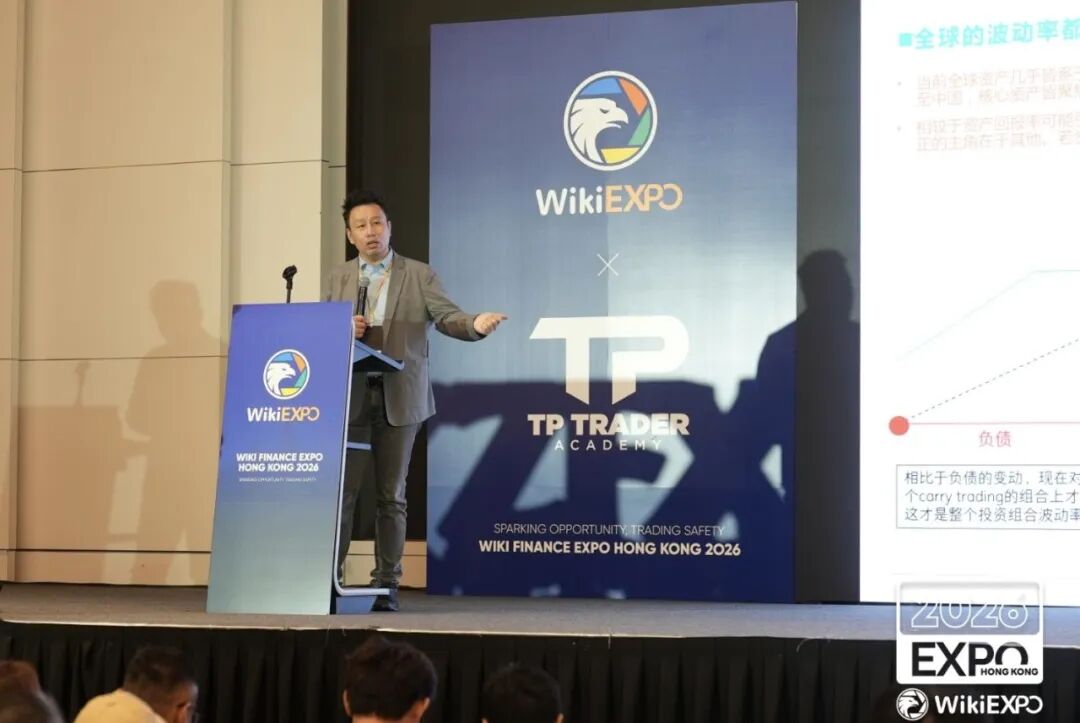
New Fire Group Chief Economist Fu Peng delivering a speech at Wiki Finance EXPO Hong Kong 2026
The following is the full text of the speech:

Today, I will share my views with you from several dimensions regarding the global markets. First, let's start with liquidity. Regardless of the asset class, up to today, including mainstream crypto assets, they are all essentially tied to core global liquidity.

After the 2008 financial crisis, global liquidity reached a temporary peak from 2008 to 2021. Liquidity should not be viewed solely through news about interest rate hikes or cuts; it comprises three dimensions, which you must remember.

Rate hikes and cuts only represent changes at the interest rate curve end and do not represent the complete liquidity environment. Observing liquidity can be broken down into three things: the volume of water in the pool, the water temperature, and the pressure distribution of funds within the pool. The underlying logic can be simply understood as P/Q×G. From a professional perspective, liquidity can be tracked from angles like the interest rate end, interest rate curve, Federal Reserve balance sheet, open market operations, etc. But there's an even simpler observation method: currently, in traditional trading, mainstream crypto assets like Bitcoin are widely regarded as leading indicators for liquidity strength.

01. From "Frenzied Speculation in Inferior Assets" to "Shrink Circle": The Two Faces of the Liquidity Cycle

After the 2020 pandemic, the world entered a window of extreme easing with low interest rates and central bank balance sheet expansion. During easing cycles, global financial assets exhibit typical characteristics: frenzied speculation in inferior assets.

For example, the retail short squeeze on GameStop in US stocks, and the surge of numerous worthless altcoins in the crypto market, are essentially results of excessive liquidity — when money is abundant, any asset can be pumped. However, when overall liquidity begins to contract, the market experiences a "shrink circle" scenario: capital actively distinguishes between good and bad assets, and inferior assets are abandoned. This process of squeezing out bubbles began in the second half of 2021.

From the second half of 2021 to 2022, typical cases include Bitcoin falling from over 70,000 to around 20,000 in the crypto market, and NVIDIA dropping about 64%-65% in 2022 in US stocks. This process is like squeezing water out of a sponge, continuously removing market bubbles.

This year, the real core inflection point occurred last November. 2021 was the peak of central bank balance sheet expansion, while the end of last year was a critical node of dual tightening involving both liquidity and quantitative tightening (QT). To explain simply: when the pool stops adding water, financial pressure doesn't materialize the instant QT begins; only when QT progresses to a certain extent does the market truly feel the funding pressure.

Last November/December, when Bitcoin was around 110,000, I made a bet with Li Lin: crypto assets were likely to halve within the next year. If this materializes, it would again confirm that the underlying logic of crypto assets is completely tied to global liquidity.

The core observation indicator last November: the Fed's Standing Repo Facility (SRF) open market operations. This indicator signifies that when QT reaches a critical point, structural funding pressure has already emerged in the market. It's important to understand that tightening credit and liquidity contraction doesn't mean everyone is short of funds; funding pressure is transmitted in layers: highly leveraged, weaker entities face funding stress first, while high-quality, leading entities still have ample funds. With this layered transmission of liquidity, capital markets experience the "shrink circle": funds first sell off peripheral, liquidity-sensitive weak assets, and continuously concentrate into the most core, highest-certainty assets.

Many retail crypto traders have a misconception: when there's no action in the crypto market, all funds flow into trading US stocks. This is a very retail-oriented mindset. Objectively speaking, during a liquidity tightening cycle, funds will first liquidate all high-volatility, highly speculative assets from their portfolios; cryptocurrencies, small-cap thematic stocks are among the first to be sold. When money is abundant and liquidity is loose, funds are willing to speculate on various junk assets; when money is scarce and liquidity tightens, funds will only focus on truly valuable core assets. This is the essence of the "shrink circle" scenario.

02. The Key Inflection Point for the AI Industry: Free Cash Flow Hits Zero, the Capex Narrative Becomes Ineffective

Since last November, global capital has continuously concentrated into the long-term productivity upgrade theme, namely the artificial intelligence (AI) sector. The logic of the AI sector can be analogized to large-scale fixed asset investment; it's easier to understand using the example of domestic infrastructure.

In 2001, the core market theme was large-scale domestic infrastructure construction, encapsulated by the old saying "to get rich, build roads first." At that time, Justin Yifu Lin and Andy Xie were discussing the driving effect of road and rail infrastructure on the economy. The 2002 Two Sessions set the direction for infrastructure development. In 2003, central and local fiscal funds were fully allocated, nationwide road and bridge projects commenced in batches, entering a long-term capital expenditure cycle. In 2004, the core holdings for institutional allocation were companies like Sany Heavy Industry and Conch Cement, upstream equipment and raw material suppliers in infrastructure.

This analogical logic fully applies to the current AI sector; the underlying industrial rules don't change just because it's named "AI." The first half of the AI wave was driven by the deployment of applications like ChatGPT, which ignited corporate willingness for capital expenditure. Starting in 2023, global tech companies concentrated on laying digital infrastructure, i.e., computing power and data center construction. Large-scale digital infrastructure drives the upstream hardware, storage, optical modules, HBM, and other industrial chain beneficiaries — Samsung Electronics, SK Hynix, TSMC correspond to the steel, cement, and construction machinery of the infrastructure era. However, Q2 of this year is a key inflection point for the entire industrial chain, coinciding with the dual variable of liquidity contraction.

After Google's earnings report yesterday, experienced investors could clearly sense that the market's dominant logic of the past two to three years has become ineffective. The market rules in 2023, 2024, and 2025 were simple: whenever internet giants increased AI infrastructure spending and expanded capital expenditures, the market gave high valuations. But after major companies' Q2 earnings reports this year, even with high capex growth, stock prices fell instead.

The core reason is that investors detected a key data point: free cash flow has dropped to zero for all leading companies heavily investing in AI infrastructure. The most critical indicator in Google's earnings report last night was free cash flow. Many investors still cling to the old logic, believing that as long as capex keeps expanding, stock prices will rise. That era is over.

The market pricing logic has completely shifted: previously, it was about the scale of capital investment; now, capital will interrogate whether infrastructure investments can generate sustained traffic and revenue to recoup costs. Free cash flow hitting zero is a landmark signal for the transition from Phase 1 to Phase 2 of the AI industry. If companies plan to continue increasing capital expenditures, they can only do so through external financing like equity issuance or bond issuance. External funds have costs, and investor scrutiny will become extremely stringent.

Here's a refined tracking metric: the ratio of Capital Expenditures (CapEx) to the growth rate of cloud business revenue. Currently, Google's ratio is about 1.9, meaning for every 1.9 units invested in infrastructure, only 1 unit of cloud revenue is generated. This is the core reason why the capital market is unwilling to continue giving high valuations.

With tightening overall funding conditions, global capital continuously contracts to a few high-certainty assets, coupled with the industrial cycle shift, the "shrink circle" scenario inevitably leads to severe risk volatility in the market.

Let me take NVIDIA as an example to outline the complete industrial cycle: 2022 was the starting point for confirming NVIDIA's industrial cycle, with its market cap falling from trillions to hundreds of billions that year. After the explosive deployment of ChatGPT, NVIDIA officially entered a value-growth phase. In 2023 and 2024, NVIDIA's logic was fully closed-loop: continuous earnings growth, global AI capex driving order expansion, market cap successively breaking through $1 trillion, $2 trillion, $3 trillion, with extremely low stock price volatility and almost no deep correction risks.

However, after returning from a research trip to Singapore in June 2024, I began warning major financial institutions about risks: NVIDIA's business operations, industry supply/demand, and industrial fundamentals were all sound; the risks all came from off-balance-sheet financial leverage.

There is a serious cognitive bias among new-generation post-00s investors: they believe stock price movements must perfectly match fundamentals. This view is completely wrong! Capital market pricing trades on market expectations, which significantly lead actual corporate fundamentals.

Here's an example: the current industry reality is that HBM capacity is tight and supply is insufficient — a correct fundamental fact. But this doesn't lead to the conclusion that stock prices will continue to rise indefinitely. This is a typical cognitive bias: earnings reports and capacity reflect current reality, while stock prices trade future expectations. Fundamental data severely lags behind market pricing. This is practical experience from over twenty years in the industry.

In July 2024, NVIDIA plunged 20% in just a few trading days, and Japanese stocks fell 10% on the same day. Many analysts at the time attributed the decline to the Bank of Japan's rate hike and the unwinding of yen carry trades — these were superficial explanations. The underlying truth was: global capital was concentrated into a few high-certainty assets, extreme certainty breeds extreme greed, directly manifesting as investors aggressively adding leverage.

Here's a simple trading analogy: we are playing cards, your card is a 6, mine is a 5, and you clearly know you have the better hand. An ordinary retail investor might go in with a heavy position, but a qualified trader would go all-in with maximum leverage. The core conclusion must be remembered: certainty breeds greed; everything has two sides; the corresponding action for greed is adding leverage. With a consensus that NVIDIA has ample long-term orders, traders will continuously add leverage to amplify returns — this is traders' instinct. When leverage accumulates to a critical point, it inevitably triggers violent volatility and rapid declines.

The current market is replicating the same pattern: some memory chip stocks experience frequent sharp plunges despite no industry headwinds, stable business operations, full order books, and steady earnings growth. Many young traders in South Korea made significant profits one day, only to suffer large losses the next. The root cause isn't Samsung, SK Hynix, or HBM industry supply/demand; the core issue is excessive accumulated leverage within the market.

The underlying logic is identical to NVIDIA's flash crash in July 2024: high-certainty assets breed leverage bubbles; when leverage hits a critical threshold, a crash is inevitable. There is no such thing as a perpetual leveraged rally. Here's a simple risk assessment standard: when recent graduates with no practical experience pour all their funds and leverage to go all-in on Samsung and SK Hynix, it signals approaching risk. When a previously niche, professional sector is flooded with speculative retail investors, a bubble burst is only a matter of time. The market has been in a capital contraction cycle for several years; everyone recognizes the few core, certain assets. But the risk isn't in the industry fundamentals; it lies hidden at the liquidity and leverage levels. This must be emphasized.

The market has now reached the core inflection point of AI's first phase. The narrative relying solely on capital expenditure expansion has run its course; the market will experience significant volatility and valuation correction for digestion. My overall assessment for US stocks this year: if the index can maintain a sideways consolidation, that's already an optimistic expectation. Some might argue: after the March decline, US stocks rebounded in May and June. But one must distinguish: the May-June rally was an extreme structural move, driven by only a handful of stocks lifting the index, while the vast majority of stocks continued to decline steadily. The structure of the A-share market over the past year is identical: 55% of stocks are trading below their levels when the Shanghai Composite was at 3000 points, with the index solely supported by a few AI sector leaders.

To summarize the current market environment: liquidity tightening, extreme market divergence, and the AI industrial cycle reaching a key inflection point. I reiterate: the long-term development logic of the AI industry hasn't changed; productivity upgrade is the definite theme. But one cannot blindly hold stocks long-term; one must adopt a complete industrial cycle perspective for phased allocation.

I have built a complete five-layer analytical framework: Industrial Layer, Economic Layer, Inflation Layer, Liquidity Layer, Market Layer. Currently, there's no need to expend great effort dissecting the Economic Layer. The Industrial, Liquidity, and Market Layers are the core of analysis; the weight of macroeconomic analysis has significantly decreased. Some might ask if deep analysis of the US economy is still needed. The answer is absolutely not. The reason: US companies are engaged in massive, continuous capital expenditure expansion, and the household sector completed deleveraging back in 2008. In other words, there's no need to scrutinize high-frequency economic data; the core characteristic of the US economy is just two words: resilience.

03. Global Market Structure: The Only Theme is AI

At the market level, the only global theme is artificial intelligence. Currently, global capital has only this core investment logic. Looking at globally allocable assets, the future core markets are only Japan, South Korea, Taiwan (China), Mainland China, and the United States. Other regions have extremely low allocation value. In Europe, only ASML warrants attention; other assets have no allocation significance.

Consider two questions: Is the current trend of the South Korean stock market related to its domestic real economy? Completely unrelated. Look at the Japanese stock market: is it linked to Japan's domestic economy? Also unrelated. Examining the core assets of the Japanese market reveals they are all upstream equipment manufacturers in the AI industrial chain. Market focus is mostly on Samsung and SK Hynix, but the core production equipment purchased by these two companies comes from Japanese firms. The entire industrial chain's upstream and downstream are fully connected. In Taiwan (China), the only core asset is TSMC; there are no other core industrial companies with allocation value.

The entire AI sector is essentially productivity-driven industrial investment, following fixed cyclical patterns. Let me state the core conclusion clearly: the moment major tech giants' free cash flow hit zero in Q2 is the major market turning point. Before and after this inflection point, the entire market's asset pricing logic completely reverses. This must be remembered.

The AI industrial chain is divided into upstream, midstream, and downstream, each with its own independent industrial lifecycle, featuring clear sector rotation and allocation windows. Do not treat AI as a belief for blind long-term holding; simply speculating on the AI concept will inevitably lead to pitfalls. Many ask me if I'm not bullish on AI; this question itself contains a logical flaw. Over the past decade, the market has reached a consensus: artificial intelligence is the core theme of the next generation of productivity — there is no controversy about this. Being bullish on the sector does not mean blindly holding any single asset at any time. NVIDIA, as an upstream hardware core asset, has completed its high-growth cycle; starting in 2025, it enters a mature blue-chip phase, hence its significant narrowing of gains from last year to this year. It won't be long before Samsung and SK Hynix also enter maturity; the overall growth rate of the upstream hardware sector will slow, and growth potential will gradually shift downstream.

Prediction of the complete AI industry cycle rhythm: 2022 dominated by upstream hardware; 2026 involves software layer valuation digestion and reshaping; around 2030, terminal application layer valuation adjustment and repricing. The complete AI industry super-cycle lasts about 20 to 25 years; 10 years have passed so far. The first decade's theme was upstream hardware infrastructure; the next decade's theme will be terminal applications.

However, there is currently a cyclical gap; the next 10 to 18 months is an industrial transition window. During this window period, do not go all-in. Strictly follow industrial cycle patterns for phased allocation to avoid significant volatility risks. Let's distinguish a key concept: from a programmer's perspective, AI coding tools, development aids, etc., belong to the industrial supporting tools layer, not the terminal application layer. Their valuation logic differs vastly.

04. Karen Walsh and the Liquidity Paradigm Shift: The Central Bank No Longer Backstops, Crypto Assets Enter Maturation

Finally, I return to the liquidity dimension, a core variable highly relevant to crypto assets. Why is the new Fed Chair, Karen Walsh, a key signal? His appointment declares the complete rewriting of the central bank's core policy framework established by Ben Bernanke after the 2008 financial crisis.

I wrote an analysis note in January: this personnel change signifies a return to the pre-2008 policy path. Briefly summarizing the policy background: the 2008 financial crisis exposed massive systemic financial risks. Policymakers learned from the 1929 Great Depression: completely放任自由市场 (letting the free market run its course) during a crisis means the market cannot stabilize itself. Therefore, post-2008, Keynesian stimulus policies were implemented on a massive global scale.

All Fed Chairs from Bernanke to Yellen followed the same core idea: when a financial crisis erupts, the central bank must intervene to support and rescue the market. But any policy has two sides, just like leverage in investing. Leverage can quickly放大收益 (amplify returns) but can also directly lead to账户爆仓归零 (account liquidation to zero). Central bank rescue can quickly calm market panic and avoid a repeat of the Great Depression, but long-term unconditional market backstopping by the central bank breeds market speculation and催生大规模资产泡沫 (gives rise to large-scale asset bubbles).

The market has a professional term called the "Fed Put": whenever the market falls, capital dares to buy indiscriminately, as all traders bet the central bank will intervene. When the market forms a unified expectation: profits belong to investors, losses are backstopped by the central bank, all financial assets become severely overvalued.

The core message of all Karen Walsh's public speeches can be summarized in one sentence: the central bank only performs its法定分内职责 (mandated duties). The central bank has two法定核心目标 (core statutory goals): stable employment and inflation control; it will not routinely prop up the stock market. With ongoing technological progress and steady productivity提升 (improvement), the central bank has the conditions to exit the long-term backstopping model.

This can be analogized to家庭教育 (family education): when a child enters high school and gains independent living ability, parents cannot handle everything, fostering dependency. After Karen took office, many market participants superficially interpreted it as expectations for rate cuts or QT; the core focus is actually the QT operation, with less correlation to short-term rate movements. The core issue is how to complete QT orderly, returning central bank functions to their standard pre-2008 positioning.

This signifies the definitive end of the largest global liquidity easing cycle in human history from 2008 until Karen's appointment. Therefore, do not entertain illusions: the next 5 to 10 years will not replicate the 2008-2026 scenario of universal大水漫灌 (flood-like easing) and broad-based asset appreciation. Capital will flow back to truly valuable core assets with long-term value. This is a key turning point at the liquidity level that will fundamentally rewrite everyone's investment strategy. Investment logic shifts from过去全面分散布局、各类资产同步上涨 (past broad diversification and synchronous asset class gains) to focusing on a few high-quality core assets.

Similar changes will occur in the crypto market. Many traders have already observed: Bitcoin and Ethereum market caps are stabilizing, volatility is declining, market liquidity is stabilizing, and participation is becoming institutionalized. These are typical characteristics of core assets that survive post-bubble cleansing. The narrative logic of speculating on worthless altcoins has彻底失效 (completely lost effectiveness).

Liquidity is the topmost core influencing factor for all financial assets; this year everyone must thoroughly understand this analytical framework. Analyzing industries, corporate fundamentals, and various assets becomes much clearer by following this liquidity framework first. Time is limited today, so I cannot dissect each of the five analytical layers in detail.

I prefer to discuss underlying logic and analytical methodology. Once the foundational thinking is sorted out, viewing short-term market micro-volatility won't lead to excessive confusion. My sharing ends here. I hope it provides you with insights. Thank you all.


Trend Kriptolar

İlgili Sorular

QWhat are the two distinct phases of the liquidity cycle, and how does market behavior differ between them according to Fu Peng's speech?

AFu Peng describes two phases: the 'Crazy Speculation on Inferior Assets' phase during periods of ultra-loose liquidity (like post-2020), where abundant capital drives up prices of even low-quality assets. This is followed by the 'Shrinking Circle' phase when liquidity contracts. In this phase, capital actively differentiates asset quality, abandoning speculative and peripheral assets and concentrating only on core, high-quality assets with the highest certainty.

QWhat is the key turning point and critical signal for the AI industry's investment logic shift, as identified in the speech?

AThe key turning point occurred in Q2 2026 (referred to as 'this year' in the speech). The critical signal was major tech companies like Google reporting zero or negative free cash flow. This marks the end of the 'capital expenditure expansion' narrative. The market's valuation logic switched from rewarding spending to demanding proof that investments generate sustainable revenue and traffic, indicating a move from the infrastructure-building phase to the application/commercialization phase.

QWhat is the primary risk for high-certainty assets like Nvidia in the current 'shrinking circle' market, according to the economist's analysis?

AThe primary risk is not related to corporate fundamentals or industry supply/demand, but to off-balance-sheet financial leverage piled up by investors. Extreme certainty in these assets breeds greed, which manifests as investors adding excessive leverage to amplify returns. When this leverage reaches a critical point, it inevitably triggers sharp price corrections and volatility, as seen with Nvidia's 20% drop in July 2024.

QWhat major change in central bank policy framework does the appointment of the new Fed Chair, Karen Walsh, signify, and what is its implication for future markets?

AKaren Walsh's appointment signifies a fundamental shift away from the post-2008 crisis framework established by Ben Bernanke, where central banks actively intervened to backstop markets ('the Fed put'). Walsh's stance is that the central bank should only focus on its dual mandate of stable employment and inflation control, not routinely propping up asset prices. This implies the end of the era of unlimited liquidity support. Consequently, the future market will not see the broad-based, everything-rises bull market of 2008-2026, and investment strategy must focus on a narrower set of truly valuable core assets.

QHow does Fu Peng characterize the current relationship between crypto assets (like Bitcoin) and global liquidity, and what trend is he observing in the crypto market?

AHe states that mainstream crypto assets are fundamentally tied to global core liquidity. Their price action serves as a leading indicator for liquidity conditions. He observes that the crypto market is maturing: Bitcoin and Ethereum's market capitalization is stabilizing, volatility is decreasing, market liquidity is becoming more stable, and participation is becoming more institutionalized. The narrative of speculating on low-quality 'air' tokens has completely失效 (become invalid), mirroring the broader market's 'shrinking circle' phenomenon where focus shifts to core assets.

İlgili Okumalar

The Verdict in Choi Tae-won's Divorce Case: Revealing the Inheritance Undercurrent Behind SK Hynix's Trillion-Won Empire

SK Group Chairman Chey Tae-won's high-profile divorce case, involving a record 1.38 trillion won settlement, has drawn attention to the succession plans for Korea's second-largest conglomerate, especially its crown jewel, SK hynix. Unlike traditional chaebol scripts centered on the eldest son, Chey's three children from his marriage to former President Roh Tae-woo's daughter, Roh Soh-yeong, are carving distinct, non-traditional paths. Eldest daughter Chey Yun-jung (b. 1989) is seen as the most evident successor. With a scientific and consulting background, she holds executive roles at SK bioscience and SK Inc.'s growth support department, focusing on future strategy and biopharma. Her marriage is to an AI infrastructure entrepreneur, not a traditional business alliance. Second daughter Chey Min-jung (b. 1991) took a unique route, voluntarily serving as a South Korean naval officer, including an anti-piracy deployment. She later worked on policy and strategy for SK hynix in Washington D.C. before co-founding an AI-driven healthcare startup. She married a former U.S. Marine Corps officer, connecting her to U.S. defense and policy circles—networks crucial for a global semiconductor giant. The only son, Chey In-geun (b. 1995), who studied physics like his father, worked briefly at SK E&S before joining McKinsey. Despite fitting the traditional "heir" profile as the eldest son, he remains silent and holds no public position or shares in SK, suggesting the old succession playbook is obsolete. As SK hynix's valuation soars, becoming a geopolitical asset in the AI era, the heirs' legitimacy is no longer automatic. They must prove themselves in fields like AI biotech, global policy, and strategic consulting. Their marriages also reflect new elite networks in tech and defense, not old political alliances. Their inheritance is the complex challenge of navigating a globalized, tech-driven world, not just a corporate throne.

marsbitDün 09:06

The Verdict in Choi Tae-won's Divorce Case: Revealing the Inheritance Undercurrent Behind SK Hynix's Trillion-Won Empire

marsbitDün 09:06

From OpenSea to OpenRouter: Is Alex Atallah Repeating His 'Exit at the Peak' Playbook?

From OpenSea to OpenRouter: Is Alex Atallah Repeating His "Exit at the Peak" Playbook? According to the Wall Street Journal, payments giant Stripe is in talks to acquire the AI model aggregation platform OpenRouter in a potential deal valuing the company near $100 billion. This would mark founder Alex Atallah's second creation of a company reaching a $100 billion valuation, following his co-founding of NFT marketplace OpenSea. OpenRouter, founded just over three years ago, has grown rapidly by acting as a unified gateway for developers to access over 400 AI models. It currently has about 10 million users and processes over 200 trillion tokens monthly. While the platform's annualized revenue is around $50 million, its valuation has skyrocketed from $1.3 billion in March 2026. The potential acquisition by Stripe, a company OpenRouter's founder once likened it to, represents a major expansion into AI infrastructure for the payments leader. This move echoes Atallah's previous timing with OpenSea, where he departed before the NFT market's significant downturn. For OpenRouter, selling now may be strategic. Despite its scale, its business model—charging a 5-5.5% fee on AI inference calls—faces pressure from competition, open-source models, and potential price wars among model providers, limiting its profitability narrative for an IPO. A key asset for potential acquirers like Stripe is OpenRouter's vast repository of real-world AI usage data, which offers unique insights into model performance and developer preferences that are difficult to replicate. Whether this potential deal signifies a new valuation benchmark for AI infrastructure or another market peak signal remains to be seen.

链捕手Dün 08:42

From OpenSea to OpenRouter: Is Alex Atallah Repeating His 'Exit at the Peak' Playbook?

链捕手Dün 08:42

İşlemler

Spot

Popüler Makaleler

$S$ Nedir

SPERO'yu Anlamak: Kapsamlı Bir Genel Bakış SPERO'ya Giriş İnovasyonun manzarası gelişmeye devam ederken, web3 teknolojilerinin ve kripto para projelerinin ortaya çıkışı dijital geleceği şekillendirmede önemli bir rol oynamaktadır. Bu dinamik alanda dikkat çeken projelerden biri SPERO, $$s$$ olarak adlandırılmaktadır. Bu makale, SPERO hakkında ayrıntılı bilgi toplamak ve sunmak amacıyla, meraklılar ve yatırımcıların web3 ve kripto alanlarındaki temellerini, hedeflerini ve yeniliklerini anlamalarına yardımcı olmayı amaçlamaktadır. SPERO,$$s$$ Nedir? SPERO,$$s$$, kripto alanında merkeziyetsizlik ve blok zinciri teknolojisi ilkelerini kullanarak etkileşimi, faydayı ve finansal kapsayıcılığı teşvik eden bir ekosistem yaratmayı amaçlayan benzersiz bir projedir. Proje, kullanıcıların yenilikçi finansal çözümler ve hizmetler sunarak eşler arası etkileşimleri yeni yollarla kolaylaştırmayı hedeflemektedir. SPERO,$$s$$'nin temel amacı, bireyleri güçlendirmek ve kripto para alanındaki kullanıcı deneyimini artıran araçlar ve platformlar sağlamaktır. Bu, daha esnek işlem yöntemlerini mümkün kılmayı, topluluk odaklı girişimleri teşvik etmeyi ve merkeziyetsiz uygulamalar (dApp'ler) aracılığıyla finansal fırsatlar yaratmayı içermektedir. SPERO,$$s$$'nin temel vizyonu kapsayıcılık etrafında dönmekte olup, geleneksel finansal sistemlerdeki boşlukları kapatmayı ve blok zinciri teknolojisinin faydalarından yararlanmayı hedeflemektedir. SPERO,$$s$$'nin Yaratıcısı Kimdir? SPERO,$$s$$'nin yaratıcısının kimliği bir miktar belirsizdir, çünkü kurucusu(ları) hakkında ayrıntılı arka plan bilgisi sağlayan sınırlı kamuya açık kaynaklar bulunmaktadır. Bu şeffaflık eksikliği, projenin merkeziyetsizlik taahhüdünden kaynaklanabilir—birçok web3 projesinin paylaştığı bir etik anlayışı, bireysel tanınmanın yerine kolektif katkıları önceliklendirmektedir. Topluluk ve onun kolektif hedefleri etrafında tartışmaları merkezileştirerek, SPERO,$$s$$, belirli bireyleri öne çıkarmadan güçlendirme özünü taşımaktadır. Bu nedenle, SPERO'nun etik anlayışını ve misyonunu anlamak, tek bir yaratıcının kimliğini belirlemekten daha önemlidir. SPERO,$$s$$'nin Yatırımcıları Kimlerdir? SPERO,$$s$$, kripto sektöründe yeniliği teşvik etmeye adanmış girişim sermayedarlarından melek yatırımcılara kadar çeşitli yatırımcılar tarafından desteklenmektedir. Bu yatırımcıların odak noktası genellikle SPERO'nun misyonuyla uyumlu olup, toplumsal teknolojik ilerlemeyi, finansal kapsayıcılığı ve merkeziyetsiz yönetimi vaat eden projeleri önceliklendirmektedir. Bu yatırımcı temelleri, yalnızca yenilikçi ürünler sunan projelere değil, aynı zamanda blok zinciri topluluğuna ve ekosistemlerine olumlu katkılarda bulunan projelere de ilgi duymaktadır. Bu yatırımcıların desteği, SPERO,$$s$$'yi hızla gelişen kripto projeleri alanında dikkate değer bir rakip haline getirmektedir. SPERO,$$s$$ Nasıl Çalışır? SPERO,$$s$$, onu geleneksel kripto para projelerinden ayıran çok yönlü bir çerçeve kullanmaktadır. İşte benzersizliğini ve yeniliğini vurgulayan bazı temel özellikler: Merkeziyetsiz Yönetim: SPERO,$$s$$, kullanıcıların projenin geleceğiyle ilgili karar alma süreçlerine aktif olarak katılmalarını sağlayan merkeziyetsiz yönetim modellerini entegre etmektedir. Bu yaklaşım, topluluk üyeleri arasında sahiplik ve hesap verebilirlik duygusunu teşvik etmektedir. Token Kullanımı: SPERO,$$s$$, ekosistem içinde çeşitli işlevler sunmak üzere tasarlanmış kendi kripto para token'ını kullanmaktadır. Bu token'lar, işlemleri, ödülleri ve platformda sunulan hizmetlerin kolaylaştırılmasını sağlayarak genel etkileşimi ve faydayı artırmaktadır. Katmanlı Mimari: SPERO,$$s$$'nin teknik mimarisi, modülerlik ve ölçeklenebilirliği destekleyerek projenin evrimi sırasında ek özelliklerin ve uygulamaların sorunsuz bir şekilde entegrasyonuna olanak tanımaktadır. Bu uyum sağlama yeteneği, sürekli değişen kripto manzarasında geçerliliği sürdürmek için hayati öneme sahiptir. Topluluk Katılımı: Proje, işbirliği ve geri bildirim teşvik eden mekanizmalar kullanarak topluluk odaklı girişimlere vurgu yapmaktadır. Güçlü bir topluluk oluşturarak, SPERO,$$s$$, kullanıcı ihtiyaçlarını daha iyi karşılayabilir ve piyasa trendlerine uyum sağlayabilir. Kapsayıcılığa Odaklanma: Düşük işlem ücretleri ve kullanıcı dostu arayüzler sunarak, SPERO,$$s$$, daha önce kripto alanında yer almamış bireyler de dahil olmak üzere çeşitli bir kullanıcı tabanını çekmeyi hedeflemektedir. Bu kapsayıcılık taahhüdü, erişilebilirlik yoluyla güçlendirme misyonuyla uyumludur. SPERO,$$s$$ Zaman Çizelgesi Bir projenin tarihini anlamak, gelişim yolculuğu ve kilometre taşları hakkında kritik bilgiler sağlar. Aşağıda, SPERO,$$s$$'nin evriminde önemli olayları haritalayan önerilen bir zaman çizelgesi bulunmaktadır: Kavram Geliştirme ve Fikir Aşaması: SPERO,$$s$$'nin temelini oluşturan ilk fikirler, blok zinciri endüstrisindeki merkeziyetsizlik ve topluluk odaklılık ilkeleriyle yakından uyumlu olarak geliştirildi. Proje Beyaz Kağıdının Yayınlanması: Kavramsal aşamayı takiben, SPERO,$$s$$'nin vizyonunu, hedeflerini ve teknolojik altyapısını ayrıntılı bir şekilde açıklayan kapsamlı bir beyaz kağıt yayımlandı ve topluluk ilgisini ve geri bildirimini toplamak amacıyla sunuldu. Topluluk Oluşturma ve Erken Katılımlar: Projenin hedefleri etrafında tartışmalar yürüterek destek toplamak ve erken benimseyenler ile potansiyel yatırımcılar için bir topluluk oluşturmak amacıyla aktif iletişim çabaları gerçekleştirildi. Token Üretim Etkinliği: SPERO,$$s$$, yerel token'larını erken destekçilere dağıtmak ve ekosistem içinde başlangıç likiditesini sağlamak amacıyla bir token üretim etkinliği (TGE) gerçekleştirdi. İlk dApp'in Yayınlanması: SPERO,$$s$$ ile ilişkili ilk merkeziyetsiz uygulama (dApp) faaliyete geçti ve kullanıcıların platformun temel işlevleriyle etkileşimde bulunmalarını sağladı. Sürekli Gelişim ve Ortaklıklar: Projenin tekliflerine sürekli güncellemeler ve iyileştirmeler yapılmakta olup, blok zinciri alanındaki diğer oyuncularla stratejik ortaklıklar, SPERO,$$s$$'yi rekabetçi ve gelişen bir oyuncu haline getirmiştir. Sonuç SPERO,$$s$$, web3 ve kripto paranın finansal sistemleri devrim niteliğinde dönüştürme ve bireyleri güçlendirme potansiyelinin bir kanıtıdır. Merkeziyetsiz yönetime, topluluk katılımına ve yenilikçi tasarlanmış işlevselliğe olan bağlılığıyla, daha kapsayıcı bir finansal manzaraya doğru bir yol açmaktadır. Hızla gelişen kripto alanındaki herhangi bir yatırımda olduğu gibi, potansiyel yatırımcılar ve kullanıcılar, SPERO,$$s$$ içindeki devam eden gelişmelerle ilgili olarak kapsamlı bir araştırma yapmaları ve düşünceli bir şekilde katılmaları teşvik edilmektedir. Proje, kripto endüstrisinin yenilikçi ruhunu sergileyerek, sayısız olasılığını keşfetmeye davet etmektedir. SPERO,$$s$$'nin yolculuğu hala devam ederken, temel ilkeleri, teknoloji, finans ve birbirimizle etkileşim biçimimizi etkileyebilir.

196 Toplam GörüntülenmeYayınlanma 2024.12.17Güncellenme 2024.12.17

$S$ Nedir

AGENT S Nedir

Agent S: Web3'te Otonom Etkileşimin Geleceği Giriş Web3 ve kripto para dünyasında sürekli gelişen manzarada, yenilikler bireylerin dijital platformlarla etkileşim biçimlerini sürekli olarak yeniden tanımlıyor. Bu tür öncü projelerden biri olan Agent S, açık ajans çerçevesi aracılığıyla insan-bilgisayar etkileşimini devrim niteliğinde değiştirmeyi vaat ediyor. Otonom etkileşimlerin yolunu açarak, Agent S karmaşık görevleri basitleştirmeyi ve yapay zeka (AI) alanında dönüştürücü uygulamalar sunmayı hedefliyor. Bu detaylı inceleme, projenin karmaşıklıklarına, benzersiz özelliklerine ve kripto para alanındaki etkilerine dalacaktır. Agent S Nedir? Agent S, bilgisayar görevlerinin otomasyonunda üç temel zorluğu ele almak üzere özel olarak tasarlanmış çığır açıcı bir açık ajans çerçevesidir: Alan Spesifik Bilgi Edinimi: Çerçeve, çeşitli dış bilgi kaynaklarından ve iç deneyimlerden akıllıca öğrenir. Bu çift yönlü yaklaşım, alan spesifik bilgi açısından zengin bir veri havuzu oluşturmasını sağlar ve görev yürütmedeki performansını artırır. Uzun Görev Ufukları Üzerinde Planlama: Agent S, karmaşık görevlerin verimli bir şekilde parçalanmasını ve yürütülmesini kolaylaştıran deneyim artırımlı hiyerarşik planlama kullanır. Bu özellik, çoklu alt görevleri etkili ve verimli bir şekilde yönetme yeteneğini önemli ölçüde artırır. Dinamik, Homojen Olmayan Arayüzlerle Başlama: Proje, ajanlar ve kullanıcılar arasındaki etkileşimi geliştiren yenilikçi bir çözüm olan Ajan-Bilgisayar Arayüzü'ni (ACI) tanıtmaktadır. Çok Modlu Büyük Dil Modellerini (MLLM'ler) kullanarak, Agent S çeşitli grafik kullanıcı arayüzlerini sorunsuz bir şekilde gezinebilir ve manipüle edebilir. Bu öncü özellikler aracılığıyla, Agent S, makinelerle insan etkileşimini otomatikleştirmede karşılaşılan karmaşıklıkları ele alan sağlam bir çerçeve sunarak, AI ve ötesinde birçok uygulama için zemin hazırlıyor. Agent S'nin Yaratıcısı Kimdir? Agent S'nin kavramı temelde yenilikçi olsa da, yaratıcısı hakkında spesifik bilgiler belirsizliğini koruyor. Yaratıcı şu anda bilinmiyor, bu da projenin yeni aşamasını veya kurucu üyeleri gizli tutma stratejik tercihini vurguluyor. Anonimlikten bağımsız olarak, odak çerçevenin yetenekleri ve potansiyeli üzerinde kalıyor. Agent S'nin Yatırımcıları Kimlerdir? Agent S, kriptografik ekosistemde oldukça yeni olduğundan, yatırımcıları ve finansal destekçileri hakkında ayrıntılı bilgiler açıkça belgelenmemiştir. Projeyi destekleyen yatırım temelleri veya organizasyonları hakkında kamuya açık bilgilerdeki eksiklik, finansman yapısı ve gelişim yol haritası hakkında sorular doğuruyor. Destekleyicilerin anlaşılması, projenin sürdürülebilirliğini ve potansiyel pazar etkisini değerlendirmek için kritik öneme sahiptir. Agent S Nasıl Çalışır? Agent S'nin temelinde, çeşitli ortamlarda etkili bir şekilde çalışmasını sağlayan son teknoloji bir sistem yatmaktadır. İşleyiş modeli birkaç ana özellik etrafında inşa edilmiştir: İnsan Benzeri Bilgisayar Etkileşimi: Çerçeve, bilgisayarlarla etkileşimleri daha sezgisel hale getirmeyi amaçlayan gelişmiş AI planlaması sunar. Görev yürütmedeki insan davranışını taklit ederek, kullanıcı deneyimlerini yükseltmeyi vaat eder. Anlatı Belleği: Yüksek düzeyde deneyimlerden yararlanmak için kullanılan Agent S, görev geçmişlerini takip etmek amacıyla anlatı belleğini kullanarak karar verme süreçlerini geliştirir. Episodik Bellek: Bu özellik, kullanıcılara adım adım rehberlik sağlayarak, çerçevenin görevler gelişirken bağlamsal destek sunmasına olanak tanır. OpenACI Desteği: Yerel olarak çalışabilme yeteneği ile Agent S, kullanıcıların etkileşimleri ve iş akışları üzerinde kontrol sağlamasına olanak tanır ve Web3'ün merkeziyetsiz felsefesiyle uyumlu hale gelir. Dış API'lerle Kolay Entegrasyon: Çeşitli AI platformlarıyla uyumluluğu ve çok yönlülüğü, Agent S'nin mevcut teknolojik ekosistemlere sorunsuz bir şekilde entegre olmasını sağlar ve geliştiriciler ile organizasyonlar için cazip bir seçenek haline getirir. Bu işlevsellikler, Agent S'nin kripto alanındaki benzersiz konumuna katkıda bulunarak, karmaşık, çok aşamalı görevleri minimum insan müdahalesi ile otomatikleştirir. Proje geliştikçe, Web3'teki potansiyel uygulamaları dijital etkileşimlerin nasıl gelişeceğini yeniden tanımlayabilir. Agent S'nin Zaman Çizelgesi Agent S'nin gelişimi ve kilometre taşları, önemli olaylarını vurgulayan bir zaman çizelgesinde özetlenebilir: 27 Eylül 2024: Agent S'nin kavramı, “Bilgisayarları İnsan Gibi Kullanan Açık Bir Ajans Çerçevesi” başlıklı kapsamlı bir araştırma makalesi ile tanıtıldı ve projenin temelini sergiledi. 10 Ekim 2024: Araştırma makalesi arXiv'de kamuya açık olarak yayınlandı ve çerçevenin derinlemesine bir incelemesini ve OSWorld benchmark'ına dayalı performans değerlendirmesini sundu. 12 Ekim 2024: Agent S'nin yetenekleri ve özellikleri hakkında görsel bir içgörü sağlayan bir video sunumu yayımlandı ve potansiyel kullanıcılar ve yatırımcılarla daha fazla etkileşim sağlandı. Bu zaman çizelgesindeki işaretler, sadece Agent S'nin ilerlemesini değil, aynı zamanda şeffaflık ve topluluk katılımına olan bağlılığını da göstermektedir. Agent S Hakkında Ana Noktalar Agent S çerçevesi gelişmeye devam ederken, birkaç ana özellik öne çıkmakta ve yenilikçi doğasını ve potansiyelini vurgulamaktadır: Yenilikçi Çerçeve: İnsan etkileşimine benzer bir bilgisayar kullanımı sağlamak üzere tasarlanan Agent S, görev otomasyonuna yeni bir yaklaşım getiriyor. Otonom Etkileşim: GUI aracılığıyla bilgisayarlarla otonom olarak etkileşim kurabilme yeteneği, daha akıllı ve verimli hesaplama çözümlerine doğru bir sıçrama anlamına geliyor. Karmaşık Görev Otomasyonu: Sağlam metodolojisi ile karmaşık, çok aşamalı görevleri otomatikleştirerek süreçleri daha hızlı ve daha az hata payı ile gerçekleştirebilir. Sürekli İyileştirme: Öğrenme mekanizmaları, Agent S'nin geçmiş deneyimlerden öğrenmesini sağlar ve sürekli olarak performansını ve etkinliğini artırır. Çok Yönlülük: OSWorld ve WindowsAgentArena gibi farklı işletim ortamlarında uyumlu olması, geniş bir uygulama yelpazesine hizmet edebilmesini sağlar. Agent S, Web3 ve kripto alanında kendini konumlandırırken, etkileşim yeteneklerini artırma ve süreçleri otomatikleştirme potansiyeli, AI teknolojilerinde önemli bir ilerlemeyi temsil etmektedir. Yenilikçi çerçevesi aracılığıyla, Agent S dijital etkileşimlerin geleceğini örneklemekte ve çeşitli sektörlerde kullanıcılar için daha sorunsuz ve verimli bir deneyim vaat etmektedir. Sonuç Agent S, AI ve Web3'ün birleşiminde cesur bir sıçramayı temsil ediyor ve teknoloji ile etkileşim biçimimizi yeniden tanımlama kapasitesine sahip. Henüz erken aşamalarında olmasına rağmen, uygulama olanakları geniş ve çekici. Kritik zorlukları ele alan kapsamlı çerçevesi ile Agent S, otonom etkileşimleri dijital deneyimin ön plana çıkmasına taşımayı hedefliyor. Kripto para ve merkeziyetsizlik alanlarına daha derinlemesine girdikçe, Agent S gibi projelerin teknoloji ve insan-bilgisayar işbirliğinin geleceğini şekillendirmede önemli bir rol oynayacağı kesin.

669 Toplam GörüntülenmeYayınlanma 2025.01.14Güncellenme 2025.01.14

AGENT S Nedir

S Nasıl Satın Alınır

HTX.com’a hoş geldiniz! Sonic (S) satın alma işlemlerini basit ve kullanışlı bir hâle getirdik. Adım adım açıkladığımız rehberimizi takip ederek kripto yolculuğunuza başlayın. 1. Adım: HTX Hesabınızı OluşturunHTX'te ücretsiz bir hesap açmak için e-posta adresinizi veya telefon numaranızı kullanın. Sorunsuzca kaydolun ve tüm özelliklerin kilidini açın. Hesabımı Aç2. Adım: Kripto Satın Al Bölümüne Gidin ve Ödeme Yönteminizi SeçinKredi/Banka Kartı: Visa veya Mastercard'ınızı kullanarak anında Sonic (S) satın alın.Bakiye: Sorunsuz bir şekilde işlem yapmak için HTX hesap bakiyenizdeki fonları kullanın.Üçüncü Taraflar: Kullanımı kolaylaştırmak için Google Pay ve Apple Pay gibi popüler ödeme yöntemlerini ekledik.P2P: HTX'teki diğer kullanıcılarla doğrudan işlem yapın.Borsa Dışı (OTC): Yatırımcılar için kişiye özel hizmetler ve rekabetçi döviz kurları sunuyoruz.3. Adım: Sonic (S) Varlıklarınızı SaklayınSonic (S) satın aldıktan sonra HTX hesabınızda saklayın. Alternatif olarak, blok zinciri transferi yoluyla başka bir yere gönderebilir veya diğer kripto para birimlerini takas etmek için kullanabilirsiniz.4. Adım: Sonic (S) Varlıklarınızla İşlem YapınHTX'in spot piyasasında Sonic (S) ile kolayca işlemler yapın.Hesabınıza erişin, işlem çiftinizi seçin, işlemlerinizi gerçekleştirin ve gerçek zamanlı olarak izleyin. Hem yeni başlayanlar hem de deneyimli yatırımcılar için kullanıcı dostu bir deneyim sunuyoruz.

1.8k Toplam GörüntülenmeYayınlanma 2025.01.15Güncellenme 2026.06.02

S Nasıl Satın Alınır

Tartışmalar

HTX Topluluğuna hoş geldiniz. Burada, en son platform gelişmeleri hakkında bilgi sahibi olabilir ve profesyonel piyasa görüşlerine erişebilirsiniz. Kullanıcıların S (S) fiyatı hakkındaki görüşleri aşağıda sunulmaktadır.

活动图片














