Bitcoin Mining Farms Are Becoming AI Factories

链捕手2026-07-22 tarihinde yayınlandı2026-07-22 tarihinde güncellendi

Özet

Bitcoin mines are transforming into AI factories. This shift is driven by the convergence of three key assets from the previous crypto cycle: infrastructure, talent, and capital. Crypto mining companies like Crusoe, CoreWeave, and Bitdeer are repurposing their core competency—securing power, land, and grid connections in remote locations—to build data centers for AI clients. These firms are signing multi-billion dollar, long-term contracts with companies like Anthropic, AWS, and Microsoft, as AI's demand for reliable, high-capacity compute surpasses the profitability of Bitcoin mining. Simultaneously, crypto entrepreneurs and engineers are applying their skills to new AI ventures. Examples include OpenSea's co-founder launching OpenRouter (an AI model aggregator), and former Coinbase engineers building Fal.ai (a generative media infrastructure platform). Their experience in building scalable, global software networks translates effectively to the AI space. Furthermore, capital accumulated during the crypto boom is now fueling AI. Figures like Jed McCaleb (co-founder of Ripple) funded Voltage Park, a large-scale GPU cloud provider. Notably, some crypto investments, like FTX's early bets on Anthropic and Cursor, have generated astronomical paper returns, demonstrating how high-risk crypto capital flowed into AI before it became mainstream. The transition is not just about repurposing hardware, but about redirecting critical resources—power infrastructure, distributed system...

Author: Xiao Bing

In Abilene, Texas, on a construction site covering approximately 1,000 acres, eight H-shaped data centers are gradually becoming operational.

This is the first major campus of OpenAI's "Stargate" project. The entire project has a planned capacity of 1.2 gigawatts. The first two buildings are already online, with the rest still under construction.
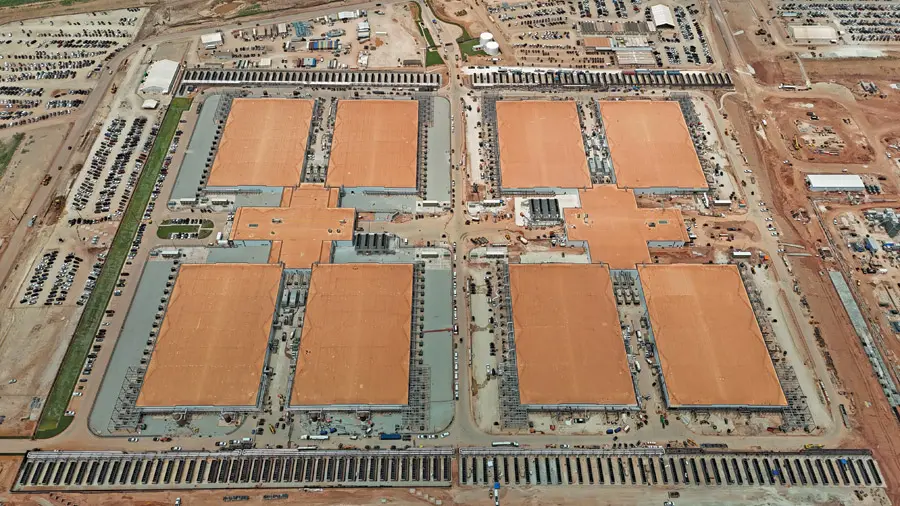
The campus is operated by Oracle. Its developer, called Crusoe, originally started in Bitcoin mining.

Founder Chase Lochmiller was formerly a partner at crypto fund Polychain Capital.

In 2018, he and his childhood friend Cully Cavness discovered that U.S. oil fields were flaring vast amounts of stranded associated natural gas daily. The duo moved generators and mining rigs to the wellheads, using what would have been wasted gas to mine Bitcoin.

The business logic was simple:Find power in remote areas and turn it into computing power very quickly.

Seven years later, their client has shifted from the Bitcoin network to OpenAI. In 2025, Crusoe sold its Bitcoin business of over 425 modular data centers to NYDIG to focus on developing AI.

Crusoe's transformation may seem like a major leap, but its core capabilities have remained consistent: finding power, building data centers, and operating and maintaining them.

Like Crusoe, many other companies and individuals have made similarly impressive pivots from Crypto to AI. They are not like the "PayPal Mafia"—originating from the same company—nor do they share a common organization. What connects them are three types of assets left over from the last Crypto cycle:

  • Electricity, land, and grid interconnection permits secured by mining companies;
  • Engineers and entrepreneurs trained by Crypto companies;
  • Capital accumulated during the last bull market.

After 2022, these three asset types began flowing into AI simultaneously.

Mining Companies Are Selling Electricity to AI, Not Mining Rigs

"The greatest conflict facing humanity's future is the contradiction between the ever-increasing need for data processing and limited computing power."

In 2019, Bitmain founder Jihan Wu wrote this in an article titled "The Beauty of Computing Power," explicitly stating it as the reason Bitmain was investing in AI chips.

At the time, these words seemed like public relations rhetoric. Looking back six years later, they read more like a prophecy written in advance.

In February 2026, Jihan Wu's mining company Bitdeer announced it was liquidating all its Bitcoin inventory to provide liquidity for building AI data centers, decisively pivoting from Crypto to AI.

Bitcoin mining companies pivoting to AI is often misunderstood by the public as "turning mining rigs into AI servers." The reality is different.

Bitcoin mining rigs are mostly ASIC chips designed for specific hash algorithms and cannot be used to train large models. Even the GPUs left over from Ethereum mining farms often fail to meet the networking, memory, liquid cooling, and reliability requirements of today's large AI clusters.

The truly valuable assets of mining companies are their data centers already connected to the power grid.

Building an AI data center, the hardest part is often not buying GPUs, but securing hundreds of megawatts of stable electricity, acquiring land, substations, transmission lines, and construction permits. This process can take years. Mining companies, driven by the need to lower costs and comply with regulations, have already completed much of this groundwork in North America, Northern Europe, and the Middle East.

When Bitcoin mining profits decline and AI companies are willing to sign long-term, high-value contracts, mining companies naturally begin switching clients.

CoreWeave was one of the earliest to complete this transition.

In 2016, three commodity traders placed a GPU on their pool table in a Manhattan office and started mining Ethereum. When the Crypto winter arrived, they took advantage of falling prices to acquire a large number of second-hand graphics cards, later expanding their business into film and TV rendering and machine learning.

The company was initially called Atlantic Crypto, later renamed CoreWeave. Its IPO documents show that before 2022, most of the company's revenue still came from cryptocurrency mining; thereafter, the Crypto business was completely discontinued.

Today, CoreWeave is a leading AI cloud company backed by NVIDIA. Its path is now being replicated by the entire crypto mining industry.

In 2026, TeraWulf signed a data center lease with Anthropic for approximately 401 megawatts over 20 years, with an initial contract value of about $19 billion;

Cipher Mining signed a 300-megawatt, approximately $5.5 billion, 15-year agreement with AWS;

Core Scientific allocated large amounts of data center capacity to CoreWeave on a long-term basis.

Hut 8 signed two consecutive 15-year leases at its Beacon Point campus in Texas, each with a base contract value of about $9.8 billion.

After reaching a $9.7 billion cloud services agreement with Microsoft, IREN in July 2026 disclosed new contracts totaling $2.8 billion.

According to CoinShares statistics, by the first quarter of 2026, publicly listed mining companies had announced over $70 billion in AI and high-performance computing contracts. Meanwhile, Bitcoin mining revenue per unit of hashrate once fell to around $30 to $35 per day per PH/s, pushing some mines using older equipment or with higher electricity costs close to breakeven.

Mining companies have transformed from computing power facilities of the crypto era into the computing power infrastructure of the AI era, remaining squarely in the spotlight.

From OpenSea to OpenRouter

Besides mining farms, people from the Crypto industry are also migrating to AI.

Alex Atallah is the co-founder and former CTO of OpenSea. At the height of the NFT craze, OpenSea's monthly trading volume once exceeded $4 billion. In July 2022, Atallah left the company, planning to start a new venture.

In 2023, he founded OpenRouter.

The problem OpenRouter solves is straightforward: there are increasingly more large language models, each with different prices, speeds, and capabilities. Developers don't want to integrate APIs for each model company. Through OpenRouter, they just need to connect one interface to call hundreds of models, with requests automatically routed based on price, performance, and availability.

In 2025, OpenRouter completed a combined $40 million in funding at a valuation of approximately $500 million.

In May 2026, it completed a $113 million Series B round led by CapitalG, raising its valuation to about $1.3 billion. Over the past six months, the number of tokens processed weekly on the platform grew from 5 trillion to 25 trillion.

OpenRouter and OpenSea don't do exactly the same thing, but their business structures are quite similar.

OpenSea aggregates NFT buyers and sellers, while OpenRouter aggregates models, compute suppliers, and developers. The former facilitates digital asset transactions, the latter facilitates inference requests. The product changed, but the ability to build markets and integrate fragmented supply did not.

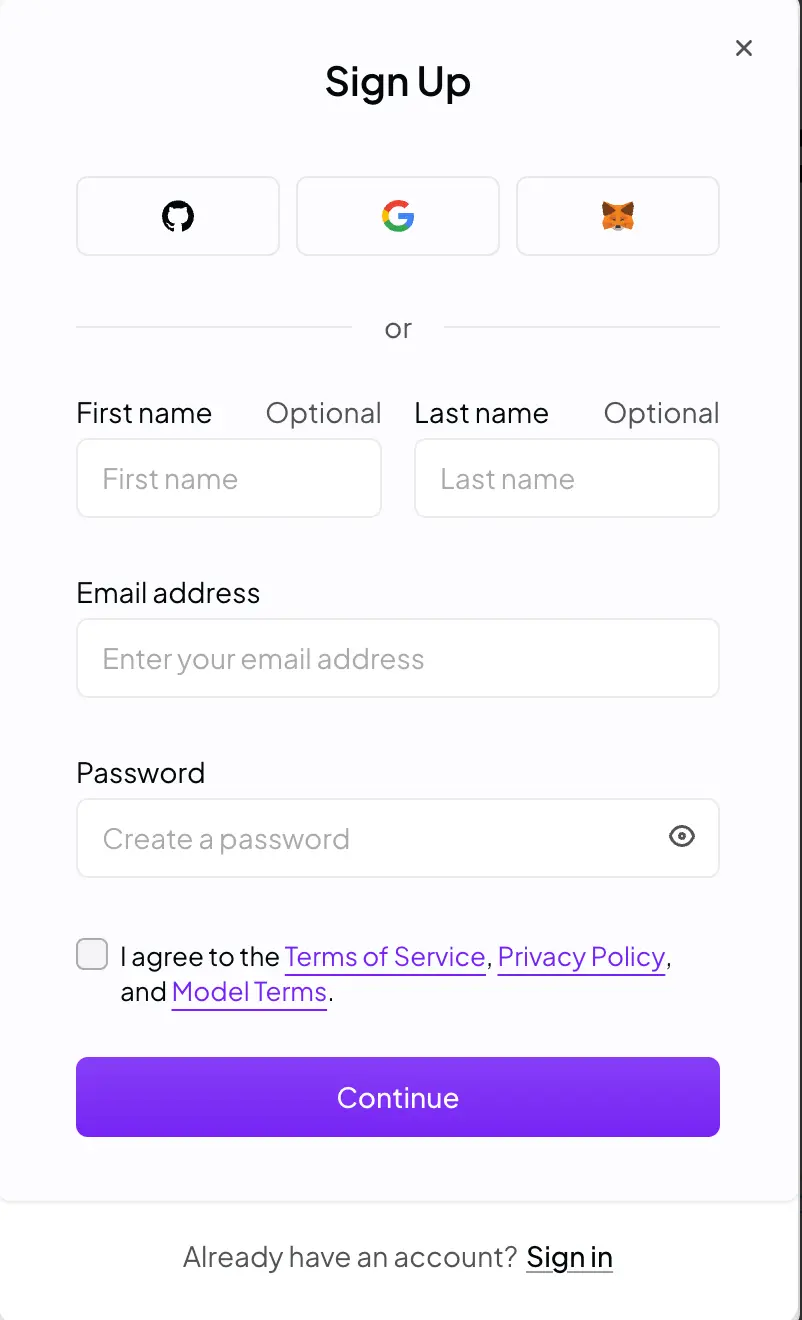
Some Crypto traces even remain directly in the product. On OpenRouter's signup page, next to Google and GitHub login, there is still a MetaMask option, and the platform also accepts USDC payments.
Fal.ai is another example.

Founder Burkay Gur previously worked on building a machine learning platform at Coinbase. He started his own company in 2021, initially developing machine learning data pipelines and deployment tools.

After Stable Diffusion was open-sourced, they noticed that while image and video models were proliferating, inference was slow, deployment cumbersome, and GPU utilization low. So Fal.ai shifted its focus to generative media inference.

This pivot paid off quickly.

By mid-2025, Fal.ai's annualized revenue approached $95 million. In December of the same year, the company completed a $140 million Series D round led by Sequoia Capital, reaching a valuation of $4.5 billion. Companies like Adobe, Canva, and Perplexity all use its generative media infrastructure.

Using Crypto Money to Fuel AI

While mining companies provide power and data centers to AI, capital accumulated during the Crypto cycle is entering AI in another way.

The most direct example is Jed McCaleb.

He created the crypto exchange Mt.Gox, and later co-founded Ripple and Stellar, becoming one of the earliest billionaires in the Crypto industry.

In 2023, McCaleb's Navigation Fund allocated approximately $500 million to purchase 24,000 NVIDIA H100 GPUs in one go, forming Voltage Park to rent GPUs to AI companies and research institutions.

He didn't create another public blockchain. Instead, he turned the money earned from Crypto into the most scarce asset in the AI industry.

In 2026, Voltage Park merged with the AI development platform Lightning AI, with the combined entity valued at roughly $2.5 billion. Wealth accumulated from the last crypto cycle thus became part of the balance sheet of an AI cloud company.

The investment portfolio of SBF, founder of the now-collapsed crypto exchange FTX, provides an even more dramatic case.

In 2022, SBF invested $500 million in the then little-known Anthropic, acquiring approximately a 13.5% stake. After FTX's bankruptcy, the liquidation team sold these shares in batches in 2024, recovering about $1.3 billion. Today, Anthropic's post-money valuation is $965 billion. Assuming FTX had not sold its shares, its stake would likely be diluted to around 6.7%, worth approximately $65 billion—a roughly 130-fold return on the initial $500 million investment.

Cursor's story is more extreme.

In April 2022, SBF's fund Alameda participated in an early round of funding for Anysphere with $200,000. This company later launched the AI programming tool Cursor. After FTX entered bankruptcy proceedings, the liquidation team sold this stake for $200,000 in April 2023—almost exactly the original price.

In June 2026, SpaceX announced its acquisition of Anysphere in an all-stock deal valued at $60 billion. According to public reports, Alameda initially received rights representing about 5% of the company. If we completely ignore any dilution from subsequent funding rounds, the paper value of this stake could reach $3 billion—a 15,000-fold return on the initial $200,000 investment.

This shouldn't be interpreted solely as proof of SBF's investment genius. A more accurate understanding is that, even before ChatGPT's launch, some of the most aggressive, highest-risk-capital from the Crypto bull market had already begun seeking out AI projects.

During the Crypto market boom, a significant amount of capital believed two things:Computing power would become increasingly valuable, and software networks could expand globally in a very short time. AI fits both conditions perfectly.

Therefore, when Crypto capital entered AI, it wasn't just buying graphics cards; it was also funding new technological and organizational experiments.

Nous Research is a typical case.

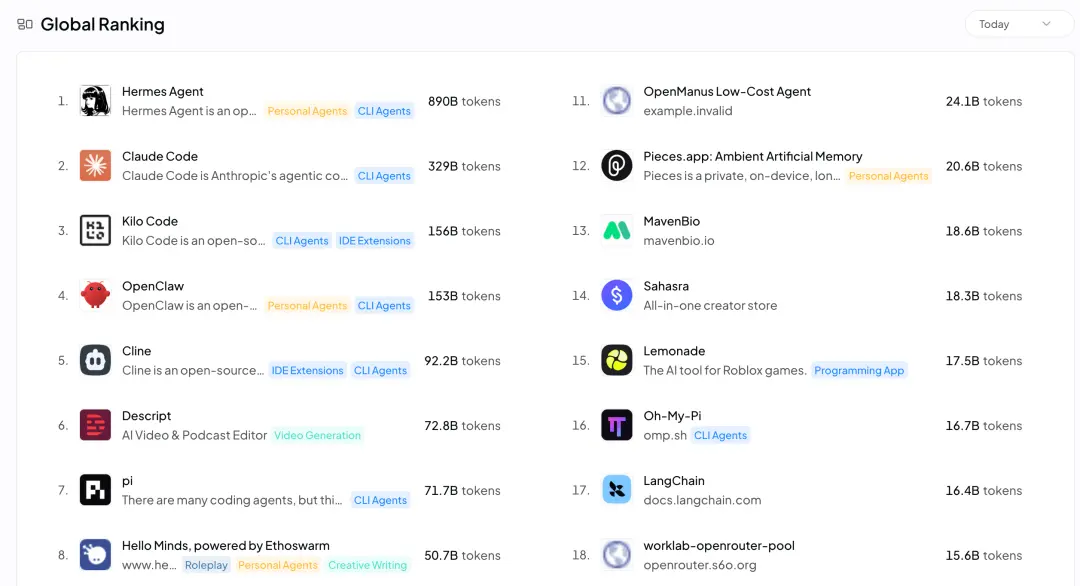
Nous's Hermes Agent is an open-source AI agent capable of accumulating long-term memory and autonomously generating skills. According to OpenRouter statistics, Hermes Agent's token usage ranks first globally, surpassing Claude Code.
In 2025, Crypto investment firm Paradigm led Nous Research's $50 million Series A round.

According to reports at the time, this financing valued the company's yet-to-be-issued tokens at approximately $1 billion. Previous investors in Nous also included crypto VC Distributed Global and former Coinbase CTO Balaji Srinivasan.

Besides Hermes, Nous is also developing Psyche, a distributed model training network built on Solana.

Traditional AI labs need to concentrate large numbers of GPUs in a single data center. Psyche aims to validate an alternative path: connect GPUs scattered across different regions, owned by different participants, to collaboratively train models, coordinating training progress, verifying participants, and distributing rewards via smart contracts.

Currently, Psyche remains an experiment, with its testnet tokens explicitly labeled by the official team as having no economic value. However, it represents another kind of influence from Crypto capital entering AI.

OpenAI also seriously considered a similar direction in its early days.

OpenAI was founded as a non-profit in 2015, but the funding needed for cutting-edge models soon exceeded what donations could support. By the end of 2017, Sam Altman and Greg Brockman were already discussing new financing structures. One option was a token offering.

Later public internal emails show the team seriously researched issuing tokens in early 2018. Elon Musk explicitly opposed it, believing a token offering would severely damage OpenAI's credibility. OpenAI later added that by the end of January that year, the team itself had gradually lost interest in the plan.

OpenAI ultimately chose to establish a for-profit entity and secured massive investment from Microsoft, but Sam Altman didn't leave Crypto behind.

In 2019, he co-founded Worldcoin with Alex Blania and Max Novendstern. This project uses iris-scanning devices called Orbs to verify that a user is a real and unique human, establishing an identity and payment network via World ID and the WLD token.

From Crusoe and CoreWeave to OpenRouter, Fal.ai, and Nous Research, these individual stories full of survivor bias do not mean that Crypto companies have a higher chance of success when pivoting to AI.

Mining companies left behind electricity, land, and grid permits; exchanges and Web3 companies trained a group of engineers familiar with distributed systems, GPU orchestration, and globalized products; the wealth created by token appreciation then became capital for buying graphics cards, investing in model companies, and funding technological experiments.

Crypto didn't magically transform into AI. It merely channeled the resources left from the last cycle to the next industry that needed them more.


Trend Kriptolar

İlgili Sorular

QWhat is the main asset that Bitcoin mining companies are selling to AI companies, and why is it valuable?

ABitcoin mining companies are primarily selling access to electricity and data center infrastructure to AI companies, not their mining hardware. This is valuable because the most difficult and time-consuming part of building an AI data center is securing a stable, high-capacity power supply and obtaining land, permits, and grid connections. Crypto mining firms have already completed this groundwork in their pursuit of cheap, compliant power for mining.

QHow does the transition of companies like OpenSea's co-founder to creating OpenRouter demonstrate a transfer of skills from Crypto to AI?

AThe transition demonstrates a transfer of market-building and aggregation skills. OpenSea's Alex Atallah leveraged his experience in creating a platform that aggregated NFT buyers and sellers to build OpenRouter, which aggregates AI models, compute suppliers, and developers. The core competency—creating a marketplace to connect fragmented supply and demand—remained the same, even though the product shifted from digital assets to AI inference requests.

QIn what way did capital accumulated during the Crypto boom fund the development of the AI industry?

ACrypto capital funded the AI industry in several key ways: 1. Direct purchase of critical hardware, such as Jed McCaleb using his wealth to buy tens of thousands of Nvidia H100 GPUs to create Voltage Park. 2. Early-stage investments in AI startups, as seen with FTX/Alameda's early bets on Anthropic and Cursor (Anysphere). 3. Funding experimental AI projects and organizations, like Paradigm's investment in Nous Research, which explores decentralized model training via crypto-economic mechanisms.

QWhat was the original business model of Crusoe, and what core capability allowed it to pivot from Bitcoin mining to supporting OpenAI's 'Stargate' project?

ACrusoe's original business model involved using otherwise wasted natural gas from oil fields to generate electricity for Bitcoin mining. The core capability that enabled its pivot was its expertise in finding power sources in remote locations, building data centers quickly, and operating and maintaining them. This ability to 'find electricity and turn it into compute power in a very short time' was directly applicable to building the large-scale AI data centers required for projects like OpenAI's Stargate.

QAccording to the article, what are the three main types of assets left from the previous Crypto cycle that are now flowing into the AI sector?

AThe three main types of assets are: 1. Physical Infrastructure: The electricity, land, and grid interconnection permits secured by mining companies. 2. Human Capital: The engineers and entrepreneurs trained in distributed systems, GPU orchestration, and global product development within Crypto and Web3 companies. 3. Financial Capital: The wealth accumulated during the crypto bull market, which is now being deployed to purchase GPUs, invest in AI companies, and fund technical experiments.

İlgili Okumalar

After Three Consecutive Quarters of Decline, Can the Crypto Market Find a Window for Stabilization in Q3?

The cryptocurrency market has just concluded its worst-performing quarter since 2022, with total capitalization dropping 12.6% to $2.1 trillion. All core metrics indicate capital is leaving the sector, not just rotating within it. Bitcoin fell 14.2% and Ethereum dropped 25.4% in Q2, breaking their previous correlation with US tech stocks. A key driver is the reversal in US spot Bitcoin ETF flows, which saw a net outflow of approximately $4.67 billion in Q2, including a record monthly outflow near $4.5 billion in June. While recent data suggests long-term holders are accumulating again, sustained ETF outflows mean continued selling pressure. Market focus is now singularly on the Federal Reserve. The upcoming July FOMC meeting is seen as the most critical event for Q3. A dovish signal could support Bitcoin reclaiming a $68,000-$84,000 range, while a hawkish stance might establish a new trading band around $50,000-$56,000. Additionally, regulatory uncertainty persists, with the progress of the crucial *CLARITY Act* stalling in the Senate, reducing its perceived 2026 passage probability to 40-45%. Despite the broad downturn, a few sectors showed growth. Prediction markets saw nominal volume surge 48.7% year-over-year to $113.8 billion, and tokenized collectibles transaction volume rose 143% quarterly to $1.4 billion. The Real-World Asset (RWA) tokenization sector also continued steady growth, now representing ~$28.1 billion in on-chain value. The market's foundation for an extreme crash appears limited, with Bitcoin price hovering near its 200-week moving average. However, the trading paradigm has shifted from narrative-driven speculation to decisions based on price action, policy developments, and interest rate expectations, making a broad sentiment-driven rally unlikely in the near term.

marsbit11 saat önce

After Three Consecutive Quarters of Decline, Can the Crypto Market Find a Window for Stabilization in Q3?

marsbit11 saat önce

BIT Trading Moment: BTC Still Suppressed by Weekly 200 EMA, Rejection May Restart Decline; Storage and Semiconductors that Surged Last Night Begin Falling in Evening Trading

**Crypto & Stock Market Wrap: Bitcoin Tests Resistance, Stocks Retreat After AI Surge** Bitcoin consolidates around $66,000, facing key resistance near $68,000—an area seen as a major psychological and technical hurdle where previous rallies have failed. Analysts note the cryptocurrency is caught between its 200-week moving average (~$63,333) and 200-week EMA (~$68,328). A clear break above $68k is needed to signal a stronger bullish trend, while a rejection could lead to a retest of $63k support. Market sentiment remains cautious, with low futures open interest pointing to a low-liquidity rebound rather than a full bull market. Bitcoin spot ETFs saw another $203 million inflow. US stock futures pointed lower after a strong Tuesday session led by a massive rebound in semiconductors and memory stocks. The rally was fueled by renewed optimism about AI-driven hardware demand, with Micron, SanDisk, and SK Hynix surging. However, those gains reversed in pre-market trading. Super Micro Computer (SMCI) soared over 20% after hours on strong guidance and a record backlog. Other standouts included Rocket Lab and nuclear energy plays Oklo and X-Energy. Rising oil prices (Brent above $91) and climbing Treasury yields (10-year near 4.64%), however, are reigniting inflation concerns and acting as a headwind for equities. In Asia, markets were mixed. South Korea's KOSPI pared early gains to close slightly higher as semiconductor stocks like SK Hynix gave back initial surges. Japan's Nikkei edged lower as the yen hit a fresh 38-year low against the dollar, raising fears of potential market intervention. Key events to watch include the Samsung Galaxy launch, AMD's AI event, and a slew of major tech earnings from Alphabet, Tesla, and IBM after the close on Wednesday, followed by the ECB meeting and Intel's earnings on Thursday.

marsbit11 saat önce

BIT Trading Moment: BTC Still Suppressed by Weekly 200 EMA, Rejection May Restart Decline; Storage and Semiconductors that Surged Last Night Begin Falling in Evening Trading

marsbit11 saat önce

Former CFTC Chairman, Circle President Tarbert: Preaching Long-Termism While Cashing Out $30 Million Himself

Former CFTC Chairman and Circle President Heath Tarbert has consistently advocated for a long-term vision in public, urging patience from investors as Circle’s stock price has fallen significantly from its peak. However, it has been revealed that since Circle’s IPO, Tarbert has continuously sold his CRCL shares through pre-arranged trading plans, cashing out approximately $30 million, without making any public market purchases. This contrast between his public messaging and personal actions has drawn criticism. Tarbert joined Circle in July 2023 as Chief Legal Officer, leveraging his regulatory experience to help guide the company through its IPO and expansion. Despite promoting stablecoins as long-term infrastructure, he established a 10b5-1 trading plan just before Circle went public, leading to substantial stock sales over the following year. In March 2026, he initiated another plan to sell more shares. His career trajectory highlights a pattern of moving between high-level regulatory roles and influential positions in the financial sector. After resigning as CFTC Chairman in early 2021, he joined Citadel Securities as Chief Legal Officer just 27 days later, during a period of intense regulatory scrutiny for the firm. He later joined Circle, aiding its efforts to navigate regulatory challenges for its public listing. While Tarbert's expertise in policy and compliance is valuable to companies like Circle, his actions—advocating long-term confidence while personally divesting—raise questions about the alignment between his public statements and his private financial decisions, leaving investors who followed his advice to bear the market risks.

marsbit12 saat önce

Former CFTC Chairman, Circle President Tarbert: Preaching Long-Termism While Cashing Out $30 Million Himself

marsbit12 saat önce

Gate Research Institute: The 'Wall Street-ization' Wave of Crypto Financial Products – Competition or Integration?

The article titled "Gate Research Institute: Are Crypto Financial Products Sparking a 'Wall Street' Wave—Competition or Convergence?" explores the evolving relationship between the crypto ecosystem and traditional finance (TradFi). The piece begins by reflecting on Bitcoin's original 2009 vision of decentralization, disintermediation, and moving away from banks. It then contrasts this with the 2024 landscape, where key crypto assets like Bitcoin are increasingly held through Wall Street products like ETFs issued by giants like BlackRock. The article questions whether this signifies that TradFi is systematically taking over the rights to issue, price, custody, and distribute crypto financial assets. The core argument is that this is not a zero-sum takeover but rather a bidirectional convergence where each side addresses the other's weaknesses. Crypto offers 24/7 global markets, programmable settlement, and open access but lacks compliant channels, institutional-grade custody, deep fiat liquidity, and mainstream distribution. TradFi possesses these but is constrained by legacy systems, limited operating hours, and slow settlement. Two primary convergence paths are highlighted: * **Path A (CEX to TradFi):** Exemplified by Gate, which has progressed from offering tokenized stocks and CFDs to providing direct, real stock trading (US, Hong Kong, South Korea) within its platform, using USDT. * **Path B (TradFi to Crypto):** Exemplified by Robinhood, which has integrated crypto trading, acquired exchanges like Bitstamp, and is moving traditional assets like stocks onto the blockchain via tokenization and its own Layer 2. Both paths are ultimately competing to become the next-generation, unified financial account—a "super account" where users can seamlessly trade cryptocurrencies, stocks, ETFs, RWA (Real World Assets), and tokenized treasury products in one interface. The growth of RWA and tokenized treasuries (e.g., BlackRock's BUIDL) is presented as the asset-layer fusion, providing stable, yield-bearing assets on-chain and acting as a bridge between the two worlds. In conclusion, the "Wall Street-ization" of crypto is framed as a mutual transformation. Decentralized ideals persist in the protocol layer, while at the application layer, a more efficient, global, and accessible unified capital market is emerging from this convergence. The future competition lies not between crypto exchanges and stockbrokers, but between platforms vying to offer the most comprehensive asset coverage, liquidity, and user experience within a single account.

marsbit12 saat önce

Gate Research Institute: The 'Wall Street-ization' Wave of Crypto Financial Products – Competition or Integration?

marsbit12 saat önce

İşlemler

Spot

Popüler Makaleler

BITCOIN Nedir

HarryPotterObamaSonic10Inu (ERC-20)'yu ve Kripto Alanındaki Yerini Anlamak Son yıllarda, kripto para piyasası, hem ticaret yapanların hem de topluluk etkileşimi ve eğlence değeri arayanların ilgisini çeken meme coin'lerin popülaritesinde bir artış gördü. Bu benzersiz token'lar arasında, kripto para dokusuna kültürel referansları harmanlayan ilginç bir proje olan HarryPotterObamaSonic10Inu (ERC-20) bulunmaktadır. Bu makale, HarryPotterObamaSonic10Inu'nun temel yönlerini, mekanizmalarını, topluluk odaklı ethosunu ve daha geniş kripto manzarasıyla etkileşimini incelemektedir. HarryPotterObamaSonic10Inu (ERC-20) Nedir? Adından da anlaşılacağı gibi, HarryPotterObamaSonic10Inu, Ethereum blok zinciri üzerinde inşa edilen bir meme coin'dir ve ERC-20 standardı altında sınıflandırılmaktadır. Geleneksel kripto paraların pratik kullanılabilirlik veya yatırım potansiyeline odaklandığı durumların aksine, bu token eğlence değeri ve topluluğunun gücü üzerine kuruludur. Proje, bağlı kullanıcıların bir araya gelebileceği, fikirlerini paylaşabileceği ve çeşitli kültürel fenomenlerden ilham alan etkinliklere katılabileceği bir ortam yaratmayı hedeflemektedir. HarryPotterObamaSonic10Inu'nun dikkate değer özelliklerinden biri işlemlerde sıfır vergi olmasıdır. Bu çekici unsur, küçük ölçekli yatırımcıları caydırabilecek ek ücretlerden yoksun olarak ticareti ve topluluk katılımını teşvik etmeyi amaçlamaktadır. Coin'in toplam arzı bir milyar token olarak belirlenmiştir; bu, topluluk içinde önemli bir dolaşım sağlama niyetini göstermektedir. HarryPotterObamaSonic10Inu (ERC-20) Yaratıcısı HarryPotterObamaSonic10Inu'nun kökenleri bir miktar gizemlidir; yaratıcısı hakkında spesifik bilgilerin ne olduğu bilinmemektedir. Bu token'ın geliştirilmesi, belirli bir ekip veya açık bir plan eksikliği ile gerçekleşmiştir; bu durum, meme coin sektöründe oldukça yaygındır. Proje, topluluğunun heyecanı ve katılımına dayalı olarak organik bir şekilde ortaya çıkmıştır. HarryPotterObamaSonic10Inu (ERC-20) Yatırımcıları Dış yatırımlar ve destekler söz konusu olduğunda, HarryPotterObamaSonic10Inu da belirsiz kalmaktadır. Token, bilinen herhangi bir yatırım fonunu veya önemli bir kurumsal desteği listelememektedir. Bunun yerine, projenin can damarı, kolektif eylem ve kripto alanındaki katılım yoluyla büyüme ve sürdürülebilirlik sağlayan temel topluluğudur. HarryPotterObamaSonic10Inu (ERC-20) Nasıl Çalışır? Bir meme coin olarak, HarryPotterObamaSonic10Inu, genellikle varlık değerini yöneten geleneksel çerçevelerin dışında çalışmaktadır. Projenin nasıl çalıştığını tanımlayan birkaç özelliği vardır: Sıfır Vergi İşlemleri: İşlemlerde vergi ücreti olmadan, kullanıcılar gizli maliyet endişesi olmadan token'ı serbestçe alıp satabilirler. Topluluk Etkileşimi: Proje, topluluk etkileşimi üzerine kuruludur ve sosyal medya platformlarını kullanarak heyecan yaratarak katılımı kolaylaştırır. Tartışmalar, içerik paylaşımı ve katılım, projenin erişimini genişletmeye ve destekleyiciler arasında sadakat oluşturmaya yardımcı olan kritik unsurlardır. Pratik Kullanılabilirlik Yok: HarryPotterObamaSonic10Inu'nun mali ekosistem içinde somut bir kullanılabilirlik sunmadığı belirtilmelidir. Daha ziyade, eğlence ve topluluk etkinlikleri için bir token olarak sınıflandırılmaktadır. Kültürel Referans: Token, popüler kültürden unsurları zekice harmanlayarak ilgi çekmektedir ve hem meme meraklıları hem de kripto takipçileriyle bağlantı kurmaktadır. HarryPotterObamaSonic10Inu, meme coin'lerin, daha geleneksel kripto para projelerinden nasıl farklı çalıştığını örneklendirmektedir; bu projeler, utilitarist varlıklar yerine yenilikçi sosyal yapıların bir parçası olarak piyasaya girmektedir. HarryPotterObamaSonic10Inu (ERC-20) Zaman Çizelgesi HarryPotterObamaSonic10Inu'nun tarihi, birkaç dikkate değer kilometre taşı ile işaretlenmiştir: Oluşum: Token, birçok kripto meraklısının hayal gücünü yakalayan bir viral meme'den ortaya çıkmıştır. Spesifik yaratım tarihleri mevcut değildir ve bu onun organik yükselişini vurgulamaktadır. Borsa Listelemeleri: HarryPotterObamaSonic10Inu, topluluğun daha kolay erişim ve ticaret yapabilmesini sağlamak için çeşitli borsalarda yer bulmuştur. Topluluk Katılım İnisiyatifleri: Yarışmalar, sosyal medya kampanyaları ve hayranlar ile destekçilerden içerik üretimini içeren topluluk etkileşimini artırmayı amaçlayan devam eden etkinlikler. Gelecek Genişleme Planları: Projenin yol haritası, kültürel temalarına ilişkin bir NFT koleksiyonu, ticari ürünler ve bir e-ticaret sitesi başlatılmasını içermektedir; bu da topluluğun daha fazla katılımını sağlamayı ve ekosistemine daha fazla boyut kazandırmayı hedeflemektedir. HarryPotterObamaSonic10Inu (ERC-20) Hakkında Kilit Noktalar Topluluk Odaklı Doğası: Proje, kullanıcı katılımını geliştirme önceliği taşır ve böylece kullanıcıların sürecin en önünde yer almasını sağlar. Meme Coin Sınıflandırması: Eğlenceye dayalı kripto paranın doruk noktasıdır ve geleneksel yatırım araçlarından ayrılmaktadır. Bitcoin ile Doğrudan İlişki Yok: Ticker ismindeki benzeliğe rağmen, HarryPotterObamaSonic10Inu ayırt edicidir ve Bitcoin veya diğer yerleşik kripto paralarla herhangi bir ilişkisi yoktur. İşbirliğine Odaklanma: HarryPotterObamaSonic10Inu, sahipleri arasında işbirliği ve hikaye paylaşımı için bir alan oluşturmak üzere tasarlanmıştır ve bu da yaratıcılık ve topluluk bağlarını sağlamaktadır. Gelecek Beklentileri: Başlangıçta belirlendiği temalardan NFTs ve ticari ürünlere genişleme arzusu, projenin dijital kültürde daha ana akıma girebilmesi için bir yol haritası çizmektedir. Meme coin'ler, kripto para topluluğunun hayal gücünü çalmaya devam ederken, HarryPotterObamaSonic10Inu (ERC-20), kültürel bağları ve topluluk merkezli yaklaşımıyla öne çıkmaktadır. Geleneksel bir hizmet odaklı token modeliyle uyumlu olmasa da, özünde destekçileri arasında sağlanan neşe ve dostluğu vurgulayarak, giderek dijitalleşen bir çağda kripto paraların evrilen doğasını göstermektedir. Proje gelişmeye devam ettikçe, topluluk dinamiklerinin blockchain teknolojisi dünyasındaki seyrini nasıl etkilediğini izlemek önemli olacaktır.

2.1k Toplam GörüntülenmeYayınlanma 2024.04.01Güncellenme 2024.12.03

BITCOIN Nedir

BTC Nasıl Satın Alınır

HTX.com’a hoş geldiniz! Bitcoin (BTC) satın alma işlemlerini basit ve kullanışlı bir hâle getirdik. Adım adım açıkladığımız rehberimizi takip ederek kripto yolculuğunuza başlayın. 1. Adım: HTX Hesabınızı OluşturunHTX'te ücretsiz bir hesap açmak için e-posta adresinizi veya telefon numaranızı kullanın. Sorunsuzca kaydolun ve tüm özelliklerin kilidini açın. Hesabımı Aç2. Adım: Kripto Satın Al Bölümüne Gidin ve Ödeme Yönteminizi SeçinKredi/Banka Kartı: Visa veya Mastercard'ınızı kullanarak anında Bitcoin (BTC) satın alın.Bakiye: Sorunsuz bir şekilde işlem yapmak için HTX hesap bakiyenizdeki fonları kullanın.Üçüncü Taraflar: Kullanımı kolaylaştırmak için Google Pay ve Apple Pay gibi popüler ödeme yöntemlerini ekledik.P2P: HTX'teki diğer kullanıcılarla doğrudan işlem yapın.Borsa Dışı (OTC): Yatırımcılar için kişiye özel hizmetler ve rekabetçi döviz kurları sunuyoruz.3. Adım: Bitcoin (BTC) Varlıklarınızı SaklayınBitcoin (BTC) satın aldıktan sonra HTX hesabınızda saklayın. Alternatif olarak, blok zinciri transferi yoluyla başka bir yere gönderebilir veya diğer kripto para birimlerini takas etmek için kullanabilirsiniz.4. Adım: Bitcoin (BTC) Varlıklarınızla İşlem YapınHTX'in spot piyasasında Bitcoin (BTC) ile kolayca işlemler yapın.Hesabınıza erişin, işlem çiftinizi seçin, işlemlerinizi gerçekleştirin ve gerçek zamanlı olarak izleyin. Hem yeni başlayanlar hem de deneyimli yatırımcılar için kullanıcı dostu bir deneyim sunuyoruz.

8.2k Toplam GörüntülenmeYayınlanma 2024.12.12Güncellenme 2026.06.02

BTC Nasıl Satın Alınır

$BITCOIN Nedir

DİJİTAL ALTIN ($BITCOIN): Kapsamlı Bir Analiz DİJİTAL ALTIN ($BITCOIN) Tanıtımı DİJİTAL ALTIN ($BITCOIN), geleneksel değerli metallerin özelliklerini merkeziyetsiz teknolojilerin yeniliği ile birleştirmeyi amaçlayan Solana ağı üzerinde çalışan blockchain tabanlı bir projedir. Bitcoin ile aynı isme sahip olmasına rağmen, genellikle bir değer saklama aracı olarak algılandığı için “dijital altın” olarak anılmaktadır; DİJİTAL ALTIN, Web3 ortamında benzersiz bir ekosistem yaratmak için tasarlanmış ayrı bir tokendir. Hedefi, uygulanabilir bir alternatif dijital varlık olarak kendini konumlandırmaktır, ancak uygulamaları ve işlevleri ile ilgili ayrıntılar hala gelişmektedir. DİJİTAL ALTIN ($BITCOIN) Nedir? DİJİTAL ALTIN ($BITCOIN), Solana blockchain'inde kullanılmak üzere açıkça tasarlanmış bir kripto para tokenidir. Bitcoin'in yaygın olarak tanınan bir değer saklama rolü sağlamasının aksine, bu token daha geniş uygulamalara ve özelliklere odaklanıyor gibi görünmektedir. Dikkate değer yönler şunlardır: Blockchain Altyapısı: Token, yüksek hızlı ve düşük maliyetli işlemleri yönetme kapasitesi ile bilinen Solana blockchain'inde inşa edilmiştir. Arz Dinamikleri: DİJİTAL ALTIN'ın maksimum arzı 100 katrilyon token (100P $BITCOIN) ile sınırlıdır, ancak dolaşımdaki arzı ile ilgili ayrıntılar şu anda açıklanmamıştır. Kullanım Alanı: Kesin işlevler açıkça belirtilmemiş olsa da, token'ın merkeziyetsiz uygulamalar (dApps) veya varlık tokenizasyon stratejileri ile ilgili çeşitli uygulamalar için kullanılabileceğine dair işaretler bulunmaktadır. DİJİTAL ALTIN ($BITCOIN) Yaratıcısı Kimdir? Şu anda, DİJİTAL ALTIN ($BITCOIN) arkasındaki yaratıcıların ve geliştirme ekibinin kimliği bilinmemektedir. Bu durum, merkeziyetsiz finans ve meme coin fenomenleriyle uyumlu olan birçok yenilikçi proje arasında yaygındır. Böyle bir anonimlik, topluluk odaklı bir kültürü teşvik edebilirken, yönetişim ve hesap verebilirlik konusundaki endişeleri artırmaktadır. DİJİTAL ALTIN ($BITCOIN) Yatırımcıları Kimlerdir? Mevcut bilgiler, DİJİTAL ALTIN ($BITCOIN) için bilinen herhangi bir kurumsal destekçi veya önde gelen risk sermayesi yatırımı olmadığını göstermektedir. Proje, geleneksel finansman yolları yerine topluluk desteği ve benimsemeye odaklanan bir eşler arası modelde çalışıyor gibi görünmektedir. Faaliyetleri ve likiditesi esas olarak PumpSwap gibi merkeziyetsiz borsalarda (DEX'ler) yer almakta olup, bu da onun taban hareketine vurgu yapmaktadır. DİJİTAL ALTIN ($BITCOIN) Nasıl Çalışır DİJİTAL ALTIN ($BITCOIN) 'ın operasyonel mekanikleri, blockchain tasarımı ve ağ özellikleri temelinde açıklanabilir: Konsensüs Mekanizması: Solana'nın benzersiz tarih kanıtı (PoH) ile bir hisse kanıtı (PoS) modelini birleştirerek, proje ağın yüksek performansına katkıda bulunan verimli işlem doğrulamasını sağlar. Tokenomik: Belirli deflasyonist mekanizmalar kapsamlı bir şekilde detaylandırılmamış olsa da, geniş maksimum token arzı, henüz tanımlanmamış mikro işlemler veya niş kullanım durumlarına hitap edebileceğini ima etmektedir. Etkileşim: Solana'nın daha geniş ekosistemi ile entegrasyon potansiyeli bulunmaktadır; bu, çeşitli merkeziyetsiz finans (DeFi) platformlarını içermektedir. Ancak, belirli entegrasyonlarla ilgili ayrıntılar belirtilmemiştir. Önemli Olayların Zaman Çizelgesi DİJİTAL ALTIN ($BITCOIN) ile ilgili önemli kilometre taşlarını vurgulayan bir zaman çizelgesi: 2023: Token'ın Solana blockchain'inde ilk dağıtımı, sözleşme adresi ile işaretlenmiştir. 2024: DİJİTAL ALTIN, PumpSwap gibi merkeziyetsiz borsalarda işlem görmeye başladıkça görünürlük kazanır ve kullanıcıların bunu SOL karşısında ticaret yapmasına olanak tanır. 2025: Proje, topluluk odaklı etkileşimlere yönelik potansiyel ilgi ve ara sıra ticaret faaliyetleri görür, ancak şu ana kadar dikkate değer ortaklıklar veya teknik ilerlemeler belgelenmemiştir. Kritik Analiz Güçlü Yönler Ölçeklenebilirlik: Temel Solana altyapısı, yüksek işlem hacimlerini destekleyerek $BITCOIN'in çeşitli işlem senaryolarındaki faydasını artırabilir. Erişilebilirlik: Token başına potansiyel düşük ticaret fiyatı, perakende yatırımcıları çekebilir ve parçalı mülkiyet fırsatları sayesinde daha geniş katılımı kolaylaştırabilir. Riskler Şeffaflık Eksikliği: Kamuya açık olarak bilinen destekçilerin, geliştiricilerin veya bir denetim sürecinin olmaması, projenin sürdürülebilirliği ve güvenilirliği konusunda şüpheler doğurabilir. Piyasa Volatilitesi: Ticaret faaliyeti büyük ölçüde spekülatif davranışa dayanmakta olup, bu da yatırımcılar için önemli fiyat dalgalanmalarına ve belirsizliklere yol açabilir. Sonuç DİJİTAL ALTIN ($BITCOIN), hızla gelişen Solana ekosisteminde ilginç ama belirsiz bir proje olarak ortaya çıkmaktadır. “Dijital altın” anlatısını kullanmaya çalışırken, Bitcoin'in değer saklama rolünden ayrılması, amaçlanan faydasının ve yönetişim yapısının daha net bir şekilde tanımlanması gerekliliğini vurgulamaktadır. Gelecekteki kabul ve benimseme, mevcut belirsizliklerin giderilmesine ve operasyonel ile ekonomik stratejilerinin daha açık bir şekilde tanımlanmasına bağlı olacaktır. Not: Bu rapor, Ekim 2023 itibarıyla mevcut olan sentezlenmiş bilgileri kapsamaktadır ve araştırma döneminin ötesinde gelişmeler yaşanmış olabilir.

210 Toplam GörüntülenmeYayınlanma 2025.05.13Güncellenme 2025.05.13

$BITCOIN Nedir

Tartışmalar

HTX Topluluğuna hoş geldiniz. Burada, en son platform gelişmeleri hakkında bilgi sahibi olabilir ve profesyonel piyasa görüşlerine erişebilirsiniz. Kullanıcıların BTC (BTC) fiyatı hakkındaki görüşleri aşağıda sunulmaktadır.

活动图片













