Prompt Engineering Paper Accepted at ICML 2026 Sparks Heated Debate Among Netizens

marsbit2026-07-15 tarihinde yayınlandı2026-07-15 tarihinde güncellendi

Özet

A paper on prompt engineering, titled "Verbalized Sampling (VS)," has been accepted by the prestigious machine learning conference ICML 2026, sparking significant debate online. The paper addresses the problem of "mode collapse" in large language models (LLMs), where models tend to produce repetitive, safe, and homogeneous outputs. Instead of proposing new training algorithms or model architectures, the authors introduce a simple yet effective prompt-based method. The core technique, Verbalized Sampling, instructs the model to generate multiple responses (e.g., five jokes) while also outputting a possible probability value for each. This prompt adjustment alone was shown to significantly increase output diversity by 1.6x to 2.1x in creative writing tasks, without compromising factual accuracy or safety. The authors argue that the root cause of mode collapse lies not in optimization algorithms but in the "typicality bias" present in human preference data used for alignment. Human annotators naturally favor familiar and fluent text, which steers models toward conservative outputs. The VS method aims to counteract this by leveraging the model's inherent pre-training distribution during inference. The paper's acceptance has led to polarized reactions. Critics argue that prompt engineering lacks the theoretical depth and algorithmic innovation expected from top-tier conferences like ICML, questioning its novelty, generalizability across models, and experimental scale. Some draw...

Prompt engineering can get a paper published in ICML these days???

Recently, a guy shared a paper just accepted by ICML 2026 on Reddit, and the post instantly went viral, with the number of comments skyrocketing.

However, everyone was left scratching their heads: Is this for real?
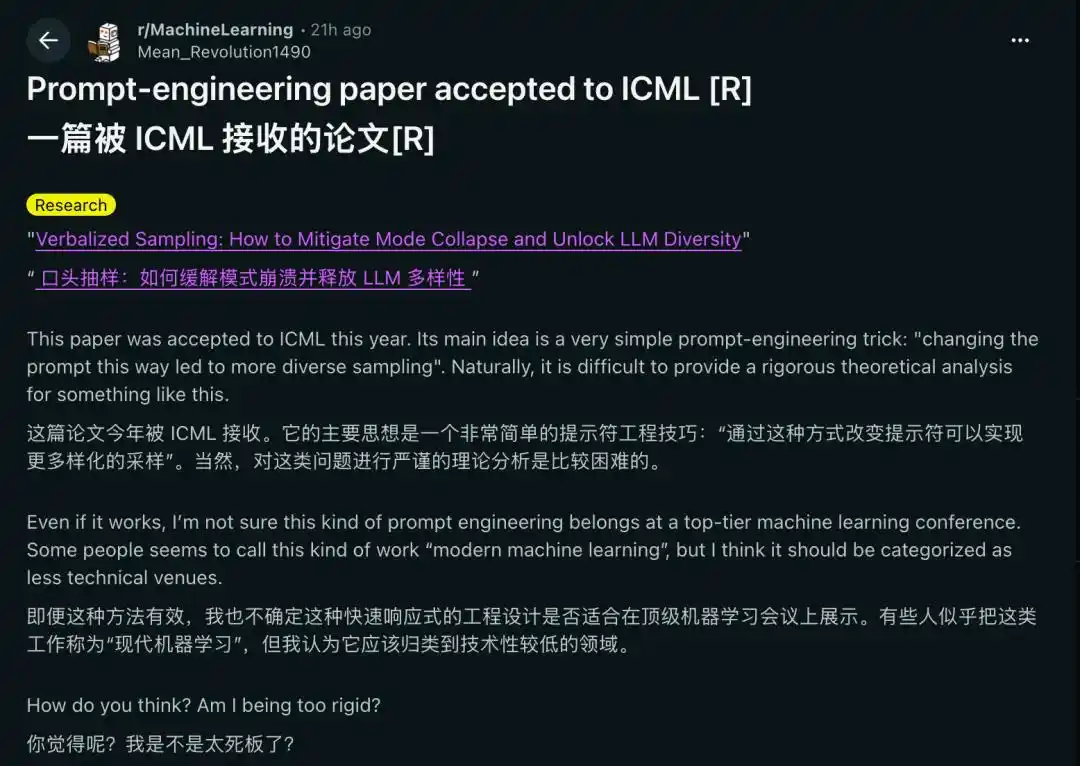
The authors didn't propose any new optimization algorithms or train any new large models. They simply did one thing—

Modified the Prompt.

The paper proposes a method called Verbalized Sampling (VS), which significantly enhances the diversity of large language model outputs and alleviates the long-standing issue of Mode Collapse in LLMs, solely by adjusting the prompt.

It sounds quite practical, but is it right for a mere prompt trick to get into a top-tier conference?

Let's take a look at the paper first before passing judgment.

A Highly Controversial ICML Paper
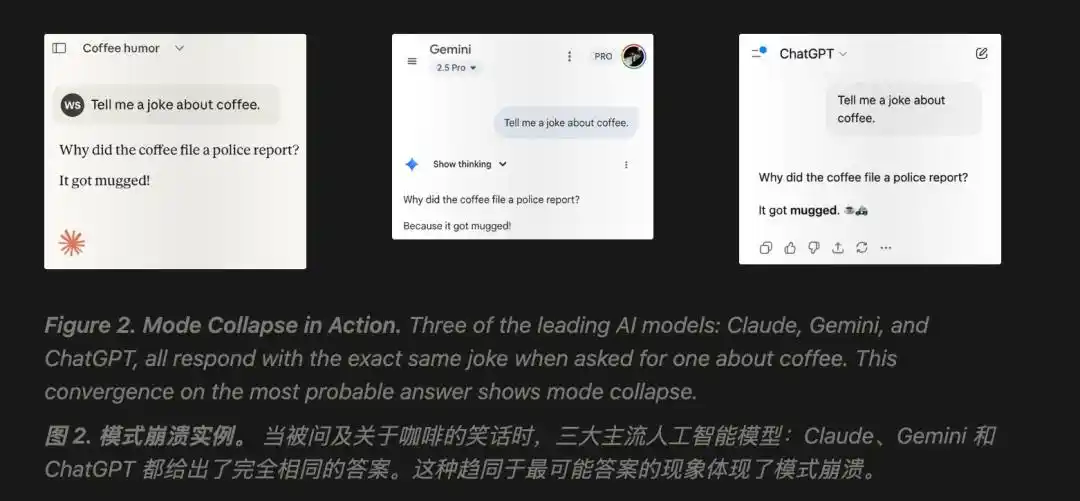
Have you ever felt that AI is becoming increasingly homogeneous?

Ask it ten times to "Tell me a joke," and the answers you get are often highly similar. This is not only true for creative tasks but also for Q&A, code generation...

This phenomenon is collectively referred to as mode collapse in academia.

Simply put, models increasingly prefer to output the highest probability, safest, and most classic answers, while rejecting alternative creative ideas.
In the past, to solve this model problem, most researchers would first think of adjusting sampling parameters, modifying decoding algorithms, retraining, etc. However, this paper takes a different approach: directly asking the model to output its own sampling process along with the answer.

For example, using the earlier joke-telling scenario, the authors would modify the prompt, requiring the model to:

Generate 5 jokes, while also assigning a possible probability value to each joke.

Then the model can produce more varied and less repetitive answers.

It sounds very simple, doesn't it? In fact, this is the core contribution of the paper—the Verbalized Probability Sampling method. No fine-tuning is needed; just by changing the way of asking, content diversity can be significantly improved.
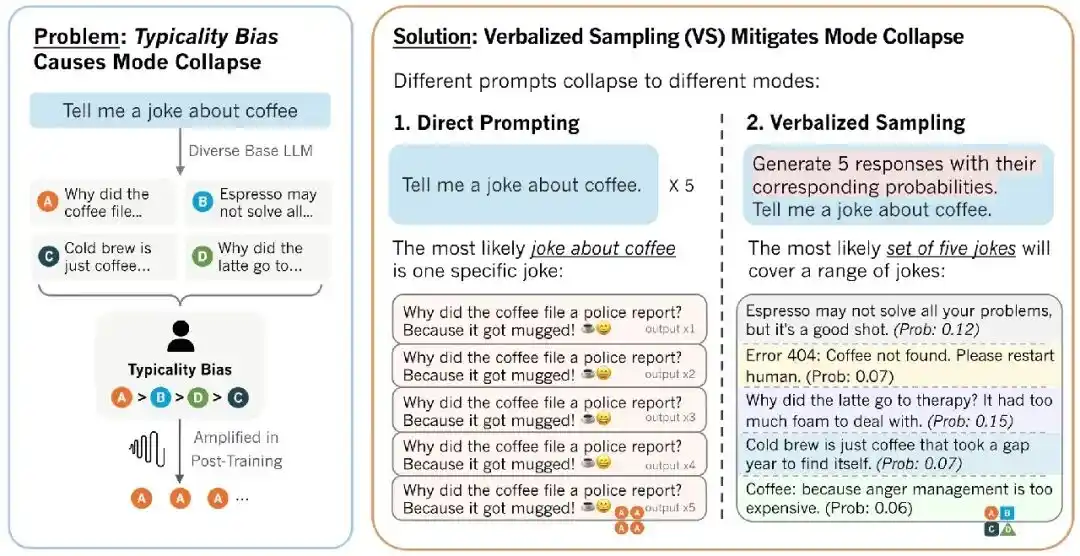
In the paper, however, the authors provide a rigorous argumentation process for this.

First, they address the root cause of the model's uniformity.

Past academia attributed this problem to algorithmic aspects, such as insufficient reward models or improperly set KL penalty terms. This paper delves deeper, suggesting the real root lies in the preference data itself.

They propose a concept called prototypical bias. From a cognitive psychology perspective, human annotators naturally prefer familiar, fluent, conventional text, and instinctively give higher scores to stereotypical, mainstream answers.
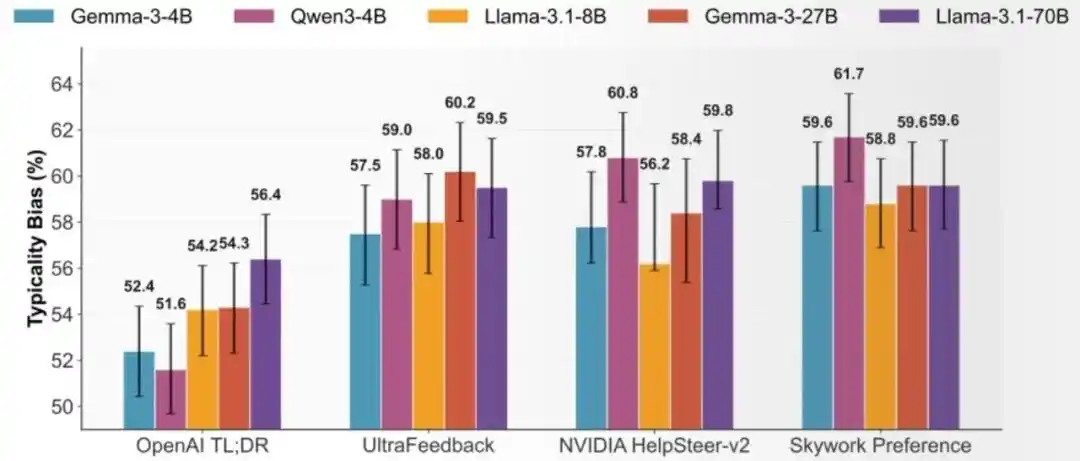
Therefore, even if reward models and optimization algorithms are perfected, as long as the human preference data used for training inherently contains prototypical bias, post-alignment models will still suffer from mode collapse.

The authors tested this repeatedly on five preference datasets and different base models, and the conclusion remained consistent.

After realizing this, the authors argue that since the problem is rooted in the training data, one only needs to consider designing a prompt-based correction scheme during the inference stage. That is, by making the model output the complete probability distribution in the prompt, the model's inherent diverse output distribution from the pre-training phase can be awakened, restoring diversity.

The rest involved running experiments with this method in various scenarios. The results show that in creative writing tasks, diversity was 1.6~2.1 times that of ordinary prompts, without reducing factual accuracy or compromising model safety.

Furthermore, the stronger the model's capabilities and the larger the parameter count, the more pronounced the diversity improvement brought by VS.
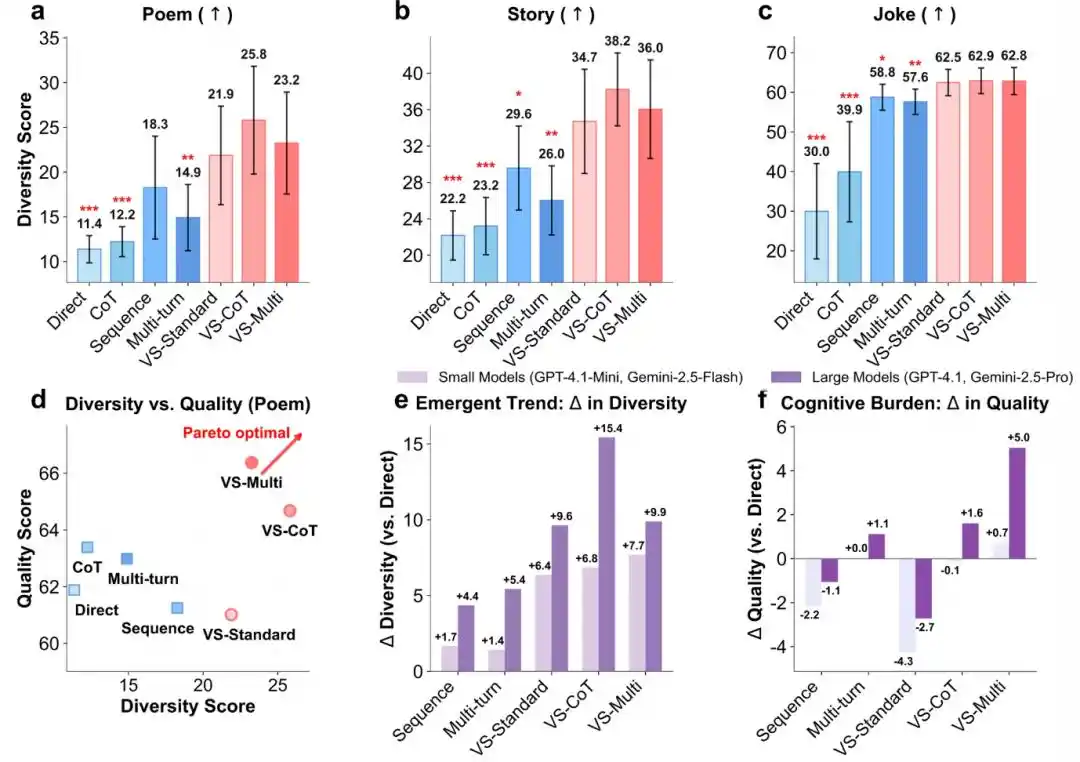
So, while the final method presented in the paper is simple, ICML still passed it.

Reddit Users in a Heated Debate

Under the original post, however, opinions on this paper are polarized.

Many netizens expressed that in the past, ICML featured hardcore innovations like new models, new algorithms, and new theories. Merely optimizing prompts or inference processes doesn't qualify as serious machine learning research.

In comparison, the innovation of this work seems somewhat thin, and several issues exist:

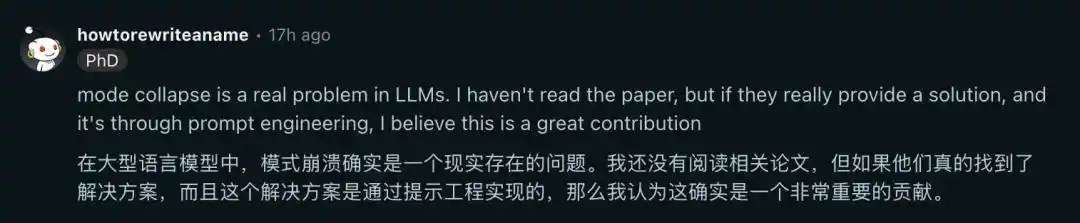
First, similar instruction-writing methods are not unique; some even claimed they were writing prompts like this just yesterday. Second, the theory is difficult to verify because prompts might fail when models are changed, unlike algorithms which are more stable. Third, the experimental scale is limited, insufficient to prove this is a universal law.
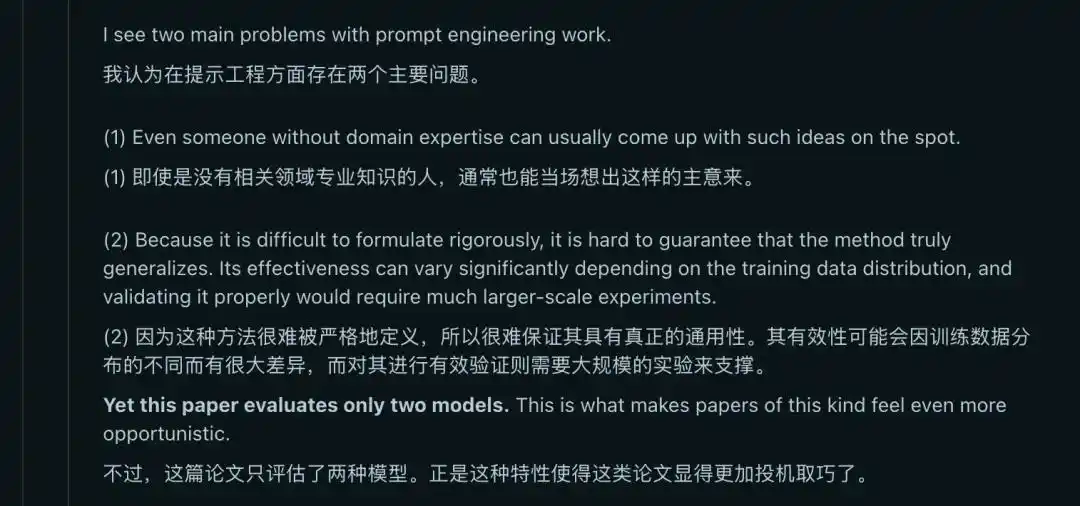
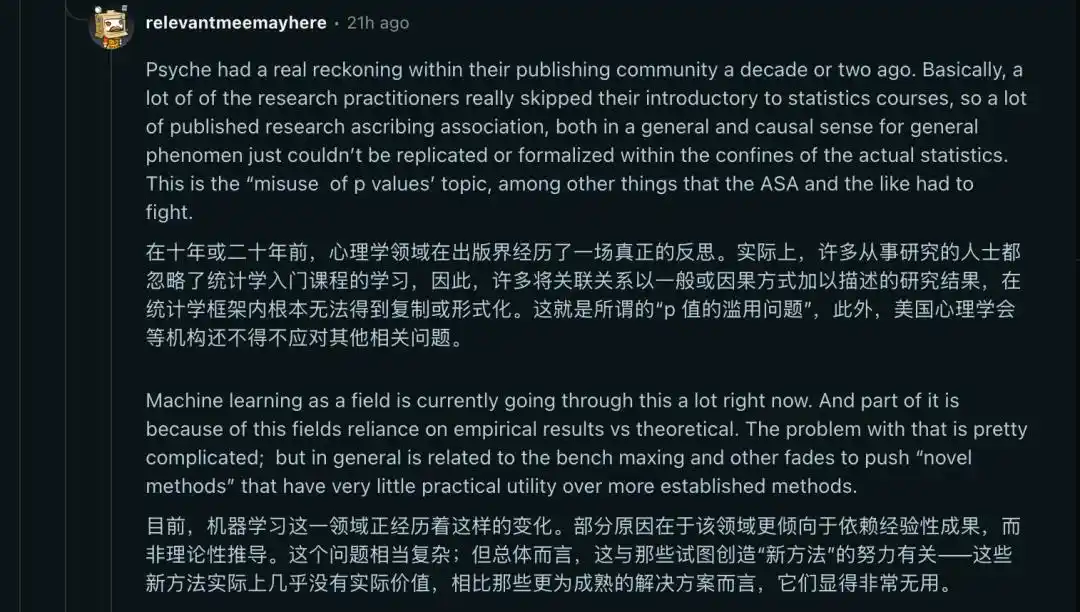
Some netizens directly compared the current state of the machine learning field to the academic crisis in psychology over a decade ago.

Back then, many researchers had weak statistical foundations and misused statistical tools, leading to many papers with unreproducible conclusions and a severe trust crisis in the field. Similarly, the machine learning industry now heavily relies on empirical experiments and undervalues rigorous theoretical support.

The industry is internally competitive, chasing new methods, but there's a widespread atmosphere of excessive hyperparameter tuning and benchmark score chasing. Many so-called innovative algorithms offer little practical value compared to mature baseline models, being packaged as innovative achievements based on tiny metric improvements.

Essentially, these are issues in paper publishing caused by unclear professional standards following the rapid expansion of the discipline.
But supporters argue that scientific research is not about whose method is more complex. As long as the hypothesis is clear, experiments are sufficient, and results are stable and reproducible, it can still be excellent research.

For example, this paper thoroughly explains what mode collapse is and proposes that the real problem lies in prototypical bias—a viewpoint more important than the prompt itself.
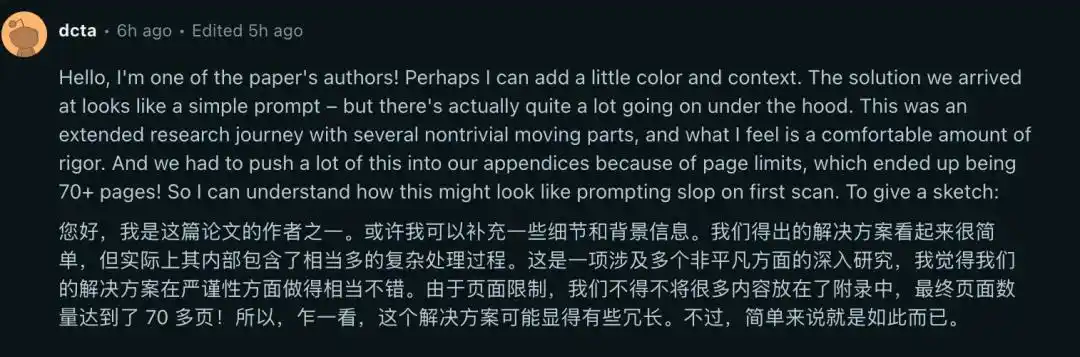
One of the authors also replied in the comments, stating that while the paper appears simple, it actually involves a great deal of complex processing.

The entire work includes complete problem tracing, new theoretical attribution, mathematical derivation, and multi-dimensional quantitative experiments—it's not a shallow, trivial prompt-tuning effort.
Many also mentioned Chain-of-Thought (CoT). When CoT first appeared, it was essentially a one-line prompt:

Let’s think step by step.

But now, almost all reasoning methods can be traced back to CoT. This precisely indicates that prompt engineering is no longer just about writing prompts; it is becoming a new method for studying model behavior.

Over the past decade, machine learning research has almost revolved around training. But now, some usage techniques during the inference stage are gradually moving toward the core of machine learning research.

Perhaps in the coming years, we will see more and more papers like this. They don't add a single line of training code or an extra model parameter, yet they can still change the capability boundaries of large models.

Research Team Introduction

Finally, let's take a look at the research team.

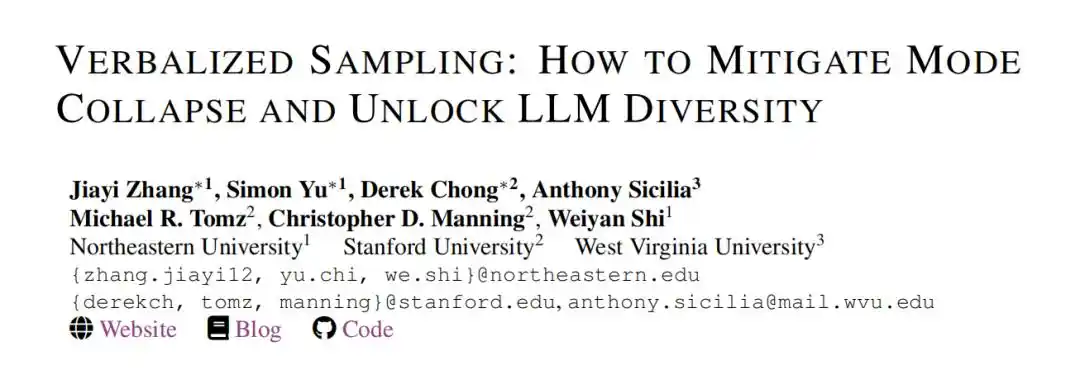
This work was completed by Weiyan Shi's team at Northeastern University (USA) in collaboration with Stanford's Manning Lab and West Virginia University. Jiayi Zhang, Simon Yu, and Derek Chong are listed as co-first authors.

Jiayi Zhang completed her undergraduate studies at the University of Michigan, earning triple bachelor's degrees in Computer Science, Mathematics, and Linguistics. She then pursued a Master's in Computer Science at Northeastern University (USA).

Another paper of hers, "Analyzing the Role of Semantic Representations in the Era of Large Language Models," accepted by the NLP top conference NAACL 2024, also revolves around semantic representation and large models.

Simon Yu is currently pursuing a Ph.D. at Northeastern University (USA), with his main research direction focusing on alignment and reinforcement learning mechanisms in large models. He completed both his bachelor's and master's degrees at the University of Edinburgh and has published several top conference papers.

Besides this paper, another one of his papers, "Unsafer in Many Turns: Benchmarking and Defending Multi-Turn Safety Risks in Tool-Using Agents," was also accepted by ICML 2026.

Derek Chong earned his Master's from Stanford University and is currently a researcher at the Stanford Artificial Intelligence Laboratory. His research primarily focuses on large language models in NLP.

He previously had three years of experience as a founder-entrepreneur and worked at Ello as an Applied Scientist, participating in industry-end AI implementation R&D. He possesses both solid theoretical research skills and rich hands-on practical experience.

References:[1]https://www.reddit.com/r/MachineLearning/comments/1uv1xb3/promptengineering_paper_accepted_to_icml_r/

[2]https://www.linkedin.com/in/jiayizx/[3]https://simonucl.github.io/[4]https://www.linkedin.com/in/derekch/

This article is from the WeChat public account "Qubit" (量子位), author: Focus on Frontier Technology


Trend Kriptolar

İlgili Sorular

QWhat is the main contribution of the 'Verbalized Sampling' paper accepted at ICML 2026?

AThe main contribution is a method called 'Verbalized Sampling' (VS), which involves adjusting prompts to ask language models to output their sampling process (e.g., assign probabilities to multiple generated answers). This simple intervention significantly increases the diversity of LLM outputs and mitigates the 'mode collapse' problem without requiring model retraining or new algorithms.

QAccording to the paper, what is identified as the root cause of the mode collapse problem in LLMs?

AThe paper identifies the root cause as 'typicality bias' in the human preference data used for training. This cognitive bias leads human annotators to consistently favor familiar, fluent, and conventional text. Consequently, the reward models trained on this data steer aligned models towards safe, high-probability answers, causing mode collapse.

QWhat are some of the key criticisms from Reddit users regarding this paper's acceptance at ICML?

ACritics argue that the innovation is thin, noting similar prompt techniques are already in use and questioning the method's stability across different models. They also contend that the experimental scale is insufficient to prove a universal law and express concern that the field is drifting towards an over-reliance on empirical results and 'benchmark hacking' rather than rigorous theoretical contributions.

QHow do the paper's supporters defend its value and acceptance at a top-tier conference?

ASupporters argue that good research is defined by clear hypotheses, rigorous experimentation, and reproducible results, not just complexity. They highlight that the paper's core contribution is the novel theoretical insight into the cause of mode collapse (typicality bias). They also compare it to foundational techniques like Chain-of-Thought, suggesting prompt engineering is evolving into a legitimate method for studying model behavior.

QWhat was the observed impact of the Verbalized Sampling method on creative writing tasks?

AIn creative writing tasks, the Verbalized Sampling method increased output diversity by 1.6 to 2.1 times compared to standard prompting, without compromising factual accuracy or model safety. The effectiveness of the method was also shown to be more pronounced in larger, more capable models.

İlgili Okumalar

UNI Doubles in Two Months Against the Trend: A 5-Year-Overdue Value Realization

Amidst a generally stagnant crypto market in June and July, UNI, the governance token of Uniswap, saw a significant surge, nearly doubling in price from around $2.3 to $4.6. This rally represents a delayed but significant value reassessment, triggered by the practical implementation of its long-debated "fee switch" mechanism. The key turning point was the on-chain execution of the UNIfication proposal in December 2025. It activated a protocol fee on select pools, directed Unichain sequencer revenue (net of costs) to a communal treasury, executed a one-time burn of 100 million UNI, and established a system where all protocol revenue flows into a "TokenJar" contract. This treasury has a single exit: purchasing and permanently burning UNI via a "Firepit" contract. Initially, the market reacted tepidly as the generated revenue and corresponding burn rate were modest. The narrative shifted dramatically in July 2025 with two major developments. First, the launch of Robinhood Chain, tailored for tokenized stocks, rapidly became a primary source of volume and fees for Uniswap, at one point contributing nearly half of its weekly fees. Second, governance votes successfully expanded the fee mechanism to v4 pools and initiated a temperature check for fees on Robinhood Chain. The activation of v4 fees caused the protocol's daily revenue earmarked for UNI burns to nearly triple. The core of UNI's recent price action is the transition from a pure governance token to a cash-flow asset with a permanent, protocol-funded buyer. Its effectiveness is amplified by UNI's mature and widely distributed supply, with no major impending unlocks to dilute the impact of the buybacks. The sustainability of this rally now hinges on whether the transaction volume, particularly on Robinhood Chain, persists after its initial gas subsidies expire, determining if this is a genuine value realization or a subsidy-fueled spike.

marsbit4 dk önce

UNI Doubles in Two Months Against the Trend: A 5-Year-Overdue Value Realization

marsbit4 dk önce

Breaking: Google Earth Urgently Pulls Back Nano Banana 2 Image Generation Feature!

Google Earth's newly launched "Create image" feature, powered by the Nano Banana 2 AI image generation model, was abruptly withdrawn shortly after its release due to being "played" by users. The feature allowed users to generate and overlay AI-created visuals directly onto real-world satellite and 3D maps in Google Earth. The tool enabled creative applications like historical recreations (e.g., visualizing ancient Pompeii), generating informational graphics for landmarks, and envisioning architectural projects or futuristic cityscapes on real terrain. It operated under "geospatial grounding," meaning the AI respected the underlying geography, topography, and perspective of the chosen map view. The model also integrated with Gemini to retrieve relevant factual information. However, upon release, users quickly tested its limits. A prominent example involved reimagining Philadelphia's historic Independence Hall as a post-apocalyptic ruin overrun by "happy" zombies, evil clowns, and giant alien mechs. This highlighted both the feature's playful potential and its risks regarding the generation of inappropriate or misleading content on realistic maps, leading to its swift temporary removal. Google stated it would re-release the feature after implementing "enhanced guardrails." Analysts note this move strategically leverages Google's vast proprietary geospatial data, positioning its AI not just for artistic generation but for spatially accurate world visualization—a unique advantage in the competitive AI image generation landscape.

marsbit1 saat önce

Breaking: Google Earth Urgently Pulls Back Nano Banana 2 Image Generation Feature!

marsbit1 saat önce

Altman Admits: Overestimated AI Snatching Jobs! Huang Renxun: The Unemployment Narrative Is Completely Backwards

Sam Altman has revised his earlier predictions about AI rapidly replacing jobs, admitting he overestimated the speed at which AI would eliminate entry-level white-collar roles. Speaking on the "Invest Like the Best" podcast, he stated that people do not truly want an AI CEO, as accountability and human connection remain critical. He found that individuals prefer interacting with people who can be held responsible for decisions. Similarly, NVIDIA's Jensen Huang argued that the narrative of AI destroying jobs is misguided. He distinguishes between tasks and jobs, noting that while AI can automate specific tasks, entire jobs—encompassing communication, judgment, coordination, and accountability—are not eliminated. He cited examples like radiologists and software engineers, where demand for these roles has increased as AI handles repetitive tasks, allowing for business expansion and the creation of more positions. Data from a University of Maryland and LinkUp study supports this, showing that U.S. job postings for new graduates have actually risen, countering the fear of vanishing entry-level roles. However, a significant shift is occurring: the traditional entry-level tasks that help newcomers gain experience are being automated, making initial career access more challenging. The key insight is that as AI takes over standardized tasks, the enduring value of human work shifts toward areas of responsibility, trust-building, and final decision-making—aspects that AI cannot replicate. The real "moat" for professionals lies in these irreplaceable human elements.

marsbit1 saat önce

Altman Admits: Overestimated AI Snatching Jobs! Huang Renxun: The Unemployment Narrative Is Completely Backwards

marsbit1 saat önce

Weekly Editor's Picks (0725-0731)

Weekly Editor's Picks (0725-0731) provides a curated selection of deep analysis, filtering out market noise. Key themes from this week include: **Macro & Policy:** The Federal Reserve's upcoming meeting is marked by high uncertainty, balancing cooling inflation data against persistent price pressures. Meanwhile, the U.S. crypto regulatory Clarity Act faces critical political hurdles, with its 2026 passage probability seen as low. **Investing & Crypto:** Analysis suggests long-term crypto success depends on conviction through volatile cycles, focusing on assets like Bitcoin and core smart contract platforms. A trend noted is the increasing similarity between global equity markets (especially tech) and crypto, driven by narrative and leverage. Several major crypto protocols show strong revenue growth, but this isn't always translating to token price appreciation due to sell pressure and structural factors. **AI & Semiconductors:** Nvidia's rising credit default swap rates signal market concern over AI infrastructure financing risks. The storage sector experienced volatility as markets began pricing in potential 2027 oversupply. Despite a record profitable quarter, SK Hynix's results were deemed "below expectations," reflecting heightened investor demands for future growth visibility. **Markets & DeFi:** TradeXYZ demonstrated remarkable accuracy in pre-market pricing for a major A股 listing. The token ONDO saw gains, linked to its growing role in the on-chain tokenized stock ecosystem. **Ethereum:** Post-Pectra upgrade, a major structural shift is underway as Lido begins migrating millions of ETH to new validator architectures designed for capital efficiency. **Also Highlighted:** Butian's bullish stock market move; OpenAI's Altman promising major advances; Samsung and SK Hynix securing large AI chip deals; Apple reaching a $5T market cap; and ongoing discussions around exchange security following Poolin's bankruptcy case.

marsbit2 saat önce

Weekly Editor's Picks (0725-0731)

marsbit2 saat önce

İşlemler

Spot

Popüler Makaleler

G Nasıl Satın Alınır

HTX.com’a hoş geldiniz! Gravity (G) satın alma işlemlerini basit ve kullanışlı bir hâle getirdik. Adım adım açıkladığımız rehberimizi takip ederek kripto yolculuğunuza başlayın. 1. Adım: HTX Hesabınızı OluşturunHTX'te ücretsiz bir hesap açmak için e-posta adresinizi veya telefon numaranızı kullanın. Sorunsuzca kaydolun ve tüm özelliklerin kilidini açın. Hesabımı Aç2. Adım: Kripto Satın Al Bölümüne Gidin ve Ödeme Yönteminizi SeçinKredi/Banka Kartı: Visa veya Mastercard'ınızı kullanarak anında Gravity (G) satın alın.Bakiye: Sorunsuz bir şekilde işlem yapmak için HTX hesap bakiyenizdeki fonları kullanın.Üçüncü Taraflar: Kullanımı kolaylaştırmak için Google Pay ve Apple Pay gibi popüler ödeme yöntemlerini ekledik.P2P: HTX'teki diğer kullanıcılarla doğrudan işlem yapın.Borsa Dışı (OTC): Yatırımcılar için kişiye özel hizmetler ve rekabetçi döviz kurları sunuyoruz.3. Adım: Gravity (G) Varlıklarınızı SaklayınGravity (G) satın aldıktan sonra HTX hesabınızda saklayın. Alternatif olarak, blok zinciri transferi yoluyla başka bir yere gönderebilir veya diğer kripto para birimlerini takas etmek için kullanabilirsiniz.4. Adım: Gravity (G) Varlıklarınızla İşlem YapınHTX'in spot piyasasında Gravity (G) ile kolayca işlemler yapın.Hesabınıza erişin, işlem çiftinizi seçin, işlemlerinizi gerçekleştirin ve gerçek zamanlı olarak izleyin. Hem yeni başlayanlar hem de deneyimli yatırımcılar için kullanıcı dostu bir deneyim sunuyoruz.

488 Toplam GörüntülenmeYayınlanma 2024.12.10Güncellenme 2026.06.02

G Nasıl Satın Alınır

@G Nedir

Graphite Ağı, $@G: Geleneksel Finans ve Web3 Arasında Köprü Kurma Graphite Ağı, $@G'ye Giriş Kripto para birimleri ve web3 projeleriyle dolu canlı dünyada, Graphite Ağı yeniliğin bir simgesi olarak ortaya çıkıyor. Yerel token'ı $@G ile bu Katman-1, Yetki Kanıtı (PoA) blok zinciri, geleneksel finans (TradFi) ile hızla gelişen Web3 ekosistemi arasındaki boşluğu kapatmak için tasarlanmıştır. Dijital para birimleri popülerlik kazandıkça, Graphite Ağı güvenlik, uyum ve hız önceliği olan bir blok zinciri platformu sunmayı hedefliyor ve kendisini güven ve hesap verebilirliğin bir kolaylaştırıcısı olarak tanıtıyor. Graphite Ağı, $@G Nedir? Graphite Ağı, yalnızca başka bir blok zinciri projesi değildir; dijital finans alanında merkeziyetsizlik, güvenlik ve kullanıcı hesap verebilirliğinin nasıl algılandığını yeniden tanımlamayı amaçlamaktadır. Proje, bir dizi ayırt edici özellik sunmaktadır: İtibara Dayalı Blok Zinciri: Graphite Ağı, entegre Müşterinizi Tanıyın (KYC) doğrulama ve puanlama mekanizmaları ile güçlendirilmiş bir kullanıcı başına bir hesap politikası uygular. Bu tasarım, kullanıcı gizliliği ile şeffaflık arasında bir denge sağlar; bu, günümüz dijital dünyasında finansal işlemlerin kritik bir yönüdür. Giriş Noktası Düğüm Geliri: Ağ, kullanıcıları giriş noktası düğümleri kurmaya teşvik eder ve operatörlerin ağ işlemlerinden ödüller kazanmasını sağlar. Bu gelir modeli yalnızca kullanıcı katılımını artırmakla kalmaz, aynı zamanda ağ sağlığını ve merkeziyetsizliği de güçlendirir. EVM Uyumluluğu: Ethereum uyumlu sanal makine (VM) ile Graphite Ağı, mevcut Solidity merkeziyetsiz uygulamaların (dApps) ve akıllı sözleşmelerin sorunsuz entegrasyonunu sağlar ve geliştiricilerin kapsamlı değişiklikler yapmadan yeteneklerinden yararlanmalarını davet eder. KYC Entegrasyonu: Uyumun en önemli olduğu bir çağda, çoklu doğrulama katmanları ile entegre KYC çerçevesi, zorunlu katılım olmaksızın finansal işlemler üzerindeki kontrolü artırır ve kullanıcı özerkliği için bir örnek teşkil eder. Graphite Ağı, $@G'nin Yaratıcısı Kimdir? Graphite Ağı, Graphite Vakfı'nın çabalarıyla doğmuştur; bu, Graphite Ağı'nın geliştirilmesi, bakımı ve evrimine adanmış kar amacı gütmeyen bir kuruluştur. Vakfın taahhüdü, projenin güvenli ve sürdürülebilir bir blok zinciri ortamı yaratma vizyonunu vurgular ve gerçek kullanıcı katılımı ile uyum odaklıdır. Graphite Ağı, $@G'nin Yatırımcıları Kimlerdir? Şu anda, Graphite Ağı girişimini destekleyen belirli yatırımcılar hakkında sınırlı bilgi bulunmaktadır. Kurucu kuruluş olan Graphite Vakfı, projenin büyümesini teşvik etmek için bağımsız olarak çalışmakta ve uyumlu ve erişilebilir bir blok zinciri platformu vizyonuna uygun ortaklıklar aramaktadır. Graphite Ağı, $@G Nasıl Çalışır? Graphite Ağı'nın işletimi, yüksek verimlilik ile merkeziyetsizlik arasında etkileyici bir denge kuran benzersiz Yetki Kanıtı konsensüs mekanizmasına dayanır. İşleyişini tanımlayan çeşitli bileşenlere bakalım: Taşıma Düğümleri: Giriş noktası düğümleri olarak hizmet eden bu düğümler, ekosistem için kritik öneme sahiptir. Operatörler, ağdan geçen işlemlerden gelir elde edebilir; bu, bireysel kullanıcıları güçlendirirken ağın merkeziyetsizliğini de artırır. Yetkili Düğümler: Graphite Ağı'nın kalbinde, sağlam KYC doğrulaması ve teknik değerlendirmeleri içeren titiz uyum testlerinden geçen temel doğrulayıcılar bulunmaktadır. Bu güven katmanı, ağ içindeki işlemlerin yüksek bir bütünlük seviyesini korumasını sağlamak için gereklidir. Ticker Sistemi: Graphite Ağı, sarılmış token'ları için @G olarak adlandırılan ayırt edici bir ticker sistemi kullanır. Bu özellik, varlık entegrasyonunda netliği artırarak kullanıcı işlemlerini anlaşılır ve basit hale getirir. Graphite Ağı'nın yenilikçi yaklaşımı, dijital finansın kritik sorunlarını ele almakta önemli bir adım olarak yansıyor ve daha fazla kullanıcının geleneksel finans biçimlerinden merkeziyetsiz uygulamalar dünyasına geçiş yapmasıyla gelecekte kendini olumlu bir şekilde konumlandırıyor. Graphite Ağı, $@G'nin Zaman Çizelgesi Graphite Ağı'nın ilerlemesini ve kilometre taşlarını anlamak için zaman çizelgesindeki önemli olayları gözden geçirmek faydalıdır: 2021: Graphite Vakfı tarafından Graphite Ağı'nın kuruluşu, uyum ve kullanıcı güçlendirmeye odaklanan blok zinciri geliştirme alanında yeni bir bölümün başlangıcını işaret eder. Ana Gelişmeler: Lansmanının ardından, giriş noktası düğüm geliri, itibara dayalı modelin kurulması, entegre KYC doğrulaması ve EVM uyumluluğunun sağlanması, projede önemli ilerlemeleri temsil eder. Son Faaliyetler: Graphite Vakfı'nın sürekli gelişim ve bakım çabaları, ağ özelliklerini artırmaya ve ekosistemin büyümesini teşvik etmeye odaklanarak sürdürülebilirlik ve yenilik için uzun vadeli bir taahhüt göstermektedir. Ek Anahtar Noktalar Temel bileşenlerinin ötesinde, Graphite Ağı, kullanılabilirliğini artıran birkaç araç ve özellik içermektedir: Graphite Cüzdanı: Kullanıcıların Ethereum uyumlu zincirler üzerindeki çeşitli ağ özelliklerine ve uygulamalarına erişimini kolaylaştıran kullanıcı dostu bir Chrome uzantısıdır. Graphite Köprüsü: Bu araç, Graphite varlıklarının farklı ağlar arasında sorunsuz bir şekilde transfer edilmesini sağlar ve entegre ve birlikte çalışabilir bir ekosistem oluşturur. Graphite Explorer: Ekosistem içinde temel bir araç olarak hizmet veren bu özellik, kullanıcıların akıllı sözleşme kaynak kodunu görüntülemesine ve doğrulamasına, işlemleri takip etmesine ve diğer önemli bilgileri gerçek zamanlı olarak keşfetmesine olanak tanır. Graphite Testnet: Proje, geliştiricilere ana ağ dağıtımından önce stabilite ve ölçeklenebilirliği sağlama imkanı sunan sağlam bir test ortamı sağlar. Bu girişim, yalnızca geliştiricileri güçlendirmekle kalmaz, aynı zamanda tüm ağın güvenilirliğini artırır. Sonuç Graphite Ağı, yerel token'ı $@G ile birlikte, geleneksel finans ile en son blok zinciri teknolojisi arasında köprü kurma yolunda önemli bir adımı temsil etmektedir. Güvenlik, uyum ve merkeziyetsizlik odaklı bu yenilikçi platform, Web3 dönemine geçişte liderlik yapmaya hazırdır. Kullanıcı katılımı arttıkça ve daha fazla proje yeteneklerinden yararlandıkça, Graphite Ağı hızla gelişen dijital manzaraya kalıcı katkılarda bulunmaya hazırlanıyor. Sonuç olarak, Graphite Ağı, yenilikçi düşüncenin modern finans ve teknolojinin artan talepleriyle buluştuğunda nelerin başarılabileceğinin bir kanıtıdır. Dünya merkeziyetsiz finansın potansiyelini keşfederken, Graphite Ağı bu alanda dikkate değer bir oyuncu olmaya devam edecektir.

38 Toplam GörüntülenmeYayınlanma 2025.01.06Güncellenme 2025.01.06

@G Nedir

Tartışmalar

HTX Topluluğuna hoş geldiniz. Burada, en son platform gelişmeleri hakkında bilgi sahibi olabilir ve profesyonel piyasa görüşlerine erişebilirsiniz. Kullanıcıların G (G) fiyatı hakkındaki görüşleri aşağıda sunulmaktadır.

活动图片