Descifrando el ciclo de las altcoins en 2026: ¿Se está desplazando el capital de las grandes capitalizaciones?

ambcrypto2026-07-08 tarihinde yayınlandı2026-07-08 tarihinde güncellendi

Özet

La rotación de capital no muestra signos claros de desencadenar un ciclo más amplio de altcoins. Los datos on-chain revelan que las altcoins están experimentando su peor desempeño histórico frente a Bitcoin (BTC), lo que sugiere que la liquidez no se está distribuyendo por todo el mercado, sino que se está concentrando en unos pocos sectores de alta convicción. Mientras el 60% de las altcoins se mantiene por encima de sus máximos anteriores, el 40% sigue por debajo, indicando una recuperación desigual. Ethereum (ETH) ha mostrado una fortaleza relativa frente a BTC, con un aumento en su dominio, lo que históricamente puede ser una señal temprana de un ciclo alcista para las altcoins. Sin embargo, las altcoins de gran capitalización, como el propio ETH y Solana, aún cotizan muy por debajo de sus máximos históricos. Al mismo tiempo, se observan fuertes entradas de capital en narrativas específicas, como lo demuestra el aumento del 150% en el TVL de Robinhood Chain. En conclusión, este ciclo parece ser selectivo. La liquidez fluye hacia sectores y activos concretos en lugar de impulsar una recuperación generalizada del mercado de altcoins, lo que podría mantener la presión sobre las principales criptomonedas de gran capitalización.

La rotación de capital no muestra signos claros de estar conduciendo a un ciclo alcista más amplio de las altcoins.

Sin embargo, este ciclo parece diferente. Los datos on-chain muestran que las altcoins están registrando su peor desempeño relativo contra Bitcoin [BTC] de la historia. Esto sugiere que la liquidez no se está distribuyendo por todo el mercado de altcoins, sino que está rotando hacia unos pocos sectores de alta convicción, mientras que la mayoría de los activos continúan rezagados frente a BTC.

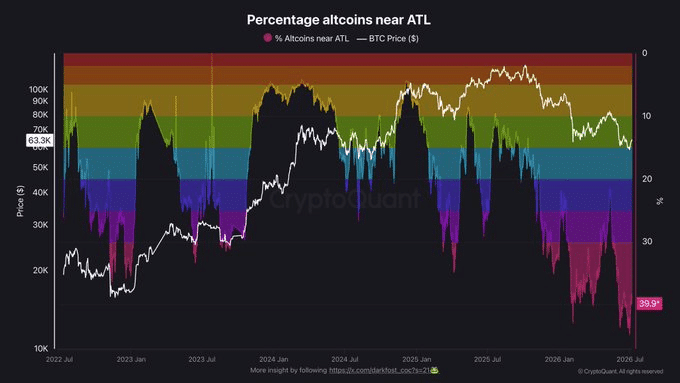
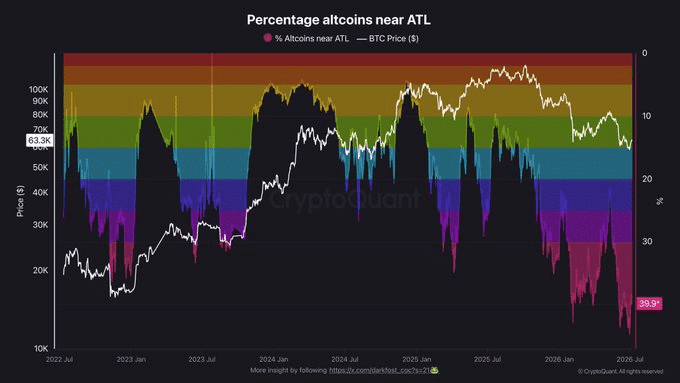
Para ponerlo en perspectiva, la capitalización total del mercado de altcoins se sitúa actualmente en torno a los 870.000 millones de dólares, con una subida del 4% hasta ahora en el tercer trimestre. Sin embargo, un reciente informe de CryptoQuant muestra que el 40% de las altcoins aún cotizan por debajo de sus máximos históricos, lo que indica que muchos activos no se han recuperado ni siquiera mientras algunas partes del mercado continúan al alza.
Fuente: CryptoQuant

Visto desde otro ángulo, el 60% de las altcoins aún se mantienen por encima de sus máximos anteriores, lo que sugiere que la fortaleza se mantiene en sectores y activos específicos, más que en todo el mercado de altcoins en general.

Desde una perspectiva técnica, la dominancia de Ethereum [ETH] ha comenzado el tercer trimestre con fuerza, subiendo más de un 4%, mientras que la dominancia de Bitcoin solo ha aumentado un 0,7%. Al tratarse de la altcoin más grande, las mayores entradas de capital a ETH en comparación con BTC sugieren que los inversores están empezando a rotar hacia las altcoins.

Históricamente, un ratio ETH/BTC al alza durante un mercado volátil suele verse como una señal temprana de que un ciclo alcista de altcoins comienza a tomar forma. Sin embargo, las altcoins aún registran su mayor subrendimiento contra Bitcoin de la historia, lo que plantea la pregunta: ¿Es este ciclo diferente, con liquidez fluyendo solo hacia unos pocos activos importantes y ETH luchando por desencadenar un ciclo más amplio de altcoins?

Por qué los repuntes de altcoins basados en sectores podrían dejar atrás a las grandes capitalizaciones

Los analistas están señalando signos de advertencia en todo el mercado.

Esto se produce tras el reciente informe de CryptoQuant, en el que los analistas instaron a los inversores a ser más "selectivos", ya que las altcoins enfrentan su mayor subrendimiento contra Bitcoin de la historia. De cara al futuro, la cuestión clave es si los inversores recuperan el apetito de riesgo para volver a invertir en altcoins, especialmente en activos de gran capitalización.

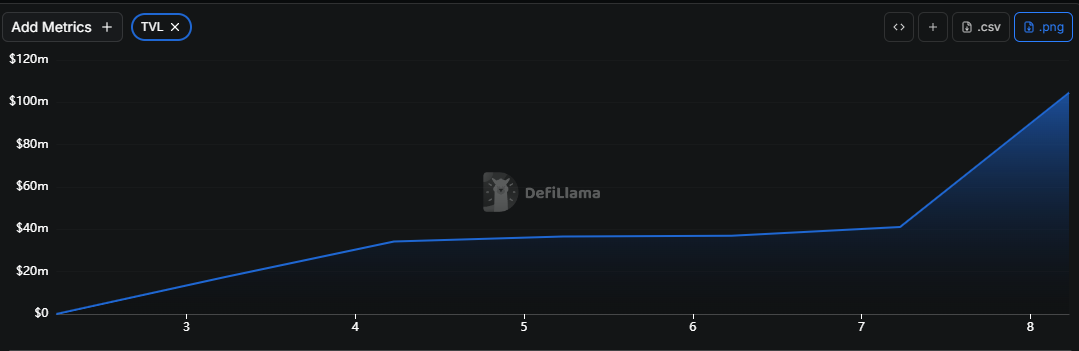
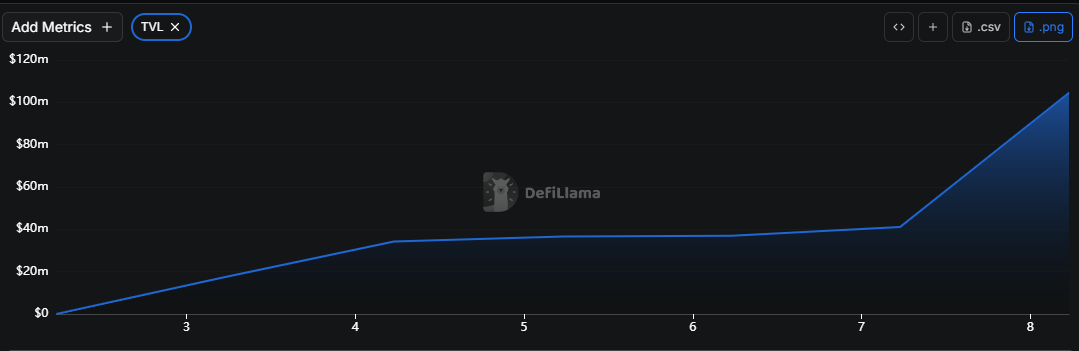
Desde una perspectiva técnica, los principales activos de gran capitalización aún cotizan muy por debajo de sus máximos históricos. Ethereum, por ejemplo, sigue bajando más del 60%, mientras que Solana baja más del 70%, lo que muestra que incluso las principales altcoins aún no se han recuperado completamente. Mientras tanto, el TVL en Robinhood Chain ha aumentado más de un 150% en las últimas 24 horas, alcanzando un récord de 108 millones de dólares.
Fuente: DeFiLlama

En comparación, el TVL en muchos ecosistemas importantes de gran capitalización se mantiene cerca de mínimos de varios meses, mostrando hacia dónde fluye realmente la liquidez. Más importante aún, estas entradas se han producido junto con el repunte del 30%+ de ROBIN en lo que va del tercer trimestre, reforzando la visión de que los inversores están rotando hacia narrativas de alta convicción.

Esto, naturalmente, pone el foco en la reciente fortaleza de Ethereum.

Si bien ETH ha mostrado una fuerza relativa frente a Bitcoin, sus fundamentales on-chain siguen siendo débiles, lo que sugiere que el movimiento podría ser más técnico que estructural. Si el capital continúa fluyendo hacia narrativas selectivas de altcoins, la presión sobre las principales altcoins de gran capitalización podría seguir acumulándose durante el resto del segundo semestre.


Resumen Final

  • El capital fluye de manera selectiva, mientras muchas altcoins de gran capitalización continúan rezagadas.
  • Ethereum muestra fortaleza técnica, pero las grandes capitalizaciones aún podrían enfrentar presión si la liquidez sigue siendo selectiva.


İlgili Sorular

Q¿Qué indica el reciente informe de CryptoQuant sobre el rendimiento de las altcoins frente a Bitcoin en el ciclo actual?

AIndica que las altcoins están registrando su peor desempeño frente al Bitcoin en la historia, lo que sugiere que la liquidez no se está extendiendo por todo el mercado de altcoins, sino que se está rotando hacia algunos sectores específicos con alta convicción.

QSegún el artículo, ¿por qué la fortaleza reciente de Ethereum podría no ser suficiente para desencadenar un ciclo alcista más amplio en las altcoins?

APorque sus fundamentales on-chain siguen siendo débiles, lo que sugiere que su movimiento alcista podría ser más técnico que estructural. Además, el capital continúa fluyendo de manera selectiva hacia narrativas específicas, en lugar de distribuirse por todo el mercado.

Q¿Cómo ilustra el caso de Robinhood Chain (ROBIN) la tendencia actual de rotación de capital mencionada en el artículo?

AIlustra que los inversores están rotando capital hacia narrativas de alta convicción. El TVL de Robinhood Chain aumentó más de un 150% en 24 horas y su token ROBIN subió más de un 30% en el tercer trimestre, mientras que el TVL en muchos ecosistemas de altcoins de gran capitalización se mantiene cerca de mínimos de varios meses.

Q¿Qué porcentaje de altcoins todavía cotiza por debajo de sus máximos históricos, según los datos presentados, y qué implica esto?

AUn 40% de las altcoins todavía cotiza por debajo de sus máximos históricos. Esto implica que muchos activos no se han recuperado, a pesar de que ciertos sectores del mercado continúan al alza, evidenciando una recuperación desigual y selectiva.

Q¿Qué señal histórica suele representar un ratio ETH/BTC en alza durante un mercado volátil, y por qué el artículo cuestiona su validez en el ciclo actual?

AHistóricamente, un ratio ETH/BTC en alza durante un mercado volátil se ve como una señal temprana de que está comenzando a formarse un ciclo alcista para las altcoins. El artículo cuestiona su validez porque, a pesar de esta fortaleza relativa de ETH, las altcoins en su conjunto registran su mayor bajo rendimiento frente a Bitcoin, sugiriendo que este ciclo podría ser diferente y la liquidez podría concentrarse solo en unos pocos activos importantes.

İlgili Okumalar

After Three Consecutive Quarters of Decline, Can the Crypto Market Find a Window for Stabilization in Q3?

The cryptocurrency market has just concluded its worst-performing quarter since 2022, with total capitalization dropping 12.6% to $2.1 trillion. All core metrics indicate capital is leaving the sector, not just rotating within it. Bitcoin fell 14.2% and Ethereum dropped 25.4% in Q2, breaking their previous correlation with US tech stocks. A key driver is the reversal in US spot Bitcoin ETF flows, which saw a net outflow of approximately $4.67 billion in Q2, including a record monthly outflow near $4.5 billion in June. While recent data suggests long-term holders are accumulating again, sustained ETF outflows mean continued selling pressure. Market focus is now singularly on the Federal Reserve. The upcoming July FOMC meeting is seen as the most critical event for Q3. A dovish signal could support Bitcoin reclaiming a $68,000-$84,000 range, while a hawkish stance might establish a new trading band around $50,000-$56,000. Additionally, regulatory uncertainty persists, with the progress of the crucial *CLARITY Act* stalling in the Senate, reducing its perceived 2026 passage probability to 40-45%. Despite the broad downturn, a few sectors showed growth. Prediction markets saw nominal volume surge 48.7% year-over-year to $113.8 billion, and tokenized collectibles transaction volume rose 143% quarterly to $1.4 billion. The Real-World Asset (RWA) tokenization sector also continued steady growth, now representing ~$28.1 billion in on-chain value. The market's foundation for an extreme crash appears limited, with Bitcoin price hovering near its 200-week moving average. However, the trading paradigm has shifted from narrative-driven speculation to decisions based on price action, policy developments, and interest rate expectations, making a broad sentiment-driven rally unlikely in the near term.

marsbitDün 08:36

After Three Consecutive Quarters of Decline, Can the Crypto Market Find a Window for Stabilization in Q3?

marsbitDün 08:36

BIT Trading Moment: BTC Still Suppressed by Weekly 200 EMA, Rejection May Restart Decline; Storage and Semiconductors that Surged Last Night Begin Falling in Evening Trading

**Crypto & Stock Market Wrap: Bitcoin Tests Resistance, Stocks Retreat After AI Surge** Bitcoin consolidates around $66,000, facing key resistance near $68,000—an area seen as a major psychological and technical hurdle where previous rallies have failed. Analysts note the cryptocurrency is caught between its 200-week moving average (~$63,333) and 200-week EMA (~$68,328). A clear break above $68k is needed to signal a stronger bullish trend, while a rejection could lead to a retest of $63k support. Market sentiment remains cautious, with low futures open interest pointing to a low-liquidity rebound rather than a full bull market. Bitcoin spot ETFs saw another $203 million inflow. US stock futures pointed lower after a strong Tuesday session led by a massive rebound in semiconductors and memory stocks. The rally was fueled by renewed optimism about AI-driven hardware demand, with Micron, SanDisk, and SK Hynix surging. However, those gains reversed in pre-market trading. Super Micro Computer (SMCI) soared over 20% after hours on strong guidance and a record backlog. Other standouts included Rocket Lab and nuclear energy plays Oklo and X-Energy. Rising oil prices (Brent above $91) and climbing Treasury yields (10-year near 4.64%), however, are reigniting inflation concerns and acting as a headwind for equities. In Asia, markets were mixed. South Korea's KOSPI pared early gains to close slightly higher as semiconductor stocks like SK Hynix gave back initial surges. Japan's Nikkei edged lower as the yen hit a fresh 38-year low against the dollar, raising fears of potential market intervention. Key events to watch include the Samsung Galaxy launch, AMD's AI event, and a slew of major tech earnings from Alphabet, Tesla, and IBM after the close on Wednesday, followed by the ECB meeting and Intel's earnings on Thursday.

marsbitDün 08:28

BIT Trading Moment: BTC Still Suppressed by Weekly 200 EMA, Rejection May Restart Decline; Storage and Semiconductors that Surged Last Night Begin Falling in Evening Trading

marsbitDün 08:28

Former CFTC Chairman, Circle President Tarbert: Preaching Long-Termism While Cashing Out $30 Million Himself

Former CFTC Chairman and Circle President Heath Tarbert has consistently advocated for a long-term vision in public, urging patience from investors as Circle’s stock price has fallen significantly from its peak. However, it has been revealed that since Circle’s IPO, Tarbert has continuously sold his CRCL shares through pre-arranged trading plans, cashing out approximately $30 million, without making any public market purchases. This contrast between his public messaging and personal actions has drawn criticism. Tarbert joined Circle in July 2023 as Chief Legal Officer, leveraging his regulatory experience to help guide the company through its IPO and expansion. Despite promoting stablecoins as long-term infrastructure, he established a 10b5-1 trading plan just before Circle went public, leading to substantial stock sales over the following year. In March 2026, he initiated another plan to sell more shares. His career trajectory highlights a pattern of moving between high-level regulatory roles and influential positions in the financial sector. After resigning as CFTC Chairman in early 2021, he joined Citadel Securities as Chief Legal Officer just 27 days later, during a period of intense regulatory scrutiny for the firm. He later joined Circle, aiding its efforts to navigate regulatory challenges for its public listing. While Tarbert's expertise in policy and compliance is valuable to companies like Circle, his actions—advocating long-term confidence while personally divesting—raise questions about the alignment between his public statements and his private financial decisions, leaving investors who followed his advice to bear the market risks.

marsbitDün 08:06

Former CFTC Chairman, Circle President Tarbert: Preaching Long-Termism While Cashing Out $30 Million Himself

marsbitDün 08:06

Gate Research Institute: The 'Wall Street-ization' Wave of Crypto Financial Products – Competition or Integration?

The article titled "Gate Research Institute: Are Crypto Financial Products Sparking a 'Wall Street' Wave—Competition or Convergence?" explores the evolving relationship between the crypto ecosystem and traditional finance (TradFi). The piece begins by reflecting on Bitcoin's original 2009 vision of decentralization, disintermediation, and moving away from banks. It then contrasts this with the 2024 landscape, where key crypto assets like Bitcoin are increasingly held through Wall Street products like ETFs issued by giants like BlackRock. The article questions whether this signifies that TradFi is systematically taking over the rights to issue, price, custody, and distribute crypto financial assets. The core argument is that this is not a zero-sum takeover but rather a bidirectional convergence where each side addresses the other's weaknesses. Crypto offers 24/7 global markets, programmable settlement, and open access but lacks compliant channels, institutional-grade custody, deep fiat liquidity, and mainstream distribution. TradFi possesses these but is constrained by legacy systems, limited operating hours, and slow settlement. Two primary convergence paths are highlighted: * **Path A (CEX to TradFi):** Exemplified by Gate, which has progressed from offering tokenized stocks and CFDs to providing direct, real stock trading (US, Hong Kong, South Korea) within its platform, using USDT. * **Path B (TradFi to Crypto):** Exemplified by Robinhood, which has integrated crypto trading, acquired exchanges like Bitstamp, and is moving traditional assets like stocks onto the blockchain via tokenization and its own Layer 2. Both paths are ultimately competing to become the next-generation, unified financial account—a "super account" where users can seamlessly trade cryptocurrencies, stocks, ETFs, RWA (Real World Assets), and tokenized treasury products in one interface. The growth of RWA and tokenized treasuries (e.g., BlackRock's BUIDL) is presented as the asset-layer fusion, providing stable, yield-bearing assets on-chain and acting as a bridge between the two worlds. In conclusion, the "Wall Street-ization" of crypto is framed as a mutual transformation. Decentralized ideals persist in the protocol layer, while at the application layer, a more efficient, global, and accessible unified capital market is emerging from this convergence. The future competition lies not between crypto exchanges and stockbrokers, but between platforms vying to offer the most comprehensive asset coverage, liquidity, and user experience within a single account.

marsbitDün 08:01

Gate Research Institute: The 'Wall Street-ization' Wave of Crypto Financial Products – Competition or Integration?

marsbitDün 08:01

İşlemler

Spot
活动图片




