43-Year-Old OnlyFans Helmsman Passes Away; He Once Bought ETH into the Company's Balance Sheet

marsbit2026-03-25 tarihinde yayınlandı2026-03-25 tarihinde güncellendi

Özet

Leonid Radvinsky, the 43-year-old Ukrainian-American majority owner of OnlyFans, has passed away after a long battle with cancer. Under his leadership since acquiring 75% of the parent company Fenix International in 2018, OnlyFans grew into a subscription-based content platform valued at approximately $18 billion, with over 377 million users and 4.63 million creators. Radvinsky maintained a low public profile but quietly engaged with crypto initiatives. In 2022, OnlyFans introduced NFT profile picture verification via Ethereum, marking its first step into web3. That same year, Fenix International purchased $19.9 million worth of ETH, recording it on its balance sheet, though it later wrote down $8.46 million due to market declines. The company also donated 500 ETH (then around $1 million) to Ukraine DAO in support of war relief efforts. Although OnlyFans never integrated crypto payments, its founder Tim Stokely later launched Zoop, an NFT trading card platform on Polygon, applying the creator-paid subscription model to web3. In 2025, Zoop and HBAR Foundation even submitted a bid to acquire TikTok’s U.S. operations with plans to incorporate token incentives and NFT-based creator monetization—though the deal did not materialize. Radvinsky’s tenure transformed OnlyFans into a financial powerhouse, generating over $6 billion in annual transactions and paying out more than $700 million in dividends in 2024 alone.

Original Author: Ma He, Foresight News

On March 23, Leonid Radvinsky, the actual controller of OnlyFans, passed away after a long battle with cancer at the age of 43. The OnlyFans company spokesperson simply stated "he passed away peacefully" and requested respect for the family's privacy.

OnlyFans is a content subscription platform headquartered in London, UK. Creators upload exclusive content, and fans pay a monthly fee to subscribe. While it is centered around adult content creators, it also covers areas like fitness, music, and cooking. According to the latest data from 2025, OnlyFans has stabilized at approximately 377.5 million user accounts, with the number of creators growing to 4.63 million. Currently, OnlyFans is valued at around $18 billion, making it the highest-valued private company among global subscription-based creator economy platforms.

Radvinsky, a Ukrainian-American, rarely made public appearances. However, in 2018, he acquired a 75% stake in the parent company of OnlyFans, transforming a small UK-based platform into a cash cow with annual transaction volumes exceeding $6 billion. When he took over OnlyFans in 2018, the platform was just a "paid Instagram" started by the Stokely family with a loan of £10,000. After Radvinsky's significant acquisition, he decisively steered the platform towards adult content. During the pandemic, user numbers exploded, and in 2024 alone, he took home over $700 million in dividends.

Little was known publicly about Radvinsky's stance on crypto—he never publicly endorsed any chain but had explored the crypto world.

Bought Millions in ETH, Also Donated to Ukraine DAO

During his control, OnlyFans quietly launched a small feature in February 2022: support for Ethereum-verified NFTs as profile pictures. The platform explicitly stated this was "the first step in exploring the role of NFTs on the platform." Creators' NFT profile pictures would feature a small Ethereum icon, which could be clicked to view details on OpenSea.

This feature, seemingly minor, allowed millions of adult creators to directly engage with crypto assets for the first time.

This move was early. That year, the NFT frenzy was at its peak; Twitter had just introduced NFT profile pictures, and OnlyFans followed suit quickly.

Less known is that OnlyFans' parent company, Fenix International, also purchased tens of millions of dollars worth of ETH.
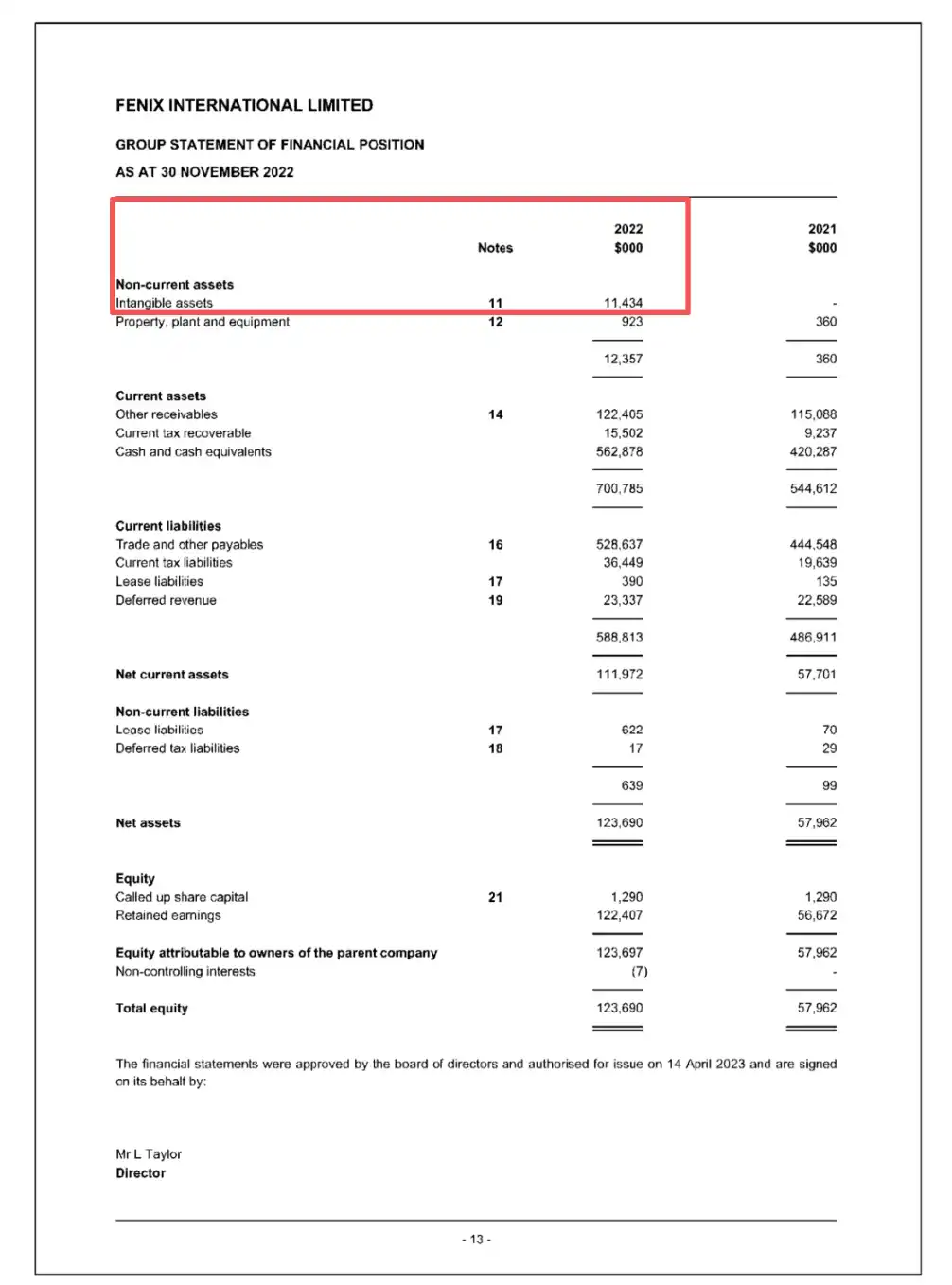
According to the company's financial statements from the end of November 2022, Fenix purchased a total of approximately $19.9 million worth of ETH, listing it as an intangible asset. Due to the cryptocurrency market crash in 2022, Ethereum's price plummeted significantly. The company recorded an impairment loss of approximately $8.46 million that year, adjusting the value of its ETH holdings to about $11.4 million.

The OnlyFans platform has not yet opened up crypto payments; users still rely on credit cards or third-party virtual cards. During Radvinsky's era, OnlyFans resembled more of a hybrid of "traditional finance + adult content," taking a 20% cut, with terrifyingly stable cash flow.

Shifting focus to the Russia-Ukraine war period in 2022, a group of cryptocurrency activists and enthusiasts quickly gathered to support Ukraine.

Their method was to auction an NFT artwork depicting the Ukrainian flag. The decentralized autonomous organization "Ukraine DAO" raised 2258 ETH in an auction, worth approximately $6.79 million at the time.
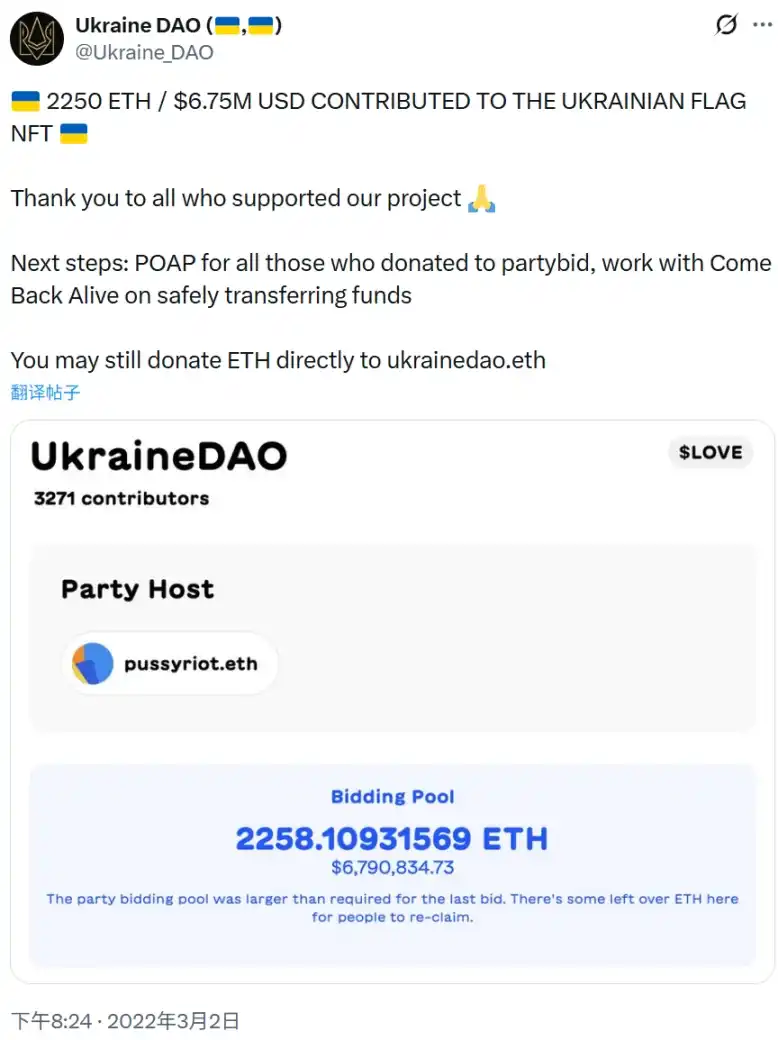
According to a subsequent report by Decrypt, the adult website OnlyFans also participated in this donation.

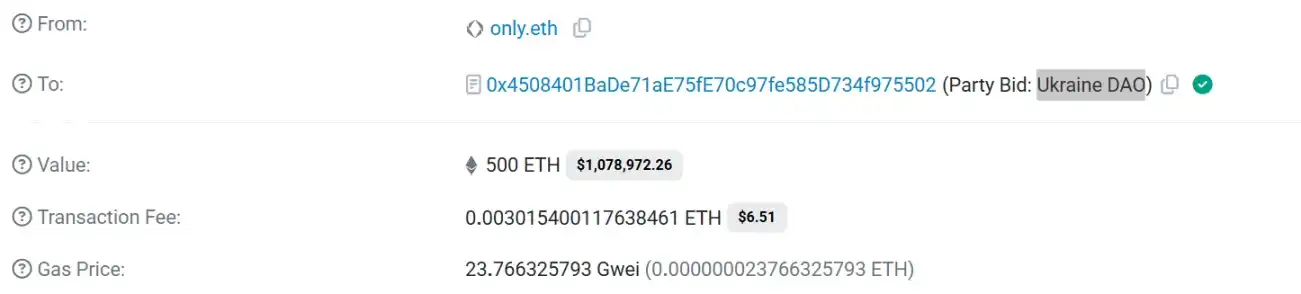
Blockchain tracking platform Etherscan showed that on February 27, an address named only.eth donated 500 ETH to Ukraine DAO, worth $1.079 million today.
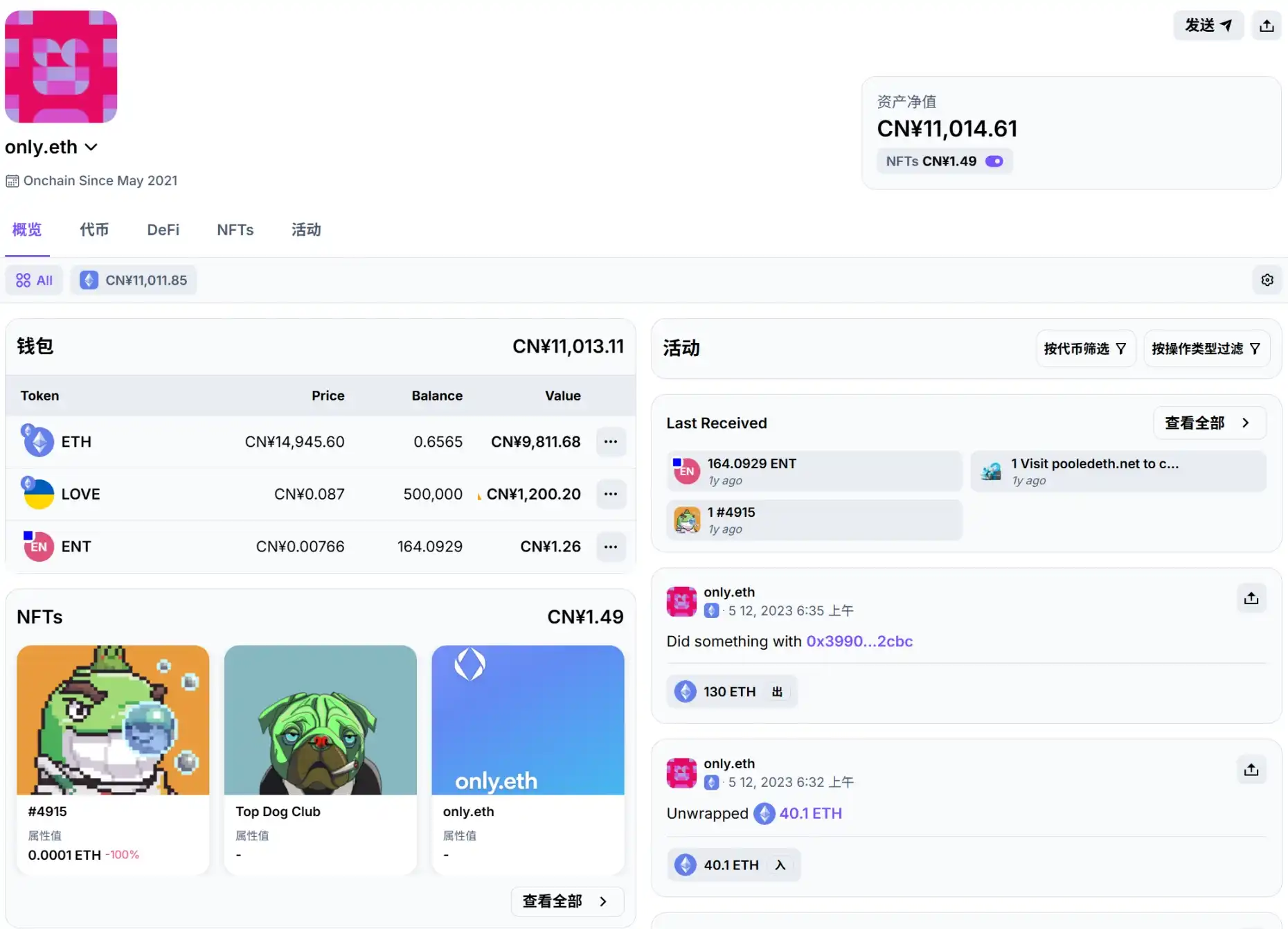
Zapper data shows that the only.eth address was created in May 2021. Currently, its wallet holds a total value of less than $2000, with the last wallet activity being 3 years ago.
However, the person who truly brought the OnlyFans基因 (gene) into crypto was its founder, Tim Stokely.

Stokely founded the OnlyFans platform in 2016, resigned as CEO in December 2021, and made a complete turn. In May 2022, he and former OnlyFans executive RJ Phillips launched Zoop—an NFT trading card platform based on the Polygon chain.

Zoop is positioned as completely "family-friendly": selling 3D digital collectible cards of celebrities and influencers. Users can buy, sell, trade, collect, and also receive airdropped benefits. It features limited editions and emphasizes creator revenue sharing. Essentially, Zoop transplants OnlyFans' "fans pay directly" model into the Web3 collectibles track.

In April 2025, Zoop, in conjunction with the HBAR Foundation (the treasury management entity for the Hedera chain), submitted a bid to acquire TikTok's US operations. The core of the proposal was Web3 integration: Hedera's scalability would be used to support TikTok's NFTs, creator payments, governance structure, and overall token incentive system, aiming to distribute 80% of advertising revenue directly to creators and users.

Ultimately, for various reasons, this intended bid did not finalize. Tim Stokely stepped away from the adult empire but brought its core logic into Zoop and the Hedera-led TikTok bid, effectively upgrading the "fans pay for content" model into a Web3 version.

İlgili Sorular

QWho was the actual controller of OnlyFans and what was the cause of his death?

ALeonid Radvinsky was the actual controller of OnlyFans. He passed away at the age of 43 after a long battle with cancer.

QWhat significant cryptocurrency purchase did OnlyFans' parent company, Fenix International, make under Radvinsky's control?

AFenix International purchased approximately $19.9 million worth of ETH, which it listed as an intangible asset on its balance sheet.

QHow did the OnlyFans platform engage with the crypto space in 2022?

AIn 2022, OnlyFans launched a feature allowing users to set an Ethereum-verified NFT as their profile picture, marking its first step in exploring the role of NFTs on the platform.

QWhat was the name of the core business model of the NFT platform launched by OnlyFans' founder, Tim Stokely, after he resigned?

ATim Stokely co-founded Zoop, an NFT trading card platform on the Polygon blockchain, which uses a 'fans pay creators directly' model similar to OnlyFans but for Web3 collectibles.

QWhat was the purpose of the only.eth address's transaction to Ukraine DAO in February 2022?

AThe only.eth address, associated with OnlyFans, donated 500 ETH (worth about $1.079 million at the time of the article) to Ukraine DAO to support Ukraine during the war.

İlgili Okumalar

Dialogue with Jia Hang | Looking Back at Two Decades of Chinese Payment Going Global

**Summary: A Conversation with Jia Hang on Two Decades of China's Payment Globalization** Jia Hang, a veteran with over twenty years in payments, reflects on China's attempts to build a global payment network through three key phases: UnionPay (card networks), Alipay+ (digital wallets), and now, stablecoins. His journey began at UnionPay International, aiming to establish China's card network abroad. While successful in following Chinese tourists ("where Chinese go, UnionPay goes"), it struggled to achieve true global scale. The core lesson: card networks like Visa/Mastercard's unassailable advantage isn't just technical standards, but their deeply entrenched **governance and profit-sharing models** that create powerful network effects. Competing as the "same species" is nearly impossible. At Ant Group, he led Alipay+, a strategy to bypass card networks by interconnecting local e-wallets worldwide. While innovative, it faced a similar ceiling. Mobile QR payments and card swipes were essentially **the same species competing for the same pie**, lacking a disruptive value proposition for users or a sustainable new incentive model to replace the card networks' established flywheel. Today, at Singapore's DCS, Jia focuses on stablecoin-based payments. He argues stablecoins represent a fundamental shift. They are not competing with Visa for consumer payments but challenging the **traditional banking and account system for value movement**. Products like "U Cards" (stablecoin-linked payment cards) are transitional, leveraging existing card networks for acceptance while building new rails. The real potential lies in stablecoins enabling seamless, low-cost global value transfer, potentially reorganizing the financial infrastructure around **accounts rather than cards**. Jia believes stablecoin adoption for local retail payments, cross-border transactions, and as high-yield savings vehicles is becoming irreversible. This could gradually reduce reliance on traditional fiat channels, especially in regions with weak currencies or capital controls. The quest for the "next global payment network" continues, now centered on whether stablecoins can successfully bridge Web2 and Web3, establish new governance, and create compelling user value beyond mere cost reduction.

marsbit11 dk önce

Dialogue with Jia Hang | Looking Back at Two Decades of Chinese Payment Going Global

marsbit11 dk önce

Circle's Stock Price Plunges 76%, Hong Kong Dollar Stablecoin Set to Launch Within Two Weeks

Circle's stock price has plunged approximately 76% from its 2023 peak, reflecting a major market revaluation. Despite this, Circle President Heath Tarbert emphasized the company's focus on long-term execution and its dominant position with USDC's $73 billion circulation across 34 blockchains. The competitive landscape is intensifying. A new consortium-backed stablecoin, Open USD, is attempting to challenge incumbents by sharing reserve yields with partners. More significantly, Visa's new stablecoin platform, initially supporting Open USD while also being compatible with USDC, could erode Circle's network effects. In response, Circle is expanding into real-world payments through partnerships like the one with Japan's JCB. Separately, Tether (USDT) faces a two-year compliance window under new U.S. regulations, requiring it to adjust its reserve composition away from assets like Bitcoin and loans towards cash and U.S. Treasuries. Meanwhile, in Hong Kong, Standard Chartered-backed fintech firm Dian Dian is poised to launch a licensed HKD-pegged stablecoin (HKDAP), moving the industry into a phase where the real test is integrating licensed stablecoins into actual payment flows and corporate treasury systems. The sharp decline in Circle's stock underscores a broader shift: the stablecoin market is moving from a winner-takes-all dynamic to a multi-player competitive arena where execution, compliance, and real-world utility are becoming paramount.

marsbit12 dk önce

Circle's Stock Price Plunges 76%, Hong Kong Dollar Stablecoin Set to Launch Within Two Weeks

marsbit12 dk önce

Amidst Capital's Encirclement, Decentralization is the Sole Defense for Public Blockchains

In a landscape dominated by power and profit motives, the author argues that decentralization is not merely one desirable feature among many in blockchain design—it is the singular, non-negotiable defense against corporate and capital capture. The article adopts a Machiavellian, realist perspective on human institutions, positing that businesses will inevitably attempt to co-opt any valuable network to protect their profits and dominance. While external attacks like 51% forks are often discussed, the greater existential risk is internal capture—the gradual erosion of a protocol’s neutrality by vested interests, as seen historically with platforms like Visa and Google. The piece critiques permissioned chains, highly centralized “permissionless” layer-1s, and layer-2s without sufficient decentralization (e.g., single sequencers) as inherently vulnerable. These compromised systems, promoted by established financial players, are framed as delaying tactics to stifle truly open networks that threaten existing high-fee, inefficient business models. Real-world examples, such as closed enterprise consortiums that exclude competitors, illustrate how such systems cement oligopolies rather than foster innovation. The author concludes that while decentralized protocols like Ethereum are imperfect and costly to operate, they represent the only viable long-term equilibrium. In a market where value naturally flows to the most secure and neutral settlement layer, only maximally decentralized public blockchains can resist being subsumed by capital and powerful incumbents.

Foresight News22 dk önce

Amidst Capital's Encirclement, Decentralization is the Sole Defense for Public Blockchains

Foresight News22 dk önce

Who Decides the Rules of Bitcoin? BIP-110 Ignites Governance Debate

Bitcoin's governance is once again at the center of a heated debate, this time ignited by BIP-110, the "Reduced Data Temporary Softfork." This proposal aims to curb non-monetary data (like inscriptions and Runes) by introducing seven new consensus-layer restrictions over a year, such as limiting new output scripts to 34 bytes and restoring the OP_RETURN cap to 83 bytes. The controversy stems from BIP-110's fundamental shift: it moves the battle against "spam" from node relay and miner policies to the consensus layer, rendering currently valid transactions invalid. Supporters, arguing that default policy governance has failed (highlighted by Bitcoin Core v30's relaxation of OP_RETURN limits), see this as necessary to protect node resources and Bitcoin's monetary focus. Opponents, led by figures like Michael Saylor and Adam Back, warn it dangerously centralizes governance. Saylor listed 110 reasons against it, criticizing its low 55% miner activation threshold and potential for chain splits. Back emphasized Bitcoin's "permissionless" ethos, arguing no single group should impose value judgments via consensus rules. Further complicating matters, technical critiques suggest BIP-110 may be technically circumventable, and a "BlockSlop" vulnerability in its upgrade path poses a consensus risk. The debate has drawn in diverse stakeholders: miners (with pools like Ocean signaling support and Foundry polling clients), node operators (like Bitcoin Knots), and new players like corporate treasury holder MicroStrategy (Saylor), whose market influence adds a novel dimension. Ultimately, BIP-110 acts as a governance stress test, exposing the unresolved question: who decides Bitcoin's rules? It pits the authority of miners, node operators, developers, and capital holders against each other, with each side claiming to defend Bitcoin's core principles of neutrality and security.

marsbit39 dk önce

Who Decides the Rules of Bitcoin? BIP-110 Ignites Governance Debate

marsbit39 dk önce

İşlemler

Spot
活动图片