Blockchain.com Expands Tokenized Stock Access Through Ondo Finance

bitcoinist2026-06-19 tarihinde yayınlandı2026-06-19 tarihinde güncellendi

Özet

Blockchain.com has expanded its partnership with Ondo Finance to integrate tokenized U.S. stocks and ETFs into its wallet ecosystem. This move allows eligible, primarily non-U.S., users to access traditional financial assets through a familiar crypto-native interface, blending real-world asset exposure with existing crypto holdings like stablecoins and DeFi tools. Ondo Finance, a key player in tokenizing assets like Treasuries and equities, gains a significant distribution channel through Blockchain.com's large user base. The partnership highlights the industry trend of making tokenized assets as accessible as ordinary crypto tokens, targeting global audiences who may face barriers using traditional brokerage services. While the tokenized real-world asset (RWA) market grows increasingly competitive, questions remain around custody, regulation, and market structure. Blockchain.com and Ondo are betting that seamless wallet integration can address these challenges and drive broader adoption.

Blockchain.com Expands Tokenized Stock Access Through Ondo Finance

TL;DR

  • Blockchain.com and Ondo Finance have expanded access to tokenized U.S. stocks and ETFs through the Blockchain.com wallet ecosystem.
  • The partnership brings regulated real-world asset exposure into a crypto-native interface for eligible users.
  • The latest market discussion centers on the growth of Ondo Global Markets and a wider catalogue of tokenized equities.
  • The move fits a larger trend: exchanges and wallet providers are racing to make tokenized traditional assets feel like ordinary crypto products.

Tokenized Stocks Move Further Into Wallets

Blockchain.com’s partnership with Ondo Finance is pushing tokenized U.S. stocks and ETFs deeper into the crypto wallet experience, giving eligible users another way to access real-world assets onchain. The companies have already framed the integration as a way to bring tokenized equities into the familiar Blockchain.com wallet interface, rather than forcing users through a traditional brokerage-style setup.

The story has gained fresh attention as Ondo Global Markets continues expanding the number of tokenized assets available across chains. For crypto users, the practical draw is simple: stocks, ETFs and other traditional exposures can sit closer to stablecoins, DeFi and self-custody tools.

Why Ondo Is Central To The RWA Push

Ondo has become one of the best-known names in the tokenized real-world asset market because it focuses on taking familiar financial products and representing them onchain. That includes tokenized Treasuries, yield products and stock-linked exposure. The Blockchain.com integration gives Ondo a consumer-facing distribution channel with a large wallet user base.

This is important because tokenization is not just a technology problem. It is a distribution problem. Users need access, compliance checks, liquidity, custody options and a reason to prefer tokenized exposure over existing brokerage products. Wallet integrations can help close that gap by putting tokenized assets in front of users who already operate in crypto.

The Non-US Access Angle

Much of the tokenized stock story is aimed at users outside the United States. In many markets, access to U.S. equities can be slow, expensive or limited by local brokerage infrastructure. Tokenized products promise a crypto-native alternative, though availability still depends on eligibility, jurisdiction and product structure.

That makes the Blockchain.com and Ondo setup interesting. It is not trying to convince U.S. brokerage customers to abandon familiar platforms overnight. Instead, it targets a global audience that may already use stablecoins and crypto wallets as financial infrastructure, then adds stock-like exposure into that environment.

RWA Growth Gets More Competitive

The broader RWA market is becoming increasingly crowded. Exchanges, fintech apps, DeFi protocols and issuers all want to control the interface through which users access tokenized traditional assets. Stocks and ETFs are especially attractive because they are easy to understand and already have strong global demand.

Still, tokenized equities carry real questions around custody, redemption, market hours, legal claims and regulatory treatment. The winning products will need to feel as simple as crypto tokens while giving users confidence that the underlying exposure is legitimate. Blockchain.com and Ondo are betting that wallet-native access can help make that leap.

This article was written by the Bitcoinist News Desk and edited by Samuel Rae.

This report is based on information from Blockchain.com. at Blockchain.com

Trend Kriptolar

İlgili Sorular

QWhat is the main news announced in the article regarding Blockchain.com and Ondo Finance?

ABlockchain.com and Ondo Finance have expanded access to tokenized U.S. stocks and ETFs through the Blockchain.com wallet ecosystem, integrating regulated real-world assets into a crypto-native interface for eligible users.

QWhy is Ondo Finance considered central to the push for tokenized real-world assets (RWAs)?

AOndo Finance is central because it focuses on tokenizing familiar financial products like Treasuries, yield products, and stock-linked exposures, and the integration with Blockchain.com provides a major consumer-facing distribution channel to a large wallet user base, helping solve the distribution problem for tokenized assets.

QAccording to the article, which user segment is a primary target for tokenized stock access via this partnership?

AThe primary target is users outside the United States, who may face slow, expensive, or limited access to U.S. equities through traditional local brokerage infrastructure, but already use stablecoins and crypto wallets as financial infrastructure.

QWhat is one key practical benefit for crypto users in having tokenized stocks and ETFs in their wallet?

AA key practical benefit is that stocks, ETFs, and other traditional exposures can sit closer to and be managed alongside stablecoins, DeFi assets, and self-custody tools within a familiar crypto wallet interface.

QWhat are some of the challenges or questions mentioned regarding tokenized equities?

AChallenges and questions include issues around custody, redemption, alignment with market hours, legal claims on the underlying assets, and regulatory treatment. Winning products must feel as simple as crypto tokens while ensuring users have confidence in the legitimacy of the underlying exposure.

İlgili Okumalar

The Hunter Becomes the Hunted: The Most Profitable MEV Bot Gets Hacked

A well-known and highly profitable Ethereum MEV Bot, Jaredfromsubway.eth, suffered a sophisticated on-chain attack this Saturday, losing over $7.5 million. Analysis by Blockaid and others reveals this was not a conventional phishing or smart contract exploit, but a targeted "counter-MEV honeypot attack." The attacker meticulously laid a trap over several weeks, deploying 66 fake token contracts and liquidity pools disguised as major assets like WETH and USDC. These pools created the illusion of arbitrage opportunities. The MEV Bot's automated system detected these signals, executed trades, and in the process, granted approval permissions to attacker-controlled contracts. These approvals were not revoked, creating a persistent vulnerability. The attacker then exploited this in a single transaction, draining the bot's ETH, USDC, and USDT holdings. Jaredfromsubway.eth is notorious as one of Ethereum's most active and profitable MEV Bots, primarily known for executing "sandwich attacks" to profit from transaction slippage. Estimates suggest it has earned tens of millions in MEV revenue. The incident highlights escalating crypto security threats, demonstrating that even top-tier automated "predators" are vulnerable to novel, logic-based attacks designed to exploit their own operational rules. Following the hack, an unverified X account impersonating Jaredfromsubway.eth emerged, falsely offering a bounty for the return of funds, prompting developer warnings for users to stay vigilant.

marsbit25 dk önce

The Hunter Becomes the Hunted: The Most Profitable MEV Bot Gets Hacked

marsbit25 dk önce

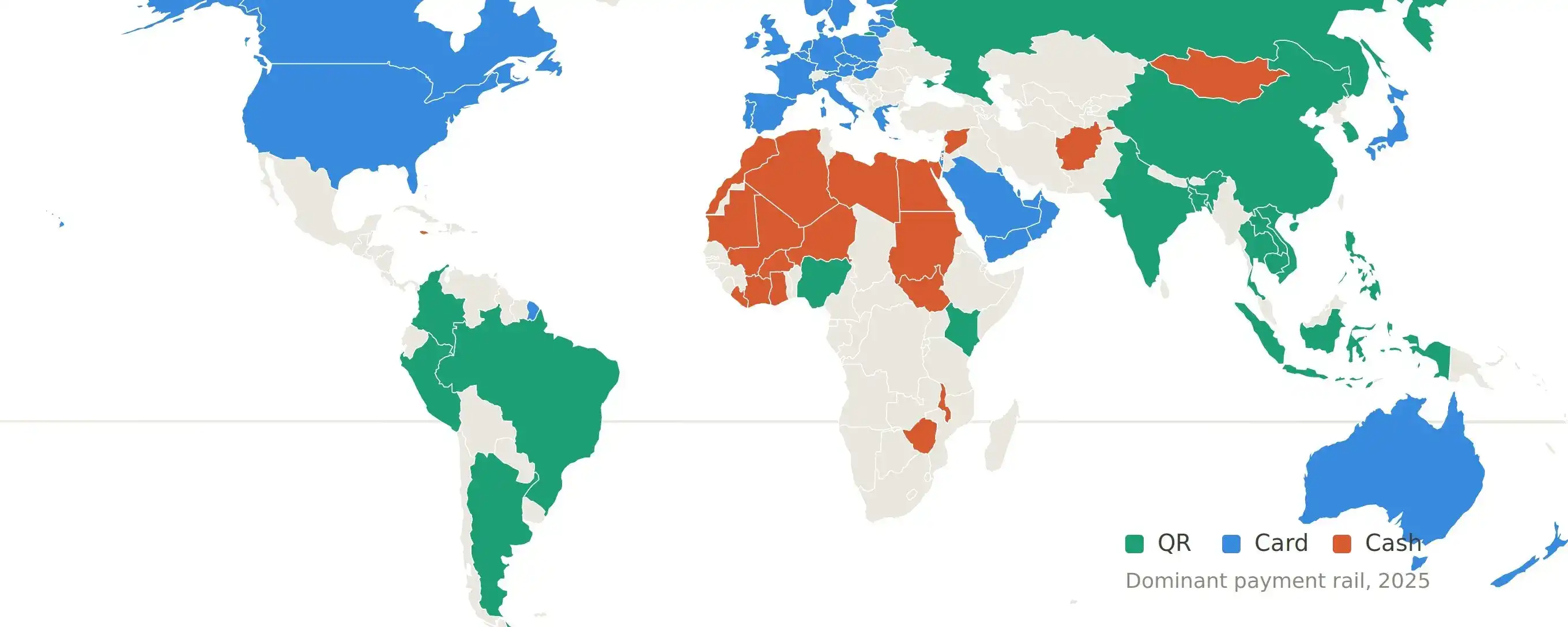
The Reality of Payments in Latin America Is Not What You Think

The payment landscape in Latin America is undergoing a fundamental shift, driven by on-the-ground realities that challenge common perceptions. Based on over 500 hours of field research across the region, key insights emerge. Firstly, QR code payments, like Brazil's Pix, are becoming the dominant payment method in most emerging markets, overtaking cards. However, these domestic instant payment systems lack international interoperability, creating a significant gap for cross-border users. Secondly, the narrative around crypto cards is often misunderstood; their primary volume comes from high-net-worth professionals using them for salary conversions (e.g., USDT to local currency via Pix), not retail micro-payments. Competition in payments is shifting from customer acquisition to controlling the settlement layer, leading fintechs to acquire banking licenses for efficiency. Thirdly, treating "Latin America" as a single market is a mistake. Countries like Argentina, Brazil, and Mexico have distinct economic realities, user segments, and regulatory approaches. Brazil alone has at least five distinct user segments with different financial flows. Overlooked markets like Guatemala, Honduras, and El Salvador (the "forgotten five") offer high remittance volumes with lower competitive density. Finally, regulation in Latin America is often ahead of the US, with clearer frameworks for digital assets and a pragmatic approach from regulators focused on safety rather than obstruction. The margin on stablecoin forex is rapidly compressing toward zero, meaning future winners will be those building value-added services on top of the infrastructure, not just the cheapest exchange.

marsbit40 dk önce

The Reality of Payments in Latin America Is Not What You Think

marsbit40 dk önce

Making Music in a Bear Market: The Survival Experiment of a Bitcoin Band

"Orange Pill Jam: A Bitcoin Band's Survival in the Bear Market" Orange Pill Jam is a musical group exploring themes of financial sovereignty and privacy, born from the Bitcoin community. Formed after singer Mermaid performed her song "Dollar Apocalypse" at a 2022 conference, the band creates music intended for both Bitcoin enthusiasts and general audiences. Their creative process involves Mermaid writing lyrics and melodies, which producer/multi-instrumentalist Michi then shapes with a precise, rhythm-focused approach, often demanding numerous retakes to achieve his unique standard of timing. Their songs, like "Cypherpunks' Manifesto" and "Fire of Freedom," tackle concepts of digital privacy, the pitfalls of "free" services, and personal sovereignty, influenced by experiences in places like El Salvador. Despite operating in a crypto bear market with a Copyleft model (offering music for free sharing/remixing and accepting optional Bitcoin donations), they face practical challenges. Their growth is slow on platforms like YouTube and Spotify, which aren't optimized for their niche content. The band also navigates the rise of AI-generated music. While acknowledging AI's efficiency for certain tasks, they believe human creativity occupies a unique space that algorithms cannot replicate—the ability to create new genres and capture intangible rhythmic feeling. For Orange Pill Jam, the core argument for both Bitcoin in a downturn and human artistry in the AI age lies in this irreplaceable, intentional, and imperfectly human creative process. Their project persists as an anti-algorithm experiment, valuing the unquantifiable impact of music over scalable metrics.

marsbit46 dk önce

Making Music in a Bear Market: The Survival Experiment of a Bitcoin Band

marsbit46 dk önce

İşlemler

Spot
Futures

Popüler Makaleler

ONDO Nasıl Satın Alınır

HTX.com’a hoş geldiniz! OndoFinance (ONDO) satın alma işlemlerini basit ve kullanışlı bir hâle getirdik. Adım adım açıkladığımız rehberimizi takip ederek kripto yolculuğunuza başlayın. 1. Adım: HTX Hesabınızı OluşturunHTX'te ücretsiz bir hesap açmak için e-posta adresinizi veya telefon numaranızı kullanın. Sorunsuzca kaydolun ve tüm özelliklerin kilidini açın. Hesabımı Aç2. Adım: Kripto Satın Al Bölümüne Gidin ve Ödeme Yönteminizi SeçinKredi/Banka Kartı: Visa veya Mastercard'ınızı kullanarak anında OndoFinance (ONDO) satın alın.Bakiye: Sorunsuz bir şekilde işlem yapmak için HTX hesap bakiyenizdeki fonları kullanın.Üçüncü Taraflar: Kullanımı kolaylaştırmak için Google Pay ve Apple Pay gibi popüler ödeme yöntemlerini ekledik.P2P: HTX'teki diğer kullanıcılarla doğrudan işlem yapın.Borsa Dışı (OTC): Yatırımcılar için kişiye özel hizmetler ve rekabetçi döviz kurları sunuyoruz.3. Adım: OndoFinance (ONDO) Varlıklarınızı SaklayınOndoFinance (ONDO) satın aldıktan sonra HTX hesabınızda saklayın. Alternatif olarak, blok zinciri transferi yoluyla başka bir yere gönderebilir veya diğer kripto para birimlerini takas etmek için kullanabilirsiniz.4. Adım: OndoFinance (ONDO) Varlıklarınızla İşlem YapınHTX'in spot piyasasında OndoFinance (ONDO) ile kolayca işlemler yapın.Hesabınıza erişin, işlem çiftinizi seçin, işlemlerinizi gerçekleştirin ve gerçek zamanlı olarak izleyin. Hem yeni başlayanlar hem de deneyimli yatırımcılar için kullanıcı dostu bir deneyim sunuyoruz.

288 Toplam GörüntülenmeYayınlanma 2024.12.12Güncellenme 2026.06.02

ONDO Nasıl Satın Alınır

Tartışmalar

HTX Topluluğuna hoş geldiniz. Burada, en son platform gelişmeleri hakkında bilgi sahibi olabilir ve profesyonel piyasa görüşlerine erişebilirsiniz. Kullanıcıların ONDO (ONDO) fiyatı hakkındaki görüşleri aşağıda sunulmaktadır.

活动图片