AI New Money, $5,000-an-Hour Companionship: Silicon Valley in 2026 and Night City in 2077

marsbit2026-06-11 tarihinde yayınlandı2026-06-11 tarihinde güncellendi

Özet

In 2026, San Francisco's AI boom has reshaped the city. While companies like OpenAI and Anthropic drive a commercial real estate revival and create a new class of tech millionaires, profound inequality deepens. Rental prices soar in AI districts, pricing out many who service the industry. A new, expensive social phenomenon emerges: tech "nouveaux riches," often lonely despite wealth, pay $3,000-$6,000 per hour for "high-end companionship." This service, provided by smart, tech-literate individuals (often women), offers not just beauty but engaged conversation about AI, longevity, and crypto—fulfilling a deep need for validation. This mirrors historic gold rushes, where service industries bloom around new wealth. The narrative draws parallels to Cyberpunk 2077's Night City, depicting a "high-tech, low-life" society where technological advancement exacerbates social divides, creating separate worlds within the same city.

By Sleepy

Silicon Valley has also started "hooking up with old men."

Of course, not in that way. There are no small-town girls calling middle-aged men "brother" here, nor are there 20-yuan WeChat red packets with a "you're so amazing" message attached. The Silicon Valley version is more respectable, and much more expensive.

Here, the "old men" are a group of twenty- and thirty-something tech nouveau riche, holding Nvidia options or OpenAI stock, living in high-rise apartments in the SoMa district. They aren't old, but they already carry an aura of age. They have money, their heads are full of ideas but they can't find anyone to tell them to, and when they do speak, no one takes them seriously. Eventually, they discover that "someone listening to me seriously" is something you can buy. In a small town, it costs twenty yuan; in Silicon Valley, it's three thousand to six thousand dollars an hour.

In June 2026, San Francisco has two faces.

The daytime face is easy to recognize. OpenAI and Anthropic have successively submitted confidential IPO filings to the U.S. Securities and Exchange Commission, with the two AI giants preparing to go public almost simultaneously. Even earlier, OpenAI allowed over six hundred employees to cash out approximately $66 billion through the secondary market. Jensen Huang also said Nvidia has minted quite a few billionaires.

This is the daytime story, the wealth-creation story written in funding news and financial headlines.

The nighttime face is rarely shown to the public. In the same city, a group of young women who claim to understand AI, GPUs, longevityism, and cryptocurrency have begun offering high-end companionship services to Silicon Valley tech people for several thousand dollars an hour. A significant portion of their clientele are the very people who appear in those funding news stories during the day.

AI sucks money in, the money changes the shape of the city, the city changes the people living in it, and their loneliness and dignity also grow a price tag.

First, Money Changed the City's Shape

Three years ago, everyone thought San Francisco was finished.

The pandemic hollowed out downtown office buildings. Remote work sent programmers to Austin, Miami, even Bali. In the Mid-Market district where Twitter's headquarters was located, tents lined the streets, and faded 'For Lease' signs on empty storefronts went untorn.

Back then, if you told people you were still in San Francisco, they looked at you with pity. An American city built on "innovation" was being described as "in decline" for the first time.

Then AI brought the money.
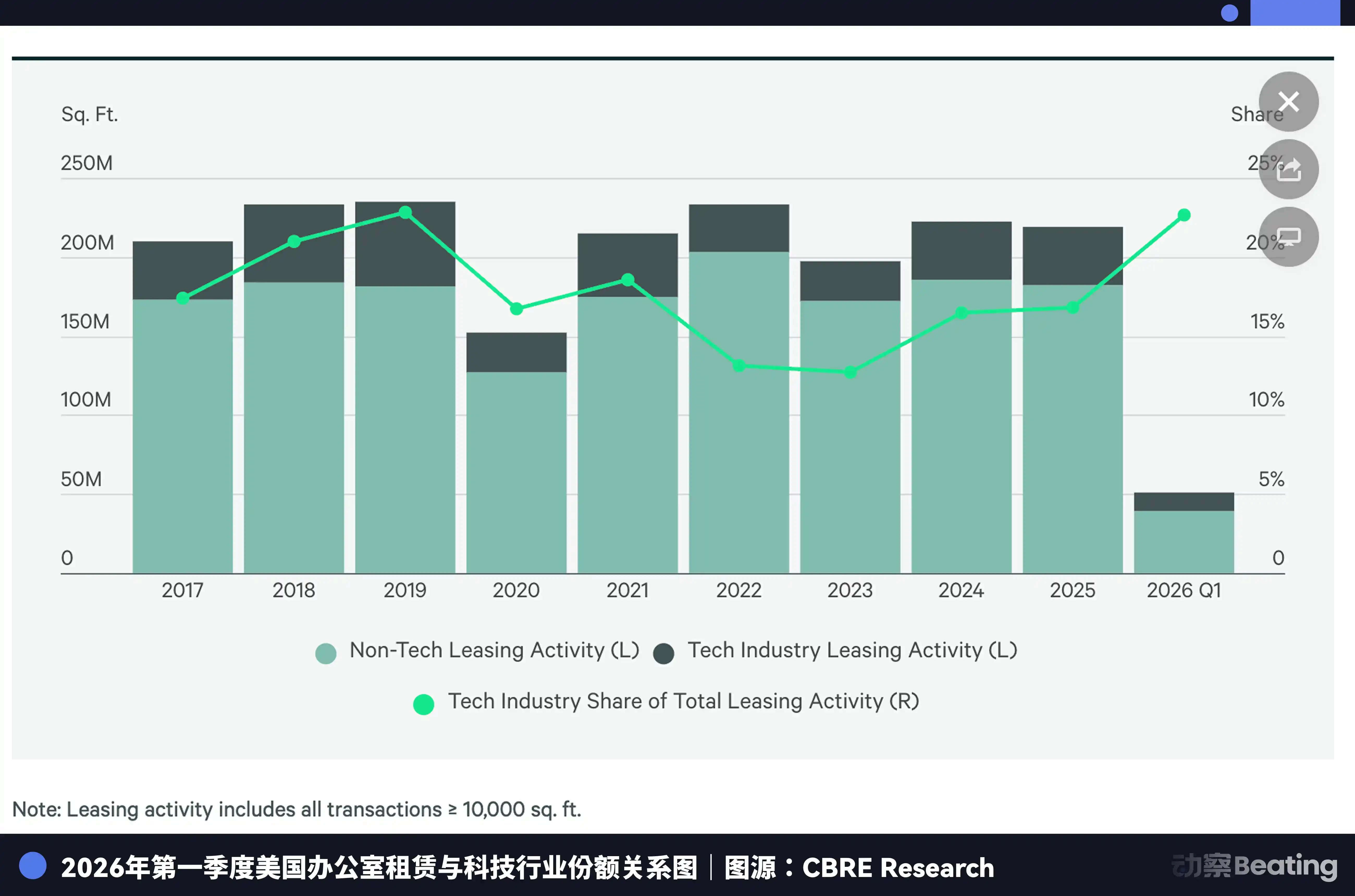
According to a CBRE report in May 2026, AI companies are strongly driving office leasing recovery in the San Francisco Bay Area. Anthropic has leased large swaths of office space in the SoMa district, OpenAI moved into a new landmark in Mission Bay, and large and small AI companies have filled up South Beach and the Design District. Three years ago, half these buildings were empty; now, you have to queue to rent an office on this street.

Once the office buildings filled up, residential rents followed.

By June 2026, the median rent for a one-bedroom in San Francisco had risen to $4,000, 20% higher than a year ago. SoMa saw a 36% increase, Mission Bay 22%, South Beach 21%. These numbers seemed to ripple outward, following the locations of AI company offices.
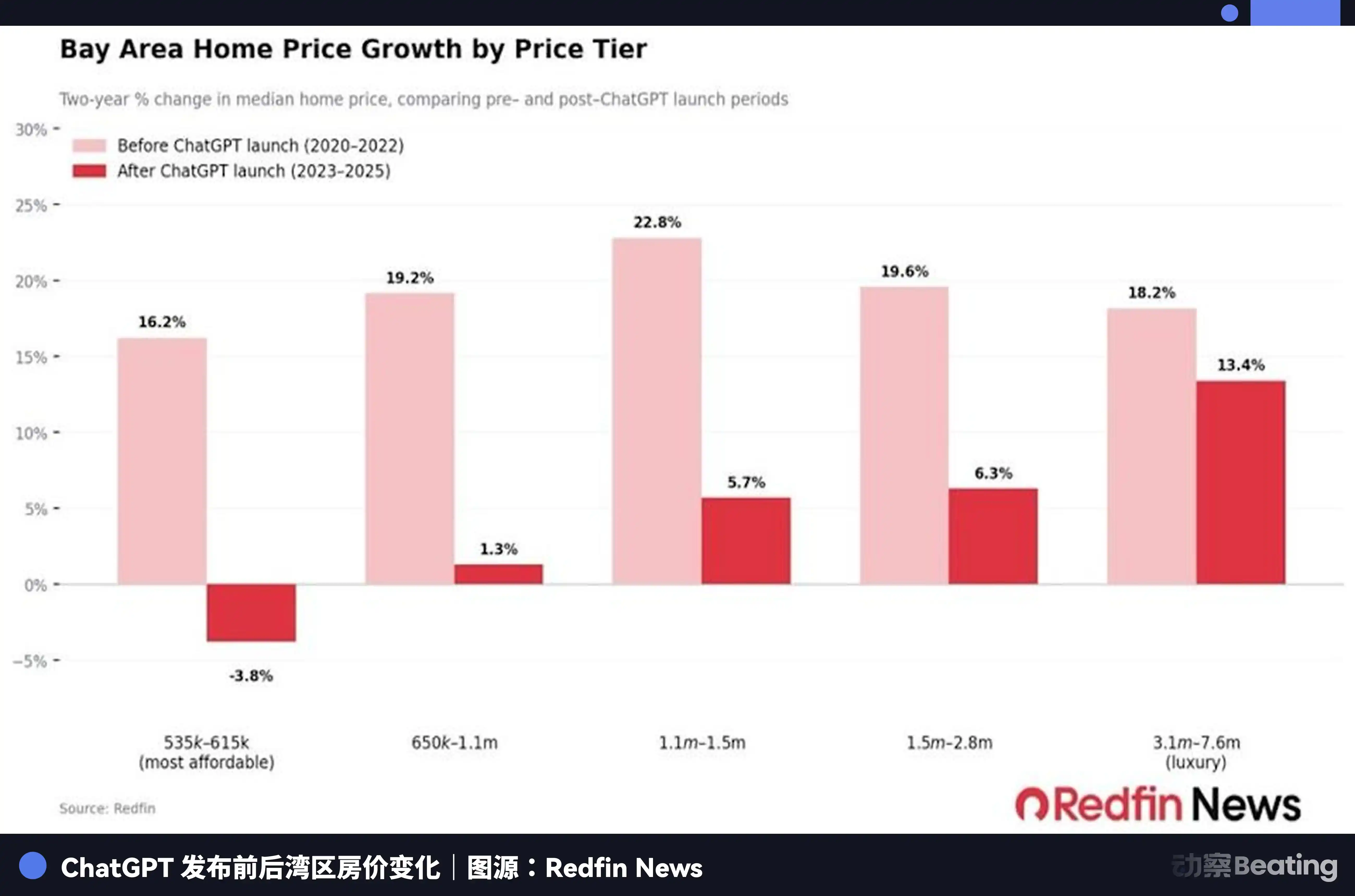
There's an Edwardian-style house listed for $2.995 million whose property description even includes a special note: "Seller accepts Anthropic or OpenAI stock as payment."

This is how a city comes back to life, sometimes down to this level of detail. In the past, buying a house relied on cash, loans, and family help. Now, you can also rely on stock from a pre-IPO AI company.

Luxury homes get more expensive, ordinary people's homes become increasingly unaffordable. The same city, the same wave of prosperity, but which world you belong to depends entirely on whether you are part of the AI food chain.

San Francisco and Oakland are only separated by a bay bridge, but rents on either side feel like two different worlds. By the end of 2025, one-bedroom rents in San Francisco were about 70% higher than in Oakland. Some stay in the city, writing code, wiping tables, serving coffee, delivering food for these companies; others have to go farther to find housing they can still afford.

San Francisco has indeed come back to life. But this time, it revived around a small group of people. Office buildings are rented for them, housing prices rise following them, the entire city increasingly operates as if it were built for this small group.

Next to Every Gold Rush, a Street Grows

Once the city's shape is altered, what follows is the alteration of its inhabitants' lives. This is nothing new. California's own history has played it out in full.

Gold was discovered in California in 1849, and hundreds of thousands flocked to San Francisco. Later, everyone knew most gold miners didn't get rich. Levi Strauss got rich selling dry goods, fabrics, and workwear; Wells Fargo got rich handling remittances for mining areas; hotels, taverns, and gambling houses in Sacramento got rich. The gold miners walked ahead, and the businesspeople followed.

Common sense explains it. A bunch of people suddenly have money, all crammed in one place. They need to eat, have somewhere to live, and find some entertainment after a hard day's work. Where there's demand, supply follows. First come the shovel and tent sellers, then the bankers and postmasters, finally the tavern, casino, and brothel owners. From survival to pleasure, it's always been in that order.

The AI wave is the same. The shovel sellers arrived first: GPUs, cloud computing, data centers—these are upfront businesses anyone can see. Then came the VCs, lawyers, headhunters, wealth managers.

After the money lands in personal accounts, some help them buy houses, some teach them how to live longer, some accompany them to the gym, some manage their charitable giving.

And then, it's "hooking up with old men."

A wealth advisor said many of the AI nouveaux riches he has met show no interest in luxury cars or watches, and don't even know what to do with the money. They are too young, inexperienced with spending, and have few friends. But they share one thing: each has a complete set of ideas about the world's future in their head—AGI, longevity, entropy reduction, how civilization should develop—they can talk for hours without repeating themselves. The problem is no one listens; people around them start looking at their phones after three sentences.

Lots of money, little time, poor at making friends, heads full of ideas with nowhere to share them. Put these together, and you have a very clear demand, clear enough for someone to build a business around it.

Knowing GPUs Is Better Than Knowing How to Flirt

Forbes recently published a report interviewing a few of these people. Through them, you can see what this city is becoming.

Meida Marek originally wanted to go into finance.

Fresh out of school, she was a junior analyst at a company, running data, building models, writing reports every day. The work wasn't hard, and the path was clear. Then she did the math: language models could write reports ten times faster than her, for free. How long could her job last?

After the calculation, she felt uncertain.

But she had other skills. She was smart, a good conversationalist, and she genuinely understood AI, cryptocurrency, biohacking, and longevityism—not just surface-level knowledge. These topics just happened to be Silicon Valley nouveau riche's favorites. So she switched directions, starting a high-end companionship service, with clients being AI tech people, charging $3,500 an hour. Her schedule filled up quickly within months, and her rates nearly doubled.

A young person afraid of AI taking her job took a turn and made more money from the wealthy created by AI. Inspiring and absurd.

She wasn't the only one eyeing this business.
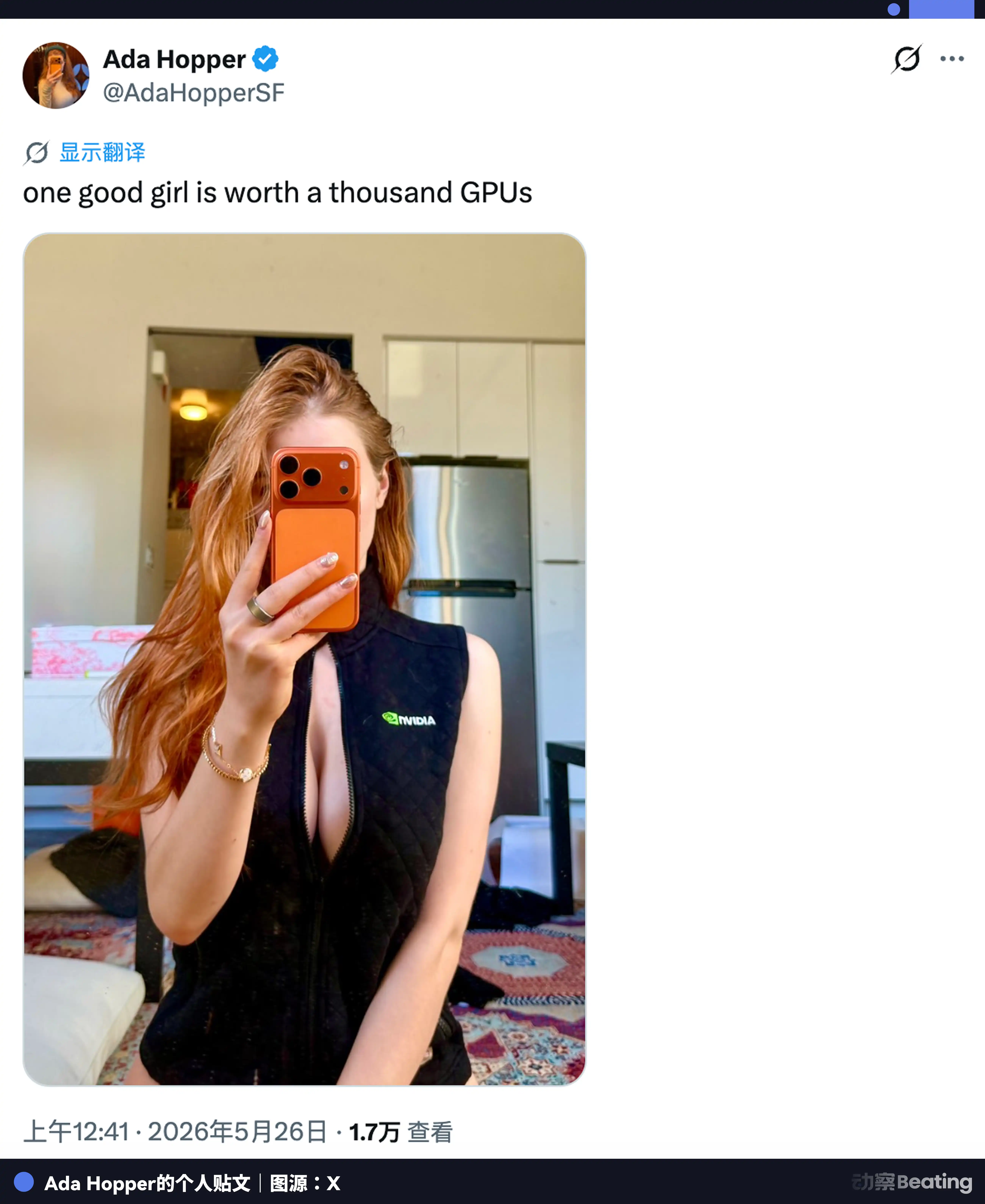
Ada Hopper charges $5,000 an hour. She once said something spot-on: talking about AI with these clients works very well; tech guys get excited because a beautiful woman knows what a GPU is.

Think about what that sentence means. The client pays five thousand dollars an hour, not just for beauty; a vase isn't worth that price. What's worth it is a beautiful person who also understands what you're saying, who can keep up when you talk about GPUs, who won't zone out when you discuss your worldview, and who you dare not look down upon.

Talia Sable is a former programmer, her bio says huge nerd, loves Dungeons & Dragons, AI, and supply chain management. Charges $3,000 an hour, schedule also fully booked.

Aella entered the scene earlier, reportedly charging up to $6,000 an hour. She promoted a concept called "nerd-first." The idea is that beautiful women should not just accompany the client's time and body, but also take their intellect and ideas seriously. In plain language: I don't just listen to your worldview; I genuinely find it interesting.

This business is new, but the need it fulfills is older than Silicon Valley.

In the karaoke bars of the eighties and nineties, the most valuable skill of a hostess wasn't beauty, it was knowing how to say, "Boss, you're amazing." The boss knew this was fake. But it didn't matter. Outside, he was a nobody; inside the bar, spending a few hundred yuan, he could be a big shot for a night. He knew it was bought, but bought was fine.

They had one good point: they didn't lie to themselves.

These Silicon Valley folks don't have that virtue. They pay five thousand dollars an hour to chat with a beautiful woman about AGI and humanity's future, then tell themselves this is high-quality intellectual exchange. Maybe it is. But if it's truly intellectual exchange, why must the other person be both beautiful and skilled at complimenting you? You could have an intellectual exchange with an MIT professor for free.

The reason is simple. He doesn't want exchange; he wants someone sitting across from him, taking him seriously. Exactly like the karaoke bars.

When he talks about AGI with friends, no one listens; when he chats about transformers, people lose interest after three sentences. Now, an intelligent and attractive person sits opposite him and says, "Go on." He finally feels taken seriously. This feeling costs three to six thousand dollars an hour, market price, fair and square.

In this brave new world, knowing GPUs works better than knowing how to flirt.

Longevity, Ketogenic Diets, and Local Models

Ada Hopper was terribly nervous before meeting her first client. Only after sitting down did she realize what the client most wanted to talk about aligned with her own interests: intermittent fasting, metabolic health, ketogenic diets. They discussed research papers half the night. Five-thousand-dollar-an-hour high-end companionship spent debating how to eat meat more scientifically.

Traditional wealthy people spend money to be seen. Buying a Ferrari, wearing a Patek Philippe—the money spent needs to be visible. Silicon Valley folks are the opposite. They spend money for themselves to see, or rather, for their bodies to see. They don't buy luxury cars or watches; ask a recently cashed-out engineer worth tens of millions what he's bought lately, and he'll say a Mac Mini to run local models. Ask another, and he'll say he's on a ketogenic diet, aiming to live to 120.

Marek has a client who completely adopted the longevityist ideas from her, even seeing it as a moral responsibility. He believed if technology could make people live longer, not pursuing it was a form of negligence. Later, influenced by Marek, he lost 50 pounds.

Another client gifted Marek a Mac Mini. Not a designer bag, not jewelry, but a small computer that can run AI models locally, because he thought Marek should have her own local inference capability. Someone else created AI-generated digital art specifically for her.

International travel, shopping trips to Europe, even indoor wingsuit flying. She herself, however, prefers older things. Antique jewelry, Edwardian-era vintage clothing, and mechanical movements hidden in small objects. She likes watching those tiny gears spin round and round. This hobby and her clients' study of Transformers share a common thread.
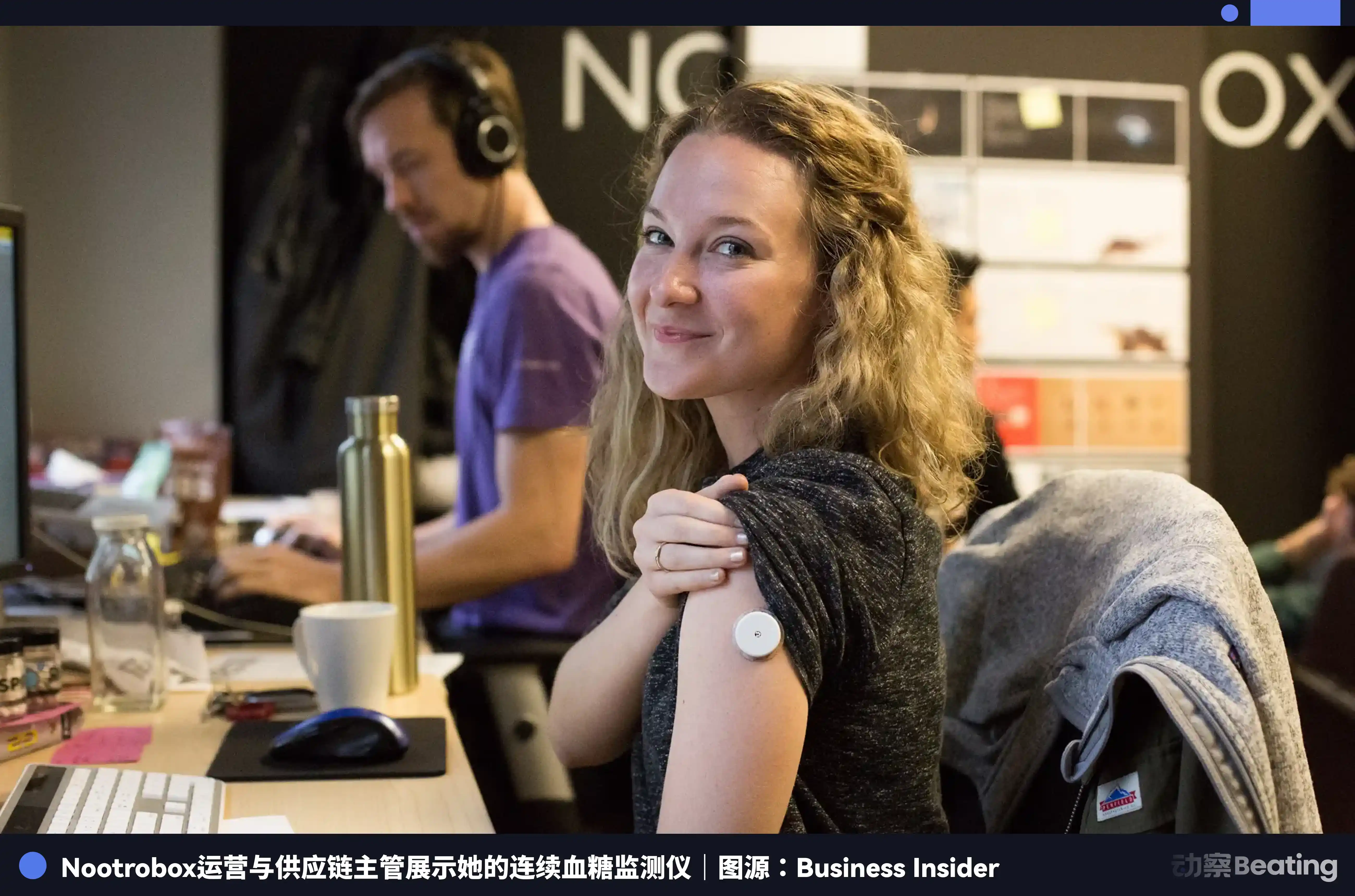
This isn't the sensual extravagance of traditional wealth. Today's wealthy study how to live twenty years longer while also running a large model at home. They are very meticulous about their bodies, like a diligent engineer tending to a newly purchased machine.

What to eat each day, how many hours to sleep, heart rate, body fat percentage—best to record it all. As long as there is a curve graph, they feel a bit more at ease. The act of living, in their hands, becomes very much like a long-term experiment, with themselves as the subject. Qin Shi Huang sent people overseas; San Francisco's wealthy watch their sleep curves. The methods have advanced considerably, but the desire hasn't changed much.

Unfortunately, some things aren't so cooperative. Like a person sitting across from you, listening to you say things of little use. You don't know when they'll get bored, or why they suddenly laugh. This can't be quantified and doesn't offer stable returns. Precisely because of that, it's expensive.

Before models change the world, they first change the nights of the wealthy.

Wake Up, Night City

Now, we can almost see what this city looks like.

Here, companies don't need to be mayors to decide who stays and who leaves. Someone just sold part of their options, adding thirty million dollars to their account. They study longevity, sleep, how to optimize their bodies to peak condition. When bored at night, they can spend a few thousand dollars to have an intelligent, attractive person sit down and talk with them.

The lives of others are much simpler. Wake up at six in the morning, set out from Oakland or farther away, commute over an hour into the city. Some write code for these companies, some wipe office tables, some serve coffee, deliver food, drive for ride-sharing apps. With a monthly rent of $3,415 on the table, they can only live farther and farther away.

This city deeply believes in technology. Believes bodies can be optimized, sleep can be optimized, work efficiency can be optimized. Human relationships can also be turned into a service. Open your phone, choose, book, pay, cancel. Not much different from calling a car.
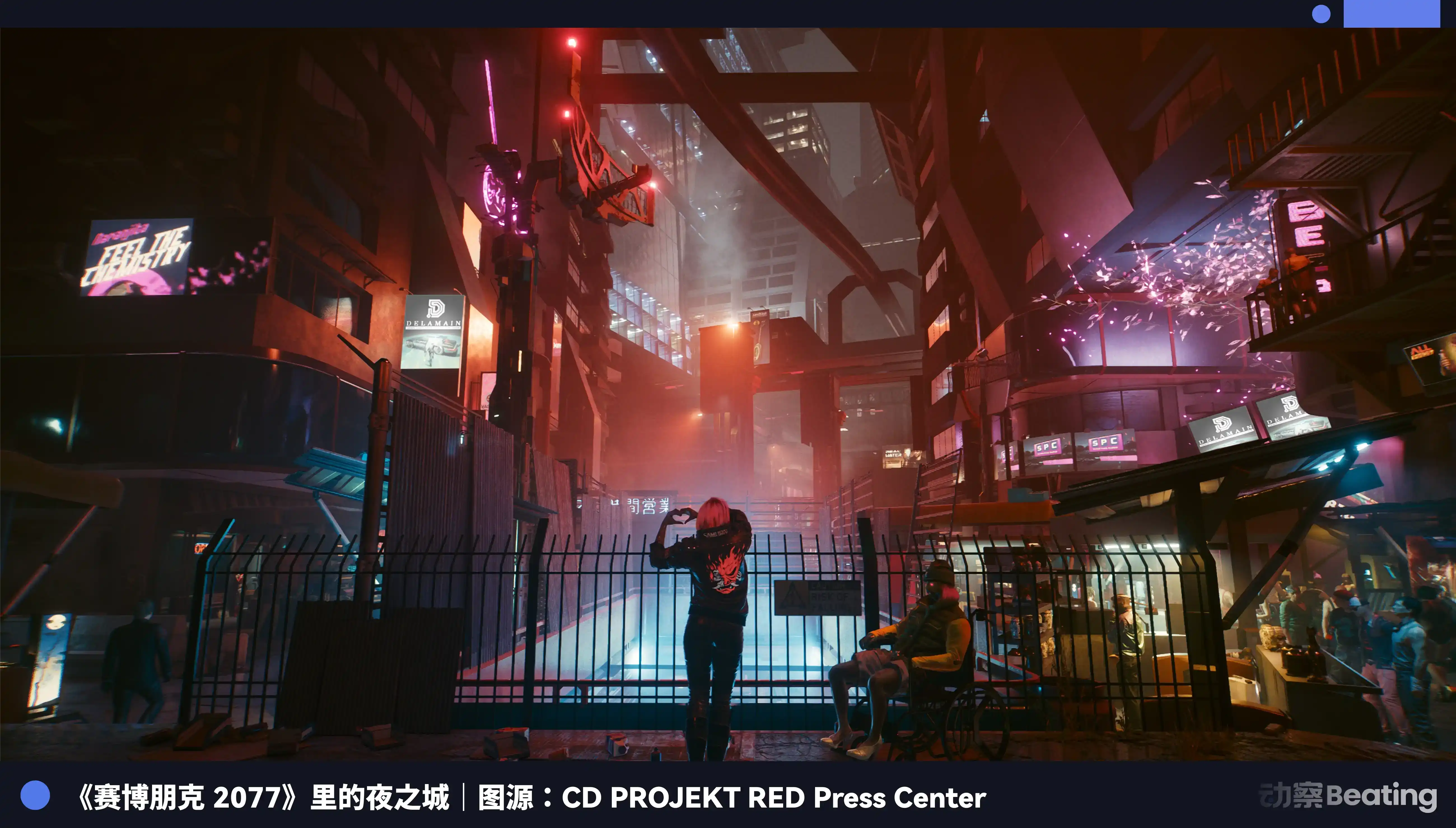
Those who have played Cyberpunk 2077 might find this somewhat familiar. Developer CD Projekt Red wrote this introduction for Night City: It's a megalopolis obsessed with power, glamour, and body modification.

Replace body modification with longevityism and Biohacking, replace glamour with AGI, replace power with AI companies and valuation tables, and this sentence could almost be pasted verbatim onto San Francisco's 2026 city introduction page.

Cyberpunk has never been an aesthetic. Neon lights on the streets don't make it cyberpunk, nor do robots. It's a social structure of high technology and low quality of life for most.

Technology becomes increasingly advanced, but people become less and less like the same species. Some have already started considering how to surpass natural limitations, make their bodies live longer, keep their minds sharp, and outsource all the annoying parts of life. Others are still calculating how far they need to move to stay in this city.

Night City didn't start with mechanical prosthetics.

It started when a city gradually accepted this arrangement. Some constantly upgrade, others constantly retreat. They ride the same elevator in a building, wait at the same traffic light on a street, then return to completely different worlds.

San Francisco doesn't have that many neon lights, and it rarely rains. But it always makes you think of Night City.

İlgili Sorular

QWhat significant shift has occurred in San Francisco's office real estate market by 2026, and what is driving it?

ABy 2026, San Francisco's office real estate market has experienced a strong recovery driven by the AI boom. Major AI companies like OpenAI, Anthropic, and others are aggressively leasing large office spaces in areas like SoMa, Mission Bay, and South Beach, filling buildings that were half-vacant just three years prior. This demand has revitalized the downtown core.

QWhat is the core service being offered by individuals like Meida Marek and Ada Hopper, and what makes it valuable to their clients?

AThey offer high-end companionship services, charging $3,000 to $6,000 per hour. The core value lies not just in physical appearance, but in their ability to engage in intelligent, knowledgeable conversations about topics their tech-savvy clients are passionate about, such as AI, GPUs, longevity, and crypto. They provide a sense of being truly heard and intellectually validated, which their wealthy but isolated clients crave.

QHow does the article draw a parallel between the 1849 California Gold Rush and the current AI boom in Silicon Valley?

AThe article draws a parallel by noting that in both historical events, while the primary prospectors (miners/AI engineers) seek fortune, it's the surrounding ecosystem of service providers who often build sustainable wealth. Just as merchants selling supplies, banks, and saloons thrived during the Gold Rush, today's AI boom fuels businesses selling GPUs, cloud services, legal counsel, wealth management, and, ultimately, niche personal services like high-end companionship.

QAccording to the article, what key difference exists between the spending habits of traditional wealthy individuals and the new AI-affluent tech workers?

ATraditional wealthy individuals often spend on conspicuous consumption like luxury cars and watches to signal status to others. In contrast, the new AI-affluent tech workers focus their spending on self-optimization and personal intellectual interests. They invest in things like longevity research (e.g., ketogenic diets, sleep tracking), running local AI models, and high-intellect companionship, viewing their bodies and minds as systems to be upgraded.

QWhat is the central irony or critique the article presents about San Francisco's transformation, linking it to the concept of 'Cyberpunk'?

AThe article critiques that San Francisco's revival, fueled by concentrated AI wealth, is creating a society reminiscent of 'Cyberpunk'—characterized by 'high tech, low life.' While technology advances dramatically for a privileged few who can afford life optimization and personalized services, it widens the inequality gap, forcing many service workers to live farther away due to rising costs. The city becomes divided into different worlds, not by neon and implants, but by economic disparity masked by technological progress.

İlgili Okumalar

Xpeng and NIO Compete on Computing Power, Li Auto Shifts Architecture

On June 15, 2026, Li Auto unveiled details of its self-developed chip, Mahe M100, for its new L9 Livis model. CTO Xie Yan stated the goal was not just a faster chip, but a fundamentally different one, targeting the chip architecture itself. While competitors like NIO, Xpeng, and Huawei highlight TOPS (computing power) figures for their self-developed chips, Li Auto’s Mahe M100 focuses on redesigning the underlying architecture. It employs a "dynamic data flow architecture" to address memory bandwidth bottlenecks in large model inference, claiming up to 3x the effective computing power of Nvidia's Thor U for its specific workloads and a 40% reduction in latency. The chip's design was peer-reviewed and accepted at ISCA 2026. However, this performance is highly optimized for Li Auto's own VLA2.1 algorithm, meaning it may not generalize as well to other tasks. Li Auto aims to achieve full-stack in-house development with Mahe M100, covering chip, compiler, OS, AI algorithms, and domain controller—a level of vertical integration few competitors match. Beyond the chip, CEO Li Xiang introduced a new strategic narrative: the "embodied intelligent vehicle," defined as an integration of an EV, a professional driver, an AI computer, and a life assistant. This shifts competition from features like large screens to systemic AI capabilities. A key commitment was that Li Auto's Mahe VLA autonomous driving model will match Tesla's FSD V14 by Q4 2026, with specific OTA milestones set for July, September, and December. Financially, Li Auto faces pressure with declining revenue and vehicle gross margins since Q4 2025, while maintaining high R&D investment (approx. ¥12B in 2026, 50% AI-related). Its 2026 sales target is 550,000 vehicles, up from 406,000 in 2025. The new L9 Livis garnered over 10,000 pre-orders in two weeks. The effectiveness of these strategic moves—new products, OTAs, and the novel chip architecture—will begin to show in Q3 2026 financial results, with the year-end FSD V14 benchmark being the ultimate test.

marsbit51 dk önce

Xpeng and NIO Compete on Computing Power, Li Auto Shifts Architecture

marsbit51 dk önce

The Year of AI Applications: Saying 'Yes' While Ignoring Risks? A Comprehensive Open Source Log of Software Development's Journey

The Year of AI Applications: Blindly Saying "Yes" While Ignoring Risks? A Software Development Log Goes Fully Open Source. AI-generated code harbors risks hidden within seemingly correct programs, potentially leading to data leaks or asset loss. The open-source project "Narwhal AI Code Risks," from Peking University's Narwhal-Lab, compiles real-world cases, early warning signs, and typical risk pathways. Its goal is to help developers identify potential hazards early and avoid repeating past mistakes. In 2026, code is generated faster than ever but deployed with less scrutiny. The danger often lies not in glaring errors, but in code that appears normal—syntactically correct, passing all checks—yet introduces subtle but critical flaws like non-existent dependencies, excessive permissions, or exposed databases. A stark example is the Moonwell cbETH oracle incident. A configuration file error, where a cryptocurrency price was set to ~$1.12 instead of ~$2,200, slipped through 28 checks and a pull request signed by both AI (Claude, Copilot) and human developers. This "semantic deviation" resulted in a loss of $1.78 million. The risk is that AI can produce functionally valid code that is semantically wrong for the business context. As AI moves beyond simple code completion to modifying configurations, installing dependencies, and operating via autonomous agents, it traverses longer, less traceable paths within software engineering, blurring traditional boundaries and oversight points. The Narwhal AI Code Risks project structures information into three layers: `/cases` for documented real-world incidents, `/inferred` for early warning signals, and `/scenarios` for clear, generalized risk patterns not yet tied to specific events. This aims to create a lasting, public record to prevent collective amnesia about past AI-coding pitfalls. Risks are categorized into seven areas: Software Supply Chain (e.g., recommending fake packages), Code-Level Vulnerabilities (e.g., reintroducing path traversal bugs), Cloud & Infrastructure Misconfiguration (e.g., overly permissive settings), Agent Risks (from autonomous tool execution), Vertical Domain Risks (e.g., in finance, healthcare), Intellectual Property & Compliance issues, and Human Factors (like over-reliance on AI output). The project's core value is transforming isolated incidents into reusable knowledge—a foundational resource for developers to spot similar issues, for security researchers to build upon, for toolmakers to create detection rules, and for the community to contribute new findings. As AI integration accelerates, this open-source "logbook" serves as a crucial navigational aid, charting past errors to help future projects steer clear of the same traps.

marsbit52 dk önce

The Year of AI Applications: Saying 'Yes' While Ignoring Risks? A Comprehensive Open Source Log of Software Development's Journey

marsbit52 dk önce

The Foundation of SpaceX's Trillion-Dollar Valuation: Who is Dividing Up Musk's Annual Tens of Billions in Capital Expenditure?

SpaceX's trillion-dollar valuation is built on its three core businesses: Starlink (profitable, 60% of revenue), rockets (driving down launch costs), and AI (a major investment area). This creates a financial cycle: Starlink funds rocket development, which enables low-cost launches for AI hardware, generating future revenue. This cycle fuels annual capital expenditures of tens of billions, flowing to a vast supply chain. Suppliers are categorized by their replaceability. The first group includes irreplaceable players like NVIDIA (GPU/CUDA ecosystem), Eutelsat (critical radio spectrum), Filtronic (specialized amplifiers), Materion (strategic beryllium), and STMicroelectronics (antenna chips). The second group consists of hard-to-replace suppliers due to high switching costs, such as Honeywell (flight control), Carpenter Technology (specialty alloys), Hexcel (carbon fiber), Broadcom (data exchange), and Linde (industrial gases). The third group comprises high-volume, cost-critical suppliers for mass-produced items like Starlink terminals. Key names include Wistron NeWeb (primary manufacturer) and several A-share companies like Shenzhen Sunway (connectors), Pies New Materials (forgings), Western Superconducting (alloys), and Yingliu (castings). Other niche players include Trimble (timing), Astronics (power distribution), and CTS (thermal management). The article argues that investing in these suppliers, rather than SpaceX stock directly, offers an alternative opportunity. The rationale is threefold: procurement is just beginning to scale, SpaceX's IPO brings new transparency to its supply chain, and the situation mirrors early stages of past "super terminal" ecosystems like Apple or Tesla. While risks exist (commodity cycles, geopolitical factors, technology shifts), the core thesis is that SpaceX's massive, ongoing procurement will translate into reliable revenue for its key suppliers, regardless of its own stock price volatility.

marsbit1 saat önce

The Foundation of SpaceX's Trillion-Dollar Valuation: Who is Dividing Up Musk's Annual Tens of Billions in Capital Expenditure?

marsbit1 saat önce

SpaceX's Trillion-Dollar Valuation Base: Who's Sharing in Musk's Annual Tens of Billions in Capital Expenditure?

**Title: The Foundation of SpaceX's Trillion-Dollar Valuation: Who Benefits from Musk's Annual $100 Billion Capital Expenditure?** This article argues that investors seeking to benefit from SpaceX's growth might find greater opportunities in its supply chain rather than directly investing in the company itself, drawing parallels to historical successes with Apple, Tesla, and NVIDIA suppliers. **SpaceX's Business Model & Cash Flow:** SpaceX generates revenue from three main areas: 1. **Starlink:** Its profitable core, earning $11.3B in 2023 (60% of revenue), funding other ventures. 2. **Rockets (Falcon/Starship):** Requires $3B+ in annual R&D but achieves the world's lowest launch costs. 3. **AI:** Currently unprofitable (-$6B+ in 2023), investing heavily in ground-based supercomputers (220,000 GPUs) and future orbital data centers. The cycle is: Starlink profits → fund cheaper rockets → low-cost launches deploy AI hardware → AI compute rentals generate future revenue. This cycle drives annual procurement spending of tens of billions of dollars. **The Supply Chain Beneficiaries:** Suppliers are categorized by their replaceability: **1. Nearly Irreplaceable (High Barriers to Entry):** * **NVIDIA:** Powers the Colossus supercomputer; its CUDA ecosystem creates immense switching costs. * **Eutelsat (SATS):** Controls critical radio spectrum for satellite communications; holds a ~3% stake in SpaceX. * **Filtronic (FTC):** Supplies millimeter-wave signal amplifiers for Starlink satellites; SpaceX constitutes 83% of its revenue. * **Materion (MTRN):** Global leader in beryllium production, a strategic material used in Starship structures. * **STMicroelectronics (STM):** Supplies phased-array antenna chips for Starlink satellites. **2. Replaceable, but Switching Cost is Prohibitively High:** * **Honeywell (HON):** Provides flight control and inertial navigation systems with decades of certification. * **Carpenter Technology (CRS):** Manufactures ultra-pure specialty steel alloys for Raptor engines. * **Hexcel (HXL):** Supplies custom carbon fiber composites developed over a decade with SpaceX. * **Broadcom (AVGO):** Manages high-speed data switching. * **Linde Group:** Supplies industrial gases (liquid oxygen/nitrogen) from facilities built near SpaceX launch sites. **3. High-Volume, Cost-Critical Manufacturing:** Focuses on mass-producing components like Starlink user terminals (target: 30 million units). * **Key Players:** Wistron NeWeb (6285, primary terminal manufacturer), several Chinese A-share companies (e.g., Sunway Communication, PAX New Materials, Western Metal Materials, Yingliu Co.), and smaller US firms like Trimble (TRMB, timing systems). **Why Now?** Three factors make the supply chain opportunity timely: 1. **Volume Ramp-Up:** SpaceX plans 100 launches in 2026, aims for 30 million Starlink terminals, and will deploy AI data centers, meaning procurement will accelerate. 2. **Increased Transparency:** The IPO provides public financial data, allowing investors to track supplier order growth. 3. **Historical Precedent:** The current phase is likened to Tesla's early mass-production stage (circa 2018), suggesting a long growth runway for suppliers. **Conclusion:** The article posits that while investing in SpaceX stock is betting on Elon Musk's ambitious vision at a high valuation, investing in its established suppliers is a bet on the tangible, recurring revenue from its massive procurement budget, which is largely decoupled from day-to-day stock price volatility.

链捕手1 saat önce

SpaceX's Trillion-Dollar Valuation Base: Who's Sharing in Musk's Annual Tens of Billions in Capital Expenditure?

链捕手1 saat önce

İşlemler

Spot
Futures

Popüler Makaleler

NIGHT Nasıl Satın Alınır

HTX.com’a hoş geldiniz! Midnight (NIGHT) satın alma işlemlerini basit ve kullanışlı bir hâle getirdik. Adım adım açıkladığımız rehberimizi takip ederek kripto yolculuğunuza başlayın. 1. Adım: HTX Hesabınızı OluşturunHTX'te ücretsiz bir hesap açmak için e-posta adresinizi veya telefon numaranızı kullanın. Sorunsuzca kaydolun ve tüm özelliklerin kilidini açın. Hesabımı Aç2. Adım: Kripto Satın Al Bölümüne Gidin ve Ödeme Yönteminizi SeçinKredi/Banka Kartı: Visa veya Mastercard'ınızı kullanarak anında Midnight (NIGHT) satın alın.Bakiye: Sorunsuz bir şekilde işlem yapmak için HTX hesap bakiyenizdeki fonları kullanın.Üçüncü Taraflar: Kullanımı kolaylaştırmak için Google Pay ve Apple Pay gibi popüler ödeme yöntemlerini ekledik.P2P: HTX'teki diğer kullanıcılarla doğrudan işlem yapın.Borsa Dışı (OTC): Yatırımcılar için kişiye özel hizmetler ve rekabetçi döviz kurları sunuyoruz.3. Adım: Midnight (NIGHT) Varlıklarınızı SaklayınMidnight (NIGHT) satın aldıktan sonra HTX hesabınızda saklayın. Alternatif olarak, blok zinciri transferi yoluyla başka bir yere gönderebilir veya diğer kripto para birimlerini takas etmek için kullanabilirsiniz.4. Adım: Midnight (NIGHT) Varlıklarınızla İşlem YapınHTX'in spot piyasasında Midnight (NIGHT) ile kolayca işlemler yapın.Hesabınıza erişin, işlem çiftinizi seçin, işlemlerinizi gerçekleştirin ve gerçek zamanlı olarak izleyin. Hem yeni başlayanlar hem de deneyimli yatırımcılar için kullanıcı dostu bir deneyim sunuyoruz.

296 Toplam GörüntülenmeYayınlanma 2025.12.08Güncellenme 2026.06.02

NIGHT Nasıl Satın Alınır

Tartışmalar

HTX Topluluğuna hoş geldiniz. Burada, en son platform gelişmeleri hakkında bilgi sahibi olabilir ve profesyonel piyasa görüşlerine erişebilirsiniz. Kullanıcıların NIGHT (NIGHT) fiyatı hakkındaki görüşleri aşağıda sunulmaktadır.

活动图片