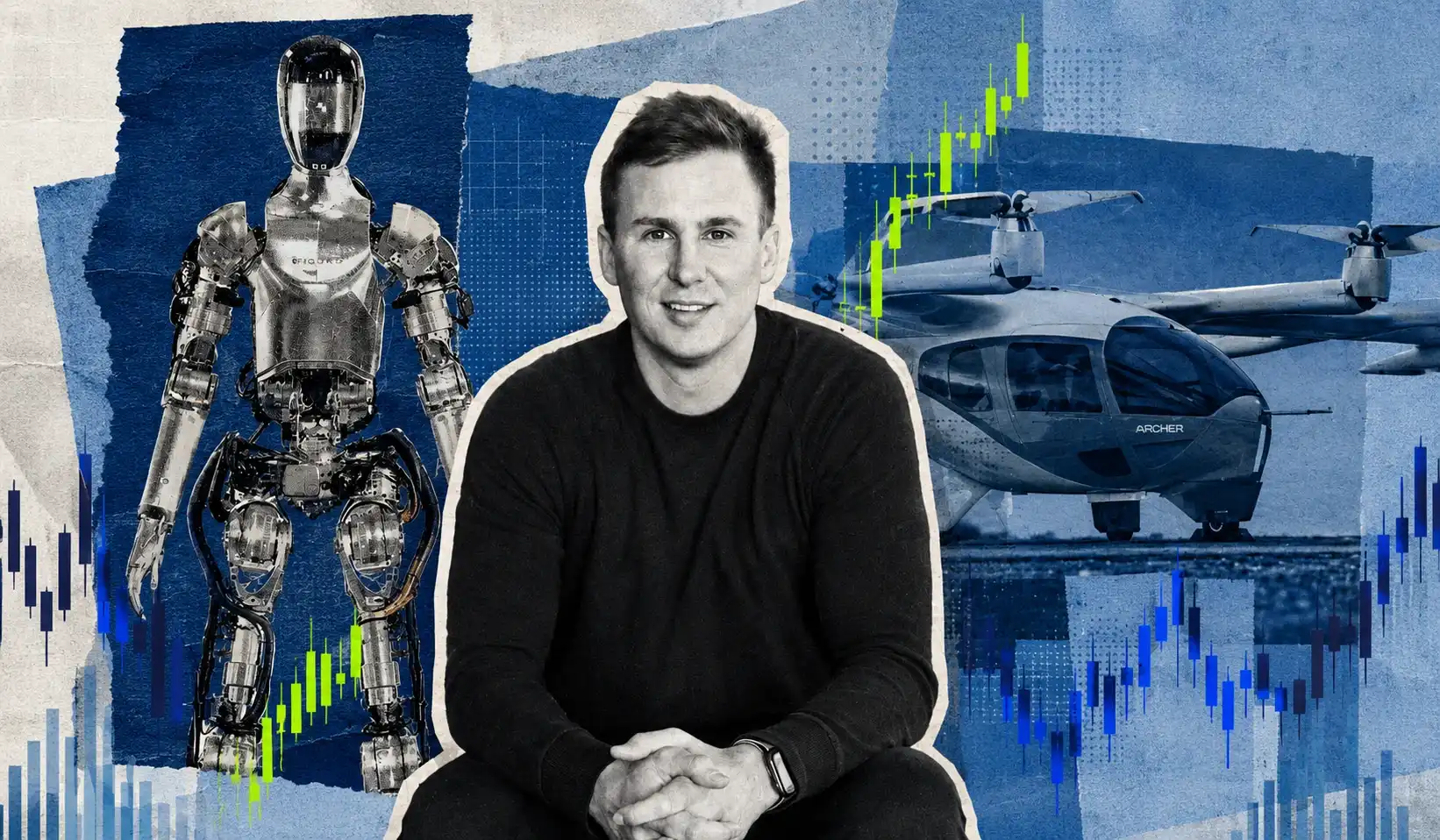
From Farm to Entrepreneur: After Building Flying Cars, He Bet on the Robot Sector and Created a $39 Billion Giant

marsbit2026-05-20 tarihinde yayınlandı2026-05-20 tarihinde güncellendi

Özet

From Farm to Tech Tycoon: Brett Adcock's Journey to a $39B Robot Giant Brett Adcock, a serial entrepreneur from an Illinois farm, has built his third major venture, humanoid robotics company Figure AI, into a $39 billion behemoth backed by NVIDIA, Intel, and others. His path began with the sale of his recruiting platform Vettery for $110 million in 2018. He then co-founded and took electric air taxi company Archer Aviation public in 2021 before departing over strategic differences. Adcock founded Figure AI in 2022 with a 30-year vision to create general-purpose humanoid robots that can work in human-designed environments, aiming to address labor shortages in manufacturing, logistics, and retail. The company gained attention through live-streamed robot sorting challenges and a viral demo, though it faces skepticism over its high valuation versus early commercial progress. A key moment was Figure's split from OpenAI in 2024 after a brief collaboration, with Adcock claiming OpenAI provided limited value and deciding to develop AI models internally—a move OpenAI contested. Adcock's pattern is tackling capital-intensive, long-term tech frontiers, moving from software to aviation to robotics, betting on AI and automation as the future of labor.

Author: Zen, PANews

Humanoid robotics company Figure AI recently initiated a "Human vs. Robot" parcel sorting challenge, attracting global attention. This competition, narrowly won by humans, led many to conclude that "humans won the present but lost the future." This statement is not baseless. Before the competition began, Figure had already started a live stream of robot sorting, which has now been broadcasting continuously for seven days. In terms of tireless endurance and continuous work capability, robots far surpass humans.

This sorting challenge live stream, along with the earlier heavyweight promotional video for a home robot, has also earned Figure the label of being a showman. However, there is no doubt that Figure AI is becoming one of Silicon Valley's most-watched humanoid robotics companies. This company, founded just three years ago, saw its valuation soar to $39 billion after a new round of financing, with investors including top-tier corporations and capital such as NVIDIA, Intel Capital, Salesforce, LG, and Qualcomm.

Standing behind this company is serial entrepreneur Brett Adcock, who hails from a farm. Before founding Figure, he had already had two distinct entrepreneurial experiences. First, he built the recruitment platform Vettery, selling it to the Adecco Group for $110 million in 2018. Subsequently, he co-founded electric vertical takeoff and landing (eVTOL) aircraft company Archer Aviation, driving its listing on the New York Stock Exchange in 2021.

Brett Adcock is not a founder who has dug deep in one industry over a long period. Instead, he continuously ventures into more complex, capital-intensive, and harder-to-validate fields. Figure is his most high-profile bet to date, placing him at the center of the AI robotics boom.

Surrounding this company, there are grand visions about a general-purpose robotic workforce, as well as skepticism regarding overvaluation, premature commercialization, safety risks, and technological approaches. To understand Figure, one must first understand how its founder has progressed step by step to reach this point.

Serial Entrepreneur from a Corn and Soybean Farm

Brett Adcock was born in 1986 on a corn and soybean farm in central Illinois. Growing up in this multi-generational farming family environment instilled in Adcock a strong emphasis on "how to create value for the world from scratch." He began starting internet companies at the age of 16. By the time he graduated as valedictorian of his high school class, his family clearly understood that he should perhaps leave the farm and venture into the world of entrepreneurship and business.
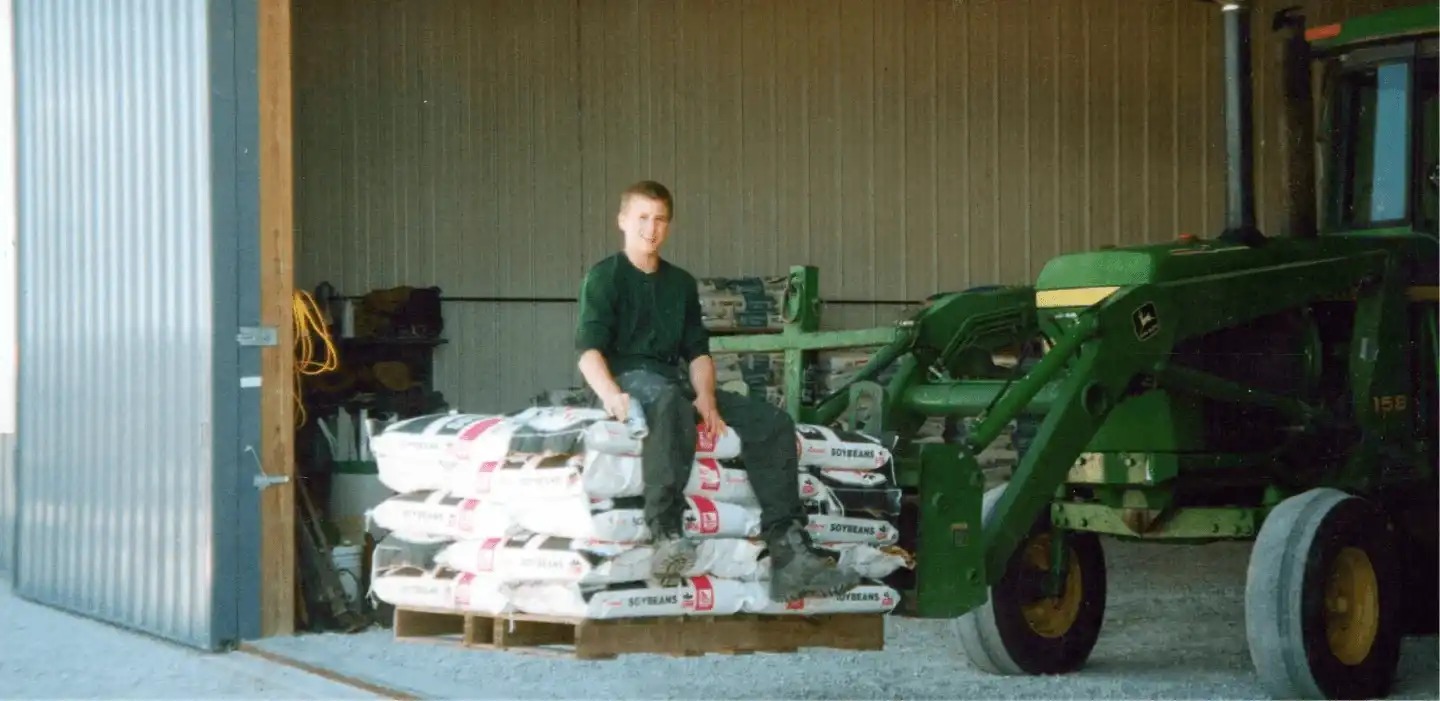
Brett Adcock during childhood

During university, Adcock continued to independently develop various software, initially creating a website selling outdoor electronics. Later, he focused his efforts on the job recruitment sector, developing content websites to help job seekers prepare for interviews in fields like finance ("Street of Walls"), a mobile job search app ("Working App"), and a video interview website. These projects were not successful and resembled early, immature entrepreneurial experiments.

In 2012, while striving in New York, Adcock turned his attention back to the recruitment market. He co-founded Vettery with Adam Goldstein. Initially, Vettery was a platform targeting third-party recruitment agencies, but this model was quickly proven uncompetitive. After several adjustments, Adcock and the team decided to pivot, placing job seekers and companies directly on the same platform and improving matching efficiency through software and machine learning.
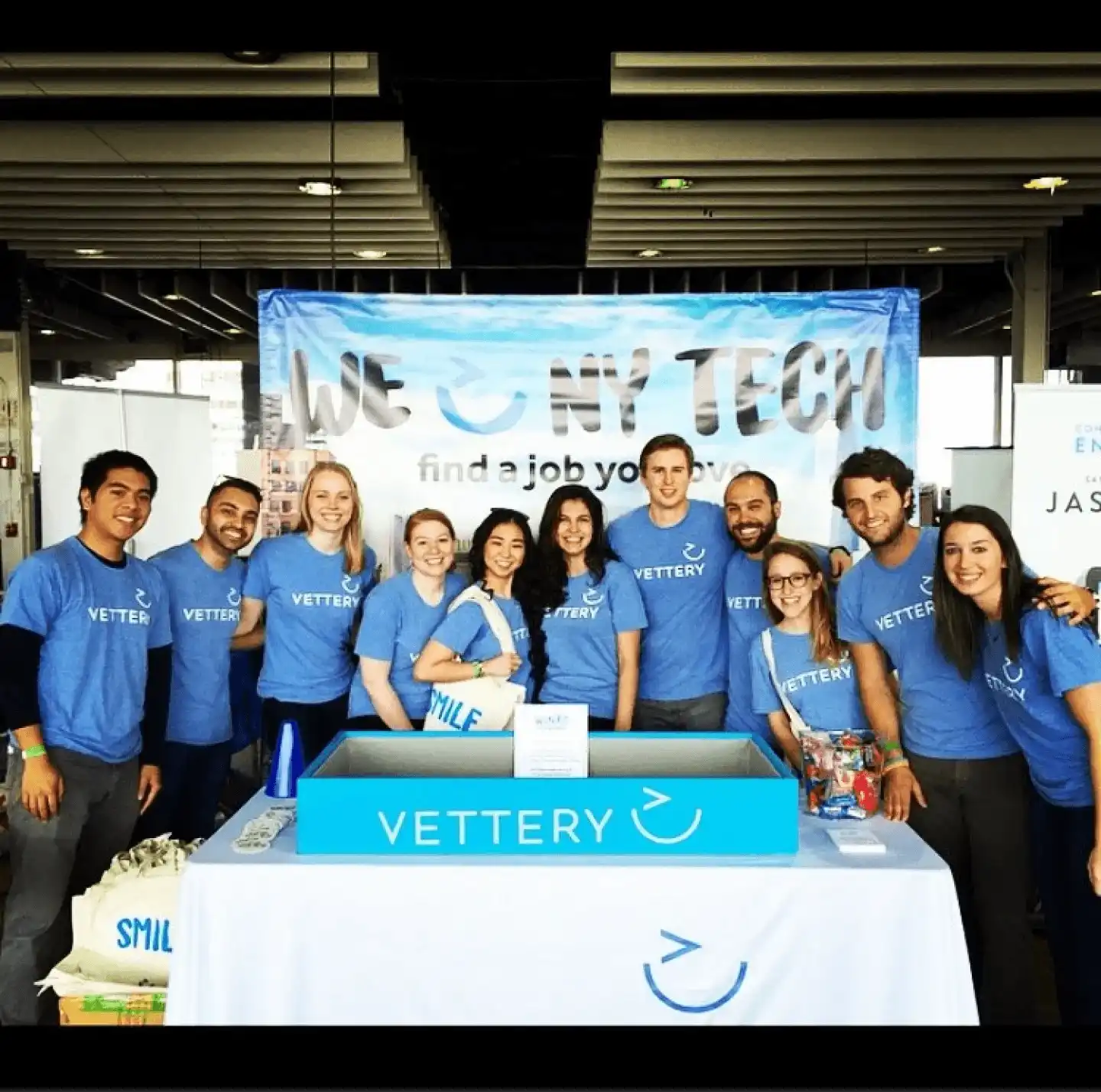
Brett Adcock (5th from right) with his team

After the Vettery platform launched, growth accelerated. Adcock later recalled that platform users experienced consecutive weeks of doubling growth. By 2017, Vettery's employee count had grown to 300, with about 20,000 clients and approximately 30,000 interviews conducted monthly through the system. The company also caught the attention of the world's largest recruitment company, the Adecco Group, and was acquired by the latter for $110 million in 2018.

This transaction provided Adcock, just past his thirties, with a substantial personal fortune. He began looking for more complex, longer-cycle problems that also required capital and engineering prowess, specifically in hardware and sustainable development. Thus, he moved west to California, heading to Silicon Valley to seek the next opportunity.

In Three Years, Building a Flying Car Startup into a Public Company

Aiming to tackle more challenging problems, Adcock could no longer randomly throw out ideas and conduct low-cost experiments like he did in university. After careful consideration, he chose to focus on solving transportation problems by entering the three-dimensional airspace. Adcock wanted to try creating the flying cars seen in sci-fi movies, making electric vertical takeoff and landing (eVTOL) aircraft the most suitable choice.

In 2018, Adcock teamed up with Adam Goldstein again to co-found Archer Aviation. Compared to Vettery, Archer was an entirely different world. It required a top-tier engineering team, hardware R&D, supply chain management, engineering manufacturing, aviation certification, public safety, and long-term patience from capital markets.

The founding of Archer Aviation also involved a fortuitous opportunity. At the time, French aviation giant Airbus was relocating all its flying car "Vahana" business to France, and flight car company Kitty Hawk's cost-cutting measures due to its partnership with Boeing caused dissatisfaction among some engineering team members (Kitty Hawk later dissolved in 2022). Seizing the opportunity, Adcock absorbed a large number of personnel from these two projects, rapidly assembling a seasoned team.

In 2021, Adcock and his team successfully conducted the maiden flight of the full-scale, two-seat, autonomous prototype aircraft "Maker." They also partnered with automotive giant Fiat Chrysler on supply chain, advanced composite materials, and engineering, design, and production aspects, and secured a $1 billion order from United Airlines. That same year, Archer Aviation went public on the New York Stock Exchange via a SPAC merger, valued at approximately $2.7 billion. Today, the company's market capitalization stands at $4.5 billion and it is part of Cathie Wood's Ark Invest portfolio.
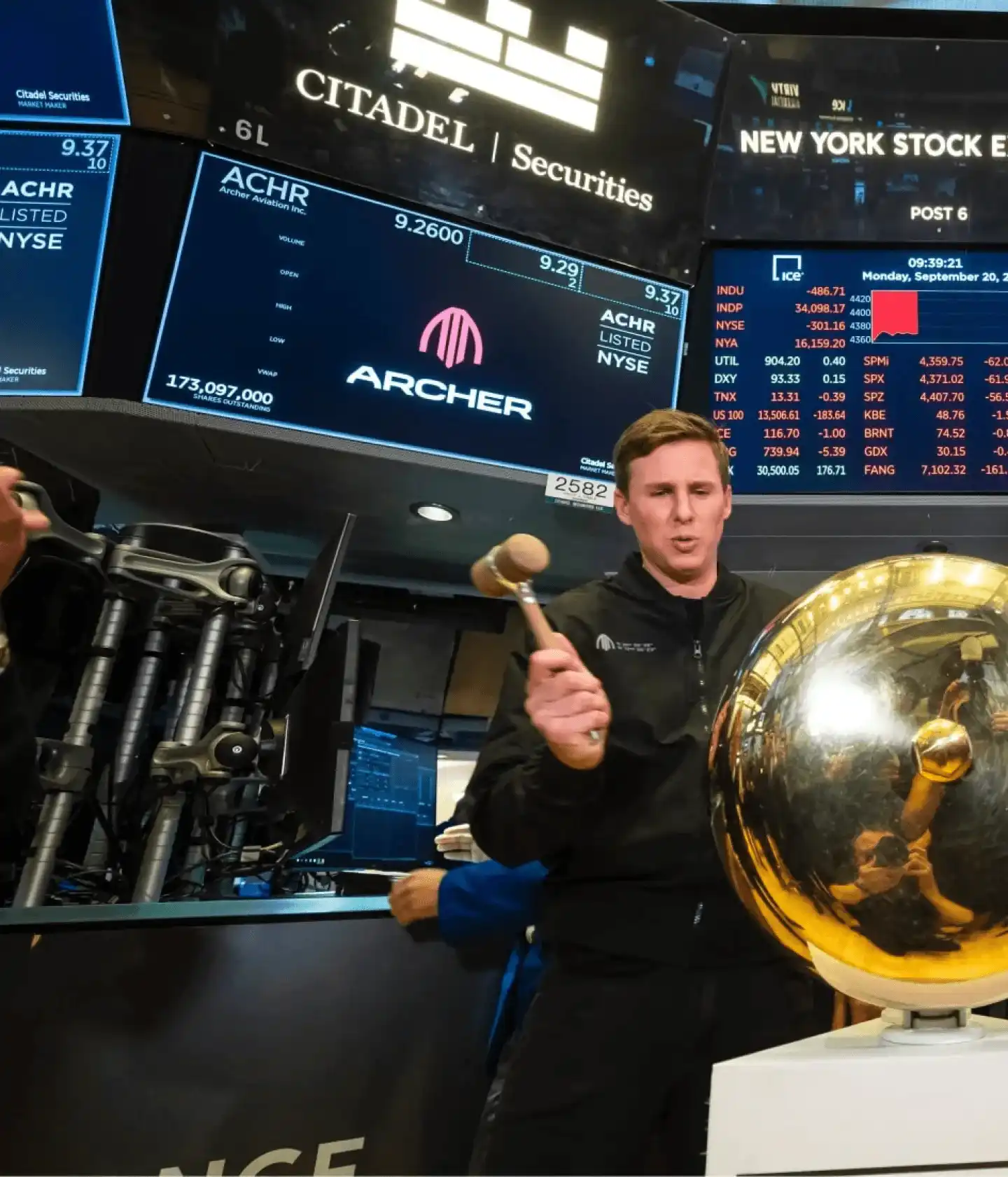
Brett Adcock rings the opening bell at the NYSE

Despite entering the market relatively late, Archer Aviation's rapid rise has made it a major contender in the emerging eVTOL industry. In November 2022, Archer's five-seater "Midnight" aircraft made a stunning debut. Once it receives type certification from the Federal Aviation Administration (FAA), it will become the company's first air taxi product.

However, Adcock quietly left the company shortly after its IPO. In April 2022, Archer announced that Adam Goldstein would serve as the sole CEO, with Adcock stepping down as co-CEO but remaining on the board. The company explained at the time that the move was to simplify the operating structure and advance flight testing, certification, and commercialization.

The real reason for his departure may be more complex and is unknown to the public. Judging by the company's stock performance, it was indeed in a post-IPO slump. Adcock later stated that he left Archer due to "differences" with the board, especially after the company went public, regarding what he wanted to do versus what the team wanted to do.

Perhaps for him, the governance of a public company, the regulatory path, and the pace of commercialization no longer suited a founder who always wanted to leap into the next technological revolution.

Final Venture? Adcock Plans to Build Figure with a 30-Year Vision

After leaving Archer, Adcock quickly entered the next equally sci-fi and currently even larger bet. In 2022, he founded Figure AI, entering the field of general-purpose humanoid robotics. In Figure's Master Plan, he wrote that his goal is to build the company with a 30-year vision, investing time and resources into "maximizing utility impact on humanity."

Regarding team composition, Adcock adopted a strategy similar to when he founded Archer. He rapidly assembled a team of 60 people, with members primarily hailing from renowned companies and projects such as Boston Dynamics, Tesla, Apple's autonomous vehicle project, and Google DeepMind.
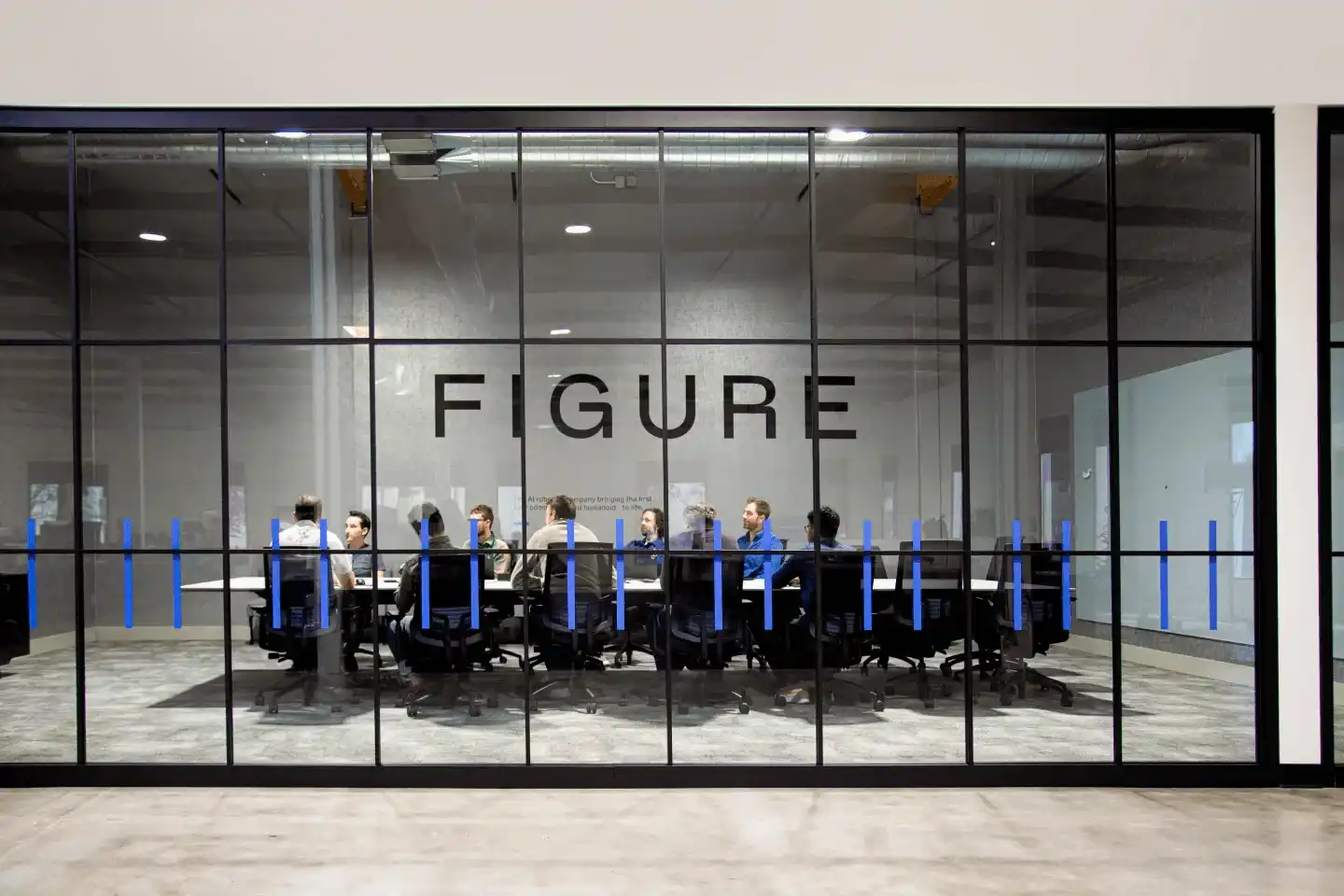
Giving AI a physical body is the proposition Adcock set for Figure. Figure aims not to create industrial robotic arms or service robots, but rather general-purpose humanoid robots capable of entering human environments, using human tools, and performing a variety of tasks. Adcock believes that the world is inherently designed for the human body; therefore, creating robots that interact with the world in a similar way can automate a vast amount of work.

The underlying rationale for this vision is Adcock's assessment of the labor market. In Figure's Master Plan, he writes that the United States has over 10 million "unsafe or undesirable" jobs, and an aging population will further exacerbate the difficulty for businesses to expand their workforce. If the economy is to continue growing, it requires more productivity, which in turn demands more automation. Consequently, Figure has identified manufacturing, logistics, warehousing, retail, and home scenarios as its long-term directions.

As Figure's valuation rises, the skepticism directed at Adcock intensifies. The first category of doubt centers on the vast gap between commercialization and valuation. Essentially, the market is buying a distant future expectation. While Figure has attracted market enthusiasm with a valuation nearing $40 billion, its revenue scale and mass production capabilities remain limited. Its future revenue projections heavily rely on the ability to deploy a large number of robots before 2029.

Furthermore, Figure's split with OpenAI has attracted significant attention and controversy. In 2024, Figure partnered with OpenAI to develop next-generation robot AI models and received investment support from OpenAI, Microsoft, NVIDIA, Jeff Bezos, and others. However, less than a year later, Adcock decided to terminate the partnership and instead develop the models internally.

According to Business Insider, Adcock later stated that OpenAI brought little value to Figure beyond its brand, and that robot AI requires a different technical approach than chatbots. He also mentioned that when OpenAI indicated it wanted to build its own humanoid robots, he considered the partnership over. The report also noted that a technical employee from OpenAI shared a related clip, calling Adcock's claims "untrue."

"Preference" for More Difficult Problems and Larger Narratives

Looking back at Adcock's three main entrepreneurial ventures, Vettery, Archer, and Figure appear unrelated on the surface—one is a recruitment platform, one is a flying car company, and one is a humanoid robot company. However, they share the same entrepreneurial philosophy: targeting a massive, inefficient market where a technological inflection point is emerging, and advancing simultaneously with capital, engineering teams, and bold narratives.

With Vettery, he bet that machine learning could improve recruitment matching efficiency. With Archer, he bet that batteries, motors, and aerospace engineering could unlock urban air mobility. With Figure, he is betting that AI models, robotic hardware, and manufacturing capabilities can fuse into a new type of labor force. Adcock's thinking does not start from a single-point product but works backward from "how the future world should operate" to determine what kind of company to build today.

Brett Adcock's career resembles a curve of increasing asset intensity: from software platforms to aircraft, and then to humanoid robots. He is not a technical expert who has dug deep in a single field for decades. He is more like an "entrepreneurial hunter," sensing opportunities, organizing resources, recruiting teams, amplifying the narrative, and then moving on.

Now, standing under the spotlight of Figure AI, he faces skepticism as loud as the applause. But regardless of the outcome, he has already etched his name into the first chapter of AI robotics business history.

İlgili Sorular

QWhat is Figure AI and why has it attracted significant attention recently?

AFigure AI is a humanoid robotics company. It recently gained global attention by hosting a 'Human vs. Robot' parcel sorting challenge and conducting a 7-day live stream of its robots performing sorting tasks. The company, founded just three years ago, reached a valuation of $390 billion after a new funding round, attracting investments from top-tier firms like NVIDIA, Intel Capital, Salesforce, LG, and Qualcomm.

QWho is Brett Adcock and what are his previous entrepreneurial ventures?

ABrett Adcock is a serial entrepreneur and the founder of Figure AI. His previous ventures include co-founding Vettery, a recruitment platform sold to the Adecco Group for $110 million in 2018, and co-founding Archer Aviation, an electric vertical takeoff and landing (eVTOL) aircraft company that went public on the NYSE in 2021.

QWhat is the core mission and long-term vision Brett Adcock has for Figure AI?

ABrett Adcock's mission for Figure AI is to build general-purpose humanoid robots that can operate in human environments, use human tools, and perform a variety of tasks. He views this as a 30-year project aimed at maximizing utility for humanity by automating labor in sectors like manufacturing, logistics, warehousing, retail, and eventually homes, to address workforce shortages and boost productivity.

QWhy did Brett Adcock leave Archer Aviation shortly after it went public?

AAdcock left his co-CEO role at Archer Aviation due to what he later described as a 'misalignment' with the board. After the company went public, he felt that what he wanted to do differed from what the team wanted to do. This suggests disagreements over the company's direction, governance, and commercialization pace post-IPO.

QWhat are some of the major challenges and criticisms facing Figure AI?

AFigure AI faces several criticisms: 1) Its $390 billion valuation is seen as extremely high compared to its current commercial scale and production capabilities. 2) Its revenue projections depend heavily on deploying large numbers of robots by 2029, which is uncertain. 3) It ended a high-profile partnership with OpenAI on robot AI models, citing a divergence in technical needs and OpenAI's own robotics ambitions, a move that was publicly disputed.

İlgili Okumalar

Xpeng and NIO Compete on Computing Power, Li Auto Shifts Architecture

On June 15, 2026, Li Auto unveiled details of its self-developed chip, Mahe M100, for its new L9 Livis model. CTO Xie Yan stated the goal was not just a faster chip, but a fundamentally different one, targeting the chip architecture itself. While competitors like NIO, Xpeng, and Huawei highlight TOPS (computing power) figures for their self-developed chips, Li Auto’s Mahe M100 focuses on redesigning the underlying architecture. It employs a "dynamic data flow architecture" to address memory bandwidth bottlenecks in large model inference, claiming up to 3x the effective computing power of Nvidia's Thor U for its specific workloads and a 40% reduction in latency. The chip's design was peer-reviewed and accepted at ISCA 2026. However, this performance is highly optimized for Li Auto's own VLA2.1 algorithm, meaning it may not generalize as well to other tasks. Li Auto aims to achieve full-stack in-house development with Mahe M100, covering chip, compiler, OS, AI algorithms, and domain controller—a level of vertical integration few competitors match. Beyond the chip, CEO Li Xiang introduced a new strategic narrative: the "embodied intelligent vehicle," defined as an integration of an EV, a professional driver, an AI computer, and a life assistant. This shifts competition from features like large screens to systemic AI capabilities. A key commitment was that Li Auto's Mahe VLA autonomous driving model will match Tesla's FSD V14 by Q4 2026, with specific OTA milestones set for July, September, and December. Financially, Li Auto faces pressure with declining revenue and vehicle gross margins since Q4 2025, while maintaining high R&D investment (approx. ¥12B in 2026, 50% AI-related). Its 2026 sales target is 550,000 vehicles, up from 406,000 in 2025. The new L9 Livis garnered over 10,000 pre-orders in two weeks. The effectiveness of these strategic moves—new products, OTAs, and the novel chip architecture—will begin to show in Q3 2026 financial results, with the year-end FSD V14 benchmark being the ultimate test.

marsbit25 dk önce

Xpeng and NIO Compete on Computing Power, Li Auto Shifts Architecture

marsbit25 dk önce

The Year of AI Applications: Saying 'Yes' While Ignoring Risks? A Comprehensive Open Source Log of Software Development's Journey

The Year of AI Applications: Blindly Saying "Yes" While Ignoring Risks? A Software Development Log Goes Fully Open Source. AI-generated code harbors risks hidden within seemingly correct programs, potentially leading to data leaks or asset loss. The open-source project "Narwhal AI Code Risks," from Peking University's Narwhal-Lab, compiles real-world cases, early warning signs, and typical risk pathways. Its goal is to help developers identify potential hazards early and avoid repeating past mistakes. In 2026, code is generated faster than ever but deployed with less scrutiny. The danger often lies not in glaring errors, but in code that appears normal—syntactically correct, passing all checks—yet introduces subtle but critical flaws like non-existent dependencies, excessive permissions, or exposed databases. A stark example is the Moonwell cbETH oracle incident. A configuration file error, where a cryptocurrency price was set to ~$1.12 instead of ~$2,200, slipped through 28 checks and a pull request signed by both AI (Claude, Copilot) and human developers. This "semantic deviation" resulted in a loss of $1.78 million. The risk is that AI can produce functionally valid code that is semantically wrong for the business context. As AI moves beyond simple code completion to modifying configurations, installing dependencies, and operating via autonomous agents, it traverses longer, less traceable paths within software engineering, blurring traditional boundaries and oversight points. The Narwhal AI Code Risks project structures information into three layers: `/cases` for documented real-world incidents, `/inferred` for early warning signals, and `/scenarios` for clear, generalized risk patterns not yet tied to specific events. This aims to create a lasting, public record to prevent collective amnesia about past AI-coding pitfalls. Risks are categorized into seven areas: Software Supply Chain (e.g., recommending fake packages), Code-Level Vulnerabilities (e.g., reintroducing path traversal bugs), Cloud & Infrastructure Misconfiguration (e.g., overly permissive settings), Agent Risks (from autonomous tool execution), Vertical Domain Risks (e.g., in finance, healthcare), Intellectual Property & Compliance issues, and Human Factors (like over-reliance on AI output). The project's core value is transforming isolated incidents into reusable knowledge—a foundational resource for developers to spot similar issues, for security researchers to build upon, for toolmakers to create detection rules, and for the community to contribute new findings. As AI integration accelerates, this open-source "logbook" serves as a crucial navigational aid, charting past errors to help future projects steer clear of the same traps.

marsbit25 dk önce

The Year of AI Applications: Saying 'Yes' While Ignoring Risks? A Comprehensive Open Source Log of Software Development's Journey

marsbit25 dk önce

The Foundation of SpaceX's Trillion-Dollar Valuation: Who is Dividing Up Musk's Annual Tens of Billions in Capital Expenditure?

SpaceX's trillion-dollar valuation is built on its three core businesses: Starlink (profitable, 60% of revenue), rockets (driving down launch costs), and AI (a major investment area). This creates a financial cycle: Starlink funds rocket development, which enables low-cost launches for AI hardware, generating future revenue. This cycle fuels annual capital expenditures of tens of billions, flowing to a vast supply chain. Suppliers are categorized by their replaceability. The first group includes irreplaceable players like NVIDIA (GPU/CUDA ecosystem), Eutelsat (critical radio spectrum), Filtronic (specialized amplifiers), Materion (strategic beryllium), and STMicroelectronics (antenna chips). The second group consists of hard-to-replace suppliers due to high switching costs, such as Honeywell (flight control), Carpenter Technology (specialty alloys), Hexcel (carbon fiber), Broadcom (data exchange), and Linde (industrial gases). The third group comprises high-volume, cost-critical suppliers for mass-produced items like Starlink terminals. Key names include Wistron NeWeb (primary manufacturer) and several A-share companies like Shenzhen Sunway (connectors), Pies New Materials (forgings), Western Superconducting (alloys), and Yingliu (castings). Other niche players include Trimble (timing), Astronics (power distribution), and CTS (thermal management). The article argues that investing in these suppliers, rather than SpaceX stock directly, offers an alternative opportunity. The rationale is threefold: procurement is just beginning to scale, SpaceX's IPO brings new transparency to its supply chain, and the situation mirrors early stages of past "super terminal" ecosystems like Apple or Tesla. While risks exist (commodity cycles, geopolitical factors, technology shifts), the core thesis is that SpaceX's massive, ongoing procurement will translate into reliable revenue for its key suppliers, regardless of its own stock price volatility.

marsbit1 saat önce

The Foundation of SpaceX's Trillion-Dollar Valuation: Who is Dividing Up Musk's Annual Tens of Billions in Capital Expenditure?

marsbit1 saat önce

SpaceX's Trillion-Dollar Valuation Base: Who's Sharing in Musk's Annual Tens of Billions in Capital Expenditure?

**Title: The Foundation of SpaceX's Trillion-Dollar Valuation: Who Benefits from Musk's Annual $100 Billion Capital Expenditure?** This article argues that investors seeking to benefit from SpaceX's growth might find greater opportunities in its supply chain rather than directly investing in the company itself, drawing parallels to historical successes with Apple, Tesla, and NVIDIA suppliers. **SpaceX's Business Model & Cash Flow:** SpaceX generates revenue from three main areas: 1. **Starlink:** Its profitable core, earning $11.3B in 2023 (60% of revenue), funding other ventures. 2. **Rockets (Falcon/Starship):** Requires $3B+ in annual R&D but achieves the world's lowest launch costs. 3. **AI:** Currently unprofitable (-$6B+ in 2023), investing heavily in ground-based supercomputers (220,000 GPUs) and future orbital data centers. The cycle is: Starlink profits → fund cheaper rockets → low-cost launches deploy AI hardware → AI compute rentals generate future revenue. This cycle drives annual procurement spending of tens of billions of dollars. **The Supply Chain Beneficiaries:** Suppliers are categorized by their replaceability: **1. Nearly Irreplaceable (High Barriers to Entry):** * **NVIDIA:** Powers the Colossus supercomputer; its CUDA ecosystem creates immense switching costs. * **Eutelsat (SATS):** Controls critical radio spectrum for satellite communications; holds a ~3% stake in SpaceX. * **Filtronic (FTC):** Supplies millimeter-wave signal amplifiers for Starlink satellites; SpaceX constitutes 83% of its revenue. * **Materion (MTRN):** Global leader in beryllium production, a strategic material used in Starship structures. * **STMicroelectronics (STM):** Supplies phased-array antenna chips for Starlink satellites. **2. Replaceable, but Switching Cost is Prohibitively High:** * **Honeywell (HON):** Provides flight control and inertial navigation systems with decades of certification. * **Carpenter Technology (CRS):** Manufactures ultra-pure specialty steel alloys for Raptor engines. * **Hexcel (HXL):** Supplies custom carbon fiber composites developed over a decade with SpaceX. * **Broadcom (AVGO):** Manages high-speed data switching. * **Linde Group:** Supplies industrial gases (liquid oxygen/nitrogen) from facilities built near SpaceX launch sites. **3. High-Volume, Cost-Critical Manufacturing:** Focuses on mass-producing components like Starlink user terminals (target: 30 million units). * **Key Players:** Wistron NeWeb (6285, primary terminal manufacturer), several Chinese A-share companies (e.g., Sunway Communication, PAX New Materials, Western Metal Materials, Yingliu Co.), and smaller US firms like Trimble (TRMB, timing systems). **Why Now?** Three factors make the supply chain opportunity timely: 1. **Volume Ramp-Up:** SpaceX plans 100 launches in 2026, aims for 30 million Starlink terminals, and will deploy AI data centers, meaning procurement will accelerate. 2. **Increased Transparency:** The IPO provides public financial data, allowing investors to track supplier order growth. 3. **Historical Precedent:** The current phase is likened to Tesla's early mass-production stage (circa 2018), suggesting a long growth runway for suppliers. **Conclusion:** The article posits that while investing in SpaceX stock is betting on Elon Musk's ambitious vision at a high valuation, investing in its established suppliers is a bet on the tangible, recurring revenue from its massive procurement budget, which is largely decoupled from day-to-day stock price volatility.

链捕手1 saat önce

SpaceX's Trillion-Dollar Valuation Base: Who's Sharing in Musk's Annual Tens of Billions in Capital Expenditure?

链捕手1 saat önce

İşlemler

Spot
Futures

Popüler Makaleler

ZEN Nasıl Satın Alınır

HTX.com’a hoş geldiniz! Horizen (ZEN) satın alma işlemlerini basit ve kullanışlı bir hâle getirdik. Adım adım açıkladığımız rehberimizi takip ederek kripto yolculuğunuza başlayın. 1. Adım: HTX Hesabınızı OluşturunHTX'te ücretsiz bir hesap açmak için e-posta adresinizi veya telefon numaranızı kullanın. Sorunsuzca kaydolun ve tüm özelliklerin kilidini açın. Hesabımı Aç2. Adım: Kripto Satın Al Bölümüne Gidin ve Ödeme Yönteminizi SeçinKredi/Banka Kartı: Visa veya Mastercard'ınızı kullanarak anında Horizen (ZEN) satın alın.Bakiye: Sorunsuz bir şekilde işlem yapmak için HTX hesap bakiyenizdeki fonları kullanın.Üçüncü Taraflar: Kullanımı kolaylaştırmak için Google Pay ve Apple Pay gibi popüler ödeme yöntemlerini ekledik.P2P: HTX'teki diğer kullanıcılarla doğrudan işlem yapın.Borsa Dışı (OTC): Yatırımcılar için kişiye özel hizmetler ve rekabetçi döviz kurları sunuyoruz.3. Adım: Horizen (ZEN) Varlıklarınızı SaklayınHorizen (ZEN) satın aldıktan sonra HTX hesabınızda saklayın. Alternatif olarak, blok zinciri transferi yoluyla başka bir yere gönderebilir veya diğer kripto para birimlerini takas etmek için kullanabilirsiniz.4. Adım: Horizen (ZEN) Varlıklarınızla İşlem YapınHTX'in spot piyasasında Horizen (ZEN) ile kolayca işlemler yapın.Hesabınıza erişin, işlem çiftinizi seçin, işlemlerinizi gerçekleştirin ve gerçek zamanlı olarak izleyin. Hem yeni başlayanlar hem de deneyimli yatırımcılar için kullanıcı dostu bir deneyim sunuyoruz.

147 Toplam GörüntülenmeYayınlanma 2024.12.12Güncellenme 2026.06.02

ZEN Nasıl Satın Alınır

Tartışmalar

HTX Topluluğuna hoş geldiniz. Burada, en son platform gelişmeleri hakkında bilgi sahibi olabilir ve profesyonel piyasa görüşlerine erişebilirsiniz. Kullanıcıların ZEN (ZEN) fiyatı hakkındaki görüşleri aşağıda sunulmaktadır.

活动图片