Sau khi AAVE bị tấn công, Spark đã làm gì để hút ngược dòng 1,3 tỷ USD?

marsbit2026-04-22 tarihinde yayınlandı2026-04-22 tarihinde güncellendi

Özet

Sau sự cố lỗi cross-chain của Kelp DAO và LayerZero, tài sản "độc hại" rsETH đã tràn vào Aave, gây ra khoản nợ xấu khoảng 200 triệu USD và khiến hàng tỷ USD rút chạy khỏi giao thức. Trong khi Aave chứng kiến dòng tiền rút ồ ạt, Spark lại đón nhận làn sóng dịch chuyển thanh khoản, hút thêm 1,3 tỷ USD TVL và lãi suất tiền gửi ETH có lúc tăng vọt lên 130%. Spark tránh được thảm họa nhờ quyết định loại bỏ rsETH từ 3 tháng trước dựa trên nguyên tắc an toàn: chi phí biên vượt quá lợi ích, mức độ tập trung rủi ro cao và khảo sát nhu cầu người dùng. Giao thức này cũng sở hữu cơ chế phòng thủ đa tầng với giới hạn tốc độ giao dịch, trần lãi suất cao để đảm bảo thanh khoản, và kiến trúc mô-đun giúp cách ly rủi ro. Sự dịch chuyển từ Aave sang Spark phản ánh xu hướng ưu tiên an toàn hơn lợi nhuận, chứng minh chiến lược quản trị rủi ro thận trọng là hào phòng thủ bền vững cho Spark.

Tác giả: Jae, PANews

Khi Aave hứng chịu cuộc rút lui trăm tỷ USD, Spark đã đón nhận thanh khoản trời giáng.

Thảm họa trên chuỗi do lỗ hổng cross-chain của Kelp DAO và LayzerZero gây ra đã xé thị trường cho vay DeFi thành hai thế giới riêng biệt.

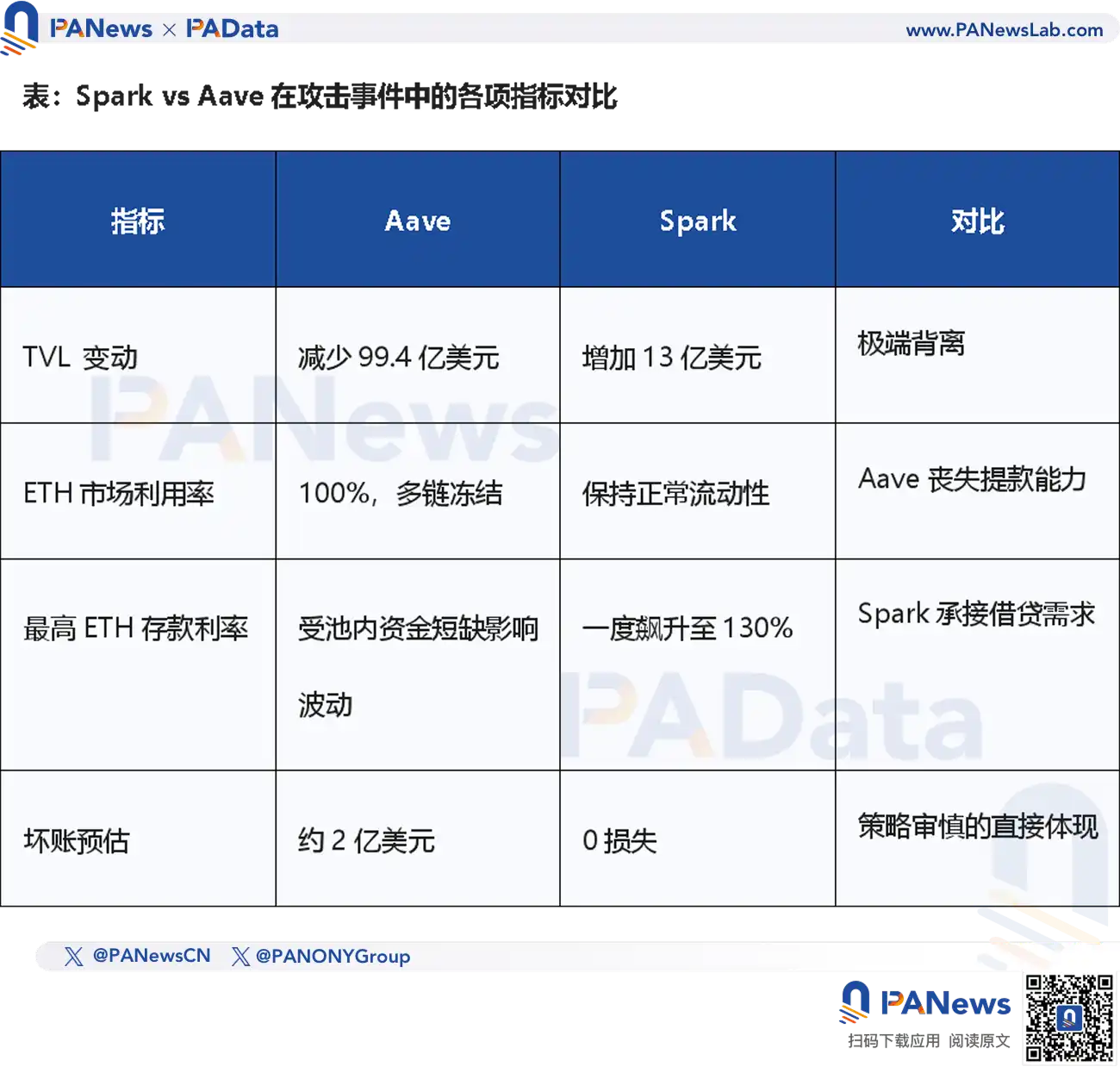
Tài sản "độc hại" rsETH tràn vào Aave, khiến nó phải gánh chịu khoảng 200 triệu USD nợ xấu, tính thanh khoản toàn mạng cạn kiệt và hàng trăm tỷ vốn tháo chạy hoảng loạn.

Tuy nhiên, giữa lúc tiếng gió thổi và hạc kêu, giao thức cho vay lớn khác là Spark lại đón nhận thời khắc rực rỡ của mình. TVL (Tổng giá trị bị khóa) tăng nhanh 1,3 tỷ USD, lãi suất tiền gửi ETH từng lên mức 130%/năm, trở thành bến cảng an toàn được cá voi lựa chọn để chuyển tài sản.

Một con thiên nga đen đã kiểm định lại chủ nhân của ngai sắt DeFi.

Aave tháo chạy máu chảy thành sông, Spark thừa cơ hút 1,3 tỷ USD

Cầu nối cross-chain của rsETH vỡ, toàn bộ thị trường cho vay Aave bị đóng băng.

Hacker dùng rsETH đúc trái phép để thế chấp trên Aave vay lượng lớn WETH, rút sạch tài sản sạch, để lại một bể nợ xấu.

Bài đọc thêm: KelpDAO cross-chain sụp đổ, AAVE thành "kẻ trả tiền", ngành kêu gọi định giá lại rủi ro

Khủng hoảng lan nhanh như virus: 15,1 tỷ USD đã rút khỏi Aave trong 3,5 ngày qua, tổng tiền gửi từ 48,5 tỷ USD giảm xuống 30,7 tỷ USD, khoảng 1/3 vốn tháo chạy; tỷ lệ sử dụng WETH trên nhiều chuỗi chạm mức 100%; người gửi không thể rút tiền, người thanh lý không có tiền để vay.

Thao tác nổi bật nhất đến từ Justin Sun, anh nhanh chóng rút 65.584 ETH từ Aave, trị giá khoảng 154 triệu USD.

Hành động "rút trước là thắng" này tạo hiệu ứng bầy đàn trên thị trường. Đối với nhà đầu tư, lợi suất hàng năm cao đến đâu cũng không bù đắp được nỗi hoảng loạn khi không thể rút tiền gốc.

Khi Aave trở thành lối thoát thanh khoản của hacker, Spark trở thành lối thoát cho người dùng.

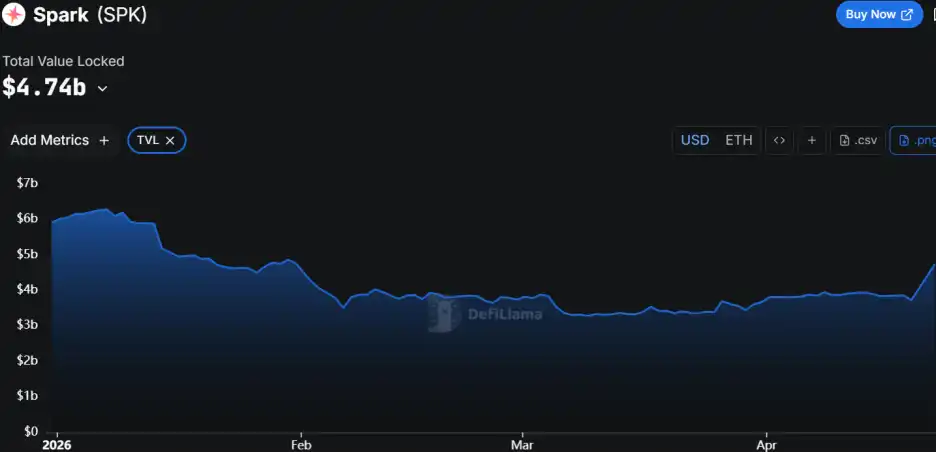
TVL của Spark không giảm mà tăng 1,3 tỷ USD, tổng quy mô đạt 4,74 tỷ USD. Số tiền này là phiếu tín nhiệm được thị trường bỏ ra bằng tiền thật.
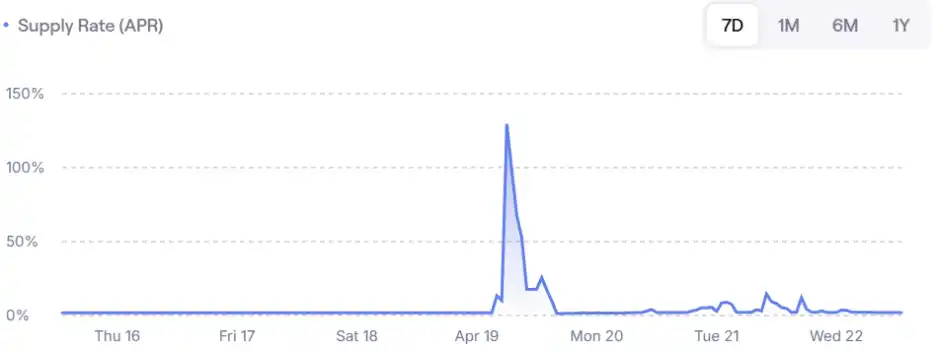
Do lượng lớn nhu cầu vay đổ vào Spark, cộng với thanh khoản khan hiếm cao, lãi suất tiền gửi ETH trên Spark trải qua một đợt tăng vọt kỳ lạ, từng lên mức 130%/năm, điều này cũng phản ánh trực tiếp mức phí bảo hiểm cực cao của tài sản an toàn.
Spark có thể đón nhận làn sóng nhu cầu này nhờ cấu trúc sinh thái độc đáo. Khác với Aave, nó là động cơ cho vay của hệ sinh thái Sky, dựa vào kho dự trữ USDS khổng lồ. Là tiền đồn thanh khoản của Sky, Spark không chỉ dựa vào tiền gửi bên ngoài, mà còn có thể nhận bổ sung stablecoin trực tiếp thông qua hạn mức tín dụng của Sky.

Hậu thuẫn thanh khoản "cấp ngân hàng trung ương" này cho phép nó luôn duy trì kênh rút tiền thông suốt ngay cả khi thị trường biến động mạnh.
Từ bỏ lòng tham TVL, Spark ngược dòng gỡ rsETH

Spark tránh được hố rsETH nhờ lựa chọn ngược dòng cách đây 3 tháng.

Cùng ngày khác số phận. Ngày 29/1, hai nền tảng cho vay lớn có logic xử lý token tái ký gửi thanh khoản (LRT) trái ngược nhau.

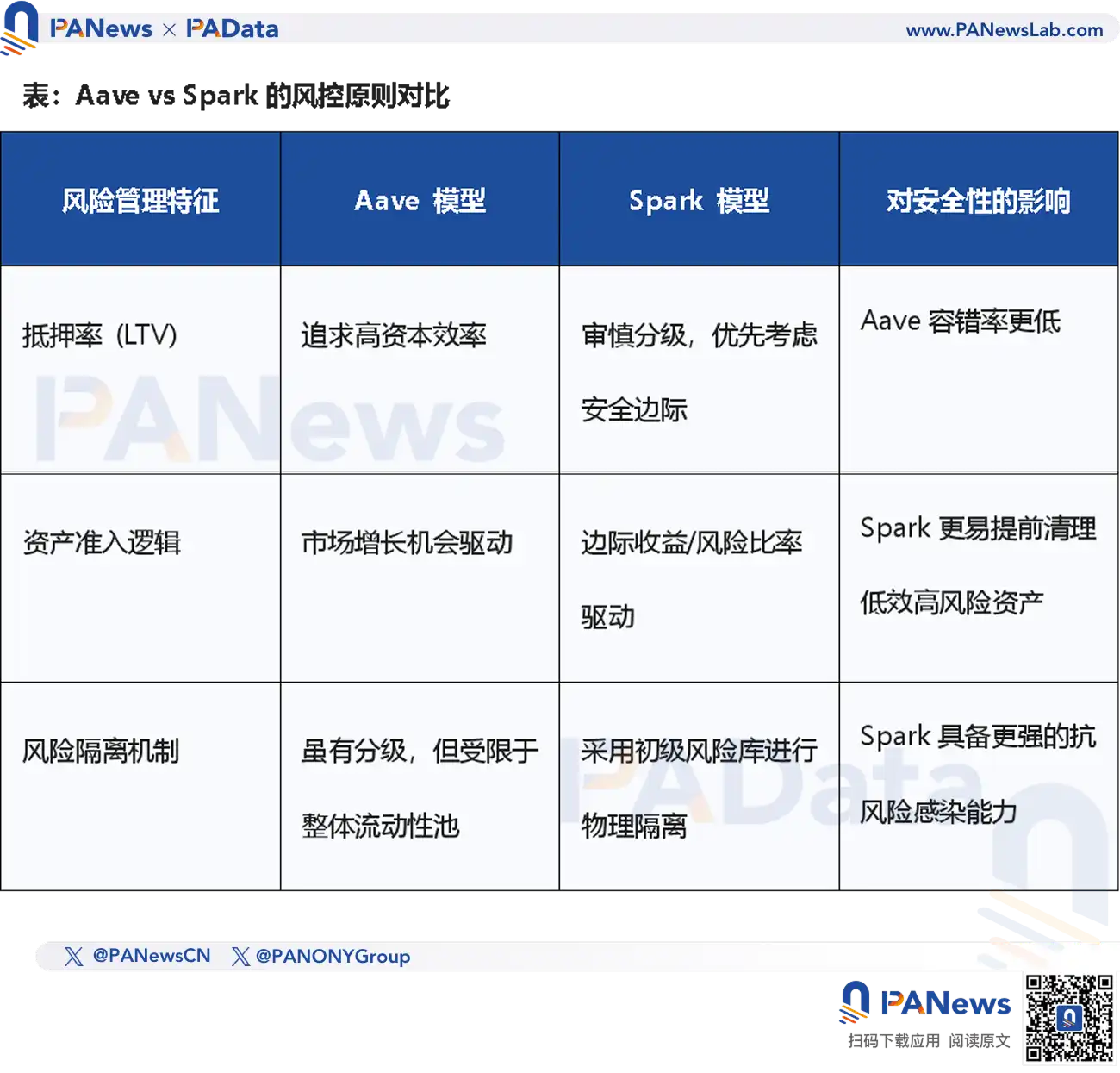
Aave ra sức toàn lực. Giao thức chính thức ra mắt rsETH E-Mode, cho phép người dùng vay đòn bẩy với tỷ lệ thế chấp cao (LTV) 93%. Mục tiêu của Aave là thu hút dòng chảy rsETH dự kiến 10 tỷ USD, khôi phục tỷ lệ sử dụng WETH và tăng tốc TVL cùng doanh thu.

Spark thận trọng rút lui. Giao thức thông qua hoạt động quản trị Spell ngừng hoàn toàn việc cung cấp mới rsETH và dần lượt loại bỏ nó khỏi danh sách tài sản.

Hành động này của Spark từng gây bất bình mạnh mẽ từ người dùng đòn bẩy vòng lặp ETH, họ thường thế chấp lặp lại các tài sản loại staking như stETH hoặc rsETH để chênh lệch lãi suất, việc gỡ bỏ của Spark buộc họ phải di chuyển vị thế, phần lớn trong số đó chảy sang Aave có chính sách nới lỏng hơn và lãi suất thấp hơn.

Lúc đó, cộng đồng nghi ngờ đội ngũ Spark "quá bảo thủ" hoặc "từ bỏ tăng trưởng". Không ai ngờ, bước đi này sau này có thể cứu cả giao thức.

Sau sự việc, Trưởng phòng chiến lược Spark monetsupply.eth chỉ ra trong bài phân tích, quyết định gỡ rsETH dựa trên cơ chế thắt chặt định hướng an toàn.

  1. Chi phí biên so với lợi ích biên: Nếu chi phí duy trì một tài sản vượt quá lợi ích sau điều chỉnh rủi ro mà nó mang lại cho giao thức, loại tài sản này sẽ bị dọn dẹp;
  2. Mức độ tập trung rủi ro: Tỷ lệ sử dụng rsETH trên Spark cực thấp, hầu như bị một địa chỉ ví độc quyền, rủi ro khó phân tán;
  3. Khảo sát sở thích người dùng: Người dùng cá voi duy nhất của rsETH bày tỏ sẵn sàng chủ động chuyển sang tài sản thế chấp trưởng thành hơn như wstETH hoặc weETH, tạo cơ hội cho giao thức dọn dẹp tài sản suôn sẻ.

Chính tính minh bạch và kỷ luật trong quyết định "không chạy theo TVL mù quáng" này đã giúp Spark tránh được mọi tổn thất tiềm ẩn có thể phát sinh từ việc hacker lợi dụng rsETH.

Hệ thống kiểm soát rủi ro đa tầng: Giới hạn tốc độ + Đệm lãi suất + Kiến trúc cách ly

PANews cho rằng, ngay cả khi không gỡ rsETH, kiến trúc của Spark cũng đủ để chống đỡ loại rủi ro này. So với Aave theo đuổi hiệu suất vốn mà hy sinh dự phòng an toàn, Spark xây dựng một hệ thống phòng thủ sâu đa tầng.

Spark triển khai giới hạn tốc độ gửi/vay nghiêm ngặt (Rate-Limited Caps), tức hạn mức vốn gửi và vay trong thời gian cố định tăng dần. Ngay cả rsETH vẫn chưa bị gỡ, kẻ tấn công cũng không thể gửi một lúc 290 triệu USD tài sản thế chấp như trên Aave. Thiết kế này ép buộc giới hạn quy mô rủi ro tối đa của một sự kiện đơn lẻ, đàn áp cứng tổn thất trong phạm vi có thể chịu đựng.

Spark duy trì trần lãi suất tương đối cao trong thời gian dài. Trong điều kiện thị trường ổn định, lãi suất vay cao mặc dù sẽ làm nản lòng người vay quá mức (vay đắt thì không vay), mặt khác thu hút nhiều người gửi tiền hơn (người gửi kiếm được nhiều hơn). Kết quả là bể luôn có thanh khoản, không "vay hết" dẫn đến mọi người muốn rút tiền cũng không rút được. Đặc biệt khi thị trường lao dốc, sẽ không bị tháo chạy vì thanh khoản cạn kiệt.

Khi tỷ lệ sử dụng bể vốn tăng, độ dốc đường cong lãi suất của Spark sẽ dốc hơn Aave, điều này tạo hai hậu quả rõ rệt:

  • Giảm đòn bẩy bắt buộc: Chi phí lãi vay cao ngất sẽ ép buộc người vay chủ động tìm thanh khoản trả nợ.

  • Thu hút bổ sung thanh khoản: Lợi suất tiền gửi năm cao sẽ nhanh chóng thu hút vốn đầu cơ bên ngoài vào, từ đó tháo gỡ nút chết tỷ lệ sử dụng 100%.

Kiến trúc mô-đun cách ly của Spark có khả năng kiểm soát mạnh trong quản lý rủi ro. Khi xử lý tài sản tổng hợp rủi ro cao như USDe, Spark cũng áp dụng thái độ thận trọng, cách ly chúng trong kho rủi ro sơ cấp cụ thể, đảm bảo ngay cả khi tài sản phân khúc nào đó gặp vấn đề, cũng không ảnh hưởng đến bể cho vay chính trên nền tảng.
Cuộc di cư thanh khoản từ Aave sang Spark, có nghĩa là vốn chuyển hướng từ theo đuổi lợi nhuận sang ổn định an toàn.

Dòng chảy trăm tỷ USD từ Aave, gióng chuông cảnh báo cho tất cả giao thức theo đuổi hiệu suất vốn cao. Trong điều kiện biên an toàn bị hy sinh, bất kỳ rủi ro liên quan bên ngoài nhỏ nào cũng có thể diễn biến thành khó khăn toàn cục của giao thức.

Sự trỗi dậy của Spark chứng minh, trong môi trường thị trường không chắc chắn, quyết định quản trị rủi ro thận trọng cùng việc thực thi chiến lược "ưu tiên rủi ro" mới là hào thành giá trị lâu dài hơn.


İlgili Sorular

QTại sao Spark Protocol lại có thể thu hút 1,3 tỷ USD trong khi Aave đang trải qua cuộc khủng hoảng thanh khoản?

ASpark Protocol có thể thu hút một lượng lớn thanh khoản nhờ cấu trúc sinh thái độc đáo, được hỗ trợ bởi kho dự trữ USDS khổng lồ của hệ sinh thái Sky. Nó hoạt động như một tiền đồn thanh khoản, không chỉ dựa vào tiền gửi bên ngoài mà còn có thể nhận được nguồn cung cấp stablecoin trực tiếp thông qua hạn mức tín dụng của Sky, đảm bảo kênh rút tiền luôn thông suốt ngay cả trong biến động thị trường.

QQuyết định nào của Spark đã giúp nó tránh được rủi ro từ rsETH?

AVào tháng 1, Spark đã thông qua một hoạt động quản trị để ngừng cung cấp rsETH mới và dần loại bỏ nó khỏi danh sách tài sản. Quyết định này dựa trên đánh giá về chi phí biên so với lợi ích biên, mức độ tập trung rủi ro và xu hướng của người dùng, giúp giao thức tránh được tất cả tổn thất tiềm ẩn từ việc rsETH bị khai thác.

QHệ thống quản lý rủi ro đa tầng của Spark bao gồm những yếu tố nào?

AHệ thống quản lý rủi ro đa tầng của Spark bao gồm: giới hạn tốc độ gửi và vay nghiêm ngặt (Rate-Limited Caps) để hạn chế quy mô rủi ro tối đa; duy trì trần lãi suất tương đối cao để đảm bảo thanh khoản và ngăn chặn đòn bẩy quá mức; và kiến trúc mô-đun biệt lập để cách ly rủi ro từ các tài sản cụ thể, ngăn chặn sự lây lan sang các nhóm cho vay chính.

QLàm thế nào mà lãi suất tiền gửi ETH trên Spark có thể tăng vọt lên 130%?

ALãi suất tiền gửi ETH trên Spark tăng vọt lên 130% do nhu cầu vay lớn ồ ạt đổ vào giao thức, kết hợp với tình trạng khan hiếm thanh khoản nghiêm trọng. Điều này phản ánh mức phí bảo hiểm rất cao cho các tài sản an toàn trong thời điểm thị trường biến động, thu hút vốn từ bên ngoài và giúp giải quyết tình trạng sử dụng vốn 100%.

QSự kiện rsETH đã tác động thế nào đến tổng giá trị locked (TVL) của Aave?

ASự kiện rsETH đã gây ra cuộc rút tiền ồ ạt khỏi Aave, với 15,1 tỷ USD bị rút ra trong 3,5 ngày, khiến tổng tiền gửi giảm từ 48,5 tỷ USD xuống còn 30,7 tỷ USD. Việc tài sản 'độc hại' rsETH tràn vào đã tạo ra khoản nợ xấu khoảng 200 triệu USD, làm cạn kiệt thanh khoản và khiến người dùng không thể rút tiền, dẫn đến mất niềm tin và hành vi bầy đàn rút vốn.

İlgili Okumalar

The 'Chip' Challenge and Breakthroughs in China's Optical Industry Chain

China's Photonics Industry: Bottlenecks and Breakthroughs In the global AI race, computing chips dominate the narrative, but the underlying bottleneck increasingly defining the scale of AI clusters is light—or more specifically, optical connectivity. Optical modules, which translate electrical signals to light and vice versa, are crucial for connecting thousands of GPUs in AI data centers, preventing data congestion and ensuring efficient model training. High-speed modules (800G, 1.6T) are now standard, with performance hinging on advanced DSP (Digital Signal Processor) chips. This is where a critical dependency lies. Two US giants—Marvell and Broadcom—collectively dominate over 90% of the high-end DSP chip market. Chinese optical module leaders like Zhongji Innolight and Eoptolink rely on these chips to manufacture modules for overseas AI customers, primarily in North America. While this creates a supply chain vulnerability, complete decoupling is difficult. Marvell derives over half its revenue from Greater China, and the US firms depend on Chinese partners for chip packaging and optical components. The risk from laser chips (e.g., from Lumentum), another key component, is considered more manageable due to multiple global suppliers and faster progress in domestic alternatives from companies like YOFC and Accelink. To mitigate risks, China's industry is pursuing a multi-pronged strategy: diversifying supply chains and locking in long-term orders; fostering a domestic market ecosystem to adopt homegrown DSPs from firms like Huawei HiSilicon and CETC; accelerating R&D in high-speed DSPs and advanced packaging; and investing in next-gen technologies like silicon photonics and Co-Packaged Optics (CPO) to reduce reliance on discrete DSPs. The ultimate solution lies not in short-term博弈 but in persistent advancement of domestic high-end chip R&D and manufacturing. While challenges remain in performance, certification, and ecosystem building, China's vast domestic market and manufacturing base provide a crucial buffer, buying time for the industry to achieve greater technological independence.

marsbit10 dk önce

The 'Chip' Challenge and Breakthroughs in China's Optical Industry Chain

marsbit10 dk önce

Behind SpaceX's $2 Trillion Market Cap: Why Does Musk Always Have the Next Move Planned?

On June 12th, SpaceX debuted on the Nasdaq, reaching a valuation that briefly touched $2 trillion. This marked the culmination of a 24-year journey from its founding in 2002, driven by Elon Musk's frustration at the high cost of buying rockets. The company's path was defined by early failures, with its first three Falcon 1 launches ending in explosions before a successful 2008 flight opened the era of commercial spaceflight. Key to its model was a fixed-price NASA contract, incentivizing cost reduction. SpaceX mastered rocket reusability, first achieving a Falcon 9 landing in 2015, which drastically cut launch costs. This enabled its profitable Starlink satellite internet constellation, envisioned years before reusability was proven, to create an internal market for frequent launches. Similarly, the next-generation Starship rocket was in development long before its first flight, with its business case evolving from Mars colonization to supporting the emerging concept of in-orbit data centers for AI—a story now central to its valuation. The company's recent IPO, a reversal of its long-standing "no IPO" stance, is funding this ambitious "space-based compute" vision. While major tech players like Google, Blue Origin, and others are investing heavily, significant technical and cost hurdles remain. Ultimately, SpaceX's history is one of creating its own demand: first with Starlink and now with space-based AI compute, betting that its next rocket will enable its next giant market.

marsbit12 dk önce

Behind SpaceX's $2 Trillion Market Cap: Why Does Musk Always Have the Next Move Planned?

marsbit12 dk önce

When Crypto Meets the World Cup: CoinW and Modrić's Art of "Navigating Cycles"

When Encryption Meets the World Cup: CoinW and Modrić's "Transcending Cycles" Philosophy In the context of the 2026 FIFA World Cup and its massive global audience, the crypto exchange CoinW announced football legend Luka Modrić as its global brand ambassador. This move is framed not merely as a marketing tactic, but as a strategic experiment in user profile migration. It targets mature, financially stable football fans—particularly in Europe, Southeast Asia, and Latin America—who traditionally have low crypto awareness but value trusted, time-tested authority figures like Modrić. The article draws parallels between Modrić's enduring, disciplined career—marked by consistency and success at the highest level over two decades—and CoinW's own development path. Founded in 2017 during a volatile industry period, CoinW focused on building robust infrastructure and risk management. It weathered the 2022 industry crisis without major security incidents, subsequently earning recognition like "Europe's Most Trusted Exchange" and growing to over 20 million registered users. This "long-termism" is translated into user-centric products. CoinW Academy lowers the initial knowledge barrier. Its integrated ecosystem (CoinW, GemW, DeriW, PropW) and the recent launch of a TradFi section—offering perpetual contracts on traditional assets like stocks, gold, and oil—aim to create a unified platform for diverse assets. For the World Cup, CoinW launched the "We Are The Game" campaign, collaborating with Alchemy Pay to offer zero-fee deposits and local payment options, aiming to transform spectators into participants and lower entry barriers. Ultimately, CoinW's sports partnerships and product strategy are presented as a concerted effort to build trust and accessibility for the "silent majority" still outside crypto—shifting the industry narrative toward inclusivity and long-term value.

Foresight News18 dk önce

When Crypto Meets the World Cup: CoinW and Modrić's Art of "Navigating Cycles"

Foresight News18 dk önce

A Panoramic View of the Solana Privacy Ecosystem: The Complete Privacy Stack from Computation to AI

**Solana Privacy Ecosystem: A Comprehensive Overview from Computation to AI** Solana's privacy ecosystem, while nascent, is rapidly evolving to address key challenges across multiple layers. Key figures like Helius CEO Mert acknowledge that Solana has lagged in privacy but highlight its unique potential for scalable, composable privacy protocols, potentially leveraging technologies like ZK compression without persistent rollups. The foundational layer is **Private Compute**, addressed by providers like Arcium and Magic Block. Arcium utilizes Multi-Party Computation (MPC) networks to process encrypted data off-chain with final settlement on Solana, supporting use cases like confidential payments (via its C-SPL token standard) and encrypted data analysis. Magic Block employs Trusted Execution Environments (TEEs) to create private, ephemeral rollups, offering confidentiality, scalability, and composability. Both enable private order books, dark pools, and DeFi rails. Building on this infrastructure are applications for **Private Transfers and Balances**. Umbra, built on Arcium, offers encrypted token accounts with amount, balance, and sender-receiver linkage privacy, plus compliance features. Privacy Cash uses Tornado-style shielded pools for SOL, while Hush provides private staking and trading with integrated swaps via Jupiter. To eliminate **On-Chain Trails** from everyday activities like trading, protocols like encifherio and VanishTrade are emerging. encifherio privately routes swaps through Jupiter by encrypting transaction details within TEEs. VanishTrade routes trades through shielded liquidity pools. Darklake offers a ZK-native "blind slippage" AMM and private perpetuals to hide trading intent and prevent front-running. More advanced applications include **Private Prediction Markets**. Platforms like Melee Markets use Arcium's MPC to encrypt order books, allowing participants to place hidden bets without revealing their market position until settlement. Finally, the ecosystem is expanding into **Private AI**. Loyal leverages both Magic Block and Arcium to create a decentralized protocol where user-AI interactions, queries, and preferences are encrypted on-chain, giving users ownership and control over their data while enabling private transactions and yield generation. In summary, Solana's privacy stack is developing from core compute and transfer privacy towards sophisticated applications in DeFi, prediction markets, and AI, aiming for a future where Fully Homomorphic Encryption (FHE) and Zero-Knowledge (ZK) proofs combine for a complete privacy solution.

marsbit20 dk önce

A Panoramic View of the Solana Privacy Ecosystem: The Complete Privacy Stack from Computation to AI

marsbit20 dk önce

İşlemler

Spot
Futures

Popüler Makaleler

AAVE Nasıl Satın Alınır

HTX.com’a hoş geldiniz! Aave Protocol (AAVE) satın alma işlemlerini basit ve kullanışlı bir hâle getirdik. Adım adım açıkladığımız rehberimizi takip ederek kripto yolculuğunuza başlayın. 1. Adım: HTX Hesabınızı OluşturunHTX'te ücretsiz bir hesap açmak için e-posta adresinizi veya telefon numaranızı kullanın. Sorunsuzca kaydolun ve tüm özelliklerin kilidini açın. Hesabımı Aç2. Adım: Kripto Satın Al Bölümüne Gidin ve Ödeme Yönteminizi SeçinKredi/Banka Kartı: Visa veya Mastercard'ınızı kullanarak anında Aave Protocol (AAVE) satın alın.Bakiye: Sorunsuz bir şekilde işlem yapmak için HTX hesap bakiyenizdeki fonları kullanın.Üçüncü Taraflar: Kullanımı kolaylaştırmak için Google Pay ve Apple Pay gibi popüler ödeme yöntemlerini ekledik.P2P: HTX'teki diğer kullanıcılarla doğrudan işlem yapın.Borsa Dışı (OTC): Yatırımcılar için kişiye özel hizmetler ve rekabetçi döviz kurları sunuyoruz.3. Adım: Aave Protocol (AAVE) Varlıklarınızı SaklayınAave Protocol (AAVE) satın aldıktan sonra HTX hesabınızda saklayın. Alternatif olarak, blok zinciri transferi yoluyla başka bir yere gönderebilir veya diğer kripto para birimlerini takas etmek için kullanabilirsiniz.4. Adım: Aave Protocol (AAVE) Varlıklarınızla İşlem YapınHTX'in spot piyasasında Aave Protocol (AAVE) ile kolayca işlemler yapın.Hesabınıza erişin, işlem çiftinizi seçin, işlemlerinizi gerçekleştirin ve gerçek zamanlı olarak izleyin. Hem yeni başlayanlar hem de deneyimli yatırımcılar için kullanıcı dostu bir deneyim sunuyoruz.

397 Toplam GörüntülenmeYayınlanma 2024.12.11Güncellenme 2026.06.02

AAVE Nasıl Satın Alınır

Tartışmalar

HTX Topluluğuna hoş geldiniz. Burada, en son platform gelişmeleri hakkında bilgi sahibi olabilir ve profesyonel piyasa görüşlerine erişebilirsiniz. Kullanıcıların AAVE (AAVE) fiyatı hakkındaki görüşleri aşağıda sunulmaktadır.

活动图片