从爆款应用到NFT公链,一文读懂Flow的进化之路

链茶馆2022-08-15 tarihinde yayınlandı2022-08-15 tarihinde güncellendi

Özet

Dapper Labs在加密世界中有着令人骄傲的成绩:开发了CryptoKitties这一OG爆款应用后,转而开发公链Flow,又在公链上推出了出圈产品NBA Top Shot,占尽风头。

Dapper Labs在加密世界中有着令人骄傲的成绩:开发了CryptoKitties这一OG爆款应用后,转而开发公链Flow,又在公链上推出了出圈产品NBA Top Shot,占尽风头。当前,Flow也仍在积极拓展生态资源,近日刚刚宣布Meta前高管将入职。本文将从产品技术和运营生态等角度来分析Flow,理解其当下发展。

1. 产品技术

Flow的技术中有两个最大的特色,一是「多节点架构」,二是「面向资源编程」,而这两点恰恰对应着当下的两个热点潮流:模块化区块链和Move系新公链。

Flow的第一个特点「多节点架构」指的是,将整条链从计算执行到完成共识的过程区分成不同的过程,用四类不同的节点完成相应的工作。相对于ETH Sharding的平行分工,这是一种垂直分工[1]。当下火热的模块化区块链,也是类似思路,Flow可以看作是模块化的一个早期案例。

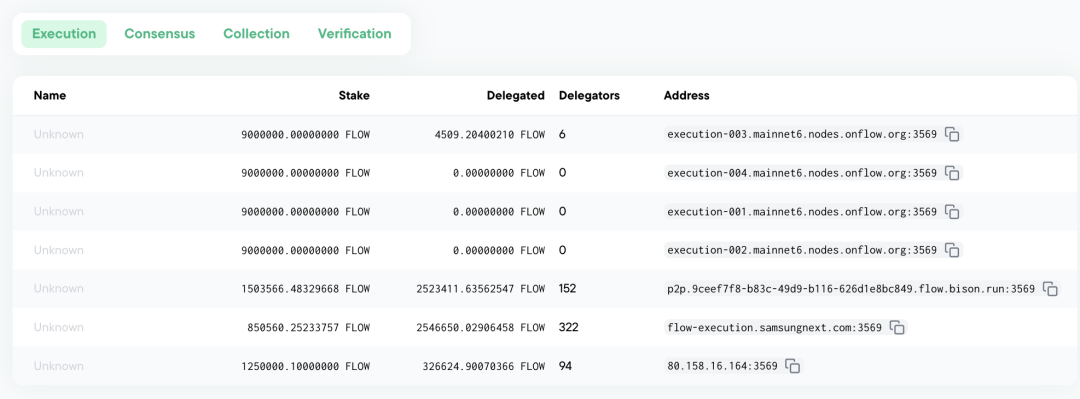
四类节点分别包括:计算节点、共识节点、验证节点和收集节点。其中,计算节点运行要求高,必须部署在数据中心,实行准入制,目前总共7个计算节点;此外的其他节点云心要求较低,合计400+个节点。
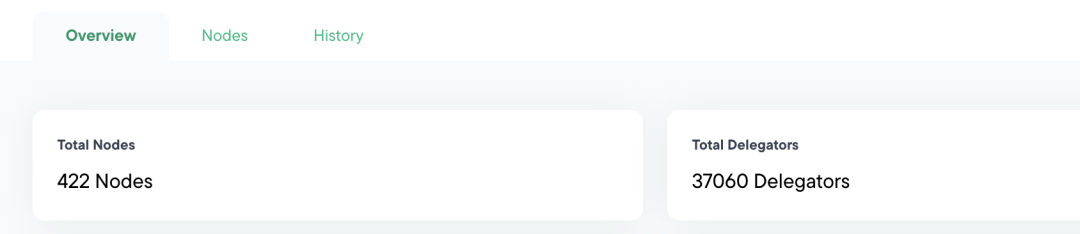
来源:https://flowscan.org/staking/nodes

Flow试图通过这样的方式来实现扩容。不过,目前的TPS还算不上很优秀,根据官网,简单转账的情况下可以达到100+TPS,但实际使用场景大多比转账复杂,估计没法做到[2]。垂直分工也让一部分节点的门槛降低,能让更多用户参与共识环节,但是计算节点的运行仍然是中心化的,「不可能三角」的问题仍然存在。

第二个特点「面向资源编程」(Resource-oriented Programming)是其自研编程语言Cadence的特征。「面向资源」也是Aptos/Sui/Linera这三条Libra系公链的通用语言Move的特征,Flow团队早期正是受到Move启发,完成了Cadence语言的开发。

面向资源编程作为一种新的语言趋势,目的是为了更好地适配链上资产的应用场景。Solidity是一种「账本模型」,一个资产对应一个所有者,资产都记录在合约中;而以Cadence为代表的面向资源编程则是「资源模型」,资产全部记录在所有者的地址中,只有所有者可以调用方法挪动资产。

以下面两张图为例,场景都是CryptoKitties转账,但是左图代表的账本模型是更改资产对应的owner字段,右图代表的资源模型则是将owner地址中的资产移出,再转移到新的owner地址下。
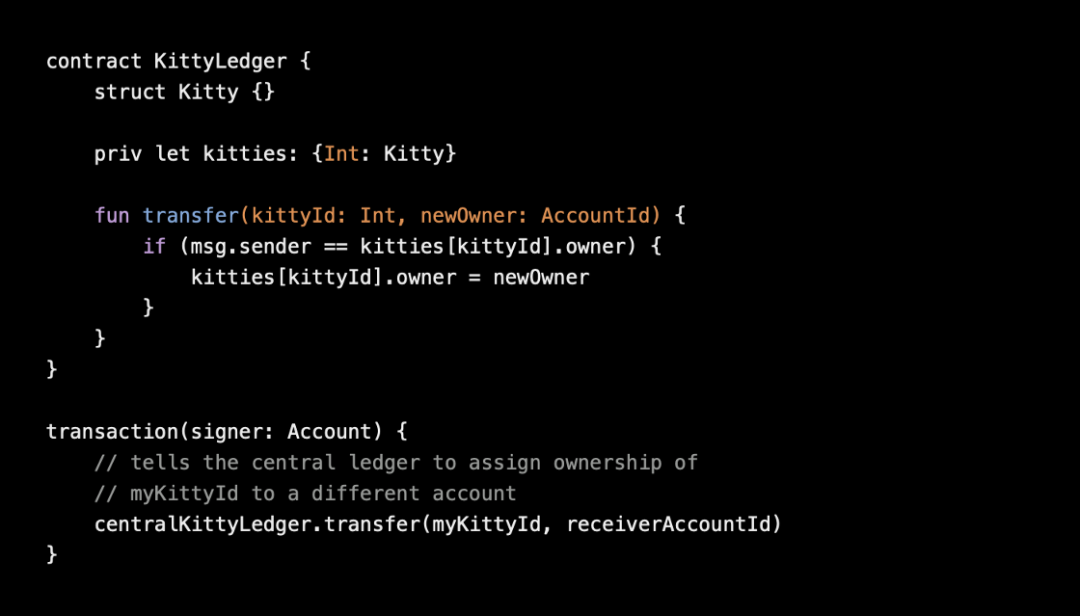
来源:https://medium.com/dapperlabs/resource-oriented-programming-bee4d69c8f8e

目前的Cadence仍然较为独立。虽然借鉴了Move的思路,但是对于语法有较大改动,代码迁移的工作量仍然不小,短期内较难与Move系生态共享开发者。不过,Flow已有规划,将上线Move VM,届时或许能够共享Move系生态红利。

通常认为,面向资源的语言相对于Solidity有两方面的好处:其一,由于将资产放在所有者地址下,天然地避免了合约控制者调用资产的「后门」,因此更安全;其二,在某些业务逻辑上可以做到更好的处理,比如很容易实现某个资产拥有另一个资产的逻辑。

2. 运营生态

Flow上的项目品类很丰富,NFT、Defi、游戏等都存在,官网显示有1,000+个项目,但是真正撑起Flow市值的还是传统体育IP的NFT项目,特别是Dapper Labs自己和NBA合作推出的NBA Top Shot——NBA比赛视频NFT的系列收藏品。

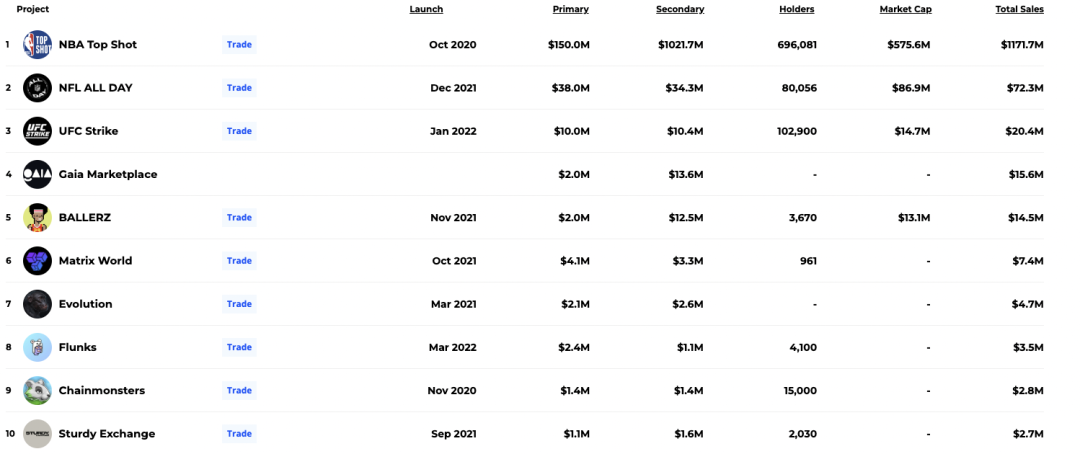
下图展示了头部项目历史以来的交易量,其中NBA Top Shot已经累计成交11.1亿美元,在Top 10中占89%。排名第二的NFL ALL DAY和排名第三的UFC Strike分别是橄榄球联赛和终极格斗锦标赛,也都由Dapper Labs推出;第四Gaia是基于FLOW的商城,第五BALLERZ是一个篮球主题的生成性NFT系列。除此之外的项目成交额均在1,000万美元以下。
来源:https://www.flowverse.co/rankings

可以看到,最头部项目都是基于体育IP的NFT项目,且这类项目为Flow贡献了主要的交易额。元宇宙(Matrix World)和游戏(Chainmonsters)虽然也都在列,但占比较小。除此之外,Flow上也有Defi项目Increment Finance,但TVL仅在300多万美元。

NBA Top Shot为Flow带来了持续的营收。今年6月和7月,单月的成交额分别为770万和830万美元,这其中包含了新卡包的发型和用户间的二次交易[3]。假设NBA Top Shot交易额占全平台的~85%,那么全平台单月大概在950万美元左右,和Immutable X的单月900万美元交易额近似[4]。不过,Flow的收入应该高于Immutable,一方面新发行的收入都归项目方所有,应该在NBA和Flow之间分摊,另一方面NBA Top Shot所有的卡牌都在自建的商城内交易,而商城会对所有二次交易收取5%的税;相对而言Immutable仅对NFT交易收取2%的协议费。

尽管有NBA Top Shot这头现金牛作为坚挺支柱,但是毕竟营收来源较为单一,不如Immutable X生态多样,亟需开拓新的应用场景。近期Flow宣布与Meta合作,将在Instagram合作展示用户NFT,这更像是软性营销,不确定是否能有效提升业务指标。

3. 通证经济

Flow的代币为$FLOW,核心作用在于支付链上操作手续费、作为激励分发给节点。普通用户也可以委托质押给节点,分享节点激励。

$FLOW还有一个较为独特的作用:由于面向资源编程的特性,用户如果要拥有资产也就必须有相应的存储空间,为此需要支付一定费用,而支付方式为锁定$FLOW,如果未来情况存储空间也就可以释放相应的$FLOW。

$FLOW在2020年底发行,初始发行量为12.5亿个。为了尽量减小抛压,$FLOW实行低通胀,链上操作手续费均会分发给节点,多则冻结、少则增发。目前$FLOW的铸造总量为13.9亿,流通量为10亿(数据来源CMC),占~72%。

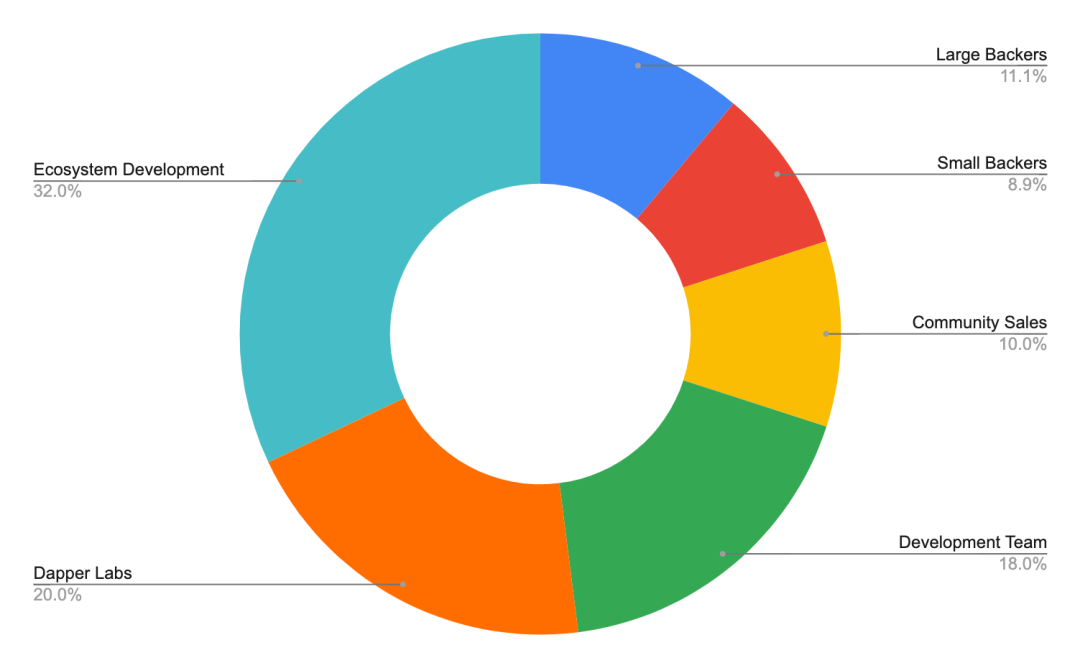
在初始的分配中,38%归属Dapper Labs公司和开发团队,20%归属投资人,32%归属生态发展,10%作为社区发售。
来源:https://flow.com/token-distribution

4. 团队与融资

Dapper Labs成立于2018年,早期由于Crypto Kitties而名声大噪,也为团队带来了持久的名声,后来才转而开发公链Flow。同时,Dapper Labs基于Flow推出的NBA Top Shot等体育明星卡牌也成为了爆款,持续为团队带来营收。

Dapper Labs从2018年到到2021年已完成多轮融资,累计融资6亿美元,主要的投资方包括a16z、Union Square Ventures、Venrock、Coatue。

CEO及创始人Roham Gharegozlou,本硕毕业于斯坦福,毕业后曾在基金公司工作,2013年创办创意工作室Axiom Zen,协助创业公司募资和开发产品,也是在Axiom Zen中Roham Gharegozlou开发了CryptoKitties,在2018年成立Dapper Labs专注于CryptoKitties业务,并衍生出公链Flow。

CTO Dieter Shirley于1996年毕业于滑铁卢大学,其后曾在包括苹果在内的多家公司担任软件工程师,2013年加入Axiom Zen担任首席软件架构师,开启了和Roham共同的创业之路,并在2018年一同加入Dapper Labs。Dieter Shirley也是ERC-721标准的创立者。

Dapper Labs近日在Twitter上表示,Meta前内容及社区合作伙伴副总裁Nick Grudin即将加入Dapper Labs担任首席商务官,负责合作伙伴关系、开发者体验及营销[5]。这或许会对Flow的生态发展带来改观。

5. 优势与挑战

链茶馆认为,Flow的核心优势在于:

1)技术上敢于做创新,较早地采用了模块化分工的思路和面向资源编程的语言,是一个愿意开拓新领域的团队;

2)从CryptoKitties到NBA Top Shot,Flow是难得的有连续成功爆款经验的公司,拥有几乎不可复制的信任背书;

3)NBA Top Shot也在为Flow公链带来持续的可观营收,基本面较稳固。

同时,Flow也面临相应的挑战:目前的生态较为单一,交易额集中在Dapper Labs推出的几个NFT产品,其他类型的项目如游戏、Defi等虽然也存在,但并不繁荣。未来生态发展的核心变量:一是Move系语言生态能否兴起、且Flow能否通过Move VM共享红利,二是Dapper Labs能否持续BD到营收可观的项目。

6. 附录

[1]https://flow.com/primer

[2]https://developers.flow.com/flow/faq/operators

[3]https://cryptoslam.io/nba-top-shot/sales/summary

[4]https://mp.weixin.qq.com/s/_IwGYLXET9lA8XYlbdIAAw

[5]https://twitter.com/roham/status/1557897566498328578

Trend Kriptolar

İlgili Okumalar

Bitcoin Hits 20-Month Low as Largest Bull Suffers $15 Billion Paper Loss

Bitcoin Hits 20-Month Low as Major Bull Loses $15 Billion On June 25th, Bitcoin fell below $60,000, hitting a low of $58,030—its lowest level since October 2024. The sell-off triggered over $1 billion in leveraged liquidations in 24 hours, with longs accounting for $788 million. This marks a more than 53% decline from the October 2025 all-time high of $126,198. A critical factor in the downturn is the weakening position of MicroStrategy, the largest corporate Bitcoin holder. With 847,363 BTC at an average cost of $75,651, the company now faces over $14.6 billion in unrealized losses. Its core financing flywheel—raising capital to buy Bitcoin—is stalling. Its variable-rate preferred shares (STRC), a key fundraising tool, have fallen 25% below their $100 target. This raises doubts about its ability to continue providing steady institutional demand for Bitcoin. Simultaneously, U.S. spot Bitcoin ETFs are experiencing significant outflows, with a single-day net outflow of $469 million on June 24th. This represents the most severe sustained capital flight since their launch. The macroeconomic backdrop remains restrictive, with persistent inflation delaying expected Fed rate cuts. Analysts note a shift in capital allocation, with institutional funds moving away from crypto towards AI infrastructure stocks. Immediate pressure comes from approximately $10 billion worth of Bitcoin options expiring on June 26th, which could increase market volatility. The combined effect of these factors—eroding core demand pillars, macro headwinds, and capital rotation—has decisively broken the $60,000 support level.

Foresight News6 dk önce

Bitcoin Hits 20-Month Low as Largest Bull Suffers $15 Billion Paper Loss

Foresight News6 dk önce

STRC Falls Below $80, Can Conservative Investors Still Buy the Dip?

The article analyzes whether the STRC (a perpetual preferred stock issued by MicroStrategy) presents a buying opportunity after its price fell below its $100 par value to around $80, offering a seemingly high yield of 13-15%. The core argument is that STRC's discount reflects market skepticism about the sustainability of MicroStrategy's capital structure model, not just temporary panic. This model relies on issuing securities (like STRC) to raise funds to buy more Bitcoin, a "flywheel" that works in a bull market. The recent small sale of BTC to fund dividends, while minor, broke the psychological "never sell" anchor and signaled potential strain. Key risks identified are not a traditional Ponzi collapse but a potential breakdown in the financing narrative: 1) If Bitcoin enters a deep bear market, crushing MicroStrategy's stock premium (mNAV), its ability to raise cheap capital weakens. 2) If STRC remains deeply discounted, it signifies permanently higher funding costs. 3) The high cash dividend yield represents a significant ongoing expense. 4) If selling BTC to pay dividends becomes routine, the bullish narrative reverses. The conclusion is that STRC is not a risk-free high-yield asset. It is a high-coupon bet on whether MicroStrategy's BTC treasury financing model can withstand a bear market. Buying it is a wager that the market will continue to believe in and fund this structure at acceptable costs. The current price asks if this cycle's "casualty" might be a BTC treasury company's融资 model itself.

marsbit22 dk önce

STRC Falls Below $80, Can Conservative Investors Still Buy the Dip?

marsbit22 dk önce

Why Do Crypto Projects Keep Changing Their Names?

**Why Do Crypto Projects Keep Changing Names?** In the crypto world, changing a project's name is common—over 16% of projects have done so, including major ones like Polygon (formerly Matic Network). This contrasts sharply with traditional businesses, which fiercely protect brand equity. The core reason is that in crypto, brand loyalty is often weak. Users are frequently investors, airdrop hunters, or yield seekers, not traditional consumers. A name associated with price crashes, hacks, or failed narratives becomes a liability, not an asset. Renaming can be a strategic reset to shed this baggage. Name changes serve as a potent marketing tool. They can signal a genuine pivot in strategy or scope (e.g., EthSign dropping "Eth" as it expanded). However, they are often used to "narrative surf," rebranding to align with hot trends like AI, RWA, or the metaverse (e.g., Elrond → MultiversX). Critically, renaming is also a PR tactic to distance a project from past failures like security breaches (e.g., Anyswap → Multichain). The most significant risk emerges when a name change is coupled with a token migration or swap. This process can allow projects to reset exchange price charts, erase visible historical downtrends, and create an illusion of a fresh start. It often facilitates liquidity resets, where low float can be exploited for pumps. More alarmingly, migrations sometimes mask overhauls to tokenomics, introducing substantial new token supply through "ecosystem funds" or "node rewards," effectively diluting existing holders. The fundamental issue isn't renaming itself, which can be valid for strategic evolution. The problem is when it functions as an escape from history—a way to avoid accountability for past mistakes, failed promises, and poor performance. When a project announces a rebrand, the critical questions are: What tangible new capability or strategy does it represent? Has the tokenomics changed? And what part of its past is it most trying to make users forget?

marsbit28 dk önce

Why Do Crypto Projects Keep Changing Their Names?

marsbit28 dk önce

A Trillion-Dollar Entry Point for Pension Funds? Franklin's Bitcoin Dividend Reinvestment ETFs Come with a Built-In Selling Pressure Ceiling

Franklin Templeton filed for two ETFs on June 18 that embed a "default option" logic into Bitcoin investing. These funds—the Franklin US Equity Bitcoin Dividend Reinvestment Index ETF and the Franklin US Innovative Equity Bitcoin Dividend Reinvestment Index ETF—aim to automatically allocate a portion of investor dividends to Bitcoin, initially with a 95% stock and 5% Bitcoin allocation. The mechanism is designed for financial advisors, not retail investors. By packaging Bitcoin exposure within a standard equity fund label, advisors can bypass internal compliance restrictions against direct cryptocurrency allocation for their clients. Dividends from the stock holdings are automatically used to buy Bitcoin via spot ETFs, futures, or options. However, the structure imposes strict rebalancing rules: if Bitcoin's allocation exceeds 5%, it is trimmed back to 4.5% quarterly, with a hard cap of 20%. This means the fund becomes a systematic seller during Bitcoin price rallies. Realistically, the potential buying pressure is minimal. Based on dividend yields (approximately 1.05% for broad market, 0.52% for innovative equity), the annual inflow into Bitcoin would be a tiny fraction of the fund's assets. For comparison, Franklin's existing Bitcoin ETF ($359 million AUM) would generate only about $3.6 million in annual Bitcoin purchases—negligible against Bitcoin's daily trading volume. The innovative equity fund, heavily weighted in low-dividend stocks like Nvidia, would have even weaker buying power. The product utilizes an offshore Cayman subsidiary to hold Bitcoin, a common compliance tactic for commodity exposure in mutual funds. A key drawback for investors is the tax liability: they must pay taxes on dividends that are automatically converted into Bitcoin, requiring out-of-pocket cash for a gain they never directly receive. For the strategy to scale significantly, such funds would need to become a default or near-default option in retirement plans like 401(k)s. Recent regulatory moves, including a Trump executive order and a Department of Labor proposal offering fiduciary safe harbors for including crypto assets, could pave the way. However, widespread employer adoption likely awaits further legal clarity. Ultimately, the fund's model leverages investor inertia and automated systems, rather than convincing anyone to actively choose Bitcoin. While it creates a new, albeit small, structural buyer, its rebalancing rules also establish a built-in "selling ceiling" that could dampen price upside if similar products proliferate.

Foresight News30 dk önce

A Trillion-Dollar Entry Point for Pension Funds? Franklin's Bitcoin Dividend Reinvestment ETFs Come with a Built-In Selling Pressure Ceiling

Foresight News30 dk önce

Why Do Crypto Projects Always Love Changing Names?

This article explores why cryptocurrency projects frequently change their names, a practice uncommon in traditional businesses where brand equity is a core asset. Over 16% of crypto projects have reportedly rebranded, often for strategic, marketing, or defensive reasons. The primary explanation is the weak user loyalty in crypto; many users are investors, airdrop hunters, or narrative traders, not traditional consumers. When a project's token price falls, its narrative fades, or it faces scandals/hacks, its old name becomes a liability laden with negative history rather than brand value. Therefore, frequent rebranding aims to shed this historical baggage. Name changes can be a marketing strategy to align with new business directions (e.g., Matic to Polygon), capitalize on trending narratives (e.g., adding "AI" or "Multiverse"), or distance from past failures like security breaches (e.g., Anyswap to Multichain). However, the most concerning aspect often involves a simultaneous token migration or swap. This process can serve as a "liquidity reset": it wipes historical price charts, potentially eases market manipulation, and is sometimes used to introduce new tokenomics that dilute existing holders' value through hidden inflation. The article concludes that while legitimate strategic pivots can justify a rebrand, many crypto name changes are less about building a new future and more about escaping the past—erasing bad memories, failed narratives, and dissatisfied communities. The key questions for any rebranding project are: what genuine new value or strategy does it bring, how has the tokenomics changed, and what part of its history is it trying to make users forget?

链捕手37 dk önce

Why Do Crypto Projects Always Love Changing Names?

链捕手37 dk önce

İşlemler

Spot
Futures

Popüler Makaleler

FLOW Nasıl Satın Alınır

HTX.com’a hoş geldiniz! Flow (FLOW) satın alma işlemlerini basit ve kullanışlı bir hâle getirdik. Adım adım açıkladığımız rehberimizi takip ederek kripto yolculuğunuza başlayın. 1. Adım: HTX Hesabınızı OluşturunHTX'te ücretsiz bir hesap açmak için e-posta adresinizi veya telefon numaranızı kullanın. Sorunsuzca kaydolun ve tüm özelliklerin kilidini açın. Hesabımı Aç2. Adım: Kripto Satın Al Bölümüne Gidin ve Ödeme Yönteminizi SeçinKredi/Banka Kartı: Visa veya Mastercard'ınızı kullanarak anında Flow (FLOW) satın alın.Bakiye: Sorunsuz bir şekilde işlem yapmak için HTX hesap bakiyenizdeki fonları kullanın.Üçüncü Taraflar: Kullanımı kolaylaştırmak için Google Pay ve Apple Pay gibi popüler ödeme yöntemlerini ekledik.P2P: HTX'teki diğer kullanıcılarla doğrudan işlem yapın.Borsa Dışı (OTC): Yatırımcılar için kişiye özel hizmetler ve rekabetçi döviz kurları sunuyoruz.3. Adım: Flow (FLOW) Varlıklarınızı SaklayınFlow (FLOW) satın aldıktan sonra HTX hesabınızda saklayın. Alternatif olarak, blok zinciri transferi yoluyla başka bir yere gönderebilir veya diğer kripto para birimlerini takas etmek için kullanabilirsiniz.4. Adım: Flow (FLOW) Varlıklarınızla İşlem YapınHTX'in spot piyasasında Flow (FLOW) ile kolayca işlemler yapın.Hesabınıza erişin, işlem çiftinizi seçin, işlemlerinizi gerçekleştirin ve gerçek zamanlı olarak izleyin. Hem yeni başlayanlar hem de deneyimli yatırımcılar için kullanıcı dostu bir deneyim sunuyoruz.

282 Toplam GörüntülenmeYayınlanma 2024.12.10Güncellenme 2026.06.02

FLOW Nasıl Satın Alınır

Tartışmalar

HTX Topluluğuna hoş geldiniz. Burada, en son platform gelişmeleri hakkında bilgi sahibi olabilir ve profesyonel piyasa görüşlerine erişebilirsiniz. Kullanıcıların FLOW (FLOW) fiyatı hakkındaki görüşleri aşağıda sunulmaktadır.

活动图片