Deconstructing the Capital Game of Public Chain Pharos: A $950 Million Valuation Propped Up by Photovoltaic and Other Assets, A Shell Transaction Under Layers of Betting?

marsbit2026-03-15 tarihinde yayınlandı2026-03-15 tarihinde güncellendi

Özet

The article investigates the recent $247.3 million investment by Hong Kong-listed GCL New Energy into the Layer 1 blockchain project Pharos at a $950 million valuation. It reveals the deal is not a straightforward investment but a complex, multi-stage transaction bound by stringent performance milestones. The core of the agreement is a set of mutual, conditional investments. Pharos must first purchase up to $1.5 billion HKD worth of GCL shares. However, GCL's reciprocal investment in Pharos tokens is contingent upon a series of strict, performance-based vesting conditions. The entire deal is split into five tranches, each unlocking only if the Pharos token lists on an exchange without falling below its issue price and maintains a high fully diluted valuation (FDV) over successive three-month periods. If any condition fails, the entire agreement can be terminated. The article questions the legitimacy of the $950 million valuation, which was calculated based on a purported $250 million in Total Value Locked (TVL). Notably, over half of this TVL is claimed to be from real-world assets (RWA), specifically photovoltaic and power station assets linked to GCL—a highly unconventional method for valuing a Layer 1 blockchain. Furthermore, the mainnet is not yet live, and the TVL figure is unverified by independent data platforms. The author suggests the deal is a "capital game" designed to boost GCL's stock price, which saw suspicious pre-announcement surges, and to create hype for ...

Author: Gu Yu, ChainCatcher

After several months, the Layer1 public chain sector has recently seen another financing round at the billion-dollar valuation level. Pharos, which claims to be a high-performance parallel Layer 1 public chain, announced an upgrade in its capital cooperation with the Hong Kong Stock Exchange-listed company GCL New Energy. GCL New Energy completed an investment subscription in Pharos at a valuation of $950 million, with an amount of $24.73 million.

GCL New Energy is a well-known domestic private photovoltaic power generation enterprise, mainly engaged in the development, construction, operation, and management of solar power stations. This aligns very well with Pharos's key RWA development direction, making it seem like a transaction of positive strategic significance for both parties.

However, this transaction has also raised many questions in the market. Given the current dismal secondary market, can projects in the Layer1 and RWA sectors really achieve billion-dollar valuations in the primary market? Would a listed company easily invest in such high-risk assets?

A Mutually Binding Betting Transaction

Many details hidden in the complex announcements show that this is not a conventional direct financing transaction, but a bundled deal involving mutual investment, phased settlements, and market value betting. Moreover, all core settlement conditions are firmly in the hands of GCL New Energy. If any condition is not met, this transaction will be nothing more than an empty document without any substantive binding force.

Among them, Pharos's share subscription in GCL New Energy is a preconditioned investment. It will subscribe for a maximum of 183,480,000 new shares in the company at a price of HK$1.05, worth approximately HK$150 million. This price represents a 15% discount compared to GCL New Energy's current price (HK$1.23).

This transaction seems to favor Pharos, but GCL New Energy is clearly well-versed in financial operations and has set five stringent settlement thresholds for this share subscription. If any batch of settlement conditions is not met, all subsequent settlements will be terminated, and the entire agreement is valid for only 18 months. Specifically, this investment is divided into five batches of settlements, with unlocking conditions all tied to the listing performance of the Pharos Token:

The first batch, accounting for 50%, will only proceed if the Pharos Token is successfully approved for listing on relevant Web3 exchanges and the opening price is not lower than the company's agreed investment price (calculated based on a $950 million valuation). If the listing fails or the opening price falls below the issue price, the company has the right not to proceed with the settlement.

The second batch, accounting for 12.5%, will only proceed if the daily average FDV (Fully Diluted Valuation) of the Pharos Token in the first three months after listing is not less than $760 million.

The unlocking conditions for the subsequent three batches are roughly similar, with the main difference being the calculation periods for the average FDV: the fourth to sixth months, the seventh to ninth months, and the ninth to twelfth months, respectively.

Once the Pharos Token meets the settlement conditions, Pharos's share subscription in GCL New Energy will take effect accordingly, and GCL New Energy's subscription for the Pharos Token will also take effect simultaneously, with the same unlocking ratio.

In other words, after the successful listing of the Pharos Token, Pharos will immediately settle a HK$75 million share subscription with GCL New Energy, while GCL New Energy will acquire Pharos Tokens worth approximately HK$96.73 million at a valuation of $950 million.

For GCL New Energy, this is an almost risk-free transaction. On one hand, it can obtain HK$75 million in share subscription funds, and on the other hand, if the Pharos Token performs well, it can acquire tokens worth nearly HK$100 million at the initial listing valuation, offering considerable profit margin.

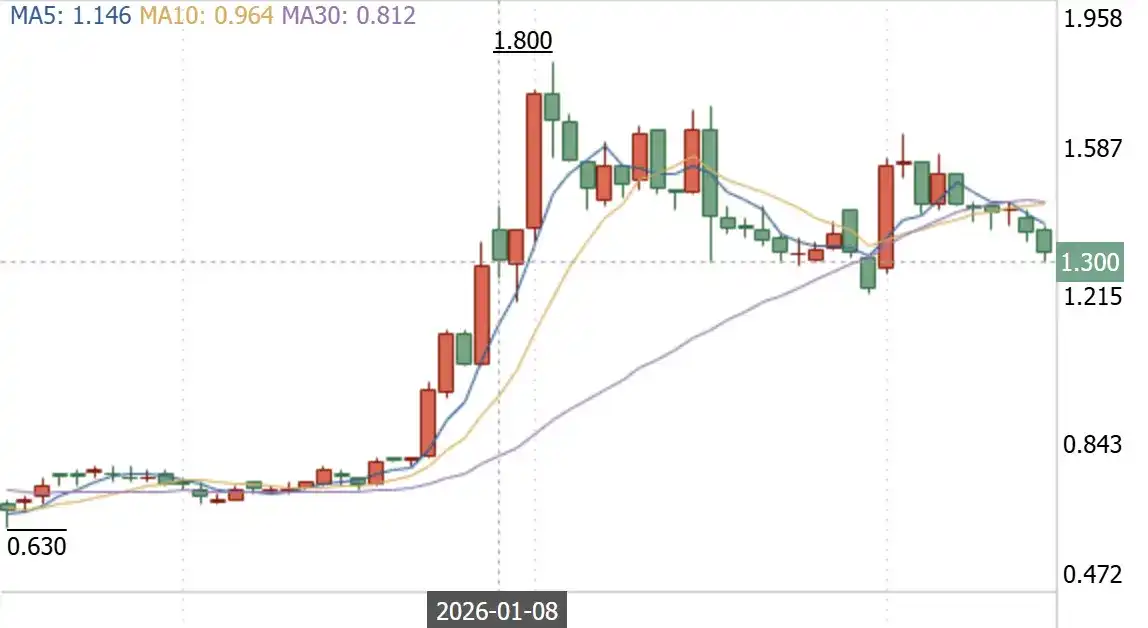
The positive news has already been reflected in the stock price. Although GCL New Energy first disclosed its cooperation with Pharos on January 8, its stock price had already risen significantly a week earlier, climbing from HK$0.8 to HK$1.3 on the announcement day, and later reaching a peak of HK$1.8. Since then, it has been on a downward trend. In the trading market, this is a typical "rat trading" pattern.
Another potential issue is that Pharos has previously disclosed a cumulative financing of only $8 million, equivalent to HK$62.61 million. Therefore, even if the pre-investment conditions are met, this funding gap may pose a challenge for Pharos.
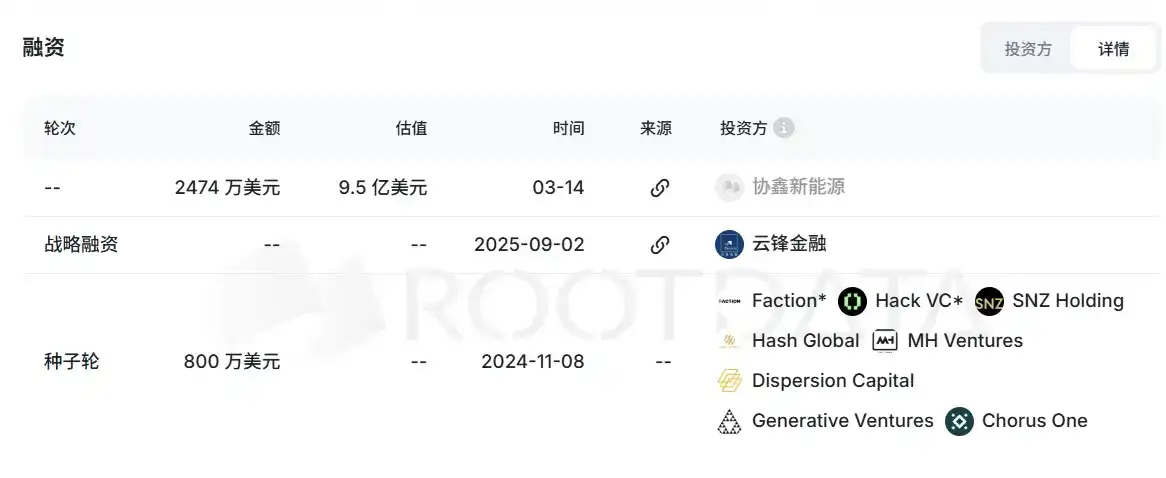
Source: RootData

How Was the $950 Million Valuation Derived?

Another interesting piece of information is that GCL New Energy also detailed in the agreement why it valued Pharos at $950 million. According to the agreement, this investment valuation is primarily based on the on-chain total value locked (TVL). In the Layer1 sector, the average ratio of fully diluted valuation (FDV) to total value locked (TVL) for Ethereum, BSC, Hyperliquid, Tron, and Avalanche is 10x, with a median of 6x. Monad, which has a similar technical route, has a ratio of 10x.
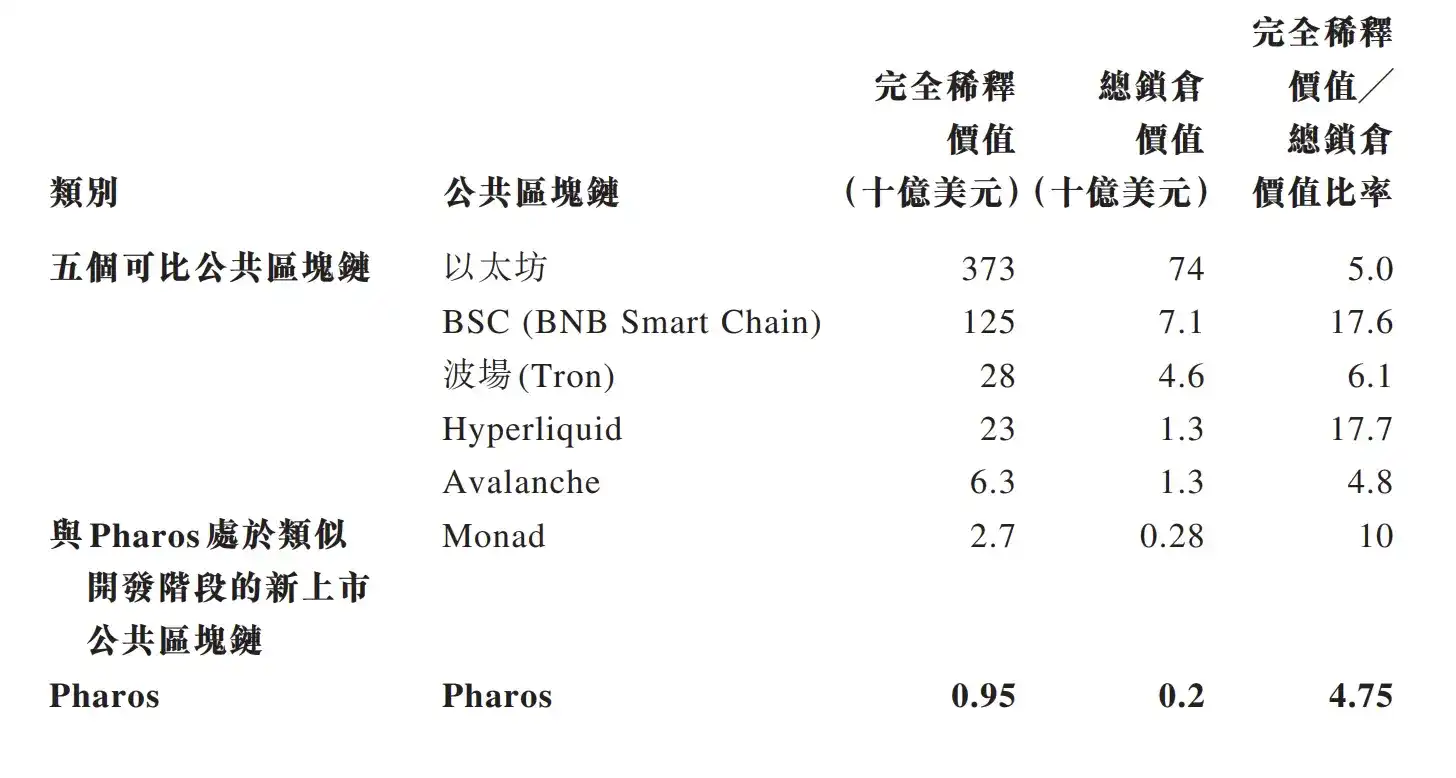
Therefore, both parties decided to set the calculation coefficient for Pharos at 4.75x. Since Pharos's current total value locked is $250 million, and calculated with a 20% discount, the initial valuation should be $950 million.

Regarding the types of on-chain locked assets, the agreement disclosed that currently, among all locked assets in Pharos, 51% come from new energy assets of distributed photovoltaic operators and centralized power station operators, and 49% come from financial assets of fund management companies and credit asset issuers.

In other words, Pharos's total value locked includes physical assets in its calculation, specifically power station and photovoltaic assets closely related to the parties involved in this transaction. This calculation method sets a precedent in the Layer1 industry.

In fact, Pharos's mainnet has not yet been officially announced as launched. Professional on-chain data statistics platforms like DeFiLlama do not include Pharos's locked data, and the $250 million figure is entirely a unilateral disclosure from the project team.

The premature stock price movement, combined with the layers of betting conditions in the agreement and the inflated valuation calculation, makes it easy to see the true purpose of this transaction: For GCL New Energy, this may be a financial operation to hype the stock price and boost the company's market value by leveraging crypto concepts. For Pharos, it is an attempt to rely on the listed company's physical assets to create a high-valuation buzz and build momentum for the subsequent token listing. Both parties get what they need, but leave the risks to the market and subsequent investors.

When a实体产业 company injects physical assets into a Layer1 project and then calculates a valuation several times the value of those physical assets to easily create a $950 million valuation, isn't this capital game too outrageous? Does the crypto market really need such RWA?


Trend Kriptolar

İlgili Sorular

QWhat is the nature of the capital cooperation between Pharos and GCL New Energy, and what is the announced valuation?

AThe capital cooperation involves GCL New Energy investing in the Layer 1 blockchain Pharos at a valuation of $950 million. The investment amount is $24.73 million. The deal is structured as a mutual investment with staged closings and market cap-based performance warrants, not a straightforward equity purchase.

QWhat are the specific conditions (warrants) that GCL New Energy set for the investment to be executed?

AThe investment is split into five tranches with strict unlocking conditions tied to the performance of the Pharos Token post-listing. The first tranche (50%) requires the token to be listed on an exchange at or above the initial offering price. Subsequent tranches require the token's fully diluted valuation (FDV) to maintain specific averages over 3-month periods (e.g., $760 million for the second tranche) for the 12 months following listing.

QHow was the $950 million valuation for Pharos calculated, and what is controversial about it?

AThe valuation was calculated by applying a multiple of 4.75 to a reported Total Value Locked (TVL) of $250 million, with a 20% discount. The TVL figure controversially includes real-world assets (RWA) like photovoltaic power stations and financial assets, not just crypto assets. This method is unprecedented in the Layer 1 sector, and the $250M TVL is a self-reported figure as the mainnet is not yet live on major tracking sites.

QWhat potential market manipulation is suggested by the article regarding GCL New Energy's stock price?

AThe article suggests potential 'rat trading' (insider trading or market manipulation), as GCL New Energy's stock price experienced a significant rise from HK$0.8 to HK$1.3 in the week *before* the official announcement of the deal with Pharos was made public on January 8th.

QWhat is the article's overall conclusion about the strategic purpose of this deal for both companies?

AThe article concludes the deal is a capital game where GCL New Energy aims to boost its stock price by leveraging crypto hype, while Pharos aims to create a high-valuation narrative backed by real-world assets to generate momentum for its upcoming token listing. The complex warrant structure transfers all risk to the market and future investors, making the $950M valuation appear inflated and the transaction potentially hollow.

İlgili Okumalar

Breaking: Google Earth Urgently Pulls Back Nano Banana 2 Image Generation Feature!

Google Earth's newly launched "Create image" feature, powered by the Nano Banana 2 AI image generation model, was abruptly withdrawn shortly after its release due to being "played" by users. The feature allowed users to generate and overlay AI-created visuals directly onto real-world satellite and 3D maps in Google Earth. The tool enabled creative applications like historical recreations (e.g., visualizing ancient Pompeii), generating informational graphics for landmarks, and envisioning architectural projects or futuristic cityscapes on real terrain. It operated under "geospatial grounding," meaning the AI respected the underlying geography, topography, and perspective of the chosen map view. The model also integrated with Gemini to retrieve relevant factual information. However, upon release, users quickly tested its limits. A prominent example involved reimagining Philadelphia's historic Independence Hall as a post-apocalyptic ruin overrun by "happy" zombies, evil clowns, and giant alien mechs. This highlighted both the feature's playful potential and its risks regarding the generation of inappropriate or misleading content on realistic maps, leading to its swift temporary removal. Google stated it would re-release the feature after implementing "enhanced guardrails." Analysts note this move strategically leverages Google's vast proprietary geospatial data, positioning its AI not just for artistic generation but for spatially accurate world visualization—a unique advantage in the competitive AI image generation landscape.

marsbit28 dk önce

Breaking: Google Earth Urgently Pulls Back Nano Banana 2 Image Generation Feature!

marsbit28 dk önce

Altman Admits: Overestimated AI Snatching Jobs! Huang Renxun: The Unemployment Narrative Is Completely Backwards

Sam Altman has revised his earlier predictions about AI rapidly replacing jobs, admitting he overestimated the speed at which AI would eliminate entry-level white-collar roles. Speaking on the "Invest Like the Best" podcast, he stated that people do not truly want an AI CEO, as accountability and human connection remain critical. He found that individuals prefer interacting with people who can be held responsible for decisions. Similarly, NVIDIA's Jensen Huang argued that the narrative of AI destroying jobs is misguided. He distinguishes between tasks and jobs, noting that while AI can automate specific tasks, entire jobs—encompassing communication, judgment, coordination, and accountability—are not eliminated. He cited examples like radiologists and software engineers, where demand for these roles has increased as AI handles repetitive tasks, allowing for business expansion and the creation of more positions. Data from a University of Maryland and LinkUp study supports this, showing that U.S. job postings for new graduates have actually risen, countering the fear of vanishing entry-level roles. However, a significant shift is occurring: the traditional entry-level tasks that help newcomers gain experience are being automated, making initial career access more challenging. The key insight is that as AI takes over standardized tasks, the enduring value of human work shifts toward areas of responsibility, trust-building, and final decision-making—aspects that AI cannot replicate. The real "moat" for professionals lies in these irreplaceable human elements.

marsbit33 dk önce

Altman Admits: Overestimated AI Snatching Jobs! Huang Renxun: The Unemployment Narrative Is Completely Backwards

marsbit33 dk önce

Weekly Editor's Picks (0725-0731)

Weekly Editor's Picks (0725-0731) provides a curated selection of deep analysis, filtering out market noise. Key themes from this week include: **Macro & Policy:** The Federal Reserve's upcoming meeting is marked by high uncertainty, balancing cooling inflation data against persistent price pressures. Meanwhile, the U.S. crypto regulatory Clarity Act faces critical political hurdles, with its 2026 passage probability seen as low. **Investing & Crypto:** Analysis suggests long-term crypto success depends on conviction through volatile cycles, focusing on assets like Bitcoin and core smart contract platforms. A trend noted is the increasing similarity between global equity markets (especially tech) and crypto, driven by narrative and leverage. Several major crypto protocols show strong revenue growth, but this isn't always translating to token price appreciation due to sell pressure and structural factors. **AI & Semiconductors:** Nvidia's rising credit default swap rates signal market concern over AI infrastructure financing risks. The storage sector experienced volatility as markets began pricing in potential 2027 oversupply. Despite a record profitable quarter, SK Hynix's results were deemed "below expectations," reflecting heightened investor demands for future growth visibility. **Markets & DeFi:** TradeXYZ demonstrated remarkable accuracy in pre-market pricing for a major A股 listing. The token ONDO saw gains, linked to its growing role in the on-chain tokenized stock ecosystem. **Ethereum:** Post-Pectra upgrade, a major structural shift is underway as Lido begins migrating millions of ETH to new validator architectures designed for capital efficiency. **Also Highlighted:** Butian's bullish stock market move; OpenAI's Altman promising major advances; Samsung and SK Hynix securing large AI chip deals; Apple reaching a $5T market cap; and ongoing discussions around exchange security following Poolin's bankruptcy case.

marsbit1 saat önce

Weekly Editor's Picks (0725-0731)

marsbit1 saat önce

Low Investment Isn't Apple's Immunity Pass

While Meta and Google face investor scrutiny over ballooning AI capital expenditures, Apple's minimal AI investment has paradoxically become a strength. Its market cap recently reclaimed the global top spot, surpassing $5 trillion. The irony is deep: Apple's own AI efforts have lagged, with "Apple Intelligence" delayed and core talent lost, forcing reliance on partners like Google Gemini and Alibaba's Qianwen. Its Q3 FY2026 (Q2 CY) earnings initially seemed stellar. Revenue hit $109.4B (up 16% YoY), with iPhone and Mac sales, growing 22% and 29% respectively, driving most of the growth. However, the stock fell over 8% post-earnings. The primary concern was a weaker Q4 revenue growth forecast of 9-11%, below expectations, due to looming supply chain constraints. Apple is feeling the indirect cost of the AI boom. Soaring memory and chip prices, fueled by massive data center investments from Microsoft, Amazon, and others, are forcing Apple to raise Mac and iPad prices significantly. The upcoming iPhone launch is also expected to see substantial price hikes. Despite avoiding heavy AI infrastructure spending—its capital expenditures are actually down 28%—Apple cannot escape the industry-wide supply and cost pressures. While Apple's operating cash flow remains robust, its substantial R&D spending (up 32% YoY) has yet to yield major AI breakthroughs. As Tim Cook prepares to step down as CEO, Apple faces a challenging transition: balancing its premium hardware success against the strategic and cost pressures of the AI era it has so far cautiously navigated.

marsbit1 saat önce

Low Investment Isn't Apple's Immunity Pass

marsbit1 saat önce

İşlemler

Spot

Popüler Makaleler

SHELL Nasıl Satın Alınır

HTX.com’a hoş geldiniz! MyShell (SHELL) satın alma işlemlerini basit ve kullanışlı bir hâle getirdik. Adım adım açıkladığımız rehberimizi takip ederek kripto yolculuğunuza başlayın. 1. Adım: HTX Hesabınızı OluşturunHTX'te ücretsiz bir hesap açmak için e-posta adresinizi veya telefon numaranızı kullanın. Sorunsuzca kaydolun ve tüm özelliklerin kilidini açın. Hesabımı Aç2. Adım: Kripto Satın Al Bölümüne Gidin ve Ödeme Yönteminizi SeçinKredi/Banka Kartı: Visa veya Mastercard'ınızı kullanarak anında MyShell (SHELL) satın alın.Bakiye: Sorunsuz bir şekilde işlem yapmak için HTX hesap bakiyenizdeki fonları kullanın.Üçüncü Taraflar: Kullanımı kolaylaştırmak için Google Pay ve Apple Pay gibi popüler ödeme yöntemlerini ekledik.P2P: HTX'teki diğer kullanıcılarla doğrudan işlem yapın.Borsa Dışı (OTC): Yatırımcılar için kişiye özel hizmetler ve rekabetçi döviz kurları sunuyoruz.3. Adım: MyShell (SHELL) Varlıklarınızı SaklayınMyShell (SHELL) satın aldıktan sonra HTX hesabınızda saklayın. Alternatif olarak, blok zinciri transferi yoluyla başka bir yere gönderebilir veya diğer kripto para birimlerini takas etmek için kullanabilirsiniz.4. Adım: MyShell (SHELL) Varlıklarınızla İşlem YapınHTX'in spot piyasasında MyShell (SHELL) ile kolayca işlemler yapın.Hesabınıza erişin, işlem çiftinizi seçin, işlemlerinizi gerçekleştirin ve gerçek zamanlı olarak izleyin. Hem yeni başlayanlar hem de deneyimli yatırımcılar için kullanıcı dostu bir deneyim sunuyoruz.

210 Toplam GörüntülenmeYayınlanma 2025.02.28Güncellenme 2026.06.02

SHELL Nasıl Satın Alınır

Tartışmalar

HTX Topluluğuna hoş geldiniz. Burada, en son platform gelişmeleri hakkında bilgi sahibi olabilir ve profesyonel piyasa görüşlerine erişebilirsiniz. Kullanıcıların SHELL (SHELL) fiyatı hakkındaki görüşleri aşağıda sunulmaktadır.

活动图片