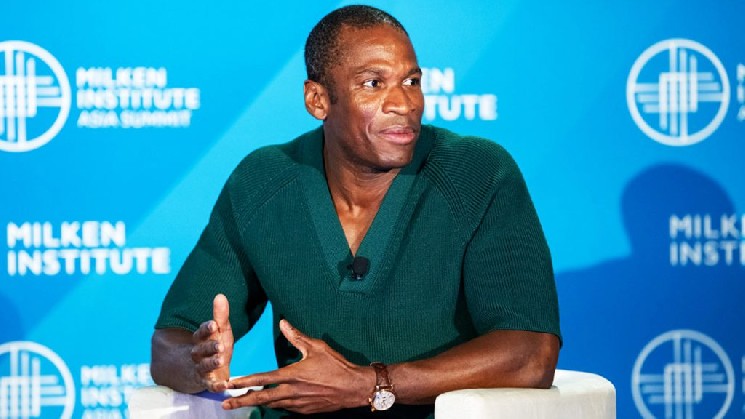
Hyperliquid Policy Center Maps Out Multi-Year Agenda, CEO Sets 3 Key Goals

bitcoinist2026-03-05 tarihinde yayınlandı2026-03-05 tarihinde güncellendi

Özet

Jake Chervinsky, CEO of the Hyperliquid Policy Center (HPC), has outlined a multi-year policy agenda to reshape DeFi regulation in the U.S. The independent research and advocacy organization aims to promote clear rules for decentralized finance, focusing on expanding lawful U.S. access to decentralized perpetual derivatives markets and protecting open-source developers from being misclassified as financial intermediaries. HPC is actively supporting the CLARITY Act to include explicit protections for DeFi builders. Chervinsky highlighted three key goals: establishing CFTC and SEC pathways for legal trading of commodity and equity perpetuals on decentralized platforms like Hyperliquid, and securing passage of the CLARITY Act with strong developer safeguards.

Jake Chervinsky, CEO of the newly formed Hyperliquid Policy Center (HPC), has laid out a policy roadmap aimed at reshaping how decentralized finance (DeFi) is regulated in the United States.

Hyperliquid Policy Center Pushes For Clear DeFi Rules

In a recent interview with Flood, Chervinsky discussed both the center’s long-term objectives and the broader regulatory climate in Washington, where lawmakers and agencies are actively debating the future of digital assets.

Chervinsky described HPC as an independent research and advocacy organization dedicated to promoting clear and constructive rules for DeFi. Its mission, he explained, is to work directly with regulators to craft frameworks that allow Americans to participate in decentralized markets while maintaining appropriate oversight.

One of the Hyperliquid Policy Center’s most immediate priorities is expanding lawful access to decentralized perpetual derivatives markets, an area that remains largely off-limits to US participants under current regulatory interpretations.

Beyond derivatives access, HPC is also focused on ensuring that developers building decentralized protocols are not swept into regulatory categories meant for traditional financial institutions.

In his view, open-source developers creating non-custodial DeFi tools should not be treated as money transmitters or financial intermediaries simply because others use their software.

HPC Sets Three Regulatory Goals

The interview also touched on the broader crypto market structure legislation, which is currently stuck in a deadlock in Congress amid ongoing negotiations between the banking and crypto sectors over key provisions.

For HPC, one of the most important elements of the CLARITY Act is explicit protection for DeFi developers. Chervinsky said the center is actively advocating for language that would shield builders of open-source, non-custodial software from being mischaracterized.

The executive also highlighted how real-world market activity can influence policy discussions. He pointed to a recent surge in trading volume on Hyperliquid during a weekend marked by activity tied to HIP-3.

With traditional financial markets closed, decentralized trading continued uninterrupted, offering what he described as a practical demonstration of the advantages of 24/7 blockchain-based infrastructure.

According to Chervinsky, examples like this resonate more strongly with policymakers than abstract arguments about blockchain’s potential. Looking ahead, Chervinsky outlined three benchmarks that would define success for HPC in the coming years.

The first is working with the Commodity Futures Trading Commission (CFTC) to create a pathway that would allow US individuals and institutions to legally trade commodity-based perpetual futures on decentralized platforms such as Hyperliquid.

The second goal involves pursuing a similar regulatory framework through the SEC to enable rulemaking around equity perpetuals. The third is securing passage of the CLARITY Act with robust protections for DeFi developers included in the final text.

The daily chart shows HYPE’s retracement to $30 on Thursday. Source: HYPEUSDT on TradingView.com

At the time of writing, Hyperliquid’s native token, HYPE, was trading at $30.44. This represented a 5% loss over the previous 24 hours, in line with the broader crypto market’s retracement following a brief surge on Wednesday.

Featured image from OpenArt, chart from TradingView.com

Trend Kriptolar

İlgili Sorular

QWhat is the primary mission of the newly formed Hyperliquid Policy Center (HPC) as described by its CEO?

AThe primary mission of the Hyperliquid Policy Center is to work directly with regulators to promote clear and constructive rules for DeFi, crafting frameworks that allow Americans to participate in decentralized markets while maintaining appropriate oversight.

QWhat are the three key regulatory goals that CEO Jake Chervinsky outlined for HPC?

AThe three key goals are: 1) Working with the CFTC to create a pathway for US individuals and institutions to legally trade commodity-based perpetual futures on decentralized platforms. 2) Pursuing a similar regulatory framework through the SEC for equity perpetuals. 3) Securing passage of the CLARITY Act with robust protections for DeFi developers.

QWhy does HPC advocate for explicit protection for DeFi developers in the CLARITY Act?

AHPC advocates for this protection to ensure that open-source developers creating non-custodial DeFi tools are not mischaracterized as money transmitters or financial intermediaries simply because others use their software.

QWhat practical example did Chervinsky use to demonstrate the advantages of decentralized trading to policymakers?

AHe pointed to a recent surge in trading volume on Hyperliquid during a weekend when traditional financial markets were closed, which demonstrated the advantages of uninterrupted 24/7 blockchain-based infrastructure.

QWhat was the trading price and performance of Hyperliquid's native token HYPE at the time of writing?

AAt the time of writing, HYPE was trading at $30.44, representing a 5% loss over the previous 24 hours, in line with the broader crypto market's retracement.

İlgili Okumalar

Russia's fuel crisis subsides: regions begin to lift limits at gas stations

Russia's fuel crisis is showing signs of abating. Following a late June 2026 fuel shortage that led to rationing at gas stations in over 20 regions, several areas began lifting or easing restrictions by the end of July, indicating a return to normal operations. Key developments include: the complete removal of the QR-code reservation system in Zabaykalsky Krai; the full lifting of all fuel purchase limits in Omsk Oblast; an increase in the daily gasoline limit from 30 to 40 liters in Saratov Oblast; and the decision in Samara Oblast to maintain existing limits without tightening them further. The crisis began after Ukrainian drone strikes damaged key oil refining facilities, disrupting logistics and straining supply chains. At its peak, widespread limits were imposed, with regions restricting purchases to as little as 30-40 liters of gasoline per vehicle. Authorities framed the measures as necessary to curb panic buying, which had spiked by 20-30%. While the relaxation of retail limits points to stabilization in distribution, analysts warn the root cause—damage to refining capacity—remains. Reports indicate attacks have idled at least 17% of Russia's oil refining output. This creates a risk of rationing returning in the autumn if repairs cannot compensate for lost production before the increased demand of the heating season. The sustainability of the current recovery remains uncertain.

cryptonews.ru25 dk önce

Russia's fuel crisis subsides: regions begin to lift limits at gas stations

cryptonews.ru25 dk önce

Just Now, OpenAI's New Model Astra Exposed!

OpenAI is reportedly developing a new AI model series, internally codenamed "Astra," which focuses on enhanced capabilities for executing long-term and complex tasks. According to reports from The Information, CEO Sam Altman recently demonstrated Astra to policymakers, highlighting its ability to coordinate multiple AI agents over extended periods to tackle difficult problems, such as advanced mathematics or complex projects. Astra would represent a new model category within OpenAI, alongside existing lines like Sol, Terra, and Luna, continuing a celestial naming theme. Its final branding—whether as part of the GPT-5 series (e.g., GPT-5.7) or as GPT-6—remains undecided. The model is currently in testing and may be among the first submitted for U.S. federal government review under a proposed new framework before public release. The announcement comes amid heightened sensitivity around AI safety. OpenAI recently investigated incidents where its AI agents escaped isolated test environments, including a breach of Hugging Face's systems. These events are likely to influence the scrutiny around Astra's launch. Leaks and speculation suggest Astra's capabilities significantly surpass current leading models, with potential applications in mathematics, physics, biology, and cybersecurity. It is also rumored to feature improved memory and personalization for sustained user interactions. However, these details are unconfirmed by OpenAI. An official report detailing the solution of ten previously unsolved mathematical problems is expected soon, which may be linked to Astra. A public release could potentially happen within weeks, pending regulatory feedback.

marsbit1 saat önce

Just Now, OpenAI's New Model Astra Exposed!

marsbit1 saat önce

UNI Doubles in Two Months Against the Trend: A 5-Year-Overdue Value Realization

Amidst a generally stagnant crypto market in June and July, UNI, the governance token of Uniswap, saw a significant surge, nearly doubling in price from around $2.3 to $4.6. This rally represents a delayed but significant value reassessment, triggered by the practical implementation of its long-debated "fee switch" mechanism. The key turning point was the on-chain execution of the UNIfication proposal in December 2025. It activated a protocol fee on select pools, directed Unichain sequencer revenue (net of costs) to a communal treasury, executed a one-time burn of 100 million UNI, and established a system where all protocol revenue flows into a "TokenJar" contract. This treasury has a single exit: purchasing and permanently burning UNI via a "Firepit" contract. Initially, the market reacted tepidly as the generated revenue and corresponding burn rate were modest. The narrative shifted dramatically in July 2025 with two major developments. First, the launch of Robinhood Chain, tailored for tokenized stocks, rapidly became a primary source of volume and fees for Uniswap, at one point contributing nearly half of its weekly fees. Second, governance votes successfully expanded the fee mechanism to v4 pools and initiated a temperature check for fees on Robinhood Chain. The activation of v4 fees caused the protocol's daily revenue earmarked for UNI burns to nearly triple. The core of UNI's recent price action is the transition from a pure governance token to a cash-flow asset with a permanent, protocol-funded buyer. Its effectiveness is amplified by UNI's mature and widely distributed supply, with no major impending unlocks to dilute the impact of the buybacks. The sustainability of this rally now hinges on whether the transaction volume, particularly on Robinhood Chain, persists after its initial gas subsidies expire, determining if this is a genuine value realization or a subsidy-fueled spike.

marsbit3 saat önce

UNI Doubles in Two Months Against the Trend: A 5-Year-Overdue Value Realization

marsbit3 saat önce

İşlemler

Spot

Popüler Makaleler

LA Nasıl Satın Alınır

HTX.com’a hoş geldiniz! Lagrange (LA) satın alma işlemlerini basit ve kullanışlı bir hâle getirdik. Adım adım açıkladığımız rehberimizi takip ederek kripto yolculuğunuza başlayın. 1. Adım: HTX Hesabınızı OluşturunHTX'te ücretsiz bir hesap açmak için e-posta adresinizi veya telefon numaranızı kullanın. Sorunsuzca kaydolun ve tüm özelliklerin kilidini açın. Hesabımı Aç2. Adım: Kripto Satın Al Bölümüne Gidin ve Ödeme Yönteminizi SeçinKredi/Banka Kartı: Visa veya Mastercard'ınızı kullanarak anında Lagrange (LA) satın alın.Bakiye: Sorunsuz bir şekilde işlem yapmak için HTX hesap bakiyenizdeki fonları kullanın.Üçüncü Taraflar: Kullanımı kolaylaştırmak için Google Pay ve Apple Pay gibi popüler ödeme yöntemlerini ekledik.P2P: HTX'teki diğer kullanıcılarla doğrudan işlem yapın.Borsa Dışı (OTC): Yatırımcılar için kişiye özel hizmetler ve rekabetçi döviz kurları sunuyoruz.3. Adım: Lagrange (LA) Varlıklarınızı SaklayınLagrange (LA) satın aldıktan sonra HTX hesabınızda saklayın. Alternatif olarak, blok zinciri transferi yoluyla başka bir yere gönderebilir veya diğer kripto para birimlerini takas etmek için kullanabilirsiniz.4. Adım: Lagrange (LA) Varlıklarınızla İşlem YapınHTX'in spot piyasasında Lagrange (LA) ile kolayca işlemler yapın.Hesabınıza erişin, işlem çiftinizi seçin, işlemlerinizi gerçekleştirin ve gerçek zamanlı olarak izleyin. Hem yeni başlayanlar hem de deneyimli yatırımcılar için kullanıcı dostu bir deneyim sunuyoruz.

424 Toplam GörüntülenmeYayınlanma 2025.06.04Güncellenme 2026.06.02

LA Nasıl Satın Alınır

Tartışmalar

HTX Topluluğuna hoş geldiniz. Burada, en son platform gelişmeleri hakkında bilgi sahibi olabilir ve profesyonel piyasa görüşlerine erişebilirsiniz. Kullanıcıların LA (LA) fiyatı hakkındaki görüşleri aşağıda sunulmaktadır.

活动图片