Ethena吸收海耶斯360万转账——为何ENA拒绝崩盘

ambcrypto2026-02-06 tarihinde yayınlandı2026-02-06 tarihinde güncellendi

Özet

阿瑟·海斯(Arthur Hayes)向Galaxy和Binance转移了约363万枚ENA(价值约48.7万美元),引发市场对中心化流动性动态的关注。尽管此时ENA本就承压,但市场反应相对理性。大额转账并未引发恐慌性抛售,反而与稳定的现货需求相吻合。买家持续积极吸收卖压,现货Taker CVD数据显示买方主导力强劲。 技术面上,ENA在4小时图的下行回归通道内交易,价格在0.130美元附近获得支撑,卖方动能逐渐减弱。MACD柱状图收缩表明下跌动力放缓。同时,清算地图显示0.135-0.145美元区间存在密集空头杠杆,一旦价格反弹,可能引发空头挤压。 总体而言,海斯的转账并非急于抛售,而是被市场有效吸收。尽管ENA仍处于下行通道,但卖方缺乏坚定打压意愿。若当前吸收态势持续,ENA可能企稳并尝试反弹,而非进一步下跌。

Arthur Hayes向Galaxy和Binance转移约363万ENA(价值约48.7万美元),将市场注意力引向中心化流动性动态。

此次转账在ENA本已承压交易之际引入了可交易供应量,迫使市场参与者重新评估其动机。

大额转账常引发抛售担忧,但本次事件需结合背景分析:该操作恰逢稳定现货需求而非恐慌性抛售。

交易者持续积极承接买盘,这改变了市场对此次流入的解读。其时机更符合受控流动性轮动,而非紧急退出信号。

周边订单流行为如今更具权重,尤其当Ethena [ENA] 价格徘徊在结构关键区域附近时。

ENA在下降回归通道内盘整

截至发稿,ENA在4小时图上处于明确的下降回归通道内,价格在0.132-0.130美元的下轨附近压缩。

卖方持续防守通道中线,限制每次反弹后的上行延续。

但下行进程明显缓慢,因价格坚守0.130美元附近的水平需求区。此现象表明卖方紧迫性减弱,而非买方激进追涨。

结构仍偏空头,但每次下探动能均减弱。此外,通道底部的反复防守降低了空头清算效率。

价格压缩加剧区间内的张力。虽整体趋势仍属调整,市场仍在等待催化剂:要么供应彻底压倒需求,要么吸收力量引发向通道中轨的结构性反应。

MACD虽处于零轴下方,但柱状图在-0.003附近收缩,显示下行动能衰退。

卖方仍控制趋势方向,但推动力缺乏加速。动量震荡走平而非扩张,通常预示整理而非延续。

买家持续吸收交易所流入量

90日窗口期的现货主动成交额(Spot Taker CVD)保持明显买方主导,显示即便ENA进入交易所后,激进市价买入仍持续压倒卖出。

买家主动吃单而非被动等待,从而高效吸收新供应量。此行为与恐慌性抛售叙事相悖——若卖方控盘,主动卖出应急剧扩大,但买盘始终坚韧。

此外,价格走弱时CVD未现溃散,强化了吸收而非投降的判断。该动态表明大额玩家正防守持仓区间而非匆忙退出,海耶斯的转账实与需求互动而非压制需求。

持续吸收通常在阻力下方积蓄压力,尤其在压缩结构内。因此当前订单流更倾向平衡而非崩坏,反弹 scenario 技术面依然成立。

空头清算密集分布于现价上方

清算热力图显示0.135-0.145美元区间存在密集空头杠杆,累计风险暴露超300万美元。现价下方清算密度显著稀疏,形成不对称风险:若价格缓步上行,强制平仓买盘可能快速加速波动。

但只要价格受抑,空头仍感安心。每次反弹失败会诱发新空头持仓,从而增加市场脆弱性。

关键点在于:杠杆集群集中于回归中线附近。即便无需放量突破,仅温和续涨即可压迫过度暴露的空头。

因此下行延续收益递减,而上行反应具备凸性风险。当前结构放大了吸收与企稳信号的重要性。

综上所述,Arthur Hayes的ENA转账不似激进抛售。买方主导的Spot Taker CVD、放缓的下行动能及密集空头杠杆表明市场仍在高效吸收供应。虽ENA仍受限于下降通道内,卖方已缺乏坚定压盘意愿。若吸收持续且价格守住下轨,即便面临交易所流动性增加,ENA仍可能企稳并尝试反弹而非延续跌势。


核心要点

  • 363万ENA转入Galaxy和Binance事件将焦点引向中心化流动性,但市场反应保持克制
  • Ethena持续在下降回归通道内交易,坚守0.130美元附近下轨

Trend Kriptolar

İlgili Sorular

QArthur Hayes向交易所转移了多少ENA代币,价值大约是多少?

AArthur Hayes向Galaxy和Binance转移了大约363万枚ENA代币,价值约为48.7万美元。

Q为什么文章认为这次大额转账没有导致ENA价格崩溃?

A文章指出,尽管有大额代币转入交易所,但市场出现了稳定的现货需求而非恐慌性抛售。买家持续积极吸收卖压,现货Taker CVD数据显示买方主导,同时下行动量减弱,表明市场在有效吸收新增供应。

QENA目前的技术形态如何?价格在哪个关键区域附近交易?

AENA目前在一个明确的下行回归通道内交易,价格在4小时图上压缩至通道下轨附近,关键区域在0.132美元至0.130美元之间。

Q文章中提到 liquidation map 显示了什么关键信息?

ALiquidation Map显示,在0.135美元至0.145美元之间存在密集的空头杠杆,累计风险暴露超过300万美元。而价格下方的清算密度较薄,这种不平衡创造了不对称风险,价格上涨可能迅速引发空头平仓。

Q根据文章,ENA未来的价格走势可能如何发展?

A文章认为,如果吸收行为持续且价格守住通道下轨,ENA可能会企稳并尝试反弹,而不是延续下跌。下行跟进动力减弱,而上行反应由于空头杠杆集中,可能带来凸性风险。

İlgili Okumalar

Unveiling the Whales of the World Cup Prediction Market: Smart Money Stumbles on the Pitch, 'Buy No' Outperforms 'Buy Yes'

**Title: Unveiling the Whales of the World Cup Prediction Market: "Smart Money" Stumbles on the Pitch as "Buying No" Outperforms "Buying Yes"** An analysis of pre-match trades over $5,000 on Polymarket for 20 completed group stage matches reveals a counterintuitive finding: large "smart money" bets were not consistently accurate. Aggregated pre-match buying volume was $89.55 million, with a weighted hit rate of only 48.5%. Holding these positions would have resulted in an estimated net loss of about $1.76 million (ROI -2.0%), challenging the notion that big money reliably predicts outcomes. The data highlights several key dynamics. Draws proved to be a major risk, significantly impacting bets on favored teams, as seen in Belgium-Egypt and Spain-Cape Verde. Markets were more efficient for clear mismatches (e.g., Germany's big win) but became prone to bias when favorites were overvalued. Notably, buying "No" shares (betting against a specific outcome) significantly outperformed buying "Yes," with hit rates of 62.4% vs. 37.5%. This suggests the market often overprices popular narratives, creating value in contrarian positions. Individual trades showed extreme volatility. One wallet (mintblade) earned an estimated $6.77 million by betting against Iran, while another (LEEEROYJENKINS) lost roughly $8.39 million on a Belgium win. The market favors high-risk, high-reward information trading rather than steady arbitrage. For sustained insight, wallets with consistent performance across multiple matches (e.g., swisstony) are more telling than one-off big bets. Ultimately, the Polymarket acts less as a crystal ball and more as a mirror, reflecting crowd bias and the inherent unpredictability of football. True "smart money" may lie not in predicting the future, but in identifying and exploiting market mispricings while respecting risk.

marsbit7 dk önce

Unveiling the Whales of the World Cup Prediction Market: Smart Money Stumbles on the Pitch, 'Buy No' Outperforms 'Buy Yes'

marsbit7 dk önce

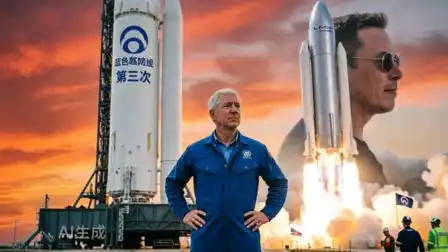
Bezos' Third Startup Still Can't Avoid Musk

Jeff Bezos Returns as CEO for Third Venture, Still Can't Avoid Musk After stepping down as Amazon CEO in 2021, Jeff Bezos has returned to the front lines as co-CEO of Prometheus, an AI startup he founded. In a recent CNBC interview, Bezos described the experience as "Type 2 fun"—exhausting but ultimately rewarding. Founded less than a year ago, Prometheus has already raised over $18 billion in two funding rounds, achieving a staggering $41 billion valuation. Prometheus aims to develop a "General Engineer AI" to accelerate the entire "invention loop"—design, simulation, testing, and manufacturing—for complex physical products like jet engines, spacecraft, and medical devices. This positions the company at the intersection of Bezos's past experiences: Amazon's platform-building scale and Blue Origin's rigorous physical engineering. This marks Bezos's third major venture, following Amazon and Blue Origin. His co-CEO is Vik Bajaj, bringing expertise from life sciences and hard tech. Bezos now dedicates most of his time to Prometheus, signaling his belief in its transformative potential. The move also comes as Bezos's space company, Blue Origin, faces challenges, including a recent test explosion delaying its New Glenn rocket. Meanwhile, Elon Musk's SpaceX achieved a record-breaking IPO, surpassing Amazon's market cap. While Musk focuses on AI for executing physical tasks (like Tesla's robots and SpaceX's engineering), Bezos is betting on AI to *invent* in the physical world. Prometheus enters a crowded industrial AI field with players like OpenAI, NVIDIA, and Tesla's Optimus. Its lofty valuation bets on the unproven but massive opportunity to become the foundational platform for engineering in the AI era—a "blue ocean" Bezos hopes to define before Musk does.

marsbit10 dk önce

Bezos' Third Startup Still Can't Avoid Musk

marsbit10 dk önce

Won't US Stocks Ever Fall Again? The 'Great Melt-up' Trap in the Era of High Debt

The article analyzes a popular theory circulating online that the U.S. stock market may be mathematically incapable of a true, sustained decline due to the country's massive and growing national debt. The argument suggests that the government's only path to managing this debt is through inflation and money printing, which would nominally lift asset prices like stocks, creating a perpetual "melt-up." The author places this idea within the historical context of market melt-ups, such as the dot-com bubble and Japan's asset bubble, where prices detach from fundamentals driven by momentum and FOMO. While acknowledging that a high-debt environment creates incentives for inflation, which is generally favorable for assets over cash, the article refutes key claims of the online theory. It clarifies that interest payments are not about to exceed GDP, that printing money is not the only option for the government, and that stocks do not reliably rise in lockstep with hyperinflation, citing historical examples from Germany, Zimbabwe, and Venezuela. The more probable outcome, according to the author, is a prolonged period of financial repression—moderate inflation above interest rates that slowly erodes debt and cash purchasing power, leading to nominally higher asset prices but potentially lower real returns. The core warning is that while long-term market trends may be upward, this does not eliminate the risk of significant interim crashes (30%, 40%, or more) or guarantee real wealth creation during inflationary times. The conclusion advises against betting one's entire financial future on a smooth, perpetually rising market narrative. Instead, it recommends a disciplined, diversified strategy involving productive assets (stocks, real estate, some gold, short-term bonds) and an adequate cash buffer to avoid forced selling during downturns. The key takeaway is to avoid extreme concentration in expensive assets and leverage, and not to base investment decisions on the hope that every market dip will inevitably be rescued.

marsbit30 dk önce

Won't US Stocks Ever Fall Again? The 'Great Melt-up' Trap in the Era of High Debt

marsbit30 dk önce

The Fate of Digital Banks: No Fancy App Can Outshine a Banking License

The Fate of Digital Banks: A Flashy App is No Match for a Banking License The article argues that despite attracting billions of users with fee-free checking accounts and sleek apps, most "neobanks" struggle to be profitable because their core business—transaction fees—is inherently low-margin. The real profit engine of banking is lending (credit), which generates interest income. However, many early neobanks operated without their own banking licenses, which restricted their ability to lend at scale. Examples like Nubank, Revolut, and Chime illustrate the point. While they gained users with free accounts, their eventual profitability came from rolling out credit products. The piece highlights systemic risks for neobanks that rely on third-party infrastructure, citing the Synapse bankruptcy, which froze user funds and revealed the fragility of such models. The solution, according to the author, is obtaining a formal banking license, like the U.S. OCC's national trust charter. This provides regulatory backing, allows direct custody of funds, and eliminates dependency on intermediary partners. The trend is now evident in the crypto sector, where companies like Kraken, SoFi, and others are actively pursuing such licenses. The article concludes that while technology changes, the fundamental business logic of banking—profiting from lending—remains constant. Successful digital banks ultimately conform to this old model, just with better interfaces and fairer terms.

Foresight News38 dk önce

The Fate of Digital Banks: No Fancy App Can Outshine a Banking License

Foresight News38 dk önce

İşlemler

Spot
Futures

Popüler Makaleler

ENA Nasıl Satın Alınır

HTX.com’a hoş geldiniz! Ethena (ENA) satın alma işlemlerini basit ve kullanışlı bir hâle getirdik. Adım adım açıkladığımız rehberimizi takip ederek kripto yolculuğunuza başlayın. 1. Adım: HTX Hesabınızı OluşturunHTX'te ücretsiz bir hesap açmak için e-posta adresinizi veya telefon numaranızı kullanın. Sorunsuzca kaydolun ve tüm özelliklerin kilidini açın. Hesabımı Aç2. Adım: Kripto Satın Al Bölümüne Gidin ve Ödeme Yönteminizi SeçinKredi/Banka Kartı: Visa veya Mastercard'ınızı kullanarak anında Ethena (ENA) satın alın.Bakiye: Sorunsuz bir şekilde işlem yapmak için HTX hesap bakiyenizdeki fonları kullanın.Üçüncü Taraflar: Kullanımı kolaylaştırmak için Google Pay ve Apple Pay gibi popüler ödeme yöntemlerini ekledik.P2P: HTX'teki diğer kullanıcılarla doğrudan işlem yapın.Borsa Dışı (OTC): Yatırımcılar için kişiye özel hizmetler ve rekabetçi döviz kurları sunuyoruz.3. Adım: Ethena (ENA) Varlıklarınızı SaklayınEthena (ENA) satın aldıktan sonra HTX hesabınızda saklayın. Alternatif olarak, blok zinciri transferi yoluyla başka bir yere gönderebilir veya diğer kripto para birimlerini takas etmek için kullanabilirsiniz.4. Adım: Ethena (ENA) Varlıklarınızla İşlem YapınHTX'in spot piyasasında Ethena (ENA) ile kolayca işlemler yapın.Hesabınıza erişin, işlem çiftinizi seçin, işlemlerinizi gerçekleştirin ve gerçek zamanlı olarak izleyin. Hem yeni başlayanlar hem de deneyimli yatırımcılar için kullanıcı dostu bir deneyim sunuyoruz.

194 Toplam GörüntülenmeYayınlanma 2024.12.10Güncellenme 2026.06.02

ENA Nasıl Satın Alınır

Tartışmalar

HTX Topluluğuna hoş geldiniz. Burada, en son platform gelişmeleri hakkında bilgi sahibi olabilir ve profesyonel piyasa görüşlerine erişebilirsiniz. Kullanıcıların ENA (ENA) fiyatı hakkındaki görüşleri aşağıda sunulmaktadır.

活动图片