Podcast Source: Invest Like The Best
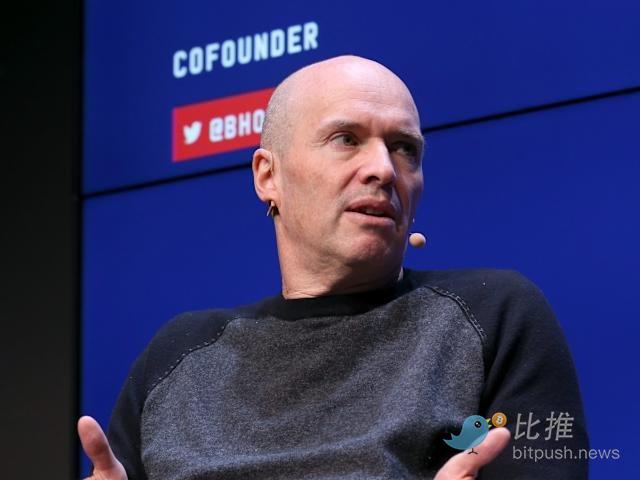
Interviewee: Ben Horowitz(Co-founder of a16z)
Broadcast Date: February 3, 2026
Compiled by: BitpushNews
Preface
Ben Horowitz believes that AI is rapidly reshaping the economy and the entrepreneurial landscape, and will significantly change various industries in the next year or two, creating new opportunities and companies. However, the biggest risk of this revolution is not technology, but policy—excessive regulation could directly slow down or even halt technological leadership.
Regarding unemployment and unfairness, he judges that AI will change the employment structure and amplify returns for the top performers, but it will also lower the barrier to entry and expand the sources of opportunity. Historically, every wave of automation has been accompanied by the disappearance of jobs and the birth of new professions. The key is not absolute fairness, but whether society still provides opportunities for upward mobility. In the AI era, both risks and opportunities are being amplified simultaneously.
The following is the original interview:
The United States in 2026: What is the "State of Play" in Your Eyes?
Interviewer: Ben, an interesting start—how do you view the current state of the U.S.? What does 2026 feel like to you? What's the "state of play"?
Ben: I think the tech industry is very healthy. The U.S. is highly competitive, and the entrepreneurial culture is excellent. From my perspective, that's the most critical part.
I travel around the world frequently, and almost everywhere I go, people ask: How can we have a "Silicon Valley"? The UK, France—they all ask the same question. They have many elements: talent, universities, research. But their problem is: the regulatory environment is worse, especially in the EU, which is becoming increasingly unfriendly to startups; more deeply, it's a cultural issue—in many places, young people don't feel that "doing something bigger than themselves" or "making the world a better place" is a value that society truly prioritizes, so it's hard to get people to dedicate their lives to a mission.
But in the U.S., this is astonishing: people are willing to fight for a mission.
As for the economy, I think it's better than most people imagine. We've implemented many stimulus measures: lower energy prices, less regulation, friendlier tax systems—these are starting to take effect gradually.
More importantly, there's AI. It will affect everything. There's hardly a problem for which you can't say: we have an opportunity to solve it with AI. Car crash deaths, cancer... many major problems could potentially have AI solutions. For the first time, we have a technology that can touch almost every difficult problem. This is new.
Why Will the Impact Be More "Felt" in the Next 12 to 24 Months?
Interviewer: You mentioned that more noticeable changes will occur in the next 12 to 24 months. Why that timeframe?
Ben: Because it's happening now, but it needs deployment and diffusion. Historically, technology deployment was slow often because of infrastructure: cars needed roads, traffic lights; the internet needed fiber optics, smartphones.
But AI is different. Internet infrastructure already exists. If a company wants to use AI, it can do so directly; it doesn't need to first build a "world that can use it." So the diffusion speed will be much faster.
Interviewer: What factors are most likely to interrupt the U.S.'s trajectory of solving problems with technology? What is the biggest risk?
Ben: Policy.
My father once told me: A bad government can destroy everything. No matter how many smart people you have, how good the culture is, or how strong the country is, it can be ruined by bad policy. Look at Venezuela—it was once extremely wealthy, then it turned to communism, and the result was collapse.
Europe also has many smart people, but the output is minimal. In some Eastern European countries during the communist era, much innovation and creativity almost "disappeared." Hungary, Romania produced a large number of genius scientists and entrepreneurs, but once the political system changed, the innovation ecosystem was cut off.
This could happen in the U.S. too. We might even "ban AI." The previous (Biden) administration's executive order once stipulated that selling GPUs required federal approval—that was an official executive order, later overturned. But we were that close to "withdrawing from the global chip competition." It's very fragile.
Another point: Technological solutions are usually more effective than policy solutions. Policy often has huge side effects. For example, during the pandemic, you could use policy to keep everyone at home, but there were many side effects, and the effectiveness wasn't guaranteed; in contrast, if you could develop drugs or vaccines, that was a better path.
The climate issue is similar: No matter how much Europe reduces emissions, if China doesn't, the effect is limited; but if you can develop safe and efficient nuclear energy or fusion, that's a solution that truly "changes the system."
Similarly, policies like "defunding the police" didn't make people safer; technology might actually improve public safety. In short, if you want to make the world better, almost any problem today can potentially be solved by entrepreneurs using technology—for entrepreneurs, there has never been a better era.
AI Enables Restaurant Owners to "Build Their Own Systems": Will This Overturn Your Investment Logic?
Interviewer: I had a long conversation with a restaurant owner in New York yesterday. He said he's going to use AI to transform the entire restaurant operation, even to "build an operating system" himself, without needing many traditional software companies. Will SaaS companies like Toast be replaced? How will this change the way you look at investment opportunities?
Ben: On the positive side: Everything is open for competition again. Many people overreact to traditional software companies, thinking they will all die, but companies like Salesforce, SAP aren't easily disrupted; replacing them requires heavy engineering and organizational capabilities.
However, it's true that: many things have become "something you can do yourself." This will significantly increase the "number of interesting companies."
Another phenomenon is: AI products are "much easier to use" than many historical technology products, so revenue growth is faster. For example, Cursor is essentially an IDE, but it reached a scale of revenue that might have taken over a decade in the past. The growth speed is shocking.
But from an investment perspective, what's really changing is: The "physical laws" of company building have changed. There used to be an iron rule for software companies: you can't catch up to a good product made by a small team by throwing money at it—Google couldn't hire two thousand engineers and catch up to a product someone else built in three years; that wasn't realistic.
Now it's different: if you have data, GPUs, money, you can brute-force many things to a result. Look at some players catching up in the large model competition in a very short time—that was almost impossible in the past. At the same time, the market size might far exceed historical imagination: not $50 billion, but maybe $5 trillion. Valuation, long-term value, competitive catch-up ability—these are all becoming unprecedented.
AI Research Talent Will Be "Priceless"
Interviewer: When you discuss AI investment internally, what's the biggest difference compared to four years ago?
Ben: The thing about AI researchers is very different. If you haven't actually participated in training large models with "hundreds of millions of dollars worth of resources" at places like Google, Meta, OpenAI, Anthropic, then even if you have the money, you might not know how to do it.
Because this isn't something you can learn in school. It's a bit like alchemy—more art than pure theory. The probability of success on the first try isn't high.
This also explains the phenomenon that seems absurd to outsiders: why are people willing to spend hundreds of millions, even billions of dollars to "poach" top AI researchers? Because if there are maybe only forty people in the world who truly know how to do this, and they might determine the fate of a $4 trillion company—the math changes.
AI and Inequality
Interviewer: In venture capital, people often talk about "power law," which背后 is actually inequality. AI amplifies this trend: billion-dollar researchers, super companies, wealth concentration. How do you view the good and bad of inequality?
Ben: The inequality caused by AI, I think, is an extension of the "Kobe effect."
Initially, how much an athlete could earn was limited by the size of the live audience; with television and global broadcasting, the market expanded, and a player could become a billionaire—that was impossible before. The internet allowed products to achieve global distribution quickly, further accelerating wealth concentration; AI adds another layer on top of this: the same product becomes more valuable, so the creator gets richer.
This is indeed the "bad side."
But the "good side" is: AI is extremely democratizing from day one. As long as you have a phone—and now most people have smartphones—you have a very powerful intelligent assistant. Every child can have a top-tier tutor. This might be one of the biggest opportunity equalizers we've ever seen: education, consulting, law, accounting, advice—all in your pocket.
My father also taught me: Life isn't fair. When the government tries to "correct everything to be completely fair," it often doesn't become fairer; instead, power gets concentrated in the hands of "those who execute the system," which historically has often led to disaster. What's truly important is: giving people opportunities—not necessarily exactly the same opportunities, but at least "having a chance."
A system that provides opportunities will inevitably produce inequality, but you can systematically allow more people to have opportunities. I think AI is very strong in this aspect.
"You Must Have Capital, Otherwise You'll Be Permanently Stuck at the Bottom"?
Interviewer: There's a saying online: you have a few years left to accumulate capital, otherwise you'll become part of the "permanent underclass." Because AI will make society need less labor, and those without capital will find it harder to break through. What do you think?
Ben: I don't think the door will close behind you. New technologies often multiply opportunities.
Look at cryptocurrency: many who made money didn't start with much, some even had almost no capital, they just entered the technology curve earlier. If something grows exponentially, even a little capital can multiply many times—you just need "one coin" to get in early.
As for "AI will massively destroy jobs," I think the predictability is overestimated. Humans have been automating since the agricultural age; back then, 95% of jobs were in agriculture, and almost all disappeared, but today there are a huge number of professions that people back then couldn't even imagine.
So sitting here today, it's hard to imagine what new jobs AI will create. Demand for creative work might rise, processing work might fall, but it might not be that simple. More crucially: if AI started around 2012 (image, NLP), and exploded with ChatGPT in 2022—where is the "great job destruction"? Why hasn't it happened? How can you be sure it will definitely happen next and won't create new jobs? I don't think it's that predictable.
The Next 10 to 20 Years: What Is Your Ambition?
Interviewer: In the next 10 to 20 years, what is your ambition?
Ben: I was deeply influenced by Andy Grove. He had a simple but profound view: When you are an industry leader, the growth of the industry depends on you. The market needs you to expand; no one will do it for you.
I see that the reason the U.S. is the U.S. is partly due to the fact: we won the Industrial Revolution. Entrepreneurs like Henry Ford, Edison created technology, technology brought military领先, economic领先, cultural influence—it wasn't accidental.
Now we are at a similar turning point: AI's transformation of government, society, business is equivalent to a new industrial revolution. We will either become the leader and provider of this technology, or we won't. If not, we will lose our status as an economic powerhouse, military powerhouse, and center of cultural influence. I think that would be terrible.
So one of our missions is, at the levels of funding, policy, helping entrepreneurs build companies, etc., to do our best to ensure the next generation of great companies come from the U.S. or the ally system.
What Did Andy Grove Teach You?
Interviewer: Specifically, what was Andy Grove's biggest influence on you? What did you learn?
Note: Andy Grove was the key figure who took Intel from a chip company to a global tech giant, known as "one of Silicon Valley's greatest professional managers," a founder of modern tech company management methods. Many entrepreneurs (e.g., Zuckerberg, etc.) regard him as a management mentor.
Ben: His influence on me is so great it's hard to break it down. "High Output Management" is my favorite management book; I even wrote the preface for the new edition.
Management theory itself isn't hard; an eighth grader can understand it; the difficulty is the psychological aspect—especially young people can't do it: it's confrontational, requires seeing through the surface to the organization, requires being very firm at certain moments, requires putting the overall interest of the organization above the individual.
He has a story: he went to manage Intel's Santa Clara factory, which had the worst indicators. He went to the site, put a roll of toilet paper under a chair. When management started making excuses, he took out the toilet paper and said: "Clean up your mess, then tell me when you can meet the target." Two months later the factory met the target, and afterwards it was always the best, so he got "Manager of the Year."
The Most Common Mistake Founders Make
Interviewer: When did you start personally experiencing this kind of "psychologically difficult" management lesson? How do you get young people to truly appreciate it?
Ben: The common path for founders is: invent something, then need to build a company, but don't know how, so make mistakes, mistakes damage the company, and make you lose confidence, then you start hesitating—and hesitation leads to failure.
Many founders become overly reliant on team input, but the team doesn't have the overall concept; only the leader does. If you delegate decision-making, it creates a power vacuum, and the organization starts to become political—someone will jump into the空白 to seize power.
One of the hardest situations is reorganization (reorg). Reorganization is essentially redistributing power to improve efficiency, but someone will inevitably lose power, and it might be a trusted, excellent veteran who will be very angry. If you compromise to avoid conflict, let him keep his power, you transfer power from the people doing the work to management—the organization will break.
Young people are unwilling to confront because they lack experience, aren't sure the reorg will really save the company, so they choose the "known way to avoid pain" rather than the "theoretically optimal organization," and end up destroying the company.
The Start of a16z: How Did You Manage to Sprint from Zero into the Top Tier?
Interviewer: What was the state when you first started a16z? In the first three days, three months, three years, how did you think about this business?
Ben: The background of the venture capital industry at the time was: there hadn't been a new "top-tier" venture capital firm for a long time. The threshold for being top-tier came from prestige: you had to have invested in Apple, Cisco, Google, Yahoo, etc. A new firm starting from zero couldn't immediately have that track record.
And venture capital is extremely stratified. During booms, everyone makes money, but truly top entrepreneurs only choose top-tier firms: it affects hiring, follow-on funding, market trust. So if you're not top-tier, it's hard to survive long-term.
We knew we had to become top-tier, but our track record wasn't enough, so we changed our approach: VC is a good product for LPs, but it's not a good product for entrepreneurs. If we could make the "product for entrepreneurs" better, we could win.
We came from an entrepreneurial background and knew what founders lacked: confidence, knowledge, network, judgment frameworks. We wanted to build a firm that could systematically empower founders, make them more like real CEOs, not forced to rely on others.
Second point: at the time, VCs almost never marketed, because they lived off mysterious prestige; the more they talked, the more likely they were to be exposed. But we came out publicly expressing views, speaking out, so the media reported on us a lot, and everyone quickly knew we offered a different "product."
Why the Name "Andreessen Horowitz"?
Interviewer: Why did you decide to be so high-profile from the start? And why name the firm after yourselves?
Ben: Mark asked me: why don't VCs market? He traced it back to earlier financial history: JP Morgan, Rothschild, etc., even funded both sides during WWII, so they极度 avoided exposure; this "low-key tradition" continued. Later, the VC prestige system was established, and there was no incentive to market.
After we marketed, we received a lot of criticism: some said we were narcissistic, named it after ourselves, too high-profile. But the practical reason was very real: we were fundraising in 2009, on the edge of the financial crisis. The LPs' biggest worry was: you are excellent entrepreneurs, will you run off to start another company in two years? The LPs would be "left in the fund."
I thought of a way: name the fund after us, so LPs know "this is tied to our reputation," we won't easily leave. This method actually worked.
Interviewer: From taking off in 2009 to reaching cruising altitude, roughly when did you "stabilize"? What was the hardest part?
Ben: Initially, we didn't really understand investing. We had done angel investing, but had no institutional VC experience. We made quite a few mistakes: missed ones we should have invested in, and invested in some we shouldn't have. Missing good deals might hurt more.
Another mistake was our偏差 in GP profile judgment. We overemphasized "must have been a CEO to be an investor," thinking only then would they know how to help founders become CEOs. This shaped the culture and had benefits, but the reality is: many CEOs don't really want to be investors; and many CEOs aren't good at teaching others how to be CEOs.
Fund I was very successful: small size, strong projects (Skype, Slack, Okta, Stripe, etc.), basically impossible not to explode. Fund II wasn't as good as I. By Fund III we realized the GP profile was problematic; that period was scary, later it became a good fund because of Coinbase, Databricks, Lyft, GitHub, etc. After Fund III, we were more certain about "what this firm needs to be."
A later bigger challenge was scaling. We always believed "software is eating the world," and VC should be able to scale. But the structure of traditional VC, the way partner power is分配, is hard to expand. We gradually formed a multi-team structure: each team 4-5 people, plus platform capabilities, covering different technology markets. It became more formed around 2018 (crypto fund) onwards, later扩展到 the whole company.
Why Don't You Do "AI Private Equity Roll-Up Optimization"?
Interviewer: Some say large VCs might eventually become institutions like Blackstone, Apollo? Especially now with the big wave of "AI private equity buyout + optimization."
Ben: AI private equity roll-up optimization is indeed a very good business model: like how spreadsheets drove traditional private equity back in the day, AI might create a new kind of private equity: buy companies, optimize with AI, increase value.
But we won't do it, for two reasons:
First, culturally opposite. We are about "building new things," believe in entrepreneurs, pursue growth; private equity core is "entry price," emphasizes cost and optimization, not typical VC mindset.
Second, I don't want to do a business that "makes money by optimizing existing things, layoffs, etc." We prefer to help new technology companies create the future.
The Cost of Scaling: Culture Drifts, So Culture Must Be Defined by "Behavior"
Interviewer: What trade-offs does your large scale bring?
Ben: The larger the scale, the more you must be extremely focused on culture, otherwise culture will drift. Our investment in culture probably exceeds that of any VC: sign a culture document before joining; I spend an hour with each employee explaining culture; execution is also very strict.
Interviewer: How do you define culture? How do you design it and ensure people truly follow it?
Ben: The most important insight comes from Bushido: Culture is not a set of ideas, but a set of actions.
If you write culture as "integrity," "support each other," "do the right thing," that's mostly empty slogans. You must turn it into specific behaviors: for example, if you say "respect entrepreneurs," what is the behavior?
-
Cannot be late for meetings with entrepreneurs. I even fined people by the minute in the early days of my startup.
-
Must reply promptly. Even if rejecting, say "no" clearly and explain why.
-
We will survey the entrepreneur's experience after you reject them to ensure it was good.
-
If you belittle entrepreneurs to make yourself look smart, you will be fired. We are "dream builders," not "dream killers."
Culture is implemented through actions, not pretty words.
Father's Influence: Shift from Left to Right, "Flowers Are Cheap, Divorce Is Expensive"
Interviewer: You mentioned your father gave you a lot of influence, like "life isn't fair." Can you talk more about him?
Ben: He was a so-called "red diaper baby." My grandparents were communists, held secret meetings, had party cards. My grandfather was fired during the McCarthy era due to communist background.
My father was left-wing when young, was an editor for the famous left-wing magazine "Ramparts," and also had connections with the Black Panthers. Later he left politics for a while, then reemerged on the right-wing stance. He understood the problems of socialism, communism very well, which helped me a lot.
He said something to me that I remember for life: go to the library and pick any book about socialism, you'll see page after page about how to "distribute wealth," but you won't find a single sentence about how to "create wealth." This taught me systems thinking.
He wasn't the "new age father" type, more like the old-era father: didn't talk often, but occasionally gave you a very sharp, very practical piece of advice. Once I was with my three kids, weather 102 Fahrenheit, car broke down, kids spilled a whole gallon of apple juice on the carpet... I was about to崩溃. My father looked at me and said: "Son, you know what's cheap? Flowers. You know what's expensive? Divorce."—he had been married four times, so he knew what he was talking about.
The Frontier That Excites You Most Now: Programming, Film & TV, and "Postmodern" AI Art
Interviewer: What attracts and inspires you most right now?
Ben: The programming field has been amazing recently. People used to say "AI can write code," but there would be security vulnerabilities, like "vibe coding." But after this holiday season, there was an inflection point: truly great programmers started saying—"Wow, this is really helping me," productivity seems to have suddenly increased 100x. There are few technologies that can make the world change overnight, but it's happening regularly now.
We also spend a lot of time talking to Hollywood people about AI. AI might make movies better, cheaper: you shoot three takes, then AI generates high-quality variants and combinations, no need to shoot 15-20 takes. A powerful tool for creators. Music is the same, might enter a "postmodern art" phase. Like when hip-hop was criticized for sampling "not being music," but that was actually the moment a new art form was born.
Interviewer: Which hip-hop figures influenced you the most?
Ben: Nas is a very good friend of mine, he's had a big influence. His way of seeing the world is so different, constantly gives me new perspectives. We both really like Rakim. He has a lyric "Turn up the bass... I’m letting knowledge be born", Nas paused and asked me: "Why is he handing out cigars?" I said I didn't know. Nas said: "This is about knowledge being born, you hand out cigars when a child is born." I'd listened to that song a thousand times and never caught that.
He often hears what I can't hear, sees what I can't see. This completely different perspective is very precious.
Interestingly, we also did the Coinbase investment together. Nas called me earlier asking about Bitcoin, I explained the原理 to him. Later I asked Chris Dixon about the founders of this company, Chris said one of them loved hip-hop. I invited Nas to my house to watch a game, everyone met and talked—that促成 the investment.
Las Vegas Police Department Collaboration Project
Interviewer: Can you talk about your collaboration project with the Las Vegas Police Department? It seems like a case of "new technology improving public systems."
Ben: The Las Vegas Police Department has several characteristics that attracted me:
They are led by an elected sheriff, don't report to the mayor, so they didn't get caught up in the "defund the police" political movement, one of the few cities that didn't cut budgets. They also didn't go towards over-militarization, more community policing. The data speaks for itself: Las Vegas's murder solve rate is 94%, San Francisco about 75%, Chicago 30%+, national average under 60%.
I asked Sheriff Kevin McMahill: why is the solve rate so high? He said: when a murder happens, someone always knows who the killer is, but they don't tell the police. They tell us, because we are part of the community.
I thought this would be a perfect "proving ground" for technology deployment. We invested in a lot of public safety technology in our American Dynamism project. I said: we are going to become the most high-tech police department in the U.S., even globally—I'll pay for it.
We built a drone program, 911 dispatch technology, AI camera system, etc. Whenever there's a 911 call or gunshot detection, a drone can be on scene within 90 seconds; video is immediately pushed to every officer's phone nearby.
After deployment, crime rates dropped over 50%; officer-involved shootings of suspects dropped nearly 75%. Everyone is safer—suspects, ordinary citizens, police are all safer.
What surprised me most was: a lot of violent conflicts come from "misdescription." For example, a carjacking is reported as "2004 blue Hyundai," but it might actually be "2008 green Hyundai." Police stop the wrong car, some people have trauma with police, there's a gun in the car,就容易发生悲剧. With AI cameras, we know it's the target car, and can even know there's a baby in the car. So we don't send one officer to "try," but organize a full force, safely control the situation.
Policing is inherently dangerous, but intelligence and technology significantly reduce the danger.
Another连带 effect is: technology makes the police profession "dignified, attractive" again. In the past, because no one wanted to be a police officer, we had to lower standards; now standards are反而提高. The drone center is very advanced, even has futuristic-looking vehicles on patrol, making many people want to join. Las Vegas has a high proportion of veterans, so talent pool is strong too.
Final Question: What Is the Greatest Kindness You've Experienced?
Interviewer: My last question is always the same: what is the kindest thing someone has ever done for you?
Ben: I had a mentor, Ken Coleman, he was an executive at Silicon Graphics at the time. I was introduced to him in my sophomore year of college, and he gave me a summer internship. Without that job, I probably wouldn't have come to Silicon谷, and none of what followed would have happened. This was something he didn't have to do for me, but it changed my life.
Interviewer: This type of answer is the most common in the 500+ interviews I've done: someone was willing to bet on you when they didn't have to. Ben, very glad to finally have this conversation with you, thank you for your time.
Twitter:https://twitter.com/BitpushNewsCN
Bitpush TG Discussion Group:https://t.me/BitPushCommunity
Bitpush TG Subscription: https://t.me/bitpush