Avantis [AVNT] vượt trội HYPE & ASTER với mức tăng 27%, nhưng ĐIỀU NÀY chặn đứng đường đi

ambcrypto2026-01-26 tarihinde yayınlandı2026-01-26 tarihinde güncellendi

Özet

Avantis (AVNT) đã tăng vọt hơn 27% trong ngày, vượt trội so với các đồng token DEX khác như Hyperliquid (HYPE) và Aster (ASTER). Đà tăng này được thúc đẩy bởi hoạt động mạng gia tăng mạnh mẽ, với khối lượng giao dịch trung bình đạt hơn 200K AVNT và hơn 1.461 giao dịch, mức cao nhất kể từ cuối tháng 12/2025. Sàn Upbit chiếm 46% khối lượng giao dịch, cho thấy sự tham gia tích cực của các nhà đầu tư châu Á. Tổng giá trị bị khóa (TVL) của Avantis vượt 104 triệu USD, phản ánh sự tin tưởng ngày càng tăng của người dùng. Về mặt kỹ thuật, AVNT phá vỡ mô hình falling wedge, với chỉ báo MACD cho thấy xu hướng tăng mạnh. Tuy nhiên, giá hiện đang gặp kháng cự tại vùng mở cửa năm ($0.36), một mốc quan trọng sẽ quyết định hướng đi trong thời gian tới. Triển vọng ngắn hạn nghiêng về tích cực dù xu hướng tháng qua vẫn là giảm.

Các token sàn giao dịch phi tập trung (DEX) đã có những tâm lý hỗn hợp trong vài tuần qua, không đáp ứng được sự kỳ vọng ban đầu khi chúng được ra mắt. Tuy nhiên, một số token đang dần dần tạo được chỗ đứng.

Ví dụ, token AVNT của Avantis đã tăng hơn 27% trong ngày tại thời điểm báo chí đưa tin. Đợt tăng đột biến này diễn ra sau một tuần thị trường im ắng, trong khi các câu chuyện thị trường mới tiếp tục thể hiện tốt hơn.

Altcoin này đã vượt trội hơn tất cả các đồng nghiệp của nó, như Hyperliquid [HYPE] và Aster [ASTER], cùng những token khác, về mức tăng hàng ngày. Hoạt động mạng lưới và sự bứt phá kỹ thuật chủ yếu là động lực thúc đẩy đợt tăng này, nhưng chi tiết đằng sau nó là gì?

Hoạt động mạng lưới đang hồi sinh

Hoạt động mạng lưới đã tăng vọt trên hơn bốn mặt trận. Đầu tiên, số giao dịch trung bình hơn 200K AVNT đã tăng vọt lên mức được ghi nhận vào cuối tháng 12 năm 2025. Để dễ hình dung, ngày hôm đó đã chứng kiến hơn 1.461 giao dịch như vậy và vẫn đang tiếp tục tăng, theo dữ liệu từ BaseScan.

Dữ liệu này cho thấy những người tham gia đang tích cực bán và mua token. Trên thực tế, trong năm ngày qua, các cá voi đã tích lũy token này trên sàn giao dịch Coinbase.

Hoạt động này dẫn đến sự gia tăng khối lượng giao dịch ngay cả trên các sàn giao dịch khác. Tổng khối lượng giao dịch đạt 64,4 tỷ đô la, với thị phần lớn nhất trong ngày thuộc về sàn giao dịch Upbit.

Upbit chiếm hơn 46% tổng khối lượng giao dịch trong ngày. Điều này cho thấy các nhà đầu tư châu Á là những người thúc đẩy chính của đợt tăng này.

Theo Quỹ Avantis, Base Chain chiếm 75% thị phần thị trường phái sinh của Avantis. Token DEX này cũng đã được tích hợp trên 25 ví, điều này đồng nghĩa với phạm vi tiếp cận rộng hơn. Những ví này cung cấp một cộng đồng người dùng đa dạng từ khắp nơi trên thế giới.

Trên thực tế, số lượng người dùng đã vượt quá 65K tại thời điểm viết bài, khẳng định quan điểm đã nêu ở trên về những người tham gia. Điều này thúc đẩy giá trị của token, vì nó quyết định tâm lý thị trường.

Hơn nữa, Tổng giá trị bị khóa (TVL) đã vượt qua mốc 104 triệu đô la. Điều này càng làm nổi bật việc người dùng đang ngày càng có thêm niềm tin vào token DEX, do đó mà khóa token.

Liệu mức bứt phá giá của Avantis có được duy trì?

Đó chưa phải là tất cả. Triển vọng hành động giá của altcoin phản chiếu các mẫu hình hoạt động mạng lưới.

Giá Avantis đã phá vỡ mô hình nêm giảm (falling wedge) tồn tại trong suốt tháng qua. Các thanh MACD đang tăng kích thước với Chỉ số Choppiness dưới 40. Những chỉ báo này cho thấy AVNT đang trong một xu hướng mạnh.

Duy trì đà này về mặt kỹ thuật và on-chain có thể giúp AVNT lấy lại đỉnh của mô hình nêm. Sự phá vỡ báo hiệu một sự thay đổi trong cấu trúc thị trường, mặc dù các khung thời gian cao hơn cũng cần phải đồng bộ.

Hiện tại, giá đang chững lại quanh mức 0,36 đô la, một vùng mà nó đã dao động trong tuần đầu tiên của năm. Nó cũng trùng với mức mở cửa năm (yearly open), giờ đây đã trở thành kháng cự, vì giá đang gặp khó khăn trong việc vượt qua nó.

Trong ngắn hạn, Avantis có xu hướng nghiêng về phe giá lên (bullish) nhưng lại nghiêng về phe giá xuống (bearish) trong tháng qua.


Suy nghĩ cuối cùng

  • Avantis tăng 27%, được thúc đẩy bởi hoạt động mạng lưới và sự bứt phá kỹ thuật.
  • AVNT đối mặt với một bài kiểm tra quyết định tại vùng mở cửa năm, điều này có thể xác định quỹ đạo của nó trong vài phiên tới.


Trend Kriptolar

İlgili Sorular

QĐiều gì đã thúc đẩy giá token AVNT tăng hơn 27%?

AHoạt động mạng gia tăng mạnh mẽ và sự bứt phá kỹ thuật từ mô hình nêm giảm, cùng với khối lượng giao dịch lớn và sự tích lũy từ các cá voi.

QSàn giao dịch nào chiếm tỷ trọng lớn nhất trong khối lượng giao dịch AVNT?

ASàn Upbit chiếm hơn 46% tổng khối lượng giao dịch, cho thấy các nhà đầu tư châu Á là động lực chính của đợt tăng giá này.

QChỉ số TVL (Tổng giá trị bị khóa) của Avantis đạt mức nào?

ATVL của Avantis đã vượt mốc 104 triệu USD, phản ánh sự tin tưởng ngày càng tăng của người dùng vào token DEX này.

QAVNT đang gặp phải kháng cự quan trọng tại mức giá nào?

AGiá AVNT đang gặp kháng cự tại vùng $0.36, trùng với mức giá mở cửa đầu năm và đây là vùng mà giá đang gặp khó khăn để vượt qua.

QDấu hiệu kỹ thuật nào cho thấy AVNT đang trong xu hướng mạnh?

AChỉ số MACD có các thanh tăng dần kích thước và Choppiness Index dưới 40, cho thấy AVNT đang trong một xu hướng mạnh.

İlgili Okumalar

Wall Street's Most Famous 'Cassandra' Now Has His Sights Set on Nvidia

Michael Burry, the famed "Big Short" investor, has once again captured Wall Street's attention with a series of short positions against major tech and semiconductor stocks, most notably Nvidia. In late June and July, through his "Cassandra Unchained" newsletter, Burry disclosed short bets against Nvidia, Tesla, Applied Materials, Caterpillar, the SOXX semiconductor ETF, and later, Micron Technology. His core thesis revolves around potential distortions in the AI infrastructure boom, specifically questioning whether extended depreciation schedules (e.g., 6 years vs. a realistic 2-3 years for AI chips) by cloud giants like Microsoft and Google artificially inflate profits. He also raises concerns about possible "off-balance-sheet circular financing," where chip demand might be propped up by vendor-backed funding to clients. Nvidia's stock experienced volatility following these disclosures, briefly dipping but largely holding near Burry's reported entry points, leaving his positions roughly flat or slightly underwater as of late July. This move is part of a pattern for Burry, whose track record since his legendary 2008 bet is mixed. He has faced notable losses, such as on Tesla in 2021, while scoring on broader market turns like the 2020 pandemic crash. His methodology focuses intensely on free cash flow and scrutinizing original financial documents to spot overvaluation and structural risks, but it often struggles with timing the market. The article contrasts Burry's stance with other prominent investors. Steve Eisman, another "Big Short" figure, is not shorting Nvidia, citing strong fundamentals but expressing nervousness about sustainability. Jim Chanos agrees with the broad "accounting mismatch" concern—comparing it to the dot-com bubble—but targets financial leverage in private equity firms rather than the chip stocks themselves. While Nvidia's short interest remains relatively low at 1.3-1.4% of float, the massive stock size means absolute short losses have been significant, exceeding $5 billion earlier this year. The piece concludes that for ordinary investors, the key takeaway is not replicating specific short bets but learning from the critical frameworks these investors use: questioning rosy accounting, identifying structural vulnerabilities, and maintaining skepticism during market euphoria, even if pinpointing the exact catalyst for a downturn remains elusive.

marsbit15 dk önce

Wall Street's Most Famous 'Cassandra' Now Has His Sights Set on Nvidia

marsbit15 dk önce

Weekly Selection丨Epic Stock Market Volatility, Changxin Tech's IPO Reshapes Storage Landscape, Saylor Aims to Re-Anchor STRC Around September 8th

PANews Weekly Digest: Market Turmoil, Tech Breakthroughs, and Crypto Developments. The week saw significant volatility across global markets. South Korea's KOSPI index experienced extreme turbulence, including multiple trading halts, largely driven by sharp declines in AI hardware stocks like SK Hynix. In contrast, China's Changxin Xinqiao (CXC) achieved a landmark IPO with a market cap surpassing 4 trillion yuan, marking a major success for the domestic DRAM industry after a decade of losses. In the crypto and Web3 space, several key narratives emerged. AI is driving demand for new infrastructure, with projects like AI agent wallets and programmable payments gaining traction, attracting interest from firms like Coinbase. The Bitcoin mining sector is pivoting, with companies like MARA focusing on energy management as electricity becomes a core AI-era asset. Meanwhile, the RWA (Real World Assets) sector faces a "utilization puzzle," with hundreds of billions in on-chain assets remaining dormant. Notable market movements included a historic single-day surge of over 17% for the KOSPI index and a significant migration of $16.5 billion in staked ETH within the Lido ecosystem. Michael Saylor announced a target to re-peg the STRC stablecoin around September 8th. Other highlights include discussions on Ethereum's ambitious 2030 roadmap for scaling and privacy, analysis showing high protocol revenues not always translating to token price gains, and warnings from Citi about potential extreme commodity price shocks by late 2026.

marsbit20 dk önce

Weekly Selection丨Epic Stock Market Volatility, Changxin Tech's IPO Reshapes Storage Landscape, Saylor Aims to Re-Anchor STRC Around September 8th

marsbit20 dk önce

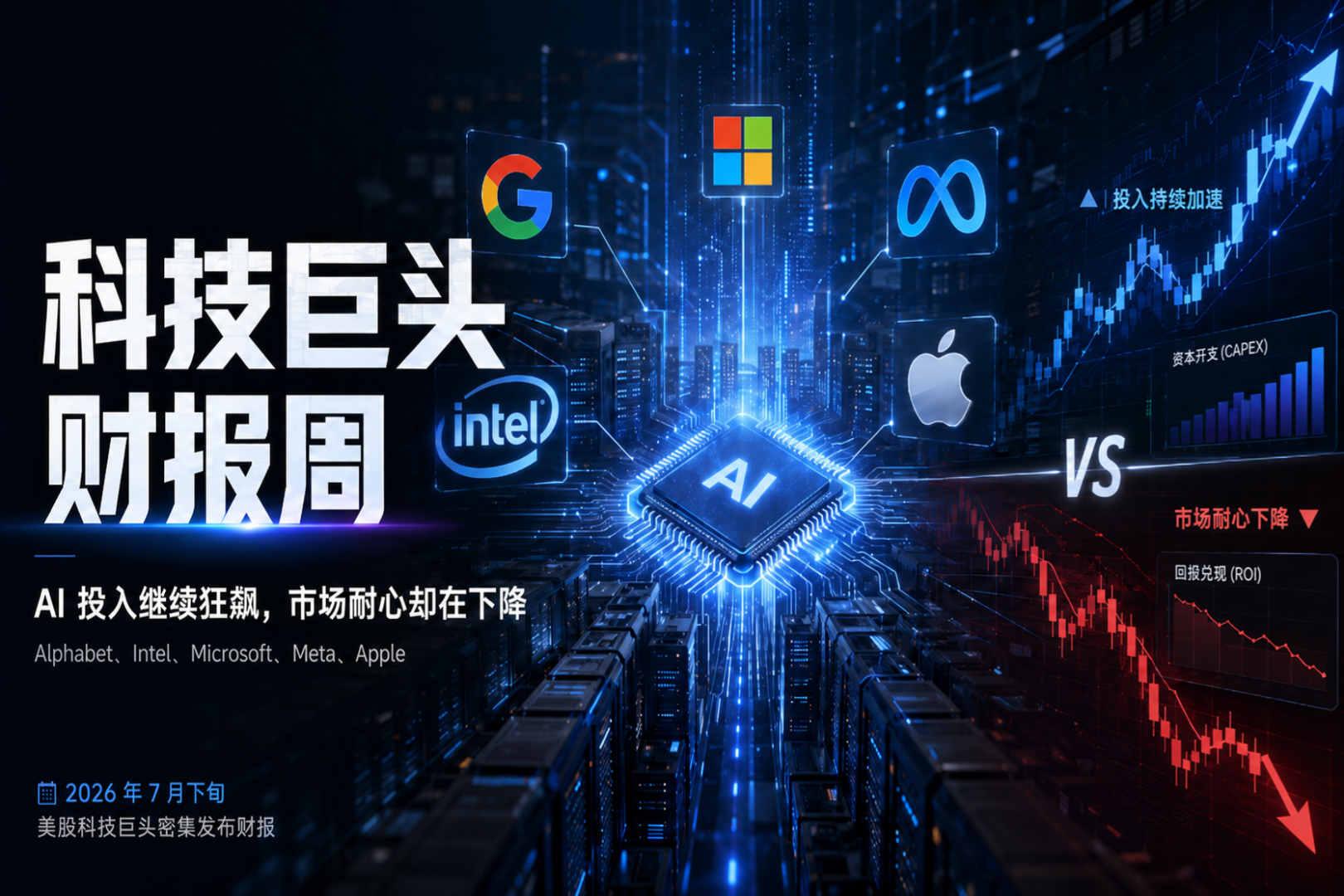
When the Market Begins to Question AI Capex: A Full Analysis of Q2 Earnings Reports from Five Tech Giants

In late July 2026, five major US tech giants—Alphabet, Intel, Microsoft, Meta, and Apple—released their Q2 earnings reports. While all companies exceeded revenue and profit expectations, driven by strong AI-related business growth, investor reactions diverged sharply due to concerns over escalating AI capital expenditures (capex) and their impact on free cash flow. Alphabet reported strong revenue growth and a surging cloud business, but its stock fell after announcing a doubled year-on-year capex and negative quarterly free cash flow for the first time. Intel posted its strongest revenue growth in over 15 years, but its stock experienced volatile trading after significantly raising its full-year capex guidance. Microsoft saw its stock surge after beating estimates and, crucially, lowering its capex forecast while projecting positive free cash flow. Meta faced the most severe sell-off as its profits declined despite revenue beats, with free cash flow plunging over 90% and its capex guidance raised. Apple reported record June-quarter results, but its stock plummeted after providing Q4 revenue guidance that fell short of expectations, citing supply chain constraints and forex headwinds. The overall takeaway is that the market's focus has shifted from validating AI demand to scrutinizing the timeline for returns on massive AI investments. Companies demonstrating a clearer path to managing capex and preserving free cash flow, like Microsoft, were rewarded, while those signaling continued aggressive spending faced investor skepticism.

Odaily星球日报29 dk önce

When the Market Begins to Question AI Capex: A Full Analysis of Q2 Earnings Reports from Five Tech Giants

Odaily星球日报29 dk önce

a16z: From Companies to DAOs, DUNA May Become the Next Generation Organizational Form

This article, "From Companies to DAOs: How DUNA Could Become the Next Organizational Form," traces the 500-year evolution of business collaboration. It begins with medieval structures like the *commenda* and Florentine *compagnia*, which exposed partners to personal risk. The modern corporation, exemplified by the Dutch East India Company (VOC), was a revolutionary leap, enabling large-scale, capital-intensive ventures by offering limited liability and reducing coordination costs. However, corporations introduced new challenges like principal-agent problems and bureaucratic overhead. The piece argues that software and internet-native protocols are now reducing these traditional overheads. Decentralized Autonomous Organizations (DAOs) emerged as a new model for coordination without centralized management. Yet, DAOs face a significant legal vacuum: they lack legal recognition, leaving members exposed to unlimited personal liability, and their tokens are vulnerable to being classified as securities under unclear regulations (e.g., the Howey Test). This has forced projects into suboptimal workarounds like offshore foundations. The article identifies the Decentralized Unincorporated Nonprofit Association (DUNA) as a potential solution. Recently legalized in states like Wyoming, the DUNA provides a legal wrapper for decentralized networks. It grants key protections—legal personality, limited liability, and perpetual existence—to a group without imposing a traditional hierarchical management structure. This allows token-holder communities to govern, hold assets, and contract as a single legal entity, aligning with their decentralized nature. While DUNA doesn't solve all governance challenges or magically resolve securities law questions, it represents a crucial step. It fills the legal recognition gap, offering a native legal form for internet-scale, decentralized collaboration and extending the separation of personal risk from organizational venture into a new domain.

marsbit1 saat önce

a16z: From Companies to DAOs, DUNA May Become the Next Generation Organizational Form

marsbit1 saat önce

2026 Mid-Year Report On-Chain RWA: Tokenized Stock Market Cap Doubles in a Year, But 90% of Rights Are Hollow Shells

The 2026 Mid-Year Report on On-Chain RWA highlights a significant growth in tokenized stock market capitalization, which nearly doubled from $951 million in March to $1.89 billion by July. However, the report reveals a fundamental contradiction in this "layer 2.5" ecosystem: products with the strongest legal foundation (like regulated U.S. infrastructure) lack liquidity and distribution, while freely tradable offshored wrapper products often lack substantive ownership rights. The increase is driven largely by a few products (SECZ, FGRS, STRCx) and platforms (Ondo, xStocks, Securitize collectively hold over 85% share). While distributed value across networks like Ethereum, Solana, and BNB Chain has grown, the market remains fragmented. Products referencing the same underlying asset (e.g., Apple stock) are distinct legal liabilities with different intermediaries and jurisdictional rules, offering varying degrees of legal claim. The report cautions that headline numbers are misleading, as they reflect changes in distributed token value—driven by issuance, conversions, and price movements—not pure investor inflows. True "canonical shares" with legal ownership, wide wallet distribution, institutional liquidity, and independent on-chain price discovery do not yet exist at scale. Tokenized treasuries show stronger product-market fit, and ETFs may be easier to scale than single stocks. The core takeaway is a trade-off: legal certainty versus liquidity and composability.

marsbit2 saat önce

2026 Mid-Year Report On-Chain RWA: Tokenized Stock Market Cap Doubles in a Year, But 90% of Rights Are Hollow Shells

marsbit2 saat önce

İşlemler

Spot

Popüler Makaleler

ASTER Nasıl Satın Alınır

HTX.com’a hoş geldiniz! Aster (ASTER) satın alma işlemlerini basit ve kullanışlı bir hâle getirdik. Adım adım açıkladığımız rehberimizi takip ederek kripto yolculuğunuza başlayın. 1. Adım: HTX Hesabınızı OluşturunHTX'te ücretsiz bir hesap açmak için e-posta adresinizi veya telefon numaranızı kullanın. Sorunsuzca kaydolun ve tüm özelliklerin kilidini açın. Hesabımı Aç2. Adım: Kripto Satın Al Bölümüne Gidin ve Ödeme Yönteminizi SeçinKredi/Banka Kartı: Visa veya Mastercard'ınızı kullanarak anında Aster (ASTER) satın alın.Bakiye: Sorunsuz bir şekilde işlem yapmak için HTX hesap bakiyenizdeki fonları kullanın.Üçüncü Taraflar: Kullanımı kolaylaştırmak için Google Pay ve Apple Pay gibi popüler ödeme yöntemlerini ekledik.P2P: HTX'teki diğer kullanıcılarla doğrudan işlem yapın.Borsa Dışı (OTC): Yatırımcılar için kişiye özel hizmetler ve rekabetçi döviz kurları sunuyoruz.3. Adım: Aster (ASTER) Varlıklarınızı SaklayınAster (ASTER) satın aldıktan sonra HTX hesabınızda saklayın. Alternatif olarak, blok zinciri transferi yoluyla başka bir yere gönderebilir veya diğer kripto para birimlerini takas etmek için kullanabilirsiniz.4. Adım: Aster (ASTER) Varlıklarınızla İşlem YapınHTX'in spot piyasasında Aster (ASTER) ile kolayca işlemler yapın.Hesabınıza erişin, işlem çiftinizi seçin, işlemlerinizi gerçekleştirin ve gerçek zamanlı olarak izleyin. Hem yeni başlayanlar hem de deneyimli yatırımcılar için kullanıcı dostu bir deneyim sunuyoruz.

602 Toplam GörüntülenmeYayınlanma 2025.09.25Güncellenme 2026.06.02

ASTER Nasıl Satın Alınır

Tartışmalar

HTX Topluluğuna hoş geldiniz. Burada, en son platform gelişmeleri hakkında bilgi sahibi olabilir ve profesyonel piyasa görüşlerine erişebilirsiniz. Kullanıcıların ASTER (ASTER) fiyatı hakkındaki görüşleri aşağıda sunulmaktadır.

活动图片