Tại sao Ethereum lại khẩn thiết cần ZK hóa?

marsbit2026-01-13 tarihinde yayınlandı2026-01-13 tarihinde güncellendi

Özet

Gần đây, câu hỏi lớn nhất là: Đâu là tầm nhìn của Ethereum? Nếu như năm 2017, Ethereum tập trung vào ICO và máy tính toàn cầu, năm 2021 là DeFi và tầng giải quyết tài chính, thì năm 2025 này, dường như chưa có một tầm nhìn mới nào có thể sánh ngang. Một nửa câu trả lời có thể là ETF, nhưng nửa còn lại chắc chắn là ZK. Ethereum là blockchain đặt cược nhiều nhất vào ZK. Vitalik gần đây rất phấn khích khi thông báo ZKEVM đã bước vào giai đoạn Alpha. Vậy tại sao Ethereum lại tập trung vào ZK đến vậy? Mặc dù TPS của Ethereum hiện không thấp (đỉnh lý thuyết ~200 TPS) nhờ tăng giới hạn Gas nhiều lần, nhưng việc này có cái giá của nó: các node phải chạy trên máy chủ đắt tiền hơn. Ethereum muốn duy trì sự phi tập trung, nên không thể yêu cầu phần cứng quá cao. Giải pháp tất yếu là ZK hóa Mainnet. Lợi ích của ZK hóa là các node có thể dễ dàng xác minh các bằng chứng ZK thay vì phải kiểm tra từng giao dịch phức tạp, giống như giáo viên chấm bài thi bằng máy quét thay vì chấm tay. Điều này giúp tăng hiệu suất đáng kể mà không đòi hỏi chi phí phần cứng tăng thêm. ZK hóa là điều kiện tiên quyết để tiếp tục tăng giới hạn Gas và đạt TPS > 1000. Vậy các đội ZK bên thứ ba (như Polygon, Scroll, ZKsync, Taiko) có còn cần thiết không? Có. Ethereum cần cộng đồng mã nguồn mở để thử nghiệm và đổi mới. Các đội này đang phát triển các loại ZK-EVM khác nhau (từ type 1 đến type 4). Đặc biệt, ZK-VM (như Brevis) thậm chí còn có vị thế vững chắc hơn vì không bị giới hạn bởi EVM, mang lại hiệu suất cao ...

Gần đây, câu hỏi tôi nhận được nhiều nhất là, làm thế nào để nhìn nhận về câu chuyện (narrative) của Ethereum?

Quả thực, Ethereum năm 17 chủ đạo là ICO và máy tính toàn cầu, năm 21 là DeFi và tầng thanh toán tài chính. Còn đến năm 25 này, dường như hiếm có một câu chuyện mới nào có thể sánh ngang về tầm vóc với những câu chuyện cũ trước đây.

Có thể ETF và Staking ETF tính là nửa phần, nhưng điều này không nằm trong tầm kiểm soát của các nhà phát triển Ethereum. Nếu phải nói về nửa phần còn lại, thì đó chỉ có thể là ZK.

Ethereum rõ ràng là blockchain công khai đặt cược nhiều nhất vào ZK trong toàn bộ thế giới Crypto, không còn nghi ngờ gì nữa.

Mấy ngày trước Vitalik tỏ ra khá phấn khích, ông đã chính thức thông báo trên Twitter rằng ZKEVM hiện đã bước vào giai đoạn Alpha.
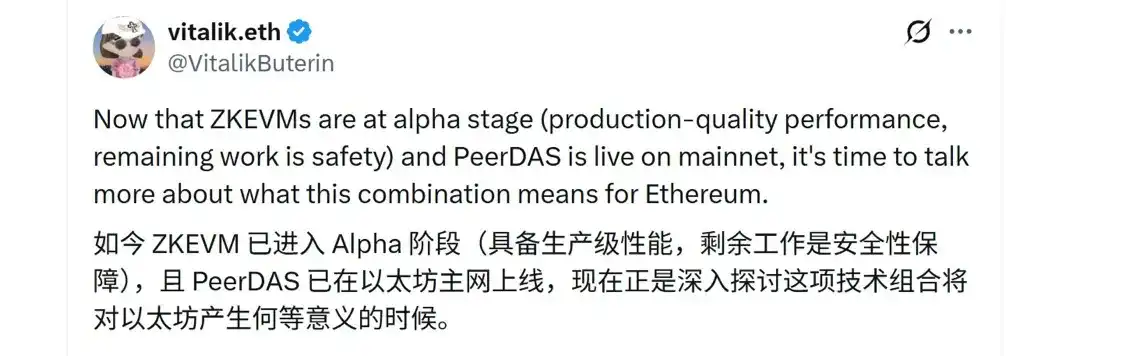
Tại sao Ethereum lại kiên trì với ZK đến vậy?

Thực ra hiện nay TPS của Ethereum đã không còn thấp, đỉnh điểm lý thuyết đã được nâng lên hơn 200 TPS, nguyên nhân chính là do Ethereum nhiều lần nâng trần Gas.
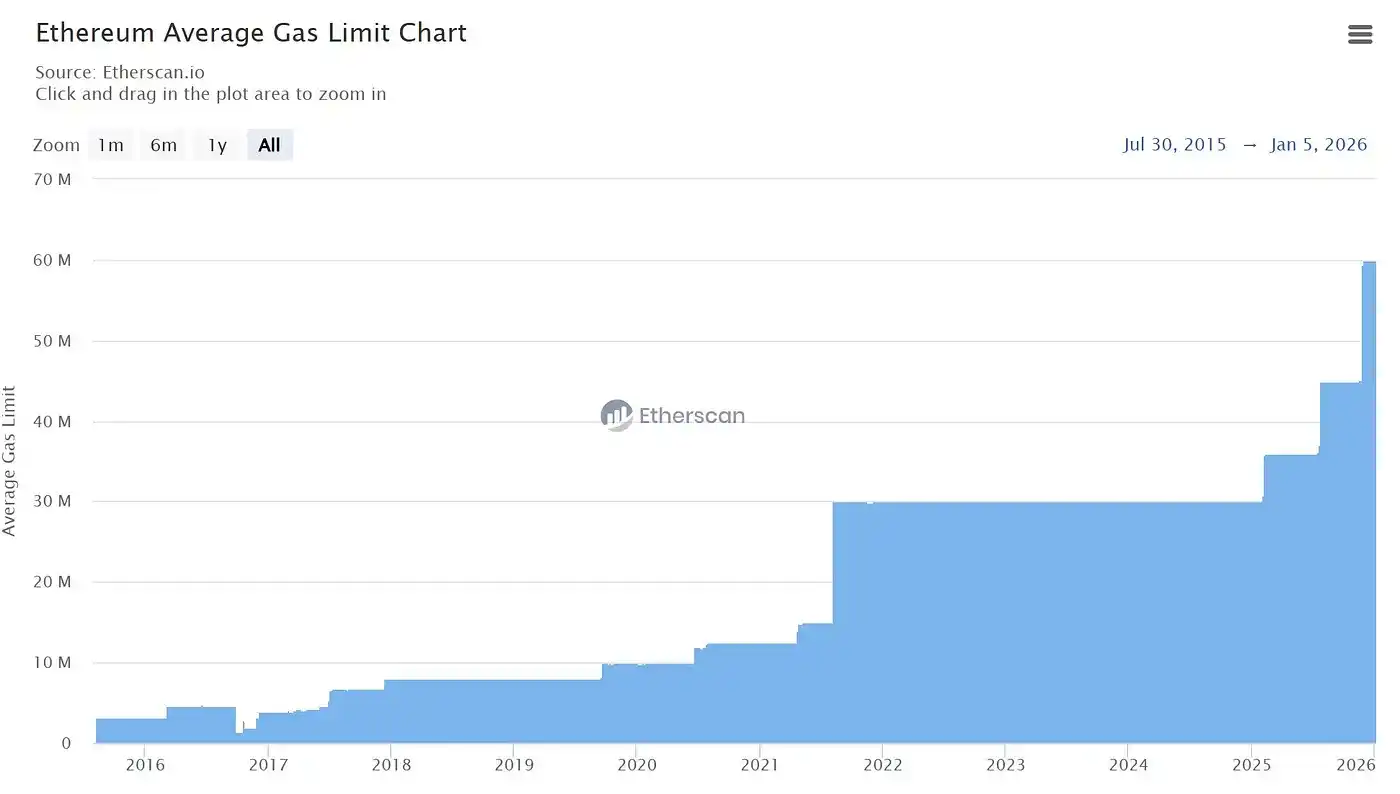
Tuy nhiên, việc nâng trần Gas này có cái giá của nó, không thể nâng vô tận. Cái giá phải trả là các node cần những máy chủ đắt tiền hơn để vận hành.

Nhưng Ethereum lại muốn giữ lại sự phi tập trung hóa cao độ mà nó tự hào, vì vậy không thể kéo hiệu năng máy chủ của các node lên quá cao (Tham khảo Solana, một máy chủ đơn lẻ đắt hơn khoảng 5–10 lần so với một máy chủ ETH đơn lẻ).

Do đó, bắt buộc phải ZK hóa mạng chính. Lưu ý, đây không phải là việc tạo ra vài ZK L2 đơn giản, mà là toàn bộ mạng chính L1 được ZK hóa hoàn toàn.

Vậy thì sau khi ZK hóa, có lợi ích gì?

Những node ETH đó, có thể đơn giản kiểm tra các bằng chứng ZK này, mà không cần phải xác minh giao dịch một cách rườm rà từng giao dịch một như trước đây.
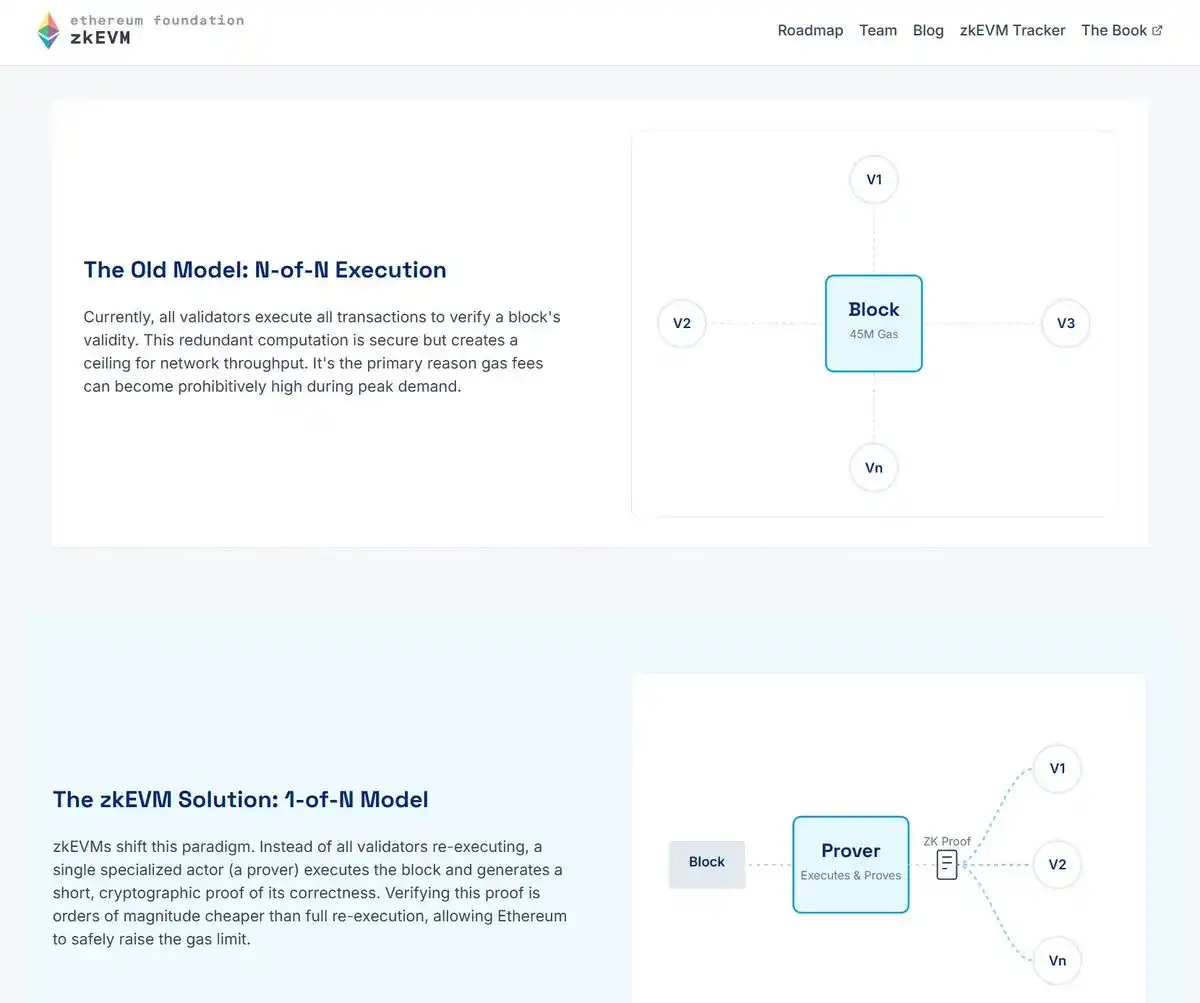
Ví dụ, nếu bạn là giám khảo chấm thi (node), những giao dịch chính là bài thi của thí sinh.

Trước đây bạn chấm thi thủ công chắc chắn rất chậm. Nhưng từ khi có công cụ thần kỳ là tô phiếu trả lời (ZK hóa), máy móc tính ra ngay điểm tổng của thí sinh trong một giây, vậy với tư cách là giám khảo, bạn chẳng phải sẽ nhàn hạ hơn rất nhiều sao?

Bạn nhàn hạ, trước đây một người chỉ chấm được 50 bài, giờ có thể chấm 1000 bài, người vẫn là người đó, hiệu suất tăng vọt.

Vì vậy, Ethereum trước tiên phải ZK hóa mạng chính, sau đó mới có thể tiếp tục nâng cao đáng kể trần Gas.

Bản thân ZK hóa không trực tiếp nâng cao TPS, nó là điều kiện tiên quyết. Nâng cao hiệu năng vẫn phải dựa vào việc kéo cao trần Gas, nhưng sau khi ZK hóa, các node không cần tăng chi phí máy chủ quá nhiều, khiến cái giá phải trả trở nên rất nhỏ.

Và sau đợt nâng cấp Fusaka lần trước (đặc biệt là nâng cấp PeerDAS) vận hành tốt, Ethereum đã tiến thêm một bước nữa đến gần hơn với việc ZK hóa mạng chính, vì vậy Vitalik mới phấn khích như vậy.

Hãy thử tưởng tượng một mạng chính có TPS phá nghìn, đối với Ethereum, đó thực sự cũng có thể tính là một câu chuyện khá tốt.

Có người đặt ra một câu hỏi:

Nếu Ethereum tự tay làm ZK-EVM cho mạng chính, vậy thì các đội ngũ ZK khác còn có ý nghĩa không?

Nói luận điểm trước, vẫn có ý nghĩa.

Tại sao vậy?

Đầu tiên, dự án ZK là một trong những công việc phát triển khó nhất toàn mạng, ngồi cùng bàn với FHE. Nó cần một lượng lớn nhân tài mật mã học.

Tin rằng Quỹ ETH có sự chuẩn bị nhất định trong phương diện này, nhưng với tư cách là cộng đồng mã nguồn mở, Ethereum tuân thủ triết lý nhiều người chung sức thì lửa cháy cao, cần dựa vào lượng lớn đội ngũ ZK bên thứ ba để thử sai và đổi mới. Để đền đáp, Ethereum sẽ cung cấp sự hỗ trợ lớn.

Thứ hai, ZK-EVM có bốn loại, từ type1 đến type4. Vài nhóm người bao gồm Polygon, Scroll, ZKsync, Taiko, có chút giống như mỗi người nhận một nhiệm vụ, đang phân đầu thực hiện một trong số các loại đó.

Ngoài ra, còn có ZK-VM, ví dụ Brevis.

Thực ra ZK-VM so với ZK-EVM thì vị trí còn vững chắc hơn.

Nguyên nhân là bốn loại ZK-EVM kể trên, cuối cùng phần lớn khả năng vẫn phải quyết định ra một phương án có tỷ lệ hiệu quả chi phí cao nhất, trở thành một phần của phương án được chỉ định cho ZK-EVM mạng chính Ethereum, vậy thì ba nhà còn lại có thể bị ảnh hưởng.

Nhưng với ZK-VM, bản thân nó không tương thích EVM, do đó nó nhất định sẽ là một phần của sự đa dạng của Ethereum.

Hơn nữa, vì VM không bị ràng buộc bởi các hạn chế của EVM, hiệu năng của nó sẽ chạy rất cao. ZK-EVM của Ethereum hoàn toàn không đe dọa nó, ngược lại giới chức thức của Ethereum sẽ tiếp tục khuyến khích.

Ví dụ, trước đây Vitalik đã từng đề cập đặc biệt đến biểu hiện hiệu năng của ZK-VM của Brevis, và mong đợi chúng bước vào lĩnh vực ZK-EVM.
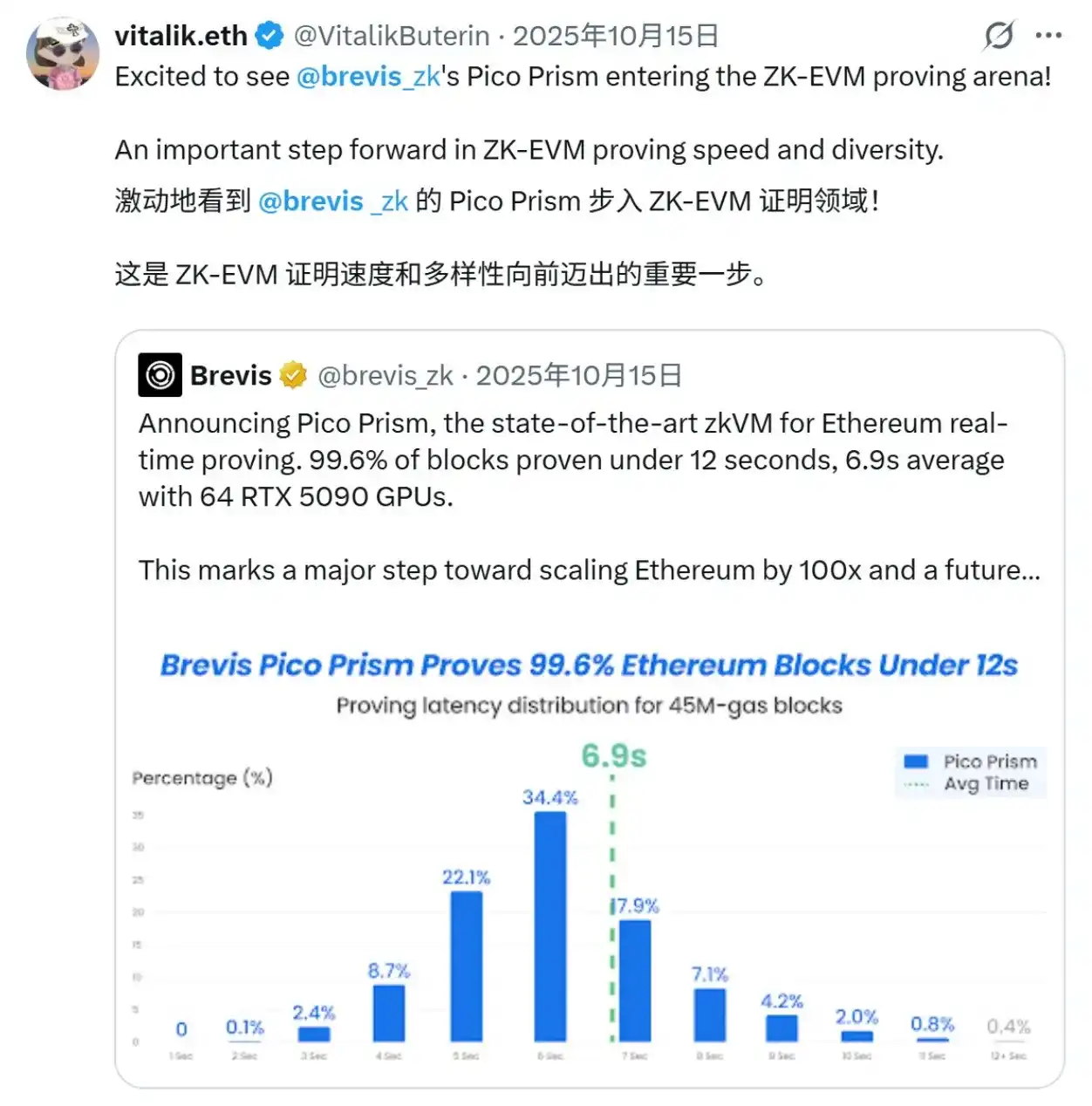
Đối với L2 thì sao?Có thể có chút ảnh hưởng, nhưng vẫn không lớn.

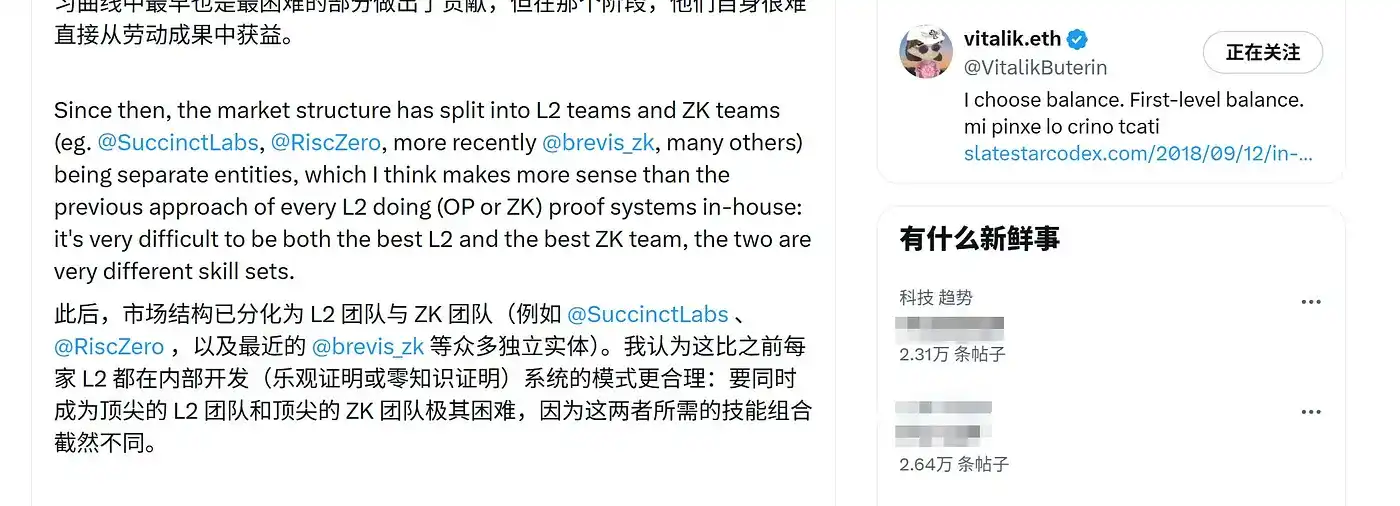
Vitalik khi nói chuyện về Polygon từng nói, ZK và L2 nên tách ra thì tốt hơn.

L1 được ZK hóa chắc chắn sau đó sẽ thu hút ngược lại một số người dùng trên ZK L2, xét cho cùng nếu L1 đủ rẻ, người dùng lên L2 có thể sẽ giảm.

Nhưng ngược lại mà nghĩ, ví dụ L1 là nền móng, L2 là tòa nhà chọc trời. Nền móng chắc chắn càng đào càng chắc càng tốt, vì vậy mạng chính L1 ZK hóa rồi, L2 cũng sẽ giảm phí, cũng có lợi.

Và trong bài tweet đó Vitalik cũng đề cập đặc biệt đến Brevis làm ZK-VM. Nguyên nhân là nhiều công việc ZK mà Brevis làm không giới hạn ở L2, tức là “nghiên cứu ZK và nghiên cứu L2 tách rời”.

Ví dụ họ có thị trường sức mạnh tính toán ZK, giúp hook của Uniswap phân phối phần thưởng ZK hóa, tính là ứng dụng dẫn dắt.
Tóm lại, Ethereum ra mắt đến nay 10 năm, đưa ra khẩu hiệu ZK hóa cũng đã năm sáu năm, vun trồng đến nay, cuối cùng việc ZK hóa đã bước vào giai đoạn Alpha, điều này không thể tách rời sự đầu tư không ngừng của Ethereum và vô số đội ngũ ZK bên thứ ba bao gồm Brevis, Polygon.


İlgili Sorular

QTại sao Ethereum lại cần ZK hóa một cách cấp thiết?

AEthereum cần ZK hóa để duy trì tính phi tập trung cao độ trong khi vẫn tăng khả năng mở rộng. Bằng cách xác minh các giao dịch thông qua bằng chứng ZK, các node không cần xử lý từng giao dịch một cách thủ công, giúp tăng đáng kể thông lượng (TPS) mà không đòi hỏi chi phí phần cứng máy chủ tăng cao.

QZK hóa có trực tiếp làm tăng TPS của Ethereum không?

AKhông, ZK hóa không trực tiếp tăng TPS. Nó là điều kiện tiên quyết cho phép Ethereum tăng giới hạn Gas (Gas limit) một cách an toàn, từ đó gián tiếp tăng TPS mà không khiến chi phí vận hành node trở nên quá đắt đỏ.

QLợi ích chính của việc kiểm tra giao dịch bằng ZK Proof là gì?

ALợi ích chính là giảm đáng kể khối lượng công việc tính toán cho các node. Giống như giáo viên chấm bài trắc nghiệm bằng máy thay vì chấm tay, node chỉ cần xác minh một bằng chứng ZK ngắn gọn để xác nhận tính hợp lệ của hàng loạt giao dịch, giúp tăng hiệu suất tổng thể của mạng lưới.

QCác nhóm ZK bên thứ ba như Polygon và Scroll có còn quan trọng sau khi Ethereum tự ZK hóa không?

ACó, họ vẫn rất quan trọng. Cộng đồng Ethereum khuyến khích sự đổi mới và thử nghiệm từ nhiều nhóm ZK bên thứ ba khác nhau. Các nhóm này đang phát triển các loại ZK-EVM và ZK-VM khác nhau (Type 1 đến Type 4), góp phần vào hệ sinh thái đa dạng và tìm ra các giải pháp tối ưu nhất.

QZK-VM khác với ZK-EVM như thế nào và tại sao nó được đánh giá cao?

AZK-VM (Máy ảo Zero-Knowledge) không bị ràng buộc bởi kiến trúc EVM, cho phép nó đạt được hiệu suất cao hơn và linh hoạt hơn so với ZK-EVM (Máy ảo Ethereum Zero-Knowledge). ZK-VM được ví như một phần của sự đa dạng trong hệ sinh thái Ethereum và không bị ảnh hưởng bởi kế hoạch ZK hóa L1 của chính Ethereum, thậm chí còn được khuyến khích phát triển.

İlgili Okumalar

M&A Deals in the Crypto Market Are Unusually Active

Title: M&A Activity in Crypto Market Becomes Unusually Active A rare signal is emerging in the crypto primary market: mergers and acquisitions (M&A) are nearing half of all financing deals. According to RootData, this month, M&A cases in the crypto industry reached 10, while financing rounds numbered only 14, meaning M&A accounts for approximately 42% of primary market transactions—the highest level in history. This does not signal a sudden industry boom. Instead, the rapid rise in M&A share primarily reflects the continued downturn in the financing market. Since November 2024, monthly crypto M&A deals have remained between 10-20, while financing deals have plummeted from around 100 to about 50, possibly hitting a new low this month. For project teams, this means the traditional path of relying on narratives, token expectations, and ecosystem subsidies to maintain valuations is narrowing. For leading companies, it presents a rare window to acquire teams, licenses, technology, liquidity, and market access at lower prices, with less competition and stronger bargaining power. Key active buyers include Coinbase, Kraken, Ripple, MoonPay, Polymarket, Kaiko, Sol Strategies, GSR, Keyrock, Jupiter, Paxos, and Ondo Finance. Their M&A logic is consistent: acquiring key capabilities at lower costs during the industry downturn. This is driven by more attractive valuations, reduced time and trial-and-error costs, the acquisition of licenses and compliance resources, and the integration of industry upstream and downstream segments. Current M&A focuses are concentrated in four areas: trading infrastructure (e.g., Coinbase acquiring Deribit, Kraken acquiring NinjaTrader), payments and stablecoins (e.g., MoonPay, Ripple expanding payment networks), compliance licenses, and asset issuance/distribution (e.g., acquisitions related to RWA and token issuance platforms like Coinbase's purchases of Liquifi and Echo). The rise in M&A is altering the primary market's exit logic. It provides an alternative path to the token-dependent model, encouraging teams to build tangible products, revenue, and strategic value that can be integrated. This could inject confidence into the market, showing that asset buyers and exit possibilities still exist, albeit with a stricter focus on real utility. However, this trend also indicates the crypto industry is becoming more centralized. As asset issuance, trading, market-making, custody, payments, and data gradually consolidate in the hands of a few major players, the industry's initial emphasis on openness and anti-monopoly is being reshaped by commercial realities. Coupled with rising compliance barriers, this signals the end of the low-barrier era for crypto entrepreneurship.

链捕手6 dk önce

M&A Deals in the Crypto Market Are Unusually Active

链捕手6 dk önce

M&A Deals Are Exceptionally Active in the Crypto Market

Mergers and acquisitions (M&A) activity in the cryptocurrency primary market has reached a historic high, accounting for approximately 42% of total deals in the current month, nearly matching the number of financing rounds. This shift does not signal a new boom cycle but rather reflects a severe contraction in the venture capital funding environment. As financing dwindles, established industry giants—including major exchanges, payment firms, and infrastructure providers—are seizing the opportunity to acquire strategic assets at lower valuations. Key drivers behind the surge in M&A include depressed project valuations, the need to quickly acquire talent and technology to capture short market windows, the pursuit of crucial regulatory licenses, and the strategic expansion into adjacent business verticals such as derivatives, payments, stablecoins, and real-world asset (RWA) issuance. Major acquisitions, like Coinbase's purchase of Deribit and Kraken's acquisition of NinjaTrader, exemplify the push to expand into high-margin areas like derivatives and multi-asset trading. This trend is reshaping the industry's exit landscape, offering an alternative to token-based exits and incentivizing startups to build tangible products and revenue streams with inherent strategic value for acquisition. However, it also points toward increasing centralization, as critical functions—trading, custody, payments, compliance—become concentrated within a few large, well-capitalized platforms, potentially raising barriers to entry for new ventures.

marsbit7 dk önce

M&A Deals Are Exceptionally Active in the Crypto Market

marsbit7 dk önce

Solana Privacy Ecosystem Panorama: A Complete Privacy Stack from Compute to AI

**Title: The Solana Privacy Ecosystem: A Full-Stack View from Compute to AI** **Summary:** This article provides a comprehensive overview of the emerging privacy landscape on the Solana blockchain, characterizing it as still in early development. It identifies two primary verticals—Neobanks and Private DeFi—as key drivers, while noting gaps in tooling and user experience. The discussion centers on two main approaches to private computation: Arcium, which utilizes Multi-Party Computation (MPC) networks (Multi-Party eXecution Environments) to process encrypted data with final settlement on Solana; and Magic Block, which leverages Trusted Execution Environments (TEEs) via its Private Ephemeral Rollup (PER). Both enable confidential applications like dark pools and private DeFi with minimal code changes. Building on this infrastructure, projects are creating privacy-focused applications. Umbra, built on Arcium, offers Encrypted Token Accounts (ETAs) for private balances, transfers, and selective disclosure for compliance. Other wallets like Privacy Cash and Hush provide mixer-like functionality for SOL. For private trading, encifherio uses TEEs to encrypt swap details routed through Jupiter, while VanishTrade and Darklake focus on shielding transaction intent and liquidity routing, with Darklake introducing a "blind slippage pool" to prevent front-running. Further applications include private prediction markets (e.g., Melee Markets using Arcium's encrypted order books) and private AI. Loyal exemplifies the latter, using both Magic Block and Arcium to enable decentralized AI agents that store user data, conversations, and transactions confidentially on-chain. The article concludes by framing privacy not as a single technology but as an evolving "ultimate privacy stack," with experts like Helius's Mert envisioning a future combination of Fully Homomorphic Encryption (FHE) and Zero-Knowledge proofs (ZK). Helius Privacy itself is developing a ZK-based UTXO privacy layer for Solana.

Foresight News12 dk önce

Solana Privacy Ecosystem Panorama: A Complete Privacy Stack from Compute to AI

Foresight News12 dk önce

7 Key Questions Regarding 'DeepSeek Completes Over 50 Billion Yuan in Financing'

DeepSeek, the prominent Chinese AI company, has reportedly completed its first external funding round, raising over 50 billion RMB (approximately $6.9 billion USD), according to foreign media reports. This financing values the company at over $50 billion USD, a significant increase from a $10 billion valuation when the round began in April 2026. Founder Liang Wenfeng personally contributed 20 billion RMB, with other investors including Tencent, CATL (Contemporary Amperex Technology), JD.com, NetEase, and IDG Capital. Notably, the National Artificial Intelligence Industry Investment Fund also participated with a direct investment of 1 billion RMB. The funding round is distinctive for its structure. Most investors' capital is channeled into a limited partnership controlled by CEO Liang Wenfeng, rather than directly into DeepSeek. These investors face a five-year lock-up period, have no voting rights, but receive priority financial information and future investment rights. This arrangement is seen as a measure to ensure Liang's absolute control over the company's direction, aligning with its stated principles of prioritizing groundbreaking AGI (Artificial General Intelligence) research over short-term profitability. The report highlights strategic reasons for key investors. Tencent's involvement is viewed as a strategic alignment, building on existing collaborations. CATL's investment is linked to the critical energy and power infrastructure needed for AI data centers, a key growth area for the battery giant. The participation of a state-backed fund underscores the national strategic importance of AI development. Post-funding, DeepSeek is expected to accelerate infrastructure development, including building its own data centers, hire more talent, and release new model versions with enhanced capabilities like image and audio support. While this marks a major step, the company's long-term journey towards AGI remains a challenging path that will require balancing its foundational ideals with the expectations of its new investors.

marsbit58 dk önce

7 Key Questions Regarding 'DeepSeek Completes Over 50 Billion Yuan in Financing'

marsbit58 dk önce

İşlemler

Spot
Futures

Popüler Makaleler

ZK Nasıl Satın Alınır

HTX.com’a hoş geldiniz! ZKsync (ZK) satın alma işlemlerini basit ve kullanışlı bir hâle getirdik. Adım adım açıkladığımız rehberimizi takip ederek kripto yolculuğunuza başlayın. 1. Adım: HTX Hesabınızı OluşturunHTX'te ücretsiz bir hesap açmak için e-posta adresinizi veya telefon numaranızı kullanın. Sorunsuzca kaydolun ve tüm özelliklerin kilidini açın. Hesabımı Aç2. Adım: Kripto Satın Al Bölümüne Gidin ve Ödeme Yönteminizi SeçinKredi/Banka Kartı: Visa veya Mastercard'ınızı kullanarak anında ZKsync (ZK) satın alın.Bakiye: Sorunsuz bir şekilde işlem yapmak için HTX hesap bakiyenizdeki fonları kullanın.Üçüncü Taraflar: Kullanımı kolaylaştırmak için Google Pay ve Apple Pay gibi popüler ödeme yöntemlerini ekledik.P2P: HTX'teki diğer kullanıcılarla doğrudan işlem yapın.Borsa Dışı (OTC): Yatırımcılar için kişiye özel hizmetler ve rekabetçi döviz kurları sunuyoruz.3. Adım: ZKsync (ZK) Varlıklarınızı SaklayınZKsync (ZK) satın aldıktan sonra HTX hesabınızda saklayın. Alternatif olarak, blok zinciri transferi yoluyla başka bir yere gönderebilir veya diğer kripto para birimlerini takas etmek için kullanabilirsiniz.4. Adım: ZKsync (ZK) Varlıklarınızla İşlem YapınHTX'in spot piyasasında ZKsync (ZK) ile kolayca işlemler yapın.Hesabınıza erişin, işlem çiftinizi seçin, işlemlerinizi gerçekleştirin ve gerçek zamanlı olarak izleyin. Hem yeni başlayanlar hem de deneyimli yatırımcılar için kullanıcı dostu bir deneyim sunuyoruz.

190 Toplam GörüntülenmeYayınlanma 2024.12.13Güncellenme 2026.06.02

ZK Nasıl Satın Alınır

Tartışmalar

HTX Topluluğuna hoş geldiniz. Burada, en son platform gelişmeleri hakkında bilgi sahibi olabilir ve profesyonel piyasa görüşlerine erişebilirsiniz. Kullanıcıların ZK (ZK) fiyatı hakkındaki görüşleri aşağıda sunulmaktadır.

活动图片