2025 In-Depth Crypto Market Report: Review of Institutions, Stablecoins & Regulation in 2025 and 2026 Outlook

HTX Learn2026-01-08 tarihinde yayınlandı2026-06-19 tarihinde güncellendi

Özet

The turning point in the 2025 crypto market was not in prices but in structure: On the capital side, retail investors ceded dominance to institutions; on the asset side, “crypto-native narratives” evolved into an on-chain dollar system centered on stablecoins and real-world assets (RWAs); and on the regulatory side, gray-area contests shifted toward normalized global oversight. Institutional capital entered as marginal buyers through regulated conduits such as spot ETFs, reducing volatility but increasing sensitivity of macro rates. Stablecoins saw a surge in annual transaction volume, evolving into a global settlement infrastructure, while the collapse of yield-bearing and algorithmic stablecoins exposed underlying systemic vulnerabilities. RWAs, especially on-chain U.S. Treasuries, achieved scaled deployment, driving the integration of on-chain yield curves with traditional finance. Regulatory clarity further lowered barriers for institutional participation, steering cryptos away from cyclical speculation toward a stage of modelable, configurable, and auditable infrastructure. Looking toward 2026, key variables will be compliant capital costs, the quality of on-chain U.S. dollar liquidity and the sustainability of real yields.

I. Institutions as Marginal Buyers: Lower Volatility But Higher Rate Sensitivity

In the early development period of the crypto market, price action and market rhythm were almost entirely driven by retail traders, short-term speculative capital and community sentiment. The market exhibited extreme sensitivity to social media hype, narrative shifts, and on-chain activity. Such a pricing mechanism driven by sentiment and narratives often summarized as “community beta”. Under this regime, upward moves of assets were rarely rooted in fundamental improvements or long-term capital allocation, but rather driven by rapid FOMO accumulation. Conversely, when expectations reversed, panic selling was exacerbated immediately by the absence of sustained capital support. This structure resulted in highly nonlinear price volatility for core assets like Bitcoin and Ethereum: Sharp rallies are followed by steep drawdowns, with cycles governed by sentiment rather than capital constraints. Retail participants were both the primary actors and key amplifiers of volatility, and traded based on short-term price moves rather than risk-adjusted returns, leaving the crypto market in a state of high volatility, high correlation and low stability.

However, from 2024 into 2025, this long-standing market structure underwent a fundamental shift, as demonstrated by detailed ETF AUM figures presented in the chart. With the sequential approval and successful operation of U.S. spot Bitcoin ETFs, crypto assets gained their first regulated conduits for large-scale institutional capital allocation. Unlike previous “sub-optimal” paths via trusts, futures, or on-chain custody, ETFs, by leveraging their standardized, transparent, and regulated nature, significantly lowered operational and compliance costs for institutions to enter the crypto market. By 2025, institutional capital was no longer merely “testing the waters” but consistently accumulating positions via ETFs, regulated custodial solutions and asset management products, evolving into marginal buyers in the market. This change was not about sheer capital size, but about the nature of the capital: The new market demand shifted from being driven by retail sentiment to be led by institutional investors that prioritize governed asset allocation and risk budgeting. A shift in the marginal buyer leads to a corresponding transformation in the market’s pricing mechanism. Institutional capital is primarily characterized by lower turnover and longer holding periods. Unlike retail actors driven by short-term price fluctuations and narrative signals, pensions, sovereign wealth funds, family offices and large hedge funds base decisions on medium-to-long-term portfolio performance, requiring investment committee deliberation, risk oversight and compliance review to make allocation decisions. This decision-making mechanism inherently curbs impulsive trading and leads to position adjustments that are more characteristic of gradual rebalancing rather than sentiment‑driven momentum chasing and panic selling. As institutional participation increased, the share of high-frequency, short-term trading diminished, and price action increasingly reflected capital allocation directions rather than instantaneous sentiment shifts. This transition was directly manifested in volatility structures: Although prices still responded to macro and systemic events, extreme short-term swings driven by sentiment were markedly reduced, especially in deep liquidity assets like Bitcoin and Ethereum, reflecting a “static orderliness” more akin to traditional assets in the overall market where price movements no longer hinge entirely on narrative‑driven leaps but are progressively reverting to dynamics constrained by capital.
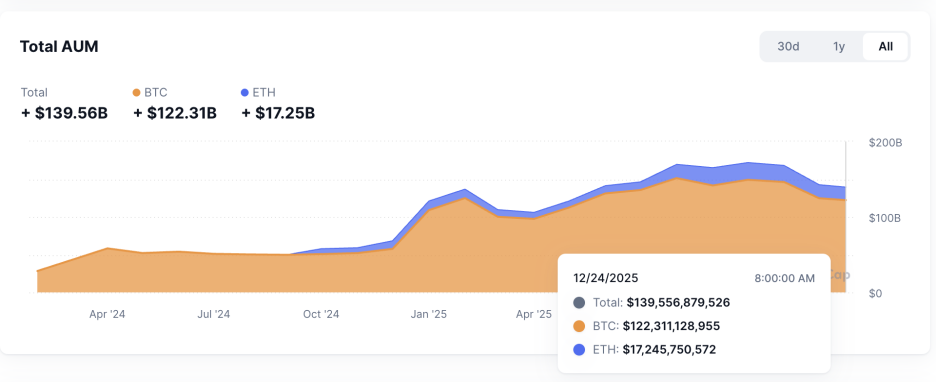
Simultaneously, institutional capital’s second defining feature, heightened sensitivity to macro variables, emerged distinctly. Institutional investment is centered on optimizing risk-adjusted returns rather than maximizing absolute gains, meaning asset allocation decisions are deeply influenced by the broader macro environment. In traditional finance, interest rates, liquidity conditions, risk preferences and cross-asset arbitrage conditions are core inputs for institutions adjusting positions. When this framework entered the crypto market, crypto prices began to exhibit stronger linkages with macro signals. The 2025 market landscape clearly demonstrated that changes in interest rate expectations more significantly affected Bitcoin and overall crypto assets. When major central banks, particularly the Federal Reserve, adjusted their policy rate paths, institutions reevaluated crypto allocations based on opportunity cost and portfolio risk, rather than shifts in narrative confidence.

Overall, the transition of institutions to marginal buyers in 2025 marked crypto’s evolution from a “narrative-driven, sentiment-priced” regime to one of “liquidity-driven, macro-priced” dynamics. Lower volatility did not imply risk elimination but a migration of risk sources from internal sentiment shocks to heightened sensitivity to macro rates, liquidity and risk appetite. For 2026 research, this shift carries methodological significance. Analytical frameworks must expand beyond on-chain indicators and narratives to systemic study of capital structure, institutional constraints and macro transmission pathways. The crypto market is increasingly integrated into global asset allocation frameworks, with prices no longer simply answering “what story the market is telling” but reflecting more “how capital is allocating risk”. This shift stands as one of the most profound structural changes of 2025.


II. Maturation of the On-Chain Dollar System: Stablecoins Transitioning into Infrastructure and RWAs Bringing Yield Curves On-Chain

If institutional capital’s large-scale entry answered “who is buying crypto assets”, the maturation of stablecoins and tokenization of real-world assets (RWAs) further answered the more fundamental questions — “what to buy, how to settle, and where returns come from”. At this level, the crypto market in 2025 completed a critical leap from “crypto-native financial experimentation” to an “on-chain dollar financial system”. Stablecoins evolved beyond trading media or hedging instruments to become the settlement and valuation foundation of the entire on-chain economic system. Concurrently, on-chain U.S. Treasuries, represented by RWAs, began to scale materially, endowing the chain with sustainable, auditable low-risk return anchors, and fundamentally altering DeFi’s yield structure and risk pricing logic.
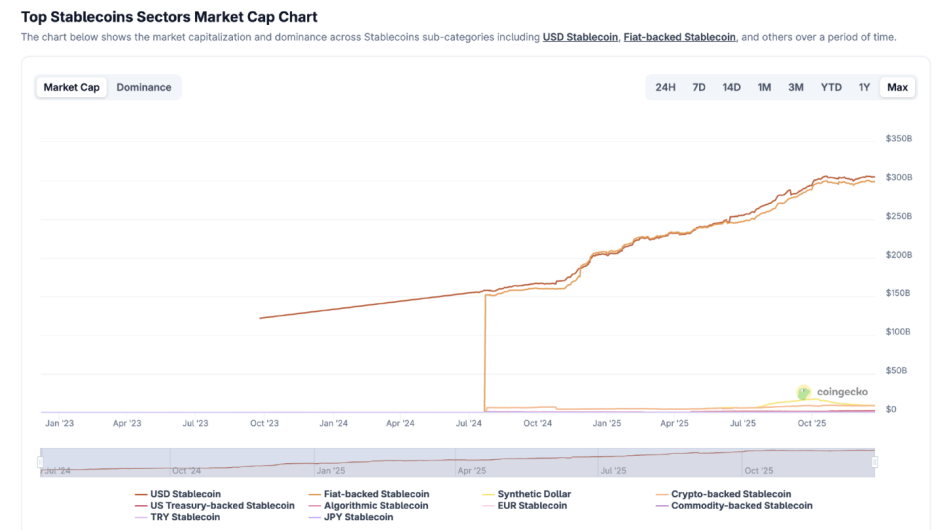
Functionally, stablecoins in 2025 indisputably became the core infrastructure of on-chain finance. Their role has long moved beyond that of “price-stable trading tokens” to fully assume multiple functions: cross-border settlement, trading pair denomination, DeFi liquidity hubs, and institutional capital on- and off-ramps. Across centralized exchanges, decentralized protocols, RWAs, derivatives and payments, stablecoins formed the underlying axis of capital flows. On-chain transaction volume data clearly shows that stablecoins have become a significant extension of the global dollar system, with annualized on-chain transaction volumes reaching tens of trillions of dollars, significantly exceeding those of most individual national payment systems. This indicates that in 2025, blockchains truly served as “functional dollar networks”, rather than mere adjuncts to high-risk asset trading. Moreover, widespread adoption of stablecoins transformed risk structures of on-chain finance. With stablecoins becoming the default unit of account, market participants could trade, borrow, lend and allocate assets without direct exposure to crypto price volatility, significantly lowering participation thresholds. This feature was especially crucial for institutional capital. That's because institutions seeks predictable cash flows and risk-controlled returns rather than high-volatility crypto gains. The maturity of stablecoins enabled institutions to maintain “dollar-denominated” exposure on-chain without traditional crypto price risk, laying the groundwork for expanded RWAs and yield products.

Within this context, RWAs, particularly the scaled deployment of on-chain U.S. Treasuries, became one of the most structurally significant developments of 2025. Unlike earlier initiatives focused on “synthetic assets” or “yield mapping”, RWA projects in 2025 began bringing traditional financial assets on-chain in forms that closely resembled conventional issuance. On-chain Treasuries were no longer conceptual narratives, but existed as auditable, traceable and composable instruments with transparent cash flows and well-defined maturities that directly linked to traditional risk-free yield curves.

However, alongside the rapid expansion of stablecoins and RWAs in 2025, the on-chain dollar system also exposed its latent systemic vulnerabilities. Particularly, multiple de-pegging events and collapses in the yield-bearing and algorithmic stablecoin sectors sounded alarms. These failures were not isolated incidents but reflected a common structural problem: recursive re-staking implicit leverage, opaque collateral structures, and concentrated risks in a small set of protocols and strategies. When stablecoin reserves extended beyond short-term Treasuries or cash equivalents into complex DeFi strategies seeking higher yields, stability stemmed not from underlying assets but from the implicit assumption of continued market prosperity. When this assumption collapsed, de-pegging transitioned from technical fluctuation to systemic shock. The events of 2025 indicated that stablecoin risk lies not in “whether they are stable”, but in "whether its sources of stability are transparent and auditable". Yield-bearing stablecoins can temporarily offer significantly higher returns than risk-free rates, but these often rely on stacked leverage and liquidity mismatches, with risks insufficiently priced. When market participants regard these products as “cash equivalents”, risk becomes systemically amplified. This forced the market to reexamine stablecoin roles: Are they primarily payment and settlement tools or financial products embedded with high-risk strategies? This question was posed in real economic terms for the first time in 2025.

Therefore, looking toward 2026, research focus is no longer on “whether stablecoins and RWAs will continue to grow”. Trendwise, the expansion of the on-chain dollar system is nearly irreversible. The key issue will be “quality stratification”. Differences among stablecoins in collateral transparency, maturity structure, risk isolation, and regulatory compliance will be directly reflected in their capital costs and use cases. Similarly, differences in legal structures, clearing mechanisms and yield stability among various RWAs products will determine their eligibility for institutional asset allocations. It is foreseeable that the on-chain dollar system will evolve from a homogeneous market into one with clear tiering: High-transparency, low-risk, strongly compliant products will enjoy lower capital costs and broader adoption, while products relying on complex strategies and implicit leverage may become marginalized and even phased out. From a macro perspective, the maturation of stablecoins and RWAs embedded the crypto market into the global dollar financial system for the first time. The on-chain ecosystem became an extension of dollar liquidity, yield curves and asset allocation logic rather than a mere experiment for value transfer. This transition, reinforced by institutional capital entry and normalized regulation, jointly propelled the crypto industry from cyclical speculation to infrastructure-level development.


III. Regulatory Normalization: Compliance as a Moat Reshaping Valuation & Industry Structure

In 2025, global crypto regulation entered a stage of normalization, not through a single law or event, but via a fundamental shift in the industry’s “survival assumptions”. For years, the crypto market operated under highly uncertain regulatory conditions, with the core question not about growth or efficiency but “whether this industry is allowed to exist". Regulatory uncertainty was seen as a systemic risk; capital entering the market priced in an extra risk premium for potential compliance shocks, enforcement and policy reversals. In 2025, this long-outstanding issue was partially resolved for the first time. As major jurisdictions in Europe, the U.S. and the Asia-Pacific progressively formed clearer and enforceable regulatory frameworks, market focus shifted from “whether crypto can exist” to “how to expand scale under compliance”, profoundly impacting capital behavior, business models and asset pricing logic.

Regulatory clarity significantly lowered institutional entry barriers. For institutional capital, uncertainty itself is a cost, and regulatory ambiguity means unquantifiable tail risk. In 2025, as stablecoins, ETFs, custodial services and trading platforms were progressively brought into defined regulatory scopes, institutions could finally evaluate crypto risks and returns within existing compliance and risk-control frameworks. This did not mean regulation became lax, but predictable. Predictability itself is a prerequisite for capital scaling. Once regulatory boundaries were defined, institutions could absorb constraints through internal processes, legal structures and risk models without treating them as “uncontrollable variables”. As a result, more long-term capital systematically entered the market, deepening participation and enhancing allocation scale; and crypto assets were steadily incorporated into broader asset allocation frameworks. More significantly, the normalization of regulation has altered the competitive dynamics at both the corporate and protocol levels.

The profound influence of regulatory normalization lies in reshaping industry organization. With compliance requirements materializing across issuance, trading, custody and settlement, the crypto industry began to exhibit stronger centralization and platformization trends. More products were issued and distributed on regulated platforms, and trading activity also concentrated on licensed and compliant infrastructures. This trend did not signify the disappearance of decentralization ideals but the reorganization of “entry points” for capital formation and flow. Token issuance gradually evolved from unstructured peer-to-peer sales to standardized processes more akin to traditional capital markets and became a new form of “internet capital marketization”. In this system, issuance, disclosure, lock-ups, distribution and secondary liquidity are more tightly integrated, stabilizing participants’ risk and return expectations. This organizational shift directly influenced asset valuation methods. In prior cycles, crypto asset valuation heavily relied on narrative strength, user growth and TVL, with limited consideration for legal and regulatory factors. Entering 2026, with regulation becoming a quantifiable constraint, valuation models began incorporating new dimensions. Regulatory capital requirements, compliance costs, legal structure stability, reserve transparency and accessibility of compliant distribution channels increasingly influenced asset prices. In other words, markets began imposing “regulatory premiums” or “regulatory discounts” on different projects and platforms. Entities capable of operating efficiently within compliance frameworks and internalizing regulatory demands as operational advantages often secured lower capital costs while models reliant on regulatory arbitrage or ambiguity faced valuation compression and even marginalization.


IV. Conclusion

The turning point in the 2025 crypto market fundamentally involved three simultaneous changes: capital migrating from retail investors to institutions; assets transitioning from narratives to an on-chain dollar system (stablecoins + RWAs); and regulatory frameworks evolving from gray areas to normalized governance. These forces jointly pushed crypto from “high-volatility speculative assets” toward “modelable financial infrastructure”. Looking ahead to 2026, research and investment should center on three core variable sets: transmission strength of macro rates and liquidity to crypto; quality stratification of on-chain dollar liquidity and sustainability of real yields; and institutional moats formed by compliance costs and distribution capacity. In this new paradigm, winners will not be projects with the best narratives, but those capable of sustained expansion under capital, yield and regulatory constraints.

Trend Kriptolar

İlgili Okumalar

CPU Makes a Comeback to the Table, A $170 Billion "Power Seizure" Drama Begins

A new era is dawning for the server CPU (Central Processing Unit), driven by the shift from AI model training to large-scale reasoning and the rise of Agentic AI. This article explores how the CPU is reclaiming a central role in the AI data center. For years, the focus has been on the GPU (Graphics Processing Unit) for AI training. However, as AI moves to the inference and Agent phase—where tasks involve complex, multi-step reasoning, tool calls, and data management—the workload balance is flipping. Studies show CPUs now handle over 70% of the workload in Agentic AI, up from 10-30% in training. This is because Agent tasks generate massive intermediate data (KV Cache) that exceeds GPU memory, forcing it to be offloaded to the CPU's larger, more scalable memory pools. This increased importance is translating into market changes. Major players are taking note: NVIDIA launched its first standalone CPU line, Vera, based on ARM architecture and optimized for Agent performance. AMD doubled its server CPU market forecast to over $1200 billion by 2030. Analyst reports project the total server CPU market could reach $1700 billion by 2030, with AI-driven demand being a primary driver. Furthermore, the classic ratio of CPUs to GPUs in AI servers is rapidly changing, converging from 1:8 toward 1:1 for Agent deployments. This surge in demand has led to a rare industry-wide price increase of 10-15% for server CPUs from Intel and AMD, breaking a decade-long trend of "more performance for the same price." Demand is bifurcating into high-core-count CPUs for in-rack GPU support and moderate-core CPUs for standalone Agent task orchestration. In China, this global trend presents an opportunity for domestic CPU manufacturers like Hygon (海光信息) and Huawei Kunpeng, who are bolstered by both growing AI infrastructure needs and national policies promoting technological self-reliance ("xin chuang"). The maturity of their software ecosystems is also accelerating, evidenced by faster adaptation to new AI models. In conclusion, the narrative is shifting from a GPU-centric view to one where CPU-GPU synergy is critical. The CPU is no longer a peripheral component but a performance-defining bottleneck and a key growth driver in the AI hardware stack, opening a massive new market estimated in the hundreds of billions of dollars.

marsbit1 saat önce

CPU Makes a Comeback to the Table, A $170 Billion "Power Seizure" Drama Begins

marsbit1 saat önce

TechFlow Intelligence: AMD AI Director Publicly Criticizes Claude Code for "Becoming Dumber and Lazier", Trump Claims Full Ceasefire in Hormuz But Strait Still Has 80 Unexploded Mines

TechFlow Intelligence Report: This daily digest covers key developments in AI, crypto, hardware, and geopolitics. In AI, SK Telecom faces US export control scrutiny over its partnership with Anthropic, while a Gemini user reports being misled in a scam scenario, sparking safety debates. China's Z.AI launches the GLM-5.2 model, rivaling Claude Opus without NVIDIA chips. In crypto, Bithumb lists ReProtocol, and Upbit delists KernelDAO. On the hardware front, MIT researchers build a custom OS to study chips, ASML denies US claims its advanced lithography machines are in China, and Amazon considers selling its in-house AI chips. Apple's future A21 Pro chip may use TSMC's latest N2P process. Major tech issues include 10,000 GitHub repositories distributing malware and Apple patching a critical eavesdropping flaw in Beats earbuds. US stocks rise, led by semiconductors, with Intel surging 10.6%, while SpaceX falls 3.5%. Geopolitically, despite a US-Iran deal, the Strait of Hormuz remains risky with ~80 uncleared mines, stalling 80M barrels of oil on standby tankers. Iran postpones Switzerland talks, and Trump calls the agreement an "unconditional surrender." The report highlights a contrast: temporary geopolitical calm versus the ongoing, fundamental restructuring of tech supply chains and chip independence.

marsbit1 saat önce

TechFlow Intelligence: AMD AI Director Publicly Criticizes Claude Code for "Becoming Dumber and Lazier", Trump Claims Full Ceasefire in Hormuz But Strait Still Has 80 Unexploded Mines

marsbit1 saat önce

İşlemler

Spot
Futures

Popüler Makaleler

ETH 2.0 Nedir

ETH 2.0: Ethereum için Yeni Bir Dönem Giriş ETH 2.0, Ethereum 2.0 olarak da bilinir, Ethereum blok zincirinde önemli bir yükseltmeyi işaret eder. Bu geçiş yalnızca bir yüz değiştirme değil; ağın ölçeklenebilirliğini, güvenliğini ve sürdürülebilirliğini temelinden geliştirmeyi hedeflemektedir. Enerji yoğun Proof of Work (PoW) konsensüs mekanizmasından daha verimli olan Proof of Stake (PoS) mekanizmasına geçişle birlikte, ETH 2.0 blok zinciri ekosistemine dönüştürücü bir yaklaşım vaat etmektedir. ETH 2.0 Nedir? ETH 2.0, Ethereum'un yeteneklerini ve performansını optimize etmeye odaklanmış özel, birbirine bağlı güncellemelerin bir derlemesidir. Yenileme, mevcut Ethereum mekanizmasının karşılaştığı kritik zorlukları, özellikle işlem hızı ve ağ tıkanıklığı ile ilgili sorunları ele almak üzere tasarlanmıştır. ETH 2.0'ın Amaçları ETH 2.0'ın ana amaçları, üç temel unsuru geliştirmeye odaklanmaktadır: Ölçeklenebilirlik: Ağın saniye başına işleyebileceği işlem sayısını önemli ölçüde artırmayı hedefleyen ETH 2.0, mevcut yaklaşık 15 işlem/saniye sınırlamasını aşmayı ve potansiyel olarak binlerce işleme ulaşmayı planlamaktadır. Güvenlik: Geliştirilmiş güvenlik önlemleri, özellikle siber saldırılara karşı daha iyi direnç sağlama ve Ethereum'un merkeziyetsiz görünümünü koruma açısından ETH 2.0 için hayati öneme sahiptir. Sürdürülebilirlik: Yeni PoS mekanizması, sadece verimliliği artırmakla kalmayıp aynı zamanda enerji tüketimini de önemli ölçüde azaltma hedefiyle tasarlanmış olup, Ethereum'un operasyonel çerçevesini çevresel kaygılarla uyumlu hale getirmektedir. ETH 2.0'ın Yaratıcısı Kimdir? ETH 2.0'ın yaratılması Ethereum Vakfı'na atfedilebilir. Ethereum'un gelişimini destekleme konusunda kritik bir rol oynayan bu kar amacı gütmeyen kuruluş, dikkat çekici kurucu ortağı Vitalik Buterin tarafından yönetilmektedir. Daha ölçeklenebilir ve sürdürülebilir bir Ethereum vizyonu, bu yükseltmenin arkasındaki itici güç olmuştur ve protokolü geliştirmek için kendini adamış küresel bir geliştici ve meraklı topluluğunun katkılarını içermektedir. ETH 2.0'ın Yatırımcıları Kimlerdir? ETH 2.0 yatırımcıları ile ilgili detaylar kamuoyuna açıklanmamış olsa da, Ethereum Vakfı'nın blok zinciri ve teknoloji alanında çeşitli kuruluşlar ve bireyler tarafından desteklendiği bilinmektedir. Bu ortaklar arasında merkeziyetsiz teknolojilerin ve blok zinciri altyapısının geliştirilmesine karşılıklı ilgi duyan girişim sermayesi şirketleri, teknoloji firmaları ve hayır kurumları yer almaktadır. ETH 2.0 Nasıl Çalışır? ETH 2.0, onu öncüsünden ayıran bir dizi önemli özelliği tanıtmasıyla dikkat çekmektedir. Proof of Stake (PoS) PoS konsensüs mekanizmasına geçiş, ETH 2.0'ın en belirgin değişikliklerinden biridir. İşlem doğrulama için enerji yoğun madenciliğe dayanmak yerine, PoS kullanıcıların ağa yatırdıkları ETH miktarına göre işlemleri doğrulayıp yeni bloklar oluşturmalarına olanak tanır. Bu, enerji verimliliğinin artırılmasına yol açarak tüketimi yaklaşık %99,95 oranında azaltmakta ve Ethereum 2.0'ı önemli ölçüde daha çevre dostu bir alternatif haline getirmektedir. Shard Zincirleri Shard zincirleri, ETH 2.0'ın diğer bir kritik yeniliğidir. Bu daha küçük zincirler, ana Ethereum zinciri ile paralel olarak çalışarak birden fazla işlemin aynı anda işlenmesine olanak tanır. Bu yaklaşım, ağın genel kapasitesini artırarak Ethereum'u rahatsız eden ölçeklenebilirlik sorunlarını ele alır. Beacon Zinciri ETH 2.0'ın temelinde, ağı koordine eden ve PoS protokolünü yöneten Beacon Zinciri yer almaktadır. Bu, bir tür organizatör olarak işlev görür: doğrulayıcıları denetler, shard'ların ağa bağlı kalmasını sağlar ve blok zinciri ekosisteminin genel sağlığını izler. ETH 2.0 Zaman Çizelgesi ETH 2.0'ın yolculuğu, bu önemli yükseltmenin evrimini gösteren birkaç önemli dönüm noktası ile tanımlanmıştır: Aralık 2020: Beacon Zinciri'nin başlatılması, PoS'un tanıtımını işaret etmiş ve ETH 2.0’a geçiş için sahneyi hazırlamıştır. Eylül 2022: "The Merge" tamamlanması, Ethereum ağının başarılı bir şekilde PoW'den PoS çerçevesine geçiş yaptığı kritik bir anı temsil etmekte ve Ethereum için yeni bir dönemi müjdelemektedir. 2023: Shard zincirlerinin beklenen dağıtımı, Ethereum ağının ölçeklenebilirliğini daha da artırmayı hedeflemekte ve ETH 2.0'ı merkeziyetsiz uygulamalar ve hizmetler için sağlam bir platform haline getirmeyi pekiştirmektedir. Ana Özellikler ve Faydalar Geliştirilmiş Ölçeklenebilirlik ETH 2.0'ın en önemli avantajlarından biri, geliştirilmiş ölçeklenebilirliğidir. PoS ve shard zincirlerinin kombinasyonu, ağın kapasitesini artırarak, eski sistemle kıyaslandığında çok daha fazla işlem hacmi karşılayabilmesini sağlamaktadır. Enerji Verimliliği PoS'un uygulanması, blok zinciri teknolojisinde enerji verimliliği yönünde büyük bir adım teşkil etmektedir. Enerji tüketimini ciddi şekilde azaltarak, ETH 2.0 yalnızca işletme maliyetlerini düşürmekle kalmaz, aynı zamanda küresel sürdürülebilirlik hedefleriyle daha yakın bir uyum sağlar. Geliştirilmiş Güvenlik ETH 2.0'ın güncellenmiş mekanizmaları, ağ genelinde güvenliğin artırılmasına katkıda bulunmaktadır. PoS'un uygulanması ve shard zincirleri ile Beacon Zinciri aracılığıyla geliştirilen yenilikçi kontrol önlemleri, potansiyel tehditlere karşı daha yüksek bir koruma sağlar. Kullanıcılar için Düşük Maliyetler Ölçeklenebilirlik geliştikçe, işlem maliyetleri üzerindeki etkiler de belirgin hale gelecektir. Artan kapasite ve azalan tıkanıklığın, kullanıcılar için düşük ücretler anlamına gelmesi beklenmekte ve Ethereum'u günlük işlemler için daha erişilebilir hale getirmektedir. Sonuç ETH 2.0, Ethereum blok zinciri ekosisteminde önemli bir evrimi işaret etmektedir. Ölçeklenebilirlik, enerji tüketimi, işlem verimliliği ve genel güvenlik gibi temel sorunları ele alırken, bu güncellemenin önemi abartılamaz. Proof of Stake'e geçiş, shard zincirlerinin tanıtımı ve Beacon Zinciri'nin altyapı çalışmaları, Ethereum'un merkeziyetsiz piyasalarının artan taleplerini karşılayabileceği bir geleceği göstermektedir. Yenilik ve ilerleme ile şekillenen bir sektörde, ETH 2.0, blok zinciri teknolojisinin daha sürdürülebilir ve verimli bir dijital ekonomi için yol açmadaki yeteneklerinin bir kanıtıdır.

181 Toplam GörüntülenmeYayınlanma 2024.04.04Güncellenme 2024.12.03

ETH 2.0 Nedir

ETH 3.0 Nedir

ETH3.0 ve $eth 3.0: Ethereum'un Geleceği Üzerine Derinlemesine Bir İnceleme Giriş Hızla evrilen kripto para ve blok zinciri teknolojisi ortamında, ETH3.0, sıklıkla $eth 3.0 olarak adlandırılmakta, önemli bir ilgi ve spekülasyon konusu haline gelmiştir. Bu terim, netleştirilmesi gereken iki temel kavramı kapsamaktadır: Ethereum 3.0: Bu, mevcut Ethereum blok zincirinin yeteneklerini artırmayı hedefleyen olası bir gelecekteki güncellemeyi temsil eder, özellikle ölçeklenebilirlik ve performansı iyileştirmeye odaklanmaktadır. ETH3.0 Meme Token: Bu ayrı kripto para projesi, Ethereum blok zincirini kullanarak meme merkezli bir ekosistem oluşturmayı amaçlamakta ve kripto para topluluğu içinde etkileşimi artırmaktadır. ETH3.0'ün bu yönlerini anlamak, yalnızca kripto meraklıları için değil, aynı zamanda dijital alandaki daha geniş teknolojik trendleri gözlemleyenler için de hayati öneme sahiptir. ETH3.0 Nedir? Ethereum 3.0 Ethereum 3.0, zaten kurulmuş olan Ethereum ağına önerilen bir güncelleme olarak duyurulmaktadır; bu ağ, kuruluşundan bu yana birçok merkeziyetsiz uygulamanın (dApp'ler) ve akıllı sözleşmelerin belkemiği olmuştur. Tasarlanan iyileştirmeler, esasen ölçeklenebilirlik üzerine yoğunlaşmakta – shardlama ve sıfır bilgi kanıtları (zk-proofs) gibi ileri teknolojileri entegre etmektedir. Bu teknolojik yenilikler, saniyede eşi benzeri görülmemiş sayıda işlem (TPS) gerçekleştirmeyi kolaylaştırmayı amaçlamakta olup, muhtemelen milyonlara ulaşarak mevcut blok zinciri teknolojisinin karşılaştığı en büyük sınırlamalardan birine çözüm getirmektedir. İyileştirme yalnızca teknik değil, aynı zamanda stratejiktir; Ethereum ağını, merkeziyetsiz çözümlere olan artan talep ile belirginleşen bir geleceğe hazırlamak için tasarlanmıştır. ETH3.0 Meme Token Ethereum 3.0'ın aksine, ETH3.0 Meme Token, internet meme kültürünü kripto para dinamikleriyle birleştirerek daha hafif ve eğlenceli bir alanda hareket etmektedir. Bu proje, kullanıcıların Ethereum blok zincirinde meme alım, satım ve ticaret yapmalarına izin vererek, yaratıcılık ve ortak ilgi alanları aracılığıyla topluluk etkileşimini teşvik eden bir platform sunmaktadır. ETH3.0 Meme Token, blok zinciri teknolojisinin dijital kültürle nasıl kesişebileceğini göstererek, hem eğlenceli hem de finansal olarak sürdürülebilir kullanım senaryoları oluşturmayı hedeflemektedir. ETH3.0'un Yaratıcısı Kimdir? Ethereum 3.0 Ethereum 3.0'a yönelik girişim, esas olarak Ethereum topluluğundaki bir geliştirici ve araştırmacı konsorsiyumu tarafından yönlendirilmektedir ve bunlar arasında Justin Drake de bulunmaktadır. Ethereum'un evrimine yönelik içgörüleri ve katkılarıyla tanınan Drake, Ethereum'u “Beam Chain” olarak adlandırılan yeni bir konsensüs katmanına geçirme konusundaki tartışmalarda öne çıkan bir figür olmuştur. Geliştirmeye yönelik bu iş birliği yaklaşımı, Ethereum 3.0'ın tek bir yaratıcının ürünü olmadığını, aksine blok zinciri teknolojisini ilerletmeye odaklanmış kolektif bir dehanın tezahürü olduğunu göstermektedir. ETH3.0 Meme Token ETH3.0 Meme Token'ın yaratıcısına dair detaylar şu anda izlenemez durumdadır. Meme tokenların doğası, genellikle daha merkeziyetsiz ve topluluk odaklı bir yapıya yol açmakta olup, bu da spesifik bir atıf eksikliğini açıklayabilir. Bu durum, yeniliğin genellikle iş birliği yerine bireysel çabalardan ortaya çıktığı kripto topluluğunun genel felsefesiyle uyumludur. ETH3.0 Yatırımcıları Kimlerdir? Ethereum 3.0 Ethereum 3.0'a olan destek, esasen Ethereum Vakfı ve hevesli bir geliştirici ve yatırımcı topluluğu tarafından sağlanmaktadır. Bu temel birliktelik, yıllar süren ağ operasyonlarıyla inşa edilen güven ve itibarından yararlanarak önemli bir meşruiyet sağlamaktadır. Kripto para dünyasının hızla değişen ikliminde, topluluk desteği, gelişim ve benimsemeyi yönlendirmede kritik bir rol oynamakta ve Ethereum 3.0'ı gelecekteki blok zinciri ilerlemeleri için ciddi bir rakip haline getirmektedir. ETH3.0 Meme Token Mevcut kaynaklar, ETH3.0 Meme Token'ı destekleyen yatırım temelleri veya kuruluşları hakkında net bilgiler sağlamasa da, bu durum meme tokenlar için tipik olan finansman modelini göstermektedir; bu model genellikle tabandan destek ve topluluk katılımına dayanır. Bu tür projelerdeki yatırımcılar genellikle toplum odaklı yenilik potansiyeli ve kripto topluluğunda bulunan iş birliği ruhuyla motive olmuş bireylerden oluşmaktadır. ETH3.0 Nasıl Çalışır? Ethereum 3.0 Ethereum 3.0'ın ayırt edici özellikleri, önerilen shardlama ve zk-proof teknolojisinin uygulanmasında yatmaktadır. Shardlama, blok zincirini daha küçük, yönetilebilir parçalara veya “parçalara” ayırma yöntemidir; bu parçalar işlemleri ardışık değil, eşzamanlı olarak işleyebilir. Bu işlem yükünün merkeziyetsizliği, tıkanıklığı önlemeye yardımcı olur ve ağın yoğun yük altında bile yanıt verebilir olmasını sağlar. Sıfır bilgi kanıtı (zk-proof) teknolojisi, işleme katılan temel verileri ifşa etmeden işlem doğrulaması sağlamasıyla başka bir sofistike katman ekler. Bu yön, sadece gizliliği artırmakla kalmaz, aynı zamanda ağın genel verimliliğini de artırır. Bu güncellemeye, ağın yeteneklerini ve faydasını daha da artırarak sıfır bilgi Ethereum Sanal Makinesi (zkEVM) entegrasyonunun da eklenmesi gündeme gelmektedir. ETH3.0 Meme Token ETH3.0 Meme Token, meme kültürünün popülaritesinden yararlanarak kendini farklılaştırmaktadır. Kullanıcıların sadece eğlence için değil, aynı zamanda potansiyel ekonomik kazançlar için meme ticareti yapmalarına olanak tanıyacak bir pazar yeri oluşturur. Stake etme, likidite sağlama ve yönetim mekanizmaları gibi özelliklerin entegrasyonu sayesinde, proje topluluk etkileşimini ve katılımını teşvik eden bir ortam oluşturur. Eğlence ve ekonomik fırsatların eşsiz bir karışımını sunarak, ETH3.0 Meme Token, kripto tutkunlarından gündelik meme meraklılarına kadar çeşitli bir kitleyi çekmeyi hedeflemektedir. ETH3.0 Zaman Çizelgesi Ethereum 3.0 11 Kasım 2024: Justin Drake, ölçeklenebilirlik iyileştirmeleri etrafında şekillenen yaklaşan ETH 3.0 güncellemesine işaret ediyor. Bu duyuru, Ethereum'un gelecekteki mimarisi hakkında resmi tartışmaların başlangıcını simgeliyor. 12 Kasım 2024: Ethereum 3.0'a yönelik beklenen önerinin, Bangkok'taki Devcon'da açıklanması planlanıyor ve bu, daha geniş topluluk geri bildirimi ve gelişim için olası sonraki adımların zeminini hazırlıyor. ETH3.0 Meme Token 21 Mart 2024: ETH3.0 Meme Token, CoinMarketCap'ta resmi olarak listeleniyor, bu da kamusal kripto alanına adım atarak meme merkezli ekosisteminin görünürlüğünü artırıyor. Ana Noktalar Sonuç olarak, Ethereum 3.0, gelişmiş teknolojiler aracılığıyla ölçeklenebilirlik ve performansla ilgili sınırlamaların üstesinden gelmeye odaklanan Ethereum ağındaki önemli bir evrimi temsil etmektedir. Önerilen güncellemeleri, gelecekteki talepler ve kullanılabilirlik için proaktif bir yaklaşımı yansıtmaktadır. Öte yandan, ETH3.0 Meme Token, kripto para alanındaki topluluk odaklı kültürün özünü kapsamakta, meme kültürünü kullanarak kullanıcı yaratıcılığını ve katılımını teşvik eden etkileşimli platformlar oluşturmayı hedeflemektedir. ETH3.0 ve $eth 3.0'un farklı amaçlarının ve işlevlerinin anlaşılması, kripto alanındaki gelişmeleri takip eden herkes için hayati öneme sahiptir. Her iki girişim de benzersiz yollar çizerek, blok zinciri yeniliğinin dinamik ve çok yönlü doğasını birlikte vurgulamaktadır.

175 Toplam GörüntülenmeYayınlanma 2024.04.04Güncellenme 2024.12.03

ETH 3.0 Nedir

ETH Nasıl Satın Alınır

HTX.com’a hoş geldiniz! Ethereum (ETH) satın alma işlemlerini basit ve kullanışlı bir hâle getirdik. Adım adım açıkladığımız rehberimizi takip ederek kripto yolculuğunuza başlayın. 1. Adım: HTX Hesabınızı OluşturunHTX'te ücretsiz bir hesap açmak için e-posta adresinizi veya telefon numaranızı kullanın. Sorunsuzca kaydolun ve tüm özelliklerin kilidini açın. Hesabımı Aç2. Adım: Kripto Satın Al Bölümüne Gidin ve Ödeme Yönteminizi SeçinKredi/Banka Kartı: Visa veya Mastercard'ınızı kullanarak anında Ethereum (ETH) satın alın.Bakiye: Sorunsuz bir şekilde işlem yapmak için HTX hesap bakiyenizdeki fonları kullanın.Üçüncü Taraflar: Kullanımı kolaylaştırmak için Google Pay ve Apple Pay gibi popüler ödeme yöntemlerini ekledik.P2P: HTX'teki diğer kullanıcılarla doğrudan işlem yapın.Borsa Dışı (OTC): Yatırımcılar için kişiye özel hizmetler ve rekabetçi döviz kurları sunuyoruz.3. Adım: Ethereum (ETH) Varlıklarınızı SaklayınEthereum (ETH) satın aldıktan sonra HTX hesabınızda saklayın. Alternatif olarak, blok zinciri transferi yoluyla başka bir yere gönderebilir veya diğer kripto para birimlerini takas etmek için kullanabilirsiniz.4. Adım: Ethereum (ETH) Varlıklarınızla İşlem YapınHTX'in spot piyasasında Ethereum (ETH) ile kolayca işlemler yapın.Hesabınıza erişin, işlem çiftinizi seçin, işlemlerinizi gerçekleştirin ve gerçek zamanlı olarak izleyin. Hem yeni başlayanlar hem de deneyimli yatırımcılar için kullanıcı dostu bir deneyim sunuyoruz.

3.6k Toplam GörüntülenmeYayınlanma 2024.12.10Güncellenme 2026.06.02

ETH Nasıl Satın Alınır

Tartışmalar

HTX Topluluğuna hoş geldiniz. Burada, en son platform gelişmeleri hakkında bilgi sahibi olabilir ve profesyonel piyasa görüşlerine erişebilirsiniz. Kullanıcıların ETH (ETH) fiyatı hakkındaki görüşleri aşağıda sunulmaktadır.

活动图片